Plant Profile & Key Characteristics
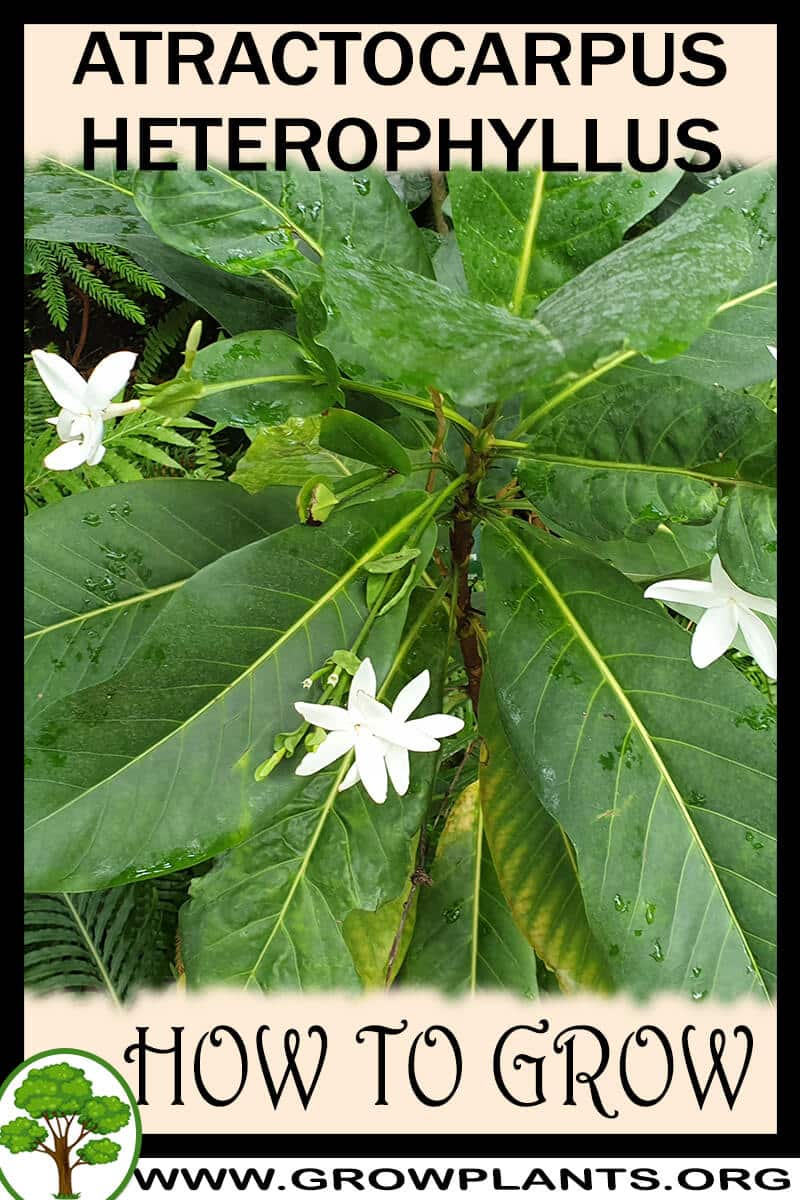
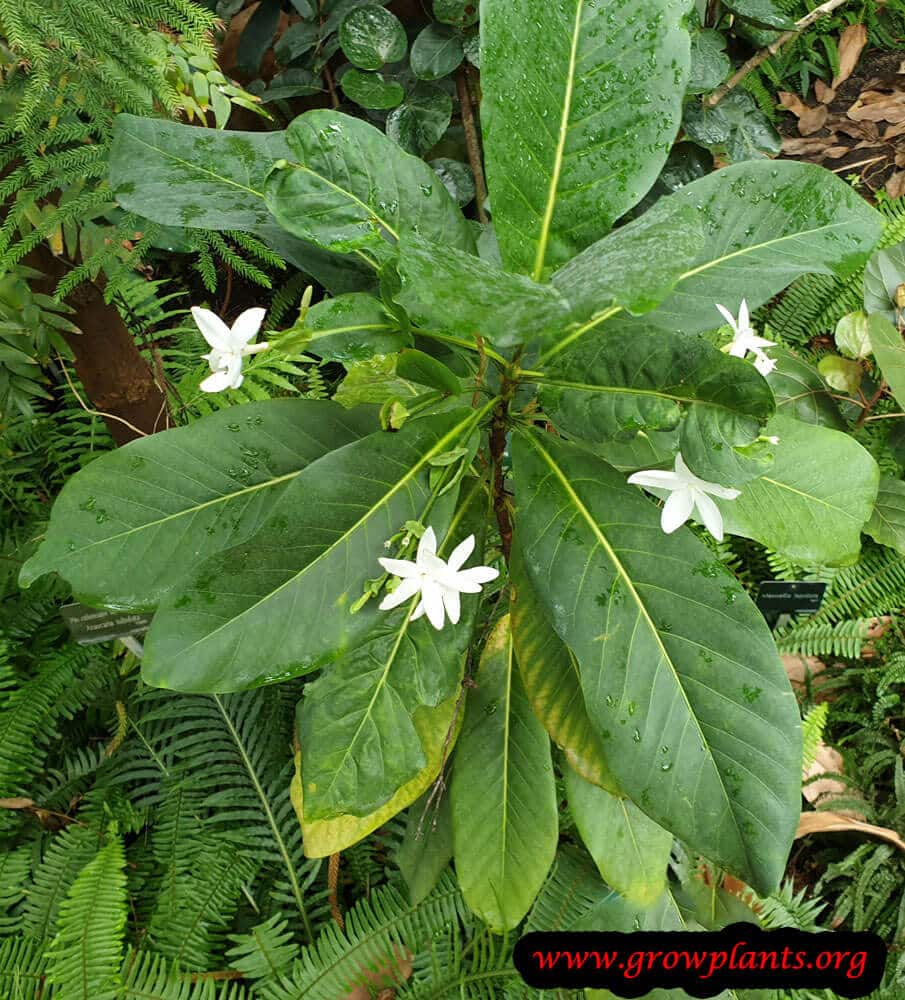
Overview: Atractocarpus heterophyllus is an evergreen shrub in the gardenia family, growing 0.5-1 m (20-40 in) tall with dark glossy foliage. This shade-tolerant perennial is grown as an ornamental for its leaves and flowers, indoors or in tropical gardens.
Quick Specifications
| Specification | Attribute |
|---|---|
| Plant Type / Life Cycle | Perennial (evergreen shrub) |
| Foliage Type | Evergreen |
| Mature Size | 0.5-1 m tall (20-40 in) |
| Growth Rate | Moderate to slow |
| Hardiness | USDA zone 11+ |
Growth Form & Structure
- Height & Spread: 0.5-1 m (20-40 in) tall, forming a compact bushy shrub; suited to containers and as a houseplant.
- Growth Habit & Form: Dense evergreen shrub with glossy foliage.
- Lifespan & Maturity: Long-lived evergreen perennial.
Anatomy & Physical Features
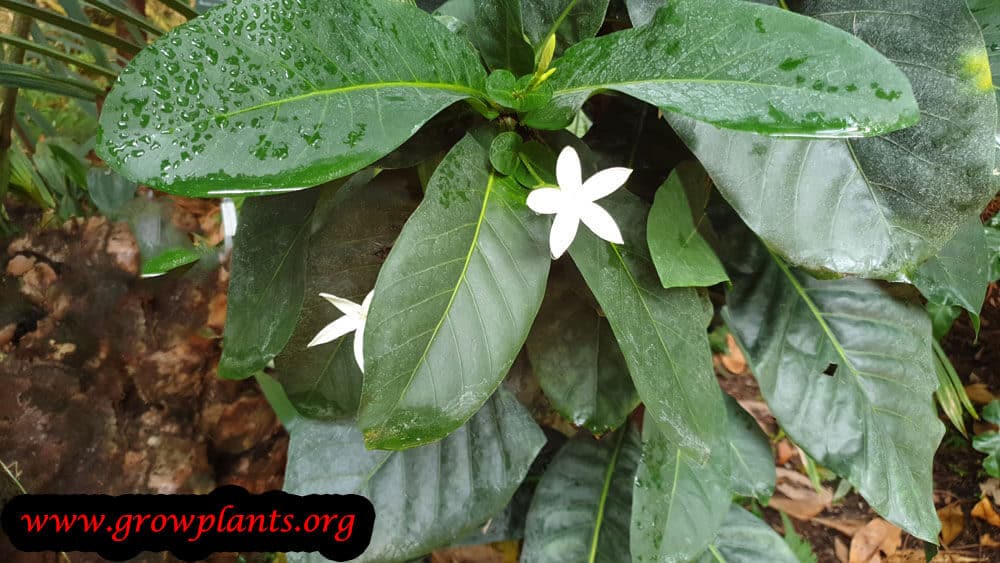
- Leaves & Foliage: Dark green, glossy, elliptic leaves – a key ornamental feature.
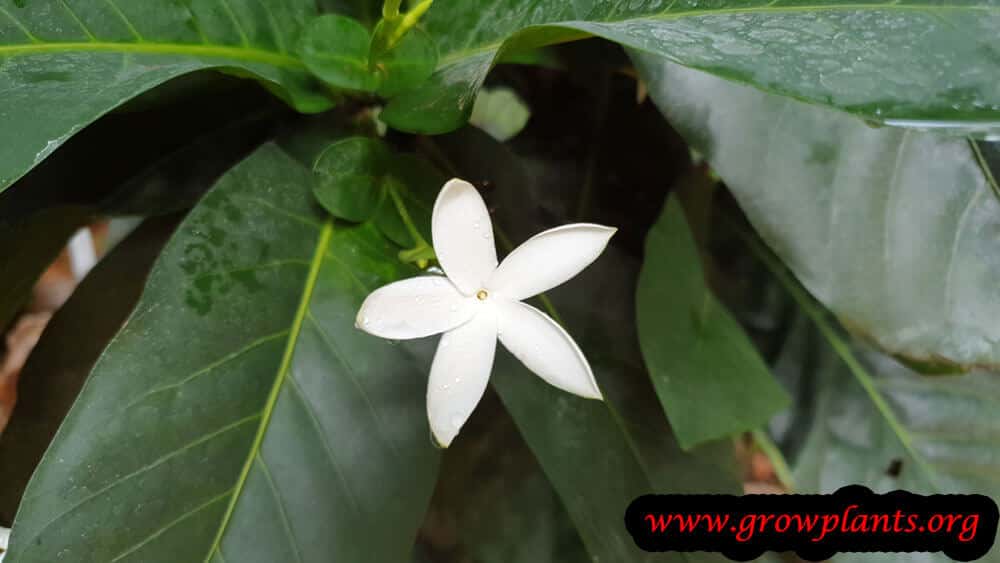
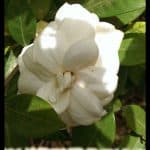
- Flower Characteristics: Glossy white star-shaped flowers with five petals borne in clusters (see Bloom guide).
Primary Uses & Landscape Value
- Functional & Ornamental Roles: Ornamental foliage and flowering shrub for shade, containers and indoor growing.
Care Guide: Planting, Soil & Watering
Overview: Atractocarpus heterophyllus is a tropical evergreen shrub (hardiness zone 11+) for part to full shade, indoors or out. It wants rich, moist, well-drained soil and steady moisture.
Quick Care Requirements
| Requirement | Ideal Condition |
|---|---|
| Planting Season | Year-round in a warm, frost-free climate |
| Growth Rate | Slow to moderate |
| Soil Type | Rich, moist, well-drained |
| Water Need | Moderate to high – keep consistently moist |
Planting & Establishment
- Best Planting Season: Plant year-round in a warm, frost-free climate.
- How to Plant:
- Hole Preparation: Dig a hole about the width of the root ball and loosen the surrounding soil.
- Soil Amendments: Work plenty of organic matter into the backfill for rich, moisture-retentive yet free-draining soil.
- Planting Depth: Set the shrub at its original depth with the root collar at the surface.
- Growth Speed & Expectations: Growth is slow to moderate, reaching about 0.5–1 m.
Soil, Watering & Drainage Care
- Soil Mix & Drainage Needs: Rich, well-drained soil that holds moisture is ideal; avoid waterlogging, which rots the roots. Quality potting mix suits it in containers.
- Watering Schedule & Technique:
- Young / Newly Planted: Keep newly planted shrubs consistently moist while they establish.
- Established: Water regularly to keep the soil moist, giving an average to generous amount, and let excess drain.
- Seasonal Adjustments: Water more in warm growth and less in cool weather.
Climate, Light & Hardiness
Atractocarpus heterophyllus is a warmth-loving, frost-tender shrub suited to humid tropical and subtropical gardens, or to container culture as a houseplant in cooler regions. It prefers filtered, shaded light rather than strong direct sun, and it has essentially no cold hardiness – even a light frost can cause serious damage.
Quick Climate Specifications
| Climate Zones | Tropical, subtropical (or grown as a houseplant elsewhere) |
|---|---|
| USDA Hardiness Zones | 11+ |
| Light Conditions | Half shade to full shade |
| Frost Tolerance | None |
Sunlight & Light Exposure
Optimal Light Setup
Grows best in bright, filtered or dappled light rather than open sun – outdoors this means half shade to full shade beneath taller canopy; indoors, a bright spot out of harsh direct rays.
Shade & Heat Management
Tolerates fairly deep shade well, which makes it useful as an understory shrub or indoor foliage plant; in hot climates, shade also helps protect the glossy dark leaves and white flowers from scorching.
Best Exposure / Orientation
An east-facing or filtered exposure suits it best outdoors; avoid unobstructed south- or west-facing sun, which is more likely to bleach or burn the foliage.
Temperature Extremes & Hardiness
USDA Hardiness & Regional Limits
Reliable, year-round outdoor growth is limited to USDA zone 11+, essentially frost-free tropical and subtropical climates. Outside that range it is grown as a container or houseplant that must be moved indoors before cold weather arrives.
Cold Damage & Winter Protection
As a true tropical, it generally begins to show cold stress once temperatures drop toward the cool end of room temperature, and is best kept above approximately 10°C (50°F); any exposure to frost or near-freezing conditions is likely to be fatal.
Frost Sensitivity
Very high – there is no meaningful frost tolerance, so plants grown outside zone 11+ need full winter protection or indoor housing.
Extreme Heat Tolerance
Handles tropical heat well provided it has shade and consistently moist soil; in hot, sunny, exposed positions the foliage can scorch.
Wind, Humidity & Microclimate
Humidity Preferences
Prefers moderate to high humidity, in keeping with its rich, moist-soil requirement and tropical origin.
Dry-Air Tolerance
Limited – in dry indoor air (typical of heated homes in winter) leaf tips and margins may brown; occasional misting or a humidity tray helps when it is grown as a houseplant.
Microclimate Recommendations
Best sited in a sheltered, shaded, humid microclimate – against a wall, under canopy, or indoors away from cold draughts and heating vents.
Growing in Pots, Balconies & Indoors
This is a compact, shade-loving evergreen shrub (0.5-1 m / 20-40 in) that the grower rates as a houseplant and a container plant. It grows in half to full shade, so it does not need direct sun and suits a bright, warm room out of hot windows.
Its modest size and tolerance of shade make it an easy potted or indoor shrub; keep it warm, humid and evenly watered.
Quick Details
- Container Size: A medium pot sized to the roots; pot up as the shrub grows.
- Indoor Suitability: A good houseplant for a warm, bright, shaded spot.
- Best Spot: Half to full shade / bright indirect light; warm and sheltered, out of hot direct sun.
- Soil & Drainage: Rich, organic, free-draining mix kept evenly moist.
- Watering in Pots: Keep evenly moist – average to generous water – but never waterlogged.
Indoors & On the Windowsill
- Genuine houseplant: Yes – it grows well indoors in bright, filtered light. Being shade-tolerant, it copes away from strong windows.
- Care: Keep it warm and humid and away from dry heating/AC drafts; wipe or mist the leaves in dry air.
- Windowsill: Bright, indirect light suits it; avoid scorching midday sun.
On a Balcony or Patio
- Light & shelter: In warm, frost-free weather it enjoys a shaded, sheltered balcony out of direct sun and drying wind.
- Overwintering: It is tender, so in cool climates keep it in a pot and bring it indoors before cold weather – a key reason to grow it in a container.
Choosing the Pot, Soil & Long-Term Care
- Pot & drainage: A medium pot with room for the shrub to develop. Give it strong drainage holes and skip a standing-water saucer to avoid root rot; terracotta breathes and dries faster, while glazed or plastic pots hold moisture longer.
- Potting mix: A light, aerated, organic-rich mix – potting soil, or peat/coir with perlite, enriched with a little humus or compost.
- Feeding: Potted plants use up their food faster because nutrients wash out with every watering, so feed lightly but more regularly than plants growing in open ground.
- Repotting: Refresh the mix and pot up every couple of years, lightly pruning the top and roots to keep it shapely.
Fertilizing & Feeding
A moderate feeder: steady balanced feeding through the growing and flowering season keeps foliage glossy and supports fragrant blooms, tapering off once flowering finishes.
Quick Fertilizing Specs
| Feeding Level | Moderate feeder |
|---|---|
| Main Nutrient Priority | Balanced feeding with adequate nitrogen to support glossy foliage and fragrant flowers |
| Best Feeding Period | Spring through the flowering season |
| Organic Options | Compost or well-aged organic matter worked around the root zone |
| Reduce/Stop Feeding | Ease off feeding as flowering finishes and growth slows |
| Micronutrients | Usually supplied by a complete acid-loving-plant fertilizer; correct only diagnosed issues |
| Soil pH | Slightly acidic, in rich, moisture-retentive soil |
Feeding by Growth Stage
Spring growth flush
Support fresh glossy foliage and strong stems as growth resumes ahead of flowering.
| Nutrient direction | A balanced complete fertilizer with adequate nitrogen supports healthy new foliage and sets up strong flowering later. |
|---|---|
| Timing | As new growth resumes in spring. |
| Frequency | Regular light feedings as new growth gets underway. |
| Fertilizer types | A balanced fertilizer formulated for acid-loving plants, Compost or organic matter worked around the root zone |
| Precautions | Avoid heavy nitrogen right before flowering, which can favor leafy growth over flower buds. |
Flowering period
Support fragrant flower production through the bloom period.
| Nutrient direction | Continue with a balanced fertilizer; adequate nitrogen alongside the full nutrient range drives strong bloom, not high-phosphorus formulas alone. |
|---|---|
| Timing | Through the flowering period. |
| Frequency | Regular light feedings through bloom, easing off as flowering winds down. |
| Fertilizer types | A balanced fertilizer formulated for acid-loving, flowering shrubs |
| Precautions | Avoid switching to a high-phosphorus ‘bloom booster’ product; a balanced fertilizer is the better-supported choice. |
Rest period after flowering
Let the plant rest after flowering without pushing new soft growth.
| Nutrient direction | None – withhold fertilizer once flowering has finished and growth slows. |
|---|---|
| Timing | After flowering finishes, through any period of slow growth. |
| Frequency | No feeding at this stage; resume once active growth resumes. |
| Fertilizer types | No feeding at this stage; do not fertilize until active growth resumes. |
| Precautions | Withhold fertilizer now; feeding a resting plant wastes nutrients and can encourage weak, tender growth. |
Nutrient Deficiency Signs & Corrections
New leaves turn yellow with veins that stay distinctly green, especially in the newest growth.
| Possible causes | soil pH too high (not acidic enough) for iron availability, poor drainage or waterlogged roots, root stress from recent transplanting or compacted soil |
|---|---|
| Appears first on | newest growth |
| What to check | soil pH, drainage around the root zone, recent root disturbance |
| Possible correction | Lower soil pH toward the acidic side and apply a chelated iron product per its label. |
Older leaves fade to pale green or yellow and flowering is sparse.
| Possible causes | low available soil nitrogen, nitrogen leaching from heavy watering or rain, thin soil low in organic matter |
|---|---|
| Appears first on | older, lower leaves |
| What to check | recent feeding history, soil organic matter, watering and drainage |
| Possible correction | Apply a balanced fertilizer formulated for acid-loving plants and build soil organic matter. |
Flower buds form but drop before opening.
| Possible causes | inconsistent watering or sudden soil dryness, abrupt temperature swings or drafts, nutrient stress from over- or under-feeding |
|---|---|
| Appears first on | developing flower buds |
| What to check | watering consistency, recent temperature changes or drafts, recent feeding history |
| Possible correction | Stabilize watering and temperature, and correct feeding to a steady, balanced routine. |
Pruning, Training & Seasonal Maintenance
This compact evergreen shrub, grown for both its glossy dark leaves and clustered white star-shaped flowers, tolerates moderate pruning focused on light shaping and removing dead material rather than heavy structural work – the source care notes describe pruning as being “just for design and dead parts.” The safest window is autumn into winter, after the spring/summer bloom has finished and before the next growth flush begins, so pruning here removes old wood and shapes the plant without cutting off the coming season’s developing flower buds. Kept to light-to-moderate cuts on this schedule, pruning mainly affects size, density and overall form rather than whether the plant flowers.
Quick Pruning & Maintenance Specs
| Pruning Tolerance | Moderate |
| Primary Pruning Window | Autumn / Winter, after flowering finishes and before the next growth flush |
| Typical Frequency | Once yearly for shaping, plus as-needed removal of dead material |
| Main Objective | Maintain a dense, rounded form and remove dead or damaged growth |
| Young Plant Priority | Light shaping toward a dense, bushy multi-stemmed habit |
| Mature Plant Priority | Annual light shaping, deadwood removal, and thinning of weak interior growth |
| Best Tool Type | Bypass secateurs, with precision snips for soft tip work |
| Avoid Heavy Pruning During | The spring/summer bloom flush and the period just before it, when flower buds are developing |
Pruning by Plant Age & Size
Newly Established
Remove only damaged or dead growth; let a young plant fill out its naturally rounded habit undisturbed.
Young / Formative
No formal leader training is needed on this naturally compact, bushy shrub; light tip-pinching while young encourages a dense, multi-stemmed rather than sparse form.
Mature / Established
Give an annual light shaping cut in autumn/winter, removing dead twigs, crossing growth, and weak, shaded interior stems to keep the canopy open enough for good flowering.
Seasonal Pruning Schedule
| Stage | Autumn / Winter |
| Objective | Shape the plant and clear deadwood before the next growth flush |
| Remove | Dead, damaged or crossing growth; select light shaping cuts for size and form |
| Do Not Remove | Healthy growth needed to carry the coming spring/summer bloom |
| Expected Response | A fresh, denser flush of new growth carrying the next flowering display |
| Flowering / Fruiting Impact | Minimal – pruning in this dormant-ish window falls before flower buds form on the new growth, so it does not sacrifice the coming bloom |
Flowering & Fruiting Wood
Flowers form on the new growth produced in the spring/summer flush that follows autumn/winter pruning, so pruning on the recommended schedule shapes the plant without removing the wood the next bloom depends on. Pruning too close to or during the spring bloom period risks cutting off developing flower buds and reducing that season’s display.
Structural Pruning & Training
Remove crossing or rubbing branches and thin dense interior growth to let light and air into the canopy, which supports flowering and helps keep pest pressure down on tender new growth. Keep the natural rounded shrub form rather than shearing it flat.
Special Growth to Remove
- Dead or dieback-affected twigs
- Weak, spindly interior growth that is too shaded to flower well
- Spent flower clusters, which can be lightly deadheaded for appearance
Container & Small-Space Pruning
Well suited to container growing given its naturally compact 0.5–1m size; a light annual trim after flowering is enough to keep a potted specimen in scale, and repotting every so often should include a partial soil refresh alongside the top pruning to keep root and canopy volume in balance.
Tools
Bypass secateurs for most stem-sized cuts; precision snips for soft tip pinching and deadheading. Given the plant’s small stature, loppers, a pruning saw or hedge shears are not appropriate – shearing would flatten its natural rounded, flowering form.
Tool Hygiene & Disease Risk
Routine – clean, sharp tools are sufficient. The main pest noted is aphids, which favor soft new growth after pruning rather than being spread by the cuts themselves, so no special blade disinfection is required.
Cut Placement & Technique
Favor thinning cuts (removing a whole stem back to its origin) over heading cuts to keep the plant’s natural rounded form, cutting just above an outward-facing bud or node.
Heavy Pruning & Rejuvenation
A leggy or overgrown specimen can be cut back moderately in late autumn/winter to renew its form; expect vigorous new growth and a temporarily lighter bloom that season, recovering by the following flowering cycle. Given the limited sourcing on this species’ tolerance for hard rejuvenation, keep any renewal cut moderate rather than removing the whole canopy at once.
Post-Pruning Care
Watch newly exposed inner growth for sunburn if the canopy has been opened significantly, keep the rich, moist soil this species prefers consistently watered, and monitor the resulting soft new growth for aphids.
Common Pruning Mistakes
- Shearing into a formal hedge shape, which loses the plant’s natural rounded, flowering habit
- Pruning during or just before the spring bloom, removing developing flower buds
- Leaving weak, shaded interior growth unaddressed, reducing flowering and airflow
When NOT to Prune
Avoid pruning during the spring/summer bloom flush and in the weeks just before it, when flower buds are forming on the new growth.
Recommended Tools (by task)
- Young & mature, annual shaping and deadwood (bypass_secateurs): most stem-sized cuts on this compact shrub suit a bypass blade for a clean cut.
- Any age, soft tip pinching/deadheading (precision_snips): fine work on young shoots and spent flower clusters needs only a precision blade.
Pruning Troubleshooting
| Problem | Possible Cause | What to Check | Corrective Action |
| Reduced flowering after pruning | Pruning done too close to or during the spring bud-development period | Timing of the last prune relative to the spring/summer bloom | Shift pruning earlier, into autumn/winter, so new growth has time to set buds before spring |
| Sparse, twiggy interior with few flowers | Dense, shaded interior growth never thinned | Light penetration into the canopy interior | Thin out weak, shaded interior stems during the autumn/winter window |
| Aphid buildup on fresh growth after a hard cut | Flush of tender new growth following pruning | Undersides of new leaves and stem tips | Monitor and treat promptly; avoid stacking multiple hard prunings in quick succession |
Propagation Guide
Atractocarpus heterophyllus can be grown from seed without needing vegetative propagation, per the site, making seed the straightforward, practical choice for most growers; semi-hardwood stem cuttings are a viable alternative where faster, guaranteed-identical plants are wanted. Difficulty is moderate, since neither seed nor cuttings are detailed on site and both benefit from warmth and humidity typical of this Gardenia relative.
Quick Propagation Specs
| Best Propagation Method | Seed |
| Alternative Methods | Semi-hardwood stem cuttings |
| Propagation Difficulty | Moderate |
| Seed True-to-Type | Yes |
| Vegetative True-to-Type | Yes |
| Best Propagation Season | Year-round in its frost-free zone 11+ range |
Growing from Seed
Seed Handling & Viability
Not detailed by the site; for this Gardenia relative, freshly cleaned seed generally germinates most reliably, as is typical for many tropical Rubiaceae.
Sowing Season
Can be sown year-round in its warm, frost-free hardiness range, matching the site’s all-year planting season.
Germination Conditions
Warm, humid conditions in a free-draining but rich, moisture-retentive medium (matching the site’s stated preference for rich, moist soil), with bright, indirect light.
Germination Time
Not specified precisely; expect several weeks, and germination can be uneven.
Seedling Care
Grow young seedlings in half to full shade to start, matching the site’s stated light preference, before hardening off to their permanent position.
Stem Cuttings
Cutting Type
Semi-hardwood tip cuttings.
Best Timing
Warmer months of active growth; material trimmed during the site’s autumn/winter pruning can also be used, though rooting is generally best while the plant is actively growing.
Cutting Preparation
Take a cutting a few nodes long, remove the lower leaves, and trim just below a node.
Rooting Setup
Insert into a free-draining, moisture-retentive medium and keep warm and humid until rooted.
Rooting Hormone
Optional – can improve rooting success but is not described as required.
Rooting Time
Not specified; several weeks under warm, humid conditions is typical for semi-hardwood cuttings of this family.
Bloom & Flower Guide
Quick Details
- Bloom Season: Spring into summer
- Flower Appearance: Glossy white, five-petalled, star-shaped flowers borne in clusters
- Edibility: Grown as an ornamental for its foliage and flowers – not eaten
Detailed Blooming Overview
A relative of the gardenias, this evergreen shrub carries glossy white, star-shaped flowers set against dark, shining foliage. The five-petalled blooms appear in clusters over spring and summer and stand out crisply against the leaves. Like others in its family, it is grown for its handsome foliage and flowers.
Flower Characteristics
- White, star-shaped flowers with five petals.
- Glossy-textured and carried in clusters.
- Set off by dark, glossy evergreen leaves.
Bloom Care & Thinning
- Encouraging bloom: Steady warmth and bright, indirect light suit flowering.
- Pollination: The flowers are visited by insect pollinators.
- Showing the flowers: The white blooms show best against the dark foliage – a light prune keeps the shrub shapely.
Pests, Diseases & Troubleshooting
Overview: Atractocarpus heterophyllus is an uncommon rainforest member of the coffee/gardenia family (Rubiaceae); specific pest data is scarce, so its profile is inferred from close gardenia relatives. This is an uncommon rainforest member of the coffee/gardenia family (Rubiaceae), and specific pest records for it are scarce; the profile below is inferred at family level from its close gardenia relatives, so verify locally. As a glossy-leaved subtropical Rubiaceae it is most likely to attract sap-sucking insects that leave honeydew and sooty mould, and to suffer gardenia-style chlorosis and root rot in the wrong soil – grow it in warm, humid, part shade with rich, free-draining, slightly acidic soil.
Quick Troubleshooting Overview
| Issue / Pest | Main Symptom | Primary Solution |
|---|---|---|
| Sap-suckers (scale/mealybug/whitefly) | Sticky honeydew and black sooty mould on glossy leaves | Wash off, horticultural/neem oil, control ants |
| Spider mites | Fine stippling and dull leaves in dry air | Raise humidity, rinse foliage, horticultural oil |
| Sooty mould | Black soot coating leaves (follows honeydew) | Control the sap-sucker causing it; wash leaves |
| Leaf chlorosis | Yellowing leaves with green veins (gardenia-style) | Keep soil acidic; iron/magnesium if deficient |
| Root rot | Wilting/yellowing in wet, poorly drained soil | Free-draining soil, avoid overwatering |
Common Pests & Management
- Mealybugs (Pseudococcus / Planococcus spp.):
- Symptoms: White cottony tufts in leaf axils and on stems and leaf undersides, with sticky honeydew and black sooty mould, and slow decline where heavy.
- Prevention & Control: Dislodge with water or an alcohol swab, control the ants that farm them, encourage predators, and treat persistent colonies with horticultural or neem oil.
- Soft scale (Coccus / Saissetia spp.):
- Symptoms: Brown or waxy bumps along stems and leaf midribs, copious honeydew and sooty mould, and yellowing/thinning foliage.
- Prevention & Control: Scrape or wipe off, prune out heavily encrusted twigs, and smother remaining crawlers with horticultural oil, repeating as young stages emerge.
- Aphids (Aphididae):
- Symptoms: Clusters of soft insects on tender new shoots and buds, causing sticky, curled, distorted growth.
- Prevention & Control: Rinse off with water, encourage ladybirds and lacewings, and treat persistent groups with insecticidal soap or neem on the new growth.
- Whitefly (Aleyrodidae):
- Symptoms: Tiny white flies rising in a cloud when foliage is disturbed, with honeydew, sooty mould and yellowing leaves.
- Prevention & Control: Use yellow sticky traps, encourage natural enemies, and treat with insecticidal soap or horticultural oil to leaf undersides, repeating to catch new adults.
- Spider mites (Tetranychus urticae):
- Symptoms: Fine pale stippling and a dull, bronzed cast on leaves with fine webbing in hot, dry conditions.
- Prevention & Control: Raise humidity and rinse the foliage, and apply horticultural oil or insecticidal soap to leaf undersides for persistent mites.
Diseases & Fungal Issues
- Sooty mould (secondary):
- Symptoms: A superficial black soot coating the leaves and stems, growing on the honeydew excreted by mealybugs, scale, aphids and whitefly rather than infecting the plant directly.
- Treatment & Management: Control the underlying sap-sucking insect and the ants that tend them; the sooty mould then weathers away, and heavy deposits can be washed off with soapy water.
- Fungal leaf spot (various fungi):
- Symptoms: Brown or black spots on leaves, mainly on plants kept wet, crowded, or in stagnant humid air.
- Treatment & Management: Remove affected leaves, improve airflow and spacing, avoid wetting the foliage, and apply a copper fungicide only if it spreads.
- Root rot (Phytophthora / Pythium spp.):
- Symptoms: Wilting, yellowing and decline with dark, decayed roots, from waterlogged or poorly drained soil.
- Treatment & Management: Plant in rich, free-draining, slightly acidic soil, water to keep it moist but never soggy, improve drainage, and remove badly affected plants.
Growing Difficulties & Abiotic Problems
- Leaf chlorosis:
- Cause & Symptoms: Yellowing leaves with contrasting green veins (interveinal chlorosis), gardenia-style, on alkaline soil or where iron/magnesium is short.
- Correction Strategy: Keep the soil slightly acidic, mulch with organic matter, and correct confirmed deficiency with chelated iron or magnesium (Epsom salts) as a foliar or soil feed.
- Root rot from overwatering:
- Cause & Symptoms: Wilting and yellowing where the soil stays wet and airless.
- Correction Strategy: Use free-draining soil, let the surface dry slightly between waterings, and ensure containers drain freely.
- Cold & wind stress:
- Cause & Symptoms: Leaf browning, bronzing or drop after cold snaps or exposure, on this warm-climate plant.
- Correction Strategy: Site in a warm, sheltered, part-shaded spot, protect from frost and cold wind, and prune damaged growth once new growth resumes.
What Helps – Products & Tools
Because firm records are limited, manage this plant like a gardenia relative: rich, acidic, free-draining soil, warm humid part shade, and control of sap-suckers before sooty mould builds up. Useful products are horticultural/neem oil and insecticidal soap for mealybug, scale, aphids, whitefly and mites; yellow sticky traps; chelated iron/magnesium for chlorosis; and copper fungicide for leaf spot. Verify its specific needs locally.