
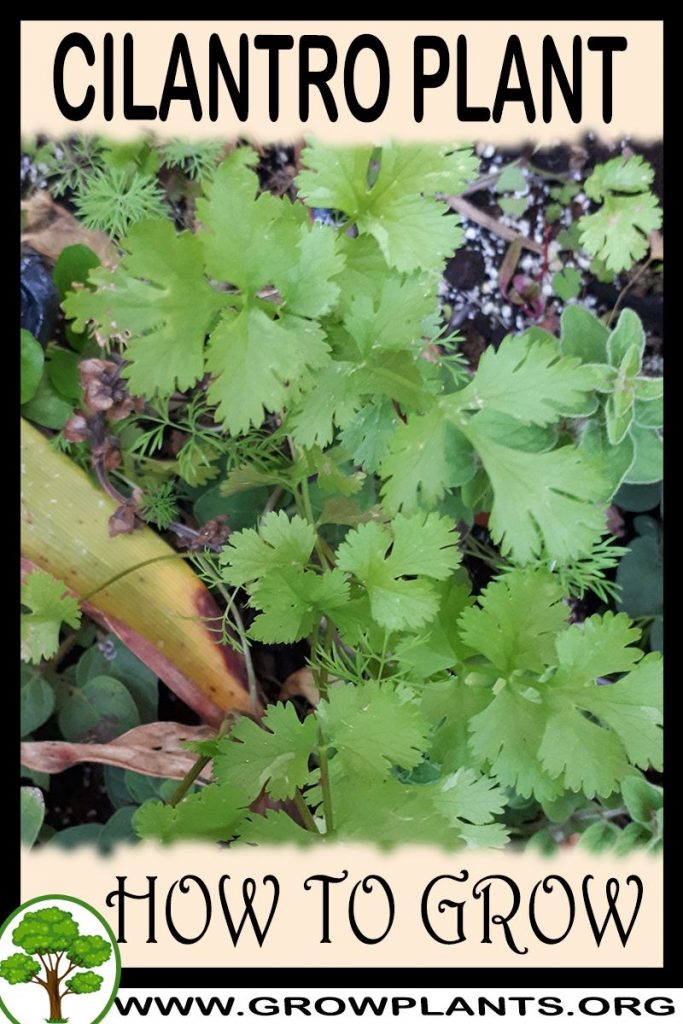
Plant Profile & Key Characteristics
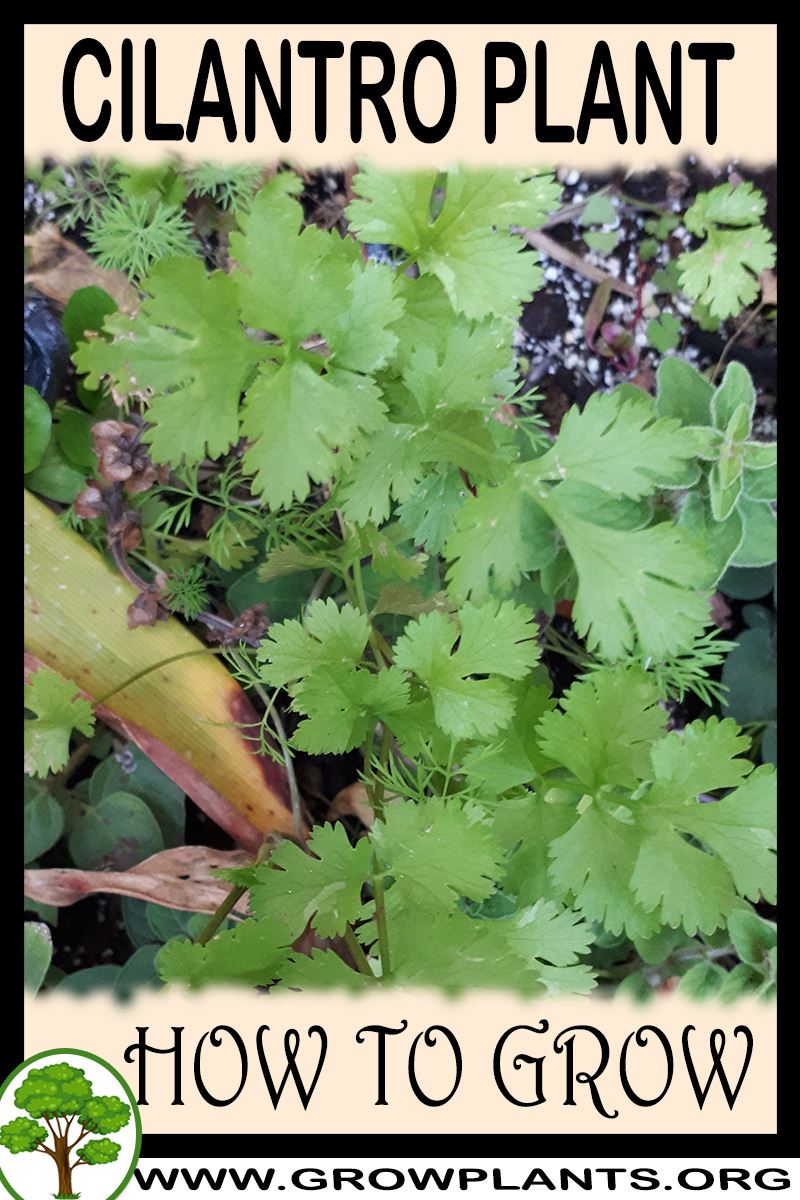
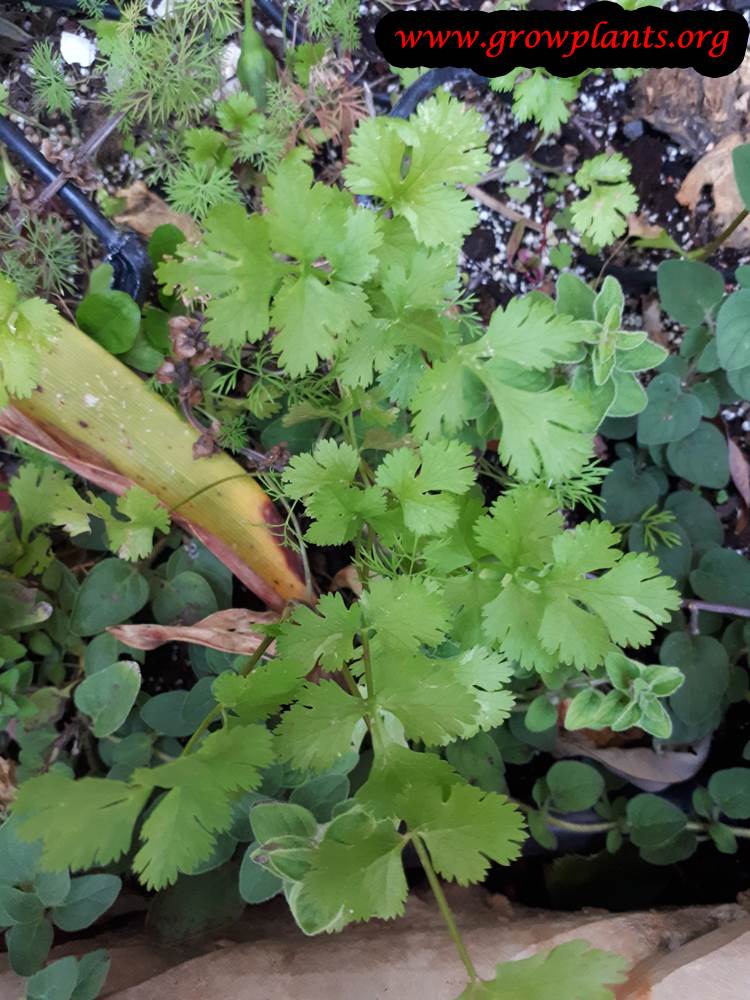
Overview: Cilantro (Coriandrum sativum) is a compact culinary herb growing 10-30 cm (4-12 in), with aromatic lobed leaves. It is grown as an annual or short biennial for its edible leaves, seeds and roots rather than for ornament.
Quick Specifications
| Specification | Attribute |
|---|---|
| Plant Type / Life Cycle | Annual, or biennial in cooler areas |
| Mature Size | 10-30 cm (4-12 in) |
| Growth Rate | Moderate to fast |
| Root System | Edible taproot, white with a yellowish skin |
| Toxicity | Non-toxic / edible |
| Hardiness | USDA zones 3-9 for spring sowing, zones 9-11 for autumn-to-winter cropping |
Growth Form & Structure
- Height & Spread: Low leafy rosette 10-30 cm (4-12 in), rising to a taller flowering stem; well suited to pots and window boxes.
- Growth Habit & Form: Upright herbaceous herb that quickly runs up to flower (bolts) in heat, after which leaf quality declines.
- Lifespan & Maturity: Fast-growing and short-lived; leaves can be cut within weeks, with seed following the same season.
Anatomy & Physical Features
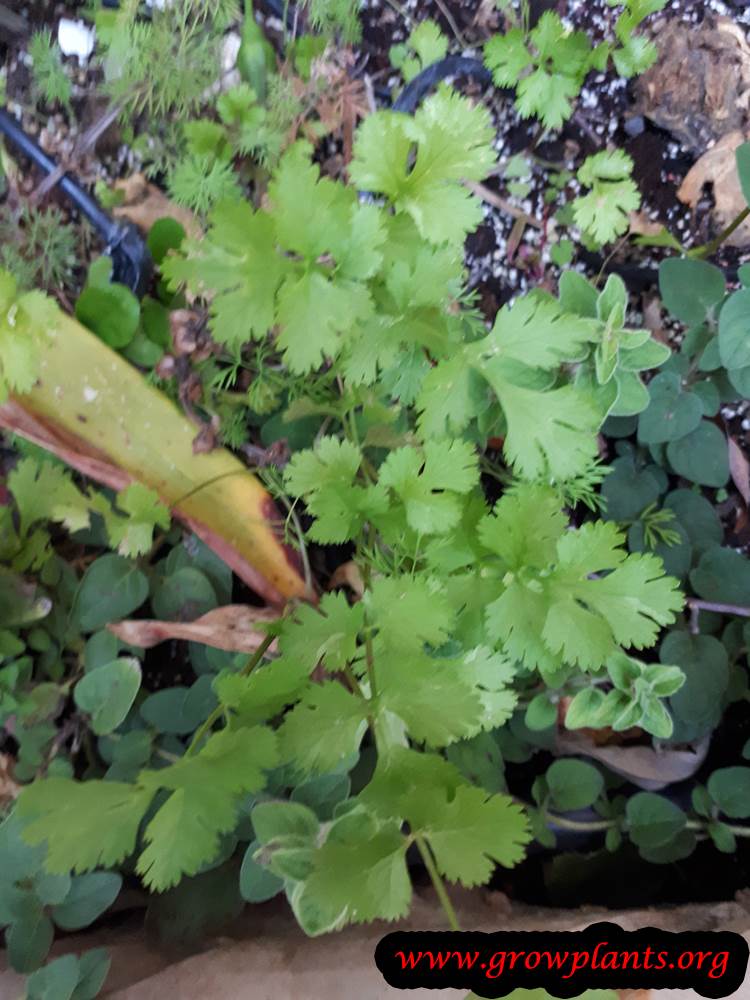
- Leaves & Foliage: Aromatic, lobed leaves with pointed edges, flat or curly, borne on slender stems.
- Flower Characteristics: Small white flowers in flat umbels, pollinated by bees.
Primary Uses & Landscape Value
- Edible Uses: Fresh leaves (cilantro) in salads and cooking, dried seeds as the spice coriander, and the cooked taproot in some Asian cuisines.
- Functional & Ornamental Roles: Culinary herb whose umbels also attract bees and beneficial insects.
Care Guide: Planting, Soil & Watering
Overview: A cool-season culinary herb. It grows best in moist, well-drained fertile soil with steady moderate watering, and bolts quickly in heat.
Quick Care Requirements
| Requirement | Ideal Condition |
|---|---|
| Planting Season | In the cool season – spring, or autumn to winter in warm and mild climates |
| Growth Rate | Fast to Moderate |
| Soil Type | Moist, fertile, well-draining |
| Water Need | Moderate – keep evenly moist |
Planting & Establishment
- Best Planting Season: Plant in spring, or in autumn to winter where summers are hot; cilantro prefers cool weather and dislikes transplanting, so sow or plant it in place.
- How to Plant:
- Hole Preparation: Make a shallow hole matching the taproot and root ball, with minimal root disturbance.
- Soil Amendments: Enrich with compost for lush leaf growth.
- Planting Depth: Set the crown at soil level, not buried.
- Growth Speed & Expectations: Fast; it reaches cutting size quickly but bolts to flower rapidly in heat.
Soil, Watering & Drainage Care
- Soil Mix & Drainage Needs: Moisture-retentive, well-drained soil; it grows well in a deep, well-drained pot that accommodates its taproot.
- Watering Schedule & Technique:
- Young / Newly Planted: Keep consistently moist.
- Established: Water regularly for even moisture – steady water delays bolting.
- Seasonal Adjustments: Water frequently in warm weather and less in cool conditions.
Climate, Light & Hardiness
Cilantro / coriander (Coriandrum sativum) is a fast-growing cool-season herb that thrives in mild weather and bolts quickly in heat or long days, and it grows in full sun to half shade. Young plants tolerate light frost, so in warm and desert climates it is grown through autumn and winter to keep it away from summer heat.
Quick Climate Specifications
| Climate Zones | Temperate, Mediterranean, subtropical and desert (autumn and winter) |
| USDA Hardiness Zones | About zones 3–9 (spring sowing) and 9–11 (autumn to winter sowing) |
| Optimal Temp Range | Cool to mild, roughly 15–24°C (59–75°F) |
| Frost Tolerance | Moderate (young plants tolerate light frost) |
| Light Conditions | Full sun to half shade |
| Wind Tolerance | Moderate |
Sunlight & Light Exposure
Optimal Light Setup
Full sun gives lush leaf growth in cool weather; in hot climates a little afternoon shade helps slow the rush to flower.
Temperature Extremes & Hardiness
USDA Hardiness & Regional Limits
It is a cool-season crop: sown in spring in cold-winter zones (about 3–9) and through autumn and winter in warm and desert zones (about 9–11) to dodge the heat.
Frost Sensitivity
It tolerates light frost, especially as young plants, but a hard freeze damages the foliage.
Extreme Heat Tolerance
Heat and long summer days trigger rapid bolting to seed, ending leaf production - the key climatic limit. Sow in succession during the cool season for a steady supply.
Wind, Humidity & Microclimate
Humidity Preferences
Moderate humidity suits it; hot, dry winds hasten bolting and leaf loss.
Microclimate Recommendations
A cool, bright spot - with light afternoon shade in hot climates - keeps it leafy for longer before it runs to seed.
Growing in Pots, Balconies & Indoors
Cilantro (Coriandrum sativum) is a fast, compact herb that is ideal for pots and for a steady supply of fresh leaves by the kitchen. The grower does not list it as a true houseplant, but it grows well on a bright, sunny windowsill and on any sunny to part-shaded balcony or patio.
Quick Details
- Container Size: Pot, 3-10 L; sow in succession for a steady supply
- Indoor Suitability: Not a true houseplant, but good on a bright, sunny kitchen sill
- Best Spot: Full sun to part shade; a little afternoon shade slows bolting in heat
- Soil & Drainage: Free-draining, organic-rich mix
- Watering in Pots: Keep evenly moist – it bolts quickly if it dries out or overheats
Indoors & On the Windowsill
- Houseplant limits: The grower does not rate it as an indoor plant; in weak light it stretches and runs to seed fast.
- Windowsill growing: On a bright, sunny sill it gives quick pickings of leaf – sow a fresh small batch every few weeks, as each plant is short-lived before it bolts.
On a Balcony or Patio
- Light & wind: Give it the sunniest spot you have. Walls, railings and paving reflect heat and dry pots quickly, so check moisture daily in warm weather and shelter or stake exposed plants against wind. A drip irrigation kit with a timer can take over that watering check automatically.
- Practicalities: Check that the filled pot’s weight is safe for the balcony and that drainage runoff can escape freely without pooling on the floor below.
Choosing the Pot, Soil & Long-Term Care
- Pot & drainage: A 3-10 L pot with strong drainage holes; skip a standing water saucer so the roots never sit wet. Terracotta breathes and dries faster, while glazed or plastic holds moisture longer.
- Potting mix: Well-aerated and organic-rich – a general potting mix, or peat/coir with perlite or vermiculite.
- Feeding: Potted plants need feeding more often than those in the ground because nutrients leach out with each watering – feed lightly through the growing season.
- Repotting: Refresh the mix or pot up about every couple of years; for perennials, lightly prune the root ball and top growth at the same time.
Fertilizing & Feeding
A light feeder grown for its aromatic leaves and seed: modest balanced feeding with restrained nitrogen keeps growth flavorful and slows bolting.
Quick Fertilizing Specs
| Feeding Level | Light feeder |
|---|---|
| Main Nutrient Priority | Modest, balanced feeding; avoid excess nitrogen that weakens aroma |
| Best Feeding Period | Through the active growing season |
| Organic Options | Compost or well-rotted organic matter worked into well-drained soil |
| Reduce/Stop Feeding | Ease back as the plant matures or the season ends |
| Soil pH | Well-drained soil in a slightly acidic to near-neutral range |
Feeding by Growth Stage
Establishment after sowing or planting
Settle seedlings or young plants in and get roots and first leaves growing.
| Nutrient direction | A gentle balanced feeding in soil with some organic matter to get growth going. |
|---|---|
| Timing | At and just after germination or transplanting. |
| Frequency | A light feeding as plants take hold. |
| Fertilizer types | A balanced complete fertilizer, Compost worked into well-drained soil |
| Precautions | Go easy on young seedlings; strong fertilizer can burn tender roots. |
Active growth
Keep aromatic foliage healthy and flavorful.
| Nutrient direction | A modest balanced feeding with restrained nitrogen keeps aromatic foliage flavorful. |
|---|---|
| Timing | Through the active growing season. |
| Frequency | Light feeding, sparingly, through the season. |
| Fertilizer types | A modest, restrained-nitrogen complete fertilizer, Compost as a light top-dressing |
| Precautions | Rich, high-nitrogen feeding gives lush but bland leaves and floppy growth, so feed sparingly. |
Flowering and seed set
Let the plant flower and ripen its seed.
| Nutrient direction | Little added nutrition is needed now; steady, restrained feeding lets seed mature. |
|---|---|
| Timing | As the plant bolts, flowers, and sets seed. |
| Frequency | Minimal feeding as flowering and seeding finish out. |
| Fertilizer types | A modest, restrained-nitrogen complete fertilizer, sparingly if at all |
| Precautions | Extra nitrogen now favors leaves over seed, so keep feeding minimal as seed ripens. |
Nutrient Deficiency Signs & Corrections
Older, lower leaves fade to pale green or uniform yellow and overall growth slows.
| Possible causes | low available soil nitrogen, nitrogen lost to leaching from heavy watering or rain, thin soil low in organic matter |
|---|---|
| Appears first on | older, lower leaves |
| What to check | recent feeding history, soil organic matter, watering and drainage |
| Possible correction | Apply a nitrogen-containing complete fertilizer and build soil organic matter, then water evenly. |
Leaf margins brown or scorch and growth stalls despite adequate watering.
| Possible causes | fertilizer salt buildup in the root zone, under-watering that concentrates salts, excessive or too-frequent feeding |
|---|---|
| Appears first on | leaf margins and tips |
| What to check | recent fertilizer amounts, watering consistency, drainage, especially in containers |
| Possible correction | Ease off feeding, water thoroughly to rinse accumulated salts, then return to lighter feeding. |
Pruning, Training & Seasonal Maintenance
Cilantro is a fast-growing, fast-bolting herb with no woody structure, so pruning here means two things: routine removal of dead leaves, and — more importantly for this species — pinching out the emerging flower stalk to delay bolting and extend the leaf harvest. Cilantro is notably quick to bolt under stress (heat, long daylength, or maturity), so unlike most herbs, actively managing that flowering stem is a real and specific part of maintaining this plant, not generic filler.
Quick Pruning & Maintenance Specs
| Pruning Tolerance | Moderate (pinching only; no woody structure) |
| Primary Pruning Window | Ongoing through the growing season, all year in mild climates |
| Main Objective | Delay bolting to extend leaf production; remove dead leaves |
| Best Tool Type | Precision snips |
| Avoid Heavy Pruning During | Peak heat stress — heavy leaf removal at that point accelerates the plant’s decline toward bolting rather than slowing it |
Special Growth to Remove
- The emerging central flower stalk — pinching it out as soon as it appears is the single most effective way to keep the plant producing leaves rather than running to seed
- Dead or damaged leaves, removed as they appear
Container & Small-Space Pruning
In containers, the same light approach applies: pinch flower stalks promptly and remove dead leaves; because the plant stays compact (10–30 cm), no size-control pruning is otherwise needed.
Tools
- Precision snips — all growth is soft and thin; every cut on this plant, from pinching the flower stalk to harvesting leaves, is fine work
Tool Hygiene & Disease Risk
Routine — clean, sharp snips are enough. Aphids are the recurring pest; no tool-spread disease risk is documented for this plant.
Common Pruning Mistakes
- Letting the central flower stalk develop unchecked, which shortens the useful leaf-harvest period
- Stripping most of the plant’s leaves at once during hot weather, which pushes an already bolt-prone plant toward flowering faster rather than slowing it down
When NOT to Prune
Avoid heavy, whole-plant leaf removal during hot weather or once the plant is already stressed and bolting — at that stage the plant is committing to seed production and further defoliation just weakens it without extending the harvest.
Recommended Tools (by task)
| Task | Tool Category | Why |
| Pinching the flower stalk and removing dead leaves | precision_snips | Every cut on this soft, fast-growing herb is fine work suited to a small snip |
Propagation Guide
Coriander is grown from seed sown where it is to grow, because the taproot dislikes transplanting and any disturbance hastens bolting. It comes true from seed and is Easy, the main knack being to sow in cool weather and keep it moist.
Quick Propagation Specs
| Best Propagation Method | Seed, direct-sown |
| Alternative Methods | None practical — it bolts if the root is disturbed |
| Propagation Difficulty | Easy |
| Seed True-to-Type | Yes, from open-pollinated seed |
| Best Propagation Season | Spring, or autumn to winter in warm zones (cool weather) |
| Seed Germination Time | Usually about 1–3 weeks |
| Seed Sowing Depth | About 1 cm (0.5 in) |
Growing from Seed
Seed Handling & Viability
Each dry “seed” is a two-seeded mericarp; gently splitting or crushing it, and a short soak, can speed and even out germination.
Sowing Season
Sow in spring, or in autumn to winter in warm zones; sow in succession, as plants are short-lived and run to seed quickly.
Sowing Depth & Spacing
Sow about 1 cm (0.5 in) deep directly in place and thin the seedlings rather than transplanting the taproot.
Germination Conditions
Keep the soil moist; cool weather suits germination and delays bolting.
Germination Time
Seedlings usually appear in about 1–3 weeks.
Seedling Care
Thin to final spacing and avoid disturbing the roots, which brings on flowering.
Bloom & Edible Flower Guide
Quick Details
- Bloom Season: Spring and summer, triggered by heat and lengthening days
- Time to First Bloom: Within the first season – warm weather makes it bolt quickly, often within a couple of months
- Flower Appearance: Small white (sometimes pale pink) flowers in loose umbels
- Edibility: Edible – the flowers are edible and carry a mild, fresh coriander flavour
Detailed Blooming Overview
Cilantro bolts as soon as the weather warms, running up to flower and setting the leaf harvest back. The upside is that the small white umbels are pretty, delicately flavoured and edible – many cooks scatter them over dishes as a garnish before the plant goes to seed.
Flower Characteristics
- Small white to pale-pink flowers arranged in open umbels.
- Delicately flavoured, echoing the leaf on a lighter note.
Bloom Care & Thinning
- Managing the bloom: If you want leaves, pinch out flower stalks and keep plants cool and watered; if you want flowers or seed, let it run.
- Pollination: Carried out by bees and other small insects.
- Using the flowers: Pick freshly opened blooms and use them raw as a garnish for the best flavour.
Fruit & Uses
Cilantro offers three distinct edible parts – leaf, root, and seed – each used differently in cooking. The fresh leaf and root are used mainly in savory cooking, while the dried seed (sold as ‘coriander’) is a separate spice with a very different flavor.
Quick Edible Specs
| Edible Parts | Leaves; Root; Seeds |
| Main Use(s) | Culinary herb (leaves); root vegetable, especially in Southeast Asian cooking (root); spice (seeds) |
| Eaten Raw or Cooked | Leaves: raw or cooked; Root: cooked; Seeds: used dried, whole or ground |
| Preparation Required | None for leaves beyond washing; root is cooked; seeds are dried before use |
| Harvest Season | Leaves: nearly year-round; Root: spring or autumn |
| Time to First Harvest | After the plant is established; note it can bolt to flower quickly in some conditions, shortening the leaf-harvest window |
| Storage | Dried seed stores well |
| Safety/Toxicity Caveat | None reported |
Leaves & Greens
The lobed, pointed-edge leaves (flat or curly depending on variety) – commonly known as cilantro – are cut once the plant is established, taking all or part of the foliage. They’re used fresh in salads and raw preparations, or cooked, and work as both an herb and a spice.
Roots & Tubers
The white, yellow-skinned taproot is also edible and can be pulled in spring or autumn. It’s used cooked, and is a classic ingredient in Southeast Asian dishes such as curry pastes, where the root’s flavor is more concentrated than the leaf’s.
Seeds, Pods & Nuts
The brown-shelled seeds – known as coriander once dried – are a separate edible part from the fresh leaf, with a warm, citrusy flavor distinct from the leaf’s fresh, herbal one. They are used whole or ground as a spice in a wide range of cooked dishes.
Harvesting
Leaves can be cut nearly year-round once established. In some conditions the plant bolts and flowers quickly, which shortens the leaf-harvest window and shifts the plant toward seed production; pruning off flowering stems can help extend leaf harvest. Root harvest is best in spring or autumn; taking the root ends the plant’s leaf production.
Preparation, Uses & Safety
Leaves need no preparation beyond washing; root is cooked rather than eaten raw; seeds are dried and used whole or ground. No toxicity concerns are reported. Because leaf, root, and seed all come from the same plant, harvesting one – especially the root, or letting the plant bolt to set seed – reduces or ends the others.
Pests, Diseases & Troubleshooting
Overview: Cilantro/coriander is a fast, cool-season culinary annual whose soft leaves attract aphids, whitefly and occasional caterpillars, while its main diseases are bacterial leaf spot, powdery mildew, damping-off and the aphid-borne carrot motley dwarf virus. Its most frequent “problem,” though, is abiotic: bolting to seed in heat. As an edible herb, use cultural and low-residue controls and observe harvest intervals.
Quick Troubleshooting Overview
| Issue / Pest | Main Symptom | Primary Solution |
|---|---|---|
| Aphids | Sticky, curled new leaves; honeydew | Water jet, insecticidal soap, beneficials |
| Whitefly | White flies rise when disturbed; yellowing | Sticky traps, insecticidal soap |
| Caterpillars / armyworms | Chewed leaves and stems; frass | Hand-pick, Bt spray |
| Bacterial leaf spot | Angular water-soaked/brown spots on leaves | Clean seed, dry foliage, airflow, copper |
| Powdery mildew | White powder on leaves in humidity/crowding | Airflow, base water, sulfur/bicarbonate |
| Bolting (heat) | Rapid flowering, bitter thin leaves | Sow in cool season, shade, succession-sow |
Common Pests & Management
- Aphids (Myzus persicae, Hyadaphis spp.):
- Symptoms: Soft green clusters on new leaves, stems and flower heads; curling, yellowing, honeydew and virus transmission (including carrot motley dwarf).
- Prevention & Control: Blast off with water and support lady beetles, lacewings and hoverflies; insecticidal soap clears heavy colonies. As it’s an edible, prefer these low-residue tools and rinse leaves before eating.
- Whitefly (Trialeurodes/Bemisia spp.):
- Symptoms: Tiny white flies rising when the plant is disturbed; nymphs on undersides cause yellowing and honeydew.
- Prevention & Control: Use yellow sticky traps to monitor and reduce adults, spray insecticidal soap on undersides, and support parasitic wasps.
- Armyworms & leaf-eating caterpillars (Spodoptera and others):
- Symptoms: Chewed leaves and stems, sometimes cutting seedlings, with dark frass; can strip tender plants.
- Prevention & Control: Hand-pick at dusk, use transplant collars against cutworms, and apply Bacillus thuringiensis (Bt) for selective caterpillar control.
- Leafhoppers (Macrosteles spp.):
- Symptoms: Small hopping insects that stipple leaves and can vector aster yellows and the carrot-family viruses.
- Prevention & Control: Manage weeds, hose foliage, encourage predators, and use insecticidal soap or neem on nymphs; controlling them limits virus spread.
- Spider mites (Tetranychus spp.):
- Symptoms: Fine stippling and bronzing with faint webbing on heat-stressed plants late in the season.
- Prevention & Control: Keep soil moist, hose the undersides, and use insecticidal soap if mites appear; heat-stressed cilantro is more prone.
Diseases & Fungal Issues
- Bacterial leaf spot (Pseudomonas syringae pv. coriandri):
- Symptoms: Angular, water-soaked spots that turn brown-black, often limited by leaf veins, spreading fast in cool, wet, splashy conditions; a major seed-borne disease of coriander.
- Treatment & Management: Start with certified clean seed, avoid overhead watering and working among wet plants, space for airflow, rotate, and remove infected debris; copper sprays give some protection but sanitation and clean seed are primary.
- Powdery mildew (Erysiphe spp.):
- Symptoms: White powdery coating on leaves and stems in crowded, humid plantings; leaves yellow and lose quality.
- Treatment & Management: Space plants, water at the base, harvest regularly for airflow, and treat with sulfur or potassium-bicarbonate, observing edible-harvest intervals.
- Damping-off & root rot (Pythium/Rhizoctonia):
- Symptoms: Seedlings rot at the soil line and collapse, or established plants wilt with rotted roots, in cold, wet, overcrowded soil.
- Treatment & Management: Sow in warm, well-drained soil at proper spacing, avoid overwatering, and provide airflow; use clean containers and media.
- Carrot motley dwarf & other aphid-borne viruses:
- Symptoms: Yellowing, reddening and stunting spread by aphids from carrot-family plants.
- Treatment & Management: There is no cure — control aphids, remove infected plants, and manage nearby weed/carrot hosts.
Growing Difficulties & Abiotic Problems
- Bolting in heat — the main issue
- Cause & Symptoms: Cilantro runs quickly to flower and seed in heat or long days, leaving thin, bitter, sparse leaves; often mistaken for a disease.
- Correction Strategy: Sow in the cool season, provide afternoon shade in warm climates, keep soil evenly moist, choose slow-bolt varieties, and succession-sow every few weeks for a steady leaf supply.
- Poor germination / transplant shock
- Cause & Symptoms: Coriander resents root disturbance and can germinate erratically.
- Correction Strategy: Direct-sow into the final position in cool, moist soil, keep seedbeds damp, and avoid transplanting established plants.
- Nutrient chlorosis
- Cause & Symptoms: Pale, yellow leaves in poor or waterlogged soil.
- Correction Strategy: Feed lightly with a balanced fertilizer and ensure good drainage; avoid overfeeding, which weakens flavor.
- Leaf scorch / drought stress
- Cause & Symptoms: Crisp brown leaf edges when heat-stressed or allowed to dry out.
- Correction Strategy: Keep soil consistently moist and provide light shade in hot spells to prolong tender leaf growth.
What Helps – Products & Tools
Because cilantro is eaten, favor cultural and low-residue tools and observe harvest intervals. Insecticidal soap and neem handle aphids, whitefly and mites; yellow sticky traps monitor whitefly, and Bacillus thuringiensis (Bt) targets caterpillars. Against disease, rely on clean seed, base watering, spacing and rotation, with sulfur or potassium-bicarbonate for powdery mildew and copper for bacterial leaf spot — all with attention to the harvest interval. Follow the label and protect pollinators.