



Plant Profile & Key Characteristics
Overview: Carrot is a cool-season root vegetable grown as an annual (biennial to flower) for its sweet, edible taproot; its ferny leaves are also edible. Roots are usually orange but range through many colours.
Quick Specifications
| Specification | Attribute |
|---|---|
| Plant Type / Life Cycle | Annual (biennial to flower) |
| Mature Size | Foliage 20-50 cm (8-20 in); taproot 4-30 cm (2-12 in) |
| Growth Rate | Moderate |
| Root System | Taproot (edible storage root) |
| Toxicity | Non-toxic / edible |
| Hardiness | USDA zones 3-8 (spring), 8-11 (autumn planting) |
Growth Form & Structure
- Height & Spread: Foliage 20-50 cm over a 4-30 cm taproot; suits deep containers.
- Growth Habit & Form: Leaf rosette over a swollen taproot.
- Lifespan & Maturity: Annual to harvest (about 70-100 days); flowers in the second year.
Anatomy & Physical Features
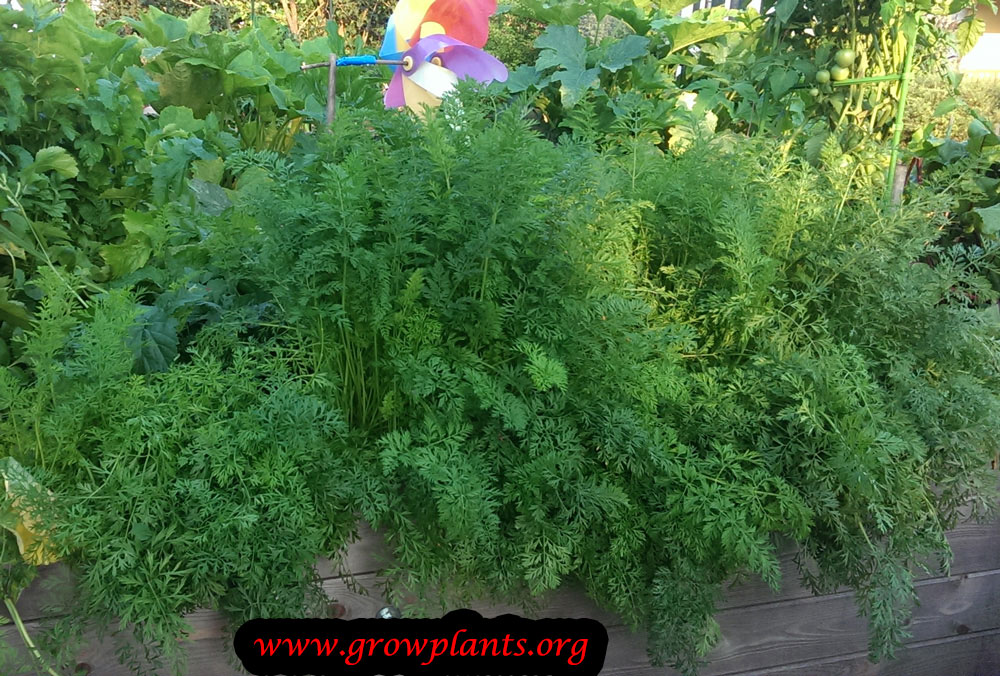
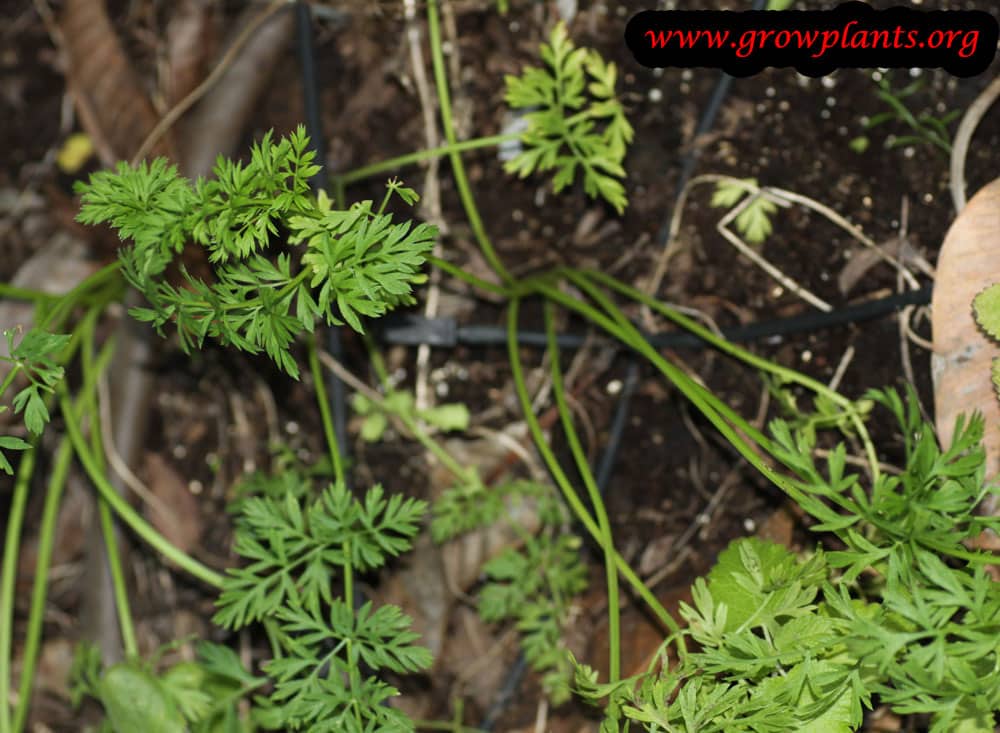
- Leaves & Foliage: Fine, pinnate, ferny green leaves.
- Flower Characteristics: Small white flowers in a flat umbel (in the second year); bee-pollinated.
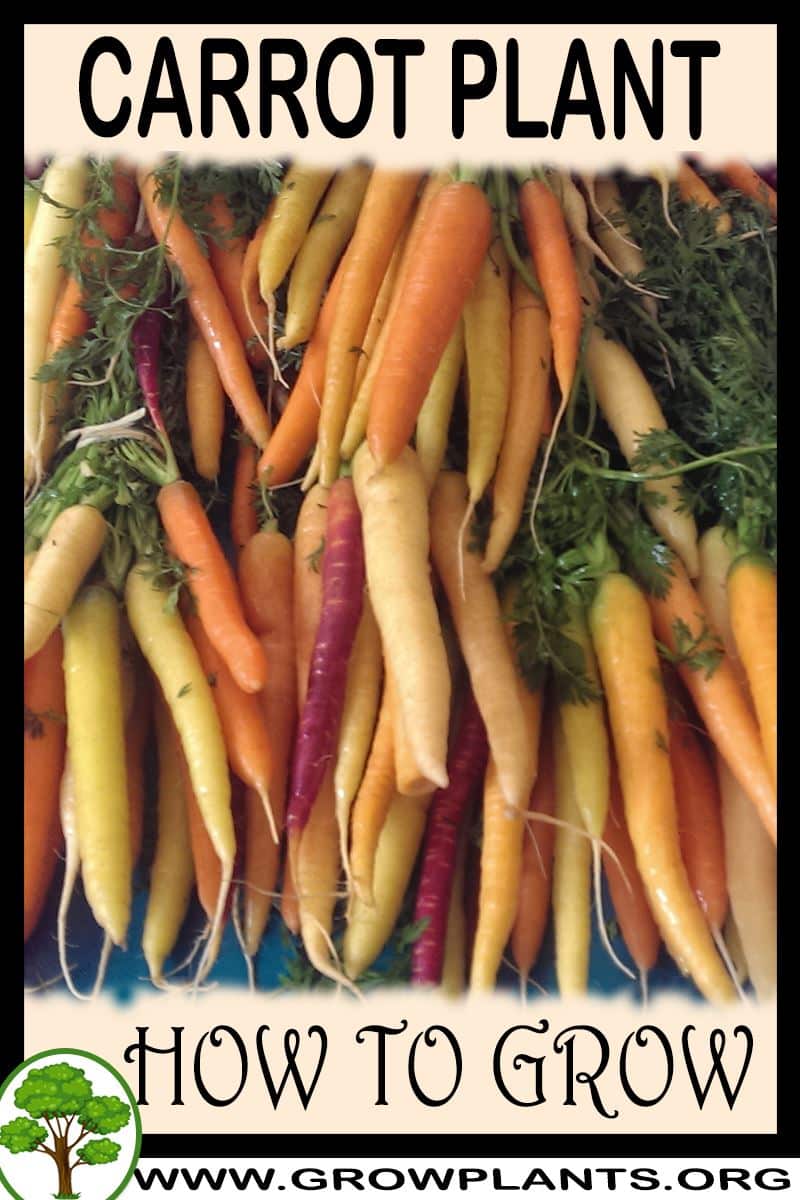
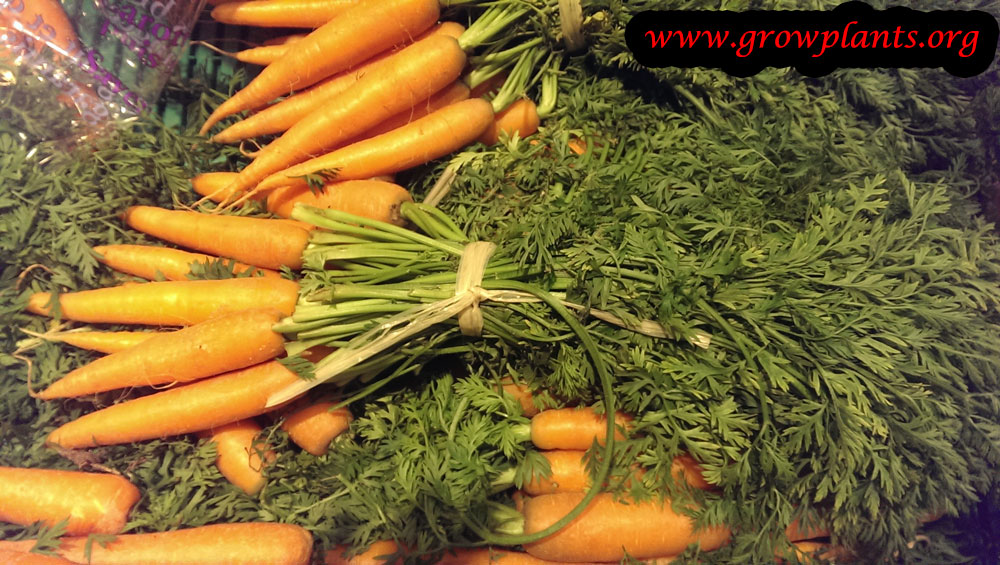
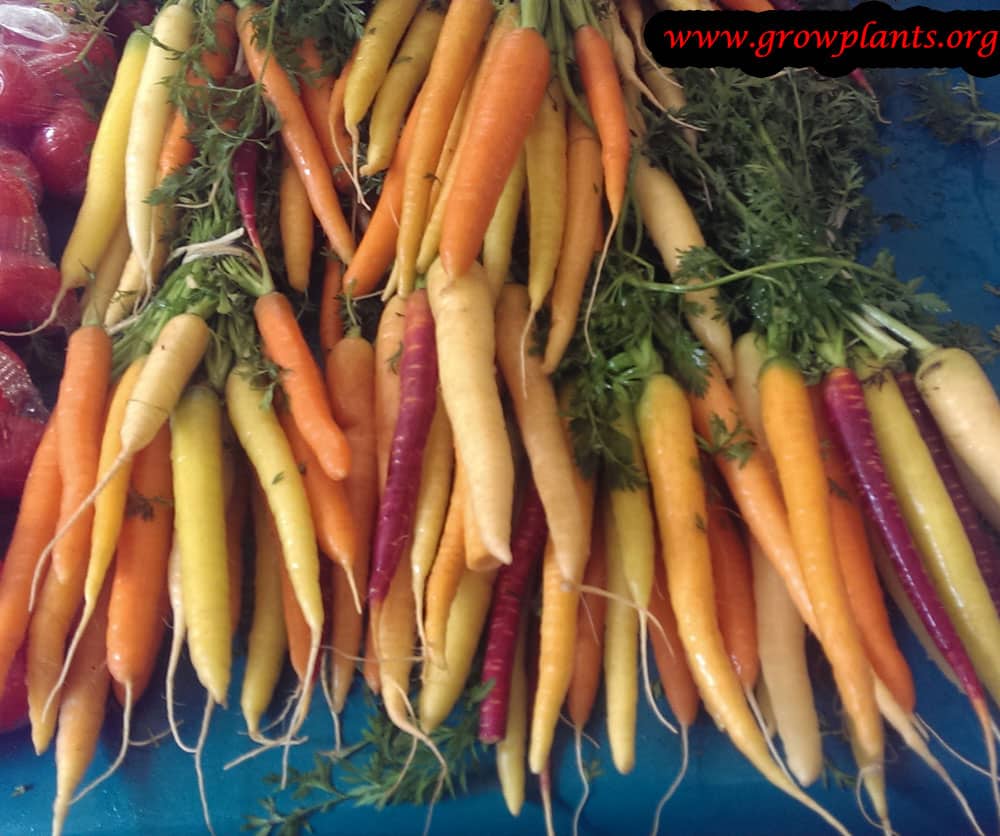
- Fruit Profile: The cone-shaped taproot is the main harvested part – usually orange but also white, yellow, red, purple or black.
Primary Uses & Landscape Value
- Edible Uses: Taproot eaten raw or cooked; young leaves in salad, mature leaves cooked, in quiche or stir-fried.
- Functional & Ornamental Roles: Containers; ferny ornamental foliage.
Care Guide: Planting, Soil & Watering
Overview: Carrots are a cool-to-mild-season root crop grown in full sun that need deep, loose, stone-free soil to form long, straight roots. Light, airy, well-drained ground and steady, even moisture give the best crop.
Quick Care Requirements
| Requirement | Ideal Condition |
|---|---|
| Planting Season | Autumn in frost-free areas, or spring where winters are cold |
| Growth Rate | Moderate |
| Soil Type | Deep, light, airy, stone-free and well-draining |
| Soil pH | Slightly acidic to neutral (about 6.0-6.8) |
| Water Need | Moderate; keep the soil evenly moist |
Planting & Establishment
- Best Planting Season: Sow in autumn in frost-free areas or in spring in temperate zones (hardiness zone 3-8 in spring, 8-11 in autumn); carrots are direct-sown where they are to grow rather than transplanted.
- How to Plant:
- Hole Preparation: No planting hole – sow seed directly into deep, finely raked, stone-free soil about 1-2 cm deep, thinning seedlings to 5-10 cm apart.
- Soil Amendments: Avoid fresh manure and lumpy compost, which cause forked roots; work the soil deep and loose, removing stones and hard clods.
- Planting Depth: Sow shallowly, about 1-2 cm deep, and keep the surface moist until germination, which takes 7-20 days.
- Growth Speed & Expectations: A steady grower; roots reach about 4-30 cm over the season, and thin sowing plus loose soil are the keys to a good yield.
Soil, Watering & Drainage Care
- Soil Mix & Drainage Needs: Above all needs deep, loose, airy soil free of stones so roots grow straight; possible in a deep container of light, sandy mix.
- Watering Schedule & Technique:
- Young / Newly Planted: Keep the seedbed evenly moist for even germination and steady early growth.
- Established: Water regularly and evenly – irregular watering after dry spells causes roots to split.
- Seasonal Adjustments: More water in warm, dry weather; steady moisture in cool growing conditions.
Climate, Light & Hardiness
Carrot (Daucus carota subsp. sativus) is a cool-season root vegetable that develops the best colour and sweetness in cool-to-mild weather and full sun. It tolerates light frost - which can even improve flavour - but high heat spoils root quality, so it is timed for the cooler part of the year.
Quick Climate Specifications
| Climate Zones | Mediterranean, subtropical and temperate; a cool-season crop |
| USDA Hardiness Zones | Grown across about zones 3–11, timed by season (spring in zones 3–8, autumn to winter in zones 8–11) |
| Optimal Temp Range | Cool, roughly 16–21°C (61–70°F) |
| Frost Tolerance | Moderate (light frost is tolerated and can sweeten the roots) |
| Light Conditions | Full sun |
Sunlight & Light Exposure
Optimal Light Setup
Full sun gives the best root development; in too much shade the plants make leafy tops and small, poor roots.
Temperature Extremes & Hardiness
USDA Hardiness & Regional Limits
Carrots are grown in the cool part of the year: sown in spring in cold-winter zones (about 3–8) and through autumn and winter in mild zones (about 8–11). Heat, rather than cold, sets the practical limit.
Frost Sensitivity
Seedlings and roots tolerate light frost, and a spell of cold weather tends to make the roots sweeter. A hard freeze can, however, damage exposed roots and cut down the tops.
Extreme Heat Tolerance
High temperatures - roughly the upper 20s Celsius (80s Fahrenheit) and above - give paler, less sweet, sometimes bitter roots and encourage bolting, which is why carrots are grown as a cool-season crop.
Wind, Humidity & Microclimate
Humidity Preferences
Moderate humidity is fine; the crop is not fussy about air moisture, but steady, even soil moisture prevents the roots from splitting.
Microclimate Recommendations
A deep, loose, stone-free bed in an open, sunny position gives the straightest roots; even watering and cool weather matter more than shelter.
Growing in Pots, Balconies & Indoors
Carrots grow well in a deep container as long as the pot is loose and stone-free enough for the roots to run straight down. They are not houseplants – the light indoors is too weak for a good root – but a large, deep pot on a sunny balcony or patio, or a very bright sill, will give you a crop of short or round cultivars.
Quick Details
- Container Size: Deep pot, at least 30 cm / 20 L, deeper for long types
- Indoor Suitability: Not a houseplant; only a very sunny sill, and short/round types crop best
- Best Spot: Full sun
- Soil & Drainage: Loose, stone-free, free-draining mix – stones and lumps fork the roots
- Watering in Pots: Keep evenly moist; steady water gives even, unsplit roots
Indoors & On the Windowsill
- Houseplant limits: The grower marks it as not an indoor plant – a room’s light is too weak to swell a good root.
- Windowsill growing: On the sunniest sill you can find, choose short or round (‘baby’ type) cultivars in a deep pot; long types need more light and depth than a sill gives.
On a Balcony or Patio
- Light & wind: Give it the sunniest spot you have. Walls, railings and paving reflect heat and dry pots quickly, so check moisture daily in warm weather and shelter or stake exposed plants against wind. A drip irrigation kit with a timer can take over that watering check automatically.
- Practicalities: Check that the filled pot’s weight is safe for the balcony and that drainage runoff can escape freely without pooling on the floor below.
Choosing the Pot, Soil & Long-Term Care
- Pot & drainage: A deep pot of at least 30 cm / 20 L with strong drainage holes; skip a standing water saucer so the roots never sit wet. Terracotta breathes and dries faster, while glazed or plastic holds moisture longer.
- Potting mix: Well-aerated and organic-rich – a general potting mix, or peat/coir with perlite or vermiculite.
- Feeding: Potted plants need feeding more often than those in the ground because nutrients leach out with each watering – feed lightly through the growing season.
- Repotting: Refresh the mix or pot up about every couple of years; for perennials, lightly prune the root ball and top growth at the same time.
Fertilizing & Feeding
A moderate feeder: carrots want steady, moderate feeding that leans toward potassium as roots bulk, with restrained nitrogen so the plant makes good roots rather than lush tops, and feeding stopped as roots finish. A fertilizer formulated for tomatoes and vegetables supports that feeding pattern through harvest.
Quick Fertilizing Specs
| Feeding Level | Moderate feeder |
|---|---|
| Main Nutrient Priority | Balanced feeding leaning toward potassium as roots bulk; go easy on nitrogen |
| Best Feeding Period | Through the active growing season until roots approach harvest size |
| Organic Options | Well-rotted compost worked in ahead of sowing, not fresh manure |
| Reduce/Stop Feeding | Stop feeding as roots finish sizing, ahead of harvest |
| Soil pH | Loose, stone-free, well-drained soil that is slightly acidic |
Feeding by Growth Stage
Establishment after sowing
Get seedlings up and rooting into loose, well-prepared soil.
| Nutrient direction | A gentle balanced feeding in soil enriched with well-rotted compost to start growth. |
|---|---|
| Timing | From sowing through seedling establishment. |
| Frequency | A light feeding as seedlings establish. |
| Fertilizer types | A balanced complete fertilizer, Well-rotted compost worked in before sowing |
| Precautions | Use well-rotted, not fresh, organic matter; rough or over-rich soil causes forked, hairy roots. |
Leafy canopy growth
Build enough healthy top growth to power the developing root.
| Nutrient direction | Moderate, restrained-nitrogen balanced feeding for healthy tops without excess leaf. |
|---|---|
| Timing | Through the early and mid growing season as tops develop. |
| Frequency | Light, steady feeding as the canopy fills in. |
| Fertilizer types | A balanced complete fertilizer, Compost as a light side-dressing |
| Precautions | Avoid heavy nitrogen, which makes big leafy tops and small, forked, or split roots. |
Root bulking
Support steady sizing of a smooth, well-shaped root.
| Nutrient direction | Lean the feeding toward potassium to support firm root development. |
|---|---|
| Timing | As the roots swell through the mid to late season. |
| Frequency | Light feeding leaning toward potassium as roots size up. |
| Fertilizer types | A complete fertilizer with adequate potassium, Compost as a side-dressing |
| Precautions | Keep nitrogen restrained now and moisture even to avoid splitting and forking. |
Maturation before harvest
Let the roots finish and firm up before lifting.
| Nutrient direction | None – withhold fertilizer while the plant is not in active growth. |
|---|---|
| Timing | As roots reach full size in the final stretch before harvest. |
| Frequency | No feeding at this stage; resume only when active growth returns. |
| Fertilizer types | No feeding at this stage; do not fertilize until active growth resumes. |
| Precautions | Do not fertilize now; feeding a plant that is not actively growing wastes nutrients and risks salt buildup. |
Nutrient Deficiency Signs & Corrections
Older, lower leaves fade to pale green or uniform yellow and overall growth slows.
| Possible causes | low available soil nitrogen, nitrogen lost to leaching from heavy watering or rain, thin soil low in organic matter |
|---|---|
| Appears first on | older, lower leaves |
| What to check | recent feeding history, soil organic matter, watering and drainage |
| Possible correction | Apply a nitrogen-containing complete fertilizer and build soil organic matter, then water evenly. |
Older leaf margins yellow and then scorch and brown.
| Possible causes | low soil potassium, excess nitrogen unbalancing the feeding, sandy soil prone to leaching |
|---|---|
| Appears first on | older leaf margins |
| What to check | balance of recent feeding, soil texture and leaching, overall plant vigor |
| Possible correction | Use a complete fertilizer that supplies adequate potassium and avoid overloading nitrogen. |
Leaf margins brown or scorch and growth stalls despite adequate watering.
| Possible causes | fertilizer salt buildup in the root zone, under-watering that concentrates salts, excessive or too-frequent feeding |
|---|---|
| Appears first on | leaf margins and tips |
| What to check | recent fertilizer amounts, watering consistency, drainage, especially in containers |
| Possible correction | Ease off feeding, water thoroughly to rinse accumulated salts, then return to lighter feeding. |
Pruning, Training & Seasonal Maintenance
Carrot is a taproot vegetable with no woody framework, so there is no structural pruning to speak of — what growers call “pruning” here is really foliage sanitation: removing dead or infected leaves as they appear, at any point in the season. The plant tolerates this light, ongoing trimming well, but the top growth is what feeds the developing root, so the objective is always removal of specifically unhealthy foliage rather than any general thinning or shaping of the canopy.
Quick Pruning & Maintenance Specs
| Pruning Tolerance | Low (sanitary only; no structural pruning) |
| Primary Pruning Window | Any time through the growing season, as needed |
| Main Objective | Remove dead or infected leaves; preserve healthy foliage feeding the root |
| Best Tool Type | Precision snips |
| Avoid Heavy Pruning During | Active root sizing — do not strip healthy green foliage at any stage |
Special Growth to Remove
- Dead or pest/disease-damaged leaves, removed at the base as they appear
- In second-year (seed) plants left to bolt, the developing flower stalk is not removed — it is the point of leaving the plant in a second year
Container & Small-Space Pruning
Carrots are commonly grown in deep containers for the taproot; foliage care is the same light sanitary removal as in-ground, with no size-control pruning needed since the plant’s above-ground growth stays modest (leaves typically 20–50 cm) relative to most container vegetables.
Tools
- Precision snips — the only cutting this plant needs is removing individual damaged leaves
Tool Hygiene & Disease Risk
Routine — clean, sharp snips are enough for occasional leaf removal. Caterpillars and aphids are the recurring pest pressure, not tool-spread disease.
Common Pruning Mistakes
- Stripping healthy green leaves along with damaged ones, which reduces the leaf area feeding the developing root
- Treating this as a plant that needs shaping or thinning cuts, which it does not
When NOT to Prune
Do not remove healthy young leaves during active root sizing — the taproot depends on that foliage, and unnecessary leaf removal can set back root development. If growing a plant on to seed (its biennial second-year stage), leave the flowering stalk untouched.
Recommended Tools (by task)
| Task | Tool Category | Why |
| Removing dead or damaged leaves | precision_snips | The only cut this root vegetable ever needs is removal of individual unhealthy leaves |
Propagation Guide
Carrots are grown from seed sown directly where they are to grow — the taproot must never be transplanted — and open-pollinated varieties come true while F1 hybrids do not. Being biennial, plants flower and set seed only in a second season; overall Easy to Moderate, with even germination the main challenge.
Quick Propagation Specs
| Best Propagation Method | Seed, direct-sown |
| Alternative Methods | None — transplanting deforms the root |
| Propagation Difficulty | Easy to Moderate |
| Seed True-to-Type | Open-pollinated varieties come true; F1 hybrids do not; seed forms in the second (biennial) year |
| Best Propagation Season | Autumn in frost-free areas; spring in temperate climates |
| Seed Germination Time | 7–20 days |
| Seed Sowing Depth | 1–2 cm (about 0.5–0.75 in), only just covered |
Growing from Seed
Seed Handling & Viability
Store the seed in a dry, dark place until sowing.
Sowing Season
Sow in autumn in frost-free areas or in spring in temperate climates.
Sowing Depth & Spacing
Sow 1–2 cm deep and only just cover the seed, which does not need deep burying; thin or space seedlings to about 5–10 cm (2–4 in) apart.
Germination Conditions
Keep the surface constantly moist — carrot seed is slow and fails if the soil dries out — in airy, stone-free ground.
Germination Time
Seedlings emerge in about 7–20 days.
Seedling Care
Thin to final spacing early and grow on in loose, stone-free soil so the taproot runs straight.
Saving Seed
To save true seed from an open-pollinated variety, leave selected roots in the ground to overwinter and flower the following year.
Bloom & Flower Guide
Quick Details
- Bloom Season: Summer, in the plant”s second year
- Time to First Bloom: The second season – carrot is biennial and normally lifted long before it flowers
- Flower Appearance: White flowers in a flat, lacy umbel (the classic Queen Anne”s lace head)
- Edibility: The flower is not the eaten part – carrot is grown for its taproot
Detailed Blooming Overview
Carrot (Daucus carota) is grown for its root and is almost always harvested in its first season, so most gardeners never see it bloom. Left in the ground into a second year it bolts and throws up a tall stalk topped with a lacy white umbel.
Flower Characteristics
- Many tiny white flowers packed into a flat-topped umbel.
- Often a single dark floret sits at the centre of the head.
Bloom Care & Thinning
- Managing the bloom: For a good root, lift the carrot before it starts to bloom – once it bolts the root turns woody. Leave a few plants to flower only if you want seed.
- Pollination: Carried out by bees and other insects visiting the umbels.
Fruit & Uses
The cone-shaped taproot is the primary edible part of the carrot, eaten raw or cooked; the leafy tops are also edible and can be used as a green. Both parts need no more than washing (and peeling the root, if desired) before eating.
Quick Edible Specs
| Edible Parts | Taproot; Leaves (tops) |
| Main Use(s) | Culinary – fresh eating, cooking, salads (root); cooked or raw green (leaves) |
| Eaten Raw or Cooked | Both (root and leaves) |
| Preparation Required | None beyond washing/peeling the root; young leaves for salad, mature leaves better cooked |
| Harvest Season | Root: once sized up, before the plant bolts; Leaves: most of the year in warm climates, spring through autumn in cooler ones |
| Time to First Harvest | A few months after sowing, varying by cultivar – see Sowing/Varieties for specifics |
| Storage | Root stores well after lifting if kept cool |
| Safety/Toxicity Caveat | None reported |
Roots & Tubers
The cone-shaped taproot is the main harvest – colors range from the familiar orange through white, yellow, red, pink, burgundy, purple, or black, and some varieties show contrasting rings. Roots are pulled once they reach usable size, ideally before the plant begins to bolt and flower, since flowering diverts energy from the root. Once lifted, the root is eaten raw or cooked in a wide range of dishes.
Leaves & Greens
The narrow, feathery green (sometimes purple-tinged) leaves are also edible and are trimmed at the base near the root. Young leaves are better for salads eaten raw, while older, more mature leaves are best cooked – used in quiches, stir-fries, or other cooked dishes.
Harvesting
Roots are typically ready within a few months of sowing, sooner or later depending on the cultivar, and are best pulled before flowering begins. Leaf harvest can continue over a longer window – most of the year in mild climates, or spring through autumn where winters are cold.
Preparation, Uses & Safety
The taproot needs no special preparation beyond washing (and peeling if desired) and is used raw or cooked in salads, sides, and countless cooked dishes. Leaves are used raw when young or cooked when mature. No toxicity concerns are reported.
Pests, Diseases & Troubleshooting
Carrots are mostly trouble-free above ground, but their signature pest is the carrot rust (root) fly, whose maggots tunnel the roots; carrot-willow aphids (virus vectors), cutworms and armyworms (the source’s ‘caterpillar/prodenia’), root-knot nematodes and swallowtail caterpillars also occur. Foliar diseases are usually minor. The most common complaints are abiotic – forked, split or stunted roots and low yields from stony soil, fresh manure, crowding or irregular watering.
Quick Troubleshooting Overview
| Issue / Pest | Main Symptom | Primary Solution |
|---|---|---|
| Carrot rust fly | Rusty tunnels and grubs in roots; reddened tops | Mesh barrier, rotate, sow to dodge peaks |
| Aphids | Colonies on foliage; virus spread | Water-jet, beneficials, insecticidal soap |
| Cutworms / armyworm | Severed seedlings, chewed tops | Weed control, hand-pick, Bt for foliage feeders |
| Forking / splitting | Forked, hairy or split roots | Loose stone-free soil, no fresh manure, even water |
| Aster yellows | Reddened, twisted tops; hairy, bitter roots | Control leafhoppers, remove infected plants |
Common Pests & Management
- Carrot rust fly (Chamaepsila rosae):
- Symptoms: Creamy maggots tunnel rusty-brown galleries through the roots, which crack and rot; foliage may turn reddish and stunted. The low-flying females are drawn by the scent of bruised carrot foliage – the key pest of the crop.
- Prevention & Control: Surround the bed with a fine mesh or fleece barrier at least 60 cm high, or cover completely, to exclude the low-flying flies; rotate away from last year’s carrots, sow thinly to avoid thinning (which releases attractant scent), and thin in the evening, firming and watering afterwards. Time sowings to dodge the main flight periods.
- Carrot-willow aphid (Cavariella aegopodii):
- Symptoms: Small aphids on the foliage and crown that stunt plants and, importantly, transmit carrot viruses (motley dwarf) causing yellowing and reddening.
- Prevention & Control: Encourage ladybirds, lacewings and hoverflies, hose off colonies, and remove badly affected plants; insecticidal soap treats heavy outbreaks.
- Cutworms & armyworms (Agrotis / Spodoptera spp.):
- Symptoms: Cutworms sever young seedlings at soil level; armyworms (the source’s ‘prodenia’) chew the foliage, sometimes in numbers.
- Prevention & Control: Keep beds weed-free, cultivate to expose caterpillars to birds, and hand-pick at night; cardboard collars protect seedlings and Bt controls foliage-feeding armyworms.
- Root-knot nematodes (Meloidogyne spp.):
- Symptoms: Forked, stubby, galled and hairy roots with stunted, patchy growth on infested ground.
- Prevention & Control: Rotate with non-hosts, add organic matter, and solarise or rest badly infested beds; avoid growing carrots repeatedly in the same soil.
- Swallowtail caterpillars (Papilio machaon / P. polyxenes):
- Symptoms: Striking green caterpillars banded black and orange grazing the ferny foliage; rarely serious on an established row.
- Prevention & Control: Usually tolerated or relocated – they become butterflies – and hand-picked only if numerous.
Diseases & Fungal Issues
- Alternaria & Cercospora leaf blight (Alternaria dauci / Cercospora carotae):
- Symptoms: Dark brown-black spots and scorched, dying leaf margins on the tops in warm, wet weather, weakening the foliage and hampering harvest.
- Treatment & Management: Rotate, use clean seed and resistant varieties, space for airflow, and avoid overhead watering; a copper fungicide protects the tops under persistent wet.
- Cavity spot (Pythium spp.):
- Symptoms: Small sunken, elliptical grey lesions across the roots, spoiling quality, worst in wet, heavy, poorly drained soil.
- Treatment & Management: Improve drainage, avoid overwatering and long spells of wet soil, rotate, and harvest promptly rather than leaving roots long in cold wet ground.
- Aster yellows (phytoplasma (spread by leafhoppers)):
- Symptoms: Yellowed, reddened and twisted tops with masses of hairy secondary roots and bitter, distorted carrots; a phytoplasma spread by leafhoppers.
- Treatment & Management: Control leafhoppers and weeds that host them, remove and destroy affected plants, and use row covers in high-pressure areas; there is no cure for infected roots.
- Sclerotinia / bacterial soft rot (Sclerotinia sclerotiorum / Pectobacterium spp.):
- Symptoms: White fluffy mould or a wet, foul-smelling breakdown of roots in storage or wet soil.
- Treatment & Management: Rotate, improve drainage, avoid injury at harvest, and store only sound, dry roots cool and airy; discard rotting roots promptly.
Growing Difficulties & Abiotic Problems
- Forked, split or hairy roots:
- Cause & Symptoms: Roots fork and become misshapen in stony, cloddy or freshly manured soil, split when heavy watering follows a dry spell, and grow hairy where soil is too rich or wet.
- Correction Strategy: Grow in deep, loose, stone-free soil (or raised beds) that has not had fresh manure, sow into a fine tilth, thin to spacing, and water evenly to avoid feast-and-famine.
- Small roots / low yield:
- Cause & Symptoms: Poor yields (noted in the source) come from overcrowding, competition from weeds, compacted or infertile soil, or lifting too early.
- Correction Strategy: Thin seedlings to proper spacing, keep the bed weed-free while young, ensure fertile but not over-rich loose soil, and allow the roots time to size up before lifting.
- Green shoulders / bitterness:
- Cause & Symptoms: Root tops exposed to light turn green, and stress or certain conditions can make roots bitter.
- Correction Strategy: Earth up or mulch over the shoulders to exclude light, and keep growth steady and unstressed.
What Helps – Products & Tools
The single most useful tool is a fine mesh or fleece barrier against carrot rust fly, backed by rotation and clever sowing timing. Insecticidal soap handles aphids, Bt controls armyworms on the tops, and iron-phosphate pellets deal with slugs. For the tops, copper fungicide checks leaf blight; most root problems, though, are solved by loose, stone-free soil and even watering, not sprays.
Varieties & Cultivars
- Atomic Red: Red-orange carrot; 70-80 days to harvest. — Shop Atomic Red on Amazon
- Tendersweet: Orange carrot; 70-80 days to harvest. — Shop Tendersweet on Amazon
- Scarlet Nantes: Orange carrot; 70-90 days to harvest. — Shop Scarlet Nantes on Amazon
- Solar Yellow: Yellow carrot; 70-80 days to harvest. — Shop Solar Yellow on Amazon
- Lunar White: White taproot carrot; 60-70 days to harvest. — Shop Lunar White on Amazon
- Parisian: Round orange carrot; 70-80 days to harvest. — Shop Parisian on Amazon
- Snow White: White taproot carrot; 70-80 days to harvest. — Shop Snow White on Amazon
- Anatolian Black: Black carrot with white and black coloring in the middle; 80-90 days to harvest.
- Royal Chantenay: Orange carrot; 90-100 days to harvest. — Shop Royal Chantenay on Amazon
- Little Finger: Short orange carrot; 50-60 days to harvest. — Shop Little Finger on Amazon