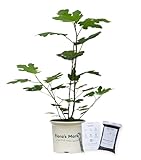


Plant Profile & Key Characteristics
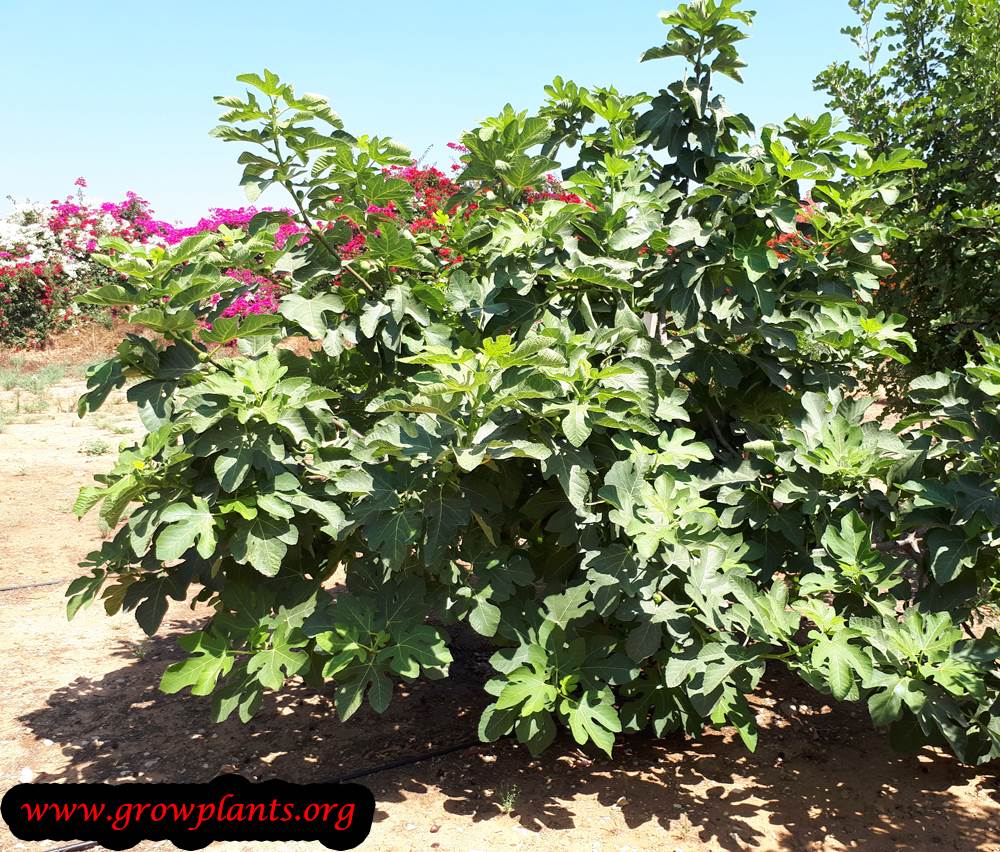
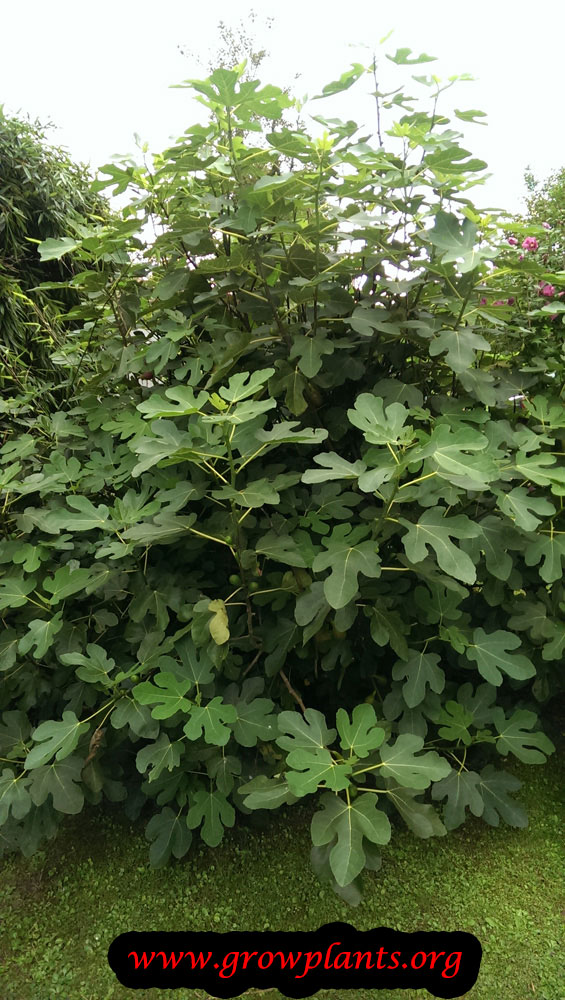
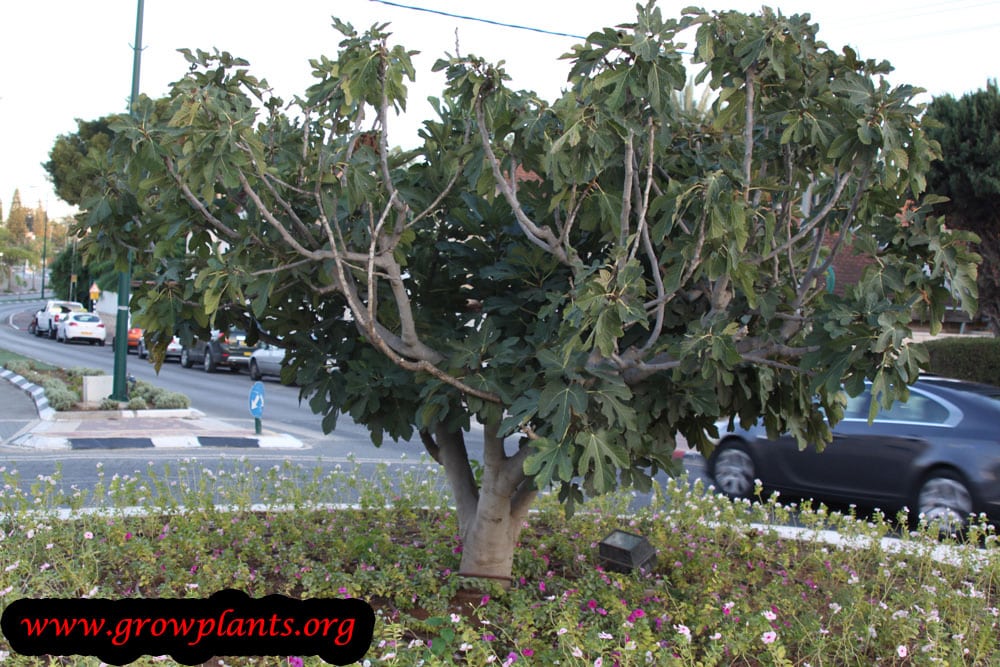
Overview: The common fig, a deciduous tree 5-10 m (16-33 ft) tall (or a 3-5 m shrub), grown for its sweet edible fruit. Drought tolerant and also used as an ornamental, shade tree or bonsai.
Quick Specifications
| Specification | Attribute |
|---|---|
| Plant Type / Life Cycle | Perennial (deciduous tree) |
| Foliage Type | Deciduous |
| Mature Size | 5-10 m tall (16-33 ft); shrub form 3-5 m (10-16 ft) |
| Growth Rate | Moderate to Fast |
| Root System | Vigorous and spreading – can be invasive; keep away from paving and pipes |
| Toxicity | Fruit edible; the milky sap is a skin irritant and can cause phototoxic dermatitis |
| Hardiness | USDA zones 7-11 |
Growth Form & Structure
- Height & Spread: 5-10 m (16-33 ft) as a tree or 3-5 m (10-16 ft) as a shrub; grown in large containers (25-75 L) with root restriction.
- Growth Habit & Form: Spreading deciduous tree or multi-stemmed shrub with a broad canopy.
- Lifespan & Maturity: Long-lived; begins bearing fruit in about 2-5 years. The common fig is self-fertile.
Anatomy & Physical Features
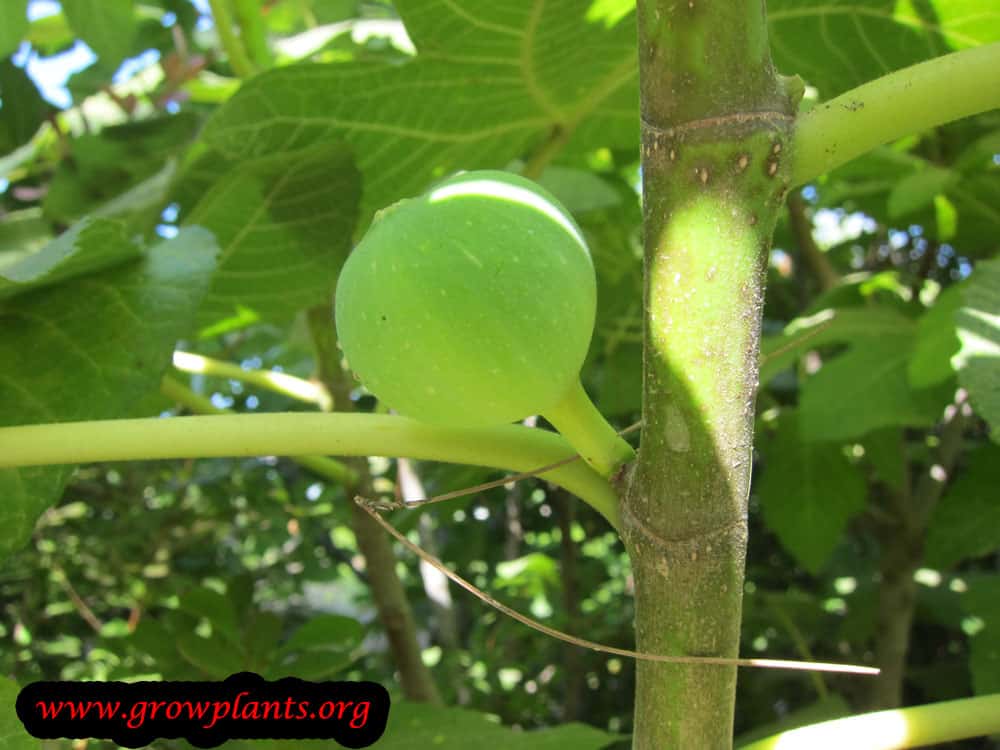
- Trunk & Bark: Smooth grey bark; exudes milky, irritant sap when cut.
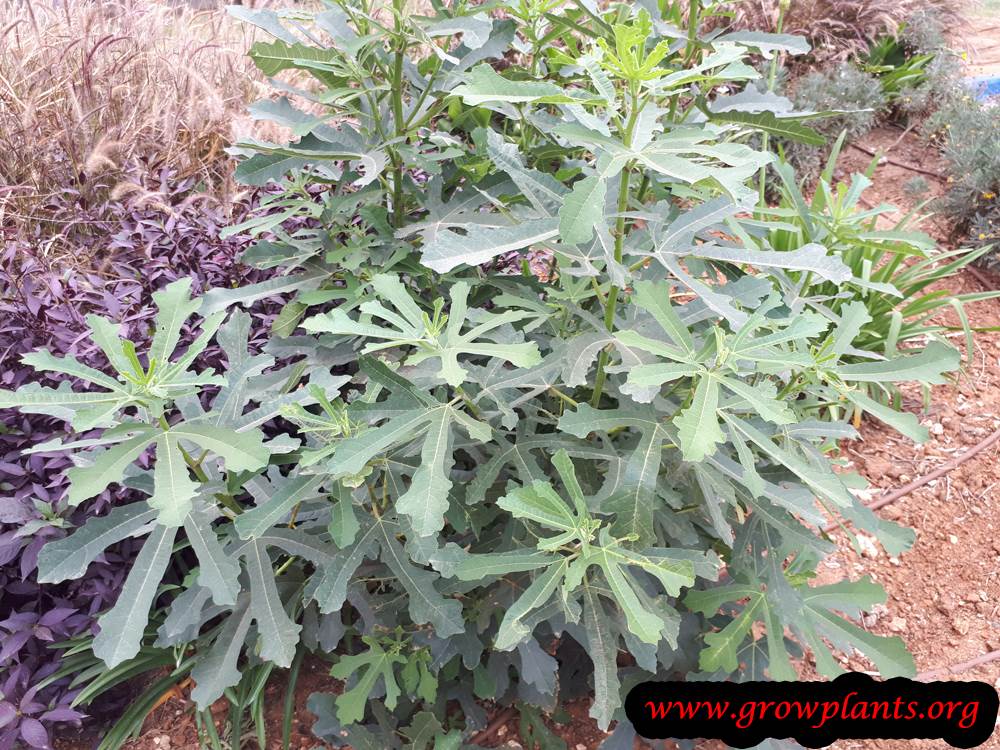
- Leaves & Foliage: Large, deeply 3-5 lobed green leaves.
- Flower Characteristics: Flowers are hidden inside the fig; the common fig is self-pollinating (full detail in the Bloom guide).
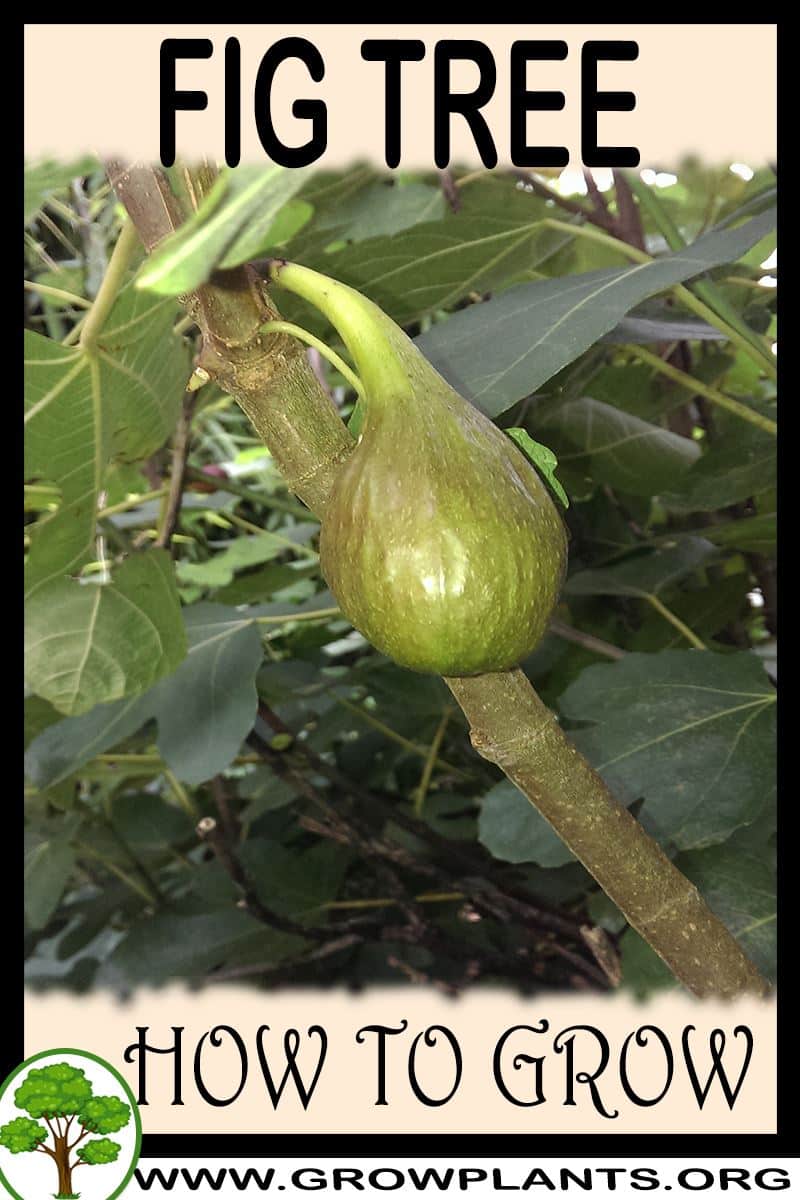
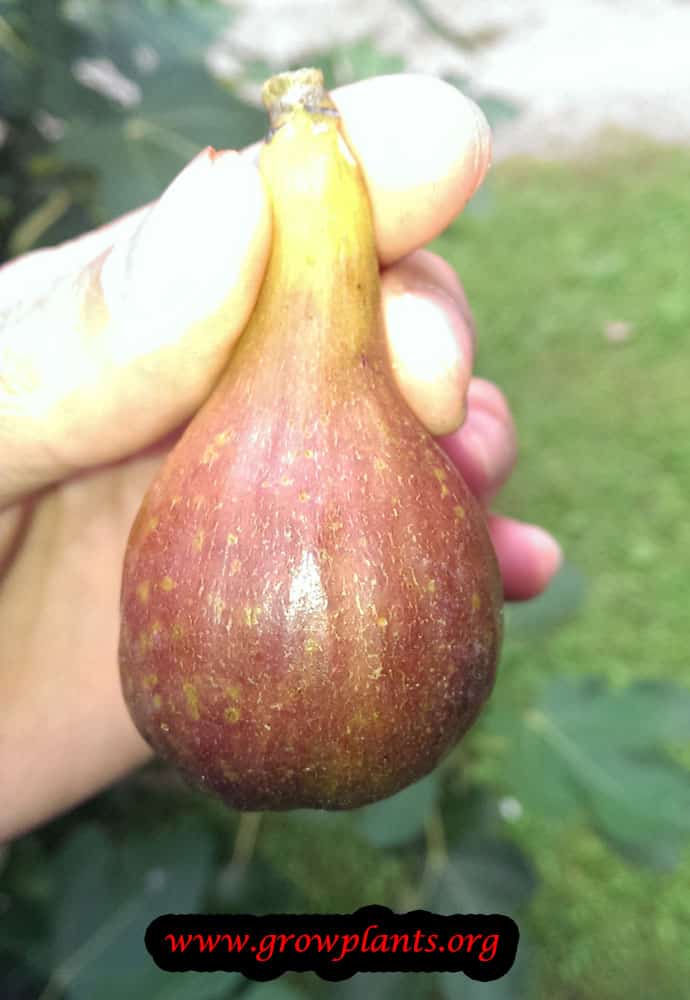
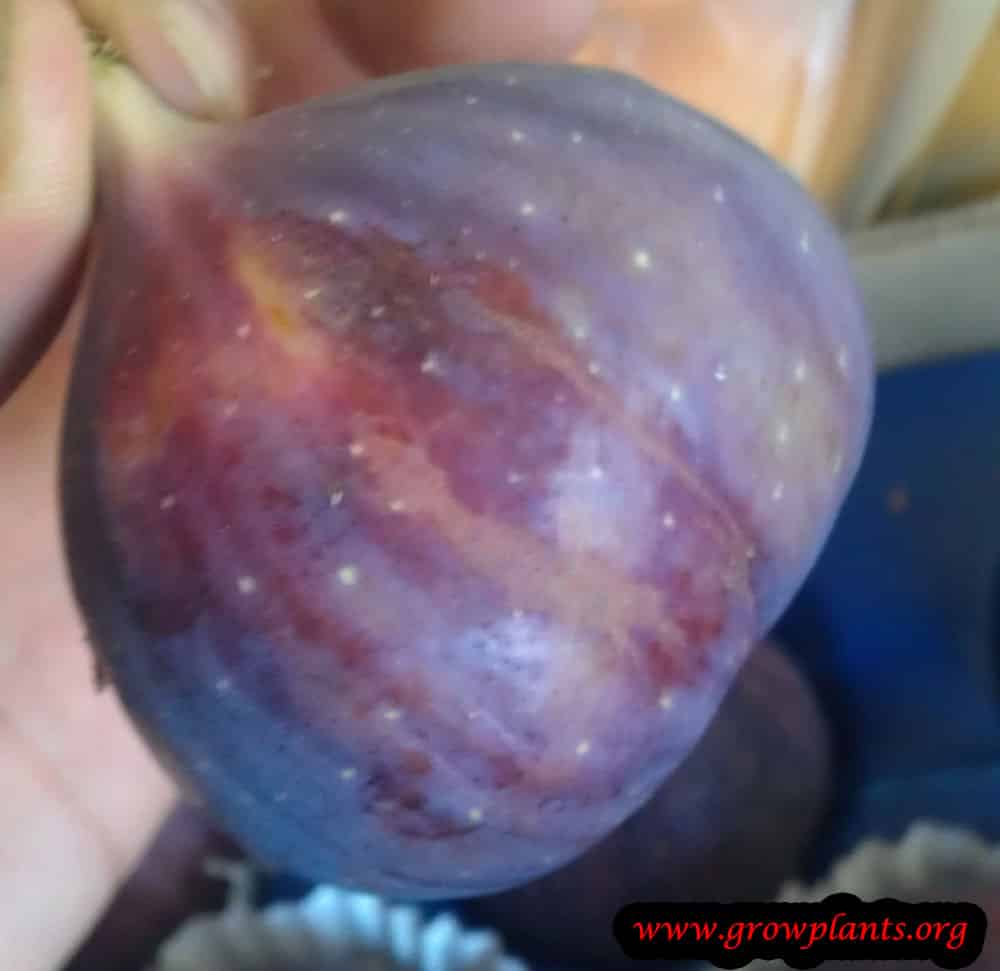
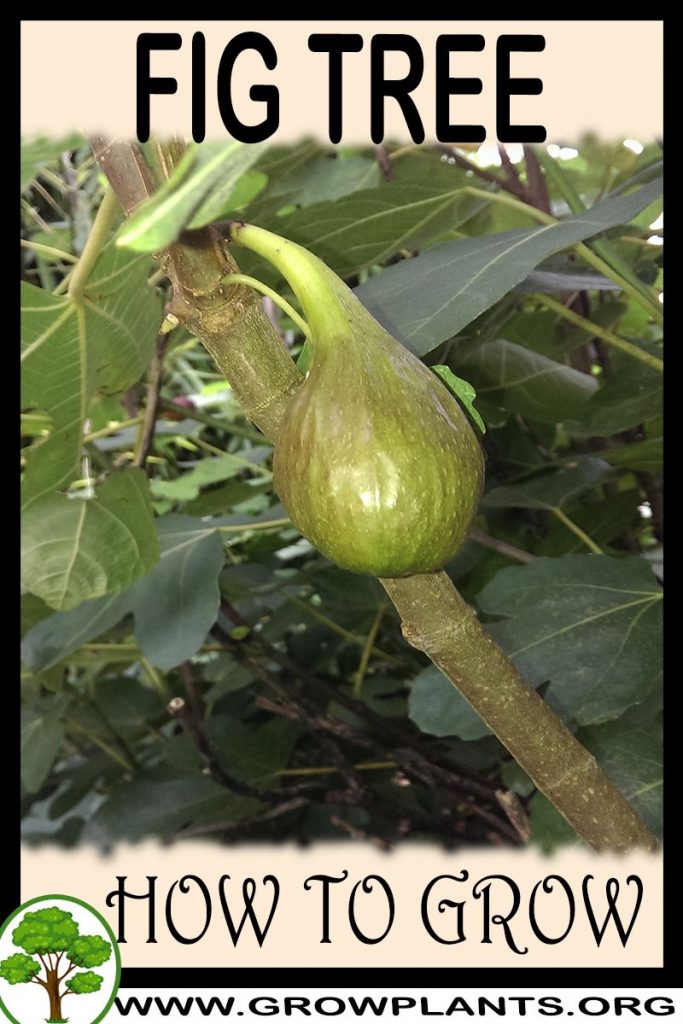
- Fruit Profile: Sweet, teardrop-shaped figs, purple or green (full detail in the Fruit guide).
Primary Uses & Landscape Value
- Edible Uses: Figs eaten fresh or made into jam, juice, dried fruit or fruit leather.
- Functional & Ornamental Roles: Grown for fruit, as a shade tree, ornamental or bonsai; drought tolerant.
Care Guide: Planting, Soil & Watering
Overview: The common fig (Ficus carica) is a deciduous fruiting tree for Mediterranean, desert, subtropical and temperate climates (hardiness zone 7-11) that fruits best in full sun. It grows in rich, well-draining soil kept lightly moist and mulched, is drought tolerant once established, and resents both waterlogging and heavy watering during fruiting.
Quick Care Requirements
| Requirement | Ideal Condition |
|---|---|
| Planting Season | Warm season, varying by zone (see below) |
| Growth Rate | Moderate to Fast |
| Soil Type | Rich, well-draining, mulched |
| Water Need | Low to Moderate – drought tolerant, but even moisture improves fruit |
Planting & Establishment
- Best Planting Season: Plant in the warm season: spring in zones 7-8, spring to summer in zone 9, spring to autumn in zone 10, and year-round in zone 11.
- How to Plant:
- Hole Preparation: Dig a hole noticeably wider and deeper than the root ball – roughly 70-100% larger – then backfill so the roots sit on firm, amended ground at root-ball depth.
- Soil Amendments: Mix plenty of organic matter, humus and dried leaves into the backfill to feed the young tree and improve the soil; top with mulch to hold moisture.
- Planting Depth: Set the tree so the root collar sits at soil level, loosen the outer roots of the root ball slightly, and firm the soil gently – not so hard that it compacts, not so loose that the tree wobbles.
- Growth Speed & Expectations: A moderate-to-fast grower reaching 5-10 m (15-30 ft), or kept as a 3-5 m shrub; it also grows well in large containers and as bonsai.
Soil, Watering & Drainage Care
- Soil Mix & Drainage Needs: Grow in rich, well-draining soil kept lightly moist and mulched; in containers use a potting or peat mix with perlite and organic matter, a pot about 50% larger than the root ball, and plenty of drainage holes so water never sits at the roots and rots them.
- Watering Schedule & Technique:
- Young / Newly Planted: For the first two weeks after planting, water every day, preferably in the morning, so the root ball never dries out while it establishes.
- Established: Once established the fig is drought tolerant and copes on modest water, but regular deep watering gives better fruit; let the top of the soil dry before watering again, and avoid overwatering during the fruiting season, which attracts pests.
- Seasonal Adjustments: Increase watering in hot weather – above about 30 C (86 F) young trees need noticeably more – and ease off in the cool season when growth slows.
Climate, Light & Hardiness
Common fig (Ficus carica) is a deciduous fruit tree of Mediterranean, desert, subtropical and temperate climates, growing in roughly USDA zones 7–11 and thriving in long, hot, sunny summers. It is among the more cold-hardy subtropical fruits: fully dormant in winter it withstands moderate freezes, and at the cold end of its range the top may die back and resprout from the base.
Quick Climate Specifications
| Climate Zones | Mediterranean, desert, subtropical, temperate |
|---|---|
| USDA Hardiness Zones | Approximately 7–11 |
| Optimal Temp Range | Warm, roughly 20–30 °C (68–86 °F) |
| Cold Damage Begins | Young growth and shoots damaged by hard frost; new spring growth is frost-tender |
| Approx. Survival Minimum | Dormant wood survives roughly to −10 to −12 °C (14 to 10 °F); harder cold kills top growth, which often regrows from the roots |
| Frost Tolerance | Moderate when dormant (varies by cultivar); Low for new growth |
| Light Conditions | Full sun (young trees tolerate half shade) |
| Wind Tolerance | Moderate |
| Salt / Coastal Tolerance | Moderate |
Sunlight & Light Exposure
Optimal Light Setup
Full sun gives the best growth and the sweetest fruit; young trees tolerate half shade and are often grown that way at first, moving into fuller sun as they mature.
Direct Sun Requirement
Abundant direct sun and summer heat are what ripen figs well; shaded trees crop later and less reliably.
Best Exposure / Orientation
A hot, sunny, sheltered aspect - classically a south-facing wall - concentrates summer heat and helps ripening in cooler regions.
Temperature Extremes & Hardiness
USDA Hardiness & Regional Limits
Grown outdoors in roughly zones 7–11. In the coldest of these the top may be killed in a hard winter yet resprout from the roots to fruit on new wood. Cold tolerance varies by cultivar, plant age, exposure duration and how well the wood has hardened off.
Cold Damage & Winter Protection
Dormant, hardened wood tolerates moderate freezes; the vulnerable moments are unhardened autumn growth and tender new spring shoots. In marginal areas a sheltered wall, wrapping or mulching over the base helps carry it through hard winters.
Frost Sensitivity
Leaves and soft new growth are frost-tender, but the deciduous, dormant tree is far tougher; a late spring frost can nip emerging shoots without killing an established tree.
Extreme Heat Tolerance
Excellent heat tolerance - it flourishes in hot Mediterranean and desert summers, which suit fruit ripening.
Chilling Requirement
Unlike temperate stone and pome fruits, fig has little or no meaningful winter-chill requirement; it fruits well in mild-winter, low-chill regions, which is part of why it succeeds across a wide subtropical-to-temperate band.
Wind, Humidity & Microclimate
Humidity Preferences
Well suited to the warm, comparatively dry air of Mediterranean and desert climates; very humid conditions can encourage fruit souring and disease.
Dry-Air Tolerance
Tolerates hot, dry air well - a classic dry-summer fruit tree.
Wind Tolerance
Moderate; the large leaves can be tattered by strong wind, and shelter improves both foliage and fruiting.
Coastal / Salt Tolerance
Shows moderate tolerance of coastal conditions and is often grown successfully in warm seaside gardens with some shelter from the harshest salt wind.
Microclimate Recommendations
A warm, sheltered, sun-trapping spot - especially a south-facing wall - extends the ripening season and buffers winter cold at the edge of its range.
Growing in Pots, Balconies & Indoors
The common fig isn’t a houseplant – the grower marks it no for indoors – but it’s one of the classic fruit trees for a big pot on a sunny patio. Growing 5-10 m in the ground (or a 3-5 m shrub), it takes well to containers, which naturally restrict its size and can even improve fruiting.
Quick Details
- Container Size: Minimum 25-75 L (5-15 gal), and bigger is better; sized up gradually
- Indoor Suitability: Not a houseplant (per the grower) – grow it outdoors in full sun
- Best Spot: Full sun (half shade when young)
- Soil & Drainage: Potting mix or peat with perlite and organic matter; sharp drainage
- Watering in Pots: Small to average; the plant likes water but too much at fruiting draws pests
Indoors & On the Windowsill
- Houseplant limits: The grower marks it no for indoors – figs need full outdoor sun to crop well; a room can’t supply enough light.
- Overwintering: A key reason to pot a fig in cold climates – when it drops its leaves and goes dormant, move the pot into an unheated shed, garage or porch to protect it from hard frost, then bring it back out in spring.
On a Balcony or Patio
- Light & wind: Give it the hottest, sunniest spot – reflected heat from walls suits it and helps ripen fruit. Pots dry fast, so water regularly (steady moisture at fruiting), and mind the weight of a large tub. The milky sap can irritate skin, especially in sun.
Choosing the Pot, Soil & Long-Term Care
- Pot & drainage: Use a pot with strong drainage holes and skip a standing-water saucer, which invites root rot; terracotta breathes and dries faster, while glazed or plastic holds moisture longer.
- Potting mix: A light, aerated organic mix – peat or coir with perlite or vermiculite – gives the roots both moisture and air.
- Feeding: Potted plants use up their feed faster because each watering leaches nutrients away, so feed a little more often than plants in open ground.
- Repotting: Refresh the top of the mix and pot up every couple of years; a light root and top prune at repotting keeps established plants vigorous.
Grower’s Container Tip
- Keep it dwarfed: In a pot you must limit both top and root growth and grow it as a dwarf or bonsai. Move up gradually – each container only about 50% bigger than the root ball until it reaches its final size; don’t start a small tree in a big pot, as too much unused soil goes stale.
- Pot size: Minimum around 25-75 L (5-15 gal), and bigger is better; make plenty of drainage holes.
- Soil & renewal: Potting mix or peat with perlite and organic matter works well. Every few years, rather than replacing all the soil in a large pot, swap out part of it from the side and top and trim back some of the root ball.
- Feeding & water: Feed at least once a year and add humus once or twice; water regularly, and if you use a saucer never let water stand more than a day – overwatering ruins both soil and roots.
Fertilizing & Feeding
A moderate feeder: the fig grows and crops well on light, balanced feeding through the active season plus steady soil organic matter, and dislikes heavy, frequent fertilizing.
Quick Fertilizing Specs
| Feeding Level | Moderate |
|---|---|
| young_feeding | Nitrogen-leaning complete fertilizer to build the framework |
| mature_feeding | Balanced feeding with adequate potassium as it bears |
| Main Nutrient Priority | Nitrogen when young; balanced with adequate potassium as it bears |
| Best Feeding Period | From late dormancy through the active growing season |
| Organic Options | Compost, aged manure and mulch |
| Micronutrients | Usually supplied by a complete fruit-tree fertilizer; iron may need attention on alkaline soils |
| Soil pH | Tolerates a wide range; needs well-drained soil |
| Reduce/Stop Feeding | Ease back in late season and during dormancy |
Feeding by Growth Stage
Newly planted
Help the newly planted the fig tree settle in and push healthy roots and first shoots.
| Nutrient direction | A gentle, balanced complete fertilizer once new growth appears, kept light while roots establish. |
|---|---|
| Timing | The first growing season after planting, once the tree shows active new growth. |
| Frequency | Light feeding spread across the active growing season. |
| Fertilizer types | Balanced complete garden or fruit-tree fertilizer, Compost or well-rotted organic matter worked into the surface |
| Precautions | Keep fertilizer off the trunk and avoid heavy applications before roots establish. |
Young, pre-bearing tree
Build a strong framework of shoots and foliage on the young, non-bearing the fig tree.
| Nutrient direction | Lean a little more toward nitrogen to drive vegetative growth, supplied within a complete fertilizer. |
|---|---|
| Timing | Through the active growing seasons of the young, pre-bearing years. |
| Frequency | Several light feedings across the growing season. |
| Fertilizer types | Nitrogen-forward complete fruit-tree fertilizer, Compost and mulch for steady background nutrition |
| Routine trace nutrients | iron, manganese, zinc |
| Precautions | Avoid pushing soft, late-season growth with excess nitrogen, as it is prone to cold and pests. |
Established, beginning to bear
Support steady growth and the first crops as the fig tree begins to bear.
| Nutrient direction | Return to a balanced complete fertilizer that supplies nitrogen with adequate potassium. |
|---|---|
| Timing | From late dormancy into the active growing season as bearing begins. |
| Frequency | A few light feedings during the active growing season. |
| Fertilizer types | Balanced complete fruit-tree fertilizer, Compost or aged manure as organic backing |
| Routine trace nutrients | iron, manganese, zinc |
| Precautions | Feed to match the tree’s growth rather than a fixed schedule. |
Mature and bearing
Sustain reliable cropping and fruit quality on the mature, bearing the fig tree.
| Nutrient direction | Keep a balanced base with enough potassium as fruit develops, while avoiding excess nitrogen that favours leaves over fruit. |
|---|---|
| Timing | From late dormancy through fruit development in the active growing season. |
| Frequency | Light feedings early in the season, easing back as fruit ripens. |
| Fertilizer types | Balanced fruit-tree fertilizer with adequate potassium, Compost and mulch to maintain soil organic matter |
| Routine trace nutrients | iron, manganese, zinc |
| Precautions | Excess nitrogen can reduce fruiting and attract pests, so feed to match growth rather than a fixed schedule. |
Nutrient Deficiency Signs & Corrections
Older leaves turn pale green to yellow and shoot growth slows.
| Possible causes | Low soil nitrogen, Cold or waterlogged soil limiting uptake, Heavy grass or weed competition around the trunk |
|---|---|
| Appears first on | Older, lower leaves |
| What to check | Recent feeding history, Soil drainage and root health, Weed competition at the base |
| Possible correction | Apply a complete nitrogen-containing fertilizer as growth resumes and build soil organic matter with compost. |
Youngest leaves yellow between still-green veins.
| Possible causes | High soil pH reducing iron availability, Waterlogged or cold soils, A genuine iron shortage |
|---|---|
| Appears first on | Youngest leaves at the shoot tips |
| What to check | Soil pH, Drainage, Whether only new growth is affected |
| Possible correction | Correct soil pH where possible and apply a chelated iron product per its label. |
Margins of older leaves scorch and brown and fruit quality drops.
| Possible causes | Low soil potassium, Heavy fruit load drawing down reserves, Sandy soils that leach potassium |
|---|---|
| Appears first on | Margins of older leaves |
| What to check | Soil potassium status, Fruit load, Soil type and leaching |
| Possible correction | Feed with a potassium-containing complete fertilizer during fruit development. |
Pruning, Training & Seasonal Maintenance
Fig tree tolerates hard pruning well. Its main pruning objectives are building an open framework and, more distinctively, balancing crop type — a fig can carry an early breba crop on one-year-old wood and a later main crop on current-season growth, so pruning severity is a deliberate crop-management choice, not just an aesthetic one. The safest, most effective window is winter dormancy while the tree is leafless.
Quick Pruning & Maintenance Specs
| Pruning Tolerance | High |
| Primary Pruning Window | Winter dormancy (leafless) |
| Secondary Maintenance Window | Summer pinching/tipping of vigorous shoots for size control |
| Typical Frequency | Annual structural prune, plus as-needed summer control |
| Main Objective | Open framework and breba-vs-main crop balance |
| Young Plant Priority | Establish an open-center (vase) or multi-leader framework, 3–5 scaffolds |
| Mature Plant Priority | Renew old unproductive wood; contain size |
| Best Tool Type | Bypass secateurs, loppers, pruning saw by limb size |
| Avoid Heavy Pruning During | Spring leaf-out/fruit set; right before a frost in marginal zones (7–8) |
Pruning by Plant Age & Size
Newly Established
Fig can be headed back hard at planting time, while dormant, to balance the top growth against any root loss from transplanting and to set the framework height.
Young / Formative
Open-center (vase) or multi-leader framework is standard: select and space 3–5 scaffold trunks/branches and remove competing upright shoots.
Mature / Established
Renew old, unproductive wood; control height and spread by heading vigorous shoots; thin dense interior growth so light reaches the canopy for even ripening.
Seasonal Pruning Schedule
Dormant/Winter
Objective: main structural pruning and crop-type balancing. Remove: some one-year wood to favor the main crop, or retain it to keep the breba crop — a deliberate choice, not a fixed rule. Impact: heavier removal of one-year wood sacrifices the early breba crop but pushes vigorous growth that carries a heavier main crop.
Post-Harvest
Objective: light cleanup/size control after the main crop, since this costs less next-season wood than a random mid-season cut. Remove: damaged or overcrowded growth.
Ongoing Sanitary
Remove dead, diseased, or winter-damaged wood any time.
Flowering & Fruiting Wood
Figs are borne on both one-year-old wood (the breba crop, ripening early summer) and on current-season new growth (the main crop, ripening later). Dormant pruning that removes last year’s shoot tips reduces or eliminates the breba crop on those shoots but forces vigorous new growth that carries a heavier main crop. Growers who value the early breba crop should prune lightly and keep more one-year wood; growers focused on the main crop can prune harder.
Structural Pruning & Training
Open-center/vase framework with well-spaced scaffolds is standard; remove crossing or rubbing branches; control height and spread, since fig can reach 5–10 m but responds very well to size-restriction pruning; thin the canopy for sun exposure and airflow, which also reduces the pest and rot pressure that heavy fruit-season watering can bring; renew old unproductive wood periodically to keep the tree fruitful.
Special Growth to Remove
Watersprouts are common after hard dormant pruning — thin the excess but keep a useful number, since headed watersprouts often become next season’s fruiting wood. Basal/root suckers can be removed if a clean single or multi-trunk form is wanted, or a few can be selected to renew an old, declining trunk.
Container & Small-Space Pruning
Fig is one of the most popular container fruit trees. Container culture needs more assertive annual heading-back of the previous season’s growth to keep the plant compact, paired with root pruning at repotting; the tree responds to hard pruning by staying more compact and productive than it would in open ground.
Tools
Bypass secateurs for pencil-thin shoots and most fruiting-wood cuts; loppers for 1–2 inch scaffold wood; pruning saw for old-trunk renewal cuts.
Tool Hygiene & Disease Risk
Routine — clean, sharp tools between plants is sufficient for general fig pruning. The milky latex sap is a skin and eye irritant that can cause a phototoxic skin reaction in sunlight, so this is primarily a personal-protection issue (gloves, covered skin) rather than a disease-transmission concern.
Cut Placement & Technique
Use thinning cuts to remove whole shoots at their point of origin, and heading cuts on one-year wood to force branching/renewal; cut just above an outward-facing bud; avoid flush cuts into the trunk; stage the removal of larger old wood to avoid bark tearing on this soft, fast-healing wood.
Heavy Pruning & Rejuvenation
Fig tolerates hard rejuvenation well — an overgrown or frost-damaged tree can be cut back hard, even near-stump, in dormancy and typically resumes bearing within one to two seasons, though the current year’s crop is sacrificed. Spread very severe rejuvenation of a large old tree over two winters to limit stress.
Post-Pruning Care
Water normally through the dormant season; avoid heavy nitrogen feeding right after a hard prune, since fig already regrows vigorously; protect newly sun-exposed bark from sunscald if a dense canopy was suddenly opened; watch new soft shoots for aphid buildup.
Common Pruning Mistakes
Shearing the whole canopy into a uniform shape, which indiscriminately removes fruiting wood and ruins the open framework fig needs for light; pruning bare-handed in sunny weather and getting a sap-related skin burn; over-thinning one-year wood and losing the breba crop without meaning to; pruning right before a cold snap and exposing fresh cuts to frost damage.
When NOT to Prune
Avoid hard pruning right before an expected frost in marginal zones (7–8); avoid major cuts during active fruit set/ripening in summer, which stresses the tree and can knock off developing fruit; avoid cutting to bare wood right at spring leaf-out when the tree is mobilizing stored reserves.
Recommended Tools (by task)
- bypass_secateurs — most fruiting-wood and small shoot cuts; fig’s soft young wood needs a clean, crush-free cut.
- loppers — scaffold-branch renewal cuts; reaches thicker wood beyond secateur capacity.
- pruning_saw — old trunk or large-limb rejuvenation on a mature tree; needed for large-diameter renewal cuts.
Pruning Troubleshooting
| Problem | Possible Cause | What to Check | Corrective Action |
| Excess watersprouts after dormant prune | Hard heading cuts stimulated vigorous regrowth | Severity/timing of the last winter prune | Thin (don’t remove all) new shoots; select some to become next year’s fruiting wood |
| Lost early (breba) crop | Too much one-year wood removed in winter | How much of last year’s growth was cut back | Prune lighter next winter; retain more one-year shoots if the breba crop is wanted |
| Fruit rot or pest buildup in canopy | Dense, unthinned canopy trapping humidity | Canopy density and airflow | Thin interior growth to open the canopy; avoid overwatering during fruit set |
Propagation Guide
Fig roots so freely from hardwood cuttings that this is the standard method — it is fast and reproduces the exact cultivar, whereas seedlings are variable and may bear poor or inedible fruit. Fig can also be raised from seed or from basal suckers, and because cuttings strike so readily the overall difficulty is Easy.
Quick Propagation Specs
| Best Propagation Method | Hardwood stem cuttings |
| Alternative Methods | Air layering; basal suckers; seed (variable) |
| Propagation Difficulty | Easy |
| Seed True-to-Type | Variable — seedlings differ from the parent and some are inedible caprifigs |
| Vegetative True-to-Type | Yes (cuttings, layers and suckers keep the cultivar) |
| Best Propagation Season | Late winter for hardwood cuttings; spring to autumn for sowing |
| Seed Germination Time | 7–21 days |
| Germination Temperature | 21–26°C (70–79°F) |
| Seed Sowing Depth | On the surface or barely covered by about 3 mm (1/8 in) |
Growing from Seed
Seed Handling & Viability
Fig seed is small; store it in a dry, dark place until sowing. Soaking it for about 24 hours before sowing improves the strike.
Sowing Season
Sow in spring, summer or autumn — in hot climates avoid high summer, and in cold-winter areas avoid autumn, since germination temperature matters and a spring sowing gives the seedling the best growing run.
Sowing Depth & Orientation
Surface-sow, or barely cover the seed with about 3 mm (1/8 in) of light medium. Space seed roughly 2×2 cm (1×1 in), or better 5×5 cm (2×2 in), and transplant only after 5–7 leaves rather than while very young.
Germination Conditions
High humidity and warmth are the keys: hold about 21–26°C (70–79°F) in a light, moist medium, in half shade to full sun. Raising the seed in a greenhouse or covered plastic box keeps humidity high; a light fog gives the best results.
Germination Time
Seed germinates in about 7–21 days.
Seedling Care
Once seedlings are up, gradually reduce humidity and expose them slowly to more sun.
Stem Cuttings
Cutting Type
Use fully mature, brown woody wood; fig hardwood cuttings strike very readily.
Best Timing
Late winter, from dormant wood, is ideal.
Rooting Setup
Keep high humidity and moist medium in a ventilated closed box or greenhouse so air still moves; water by misting or fogging and never let the cuttings dry out.
Rooting Hormone
A hormone made for woody cuttings is optional to beneficial — fig often strikes without it.
Rooting Time
Cuttings usually root within a few weeks under warm, humid conditions.
Air & Ground Layering
Fig also layers readily: wound and wrap a branch in a moist medium and separate it once rooted. This, too, reproduces the parent cultivar.
Division, Offsets, Pups & Suckers
Established figs often throw suckers from the base. A rooted sucker can be dug with some roots attached during the dormant season and grown on as a new plant identical to the parent.
Bloom & Flower Guide
Quick Details
- Bloom Season: Winter to spring
- Time to First Bloom: Young trees generally begin flowering and setting figs within their first year or two
- Flower Appearance: Many minute flowers lining the inside of a hollow receptacle that becomes the fig
- Edibility: Ornamental as a flower – the blooms are enclosed and not eaten on their own
Detailed Blooming Overview
The common fig has one of the most unusual flowering habits of any fruit tree. What looks like a young fruit is in fact the inflorescence: a hollow receptacle lined on the inside with countless tiny flowers. Because the bloom is sealed away, you never see an open flower – the receptacle simply swells and ripens over the season.
Flower Characteristics
- Numerous minute flowers borne inside a closed, hollow receptacle.
Bloom Care & Thinning
- Managing the bloom: No deadheading or thinning of flowers is possible or needed, as they sit inside the developing fig.
- Pollination: Wild types are pollinated by the fig wasp; many cultivated figs set their crop by themselves (self / parthenocarpic) without pollination.
Fruit & Uses
The common fig is grown chiefly for its sweet fruit, which is eaten fresh off the tree. Ripe figs are also made into jam and juice, or dried and pressed into fruit leather.
Quick Edible Specs
| Edible Parts | Fruit (figs) |
|---|---|
| Main Use(s) | Culinary – eaten fresh, jams, juice, dried figs, fruit leather |
| Eaten Raw or Cooked | Raw when ripe, or dried / cooked |
| Preparation Required | None beyond rinsing; eat only fully ripe fruit |
| Harvest Season | Summer to autumn |
| Time to First Harvest | A few years from a young tree (see the growing / care notes) |
| Storage | Fresh figs are highly perishable; drying preserves them |
| Safety/Toxicity Caveat | Milky latex from leaves, stems and unripe figs can irritate skin (and may cause sun-sensitivity) – eat only ripe fruit |
Fruit
The figs are teardrop-shaped and ripen to purple or green depending on the variety, becoming soft and slightly drooping when ready. Harvest each fig as it softens and colours fully; firm, unripe figs leak irritant latex and are not eaten. Watering influences fruit quality – too much water in the fruiting season swells the figs but attracts pests.
Harvesting
Pick over the tree repeatedly through summer and autumn as fruit ripens in flushes. Net the crop to protect ripening figs from birds. Because ripe figs bruise readily, gather them gently and use them quickly or dry them.
Preparation, Uses & Safety
Eat ripe figs raw, or cook them into jam and juice, or dry them for fruit leather and stored figs. Handle the tree with care: the milky white latex in leaves, unripe fruit and cut stems can irritate the skin, so wash off any sap and only eat fully ripened figs.
Pests, Diseases & Troubleshooting
Overview: The common fig is a tough, productive Mediterranean fruit tree, but it has a distinctive pest and disease set centred on the fig: eriophyid fig mites (which also spread fig mosaic virus), fig rust, and fruit-souring rots and fruit flies on ripening figs, alongside scale, nematodes and the usual sap-suckers. Most problems are managed culturally – sanitation of fallen fruit, airflow, drainage and prompt harvest – with sprays reserved for persistent issues. The milky latex is a skin/eye irritant.
Quick Troubleshooting Overview
| Issue / Pest | Main Symptom | Primary Solution |
|---|---|---|
| Fig mite (eriophyid) | Russeting/bronzing of leaves; spreads mosaic virus | Horticultural oil/sulfur, remove infested wood |
| Fig rust | Yellow then rusty-brown leaf spots, early defoliation | Rake leaves, airflow, copper/neem |
| Fruit souring / endosepsis | Fermenting, oozing, sour ripe figs | Grow closed-eye types, sanitation, control vinegar flies |
| Scale insects | Bumps on wood/leaves; honeydew, sooty mould | Prune, dormant/horticultural oil |
| Root-knot nematode | Stunting, galled roots, decline | Mulch/organic matter, resistant rootstock, healthy soil |
| Fruit splitting | Ripe figs crack open | Even watering; avoid heavy watering at ripening |
Common Pests & Management
- Fig mite (fig eriophyid mite) (Aceria ficus):
- Symptoms: Microscopic mites causing rusty russeting, bronzing and a scurfy or greasy look on leaves, buds and young fruit, with some distortion; crucially, this mite is the main vector of fig mosaic disease, so its damage is compounded by virus spread.
- Prevention & Control: Keep trees vigorous and remove and destroy heavily infested or mosaic-symptomatic wood, using clean propagation material. Wettable sulfur or horticultural oil (following label timing and avoiding hot weather, as figs can be sulfur-sensitive) suppresses mites; avoid moving the mite on tools and cuttings.
- Scale insects (Ceroplastes / Lepidosaphes / Coccus spp. (wax, mussel & soft scale)):
- Symptoms: Brown, waxy or mussel-shaped bumps on twigs, branches and leaf undersides that don’t rub off; soft scales drip honeydew that blackens with sooty mould, weakening growth and dirtying fruit.
- Prevention & Control: Prune out and destroy heavily encrusted wood, encourage parasitic wasps and ladybirds, and apply a dormant-season and/or summer horticultural oil for thorough coverage of the bark, repeating to catch crawlers.
- Fig fruit flies & vinegar flies (Ceratitis / Zaprionus / Drosophila spp.):
- Symptoms: Maggots, fermentation and rot inside ripening figs, entering through the open ‘eye’ (ostiole) of the fruit; ripe figs turn sour, ooze and drop, and populations build on fallen fruit.
- Prevention & Control: Grow closed-eye (‘common’) fig types where fruit flies are a problem, harvest promptly and daily at ripening, and rigorously remove and destroy fallen and mummified figs. Bait traps for fruit flies and vinegar flies help; sanitation is the single most effective control.
- Root-knot & other nematodes (Meloidogyne spp.):
- Symptoms: Slow decline, stunting, poor vigour and yellowing above ground, with galled, knotted roots below; worst in warm, sandy soils, weakening the tree and reducing yield.
- Prevention & Control: Plant into nematode-free soil, boost organic matter and mulch heavily to support beneficial soil organisms and root regrowth, keep trees well-watered and fed to tolerate infestation, and use resistant rootstocks/cultivars where available; there is no simple cure once established.
- Aphids & mealybugs (Aphis / Planococcus spp.):
- Symptoms: Soft insects and white cottony tufts on new shoots, leaf undersides and around the fruit, with honeydew and sooty mould; mealybugs can also shelter in the fruit eye.
- Prevention & Control: Rinse off with water, encourage ladybirds, lacewings and parasitic wasps, and avoid excess nitrogen; treat persistent colonies with insecticidal soap or horticultural oil, and keep ants (which farm them) off the tree.
Diseases & Fungal Issues
- Fig rust (Cerotelium fici (Physopella fici)):
- Symptoms: Yellow to yellow-brown angular spots on the upper leaf surface with powdery rusty-brown pustules beneath; heavy infection browns the leaves and causes early, sometimes severe, defoliation in warm, wet, humid summers, weakening the tree and reducing the late crop.
- Treatment & Management: Rake up and destroy fallen leaves (the fungus overwinters on them), improve airflow by pruning, and avoid overhead watering. Protectant sprays of a copper fungicide or neem, applied from early in the season under humid conditions, check spread; do not rely on sulfur alone in hot weather.
- Fruit souring & endosepsis (internal rot) (Fusarium / Aspergillus / yeasts (via the fruit eye)):
- Symptoms: Ripening figs ferment, sour, ooze and rot internally, often smelling of vinegar or alcohol; organisms are carried into the fruit through the open eye by vinegar flies and fruit flies.
- Treatment & Management: Grow closed-eye fig cultivars where this is a problem, keep trees and ground clean of dropped and mummified fruit, control vinegar/fruit flies, and harvest promptly. There is no spray for internal fruit rot – exclusion (closed eye) and sanitation are the controls.
- Fig mosaic disease (Fig mosaic virus (vectored by Aceria ficus)):
- Symptoms: Yellow mottling, mosaic patterns, ring spots and leaf/fruit distortion; the virus is incurable in the plant and is spread by the fig mite and by propagation from infected wood.
- Treatment & Management: Start with virus-free planting material, control the fig mite vector, and remove severely affected trees; do not propagate from symptomatic plants. Mild cases are tolerated but reduce vigour and yield.
- Anthracnose, leaf blight & root rot (Colletotrichum / Botryosphaeria / Armillaria / Phytophthora spp.):
- Symptoms: Brown leaf and fruit spots and blights, twig dieback (Botryosphaeria) in stressed trees, and decline from root and crown rots (Armillaria, Phytophthora) in wet, poorly drained soils.
- Treatment & Management: Prune for airflow and remove dead and cankered wood, clear fallen leaves and fruit, and – above all – plant in well-drained soil and avoid waterlogging to prevent the root rots that most often kill established figs. Copper protects foliage where leaf/fruit blights are recurrent.
Growing Difficulties & Abiotic Problems
- Fruit splitting & souring:
- Cause & Symptoms: Ripe figs crack open and then sour, usually after heavy rain or irrigation (or erratic watering) during ripening causes the fruit to swell too fast.
- Correction Strategy: Keep soil moisture even through ripening and avoid heavy watering just before harvest, pick figs promptly at ripeness, and choose split-resistant, closed-eye cultivars in wet climates.
- Sunscald & heat/cold damage:
- Cause & Symptoms: Bleached, scorched patches on exposed bark, trunk and fruit in intense sun, and dieback of top growth after hard frost (figs are root-hardy but top-tender in cold climates).
- Correction Strategy: Shade or whitewash exposed trunks in fierce-sun climates, keep trees well-watered in heat, and in cold regions site in a warm sheltered spot, mulch the roots, and prune out frost-killed wood in spring – the tree usually regrows from the base.
- Poor fruiting / fruit drop:
- Cause & Symptoms: Few figs, or young figs yellowing and dropping, from excess nitrogen (leafy growth over fruit), heavy shade, drought stress, or (for certain cultivars) lack of the specific fig-wasp pollinator.
- Correction Strategy: Feed modestly (avoid high nitrogen), grow in full sun, water steadily, and choose self-fruitful (‘common’) cultivars that set figs without a pollinator wasp in regions where the wasp is absent.
- Irritant latex & sap dermatitis:
- Cause & Symptoms: The milky latex from leaves, unripe fruit and cut stems irritates skin and eyes and can cause a light-sensitive (phytophototoxic) skin reaction in sunlight.
- Correction Strategy: Wear gloves and long sleeves when pruning or harvesting, keep the sap off skin and out of eyes, and wash any contact promptly and avoid sun exposure on affected skin.
What Helps – Products & Tools
For the edible fig, key tools are horticultural and dormant-season oil for scale and (with wettable sulfur, used cautiously in cool weather) fig mites; a copper fungicide or neem for fig rust and leaf/fruit blights; fruit-fly and vinegar-fly bait traps plus rigorous fallen-fruit sanitation for fruit souring; and heavy organic mulch to help trees tolerate nematodes. Even watering and good drainage prevent splitting and root rot. Wear gloves for the irritant, photo-sensitising latex and follow all label timing on fruiting trees.