Plant Profile & Key Characteristics
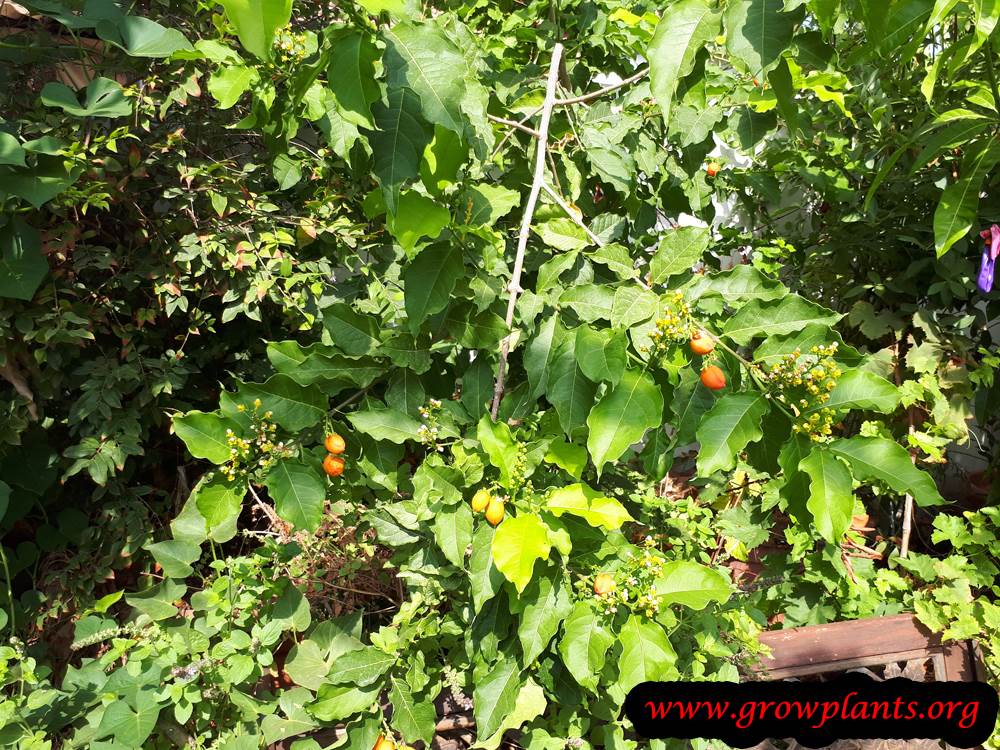
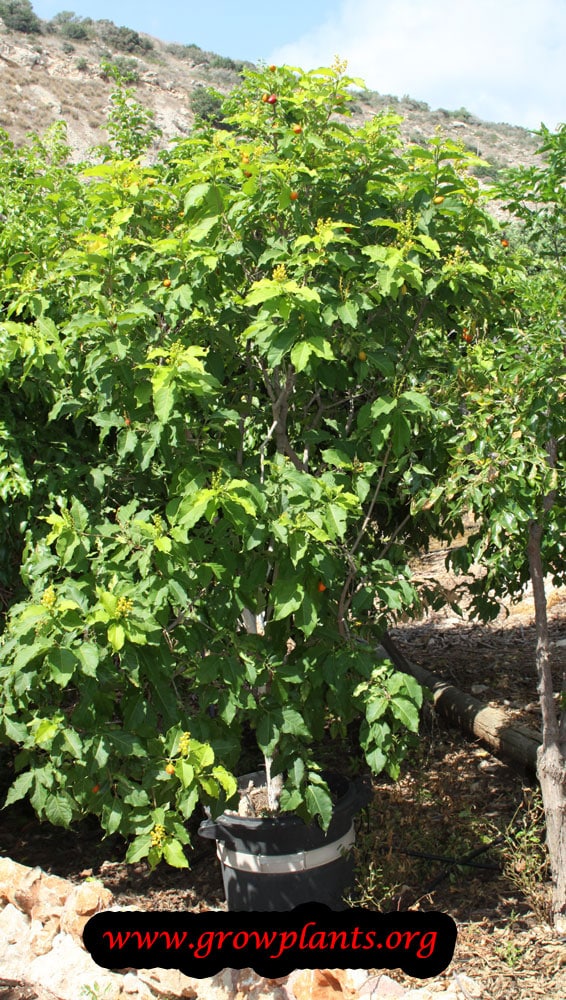
Overview: An evergreen to semi-deciduous shrub or small tree reaching 1-5 m (3-15 ft). Grown chiefly for its edible, peanut-butter-flavoured fruit and also used as an ornamental and, with training, a hedge.
Quick Specifications
| Specification | Attribute |
|---|---|
| Plant Type / Life Cycle | Perennial (shrub or small tree) |
| Foliage Type | Evergreen to semi-deciduous |
| Mature Size | 1-5 m tall (3-15 ft) |
| Growth Rate | Moderate |
| Toxicity | Non-toxic; fruit and seed are edible |
| Hardiness | USDA zone 10+ |
Growth Form & Structure
- Height & Spread: 1-5 m (3-15 ft) in the ground; readily kept smaller in pots, fruiting even in a 20 L (5 gallon) container, though larger is better.
- Growth Habit & Form: Shrub or small tree that tends to throw vigorous upright stems; usually kept compact and shrubby for easier fruiting.
- Lifespan & Maturity: Perennial fruiting plant that typically begins bearing in about 2-4 years.
Anatomy & Physical Features
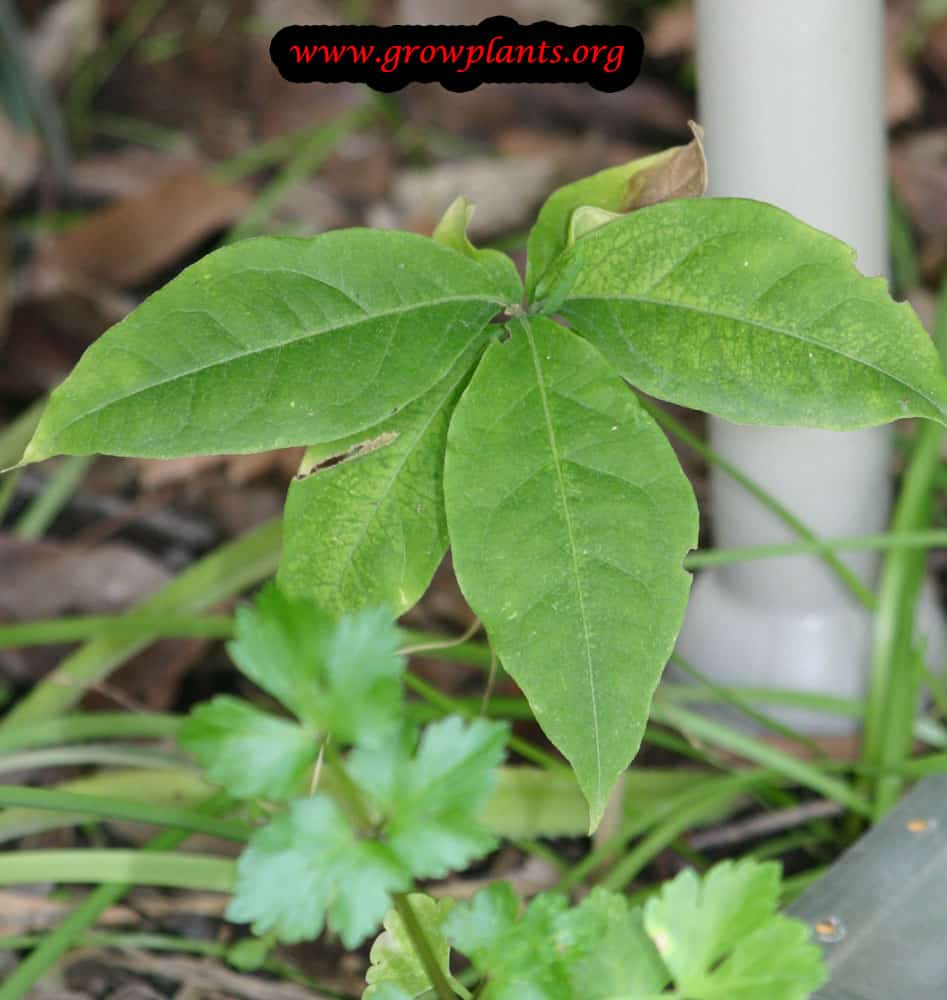
- Leaves & Foliage: Green leaves that sometimes carry a faint peanut-butter scent.
- Flower Characteristics: Small white flowers with yellow blossoms, pollinated by bees.
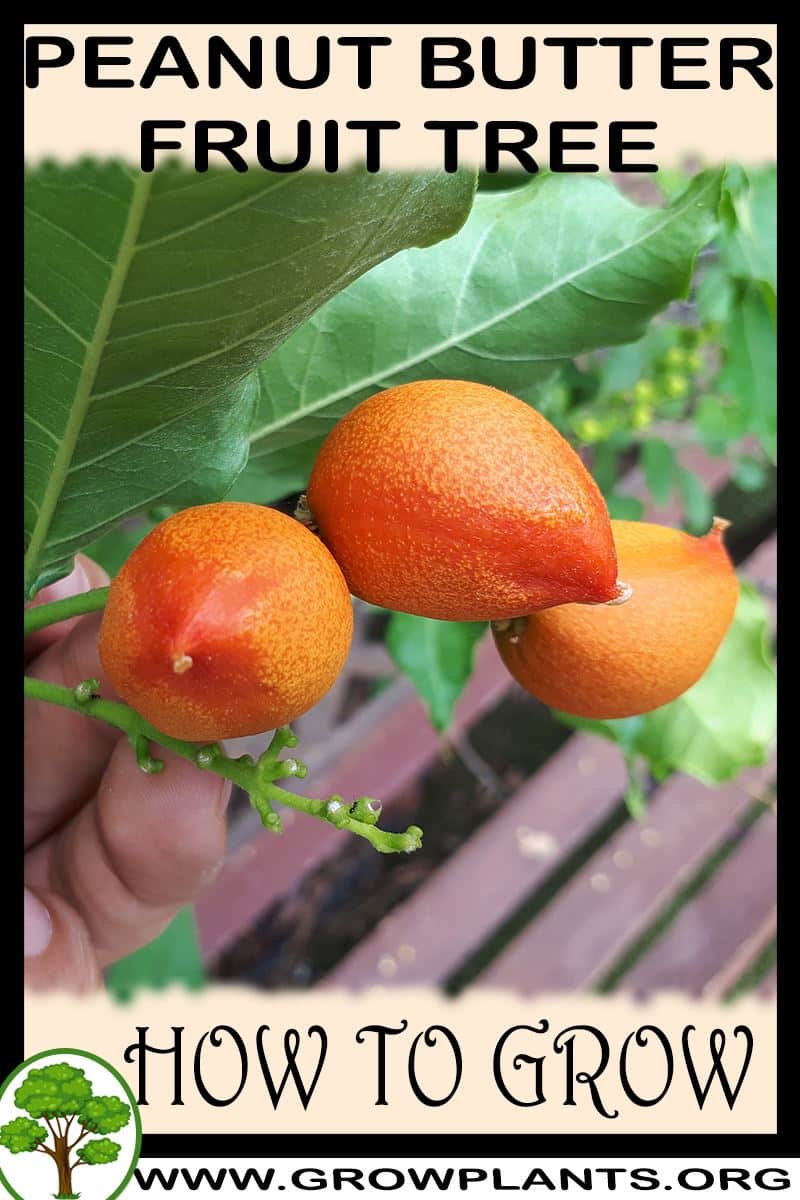
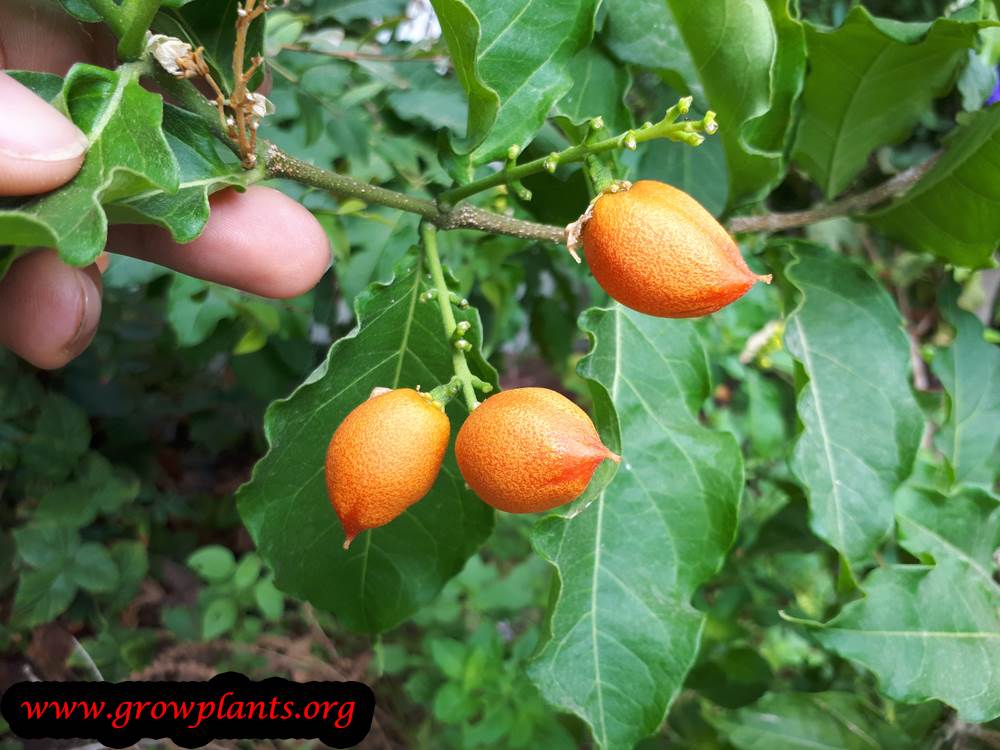
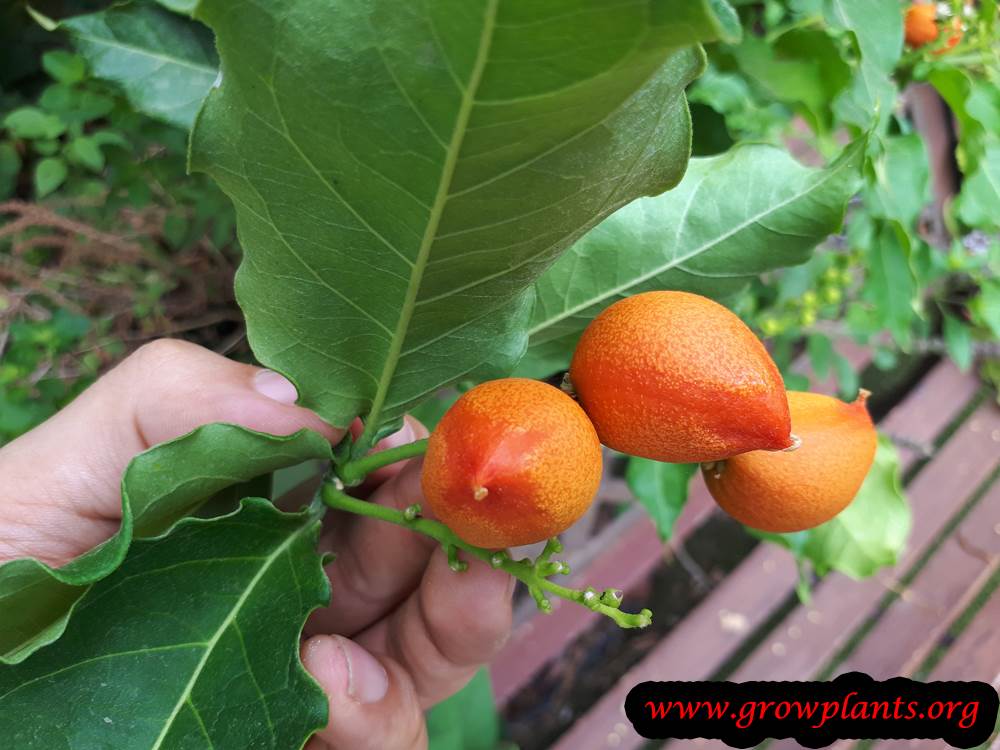
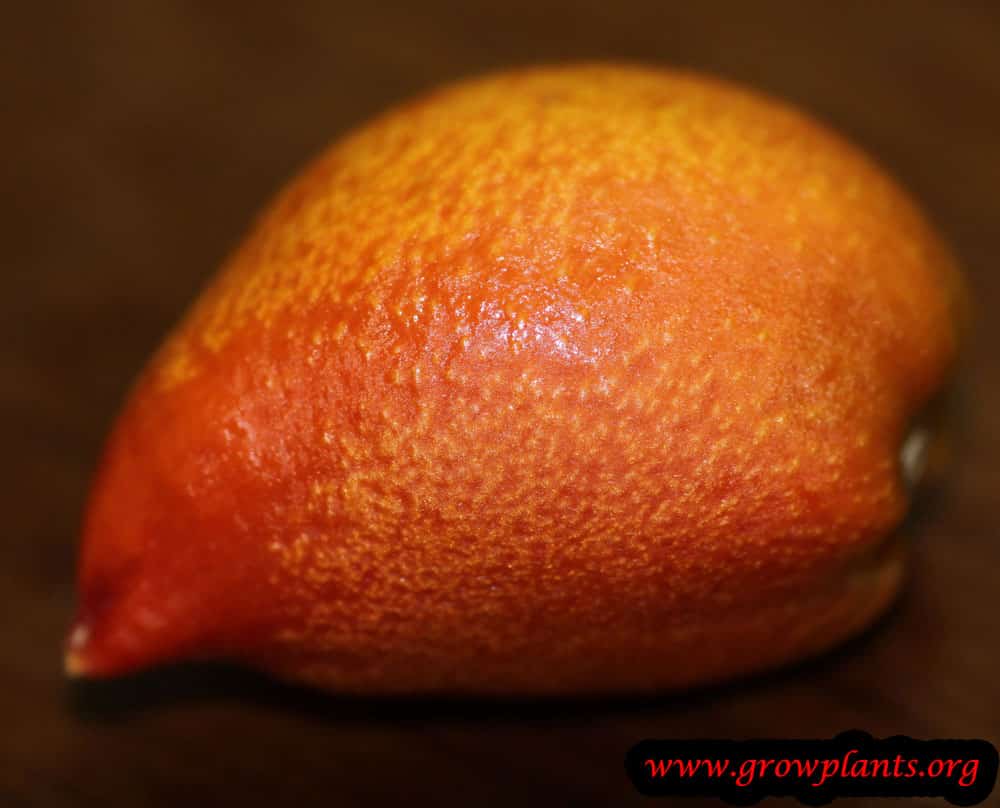
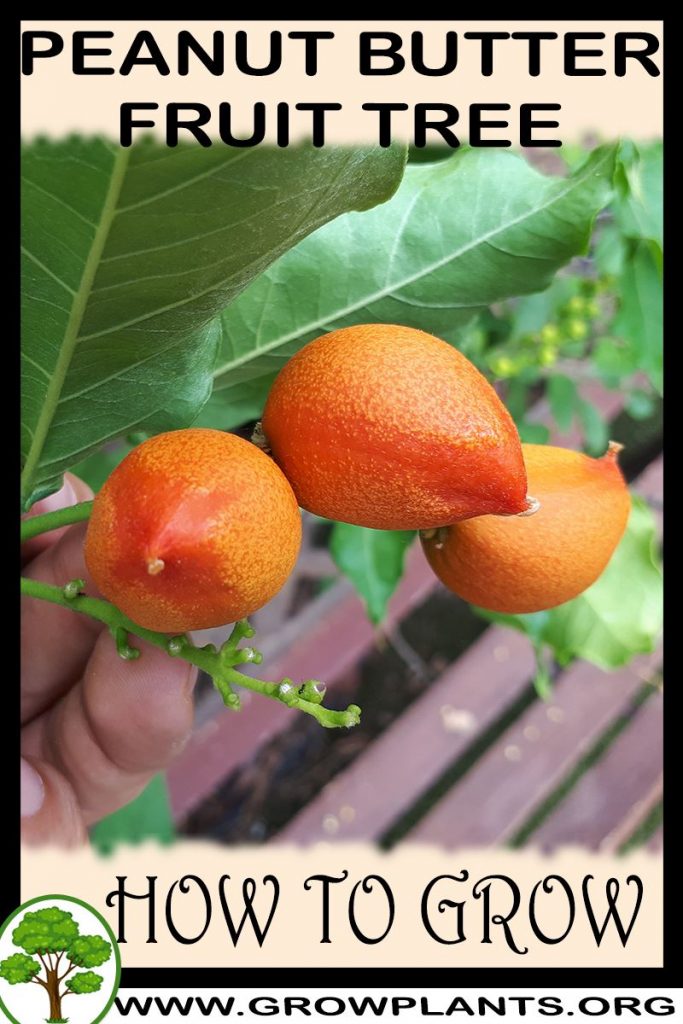
- Fruit Profile: Oval, pointed-tip fruit ripening yellow through orange-red to bordeaux, with one large edible seed; sweet flesh reminiscent of peanut butter, and of dried figs when dried.
Primary Uses & Landscape Value
- Edible Uses: Eaten fresh or dried; the single seed is also edible.
- Functional & Ornamental Roles: Edible fruiting plant, ornamental, container specimen, and (with design) an informal hedge.
Care Guide: Planting, Soil & Watering
Overview: A tropical to subtropical fruiting shrub or small tree (hardiness zone 10+) for full sun to light shade. It prefers rich, well-drained soil and a moderate supply of water, tolerating drier spells.
Quick Care Requirements
| Requirement | Ideal Condition |
|---|---|
| Planting Season | Spring through autumn (frost-free) |
| Growth Rate | Moderate |
| Soil Type | Rich, well-drained |
| Water Need | Low to Moderate (prefers moderate) |
Planting & Establishment
- Best Planting Season: Plant through the warm season, spring to autumn, in a frost-free spot so it establishes in warmth.
- How to Plant:
- Hole Preparation: Dig a hole roughly twice the width of the root ball and no deeper, keeping the plant at its original level.
- Soil Amendments: Enrich the backfill with compost or organic matter; on heavy ground add grit or coarse material to sharpen drainage.
- Planting Depth: Set the root collar level with the soil surface – don’t bury the stem.
- Growth Speed & Expectations: Moderate growth to anywhere from 1-5 m; it usually begins bearing fruit in about 2-4 years.
Soil, Watering & Drainage Care
- Soil Mix & Drainage Needs: Rich but well-drained soil is essential – drainage matters. In containers use a free-draining peat-based mix with drainage holes and some lava grit at the base; if using a saucer, let it fill when watering but empty and dry the same day.
- Watering Schedule & Technique:
- Young / Newly Planted: Keep the root zone evenly moist while the young plant establishes.
- Established: Once settled it prefers a moderate, regular supply but copes with drier spells – water deeply, then let the surface dry.
- Seasonal Adjustments: Water more freely in warm growing weather and ease off in cooler months.
Climate, Light & Hardiness
Peanut Butter Fruit is a tropical-to-subtropical shrub or small tree for Mediterranean, subtropical, and tropical climates, doing best in full sun to half shade. It has limited cold tolerance and is best suited to essentially frost-free, warm-winter areas.
Quick Climate Specifications
| Climate Zones | Tropical, Mediterranean, Subtropical |
|---|---|
| USDA Hardiness Zones | 10+ |
| Approx. Survival Minimum | approximately −1°C (30°F) at the zone 10 boundary, briefly, for an established plant |
| Frost Tolerance | Low |
| Light Conditions | Full Sun / Half Shade |
Sunlight & Light Exposure
Optimal Light Setup
Full sun for the most vigorous growth and best fruiting; half shade is tolerated.
Direct Sun Requirement
Best with strong light; full sun to half shade both work.
Best Exposure / Orientation
An open, sunny to lightly shaded site is suitable.
Temperature Extremes & Hardiness
USDA Hardiness & Regional Limits
Site data places it at zone 10+, a warm-climate limit typical of tropical and subtropical fruiting shrubs.
Cold Damage & Winter Protection
Best kept in a warm, sheltered spot; container culture is a practical option in marginal climates so plants can be moved under cover in cold weather.
Frost Sensitivity
Low frost tolerance; avoid frost-prone sites.
Extreme Heat Tolerance
Good in genuinely warm climates typical of its native range.
Wind, Humidity & Microclimate
Rainfall & Seasonal Moisture
Suited to Mediterranean, subtropical, and tropical rainfall patterns; prefers reasonably consistent moisture.
Microclimate Recommendations
A warm, sheltered, frost-free spot is best; where borderline, container culture allows moving the plant to protection in winter.
Growing in Pots, Balconies & Indoors
Peanut butter fruit (Bunchosia argentea) is a compact 1-5 m (3-15 ft) shrub or small tree. The grower says it isn’t a houseplant but grows well in a container and fruits even in a 5-gallon (20 L) pot – a nice patio plant, best grown as a shrub. He gives a detailed potting method (see the Grower’s Tip).
Quick Details
- Container Size: 20 L (5 gal) minimum – larger is better
- Indoor Suitability: Not a houseplant; a productive patio container shrub
- Best Spot: Full sun to light shade
- Soil & Drainage: Aerated, organic-rich mix that drains freely
- Watering in Pots: Water when the top of the mix begins to dry; pots dry faster than open ground, so check often and don’t let it fully dry out.
Indoors & On the Windowsill
- Houseplant limits: Not a houseplant – it wants strong sun to fruit well.
- Windowsill growing: Better outdoors, though a small young plant could sit on a very sunny sill before moving out.
- Overwintering: Frost-tender, so in cold areas keep it potted and shelter it frost-free over winter.
On a Balcony or Patio
- Light & habit: Give it full sun and grow it as a shrub, as the grower advises, to keep it compact and productive on a patio. Pots dry fast in reflected heat, so check moisture often.
Choosing the Pot, Soil & Long-Term Care
- Pot & drainage: Use a pot with good drainage holes and some lava grit in the base; peat-based mix works well. A saucer is fine but empty it the same day.
- Potting mix: Well-aerated, organic-rich mix – peat or coir with perlite and a little organic matter; it must drain freely.
- Feeding: Potted plants use up their food faster because nutrients leach out with each watering, so feed a little more often than plants in open ground.
- Refresh the soil: Swap part of the soil when you pot up, as it loses vitality over time.
Grower’s Container Tip
- Grow up in stages: Start in a pot only about 20% bigger than the root ball, and move up a size each time the roots fill it. It will fruit even in a 5-gallon (20 L) container, though bigger is better; once large, replace part of the soil rather than all of it, and grow it as a shrub.
Fertilizing & Feeding
A fast-fruiting shrub that is often pushed with nitrogen while young to reach bearing size sooner; once producing, keep to a steady, balanced routine rather than one heavy application.
Quick Fertilizing Specs
| Feeding Level | moderate |
|---|---|
| young_feeding | nitrogen-forward feeding spread across the growing season to speed the path to fruiting |
| mature_feeding | balanced feeding through the growing season once the shrub is bearing regularly |
| Main Nutrient Priority | nitrogen while young, balanced through bloom and fruit development once established |
| Best Feeding Period | the warm active growing season |
| Organic Options | organic matter and mulch worked into the planting area, especially in containers |
| Micronutrients | a complete fertilizer for fruiting shrubs generally supplies routine trace elements |
| Soil pH | does best in rich, well-drained soil |
| Reduce/Stop Feeding | ease off feeding as growth slows outside the active season |
Feeding by Growth Stage
Establishment after planting
Settle a newly planted Peanut Butter Fruit shrub into rich, well-drained soil.
| Nutrient direction | Keep feeding light and balanced while the plant establishes new roots. |
|---|---|
| Timing | After planting, once fresh growth resumes. |
| Frequency | A light feeding to start the first growing season is generally enough. |
| Fertilizer types | A diluted, balanced fertilizer for young shrubs, Organic matter worked into the planting area |
| Precautions | Keep fertilizer away from the base of a newly planted shrub to avoid root scorch. |
Vegetative growth, building toward fruiting
Push steady branch and leaf growth to reach fruiting size as quickly as this shrub allows.
| Nutrient direction | Favor nitrogen to speed the plant toward bearing age, matching the strong nitrogen response this species shows while young. |
|---|---|
| Timing | Through the warm active growing season. |
| Frequency | Several light feedings spread evenly across the growing season help this shrub reach fruiting size sooner. |
| Fertilizer types | A nitrogen-forward complete fertilizer for young fruiting shrubs |
| Routine trace nutrients | iron, manganese |
| Precautions | Keep the shrub mulched and sited in full sun to half shade, which supports the strong growth response to feeding. |
Fruiting
Support flowering and fruit development, given this shrub naturally sets a modest quantity of fruit per plant.
| Nutrient direction | Move to a balanced feed through bloom, shifting slightly toward potassium as fruit develops. |
|---|---|
| Timing | Around bloom and through fruit development. |
| Frequency | Regular light feedings through the fruiting period support steady production. |
| Fertilizer types | A balanced to potassium-leaning complete fertilizer for fruiting shrubs |
| Routine trace nutrients | iron, manganese |
| Precautions | Container-grown plants need more frequent light feeding than in-ground shrubs, since nutrients wash out of pots faster; refresh the soil periodically rather than just adding more fertilizer. |
Nutrient Deficiency Signs & Corrections
Pale, undersized leaves and a slower path to fruiting size than expected.
| Possible causes | Low soil nitrogen, Nutrient leaching from a fast-draining or container mix, Root-bound container limiting uptake, Insufficient light slowing overall growth |
|---|---|
| Appears first on | Older leaves and overall reduced vigor |
| What to check | Time since the last feeding, Whether the plant is root-bound, Light exposure, since this species needs good sun to grow and fruit well |
| Possible correction | Resume a nitrogen-forward feeding program to help push the plant toward bearing size. |
New leaves yellow between green veins.
| Possible causes | High soil or irrigation pH, Waterlogged or compacted soil, Root stress from a recent repot, Low soil iron |
|---|---|
| Appears first on | Newest leaves |
| What to check | Drainage in the container or planting site, Recent watering or repotting history, Soil pH |
| Possible correction | Correct drainage and soil conditions first; apply a chelated iron product per its label if chlorosis persists. |
Marginal leaf scorch on older leaves and fruit that fails to develop fully.
| Possible causes | Low soil potassium, Sandy or fast-draining soil, Fruit load depleting reserves, Underwatering limiting nutrient movement |
|---|---|
| Appears first on | Older leaf margins |
| What to check | Fruit fill compared with prior seasons, Soil texture and drainage, Watering consistency during fruiting |
| Possible correction | Shift toward a potassium-leaning feed as fruit develops if scorch and poor fruit fill appear together. |
Pruning, Training & Seasonal Maintenance
Peanut Butter Fruit is a compact, heavy-cropping evergreen-to-semi-deciduous shrub or small tree (1–5m) that is deliberately kept small and crowded rather than opened up. It also has a habit of sending vigorous, wayward "rebellious" stems that, despite their untidy growth, are often loaded with fruit – so pruning here is a genuine trade-off between neat structure and maximum crop. The main pruning session falls in early winter after the fruiting season, and a young plant destined to be a shrub has its main trunk cut back early to force multi-stem branching.
Quick Pruning & Maintenance Specs
| Pruning Tolerance | Moderate–High |
| Primary Pruning Window | Early winter, after fruiting |
| Typical Frequency | Annual, plus selective touch-ups given the extended spring–autumn fruiting window |
| Main Objective | Keep the plant compact while balancing crowded "rebellious" growth against fruit loss |
| Young Plant Priority | Choose form: cut the main trunk young for a shrub, or retain a leader for a small tree |
| Mature Plant Priority | Selectively manage rebellious stems – don’t remove them wholesale, since they fruit heavily |
| Best Tool Type | Bypass secateurs and loppers |
| Avoid Heavy Pruning During | Active flowering/fruiting on stems intended to be kept (spring through autumn) |
Pruning by Plant Age & Size
Newly Established
Remove only damaged growth while the young plant establishes.
Young / Formative
Decide the form now. For a shrub, cut the main trunk back while the plant is young to force multiple basal stems – this is standard practice for this species. For a small-tree form, keep a single leader and remove competing shoots instead. The plant can also be grown as a hedge, though shaping toward a uniform hedge line trades away some of the fruiting wood.
Mature / Established
The recurring task is managing the vigorous "rebellious" stems this species tends to send out. Because they often carry a large share of the fruit, don’t remove them wholesale – thin selectively after fruiting, taking out some for shape and crowding control while leaving others to crop again.
Seasonal Pruning Schedule
Post-Harvest
Objective: reset and shape once the extended fruiting season winds down. Remove: some overcrowded or rebellious stems, plus dead wood. Do not remove: all of the vigorous fruiting stems at once – that sacrifices a large share of next season’s crop. Expected response: new fruiting stems form for the next cycle. Flowering/fruiting impact: a deliberate, moderate trade-off for a more manageable size.
Flowering & Fruiting Wood
This species flowers in spring/summer and can carry fruit across spring, summer, and autumn, largely on the vigorous new "rebellious" stems it tends to produce. Because that wayward growth is actually the most fruitful wood, pruning toward a neat, open shape can noticeably cut yield – which is presumably why the grower guidance favors keeping the plant small and crowded rather than airy and thinned.
Structural Pruning & Training
Unlike most plants, the structural goal here is a deliberately small, crowded form rather than an open, thinned canopy. If grown as a hedge, uniform shearing will sacrifice some of the fruiting stems in exchange for a formal shape.
Special Growth to Remove
Remove dead wood and selectively thin the rebellious vigorous stems rather than eliminating them; this species is not typically grafted, so rootstock suckers are not a concern.
Container & Small-Space Pruning
This species fruits well even in a modest 5-gallon (20L) container and is best grown as a shrub form in pots. Keep it compact through the same selective, partial removal of vigorous stems used on in-ground plants, and increase container/soil size as the plant matures.
Tools
- Bypass secateurs – selective thinning of individual rebellious stems.
- Loppers – thicker rebellious stems and structural reduction.
Tool Hygiene & Disease Risk
Increased: this species has documented fungal disease pressure alongside aphids, so avoid pruning in wet or humid conditions when possible, and remove any visibly infected wood promptly rather than leaving it in the canopy.
Cut Placement & Technique
Favor selective removal of individual rebellious stems at their base or a lower junction over uniform shearing, except on plants deliberately trained as a formal hedge. Avoid leaving stubs.
Heavy Pruning & Rejuvenation
Reasonably well tolerated – cutting the main trunk on a young plant is already standard practice, so a firm renewal cut on a mature plant is generally workable. Because it removes fruiting stems, spread a hard renewal over two seasons if maximizing crop matters more than a quick reshape.
Post-Pruning Care
Watch fresh cuts for fungal issues given this species’ documented susceptibility, and avoid pruning right before wet weather where possible. Keep watering at its normal small-to-average level; no special feeding is needed after pruning.
Common Pruning Mistakes
Pruning toward a tidy, open shrub and unintentionally removing most of the fruitful rebellious stems; shearing into a formal hedge without accounting for the resulting drop in fruit; forgetting to cut the main trunk on a young plant when a multi-stem shrub form is wanted, resulting in an unwanted single-trunk tree.
When NOT to Prune
Avoid pruning during active flowering (spring/summer) or while fruit is developing and ripening on stems meant to be kept, given the extended spring–autumn fruiting window.
Recommended Tools (by task)
- bypass_secateurs – selective thinning of rebellious stems: precise cuts that leave neighboring fruiting wood intact.
- loppers – thicker rebellious stems and shrub structure: extra leverage for the vigorous growth this species produces.
- hedge_shears – only for plants deliberately grown as a clipped formal hedge, understanding this trades away some fruiting wood.
Pruning Troubleshooting
| Problem | Possible Cause | What to Check | Corrective Action |
| Low fruit yield despite healthy growth | Over-pruning removed most of the vigorous rebellious fruiting stems | How many wayward stems were cut versus retained | Retain a portion of vigorous stems each season instead of removing them all for tidiness |
| Plant becomes leggy or single-trunked instead of bushy | The main trunk was not cut back while the plant was young | Whether early trunk-cutback was done for shrub form | Cut the main trunk on a young plant if a multi-stem shrub form is desired |
| Fungal issues on fresh cuts | Pruning during humid/wet conditions on a species with documented fungal susceptibility | Weather at time of pruning; presence of fungal symptoms | Prune in dry conditions and remove any visibly infected wood promptly |
Propagation Guide
Peanut Butter Fruit is propagated from seed – the site lists no other method and states grafting is not necessary. Germination is easy but quite variable in timing, and once established seedlings benefit from regular feeding to speed up their early growth, making this an overall Easy species to start.
Quick Propagation Specs
| Best Propagation Method | Seed |
| Propagation Difficulty | Easy |
| Seed True-to-Type | Yes |
| Best Propagation Season | Spring or summer; in tropical climates, sowing is possible all year |
| Seed Germination Time | 2 weeks to 4 months |
| Seed Sowing Depth | About 2 cm (1 in) from the top of the seed |
Growing from Seed
Seed Handling & Viability
Clean the seed and store it dry, in a dark spot, at room temperature until sowing.
Sowing Season
Spring or summer gives the best results; in tropical climates sowing is possible all year.
Sowing Depth & Orientation
Sow at about 2 cm (1 in) deep, measured from the top of the seed. Start seed in individual pots, or space at about 2×3 m (6–10 ft) if sown where the plants will grow on.
Germination Conditions
Needs warm weather and moist soil, with light – full sun is preferred – and an average amount of watering.
Germination Time
Quite variable, from about 2 weeks up to around 4 months, so patience is needed before assuming a sowing has failed.
Seedling Care
Once seedlings are established, feeding around 4 times a year with a high-nitrogen fertilizer, along with a sunny spot, mulch, and consistently moist soil, helps speed up their early growth toward fruiting size.
Bloom & Flower Guide
Quick Details
- Bloom Season: Spring to summer
- Flower Appearance: Small yellow flowers borne in short clusters
- Edibility: The flower is not eaten; the plant is grown for its edible fruit, which can taste like peanut butter
Detailed Blooming Overview
Peanut butter fruit carries small yellow flowers in short clusters. They are followed by the red fruit the plant is named for, and even the leaves can smell faintly of peanut butter.
Flower Characteristics
- Small yellow flowers borne in short clusters.
Bloom Care & Thinning
- Pollination: Mainly bees.
Fruit & Uses
Peanut butter fruit is grown for its edible fruit, eaten whole – flesh and the single large seed together – fresh off the plant or dried. Both the fruit’s smell and flavor are often likened to peanut butter, though the resemblance only goes so far; dried fruit is said to taste more like dried figs.
Quick Edible Specs
| Edible Parts | Fruit (flesh and seed) |
|---|---|
| Main Use(s) | Culinary – fresh eating, dried |
| Eaten Raw or Cooked | Raw (also dried) |
| Preparation Required | None – eaten with the seed |
| Harvest Season | Spring / summer / autumn |
| Time to First Harvest | Fruits within a few years of planting (see Propagation for detail) |
| Storage | Can be picked slightly before full ripeness and left to finish ripening at home; also dried for longer keeping |
| Safety/Toxicity Caveat | None known |
Fruit
The oval, pointed fruit ripens through yellow, orange-red or deep bordeaux shades, with leaves and fruit both carrying a peanut-butter-like scent. Unlike many stone fruits, the single large seed inside is eaten along with the flesh rather than discarded. Fruit can be picked a little before it is fully ripe and allowed to finish ripening off the plant. Birds are the main pest competing for the ripe crop; each plant tends to bear a relatively small quantity of fruit at a time.
Preparation, Uses & Safety
No special preparation is needed – the fruit, including its seed, is eaten straight from the plant. Larger harvests can be dried, at which point the flavor is said to resemble dried figs. No toxicity is documented.
Pests, Diseases & Troubleshooting
Overview: Peanut butter fruit is an uncommon tropical Malpighiaceae shrub with relatively little documented pest pressure; the problems it does face are the usual sap-suckers of soft tropical foliage, fruit flies and birds on the ripening fruit, and fungal issues in humid, poorly drained conditions. Kept in warm, well-drained, airy conditions it is generally an easy, resilient plant.
Quick Troubleshooting Overview
| Issue / Pest | Main Symptom | Primary Solution |
|---|---|---|
| Aphids | Sticky new growth, curled tips, sooty mould | Water jet, insecticidal soap, beneficials |
| Scale & mealybugs | Bumps or white tufts on stems, honeydew | Prune, oil or soap, alcohol swab |
| Fruit flies | Maggots and premature drop of ripening fruit | Sanitation, bagging, fruit-fly traps |
| Birds | Pecked and stripped ripe fruit | Netting, harvest promptly |
| Leaf spot / anthracnose | Dark blotches on leaves and fruit in humidity | Airflow, sanitation, copper fungicide |
| Root rot | Wilting and dieback in wet soil | Improve drainage, ease watering |
Common Pests & Management
- Aphids (Aphis spp.):
- Symptoms: Soft green or black insects clustering on tender new shoots and flower clusters, causing curling, honeydew and sooty mould.
- Prevention & Control: Hose off colonies and encourage ladybirds and lacewings; use insecticidal soap or a light neem/horticultural oil for stubborn build-ups, avoiding open flowers.
- Scale insects (armoured & soft scale):
- Symptoms: Small brown, grey or waxy bumps clinging to stems, leaf undersides and midribs, with honeydew and sooty mould from soft-scale species; weakened, yellowing growth.
- Prevention & Control: Scrub off light infestations or prune out heavily encrusted wood. Smother with horticultural oil, covering stems and leaf undersides, and repeat; conserve parasitic wasps and ladybird predators.
- Mealybugs (Planococcus / Pseudococcus spp.):
- Symptoms: White cottony masses in leaf axils, on stems and around roots, with sticky honeydew and stunted growth.
- Prevention & Control: Dab with alcohol, wash off, and treat with insecticidal soap or oil; check roots of container plants and isolate new stock.
- Fruit flies (Anastrepha / Ceratitis spp.):
- Symptoms: Small stings on ripening fruit, internal maggots, softening and premature fruit drop.
- Prevention & Control: Practise strict sanitation – pick up and destroy fallen fruit – bag developing fruit, and hang protein-bait or lure fruit-fly traps. Harvest promptly as fruit colours.
- Birds (fruit predation):
- Symptoms: Ripe red fruits pecked, partly eaten or stripped from the plant.
- Prevention & Control: Net the plant as fruit colours, use visual deterrents, and harvest promptly at ripeness rather than leaving fruit on the shrub.
- Whitefly & spider mites (occasional):
- Symptoms: Whitefly appear as tiny white flies rising in clouds when disturbed, with honeydew; mites cause fine stippling in hot, dry, sheltered conditions.
- Prevention & Control: Use yellow sticky traps for whitefly, hose down for mites, and treat with insecticidal soap or horticultural oil if numbers climb.
Diseases & Fungal Issues
- Fungal leaf spots & anthracnose (Colletotrichum and others):
- Symptoms: Brown to black spots or blotches on leaves, and sunken dark lesions on fruit, worst in warm, wet, humid weather.
- Treatment & Management: Improve air circulation, avoid overhead watering, and remove and destroy affected leaves and fruit. Copper-based fungicide helps in persistently wet conditions.
- Sooty mould (secondary):
- Symptoms: Black powdery film coating leaves and fruit, growing on the honeydew left by aphids, scale, mealybugs or whitefly.
- Treatment & Management: Control the underlying sap-sucking pest; the mould then weathers away and can be wiped or rinsed off. It does not infect the plant directly.
- Root rot (Phytophthora / Pythium):
- Symptoms: Wilting despite moist soil, dark roots, and general decline in heavy or waterlogged ground.
- Treatment & Management: Plant in free-draining soil, avoid overwatering, and never let the plant stand in water. Improve drainage; severely affected plants seldom recover.
Growing Difficulties & Abiotic Problems
- Cold sensitivity:
- Cause & Symptoms: Leaf drop, blackened tips and dieback below about 0–2°C, as this is a tender tropical/subtropical plant.
- Correction Strategy: Grow in a warm, sheltered spot or container that can be moved under cover in cold climates; protect from frost.
- Iron / micronutrient chlorosis:
- Cause & Symptoms: Yellowing leaves with green veins in alkaline or waterlogged soils.
- Correction Strategy: Maintain slightly acidic, humus-rich soil; correct with chelated iron and improve drainage.
- Poor fruiting / drought stress:
- Cause & Symptoms: Flower or fruit drop and scorched leaf margins during prolonged heat and dryness.
- Correction Strategy: Keep soil evenly moist (not wet) during flowering and fruiting, and mulch to buffer moisture and temperature swings.
What Helps – Products & Tools
Useful items for this shrub are insecticidal soap and neem/horticultural oil for aphids, scale, mealybugs, whitefly and mites, protein-bait fruit-fly traps and fruit bags for the crop, bird netting, and copper fungicide for leaf spot and anthracnose in humid spells – with cultural measures (airflow, drainage, sanitation) doing most of the work.