

Plant Profile & Key Characteristics
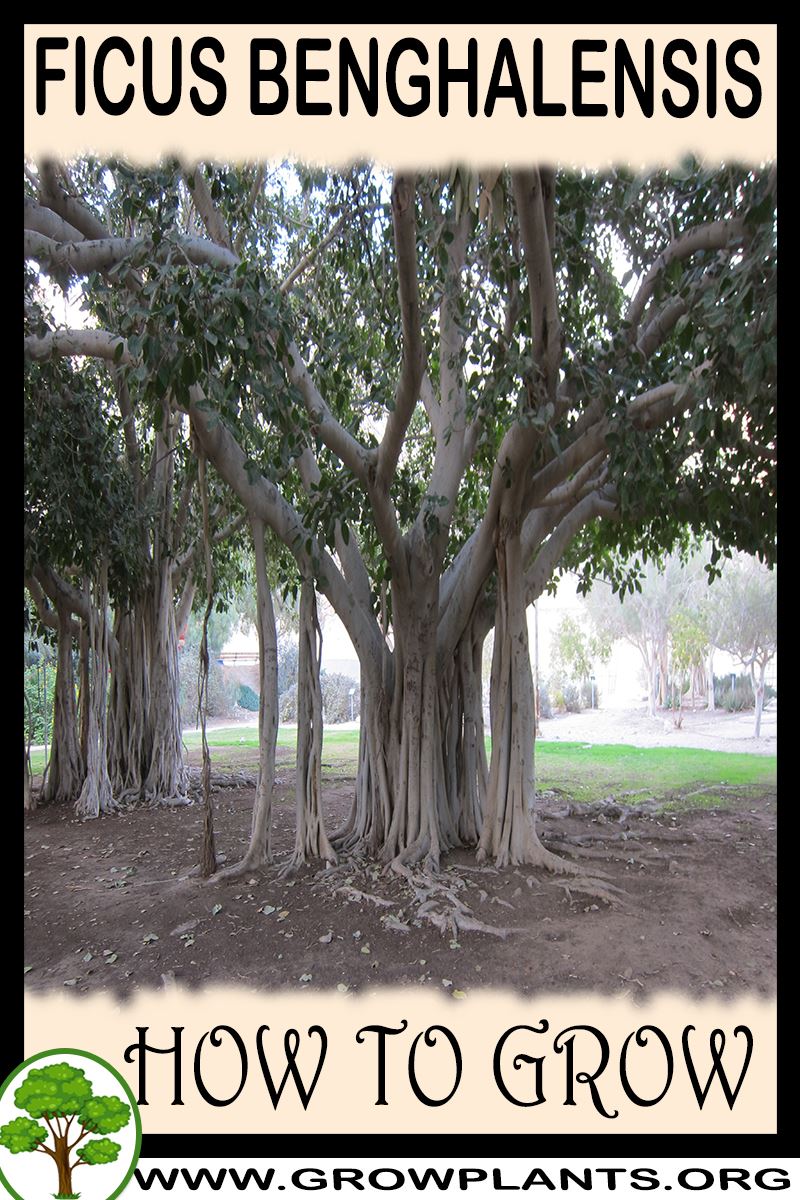
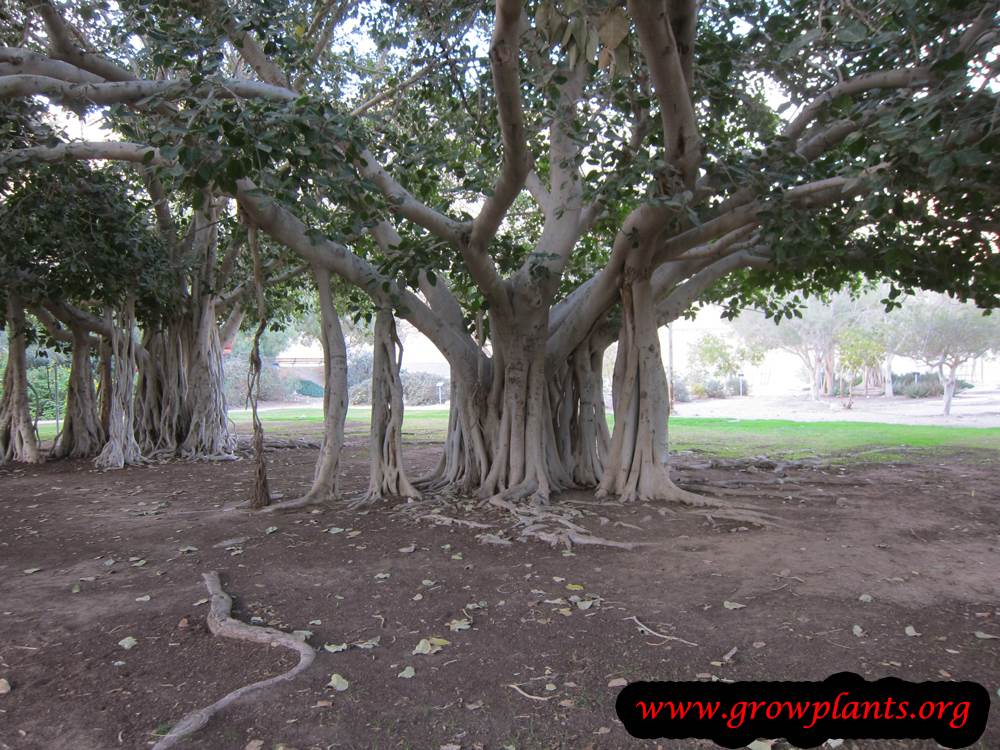
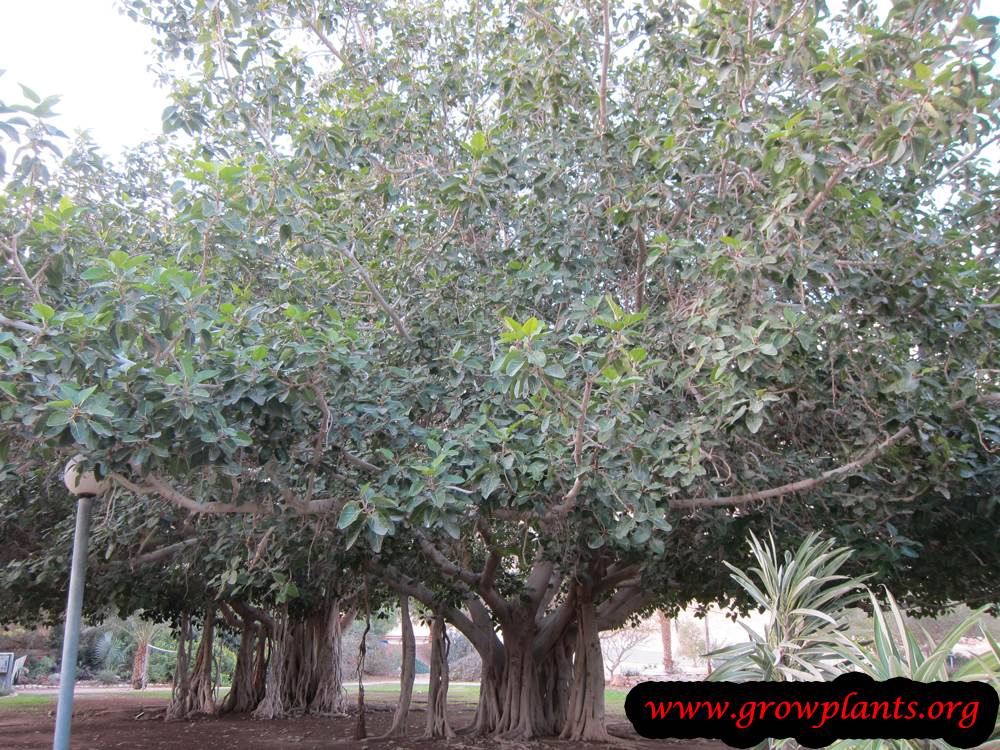
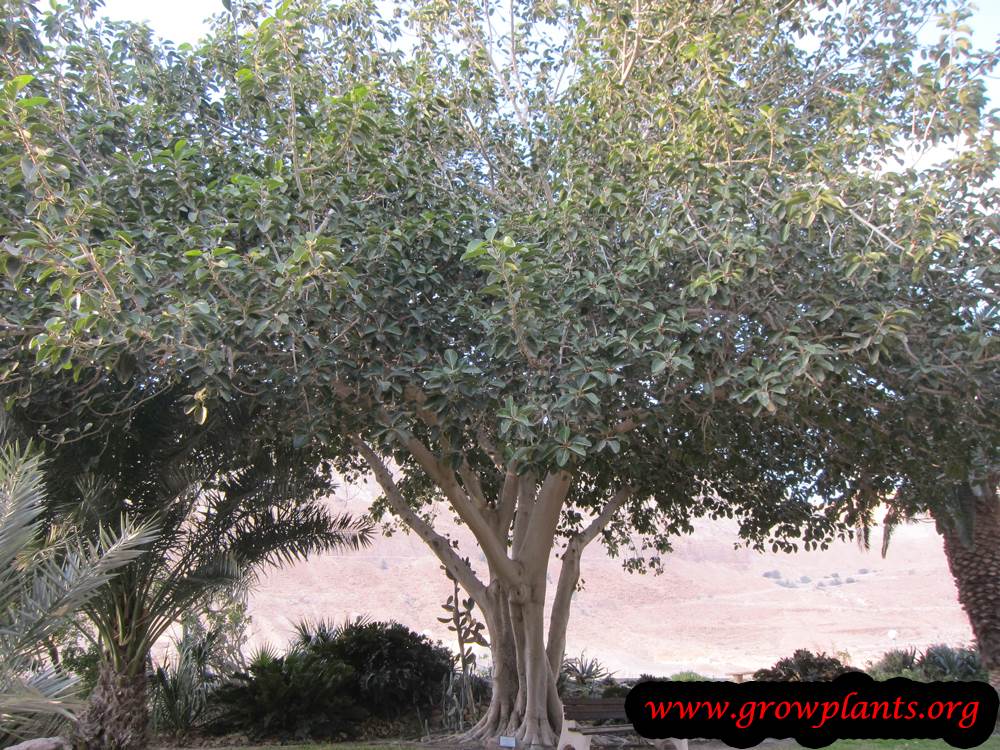
Overview: The Indian banyan, a very large fig tree 10-30 m (33-100 ft) tall that spreads widely on aerial prop roots. Evergreen to semi-deciduous, grown as a shade tree, ornamental, bonsai or houseplant, with edible figs.
Quick Specifications
| Specification | Attribute |
|---|---|
| Plant Type / Life Cycle | Perennial (tree) |
| Foliage Type | Evergreen to Deciduous |
| Mature Size | 10-30 m tall (33-100 ft); spread can be very wide |
| Growth Rate | Moderate to Fast |
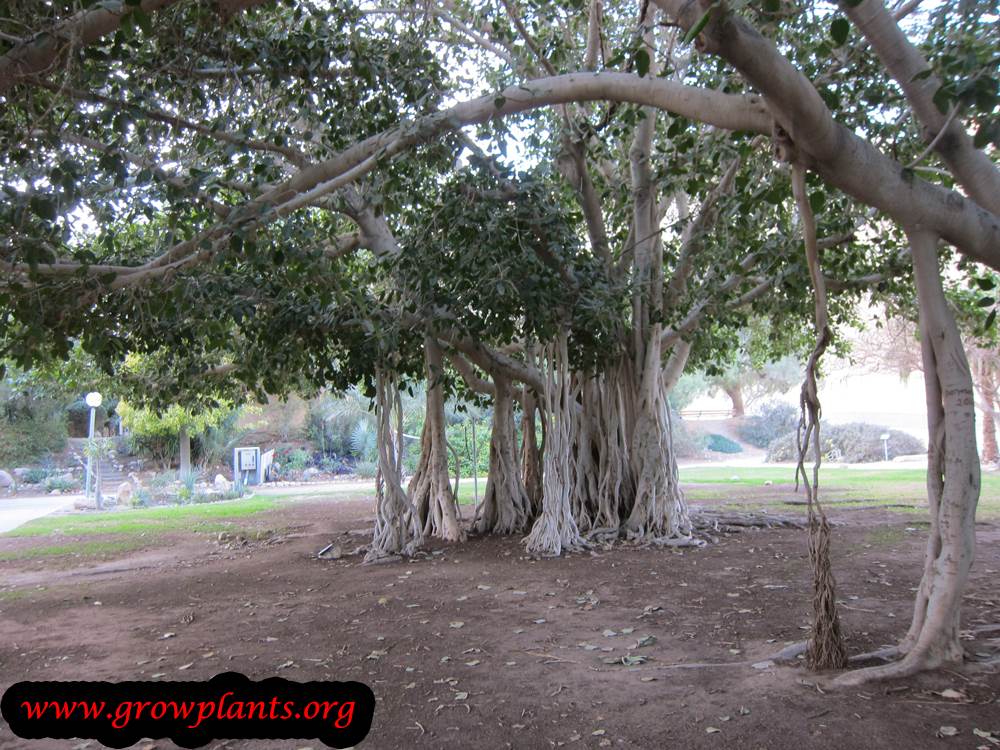
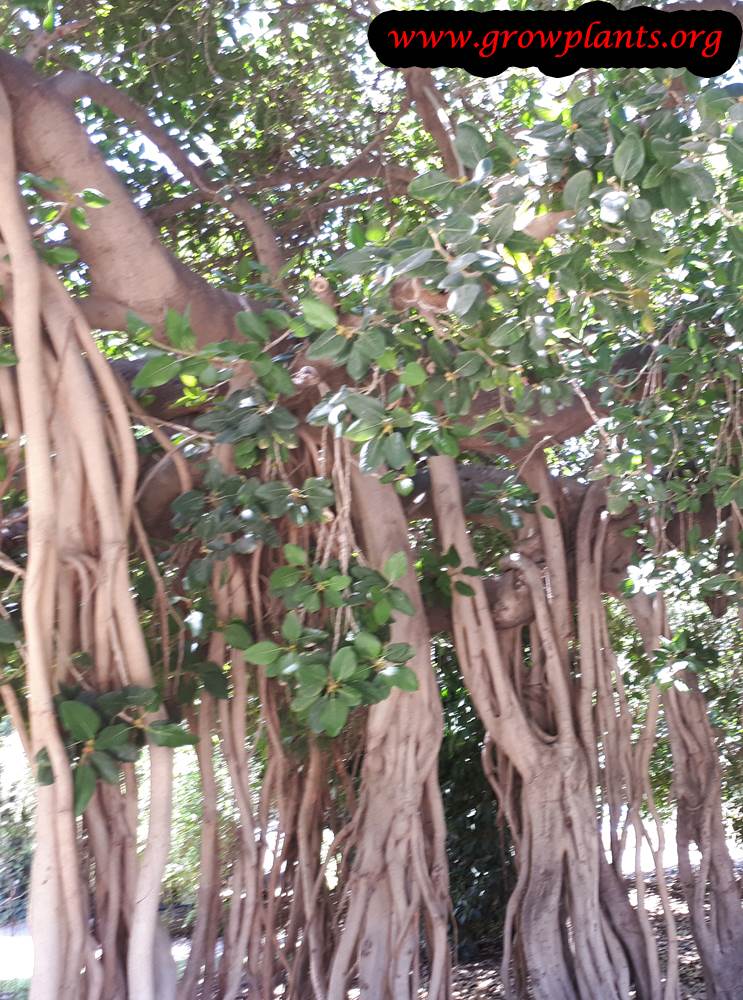
| Root System | Drops aerial prop roots that thicken into secondary trunks; vigorous and spreading (invasive) – keep well away from structures |
| Toxicity | Milky sap is a skin and eye irritant; the fruit is edible |
| Hardiness | USDA zones 10+ |
Growth Form & Structure
- Height & Spread: 10-30 m (33-100 ft) tall and potentially very wide as prop roots form new trunks; kept small as a bonsai, container plant or houseplant.
- Growth Habit & Form: Massive spreading tree; aerial roots descend from the branches and root to form additional trunks.
- Lifespan & Maturity: Very long-lived; begins bearing fruit in about 3-5 years.
Anatomy & Physical Features
- Trunk & Bark: A broad main trunk supplemented over time by pillar-like prop roots.
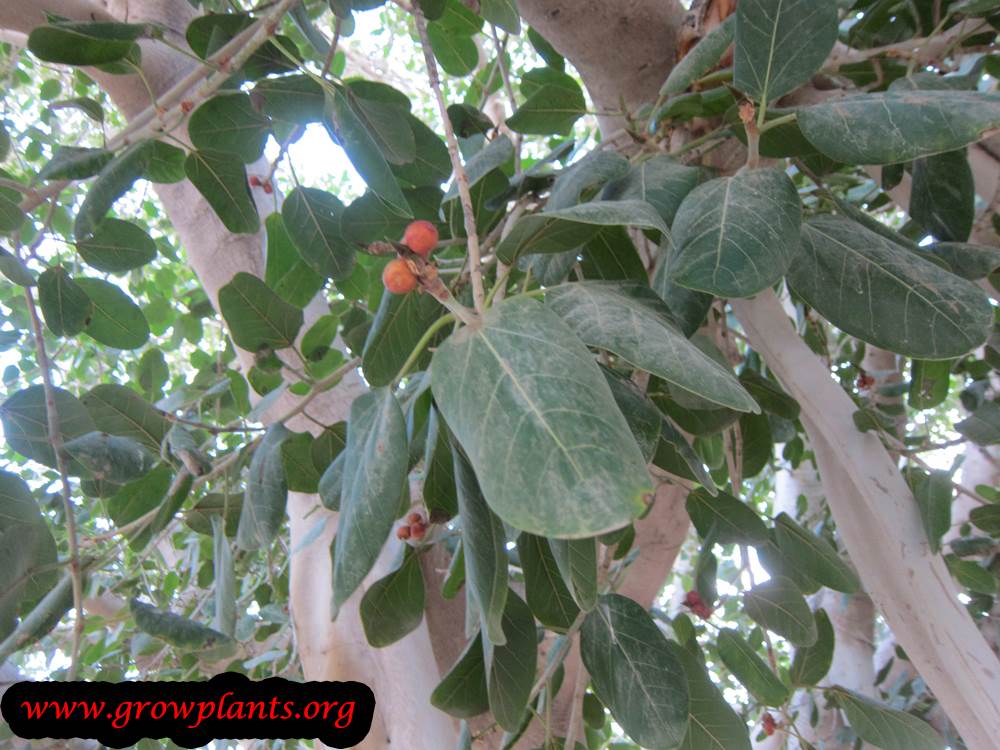
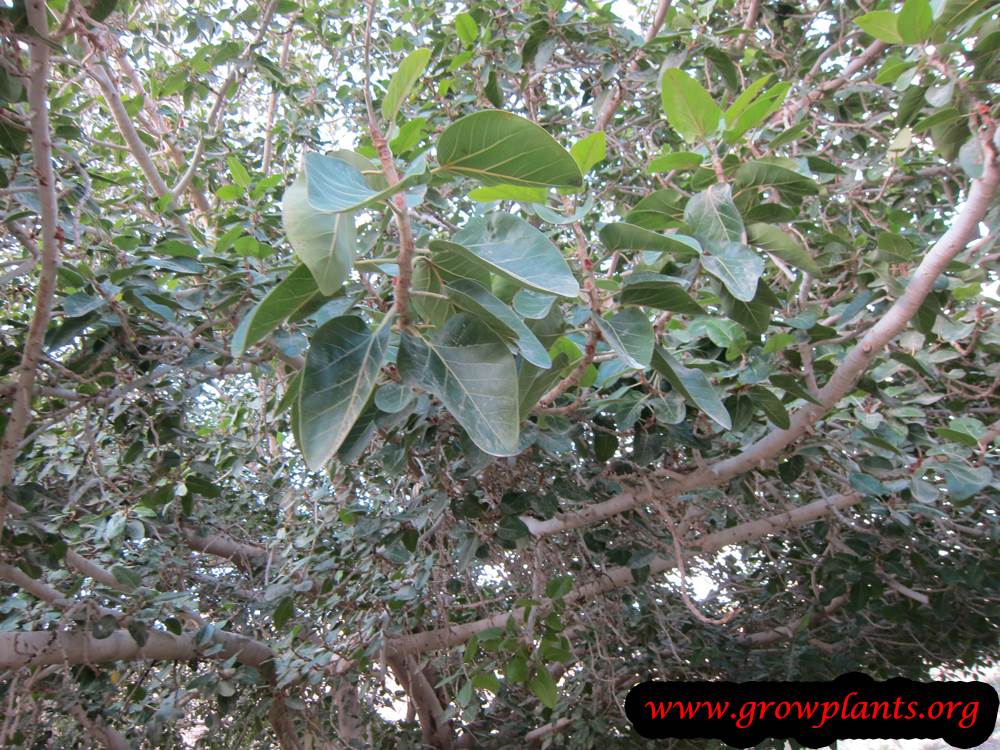
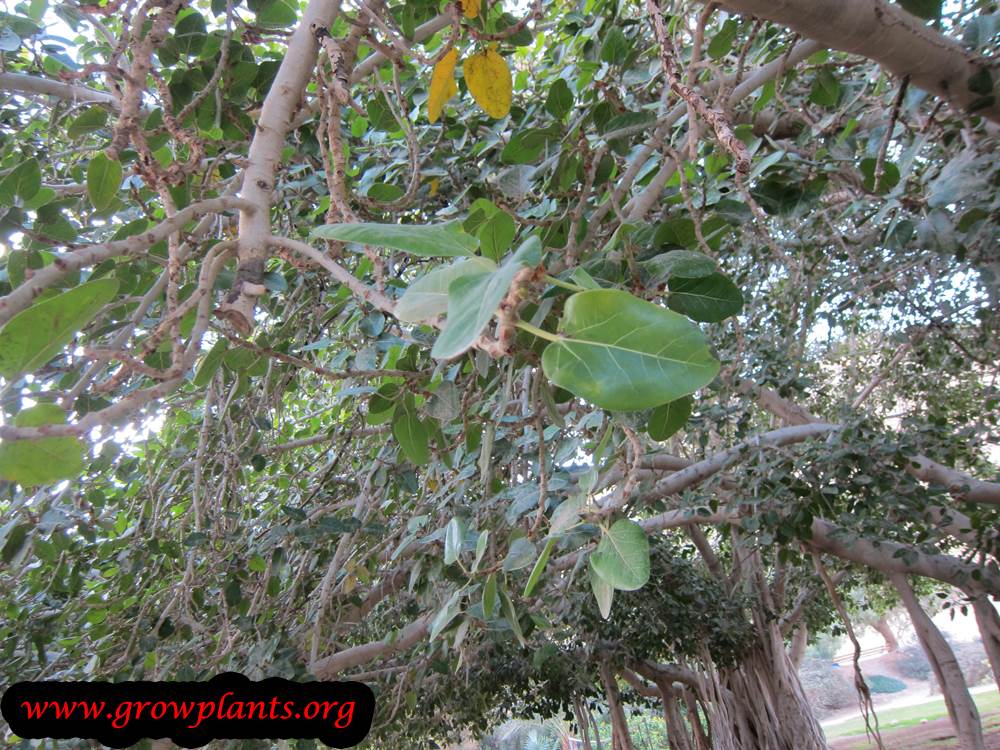
- Leaves & Foliage: Large, leathery green elliptic leaves; the ‘Audrey’ variety has lighter veins.
- Flower Characteristics: Flowers hidden inside the hollow fig, pollinated by fig wasps (full detail in the Bloom guide).
- Fruit Profile: Small teardrop-shaped edible figs, red to orange (full detail in the Fruit guide).
Primary Uses & Landscape Value
- Edible Uses: Figs eaten fresh or made into jam, juice, dried fruit or fruit leather.
- Functional & Ornamental Roles: Grown as a large shade tree, ornamental, bonsai and indoor houseplant; drought tolerant.
Care Guide: Planting, Soil & Watering
Overview: Ficus benghalensis (banyan or Indian banyan) is a very large, drought-tolerant fig for Mediterranean, tropical, desert and subtropical climates (hardiness zone 10+), also grown indoors and as bonsai. It prefers rich, well-draining soil kept lightly moist and mulched, and takes full sun to full shade.
Quick Care Requirements
| Requirement | Ideal Condition |
|---|---|
| Planting Season | Warm season, varying by zone (see below) |
| Growth Rate | Moderate to Fast |
| Soil Type | Rich, well-draining, mulched |
| Water Need | Low to Moderate – drought tolerant once established |
Planting & Establishment
- Best Planting Season: Plant in the warm season: spring to summer in zone 10a, spring to autumn in zone 10b, and year-round in zone 11 and above.
- How to Plant:
- Hole Preparation: Dig a hole noticeably wider and deeper than the root ball – roughly 70-100% larger – then backfill so the roots sit on firm, amended ground at root-ball depth.
- Soil Amendments: Mix plenty of organic matter, humus and dried leaves into the backfill to feed the young tree and improve the soil; top with mulch to hold moisture.
- Planting Depth: Set the tree so the root collar sits at soil level, loosen the outer roots of the root ball slightly, and firm the soil gently – not so hard that it compacts, not so loose that the tree wobbles.
- Growth Speed & Expectations: A moderate-to-fast grower that becomes an immense spreading tree, 10-30 m tall; it is kept small only through container growing and bonsai pruning.
Soil, Watering & Drainage Care
- Soil Mix & Drainage Needs: Grow in rich, well-draining soil kept lightly moist and mulched; in containers use a potting or peat mix with perlite and organic matter, a pot about 50% larger than the root ball, and plenty of drainage holes so water never sits at the roots and rots them.
- Watering Schedule & Technique:
- Young / Newly Planted: For the first two weeks after planting, water every day, preferably in the morning, so the root ball never dries out while it establishes.
- Established: Once established it is drought tolerant and needs only modest water; water deeply but let the top of the soil dry between waterings, and never leave it waterlogged.
- Seasonal Adjustments: Increase watering in hot weather – above about 30 C (86 F) young trees need noticeably more – and ease off in the cool season when growth slows.
Climate, Light & Hardiness
Ficus benghalensis (banyan fig) is a large, drought-tolerant shade tree suited to mediterranean, tropical, desert, and subtropical climates, or grown as a houseplant or bonsai elsewhere, and it is adaptable from full sun through full shade. It is frost-sensitive and listed hardy outdoors from about USDA zone 10 upward.
Quick Climate Specifications
| Climate Zones | Mediterranean, tropical, desert, subtropical (or houseplant/bonsai) |
|---|---|
| USDA Hardiness Zones | 10+ |
| Frost Tolerance | Low |
| Light Conditions | Full Sun to Full Shade |
Sunlight & Light Exposure
Optimal Light Setup
Highly adaptable, tolerating everything from full sun to full shade, which is part of why it also succeeds as an indoor tree or bonsai.
Temperature Extremes & Hardiness
USDA Hardiness & Regional Limits
Reliable as a permanent outdoor tree from about zone 10 upward; below that it is grown as a container plant, indoor tree, or bonsai that is protected from cold and frost.
Cold Damage & Winter Protection
Like most figs of tropical origin, it is damaged by cold well above actual freezing, with tender new growth affected first; young or container-grown plants are more vulnerable than large, established specimens.
Frost Sensitivity
Low frost tolerance; avoid exposing it to frost or prolonged cold, and increase watering care when temperatures climb above roughly 30°C (86°F) rather than treating heat itself as a hardiness concern.
Wind, Humidity & Microclimate
Humidity Preferences
Appreciates humid conditions, particularly while young or being propagated, though established outdoor trees are adaptable.
Container-Grown Note
Container and bonsai specimens have less insulated roots than an in-ground tree, so they need to be moved under cover sooner as cold weather approaches.
Growing in Pots, Balconies & Indoors
The banyan (Ficus benghalensis) is a giant tree in the wild (10-30 m), but the grower confirms it makes a good indoor plant when grown as a dwarf or bonsai in a container with its roots deliberately restricted.
Quick Details
- Container Size: Minimum 25-50 L (5-10 gal), bigger is better; step up in pots ~50% larger than the root ball rather than jumping straight to a huge container
- Indoor Suitability: A genuine houseplant grown as a dwarf/bonsai with controlled roots
- Best Spot: Very tolerant – full sun, half shade or even full shade; brighter light gives stronger growth
- Soil & Drainage: Potting mix or peat with perlite and organic matter; plenty of drainage holes
- Watering in Pots: Small to average water; water regularly but never let it sit wet – overwatering ruins the soil and roots
Indoors & On the Windowsill
- A real houseplant: The grower marks it as suitable indoors. Grown in a pot with limited roots it stays a manageable dwarf or bonsai; give it a bright spot, though it tolerates lower light.
- Care: Keep it away from cold draughts and the dry air of heaters and air conditioners; wipe the large leaves to keep them clean and let it breathe.
- Safety: The milky sap can irritate skin and mouths – keep it out of reach of children and pets.
On a Balcony or Patio
- Light & wind: It enjoys a bright, warm patio in the growing season; bring it in before cold weather. Turn and shelter it so it does not become one-sided or wind-battered.
Choosing the Pot, Soil & Long-Term Care
- Pot & drainage: Strong drainage holes are a must; if you use a saucer, empty it – never let water stand more than a day.
- Potting mix: Potting mix or peat with perlite and organic matter.
- Feeding: Feed at least once a year, and top up humus once or twice – potted plants use up nutrients faster.
Grower’s Container Tip
- Keep it dwarf, refresh the roots: Limit both top and root growth to hold it as a dwarf or bonsai. Pot up only in ~50% steps rather than starting a small tree in a big container. Every few years, in a large pot there is no need to change all the soil – swap part of it from the side and top and trim some of the root ball to keep the plant compact and the soil healthy.
Fertilizing & Feeding
Fed more generously while young and building structure, then eased back to light maintenance feeding once established – container and bonsai specimens need lighter, more frequent feedings than the same tree grown in open ground.
Quick Fertilizing Specs
| Feeding Level | Moderate – heavier while young and establishing, lighter once mature. |
|---|---|
| young_feeding | A nitrogen-leaning feed to support canopy and trunk development. |
| mature_feeding | A lighter, balanced maintenance feed once the tree is established. |
| Main Nutrient Priority | Nitrogen while young, shifting to balanced maintenance feeding at maturity. |
| Best Feeding Period | The active growing season, easing off well before the tree slows for the year. |
| Organic Options | Compost, aged manure, or organic matter worked into the root zone or top-dressed in containers. |
| Micronutrients | Iron is the main watch-item, especially for container specimens grown in alkaline mix or hard water. |
Feeding by Growth Stage
Establishment after planting
Help a newly planted or newly potted banyan fig develop a strong root system before asking it to put on major top growth.
| Nutrient direction | A balanced feed focused on root establishment rather than aggressive top growth. |
|---|---|
| Timing | The first growing season after planting or repotting, once the tree shows it is actively rooting in. |
| Frequency | A light feeding once the tree is clearly established and growing is usually enough at this stage; avoid feeding right after transplant. |
| Fertilizer types | A balanced, general-purpose tree/shrub fertilizer applied lightly around the root zone., Mulch and organic matter worked in to support the developing root system. |
| Precautions | Skip fertilizing right after transplanting until new growth confirms the roots have taken hold, and always water in well after any feeding. |
Young tree development
Support the extra vigor a young banyan fig needs to build its canopy and trunk structure, whether grown in the ground, in a large container, or trained as a bonsai.
| Nutrient direction | A nitrogen-leaning feed while the tree is young, easing toward a more balanced feed as it matures. |
|---|---|
| Timing | Through the main growing season while the tree is still young and actively building structure. |
| Frequency | Several feedings spread through the active growing season support steady development without overdriving soft, weak growth. |
| Fertilizer types | A nitrogen-forward, balanced tree fertilizer while the tree is young., For container or bonsai specimens, a fertilizer formulated for the reduced soil volume, applied lightly and often rather than in large single doses. |
| Routine trace nutrients | iron, manganese |
| Precautions | In containers or bonsai training, keep individual feedings light since the limited soil volume concentrates salts quickly; flush the pot with plain water occasionally to prevent excess buildup. |
Established maintenance feeding
Maintain steady health and canopy condition on a tree that has reached a stable, established size, whether in the landscape or as a long-term container/bonsai specimen.
| Nutrient direction | A lighter, balanced maintenance feed – established specimens need far less than young, actively expanding trees. |
|---|---|
| Timing | During the active growing season, well before the tree’s growth naturally slows for the year. |
| Frequency | A single application during the active growing season is typically enough for an established landscape tree; container-grown and bonsai specimens usually do better with a few light feedings spread through the season instead. |
| Fertilizer types | A balanced, general-purpose tree fertilizer at a light maintenance rate., Mulch and organic matter refreshed around the root zone or, for containers, worked lightly into the top of the potting mix. |
| Routine trace nutrients | iron |
| Precautions | Established trees rarely need more than light maintenance feeding – resist the urge to feed heavily, since overfeeding a mature tree mostly just pushes excess soft growth. |
Nutrient Deficiency Signs & Corrections
Leaves yellow between veins that remain green, most noticeable on newer growth.
| Possible causes | Iron becoming less available in alkaline or high-pH soil, common in containers with hard tap water., Waterlogged or compacted soil limiting root function., General nutrient shortfall from infrequent feeding. |
|---|---|
| Appears first on | The newest leaves first. |
| What to check | Soil or potting mix pH and the mineral content of the water used., Drainage and whether the root zone stays wet., How long since the last feeding. |
| Possible correction | Improve drainage, consider using low-mineral or rainwater, and if the pattern is classic interveinal yellowing, apply a chelated iron product per its label. |
The tree drops a noticeable number of leaves outside of normal seasonal shedding.
| Possible causes | Root stress from being pot-bound, recently repotted, or moved to a different light/temperature environment., Inconsistent watering, either too dry or waterlogged., Nutrient shortfall in a container that has not been fed or repotted in a long time. |
|---|---|
| Appears first on | Whole-plant leaf drop rather than one leaf position. |
| What to check | Recent changes in location, light, or temperature., Whether the plant is root-bound or overdue for fresh soil., Watering consistency over the past few weeks. |
| Possible correction | Stabilize watering and environment first, and if the container hasn’t been fed or refreshed in a long time, step up to a balanced feed and consider repotting into fresh mix. |
A container-grown or bonsai specimen puts on little new growth and leaves look pale rather than deep green.
| Possible causes | Nitrogen depletion from the limited soil volume in a pot., Roots outgrowing the container and becoming pot-bound., Insufficient light for the tree’s needs. |
|---|---|
| Appears first on | New growth throughout the canopy. |
| What to check | When the pot was last fed or the soil last refreshed., Whether roots are visibly circling or emerging from drainage holes., Light levels at the plant’s current location. |
| Possible correction | Step up to a nitrogen-leaning feed for the growing season, refresh the potting mix or move up a container size if root-bound, and confirm adequate light. |
Pruning, Training & Seasonal Maintenance
This banyan fig tolerates pruning well and, given fast to medium growth and a mature size of 10-30m, actively needs it – its own care guidance calls for pruning once a year to keep it manageable. The main objective is size and structure control (this species will outgrow most landscapes and gardens if left unchecked), or, where grown as a container specimen or bonsai, disciplined canopy and root restriction. The safest window is winter dormancy, ideally after any fruit has finished, when structural cuts heal cleanly and regrowth is not sacrificing a current crop.
Quick Pruning & Maintenance Specs
| Pruning Tolerance | High |
| Primary Pruning Window | Winter, after fruiting has finished |
| Secondary Maintenance Window | Light sanitary/weak-branch removal possible year-round |
| Typical Frequency | Once a year structurally; bonsai/container specimens need more frequent light work |
| Main Objective | Keep the tree’s ultimate size manageable; remove weak branches; shape the framework |
| Young Plant Priority | Establish a strong branch framework early, before wood thickens |
| Mature Plant Priority | Ongoing size/spread containment, weak and included branch removal, canopy thinning |
| Best Tool Type | Scaled to cut size – secateurs for young/bonsai work up to a pruning saw and pole pruner on a large, uncontained specimen |
| Avoid Heavy Pruning During | Peak summer heat/active flush stress; right before the summer–autumn fruit set if a crop is wanted |
Pruning by Plant Age & Size
Newly Established
Remove only damaged or dead growth while the young tree establishes its roots; avoid hard structural cuts in the first season.
Young / Formative
Select a strong framework of well-spaced main branches with wide, sturdy branch angles while wood is still thin and easy to correct – this matters because a mature banyan’s canopy becomes very large and heavy, and narrow or weak crotches formed early become structural liabilities later. In containers grown as bonsai, formative work instead means wiring/pinching new growth and restricting root spread from the first repot.
Mature / Established
Because this species’ own care guidance is explicitly to “keep the tree small,” mature-tree pruning is centered on repeat size and spread containment, not just tidying: annual structural reduction, removal of weak or crossing branches, and canopy thinning to manage the immense eventual size and weight of an unrestrained banyan canopy.
Seasonal Pruning Schedule
Dormant / Winter
Objective: main structural pruning – framework correction, size/spread reduction, weak-branch removal. Remove: weak, crossing, or included branches; growth pushing the tree beyond its intended footprint. Do not remove: the main scaffold branches needed for the tree’s shape. Expected response: vigorous regrowth given this species’ fast growth rate. Fruiting impact: minor – winter falls after the summer/autumn fruiting window.
Post-Harvest
Objective: light follow-up pruning once any fruit has finished, per the plant’s own guidance that pruning is “better after the fruits.” Remove: spent fruiting twigs, minor deadwood. Expected response: clean entry into the winter structural prune without sacrificing the current crop.
Flowering & Fruiting Wood
Figs form enclosed within the fruit-like syconium in the leaf axils of the current season’s growth, and this species relies on a specific fig wasp (or hand pollination) to set fruit at all. Because this tree is grown mainly as an ornamental, shade or bonsai specimen rather than for its edible crop, pruning timing has little practical impact on yield – but where fruit is wanted, avoid stripping large amounts of new growth immediately before the summer–autumn fruit set, and prefer pruning after harvest as the plant’s own guidance states.
Structural Pruning & Training
Select against narrow, included branch unions, which are prone to failure under this species’ eventual heavy canopy. Height and spread control is the central task given a potential mature size of 10-30m – almost always larger than desired in a garden setting. Thin the canopy periodically to admit light and reduce wind resistance in such a large crown, which also improves air circulation around the various sap-feeding pests (scale, mealybugs, thrips, whitefly, spider mite) this species can carry.
Special Growth to Remove
Not usually propagated by grafting, so rootstock suckers are not a concern here. Do remove weak, thin, or storm-damaged branches promptly, since this species’ own facts note a wood-boring beetle (Batocera rufomaculata) among its pests – damaged or dying wood is a likely entry point and should not be left in place. On a mature landscape specimen, watch for aerial/prop roots developing from lower limbs, a hallmark banyan trait; left unmanaged these can root into the ground and become additional trunks, which is desirable for a true banyan feature but should be a deliberate choice, not an accident, in a contained garden setting.
Container & Small-Space Pruning
This is one of the more important sections for this species: its own facts specifically describe growing it in a container as dwarf or bonsai form, which requires deliberately limiting both canopy and root growth rather than applying in-ground advice at a smaller scale. Repot and root-prune every few years, cutting back part of the root mass rather than replacing all the soil at once, and pair root reduction with a matching canopy reduction so the two stay in balance. Bonsai specimens need frequent light pinching and wiring through the growing season rather than one infrequent hard cut.
Tools
Bypass secateurs for young growth and bonsai pinching; loppers for mid-sized branches; pruning saw for structural limbs on a landscape specimen; a pole pruner for upper canopy work if the tree has been allowed to grow tall rather than kept small.
Tool Hygiene & Disease Risk
Routine: clean, sharp tools are sufficient for general cuts. No major tool-transmitted pathogen is documented for this species, but the noted wood-boring beetle (Batocera rufomaculata) means damaged or infested prunings should be removed from the site and destroyed rather than left in a brush pile near the tree.
Cut Placement & Technique
Cut just outside the branch collar and avoid flush cuts or long stubs. On large limbs, stage the cut (undercut, then top cut, then a final flush trim) to avoid tearing bark under the limb’s own weight. This species’ sap is noted as a skin irritant, so wear gloves and eye protection when making cuts.
Heavy Pruning & Rejuvenation
Tolerated well given fast to medium growth – an overgrown specimen can be cut back hard (pollarded or substantially reduced) to control size, with vigorous regrowth expected and only a temporary reduction in fruiting. On a very large, long-unpruned tree, spread the reduction over two or more seasons rather than removing the whole excess canopy at once.
Post-Pruning Care
After opening up a dense canopy, watch previously shaded bark for sunscald in strong sun. Monitor fresh wounds for borer entry given the pest noted above. Water to support regrowth, but skip extra feeding right after a hard prune – the cut itself is already forcing new growth, and this species’ own care guidance already calls for feeding four times a year on its own schedule.
Common Pruning Mistakes
Letting the tree grow to its full unmanaged size in a garden setting rather than following its own “keep the tree small” guidance; ignoring aerial/prop roots until they become a structural or property issue; cutting without gloves given the irritant sap; flush-cutting large limbs, inviting decay and borer entry; root-pruning a container/bonsai specimen hard without a matching canopy reduction, which stresses the plant.
When NOT to Prune
Avoid major structural work during active hot-season growth flushes or drought stress. Avoid heavy pruning immediately before the summer–autumn fruit set if a crop is wanted. Always wear protective gloves and eyewear given the irritant sap, regardless of season.
Recommended Tools (by task)
- bypass_secateurs – young shoots and bonsai pinch work.
- loppers – mid-sized branches beyond secateur capacity.
- pruning_saw – structural limbs on an established landscape tree.
- pole_pruner – upper canopy reach on a large, uncontained specimen (this species can reach 10-30m if not kept small).
Pruning Troubleshooting
| Problem | Possible Cause | What to Check | Corrective Action |
| Explosive regrowth after a hard prune | Fast/medium growth rate responding strongly to a heavy cut | Density and vigor of new shoots | Thin the flush rather than letting it all mature; consider staging future reductions over multiple seasons |
| Large limb failure at a branch union | Narrow, included branch angle formed during early growth | Branch attachment angle and any bark inclusion | Remove or shorten the weaker of the two competing limbs while young; on mature trees, reduce weight on included unions |
| Dieback or dead patches after pruning | Wound entry by wood-boring beetle or decay from a flush cut | Cut placement (collar vs. flush) and any boring holes/frass near wounds | Recut properly outside the collar; remove and destroy affected wood; avoid leaving large fresh wounds through peak pest activity |
| Tree outgrowing its space despite pruning | Pruning too infrequent or too light for this species’ vigor | Interval since the last structural prune and amount removed | Return to an annual structural prune as the plant’s own care guidance specifies |
Propagation Guide
Ficus benghalensis is most practically propagated from stem cuttings, which the site notes establish faster than seedlings even though growing from seed isn’t hard either; vegetative propagation isn’t strictly necessary, but it is the reliable way to keep a specific leaf-pattern selection, such as the variegated ‘Audrey’ form, true. Overall this banyan fig is an easy tree to propagate by either method.
Quick Propagation Specs
| Best Propagation Method | Stem cuttings (brown, fully-grown wood) |
| Alternative Methods | Seed; air layering for large or established specimens |
| Propagation Difficulty | Easy |
| Seed True-to-Type | Usually true-to-type for the species; named variegated selections like ‘Audrey’ need vegetative propagation to stay true |
| Vegetative True-to-Type | Yes |
| Best Propagation Season | Spring, summer or autumn (avoid summer sowing in hot climates and autumn sowing in cold winters) |
| Seed Germination Time | 7–21 days |
| Cutting Rooting Time | Typically several weeks under warm, humid conditions |
| Germination Temperature | 21–26°C (70–79°F) |
| Seed Sowing Depth | On the soil surface or covered lightly, about 3mm (1/8in) |
Growing from Seed
Seed Handling & Viability
Seed is small; store it in a dry, dark location, and soak for 24 hours before sowing.
Sowing Season
Spring, summer or autumn. In hot climates avoid summer sowing; in cold-winter areas avoid autumn sowing. Spring generally gives seedlings the best growing conditions.
Sowing Depth & Orientation
Sow on the soil surface or cover lightly with about 3mm (1/8in) of soil. Space seedlings roughly 2x2cm (1x1in), though 5x5cm (2x2in) is better, and transplant once seedlings have 5–7 leaves rather than while still very young.
Germination Conditions
High humidity and warm temperature are both important; use a light, well-aerated soil, half shade to full sun, and ideally light fog. Sowing in a greenhouse or small covered plastic box helps maintain the needed humidity.
Germination Time
About 7–21 days.
Seedling Care
Keep watering moderate with high humidity and moist soil while seedlings are small, then gradually reduce humidity and expose them to sun as they establish.
Stem Cuttings
Cutting Type
Choose a brown, fully-grown branch rather than soft green growth.
Rooting Hormone
Use a rooting hormone formulated for woody branches; it is recommended for this type of cutting.
Rooting Setup
Keep humidity high and the soil moist. An enclosed box or greenhouse works well as long as it is well ventilated with some air movement; mist or fog the cutting to maintain moisture and take care not to let it dry out.
Rooting Time
Typically several weeks under these warm, humid conditions.
Air & Ground Layering
Not detailed in the site’s own notes, but as with other large Ficus trees, air layering a semi-hardwood branch (wounding or girdling the bark, wrapping with moist sphagnum moss and plastic) is a widely used supplementary technique for producing a same-size clone more quickly than a cutting, and suits this species’ use as an ornamental or bonsai specimen.
Bloom & Flower Guide
Quick Details
- Bloom Season: Winter into spring
- Time to First Bloom: Only mature trees carry figs, so young or indoor plants may never flower
- Flower Appearance: No showy bloom — the tiny flowers are hidden inside the fig (a hollow structure called a syconium)
- Edibility: Grown as an ornamental and shade tree; there is no flower to eat
Detailed Blooming Overview
Ficus benghalensis, the Indian banyan, flowers in a way that is easy to miss entirely: its flowers are not borne in the open but are packed inside the small, hollow figs. What looks like a fruit is really an inside-out flower head, lined on the inside with dozens of minute flowers. Because of this, the tree never puts on a visible display of blossom — the "bloom" happens sealed away within each fig.
Flower Characteristics
- Very small flowers lining the inner wall of the enclosed fig.
- No petals or colour visible from outside — the fig itself is all you see.
- Male and female flowers are held within the same structure.
Bloom Care & Thinning
- Pollination: In its native range each fig is pollinated by its own specific fig wasp, which enters through a tiny pore; outside that range the figs usually go unpollinated, and gardeners sometimes hand-pollinate to set viable seed.
- No deadheading needed: There is no open flower to tend — the tree is grown for its foliage, aerial roots and stately form.
- Handling: The milky sap can irritate skin and eyes, so take care when pruning.
Fruit & Uses
Ficus benghalensis (banyan) produces small teardrop-shaped, red-to-orange figs that are genuinely edible, though the tree is mostly grown ornamentally as a shade or bonsai tree rather than for its fruit. The figs can be eaten fresh or processed, but they are small and seedy – much less substantial than cultivated edible figs – so expectations for the harvest should be modest.
Quick Edible Specs
| Edible Parts | Fruit (fig/syconium) |
|---|---|
| Main Use(s) | Culinary – eaten fresh or processed into jam, juice, dried fruit, or fruit leather; also an important food source for birds/wildlife |
| Eaten Raw or Cooked | Can be eaten raw when fully ripe; also cooked/processed |
| Preparation Required | Rinse before eating; wear gloves when picking – the milky sap is a skin irritant (see Safety) |
| Harvest Season | Summer to autumn |
| Time to First Harvest | Several years of tree growth before it fruits (see Propagation/Care info) |
| Storage | Best used fresh soon after picking, or dried/processed for longer storage |
| Safety/Toxicity Caveat | the tree’s milky latex sap is a skin irritant; wear gloves and avoid contact with skin or eyes when harvesting |
Fruit
The fig-type fruit (a syconium – a hollow receptacle enclosing tiny flowers inside) ripens from green to red or orange in a teardrop shape, through summer into autumn. Birds are the main competition for the crop, so netting is used to protect fruit if a harvest is wanted. Because the figs are small with numerous tiny seeds, they are more often left for birds and wildlife than harvested in bulk; where they are picked, ripe (fully colored, slightly soft) fruit is eaten out of hand, or cooked down into jam or juice, dried, or made into fruit leather – treat these processed uses as achievable in principle, with modest yield and quality compared to cultivated fig varieties.
Preparation, Uses & Safety
All parts of the tree, including the fruit skin and stem, exude a milky latex sap that can irritate skin (a difficulty noted for this species) – wear gloves when harvesting and rinse off any sap contact promptly. Ripe fruit needs no preparation beyond rinsing for fresh eating, or ordinary cooking down for jam, juice, or drying. This module covers only the edible fruit; see Pruning for how cutting affects fruiting and Care for general tree maintenance.
Pests, Diseases & Troubleshooting
Overview: Ornamental figs are woody tropical foliage plants whose troubles are dominated by sap-sucking insects on soft indoor growth (scale, mealybug, spider mite, thrips) and by environmental stress that triggers the fig’s notorious leaf drop and brown-spotting. Management is overwhelmingly cultural: stable warmth, bright indirect light, steady moisture without waterlogging, good airflow, and regular leaf inspection catch problems before they spread.
Quick Troubleshooting Overview
| Issue / Pest | Main Symptom | Primary Solution |
|---|---|---|
| Scale insects | Sticky honeydew, black sooty mould, brown bumps on stems/leaf backs | Wipe off, horticultural oil, isolate plant |
| Mealybugs | White cottony fluff in leaf axils and undersides | Alcohol swab, insecticidal soap/oil, repeat |
| Spider mites | Fine pale stippling, dull leaves, webbing in dry air | Raise humidity, rinse foliage, miticidal oil |
| Thrips | Silvery scarring, curled or galled new leaves | Sticky traps, prune galled tips, spinosad/oil |
| Leaf drop | Sudden shedding after a move, draft or watering change | Stabilise light, warmth and watering; be patient |
| Brown leaf spots | Dark blotches with yellow halos or dry brown edges | Diagnose water/root vs. infection; adjust watering |
Common Pests & Management
- Soft/brown scale (Coccus hesperidum, Saissetia coffeae):
- Symptoms: Flat to domed brown or greenish limpet-like bumps along stems, petioles and leaf undersides; they exude sticky honeydew that turns leaves shiny then black with sooty mould, and heavy infestations sap vigour and yellow the foliage.
- Prevention & Control: Wipe off with a damp cloth or a cotton bud dipped in dilute alcohol, prune badly encrusted stems, and isolate the plant. Follow with horticultural or neem oil to smother crawlers, repeating every couple of weeks; wash off honeydew and sooty mould so the leaves can breathe.
- Mealybugs (Planococcus citri):
- Symptoms: White cottony tufts tucked into leaf axils, new growth and along veins on leaf undersides, with honeydew and sooty mould as for scale; growth becomes stunted and puckered.
- Prevention & Control: Dab colonies with an alcohol-moistened cotton bud, then treat with insecticidal soap or neem/horticultural oil, hitting the hidden crevices. Check the root zone at repotting for root mealybug and quarantine new plants for a few weeks.
- Two-spotted spider mite (Tetranychus urticae):
- Symptoms: Fine pale stippling and a dull, faded, sometimes bronzed cast to the leaves, with delicate webbing under leaves and around growing tips; worst on plants kept hot, dry and airless.
- Prevention & Control: Raise humidity and improve airflow, rinse the foliage (including undersides) periodically, and treat persistent infestations with insecticidal soap or a light miticidal/horticultural oil. Predatory mites work well in conservatories.
- Thrips (Gynaikothrips ficorum, Frankliniella spp.):
- Symptoms: Silvery or bronzed scarring and tiny black frass specks on leaves; the fig-specific Cuban laurel thrips roll and pucker new leaves into galled pockets where they breed.
- Prevention & Control: Prune out and destroy rolled or galled tips, use blue sticky traps to monitor, and treat with spinosad or neem/horticultural oil, repeating to catch successive generations. Keep new growth clean and inspect fresh flushes.
- Whitefly (Trialeurodes vaporariorum):
- Symptoms: Tiny white moth-like insects that flutter up when the plant is disturbed, with honeydew and sooty mould; more common under glass and in warm interiors.
- Prevention & Control: Hang yellow sticky traps, rinse or vacuum adults, and treat undersides with insecticidal soap or horticultural oil on a regular cycle until numbers collapse.
Diseases & Fungal Issues
- Bacterial and fungal leaf spot (Xanthomonas campestris pv. fici, Cercospora / Colletotrichum spp.):
- Symptoms: Water-soaked or angular dark spots, sometimes with yellow halos, that enlarge and merge; fungal anthracnose produces tan sunken lesions, often starting at leaf edges or tips.
- Treatment & Management: Remove and bin affected leaves, avoid wetting the foliage, and improve airflow and spacing. Sterilise pruning tools. A copper-based fungicide/bactericide helps check spread on valued specimens, but correcting the wet, stagnant conditions that favour it matters more.
- Root and stem rot (Phytophthora / Pythium spp.):
- Symptoms: Wilting despite moist soil, yellowing lower leaves, soft blackened stem bases and dark mushy roots; the plant declines steadily and may collapse.
- Treatment & Management: Prevention is the cure: use a free-draining mix, a pot with drainage, and let the top of the soil dry between waterings. If caught early, repot into fresh mix, cut away rotten roots, and water sparingly until recovery; discard hopelessly rotted plants and their soil.
- Botrytis (grey mould) (Botrytis cinerea):
- Symptoms: Fuzzy grey-brown mould on damaged or shaded leaves and cuttings in cool, damp, still air.
- Treatment & Management: Remove affected tissue, improve ventilation and lower humidity around the plant, and avoid overhead wetting. Rarely needs chemical control indoors if airflow is corrected.
Growing Difficulties & Abiotic Problems
- Leaf drop (environmental shock):
- Cause & Symptoms: Figs shed leaves in response to sudden change – being moved, cold drafts, heating vents, low light, or a swing between over- and under-watering; the large-leaved banyan is vigorous but still sheds when stressed or moved.
- Correction Strategy: Choose a stable, bright spot away from drafts and vents and leave the plant there; keep watering even. Expect some drop after any move and allow weeks for it to settle rather than reacting with more water or fertiliser.
- Brown spots and leaf-edge browning:
- Cause & Symptoms: Dark interior spots often signal overwatering/root rot or bacterial spot, while crispy brown edges and tips usually mean underwatering, low humidity, salt build-up or scorch – diagnosis depends on where the browning sits.
- Correction Strategy: Check soil moisture and roots first; correct watering to a steady cycle, flush salts occasionally, and raise humidity. Move away from hot dry drafts and harsh midday sun through glass.
- Leaf scorch / sunburn:
- Cause & Symptoms: Abrupt exposure to strong direct sun (or a grow light too close) bleaches and browns leaf surfaces, especially after life in lower light.
- Correction Strategy: Acclimatise gradually to brighter light and provide bright but filtered exposure; move back from intense direct sun through glass.
- Chlorosis (yellowing):
- Cause & Symptoms: Uniform paling or interveinal yellowing points to nutrient shortage (nitrogen, magnesium or iron) or waterlogged roots that cannot feed.
- Correction Strategy: Feed with a balanced foliage-plant fertiliser in the growing season, correct any waterlogging, and use an iron/magnesium supplement if interveinal yellowing persists on new leaves.
- Sap irritation (handling):
- Cause & Symptoms: Cut or broken stems ooze a milky latex that can irritate skin and eyes and stain surfaces.
- Correction Strategy: Wear gloves when pruning, keep the sap off skin and pets, and wipe tools and surfaces afterwards.
What Helps – Products & Tools
Care is mostly cultural – stable light and warmth, steady watering, humidity, airflow and leaf-wiping. For insects, reach for insecticidal soap, neem or light horticultural oil (scale, mealybug, mites, whitefly), spinosad for thrips, and yellow/blue sticky traps for monitoring. For leaf-spot diseases a copper fungicide helps, while root rot is handled by repotting into free-draining mix rather than any spray.
Varieties & Cultivars
- Audrey: Green, big leaves with lighter green to white veins. — Shop Audrey on Amazon