Plant Profile & Key Characteristics
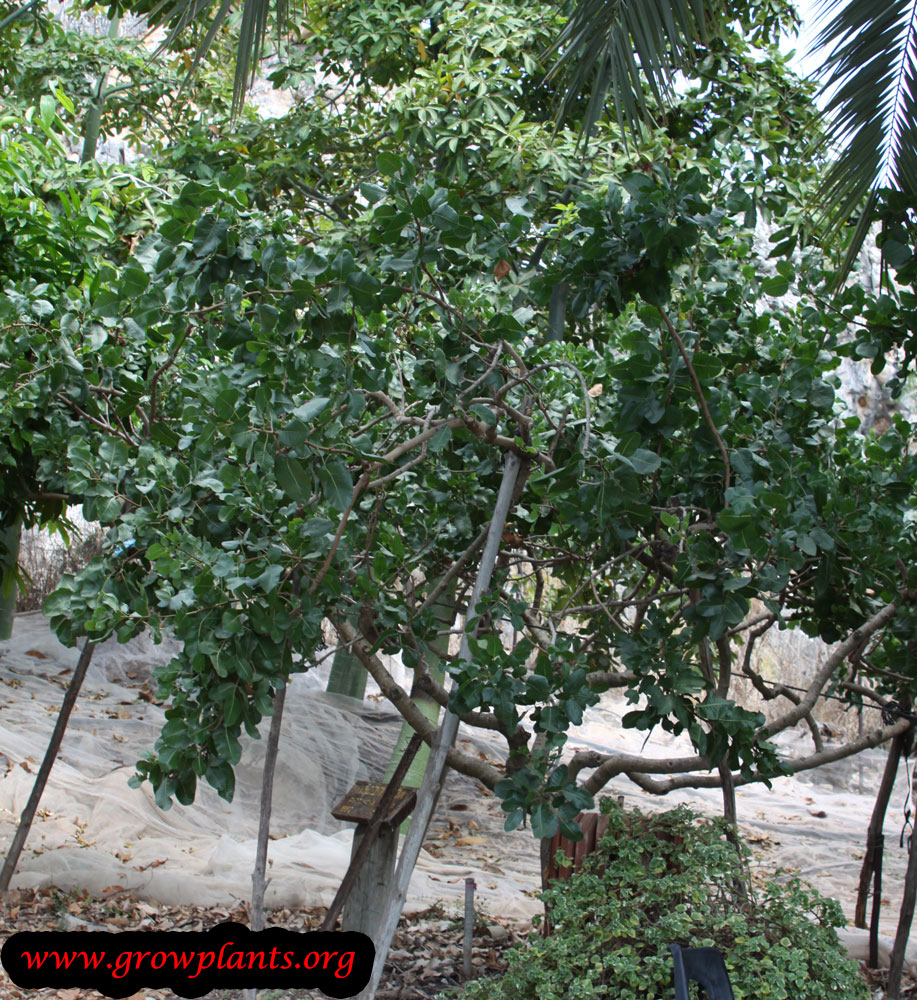
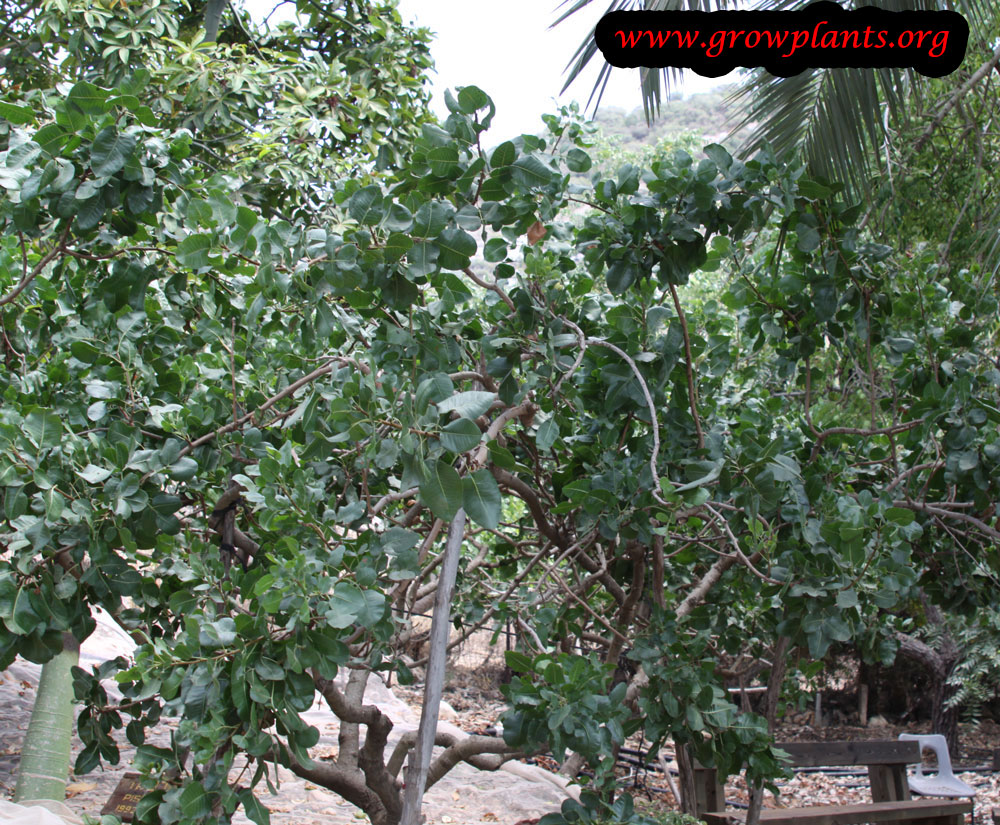
Overview: The pistachio (Pistacia vera) is a deciduous nut tree of 4–7 m (12–21 ft) suited to hot, dry climates with cold winters. It is grown for its edible green nuts, which ripen as a heavy crop roughly every second year.
Quick Specifications
| Specification | Attribute |
|---|---|
| Plant Type / Life Cycle | Perennial deciduous tree |
| Foliage Type | Deciduous |
| Mature Size | 4–7 m (12–21 ft) tall |
| Growth Rate | Moderate |
| Root System | Deep taproot (highly drought tolerant) |
| Toxicity | Non-toxic / edible — the nuts are a food crop |
| Hardiness | USDA zones 7–10a |
Growth Form & Structure
- Height & Spread: A modest orchard tree of 4–7 m (12–21 ft); not suited to pots or indoor growing.
- Growth Habit & Form: Spreading, multi-branched deciduous tree; male and female flowers grow on separate trees, so both are needed for a nut crop.
- Lifespan & Maturity: A long-lived tree that starts bearing after about 7–9 years and reaches full, high-yield production only after 15+ years, cropping heavily on an alternate-year cycle.
Anatomy & Physical Features
- Leaves & Foliage: Compound deciduous foliage.
- Flower Characteristics: Small red wind-pollinated flowers, borne on separate male and female trees.
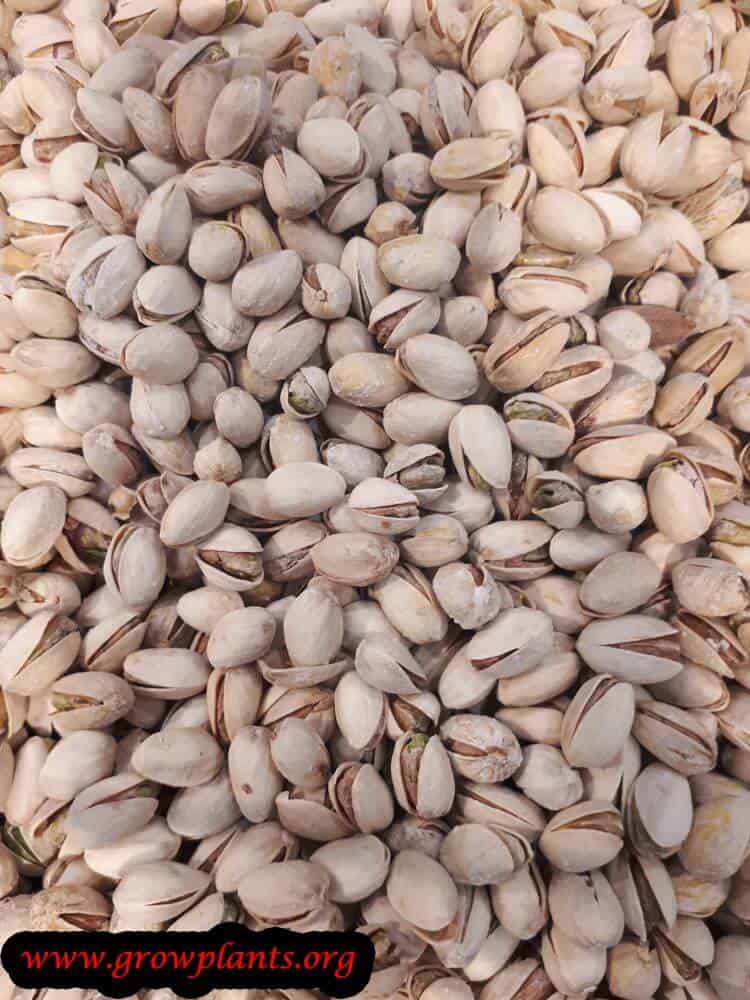
- Fruit Profile: Green-brown nut in a yellow-brown shell that mostly splits open on its own at maturity.
Primary Uses & Landscape Value
- Edible Uses: Nuts eaten raw or roasted and used in ice cream, cakes and confectionery.
- Functional & Ornamental Roles: Primarily a nut-crop tree for hot, dry regions; also provides light shade.
Care Guide: Planting, Soil & Watering
Overview: Pistachio (Pistacia vera) is a deciduous tree (hardiness zone 7-10a) suited to hot, dry-summer climates with cold winters that supply its needed chilling. It grows best in deep, very well-drained soil and is highly drought- and heat-tolerant once established; note that separate male and female trees are needed for nuts.
Quick Care Requirements
| Requirement | Ideal Condition |
|---|---|
| Planting Season | In the dormant season, from late winter to spring |
| Growth Rate | Moderate |
| Soil Type | Deep, well-drained soil; tolerates poor, sandy and alkaline ground but dislikes wet feet |
| Water Need | Low to moderate – deep but infrequent, keeping the soil on the dry side |
Planting & Establishment
- Best Planting Season: Plant bare-root or container trees while dormant, from late winter into spring, before growth begins.
- How to Plant:
- Hole Preparation: Dig a deep hole as wide as the root ball, loosening the base to encourage a deep taproot in free-draining ground.
- Soil Amendments: Avoid rich, moisture-holding amendments; instead ensure sharp drainage, adding grit on heavy soil.
- Planting Depth: Set the root collar level with the soil surface and keep any graft union above soil level.
- Growth Speed & Expectations: Growth is moderate; trees reach about 4-7 m (12-21 ft) and are slow to come into full bearing.
Soil, Watering & Drainage Care
- Soil Mix & Drainage Needs: Excellent drainage is essential – pistachio rots in wet soil, so a deep, dry, well-drained site with a dry summer suits it best.
- Watering Schedule & Technique:
- Young / Newly Planted: Water young trees deeply but occasionally to build a deep root system.
- Established: Established trees are very drought-tolerant; water deeply and infrequently, letting the soil dry well between waterings.
- Seasonal Adjustments: Keep the summer relatively dry to avoid disease, and withhold water over the dormant winter.
Climate, Light & Hardiness
The pistachio (Pistacia vera) is a deciduous tree of subtropical, Mediterranean and high-elevation desert climates, uniquely combining a need for hot, dry summers with a cold winter for chilling. It grows in full sun and, dormant, is hardy across the site's rated zones 7–10a.
Quick Climate Specifications
| Climate Zones | Subtropical, Mediterranean, high-elevation desert |
|---|---|
| USDA Hardiness Zones | 7–10a (per site data) |
| Optimal Temp Range | Hot, dry summers, roughly 25–35 °C (77–95 °F) |
| Frost Tolerance | Moderate to High when dormant; spring growth frost-sensitive |
| Light Conditions | Full sun |
| Wind Tolerance | Moderate to High |
Sunlight & Light Exposure
Optimal Light Setup
A full-sun tree; intense light and summer heat are essential for good nut development.
Direct Sun Requirement
Direct, all-day sun is required; it will not crop well in shade.
Best Exposure / Orientation
A hot, open, well-drained site is ideal; because male and female flowers grow on separate trees, plant both sexes with air movement between them for wind pollination.
Temperature Extremes & Hardiness
USDA Hardiness & Regional Limits
Rated for zones 7–10a, it tolerates real winter cold at the cooler end yet demands a long, hot, dry summer, which is why it thrives in continental and high-desert climates. Cold tolerance varies by cultivar, tree age and conditions.
Cold Damage & Winter Protection
Dormant wood is fairly cold-hardy within its zone range; young trees are more tender, and prolonged wet cold is less well tolerated than the dry cold of its native range.
Frost Sensitivity
The dormant tree is hardy, but late-spring frosts can damage the emerging shoots and flowers, reducing set.
Extreme Heat Tolerance
Very high - it is one of the most heat- and drought-adapted nut trees and positively needs hot summers.
Chilling Requirement
The site specifies about 4–6 weeks of winter chilling. Without sufficient chill, bud break and flowering are poor and erratic; this cold requirement, paired with the need for hot dry summers, is why pistachio suits continental Mediterranean and high-desert zones rather than mild coastal ones.
Frost-Free Growing Season
A long, hot, frost-free summer is required for the nuts to fill and split; short-summer areas will not ripen a crop even where winter cold is tolerated.
Wind, Humidity & Microclimate
Humidity Preferences
Strongly prefers dry air; humid summers encourage disease and are poorly suited to it.
Dry-Air Tolerance
Very high - a hallmark of this desert-adapted species.
Wind Tolerance
Moderate to high; wind aids pollination, and the tree is well adapted to open, breezy sites.
Rainfall & Seasonal Moisture
Adapted to dry-summer climates with low seasonal rainfall; it strongly dislikes summer humidity and prolonged wet conditions. (This is climatic adaptation, not a watering schedule.)
Microclimate Recommendations
A hot, sunny, dry, well-drained site with a cold enough winter for chilling gives the best cropping.
Growing in Pots, Balconies & Indoors
The pistachio tree (Pistacia vera) is a large tree (4-7 m / 12-21 ft), so the grower marks it as neither a houseplant nor a long-term container plant – and rightly so. You can keep a young seedling in a pot for its first few years, but it soon needs open ground to develop a deep root system and full canopy. It needs hot, dry summers with a winter chill, and both a male and a female plant to set nuts.
Quick Details
- Container Size: A large tub only while young (say 30-50 L / 8-12 gal for the first years); ultimately it needs open ground
- Indoor Suitability: Not a houseplant – it becomes a full-size tree and needs full sun
- Best Spot: full sun, planted in the ground outdoors
- Soil & Drainage: Deep, free-draining soil; a potted young tree needs an aerated mix that drains freely
- Watering in Pots: A potted young tree dries out far faster than one in the ground – check it often
Indoors & On the Windowsill
- Houseplant limits: The pistachio tree (Pistacia vera) will not grow indoors – it demands full sun and quickly outgrows any room. Even a bright window only suits it at the seedling stage.
- Young plants: A seedling can spend its first year or two in a pot in a bright spot before being planted out.
On a Balcony or Patio
- Young specimen only: A young tree can stand on a large patio or balcony in full sun, but pots dry quickly and give no room for a taproot, so it will need moving into the ground within a few years.
Choosing the Pot, Soil & Long-Term Care
- Pot & drainage: If growing a young tree, use the largest tub you can with strong drainage holes; skip a standing water saucer to avoid root rot. Terracotta breathes and dries faster, while glazed or plastic holds moisture longer.
- Potting mix: An aerated, organic-rich mix – for example peat or coir with perlite or vermiculite.
- Watering: Water sparingly – pistachio is drought tolerant once established and dislikes wet roots.
- Feeding: A potted tree exhausts its soil quickly and nutrients leach with every watering, so feed more often than a tree in open ground.
- Potting on: Move it into a larger container each year while young; once it is too big for pots, plant it out.
Fertilizing & Feeding
Pistachio tree is a moderate feeder: build the soil with organic matter and give balanced, restrained feedings through the growing season, easing off toward dormancy.
Quick Fertilizing Specs
| Feeding Level | Moderate |
|---|---|
| young_feeding | Nitrogen-forward complete fertilizer to build the framework. |
| mature_feeding | Balanced complete fertilizer with adequate potassium at bearing. |
| Main Nutrient Priority | Nitrogen while young, shifting to balanced with potassium once bearing. |
| Best Feeding Period | Through the active growing season. |
| Organic Options | Compost, well-rotted manure and organic mulch. |
| Micronutrients | Watch for iron, zinc and manganese on alkaline soils. |
| Soil pH | Slightly acidic to near neutral. |
| Reduce/Stop Feeding | Ease off as growth slows heading into winter dormancy. |
Feeding by Growth Stage
Newly planted
Help the young Pistachio tree settle in and push out roots after planting.
| Nutrient direction | Focus on root establishment; keep any feeding gentle and let roots reach into the surrounding soil. |
|---|---|
| Timing | From planting through the first season of establishment. |
| Frequency | Feed sparingly at this stage; well-prepared soil often carries the tree through the first months. |
| Fertilizer types | Well-rotted compost or organic matter worked into the planting area, A gentle complete fertilizer only if soil is poor |
| Precautions | Avoid strong or concentrated fertilizer against fresh roots. Pistachio is drought-adapted and tends to bear heavily in alternate years. |
Young tree (building the frame)
Drive steady shoot and canopy growth so the Pistachio tree builds a strong framework before it starts bearing.
| Nutrient direction | Lean toward nitrogen to support vegetative growth, within a complete fertilizer. |
|---|---|
| Timing | Through the active growing season in the pre-bearing years. |
| Frequency | Several light feedings across the growing season rather than one heavy dose. |
| Fertilizer types | A nitrogen-forward complete fertilizer, Compost or other organic matter to build soil |
| Routine trace nutrients | iron, manganese, zinc |
| Precautions | Taper feeding as growth slows toward autumn so new shoots harden before cold weather. |
Established, approaching bearing
Keep the Pistachio tree growing vigorously while it matures toward its first nuts crop.
| Nutrient direction | Shift toward a balanced complete fertilizer as the tree fills out. |
|---|---|
| Timing | During the active growing season as the tree nears bearing age. |
| Frequency | Light, spread-out feedings through the growing season. |
| Fertilizer types | A balanced complete fruit-tree fertilizer, Compost or mulch to maintain soil health |
| Routine trace nutrients | iron, manganese, zinc |
| Precautions | Watch for pale or yellowing new leaves on alkaline soils, a sign micronutrient availability is low. |
Mature, bearing nuts
Support consistent nuts yield and quality while keeping the mature Pistachio tree healthy.
| Nutrient direction | A balanced complete fertilizer with adequate potassium to support the developing crop. |
|---|---|
| Timing | From the start of the growing season through crop development. |
| Frequency | Split light feedings across the growing season; adjust to the tree’s vigor and crop load. |
| Fertilizer types | A balanced complete fruit-tree fertilizer with potassium, Compost or organic mulch |
| Routine trace nutrients | iron, manganese, zinc |
| Precautions | Reduce feeding as the season ends so the tree can harden off before dormancy. |
Nutrient Deficiency Signs & Corrections
Interveinal yellowing on the youngest leaves, with veins staying green.
| Possible causes | High or alkaline soil pH locking up iron, Waterlogged or poorly drained soil stressing roots, Genuinely low available iron in the soil |
|---|---|
| Appears first on | Newest leaves at the shoot tips. |
| What to check | Soil pH and drainage, Whether symptoms track wet spells, Recent watering pattern |
| Possible correction | Correct pH and drainage first; where needed apply a chelated iron product per its label. |
Uniform pale-green to yellow older leaves with weak, slow growth.
| Possible causes | Low soil nitrogen, Leaching of nitrogen from sandy soil, Competition from grass or weeds at the root zone |
|---|---|
| Appears first on | Older, lower leaves first. |
| What to check | Overall shoot vigor and colour, Ground cover competition, Recent feeding history |
| Possible correction | Apply a nitrogen-containing complete fertilizer during active growth and keep the root zone weed-free. |
Small, narrow leaves, shortened internodes and rosetting of new shoots.
| Possible causes | High or alkaline soil pH reducing zinc uptake, Sandy, low-organic-matter soil, Cold, wet soil slowing root activity |
|---|---|
| Appears first on | New spring growth at the shoot tips. |
| What to check | Soil pH, Leaf size versus normal, Shoot spacing and rosetting |
| Possible correction | Correct soil pH and, where confirmed, apply a zinc product per its label. |
Scorching and browning along the margins of older leaves, with poor crop fill.
| Possible causes | Low soil potassium, Leaching from sandy soil, Heavy crop load drawing down reserves |
|---|---|
| Appears first on | Margins of older, lower leaves. |
| What to check | Crop load versus leaf health, Soil type and leaching, Feeding history |
| Possible correction | Use a complete fertilizer that supplies potassium through the growing season. |
Pruning, Training & Seasonal Maintenance
Pistachio is a small, slow-to-moderate deciduous nut tree (4–7 m) that is trained and pruned rather like a stone-fruit orchard tree: an open-centre (vase) framework is built in youth, and mature trees get an annual dormant thinning to remove weak, dead and crossing wood and, crucially, to renew fruiting wood. Its facts confirm autumn-to-winter pruning of “weak, dead branches” and “branches that grow into each other.” It is dioecious (separate male and female trees, so a pollinator male is essential) and strongly alternate-bearing — a big crop one year, little the next — which pruning can help to even out.
Quick Pruning & Maintenance Specs
| Pruning Tolerance | Moderate – annual dormant thinning & renewal |
| Primary Pruning Window | Dormant, autumn to winter |
| Secondary Maintenance Window | Light summer thinning of dense/vigorous shoots |
| Typical Frequency | Annual (formative early, renewal thereafter) |
| Main Objective | Open-centre vase; steady renewal of one-year fruiting wood |
| Young Plant Priority | Head the young tree; select 3–5 open-centre scaffolds |
| Mature Plant Priority | Thin, renew fruiting wood, remove weak/crossing/dead limbs |
| Best Tool Type | Bypass secateurs & loppers; small pruning saw |
| Avoid Heavy Pruning During | Active spring growth; wet weather (shoot blight) |
Pruning by Plant Age & Size
Newly Established
At planting, a young pistachio is typically headed to encourage low branching for a vase; otherwise remove only damaged wood. It is slow-growing, so early cuts set the frame for years.
Young / Formative
Train an open-centre (vase) tree: select three to five well-spaced, wide-angled scaffolds around an open middle and remove the central competing shoots. This lets light into the canopy — important because pistachio bears on lateral shoots that need good light. Remove inward and crossing growth each dormant season.
Mature / Established
Thin annually to keep the centre open, remove weak, dead and crossing branches, and renew fruiting wood by cutting some older, spent laterals back to encourage fresh one-year shoots. Balanced annual pruning helps moderate the biennial (alternate) bearing swing.
Seasonal Pruning Schedule
Dormant / autumn–winter (primary): the main structural and renewal window — thin, remove weak/dead/crossing wood, and cut back a portion of older laterals to force new fruiting shoots for future crops.
Summer (light): optional thinning of over-vigorous or shading shoots to maintain the open centre; keep it light. In a known heavy-crop year, slightly more renewal helps offset the following “off” year.
Flowering & Fruiting Wood
Pistachio is wind-pollinated and dioecious, so a male tree must be near the females. Nuts are borne laterally on one-year-old wood (buds set the previous season), which is why steady renewal of young lateral shoots matters: remove too much one-year wood and you cut off next season’s crop, but never renewing leaves the tree cropping only on the outer shell of the canopy. Because it alternate-bears, moderate pruning aimed at fresh fruiting wood each year helps smooth production.
Structural Pruning & Training
Maintain the open vase: keep three to five strong scaffolds, remove the centre-filling and crossing shoots, and favour thinning over heading so light reaches the interior laterals. Height is naturally modest, so major reduction is rarely needed.
Special Growth to Remove
Named pistachios are grafted onto rootstock, so remove suckers below the graft union promptly — the rootstock (often a different Pistacia species) is not fruitful and will compete. Clear basal watersprouts that clutter the open centre.
Tools
On this smaller tree, bypass secateurs handle the many one-year lateral cuts, loppers take scaffold and older lateral wood, and a small pruning saw removes the occasional larger limb. No pole pruner is needed at 4–7 m.
Tool Hygiene & Disease Risk
Increased around blighted wood. Pistachio is subject to Botryosphaeria panicle-and-shoot blight and to Verticillium wilt; when cutting out blighted shoots or dead panicles, disinfect the blade so you do not carry the fungus to fresh cuts, and prune in dry weather. Routine clean sharp tools are fine for healthy renewal wood.
Cut Placement & Technique
Use thinning cuts back to a lateral or the branch collar to keep the centre open; when renewing, cut older laterals back to a well-placed one-year shoot or outward-facing bud. Avoid flush cuts and stubs; keep the vase from closing in.
Heavy Pruning & Rejuvenation
Pistachio tolerates renewal pruning well — older, unproductive scaffolds can be cut back over a season or two to force vigorous new fruiting wood — but avoid stripping the whole canopy at once, which sacrifices a crop and can invite shoot blight into many large wounds. Spread renovation across seasons.
Post-Pruning Care
Keep the tree modestly watered (it is drought-adapted — do not overwater) and prune in dry conditions. Monitor renewal cuts for clean healing and watch for blight on the flush of new shoots. Feeding is not a required pruning follow-up.
Common Pruning Mistakes
- Letting the centre close in, shading out the lateral fruiting wood.
- Removing too much one-year wood and cutting off next season’s nuts.
- Never renewing, so cropping retreats to the canopy edge and alternate bearing worsens.
- Cutting blighted shoots with un-sterilised tools; leaving below-graft rootstock suckers.
When NOT to Prune
Avoid pruning during the active spring flush and in prolonged wet weather (shoot-blight infection of cuts). Do not hard-prune a newly transplanted or drought-stressed tree.
Recommended Tools (by task)
- bypass_secateurs – renewal cuts on one-year laterals and sucker removal.
- loppers – scaffold shaping and older lateral wood.
- pruning_saw – the occasional larger scaffold limb.
Pruning Troubleshooting
| Problem | Possible Cause | What to Check | Corrective Action |
| Cropping only at the canopy edge | Old wood never renewed; shaded interior | Age of fruiting laterals; centre density | Thin the centre; renew a portion of old laterals each year |
| Very heavy year then almost none | Natural alternate (biennial) bearing | Crop history and renewal pruning balance | Prune moderately every year to keep fresh fruiting wood coming |
| Dead panicles / dieback of shoots | Botryosphaeria shoot blight | Blighted tips; tool hygiene; wet-weather cuts | Cut back into clean wood, disinfect blades, prune dry |
| Non-bearing suckers from the base | Rootstock growth below the graft | Position relative to graft union | Remove all below-graft suckers promptly |
Propagation Guide
Pistachio is dioecious — male and female flowers are on separate trees — and seedlings are variable and of unknown sex, so orchard trees are budded onto seedling rootstock. Budding/grafting is the necessary method to secure a known female cultivar plus the right proportion of pollinator males.
Quick Propagation Specs
| Best Propagation Method | T-budding / grafting onto Pistacia seedling rootstock |
| Alternative Methods | Seed (to raise rootstock and for breeding only) |
| Propagation Difficulty | Specialist (budding skill; dioecy to manage) |
| Seed True-to-Type | No – variable, and sex is unknown until flowering |
| Vegetative True-to-Type | Yes (buds keep the cultivar and known sex) |
| Best Propagation Season | Seed late winter to spring; budding in the active growing season |
| Seed Germination Time | Emerges in spring after soaking / short chilling |
Growing from Seed (Rootstock)
Seed Handling & Viability
Use fully filled, non-roasted seed. Soak before sowing to aid imbibition; a short cold-moist period improves evenness.
Sowing & Germination
Sow into deep containers for the taproot; seedlings are grown one to two seasons to a buddable caliper. Roughly half of any seedling batch will be male — another reason orchards rely on budded, sex-known trees.
Grafting & Budding
Why Grafting Is Used
Budding delivers a proven female cultivar and lets you set a planned ratio of male pollinators — impossible to guarantee from seed.
Methods, Rootstock & Scion
T-budding onto vigorous Pistacia seedling rootstock is standard; the rootstock also brings drought and soil tolerance. Scion/budwood is taken from a known male or female tree. Pollination is by wind, so site males upwind of females.
Graft Aftercare
Keep the bud union protected until it takes, then force the bud and remove competing rootstock growth. The species also needs its winter chilling and a dry summer to crop well.
Bloom & Flower Guide
Quick Details
- Bloom Season: Spring
- Flower Appearance: Small reddish flowers without petals, borne in clusters – trees are either male or female (dioecious)
- Edibility: Ornamental – grown for its nuts; the flowers are not eaten
Detailed Blooming Overview
Pistachio blooms in spring with small, petal-less reddish flowers gathered in loose clusters. The species is dioecious: any given tree is either male or female, so the two sexes grow on separate plants. The flowers are wind-pollinated and rely on adequate winter chill beforehand to break dormancy and bloom evenly.
Flower Characteristics
- Small reddish flowers, lacking showy petals.
- Male and female flowers on separate (dioecious) trees.
Bloom Care & Thinning
- Pollination: Wind-pollinated; because trees are single-sexed you need both a male and a female (one male can pollinate several females) for the female to set nuts.
- Chilling and bloom: Pistachio needs enough winter chilling hours to flower well – too few chilling hours leads to weak, uneven bloom.
- Bearing habit: Trees tend toward alternate (heavy-then-light) bearing from year to year.
Fruit & Uses
The edible part is the pistachio nut (seed kernel) inside a yellow-brown shell that mostly splits open on its own when ripe. The kernels are eaten raw or used in ice-cream and cakes.
Quick Edible Specs
| Edible Parts | Nut (seed kernel) |
|---|---|
| Main Use(s) | Culinary: eaten raw, in ice-cream and cakes |
| Eaten Raw or Cooked | Both — raw or in prepared dishes |
| Preparation Required | Open the shell (often already split); no detoxification needed |
| Harvest Season | Summer to autumn |
| Time to First Harvest | Several years from planting, with full yields taking longer (see growing notes) |
| Storage | Keeps well in the shell |
Seeds, Pods & Nuts
The green-brown kernel sits inside a yellow-brown shell that mostly opens by itself as the nut ripens. Trees tend to carry a large crop once every two years. The moment the shells split, the nuts should be picked, because open nuts left on the tree are quickly taken by birds.
Harvesting
Harvest from summer into autumn as the shells open. Collect promptly once open to avoid losses to birds and aphid damage.
Preparation, Uses & Safety
Open the split shell and eat the kernel raw, or use it in ice-cream and cakes. No special preparation or detoxification is required.
Pests, Diseases & Troubleshooting
Overview: Pistachio is a deciduous nut tree whose serious problems are a cluster of nut-feeding insects — stink and plant bugs that cause epicarp lesion and kernel necrosis, plus navel orangeworm and carob moth — together with Botryosphaeria panicle-and-shoot blight, Alternaria late blight and Verticillium wilt; the food-safety key is that insect-damaged nuts open the door to Aspergillus and aflatoxin. It is drought- and salt-tolerant but exacting about nut quality. Orchard hygiene, timely harvest and mummy-nut removal underpin all control.
Quick Troubleshooting Overview
| Issue / Pest | Main Symptom | Primary Solution |
|---|---|---|
| Stink / plant bugs | Dark epicarp lesions; blank, aborted or necrotic kernels | Monitor and control at nut-fill; manage weedy hosts nearby |
| Navel orangeworm / carob moth | Webbed, frass-filled nuts; larvae in kernels | Remove mummy nuts in winter; mating disruption; timely harvest |
| Pistachio psylla | Honeydew, sooty mold, leaf drop, weak nut fill | Preserve natural enemies; treat only above threshold |
| Botryosphaeria blight | Black-spotted, blighted panicles, shoots and fruit clusters | Prune out blighted wood; protectant fungicide in wet springs |
| Verticillium wilt | Branch/whole-tree wilt and dieback, vascular staining | Resistant rootstocks; avoid infested ground; no cure once infected |
| Aspergillus / aflatoxin | Moldy, discolored kernels from damaged nuts | Control nut-feeding insects; dry and harvest promptly — food-safety critical |
Common Pests & Management
- Stink bugs and plant bugs (Leptoglossus, Acrosternum, Calocoris spp.):
- Symptoms: Piercing feeders that cause ‘epicarp lesion’ (dark sunken spots on the hull) and, when they reach the kernel, blank, shrivelled or brown-necrotic nuts; large bugs feed later in the season, small bugs earlier.
- Prevention & Control: Monitor with beat sampling and manage weedy and alternate hosts around the orchard that build populations. Time any control to the vulnerable nut-fill window, favor selective materials to conserve natural enemies, and keep orchard borders clean.
- Navel orangeworm (Amyelois transitella):
- Symptoms: The key nut-quality and aflatoxin-linked pest: larvae web and bore into maturing and mummy nuts, filling them with frass and webbing and carrying Aspergillus spores.
- Prevention & Control: Remove and destroy overwintering ‘mummy’ nuts in winter (the cornerstone of control), harvest promptly, and use pheromone monitoring and mating disruption; a well-timed spray at egg-laying supports sanitation in high-pressure orchards.
- Carob moth (Ectomyelois ceratoniae):
- Symptoms: Similar to navel orangeworm — larvae infest splitting and damaged nuts, degrading quality and promoting mold, often entering through hull cracks and stink-bug wounds.
- Prevention & Control: Combine mummy-nut removal, timely harvest and monitoring; reducing hull splitting damage and stink-bug injury lowers entry points for the moth.
- Pistachio psylla (Agonoscena pistaciae):
- Symptoms: Nymphs on leaflets excrete abundant honeydew and ‘lerps’ that blacken foliage with sooty mold, causing early leaf drop, poor nut fill and weakened trees.
- Prevention & Control: Conserve natural enemies (Anthocoris and other predators) that usually regulate it, monitor nymph density, and treat with selective materials only when thresholds are exceeded, avoiding broad sprays that trigger flare-ups.
- Gill’s mealybug and scale (Ferrisia gilli, various scales):
- Symptoms: Colonies on wood, clusters and foliage with honeydew and sooty mold, downgrading nut clusters.
- Prevention & Control: Encourage natural enemies, apply horticultural oil at the crawler stage, and prune out heavy infestations; control ants that protect them.
- Pistachio seed wasp / mites (Megastigmus, Eurytoma; eriophyid & spider mites):
- Symptoms: Seed wasp larvae destroy developing kernels from within; mites stipple, bronze and gall foliage in hot dry conditions.
- Prevention & Control: Remove and destroy infested nuts to break seed-wasp cycles, and manage mites with dust control, horticultural oil and preservation of predatory mites.
Diseases & Fungal Issues
- Botryosphaeria panicle and shoot blight (Botryosphaeria dothidea):
- Symptoms: A major disease: black lesions and cankers on shoots, blighted flower/nut panicles, and black-spotted, killed fruit clusters, worst after warm wet springs; tiny black fruiting bodies dot infected tissue.
- Treatment & Management: Prune out and destroy blighted shoots and cankered wood, remove infected clusters, and improve airflow. Apply protectant fungicides during wet bloom and early-season infection periods, rotating modes of action to avoid resistance.
- Alternaria late blight (Alternaria alternata):
- Symptoms: Dark angular leaf spots with yellow halos and black spotting on hulls in late season, causing defoliation and hull staining, favored by humidity and dew.
- Treatment & Management: Improve canopy airflow through pruning and avoid excessive late-season irrigation and dense growth; apply protectant fungicides in humid climates where the disease is established.
- Verticillium wilt (Verticillium dahliae):
- Symptoms: Sudden wilting and dieback of individual branches or whole young trees, with vascular streaking; a soil-borne fungus persisting for years, worst after susceptible previous crops.
- Treatment & Management: Plant Verticillium-resistant rootstocks (a key reason modern orchards use them), avoid ground previously cropped to susceptible hosts, and keep trees vigorous; there is no cure for infected trees.
- Aspergillus / aflatoxin (Aspergillus flavus, A. parasiticus):
- Symptoms: Moldy, off-colored kernels producing aflatoxin, a serious food-safety contaminant; strongly linked to insect damage and delayed, moist harvest.
- Treatment & Management: Control nut-feeding insects (especially navel orangeworm), harvest promptly, and dry nuts quickly to safe moisture; minimize hull damage and splitting, since intact, undamaged nuts rarely become contaminated.
- Phytophthora root and crown rot (Phytophthora spp.):
- Symptoms: Decline, gumming at the crown and root rot in heavy or over-irrigated soils.
- Treatment & Management: Plant on well-drained sites and tolerant rootstocks, avoid waterlogging and prolonged saturation, and keep the crown dry; there is no rescue once major roots rot.
Growing Difficulties & Abiotic Problems
- Alternate bearing:
- Cause & Symptoms: Pistachio naturally swings between heavy and light crop years, stressing the tree and complicating pest timing.
- Correction Strategy: Support the tree with balanced nutrition and irrigation and appropriate pruning to even out cropping; expect and plan for the off-year.
- Blank nuts and poor split:
- Cause & Symptoms: Inadequate pollination (a wind-pollinated dioecious tree) gives empty shells, while stress causes non-splitting or early-split nuts vulnerable to pests and mold.
- Correction Strategy: Ensure adequate male trees upwind for pollination, and manage water and nutrition through nut fill for proper kernel development and hull split; avoid late-season water stress.
- Salinity and boron / water stress:
- Cause & Symptoms: Though salt-tolerant, excess salinity or boron and erratic water reduce yield and quality.
- Correction Strategy: Manage irrigation to leach salts, monitor water quality and boron, and provide steady moisture during nut fill while allowing good drainage.
What Helps — Products & Tools
For pistachio, orchard sanitation is the master tool — winter mummy-nut removal, prompt harvest, and fast drying to control navel orangeworm and aflatoxin. Add pheromone traps and mating disruption for nut moths, horticultural oil for scale and mealybug crawlers, protectant fungicides for Botryosphaeria and Alternaria blights, and Verticillium-resistant rootstocks. Use selective insecticides to conserve psylla predators, and spray in the evening to protect bees.