

Plant Profile & Key Characteristics
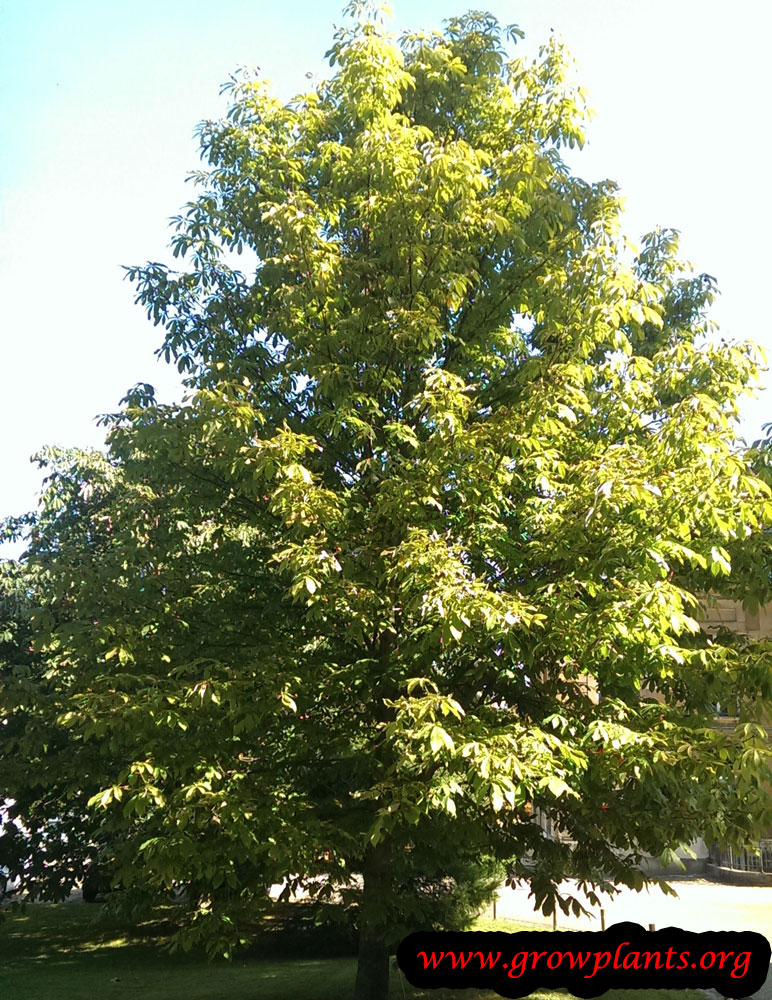
Overview: Juglans regia (English or Persian walnut) is a large deciduous tree reaching 10–30 m (30–100 ft), grown both for its edible nuts and as a shade and ornamental tree. It has aromatic pinnate foliage and a deep taproot, and thrives in temperate to cool-subtropical climates.
Quick Specifications
| Specification | Attribute |
|---|---|
| Plant Type / Life Cycle | Perennial |
| Foliage Type | Deciduous |
| Mature Size | 10–30 m tall (30–100 ft) |
| Growth Rate | Moderate to fast |
| Root System | Deep taproot |
| Toxicity | Nuts edible; the tree produces juglone, which is allelopathic and toxic to many neighbouring plants (and to horses) |
| Hardiness | USDA zones 5–10a |
Growth Form & Structure
- Height & Spread: A large, broad-canopied tree of 10–30 m (30–100 ft); not suited to containers or indoor culture.
- Growth Habit & Form: Single-trunked tree with a rounded, spreading crown and a deep, anchoring taproot.
- Lifespan & Maturity: Long-lived tree; seedlings typically take about 5–7 years to begin bearing nuts, with grafted cultivars fruiting sooner.
Anatomy & Physical Features
- Trunk & Bark: Stout trunk with smooth grey bark that becomes furrowed and darker with age.
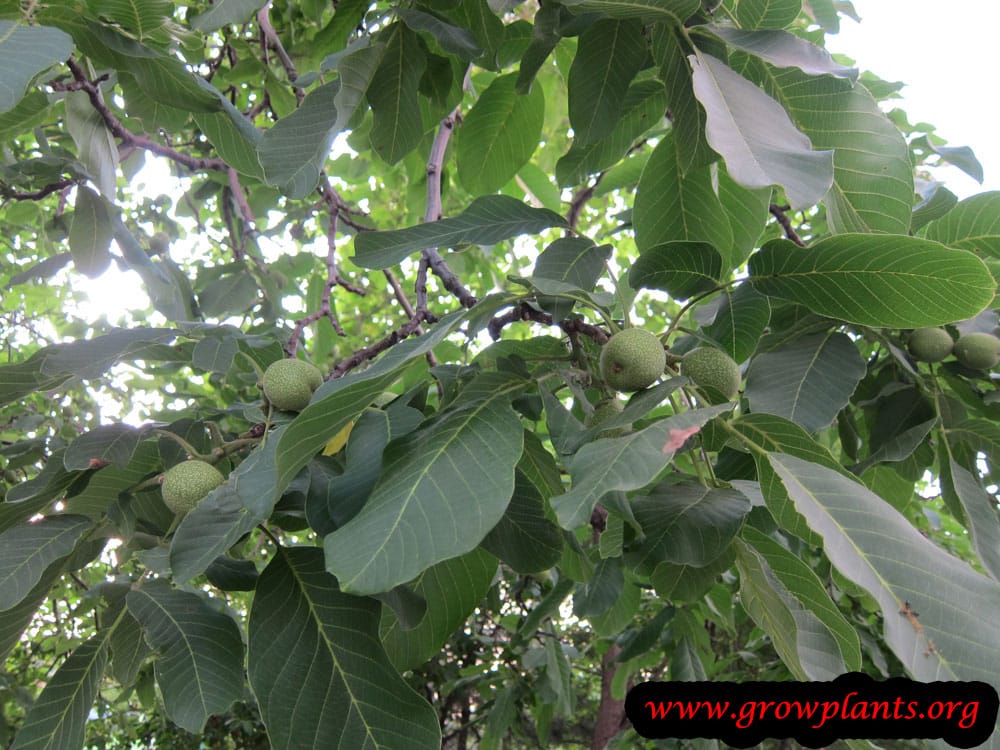
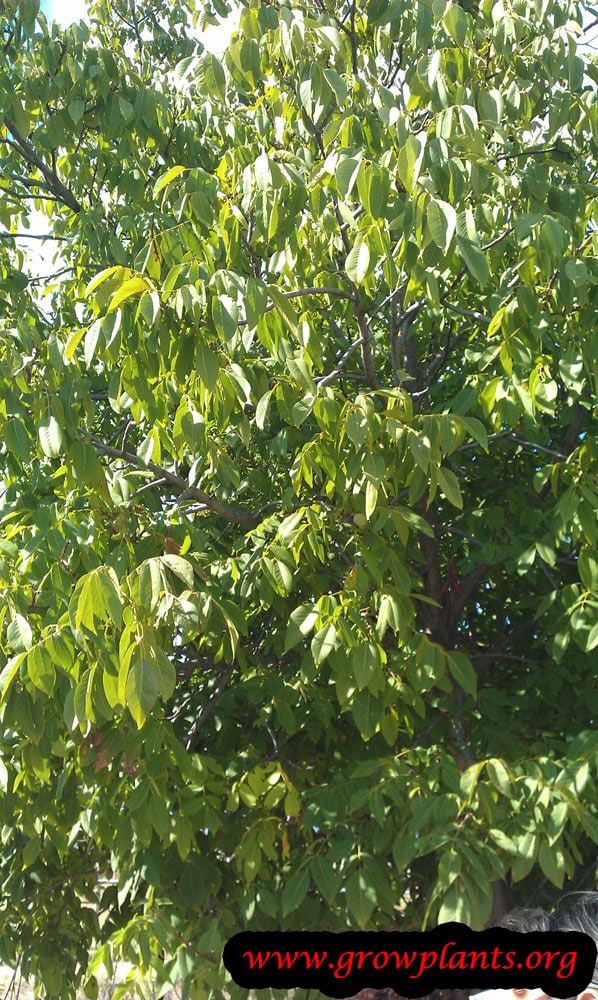
- Leaves & Foliage: Large, aromatic pinnate (compound) leaves of several elliptic leaflets.
- Flower Characteristics: Monoecious and wind-pollinated – pendulous male catkins and small female flowers in twos; some cultivars are partly self-fertile.
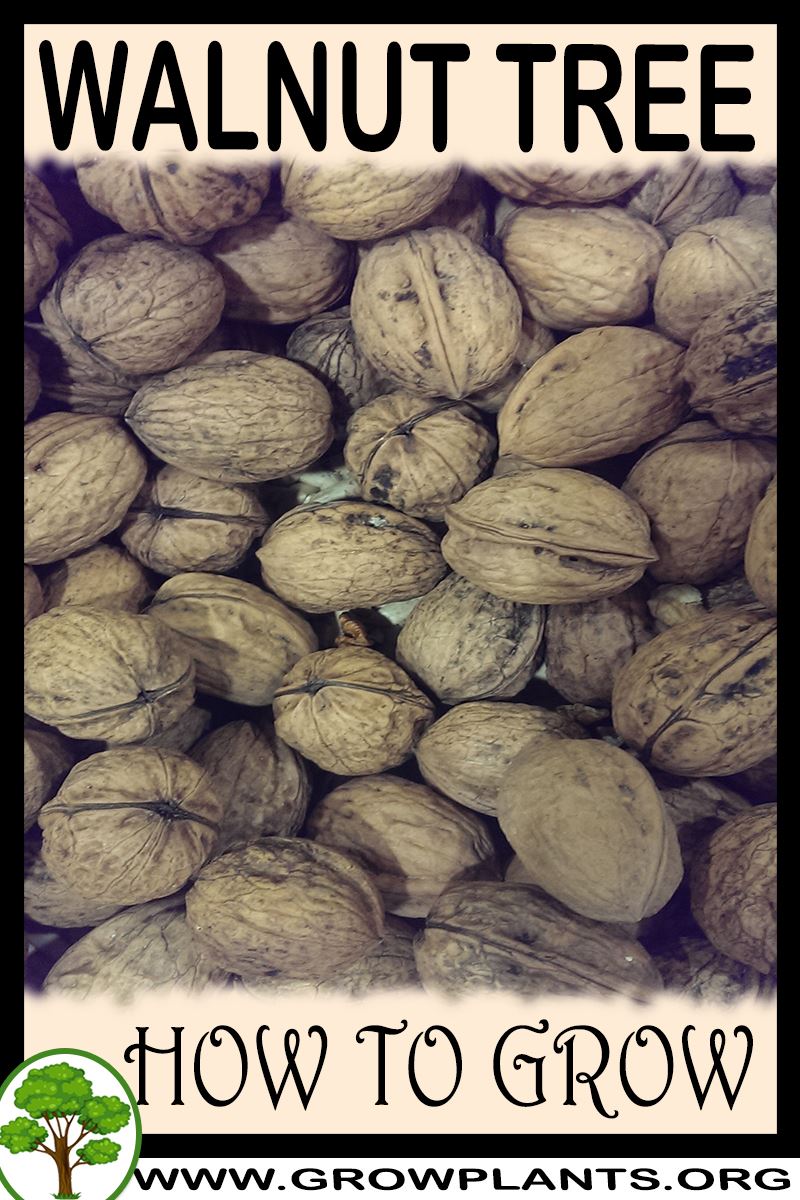
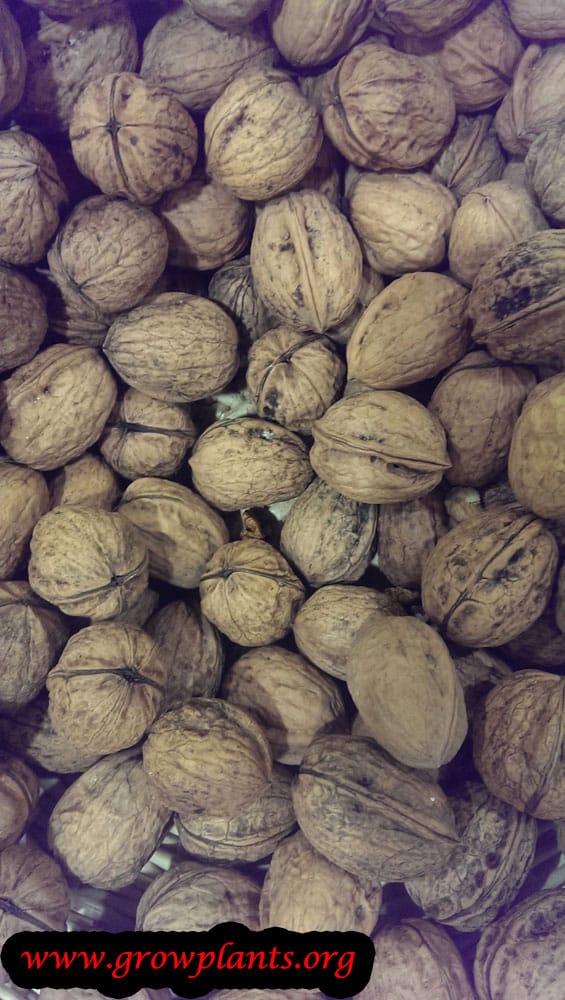
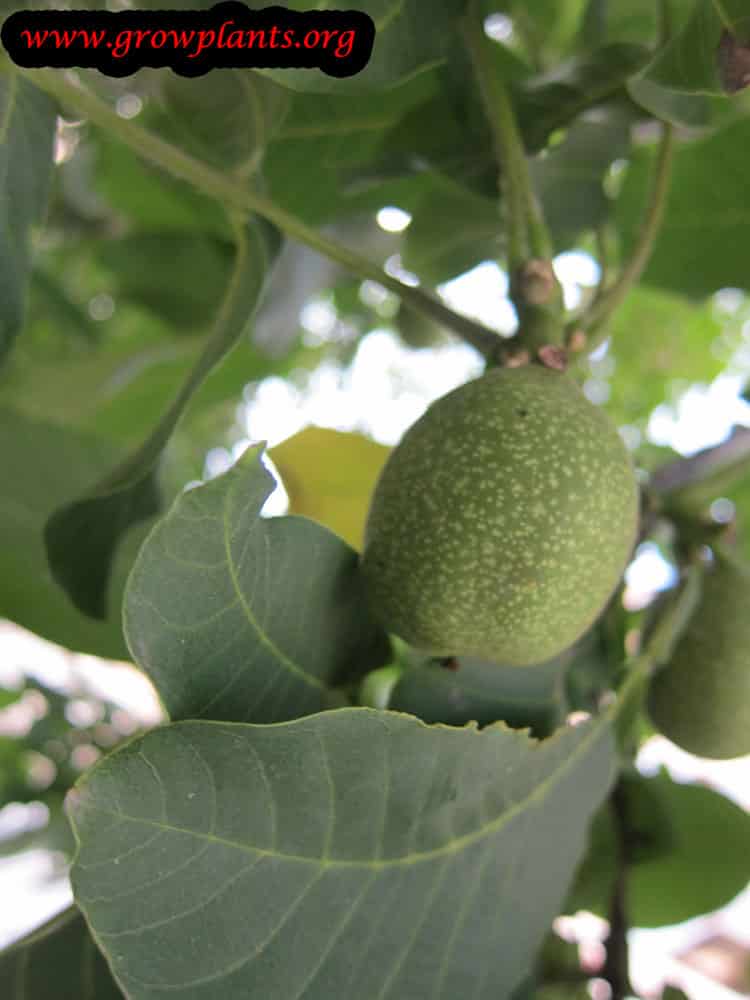
- Fruit Profile: Round green husk enclosing a brown, brain-like wrinkled nut; harvested in autumn.
Primary Uses & Landscape Value
- Edible Uses: Nuts eaten raw or used in spreads, baking and salads.
- Functional & Ornamental Roles: Grown as a productive nut tree, a shade and ornamental specimen, and prized for its timber; note its allelopathy limits under-planting.
Care Guide: Planting, Soil & Watering
Overview: The walnut is a large deciduous tree for temperate and cool-mediterranean climates that needs a spell of winter chill to crop well. It prefers a deep, fertile, free-draining loam and moderate to generous, consistent moisture, especially while young and while the nuts are filling.
Quick Care Requirements
| Requirement | Ideal Condition |
|---|---|
| Planting Season | While dormant, from late winter into early spring (bare-root stock establishes best before growth resumes) |
| Growth Rate | Moderate to fast |
| Soil Type | Deep, fertile, free-draining loam |
| Water Need | Moderate to high – keep the root zone evenly moist but never waterlogged |
Planting & Establishment
- Best Planting Season: Set walnuts out during dormancy, from late winter into early spring, so the roots settle before the tree leafs out.
- How to Plant:
- Hole Preparation: Dig a wide, deep hole to suit the long taproot, loosening the base and sides so roots can drive down; stake young trees on exposed sites.
- Soil Amendments: Blend compost or well-rotted organic matter into the backfill; on heavy clay improve drainage, as walnuts resent standing water.
- Planting Depth: Plant at the same depth the tree grew in the nursery, keeping the root collar at grade and any graft union above soil level.
- Growth Speed & Expectations: Moderate to fast growth once established, though expect several years (roughly 5 to 7) before meaningful nut crops.
Soil, Watering & Drainage Care
- Soil Mix & Drainage Needs: Deep, free-draining soil is essential and waterlogged ground causes root problems. Note that walnut roots release juglone, so keep it away from plants sensitive to it.
- Watering Schedule & Technique:
- Young / Newly Planted: Water young trees deeply and regularly through their first few growing seasons to build a strong, deep root system.
- Established: Mature trees are fairly self-reliant but benefit from deep soakings during dry spells and while nuts are developing.
- Seasonal Adjustments: Water more in summer heat and during nut fill; little to none is needed over the dormant winter.
Climate, Light & Hardiness
The Persian (English) walnut (Juglans regia) is a large deciduous tree for temperate and cooler Mediterranean or subtropical climates, needing winter chill and a warm summer to ripen its nuts. It grows in full sun and, dormant, is cold-hardy across the site's rated zones 5–10a.
Quick Climate Specifications
| Climate Zones | Temperate, cooler Mediterranean, cooler subtropical |
|---|---|
| USDA Hardiness Zones | 5–10a (site notes 10b possible but with fewer nuts) |
| Optimal Temp Range | Warm growing season, roughly 18–30 °C (64–86 °F) |
| Frost Tolerance | Moderate to High when dormant; new spring growth frost-sensitive |
| Light Conditions | Full sun |
| Wind Tolerance | Moderate |
Sunlight & Light Exposure
Optimal Light Setup
A full-sun tree; strong light and summer warmth drive growth and nut ripening.
Direct Sun Requirement
Direct, unobstructed sun is required for a good crop; shade reduces yield.
Best Exposure / Orientation
Give it an open, sunny site with plenty of room; note the tree's allelopathy, so avoid planting sensitive species directly beneath it.
Temperature Extremes & Hardiness
USDA Hardiness & Regional Limits
Rated for zones 5–10a, it tolerates cold winters at the cooler end; the site notes that in zone 10b cropping falls off for want of winter chill. Cold tolerance varies by cultivar, tree age and conditions.
Cold Damage & Winter Protection
Dormant wood withstands hard winter freezes within its zone range; young trees are more cold-sensitive and benefit from protection at the colder margin.
Frost Sensitivity
The dormant tree is hardy, but late-spring frosts readily damage the tender new leaves and flowers, so late-leafing cultivars are favoured where spring frosts linger.
Extreme Heat Tolerance
Moderate to high; it takes warm summers, though very hot, exposed conditions can scald developing nuts.
Chilling Requirement
The site explicitly lists chilling hours. Walnut needs winter chill to break dormancy and leaf out and flower evenly; insufficient chill in mild-winter areas causes delayed, erratic bud break and reduced cropping. A precise chill-hour figure is not established here and varies by cultivar.
Frost-Free Growing Season
A long enough warm, frost-free season is needed for the nuts to fill and mature after a frost-free spring flowering.
Wind, Humidity & Microclimate
Wind Tolerance
Moderate: air movement assists wind pollination, but strong winds can damage the brittle wood and, at bloom, harm the crop, so a reasonably sheltered site is preferable.
Microclimate Recommendations
A deep, open site with adequate winter chill, a warm summer, and low risk of late spring frost gives the most reliable harvests.
Growing in Pots, Balconies & Indoors
The walnut tree (Juglans regia) is a large tree (10-30 m / 30-100 ft), so the grower marks it as neither a houseplant nor a long-term container plant – and rightly so. You can keep a young seedling in a pot for its first few years, but it soon needs open ground to develop a deep root system and full canopy.
Quick Details
- Container Size: A large tub only while young (say 30-50 L / 8-12 gal for the first years); ultimately it needs open ground
- Indoor Suitability: Not a houseplant – it becomes a full-size tree and needs full sun
- Best Spot: full sun, planted in the ground outdoors
- Soil & Drainage: Deep, free-draining soil; a potted young tree needs an aerated mix that drains freely
- Watering in Pots: A potted young tree dries out far faster than one in the ground – check it often
Indoors & On the Windowsill
- Houseplant limits: The walnut tree (Juglans regia) will not grow indoors – it demands full sun and quickly outgrows any room. Even a bright window only suits it at the seedling stage.
- Young plants: A seedling can spend its first year or two in a pot in a bright spot before being planted out.
On a Balcony or Patio
- Young specimen only: A young tree can stand on a large patio or balcony in full sun, but pots dry quickly and give no room for a taproot, so it will need moving into the ground within a few years.
Choosing the Pot, Soil & Long-Term Care
- Pot & drainage: If growing a young tree, use the largest tub you can with strong drainage holes; skip a standing water saucer to avoid root rot. Terracotta breathes and dries faster, while glazed or plastic holds moisture longer.
- Potting mix: An aerated, organic-rich mix – for example peat or coir with perlite or vermiculite.
- Watering: Keep a young potted tree evenly moist.
- Feeding: A potted tree exhausts its soil quickly and nutrients leach with every watering, so feed more often than a tree in open ground.
- Potting on: Move it into a larger container each year while young; once it is too big for pots, plant it out.
- Good to know: Walnut roots and leaves release juglone, a natural compound that stunts many other plants, so keep other pots clear of a walnut’s roots and runoff.
Fertilizing & Feeding
Walnut tree is a moderate feeder: build the soil with organic matter and give balanced, restrained feedings through the growing season, easing off toward dormancy.
Quick Fertilizing Specs
| Feeding Level | Moderate |
|---|---|
| young_feeding | Nitrogen-forward complete fertilizer to build the framework. |
| mature_feeding | Balanced complete fertilizer with adequate potassium at bearing. |
| Main Nutrient Priority | Nitrogen while young, shifting to balanced with potassium once bearing. |
| Best Feeding Period | Through the active growing season. |
| Organic Options | Compost, well-rotted manure and organic mulch. |
| Micronutrients | Watch for iron, zinc and manganese on alkaline soils. |
| Soil pH | Slightly acidic to near neutral. |
| Reduce/Stop Feeding | Ease off as growth slows heading into winter dormancy. |
Feeding by Growth Stage
Newly planted
Help the young Walnut tree settle in and push out roots after planting.
| Nutrient direction | Focus on root establishment; keep any feeding gentle and let roots reach into the surrounding soil. |
|---|---|
| Timing | From planting through the first season of establishment. |
| Frequency | Feed sparingly at this stage; well-prepared soil often carries the tree through the first months. |
| Fertilizer types | Well-rotted compost or organic matter worked into the planting area, A gentle complete fertilizer only if soil is poor |
| Precautions | Avoid strong or concentrated fertilizer against fresh roots. Walnut is deciduous; keep grass and sensitive plants clear of its root zone. |
Young tree (building the frame)
Drive steady shoot and canopy growth so the Walnut tree builds a strong framework before it starts bearing.
| Nutrient direction | Lean toward nitrogen to support vegetative growth, within a complete fertilizer. |
|---|---|
| Timing | Through the active growing season in the pre-bearing years. |
| Frequency | Several light feedings across the growing season rather than one heavy dose. |
| Fertilizer types | A nitrogen-forward complete fertilizer, Compost or other organic matter to build soil |
| Routine trace nutrients | iron, manganese, zinc |
| Precautions | Taper feeding as growth slows toward autumn so new shoots harden before cold weather. |
Established, approaching bearing
Keep the Walnut tree growing vigorously while it matures toward its first nuts crop.
| Nutrient direction | Shift toward a balanced complete fertilizer as the tree fills out. |
|---|---|
| Timing | During the active growing season as the tree nears bearing age. |
| Frequency | Light, spread-out feedings through the growing season. |
| Fertilizer types | A balanced complete fruit-tree fertilizer, Compost or mulch to maintain soil health |
| Routine trace nutrients | iron, manganese, zinc |
| Precautions | Watch for pale or yellowing new leaves on alkaline soils, a sign micronutrient availability is low. |
Mature, bearing nuts
Support consistent nuts yield and quality while keeping the mature Walnut tree healthy.
| Nutrient direction | A balanced complete fertilizer with adequate potassium to support the developing crop. |
|---|---|
| Timing | From the start of the growing season through crop development. |
| Frequency | Split light feedings across the growing season; adjust to the tree’s vigor and crop load. |
| Fertilizer types | A balanced complete fruit-tree fertilizer with potassium, Compost or organic mulch |
| Routine trace nutrients | iron, manganese, zinc |
| Precautions | Reduce feeding as the season ends so the tree can harden off before dormancy. |
Nutrient Deficiency Signs & Corrections
Interveinal yellowing on the youngest leaves, with veins staying green.
| Possible causes | High or alkaline soil pH locking up iron, Waterlogged or poorly drained soil stressing roots, Genuinely low available iron in the soil |
|---|---|
| Appears first on | Newest leaves at the shoot tips. |
| What to check | Soil pH and drainage, Whether symptoms track wet spells, Recent watering pattern |
| Possible correction | Correct pH and drainage first; where needed apply a chelated iron product per its label. |
Uniform pale-green to yellow older leaves with weak, slow growth.
| Possible causes | Low soil nitrogen, Leaching of nitrogen from sandy soil, Competition from grass or weeds at the root zone |
|---|---|
| Appears first on | Older, lower leaves first. |
| What to check | Overall shoot vigor and colour, Ground cover competition, Recent feeding history |
| Possible correction | Apply a nitrogen-containing complete fertilizer during active growth and keep the root zone weed-free. |
Small, narrow leaves, shortened internodes and rosetting of new shoots.
| Possible causes | High or alkaline soil pH reducing zinc uptake, Sandy, low-organic-matter soil, Cold, wet soil slowing root activity |
|---|---|
| Appears first on | New spring growth at the shoot tips. |
| What to check | Soil pH, Leaf size versus normal, Shoot spacing and rosetting |
| Possible correction | Correct soil pH and, where confirmed, apply a zinc product per its label. |
Scorching and browning along the margins of older leaves, with poor crop fill.
| Possible causes | Low soil potassium, Leaching from sandy soil, Heavy crop load drawing down reserves |
|---|---|
| Appears first on | Margins of older, lower leaves. |
| What to check | Crop load versus leaf health, Soil type and leaching, Feeding history |
| Possible correction | Use a complete fertilizer that supplies potassium through the growing season. |
Pruning, Training & Seasonal Maintenance
Walnut is a large deciduous nut tree that needs very little pruning once formed — its own facts note structural work “just in the first years for design” — and the single most important point is timing: walnut bleeds sap profusely from cuts made in late winter and early spring, so, contrary to the generic “winter” label, extension horticulture recommends pruning in mid-to-late summer (roughly after midsummer) when bleeding is minimal and wounds close cleanly. Build a good central-leader framework in the early years, then restrict work to deadwood and the occasional structural cut. Note too its allelopathy (juglone), which affects what you can grow beneath it but not how you cut it.
Quick Pruning & Maintenance Specs
| Pruning Tolerance | Low to Moderate – minimal once framed |
| Primary Pruning Window | Mid to late summer (avoids heavy bleeding – NOT late winter/spring) |
| Typical Frequency | Formative in the first years, then rarely |
| Main Objective | Sound central-leader framework, then deadwood only |
| Young Plant Priority | One clear leader & wide-angled scaffolds |
| Mature Plant Priority | Deadwood, crossing/broken limbs – leave it largely alone |
| Best Tool Type | Loppers & pruning saw; pole pruner for height |
| Avoid Heavy Pruning During | Late winter & spring (bleeding); wet weather (blight/canker) |
Pruning by Plant Age & Size
Newly Established
Remove only damaged wood at planting. Walnut establishes best with minimal cutting; begin gentle leader training in the first summers, not by hard-heading a young whip.
Young / Formative
Train to a central leader with well-spaced, wide-angled scaffolds — this is where nearly all of walnut’s pruning is done. Remove competing co-dominant leaders and any narrow, included-bark unions while the wood is small, so cuts stay minor and bleeding is negligible in summer.
Mature / Established
A framed walnut is left largely alone: take out deadwood, broken or badly crossing limbs, and little else. Big cuts on old wood are slow to close and best avoided.
Seasonal Pruning Schedule
Mid to late summer (primary): the correct time for structural and deadwood cuts — sap flow is low, so wounds do not bleed and dry cleanly, and dry weather lowers infection risk.
Late winter / early spring (AVOID): cuts made now weep heavily; while bleeding rarely kills an established tree it stresses it and messes the wound — defer to summer.
Ongoing sanitary: remove clearly dead or hazardous wood whenever spotted, ideally in dry conditions.
Flowering & Fruiting Wood
Walnut is monoecious and wind-pollinated, with male catkins and small female flowers whose timing differs between cultivars (hence better cropping with a compatible pollinator nearby). Nuts are carried on the current season’s shoots produced from one-year-old wood — terminal-bearing in most traditional cultivars — so heavy heading of the outer canopy removes fruiting wood. Keep pruning light to protect the crop.
Structural Pruning & Training
Aim for a dominant leader and strong, wide-angled scaffolds; remove co-dominant stems and included-bark unions early. Favour thinning over heading, and resist raising or reducing a mature crown heavily — large walnut wounds heal poorly and invite decay.
Special Growth to Remove
Where a named cultivar is grafted, remove suckers arising below the graft union promptly — they are rootstock. Rub off watersprouts while soft. Seedling (own-root) trees have no graft to police.
Tools
Small shoots take bypass secateurs; scaffold cuts take loppers; larger limbs need a pruning saw. On a tall tree, a pole pruner (or an arborist) reaches the high canopy — keep all cuts small enough that summer bleeding stays trivial.
Tool Hygiene & Disease Risk
Increased – disinfect around cankers and galls. Walnut is subject to crown gall (a bacterial disease listed in its own facts) and to walnut blight, both of which can be spread on contaminated tools and enter fresh wounds. Disinfect blades before and after cutting near galled, cankered or blighted tissue, and always prune in dry weather to limit bacterial infection of cuts. Routine clean sharp tools are fine for healthy wood.
Cut Placement & Technique
Cut just outside the branch collar, avoiding flush cuts and stubs, and keep cuts small by acting early. Use a three-cut sequence on any limb heavy enough to tear bark. Prefer thinning cuts to reduce watersprout response.
Heavy Pruning & Rejuvenation
Walnut responds poorly to heavy renovation: large wounds are slow to close, prone to decay, and bleed if cut at the wrong season. Rejuvenate only gradually, in summer, removing deadwood and the worst limbs over several years rather than making big cuts at once. Do not top.
Post-Pruning Care
Prune in dry weather and leave wounds open (no dressing) to close naturally. Keep the tree watered through summer cuts, and monitor larger wounds for clean callusing rather than dieback. Feeding is not a pruning follow-up here.
Common Pruning Mistakes
- Pruning in late winter/spring and causing heavy sap bleeding.
- Making large cuts on old wood that heal slowly and decay.
- Cutting near crown-gall or blight tissue with un-sterilised tools, spreading the bacteria.
- Heading the outer canopy and removing the current-season nut-bearing shoots.
When NOT to Prune
Do not prune in late winter or spring (bleeding), nor in prolonged wet weather (blight and gall infection of wounds). Avoid heavy cuts on a newly transplanted or stressed tree.
Recommended Tools (by task)
- bypass_secateurs – small shoots, suckers and light formative cuts.
- loppers – scaffold selection and branch wood up to a few centimetres.
- pruning_saw – larger limbs and deadwood, with a collar cut.
- blade_disinfectant – sterilise blades around crown gall / blight / canker to avoid spreading bacteria.
Pruning Troubleshooting
| Problem | Possible Cause | What to Check | Corrective Action |
| Cuts weeping / bleeding sap | Pruned in late winter or spring | Season of the cut | Prune in mid-to-late summer instead; bleeding is self-limiting |
| Slow-healing, decaying wounds | Large cuts on old wood | Cut size and tree age | Keep cuts small; train while young; avoid renovation topping |
| Galls / oozing cankers spreading | Crown gall / blight moved on tools or wet-weather wounds | Tool hygiene and pruning weather | Disinfect blades; prune dry; cut well back into sound wood |
| Reduced nut set after pruning | Removal of one-year / terminal fruiting wood | Whether outer shoots were headed back | Prune lightly; retain current-season bearing shoots |
Propagation Guide
English walnut grows readily from seed, but seedlings are variable in nut size and quality, so named cultivars are grafted — as the site notes, grafting is not strictly required but lets you choose a better variety. Seed is also the standard way to raise rootstock.
Quick Propagation Specs
| Best Propagation Method | Grafting for a named cultivar; seed for rootstock or general planting |
| Alternative Methods | Seed (variable); chip/patch budding |
| Propagation Difficulty | Moderate (seed easy but slow; grafting more specialist) |
| Seed True-to-Type | Variable – seedlings differ from the parent |
| Vegetative True-to-Type | Yes (grafts keep the cultivar) |
| Best Propagation Season | Seed in late winter after chilling; grafting/budding in spring to summer |
| Seed Germination Time | Emerges in spring after cold-moist stratification |
Growing from Seed
Seed Handling & Viability
Collect sound, filled nuts in autumn and keep them cool and slightly moist; do not let them dry hard in warm storage.
Dormancy & Pre-Sowing Treatment
Walnut seed requires cold-moist stratification through winter (in-ground autumn sowing or refrigerated damp storage for roughly two to three months) before it will germinate.
Sowing & Germination
Sow into deep containers or a nursery bed to accommodate the deep taproot; stratified seed comes up in spring. Note the tree’s allelopathy (juglone) — site the nursery bed away from sensitive plants.
Grafting & Budding
Why Grafting Is Used
Grafting reproduces a selected cultivar’s nut quality and cropping habit, which seedlings will not match. Some cultivars are self-fertile, but wind pollination is the norm.
Methods, Rootstock & Scion
Whip-and-tongue grafting in spring and chip or patch budding in summer are standard. Rootstock is vigorous Juglans seedling; scion is dormant one-year wood of the chosen cultivar. Warm conditions favour a good union in this species.
Graft Aftercare
Support and protect the union until it knits, and rub out rootstock shoots below the graft.
Bloom & Flower Guide
Quick Details
- Bloom Season: Spring, as the leaves emerge
- Flower Appearance: Green and inconspicuous – many-flowered male catkins, with female flowers usually borne in twos at the shoot tips
- Edibility: Ornamental and shade tree – grown for its nuts; the flowers are not eaten
Detailed Blooming Overview
Walnut flowers are green and easily overlooked. The tree is monoecious: male flowers hang in many-flowered catkins that release abundant pollen, while the female flowers are tiny, typically appearing in twos at the ends of the new shoots. As with other wind-pollinated nut trees, the flowers rely on moving air rather than showy colour.
Flower Characteristics
- Male flowers: numerous, in pendulous green catkins.
- Female flowers: usually in pairs, small and green, at the shoot tips.
Bloom Care & Thinning
- Pollination: Wind-pollinated; some cultivars are partly self-fertile.
- For a good set: Male and female flowers often peak at different times, so a second compatible variety nearby improves nut set even on self-fertile trees.
Fruit & Uses
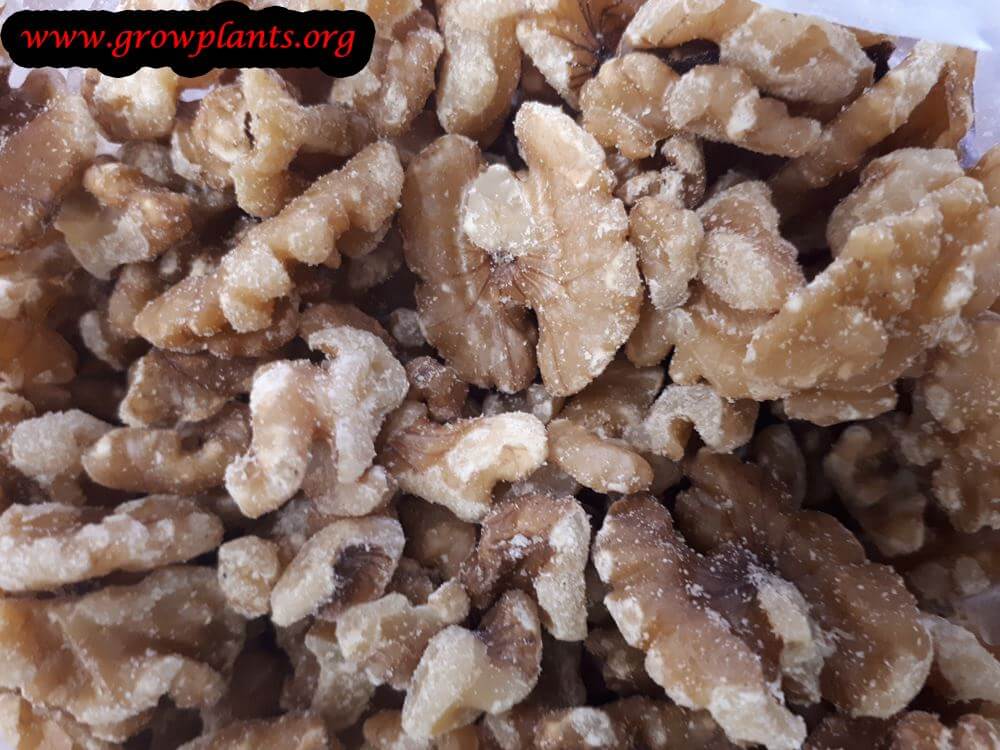
The edible part is the brown walnut kernel inside a hard brown shell whose surface and folded interior look brain-like. Kernels are eaten raw, added to salads, or worked into spreads.
Quick Edible Specs
| Edible Parts | Nut (kernel) |
|---|---|
| Main Use(s) | Culinary: eaten raw, in salads, and made into spreads |
| Eaten Raw or Cooked | Both — raw or in prepared dishes |
| Preparation Required | Crack the shell and remove the kernel |
| Harvest Season | Autumn |
| Time to First Harvest | Several years from planting (see growing notes) |
| Storage | Keeps well in the shell |
Seeds, Pods & Nuts
The kernel is enclosed in a hard brown shell with the characteristic folded, brain-like surface. Nuts mature in autumn; take the kernel out of the shell before use.
Preparation, Uses & Safety
Crack the shell, remove the kernel, and eat it raw, add it to salads, or make it into spreads. No detoxification is required.
Pests, Diseases & Troubleshooting
Overview: Walnuts are large, long-lived trees whose main problems are nut-attacking insects (husk fly, codling moth), sap-sucking aphids and mites, and two serious diseases – bacterial walnut blight and anthracnose – plus emerging threats like thousand cankers disease. Orchard hygiene, sanitation of fallen nuts and leaves, and good air movement in the canopy are the backbone of control.
Quick Troubleshooting Overview
| Issue / Pest | Main Symptom | Primary Solution |
|---|---|---|
| Walnut husk fly | Black sticky staining on husks, larvae in the husk | Sanitation; remove/destroy fallen nuts; traps |
| Codling moth | Larvae tunnel into kernels; frass at entry | Pheromone traps; sanitation; bagging; Bt/spinosad |
| Walnut aphids | Honeydew, sooty mold, weakened growth | Encourage parasites/ladybirds; oil if severe |
| Blister / gall mite | Raised blister-like galls on leaves | Usually cosmetic; horticultural oil if heavy |
| Walnut blight | Black spots on leaves, shoots and nuts, nut drop | Copper sprays; prune out cankers; airflow |
| Anthracnose | Dark leaf spots, early defoliation | Rake and destroy leaves; copper; resistant stock |
Common Pests & Management
- Walnut husk fly (Rhagoletis completa):
- Symptoms: Adults lay eggs in the green husk; maggots tunnel inside, turning the husk black, soft and sticky and staining the shell. Kernels may be shrivelled or moldy though the shell looks whole.
- Prevention & Control: Rake up and destroy fallen and mummified nuts to break the life cycle, hang yellow sticky or bait traps to time populations, and encourage the tree’s vigor; targeted bait sprays are a last resort timed by trap catches.
- Codling moth (Cydia pomonella):
- Symptoms: Larvae bore into developing nuts leaving a frass-filled entry hole; damaged nuts drop early and kernels are eaten and fouled.
- Prevention & Control: Use pheromone traps to monitor flights, keep the ground clear of dropped nuts, band trunks to trap wandering larvae, and apply Bacillus thuringiensis or spinosad timed to egg hatch if pressure is high.
- Walnut aphid (Chromaphis juglandicola):
- Symptoms: Yellow-green aphids feeding along leaf undersides, coating foliage and nuts in sticky honeydew that blackens with sooty mold and saps tree vigor.
- Prevention & Control: Conserve the aphid parasite Trioxys pallidus and ladybirds/lacewings, avoid excess nitrogen, and use a horticultural oil only for severe early-season buildups.
- Walnut blister / gall mite (Aceria erinea / A. tristriata):
- Symptoms: Raised pouch- or blister-like galls on the upper leaf surface with felty patches beneath; mostly disfiguring rather than damaging.
- Prevention & Control: Usually needs no action; rake and destroy fallen leaves, and treat with horticultural oil at bud swell only where infestation is heavy year on year.
- Fall webworm & caterpillars (Hyphantria cunea):
- Symptoms: Silken tents enclosing branch tips in late season with leaves skeletonized inside; unsightly but rarely harms an established tree.
- Prevention & Control: Prune out and destroy the webbed branch tips while small, encourage birds and parasitic wasps, and spot-treat heavy infestations with Bacillus thuringiensis.
- Walnut twig beetle (thousand cankers vector) (Pityophthorus juglandis):
- Symptoms: Tiny bark beetles whose galleries introduce a canker fungus; scattered branch dieback and yellowing crown are warning signs of thousand cankers disease.
- Prevention & Control: There is no chemical cure; keep trees vigorous and well-watered, prune and destroy dying wood, do not move walnut firewood, and report suspected cases to plant-health authorities.
Diseases & Fungal Issues
- Walnut blight (Xanthomonas arboricola pv. juglandis):
- Symptoms: Small black, angular, water-soaked spots on leaves, shoots and especially young nuts; infected nutlets blacken and drop, and shoots may develop cankers – worst in wet springs.
- Treatment & Management: Apply copper-based bactericide from bud break through the wet period, prune out cankered wood in dry weather, improve canopy airflow, and choose late-leafing or resistant cultivars where blight is chronic.
- Walnut anthracnose (Ophiognomonia leptostyla):
- Symptoms: Numerous small dark brown spots on leaves that yellow and drop early; severe defoliation reduces nut fill and weakens the tree over successive wet seasons.
- Treatment & Management: Rake and destroy fallen leaves to remove overwintering spores, thin for airflow, and use copper or an appropriate fungicide at leaf-out in high-pressure years; plant resistant stock.
- Thousand cankers disease (Geosmithia morbida):
- Symptoms: Numerous small cankers under the bark around twig-beetle galleries coalesce, girdling branches; progressive crown yellowing, thinning and dieback lead to death over a few years.
- Treatment & Management: No cure exists – focus on prevention: avoid moving infested wood, maintain tree vigor, remove and destroy affected trees, and follow regional quarantine guidance.
- Crown & root rot (Phytophthora spp. / Armillaria):
- Symptoms: Wilting, sparse yellow canopy and dark oozing lesions or decay at the trunk base and roots, in heavy or waterlogged soils.
- Treatment & Management: Plant on well-drained sites or mounds, keep irrigation off the trunk, avoid deep planting, and remove trees killed by root rot along with as much infected root as possible.
Growing Difficulties & Abiotic Problems
- Juglone allelopathy:
- Cause & Symptoms: Walnuts release juglone from roots, leaves and husks, which stunts or kills sensitive plants (tomatoes, many shrubs) growing near the tree.
- Correction Strategy: Grow only juglone-tolerant plants within the root zone, keep the area beneath clear or mulched, and compost walnut leaves separately and thoroughly before use.
- Spring frost damage:
- Cause & Symptoms: New leaves, catkins and nutlets are blackened and killed by late frosts, reducing the crop.
- Correction Strategy: Site trees away from frost pockets and, where practical, choose late-leafing cultivars that flush after the frost risk passes.
- Blackline / graft decline:
- Cause & Symptoms: A dark line at the graft union with declining vigor, on grafted trees affected by cherry leafroll virus incompatibility.
- Correction Strategy: Buy certified clean, compatible grafted stock; there is no cure once established, so prevention through healthy nursery material is key.
- Sunburn & alternate bearing:
- Cause & Symptoms: Exposed thin bark scalds on the sunny side, and heavy crops one year are followed by light ones the next.
- Correction Strategy: Paint exposed young trunks with white tree paint, maintain steady water and nutrition, and thin extreme crops to even out bearing.
What Helps – Products & Tools
Walnut care is mostly cultural and sanitary: rake and destroy fallen nuts and leaves to break husk-fly, codling-moth and disease cycles, prune for airflow, and keep the tree vigorous. Copper-based sprays are the mainstay against walnut blight and anthracnose; pheromone and bait traps monitor and time insect controls; Bacillus thuringiensis or spinosad target caterpillars and codling moth; and horticultural oil handles aphids and mites. Never move walnut firewood, to help keep thousand cankers disease out.