Plant Profile & Key Characteristics
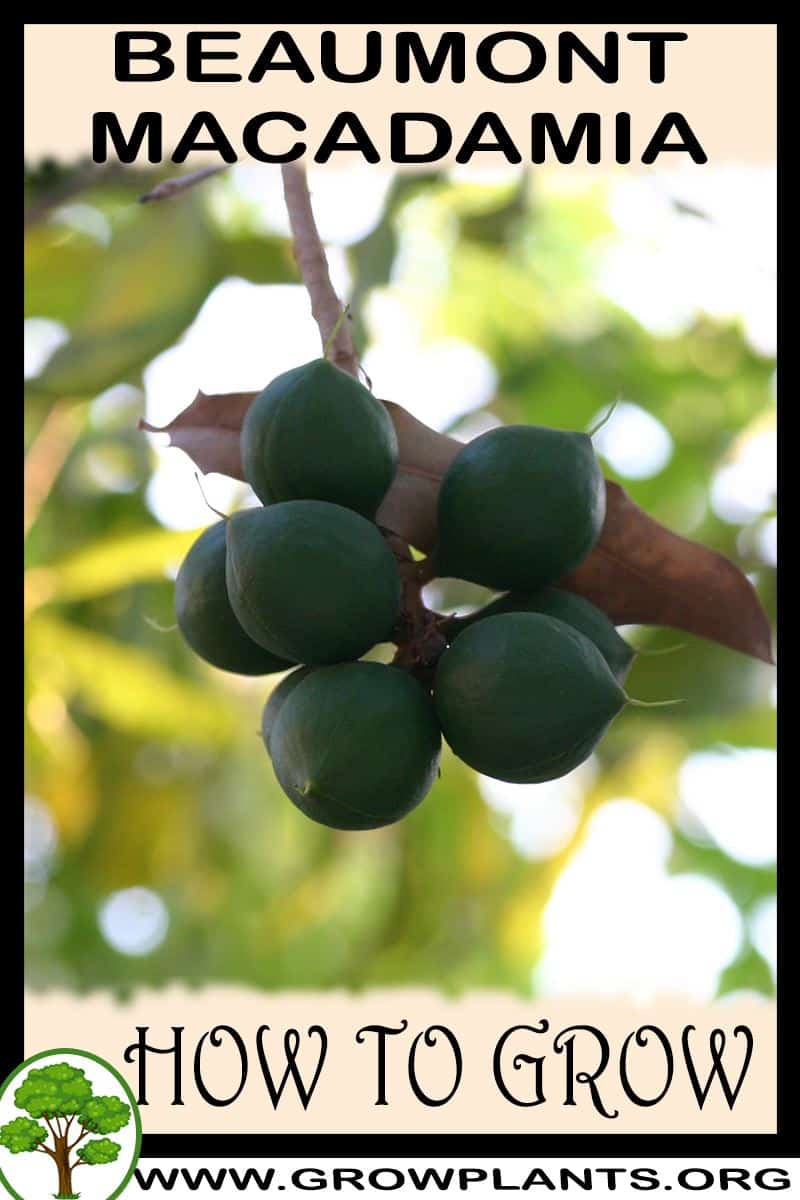
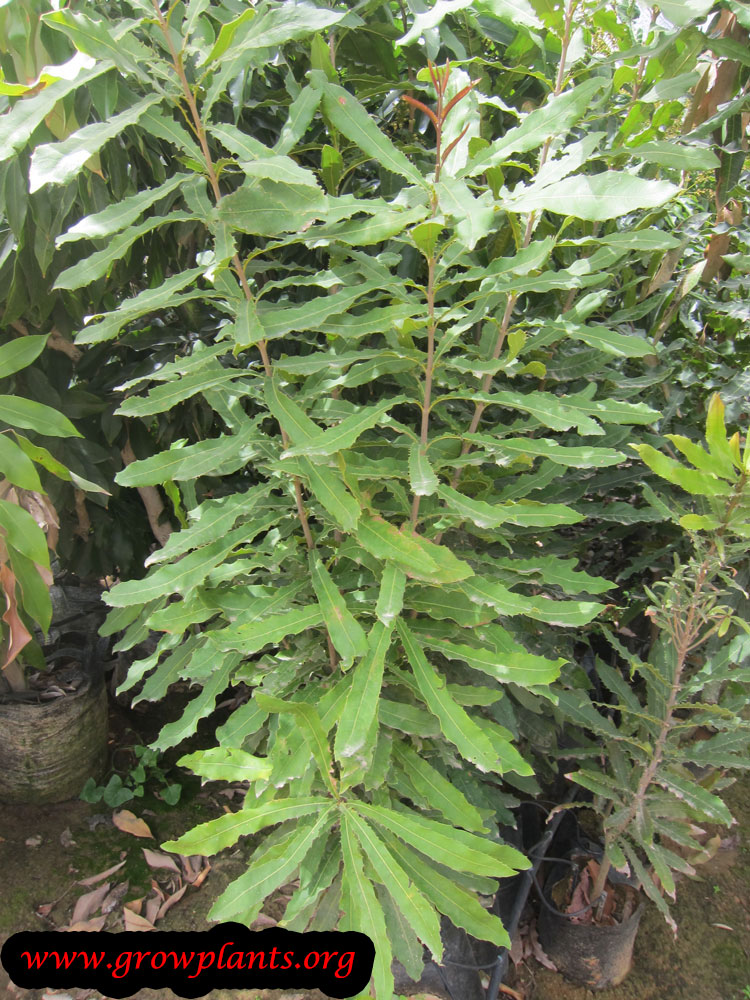
Overview: Slow-growing evergreen tree reaching 3-12 m, a macadamia hybrid grown for its edible nuts and as an ornamental. Bears pink flowers in pendent racemes followed by very hard-shelled nuts.
Quick Specifications
| Specification | Attribute |
|---|---|
| Plant Type / Life Cycle | Perennial (evergreen tree) |
| Foliage Type | Evergreen |
| Mature Size | 3-12 m (10-36 ft) |
| Growth Rate | Slow |
| Root System | Shallow, fine proteoid roots (no taproot) |
| Toxicity | Nuts edible for people; note macadamia nuts are toxic to dogs |
| Hardiness | USDA zone 10b+ |
Growth Form & Structure
- Height & Spread: 3-12 m; not suited to container growing.
- Growth Habit & Form: Upright evergreen tree with a dense canopy.
- Lifespan & Maturity: Long-lived; slow to establish, taking about 5-10 years to bear nuts.
Anatomy & Physical Features
- Leaves & Foliage: Dark green leaves with serrated, spiny edges.
- Flower Characteristics: Pink flowers in pendent inflorescences (racemes).
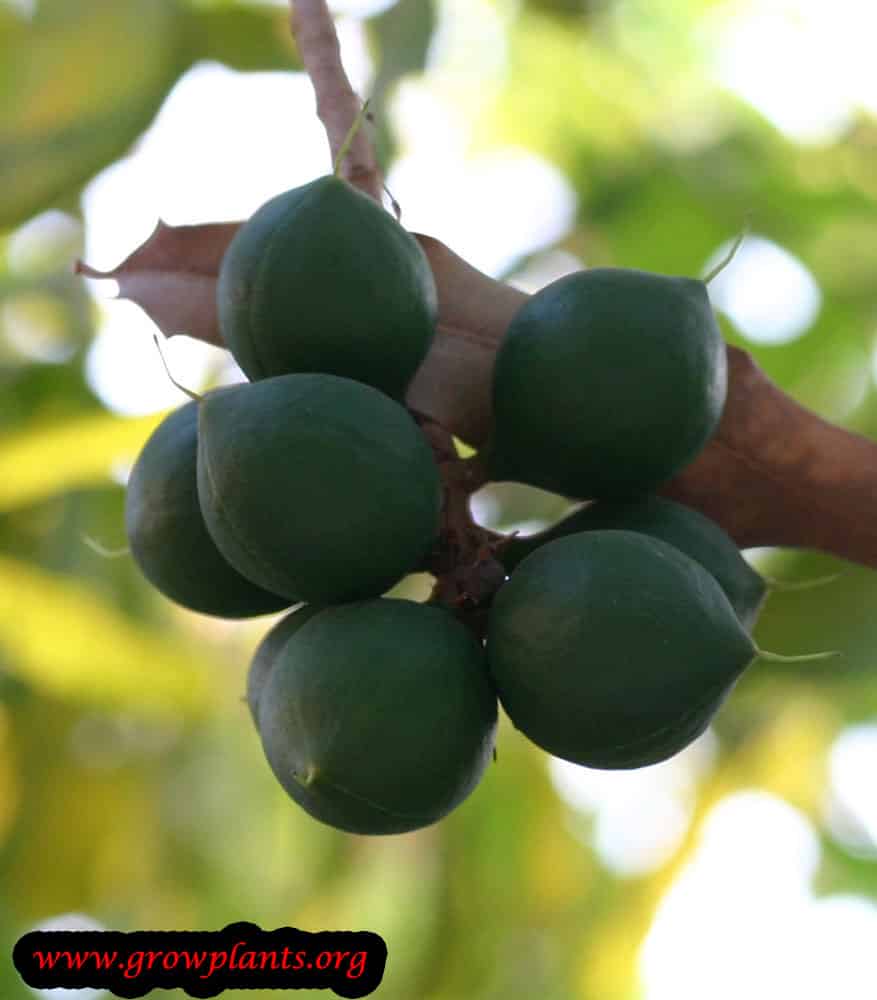
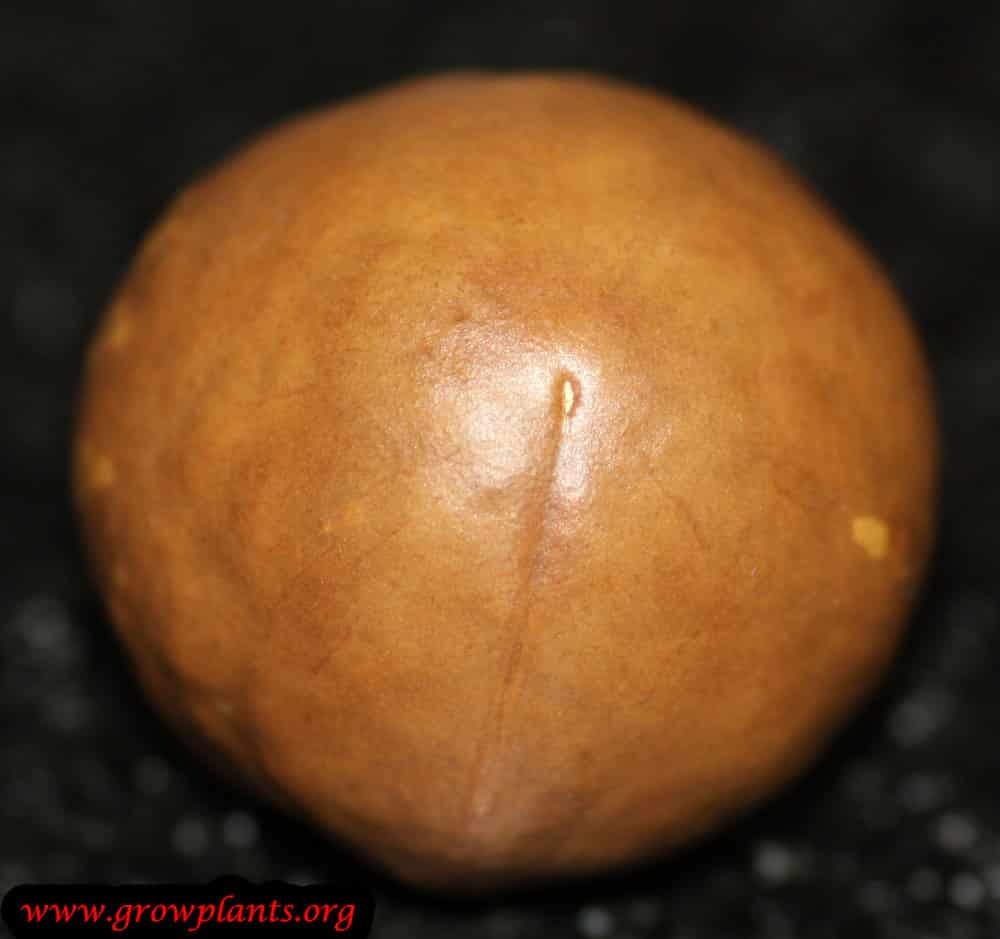
- Fruit Profile: Hard-shelled nut with a white-cream kernel in a brown shell; smaller than Macadamia tetraphylla.
Primary Uses & Landscape Value
- Edible Uses: Nuts eaten raw, roasted or as spreads.
- Functional & Ornamental Roles: Nut and shade tree, also grown ornamentally.
Care Guide: Planting, Soil & Watering
Overview: Beaumont macadamia is a slow-growing, frost-tender evergreen nut tree for warm gardens (zone 10b+) in full sun. As a Proteaceae it wants a well-drained, organically rich, slightly acidic soil, and moderate to generous watering that never leaves the roots waterlogged.
Quick Care Requirements
| Requirement | Ideal Condition |
|---|---|
| Planting Season | Warm season, spring to autumn |
| Growth Rate | Slow |
| Soil Type | Well-drained, rich in organic matter, slightly acidic |
| Soil pH | Slightly acidic (approx. 5.5–6.5) |
| Water Need | Moderate to high |
Planting & Establishment
- Best Planting Season: Through the warm season, spring to autumn, in a frost-free position (hardiness zone 10b+).
- How to Plant:
- Hole Preparation: Dig a hole about the depth of the root ball and twice as wide in a sheltered, frost-free spot; handle the sensitive roots gently.
- Soil Amendments: Blend plenty of compost and organic matter into the backfill and avoid high-phosphorus fertilisers, to which macadamias are sensitive.
- Planting Depth: Set the root collar level with the soil surface; a surface mulch helps keep the shallow roots cool and moist.
- Growth Speed & Expectations: A slow grower that takes several years to develop, with nuts typically appearing 5–10 years after planting.
Soil, Watering & Drainage Care
- Soil Mix & Drainage Needs: A deep, well-drained, humus-rich soil is important, as the shallow roots rot in wet ground; keep the surface mulched. This is a large tree and is not suited to long-term container growing.
- Watering Schedule & Technique:
- Young / Newly Planted: Water regularly to keep the root zone evenly moist while the young tree establishes.
- Established: Water deeply and regularly; don’t let the root zone dry out for long, especially in heat or while carrying fruit.
- Seasonal Adjustments: Reduce watering in winter and increase noticeably through summer heat and fruit set.
Climate, Light & Hardiness
The Beaumont macadamia is a subtropical to tropical evergreen nut tree that needs a warm, essentially frost-free climate and full sun. The site rates it for hardiness zone 10b and above, making cold and frost the key limits on where it can be grown.
Quick Climate Specifications
| Climate Zones | Subtropical, Mediterranean, tropical |
|---|---|
| USDA Hardiness Zones | 10b+ |
| Frost Tolerance | Low (frost-free preferred) |
| Light Conditions | Full sun |
| Wind Tolerance | Moderate |
Sunlight & Light Exposure
Optimal Light Setup
A full-sun tree; strong light drives healthy growth, flowering and nut production.
Direct Sun Requirement
Direct sun for most of the day is needed for good cropping.
Best Exposure / Orientation
A warm, open, sunny position, ideally sheltered from cold winds, is ideal.
Temperature Extremes & Hardiness
USDA Hardiness & Regional Limits
Rated by the site for zone 10b and warmer - a frost-free to nearly frost-free requirement. Below this range, winter cold limits outdoor cultivation.
Cold Damage & Winter Protection
The site specifies frost-free conditions. Cold near and below freezing can damage foliage, flowers and developing nuts, and young trees are distinctly more cold-sensitive than established ones. Cold tolerance varies by cultivar, plant age, exposure duration and conditions, so protect young trees and site them in the warmest available spot.
Frost Sensitivity
Frost-sensitive, especially the flowers and young growth; even light frost can reduce the crop.
Extreme Heat Tolerance
Good in subtropical heat, though very intense, dry heat is best moderated by adequate soil moisture.
Frost-Free Growing Season
A long, warm, frost-free season matters: flowering through nut fill and harvest spans much of the year, so reliable warmth without frost interruptions gives the best yields.
Wind, Humidity & Microclimate
Humidity Preferences
Suits humid subtropical to tropical air but adapts to Mediterranean climates.
Dry-Air Tolerance
Moderate; tolerates drier air with sufficient irrigation, though it prefers some atmospheric moisture.
Wind Tolerance
Moderate. Shelter from strong wind protects the brittle-topped canopy and reduces flower and nut drop.
Microclimate Recommendations
A warm, frost-free, wind-sheltered site in full sun gives the most reliable results; in marginal areas, a protected, sun-trapping corner helps.
Growing in Pots, Balconies & Indoors
Both of the grower’s key facts point the same way: this is not a houseplant, and it is not suited to long-term container growing. The Beaumont macadamia is a full-size evergreen nut tree (3-12 m), best grown in open ground; a pot is only a temporary home for a young seedling.
Quick Details
- Container Size: Not recommended long-term; only a deep nursery pot for a young seedling
- Indoor Suitability: Not a houseplant – a large outdoor tree
- Best Spot: Full sun, in the open ground
- Soil & Drainage: Deep, free-draining soil
- Watering: Regular water while young and establishing
Indoors & On the Windowsill
- Not for indoors: A large tree needing full sun – no room or windowsill will suit it.
- Young plants only under cover: In a climate colder than its range, a seedling can be kept in a pot in a bright, frost-free spot for its first winters, but it must ultimately go in the ground.
On a Balcony or Patio
- Ground, not balcony: This tree isn’t a practical balcony or patio container subject – it needs room to root and spread. Grow it in the garden where the climate allows.
- While young in a pot: keep it in the deepest pot you can, in full sun and sheltered from wind, and move it on before the roots circle.
Choosing the Pot, Soil & Long-Term Care
- Not a long-term pot plant: The grower marks containers as unsuitable. Macadamias make deep roots and a large canopy that a pot cannot support for long. A young seedling can spend its first year or two in a deep pot, but plan to plant it in open ground.
- If you must start it in a pot: use the deepest container you can (to suit the developing taproot), a free-draining mix and strong drainage holes; skip a standing water saucer to avoid root rot; terracotta breathes and dries faster, while glazed or plastic holds moisture longer.
- Feeding & moving on: feed lightly while young and pot on before it becomes root-bound – then transplant to its permanent site.
Fertilizing & Feeding
A moderate feeder: young trees appreciate nitrogen-forward feeding to build structure, while bearing trees do best with balanced nutrition and steady potassium through the growing season.
Quick Fertilizing Specs
| Feeding Level | moderate |
|---|---|
| young_feeding | Nitrogen-forward feeding through the growing season to build the tree. |
| mature_feeding | Balanced feeding with steady potassium to support cropping. |
| Main Nutrient Priority | Nitrogen while young; balanced nutrition with potassium once bearing. |
| Best Feeding Period | From when growth resumes through active growth and crop development. |
| Organic Options | Compost, well-rotted manure, and organic mulch over the root zone. |
| Micronutrients | A complete tree fertilizer usually supplies iron, manganese, and zinc; watch for chlorosis on alkaline soils. |
| Soil pH | Best in well-drained soil that is slightly acidic to near-neutral. |
| Reduce/Stop Feeding | Ease off feeding after harvest and through the cool, dormant season. |
Feeding by Growth Stage
Newly planted tree
Help the young tree establish roots after planting.
| Nutrient direction | Go light on fertilizer at first; let roots settle, then begin light balanced feeding once new growth appears. |
|---|---|
| Timing | The first season after planting. |
| Frequency | Feed sparingly until the tree is established and actively growing. |
| Fertilizer types | Light application of a balanced complete fertilizer, Compost or well-rotted organic matter worked into the planting area |
| Precautions | Keep fertilizer off the trunk and avoid heavy feeding, which can burn tender new roots. |
Young, non-bearing tree
Build a strong framework of branches and roots during the years before bearing.
| Nutrient direction | A nitrogen-forward complete fertilizer to drive steady vegetative growth and canopy development. |
|---|---|
| Timing | Through the growing seasons before the tree begins to bear. |
| Frequency | Feed through the active growing season, tapering as growth slows toward the cool season. |
| Fertilizer types | Nitrogen-forward complete tree fertilizer, Slow-release granular tree fertilizer, Compost or organic matter |
| Routine trace nutrients | iron, manganese, zinc |
| Precautions | Avoid late-season nitrogen that pushes tender growth vulnerable to cold. |
Established tree approaching bearing
Maintain healthy growth and prepare the tree to carry a crop.
| Nutrient direction | Shift toward a balanced complete fertilizer as the tree matures and prepares to fruit. |
|---|---|
| Timing | As the tree fills out and nears bearing age. |
| Frequency | Feed through the active growing season with balanced nutrition. |
| Fertilizer types | Balanced complete tree fertilizer, Slow-release granular feed, Compost or organic matter |
| Routine trace nutrients | iron, manganese, zinc |
| Precautions | Keep nutrition balanced; excess nitrogen can delay or reduce fruiting. |
Mature, bearing tree
Support a healthy canopy and a good crop year after year.
| Nutrient direction | A balanced complete fertilizer with steady potassium to support nut development. |
|---|---|
| Timing | Each growing season, with feeding concentrated as growth resumes and through crop development. |
| Frequency | Feed through the active growing season; ease off after harvest as the tree slows. |
| Fertilizer types | Balanced complete fertilizer with potassium, Slow-release granular tree fertilizer, Compost or organic matter |
| Routine trace nutrients | iron, manganese, zinc |
| Precautions | Watch for micronutrient chlorosis on alkaline soils and correct the cause rather than overfeeding. |
Nutrient Deficiency Signs & Corrections
Overall pale, yellow-green foliage with weak, slow growth.
| Possible causes | Low soil nitrogen, Heavy leaching in sandy or frequently watered soils, Cold or waterlogged soil limiting uptake |
|---|---|
| Appears first on | Older, lower leaves |
| What to check | Feeding history, Whether the oldest leaves yellow first, Soil drainage and temperature |
| Possible correction | Apply a nitrogen-forward complete fertilizer during the growing season and build soil organic matter. |
New leaves yellow between green veins, most on the youngest growth.
| Possible causes | High or alkaline soil pH making iron unavailable, Waterlogged, poorly aerated roots, Cold soil slowing uptake |
|---|---|
| Appears first on | Youngest leaves |
| What to check | Soil pH, Drainage and root health, Whether yellowing is interveinal on new leaves |
| Possible correction | Correct soil pH and drainage; apply a chelated iron product per its label if needed. |
Small, narrow leaves clustered in rosettes at shoot tips with shortened internodes.
| Possible causes | Low available zinc, High soil pH reducing zinc uptake, Sandy, low-organic soils |
|---|---|
| Appears first on | New shoot tips |
| What to check | Leaf and internode size on new growth, Soil pH, History of micronutrient issues |
| Possible correction | Correct high pH and apply a zinc product per its label if a deficiency is confirmed. |
Poor nut set, misshapen or aborted kernels, and dieback of shoot tips.
| Possible causes | Low soil boron, Sandy soils and heavy leaching, Dry conditions limiting boron movement to developing nuts |
|---|---|
| Appears first on | Developing nuts and shoot tips |
| What to check | Nut set and kernel fill, Soil boron history, Whether shoot tips die back |
| Possible correction | Correct only a confirmed shortage; apply boron carefully to a soil test and label, as the safe margin is narrow. |
Pruning, Training & Seasonal Maintenance
Beaumont macadamia (Macadamia integrifolia × tetraphylla) is a slow-growing evergreen of the Proteaceae that needs very little pruning; the real work is FORMATIVE — building a strong central-leader framework with wide-angled scaffolds, because macadamia wood is brittle and narrow forks split under nut load and wind. As a vigorous, upright, precocious hybrid it starts cropping young, which makes early wide-angle scaffold training especially important — its strong upward growth tends to throw tight forks that must be corrected before nut load tests them. Mature trees get only light maintenance, and heavy pruning delays cropping because the flower racemes arise from buds on the matured wood of previous flushes. Prune after harvest, in late winter before the spring flush.
Quick Pruning & Maintenance Specs
| Pruning Tolerance | Low–Moderate – slow to replace hard cuts |
| Primary Pruning Window | After harvest / late winter, before the spring flush |
| Secondary Maintenance Window | Light deadwood & skirt removal any time |
| Typical Frequency | Formative in years 1–4, then minimal |
| Main Objective | Strong wide-angled scaffold & some light penetration |
| Young Plant Priority | Set a central leader; keep wide-angle scaffolds; cut narrow forks |
| Mature Plant Priority | Deadwood, low skirts, crossing/inward wood; modest height |
| Best Tool Type | Secateurs/loppers, saw for scaffolds, pole pruner for height |
| Avoid Heavy Pruning During | Flowering / nut set and peak summer heat |
Pruning by Plant Age & Size
Newly Established
Remove only damaged growth and settle a single dominant leader. If the young tree is whippy, a light heading can encourage lower scaffolds to form — but keep it minimal on such a slow grower.
Young / Formative
This is the critical window. Train a central (or modified central) leader and select three to five well-spaced scaffolds with WIDE branch angles; remove narrow, upright forks tighter than about 45°, because those weak crotches split under the weight of nuts. On this upright hybrid, actively spread the scaffolds to wide angles and cut back over-dominant vertical shoots, or the tree builds tall and narrow with weak crotches.
Mature / Established
Keep it light: remove deadwood, lift the lower skirts for access and airflow, take out crossing or strongly inward shoots, and contain height modestly for harvest — nothing that strips bearing wood.
Seasonal Pruning Schedule
Post-Harvest / Late Winter
Objective: the main structural and light-thinning pass, done before the spring flush. Remove deadwood, crossing wood and a little congestion to let light in. Do NOT strip the bearing wood. Expected response: a clean spring flush and racemes; over-thinning here directly cuts next season’s crop.
Summer Canopy Management
Only remove broken, rubbing or storm-damaged wood; avoid large cuts in the heat, which expose brittle limbs to sunburn.
Flowering & Fruiting Wood
Macadamia carries its long pendant flower racemes from axillary buds on the matured wood of the previous season’s flushes (roughly one- to two-year-old wood) along the branches. Remove that wood and you remove next season’s nuts; hard tip and height cuts also push vegetative regrowth at the expense of flowering. Keep pruning modest and time it after harvest.
Structural Pruning & Training
Leader-and-scaffold selection is everything: favour wide crotch angles, remove narrow forks, and take out crossing and inward wood. Light thinning helps sunlight into a dense evergreen canopy, but keep it moderate — this Proteaceae resents hard cutting.
Special Growth to Remove
On grafted named trees, rub or cut off any rootstock suckers below the graft union so they do not steal vigour. If a hard cut forces a cluster of watersprouts, thin them to one or two useful shoots rather than leaving a congested tuft.
Container & Small-Space Pruning
Macadamia is not a container or indoor subject; it can be height-contained in the ground by modest leader reduction, but every hard cut costs crop, so it is best grown as an open-ground tree with room for its frame.
Tools
Use secateurs for small shoots, loppers for two- to three-centimetre wood, a pruning saw for scaffold cuts, and a pole pruner to reach height on a tall tree. Wear gloves and long sleeves — the holly-like leaf margins are spiny.
Tool Hygiene & Disease Risk
Routine to increased — clean, sharp cuts are the baseline; disinfect blades when you cut out dieback/Phytophthora-affected or borer- and leaf-miner-damaged material, so you do not carry it between limbs. No blanket every-cut sterilising is needed.
Cut Placement & Technique
Favour thinning cuts back to a lateral or the branch collar over heading; do not leave stubs or make flush cuts. Stage-remove big limbs in sections to avoid bark tearing on the brittle wood, and always select for wide branch angles.
Heavy Pruning & Rejuvenation
Only moderate renewal is tolerated. A neglected tree can be brought back over two to three seasons by skirting, lowering and thinning — never in a single hard cutback — and expect a one- to three-year dip in cropping while it recovers.
Post-Pruning Care
After opening the canopy, protect newly exposed trunk and limbs from sunburn (whitewash bark in hot sun); water moderately and do not force-feed. Watch fresh cuts for borer entry.
Common Pruning Mistakes
- Keeping narrow, tight forks that later split under nut load.
- Heavy heading that removes bearing wood and delays cropping for years.
- Large summer cuts that sunburn the brittle limbs.
- Topping the leader early on an already slow tree.
When NOT to Prune
Do not prune during flowering or nut set, in peak summer heat (sunburn risk on opened bark), or when the tree is drought stressed.
Recommended Tools (by task)
- bypass_secateurs — formative cuts on young shoots and scaffold selection.
- loppers — for narrow forks and 2–3 cm wood.
- pruning_saw — to stage-remove brittle scaffold limbs cleanly.
- pole_pruner — to reach deadwood and height on a tall tree from the ground.
Pruning Troubleshooting
| Problem | Possible Cause | What to Check | Corrective Action |
| Limbs splitting off | Narrow crotch angles plus nut load | Branch angles chosen when formative | Select wide-angle scaffolds; remove tight forks early |
| Poor cropping after pruning | Bearing wood removed / over-vigorous regrowth | Whether cuts took one- to two-year raceme wood | Prune lightly, after harvest; retain matured flush wood |
| Dense, shaded, unproductive interior | No thinning of an evergreen canopy | Light penetration into the centre | Thin lightly to open the canopy over a season |
| Sunburnt bark / limb dieback | Bark exposed by a big cut in heat | Newly exposed trunk and scaffolds | Whitewash exposed bark; make big cuts in cool weather |
Propagation Guide
‘Beaumont’ is a named macadamia hybrid, so it must be propagated vegetatively — normally by grafting onto seedling rootstock — to reproduce the exact clone; seed does not come true and is used only to raise rootstocks. A specialist task, because macadamia grafts unite slowly.
Quick Propagation Specs
| Best Propagation Method | Grafting (to preserve the ‘Beaumont’ clone) |
| Alternative Methods | Seed (rootstock only); cuttings or air layering |
| Propagation Difficulty | Difficult / Specialist |
| Seed True-to-Type | No — hybrid offspring vary; seed serves only for rootstocks |
| Vegetative True-to-Type | Yes |
| Best Propagation Season | Warm growing season (spring to summer) |
| Graft Union / Establishment Time | Slow — weeks to several months to unite and shoot |
| Seed Germination Time | Slow, several weeks to months (rootstock) |
Grafting & Budding
Why Grafting Is Used
To reproduce the exact ‘Beaumont’ hybrid; grafted trees also come into bearing sooner and more reliably than seedlings.
Preferred Grafting Methods
Whip or side-wedge grafting is standard for macadamia. Scion wood is often girdled on the parent tree beforehand to build up starch and improve the take.
Rootstock & Scion Selection
Use vigorous macadamia seedlings as rootstock (commonly M. tetraphylla or hybrid seedlings) and firm, mature ‘Beaumont’ wood of about pencil thickness as the scion.
Best Grafting Season & Aftercare
Graft in the warm months, keep the union humid and protected while it unites, and rub out any rootstock suckers below the graft.
Growing from Seed
Seed Handling & Viability
Sow fresh nuts with the husk removed and do not let them dry out fully. Germination is warm, moist, slow and staggered over weeks to months.
Note on Variability
Seedlings vary and are grown to provide rootstocks, not to reproduce ‘Beaumont’.
Stem Cuttings & Air Layering
Macadamia can also be struck from semi-hardwood cuttings or air-layered, but both are slower and less reliable than grafting.
Bloom & Flower Guide
Quick Details
- Bloom Season: Spring into summer
- Time to First Bloom: Usually four to six years from a young tree; grafted trees flower sooner
- Flower Appearance: Long, slender hanging spikes (racemes) crowded with many small pink flowers
- Edibility: The flower is not eaten; treat the bloom as ornamental (it is the later nut that is the crop)
Detailed Blooming Overview
‘Beaumont’ is a popular macadamia hybrid noted for its distinctly pink flower spikes. In spring and summer it hangs pendent racemes, each strung with dozens of tiny flowers, among the dark, spiny-edged leaves. Only a small fraction of these many flowers will set nuts, but the trees flower heavily and reliably, and the display is a magnet for bees.
Flower Characteristics
- Many small pink flowers packed along slender, hanging racemes.
- Borne in profusion, though only a few per spike develop into nuts.
- Nectar-rich and very attractive to bees.
Bloom Care & Thinning
- Managing the bloom: No thinning is needed; the tree naturally sheds most flowers and retains only a portion as developing nuts.
- For a good set: Cross-pollination with another macadamia nearby improves nut set, though ‘Beaumont’ also sets on its own.
- Pollination: Pollinated by bees, so avoid spraying open flowers to protect the visiting insects.
Fruit & Uses
The edible part is the creamy-white macadamia kernel enclosed in a very hard brown shell. Kernels are eaten raw or roasted, or worked into nut spreads; the main effort is cracking the exceptionally hard shell.
Quick Edible Specs
| Edible Parts | Nut (kernel) – smaller than that of Macadamia tetraphylla |
|---|---|
| Main Use(s) | Culinary: eaten raw or roasted, made into spreads |
| Eaten Raw or Cooked | Both — raw or roasted |
| Preparation Required | Crack the very hard shell to release the kernel |
| Harvest Season | Summer to autumn |
| Time to First Harvest | Several years from planting (see growing notes) |
| Storage | Keeps best in the shell until needed |
Seeds, Pods & Nuts
The white-cream kernel sits inside a hard brown shell. As with all macadamias the shell is very hard to crack — the site flags this as the main difficulty. Nuts are gathered once mature in summer and autumn.
Preparation, Uses & Safety
Crack the shell and eat the kernel raw or roasted, or grind it into spreads. No special detoxification is required; the only real effort is cracking the shell.
Pests, Diseases & Troubleshooting
Overview: Macadamia is a subtropical Proteaceae tree whose main pests attack the developing nuts – nut borers, stink bugs and the felted coccid – while husk spot, anthracnose and Phytophthora root rot are its principal diseases. As a Proteaceae, it is highly sensitive to phosphorus and to wet, poorly drained soil. Sanitation (clearing fallen nuts) and drainage are the backbone of management.
Quick Troubleshooting Overview
| Issue / Pest | Main Symptom | Primary Solution |
|---|---|---|
| Nut borer | Entry holes and frass in husks; premature nut drop | Clear fallen nuts; time harvest; pheromone monitoring |
| Stink bugs | Sunken spots, kernel damage, nut abortion | Handpick; encourage predators; clear weeds |
| Macadamia felted coccid | White felty scale on stems; dieback | Prune infested wood; horticultural oil; beneficials |
| Husk spot | Yellow spots on husk, premature nut drop | Remove stick-tights; airflow; copper |
| Phytophthora root rot | Canopy thinning, bleed cankers, decline | Improve drainage; avoid wet feet; mulch off trunk |
| Phosphorus toxicity | Leaf-tip/margin scorch, blackening | Use low/no-P fertiliser; Proteaceae are P-sensitive |
Common Pests & Management
- Macadamia nut borer (Cryptophlebia / Thaumatotibia spp.):
- Symptoms: Caterpillars bore into the green husk and immature nut, leaving entry holes and sawdust-like frass, causing premature nut drop and kernel damage.
- Prevention & Control: Practise strict orchard hygiene by collecting and destroying fallen and stick-tight nuts that harbour larvae, monitor flights with pheromone traps, time harvest to reduce exposure, and encourage parasitic wasps; targeted treatment only at egg-lay if pressure is high.
- Stink / stink-bugs (Nezara viridula / Bathycoelia spp.):
- Symptoms: Shield-shaped bugs pierce young nuts, causing sunken brown spots, kernel spotting, gumming and abortion of small nuts.
- Prevention & Control: Handpick and knock bugs into soapy water in the cool of the day, clear weedy alternate hosts around the tree, and encourage predators and egg parasitoids; spot-treat only heavy infestations at nut-set.
- Macadamia felted coccid (Eriococcus ironsidei):
- Symptoms: Tiny white, felty scale insects encrust stems, leaf veins and nuts, sucking sap and causing yellowing, leaf drop, dieback and reduced yield.
- Prevention & Control: Prune out and destroy heavily infested wood, apply horticultural oil to smother crawlers (spraying in the evening to protect pollinators), and conserve ladybird and parasitoid natural enemies that usually keep it in check.
- Thrips & lace bug (Thrips spp. / Tingidae):
- Symptoms: Silvering and flecking of leaves and flowers (thrips) or pale stippling with dark varnish-like frass on leaf undersides (lace bug), reducing flowering and vigour.
- Prevention & Control: Encourage predators, monitor with sticky traps, hose foliage, and use horticultural oil or insecticidal soap for heavy pressure; keep trees unstressed.
- Spider mites (Oligonychus / Tetranychus spp.):
- Symptoms: Fine stippling and bronzing of leaves in hot, dry, dusty conditions.
- Prevention & Control: Hose foliage to remove dust and mites, keep trees watered, and use horticultural oil for persistent colonies; conserve predatory mites.
Diseases & Fungal Issues
- Husk spot (Pseudocercospora macadamiae):
- Symptoms: Yellow then brown spots on the green husk with a chlorotic halo, causing immature nut drop and ‘stick-tight’ nuts that hang and spread spores.
- Treatment & Management: Remove stick-tight nuts from the tree after harvest as they are the main spore source, prune for an open, airy canopy, avoid dense crowding, and apply protectant copper fungicide during wet flowering-to-nut-set periods where the disease is established.
- Anthracnose / raceme & flower blight (Colletotrichum, Botrytis):
- Symptoms: Blackening and blighting of flower racemes and young nuts, and sunken dark lesions on husks and leaves in warm wet weather, cutting nut set.
- Treatment & Management: Improve airflow through pruning, avoid overhead irrigation during bloom, remove blighted racemes and mummified nuts, and use a protectant copper fungicide at flowering under high humidity.
- Phytophthora root & trunk rot (Phytophthora cinnamomi):
- Symptoms: Gradual canopy thinning, yellowing, dieback and dark bleeding cankers at the trunk base, with rotted roots in wet or poorly drained soil.
- Treatment & Management: Plant on free-draining ground or mounds, never waterlog, keep mulch and irrigation off the trunk, maintain tree vigour, and use phosphonate trunk treatments where the pathogen is present; avoid moving infested soil.
- Trunk canker & branch dieback (Botryosphaeria spp.):
- Symptoms: Sunken, cracked cankers and gumming on branches with dieback, often entering through wounds and stressed wood.
- Treatment & Management: Prune out cankered wood well below the lesion with sterilised tools in dry weather, seal large cuts, and keep trees healthy and unstressed; avoid mechanical wounding.
Growing Difficulties & Abiotic Problems
- Phosphorus toxicity (Proteaceae sensitivity):
- Cause & Symptoms: Leaf-tip and margin scorch, blackening and dieback because Proteaceae like macadamia have specialised proteoid roots and are poisoned by normal phosphorus levels.
- Correction Strategy: Use low- or no-phosphorus fertiliser formulated for native/Proteaceae plants, never apply standard high-P fertiliser or bone meal, and rely on organic mulch for gentle nutrition.
- Root rot & waterlogging:
- Cause & Symptoms: Decline, yellowing and root death in heavy, wet or compacted soil, which also invites Phytophthora.
- Correction Strategy: Plant in deep, free-draining soil or on a mound, avoid overwatering, improve heavy soils before planting, and mulch to protect surface roots without piling against the trunk.
- Wind & frost damage / premature drop:
- Cause & Symptoms: Branch breakage and blown-down nuts in exposed sites, and leaf/flower damage from frost on this subtropical tree; nuts may drop early under stress.
- Correction Strategy: Shelter from strong wind, site in a warm frost-free position, water evenly to reduce stress-related drop, and stake young trees until established.
- Nutrient deficiency (iron, zinc, boron):
- Cause & Symptoms: Interveinal chlorosis (iron), small distorted leaves (zinc) or poor nut set (boron), often on alkaline or leached soils.
- Correction Strategy: Correct with foliar micronutrients or chelated iron, keep soil pH slightly acidic to mildly acidic, and maintain balanced (low-P) feeding and organic matter.
What Helps – Products & Tools
Sanitation is the number-one tool – collect fallen and stick-tight nuts to break borer and husk-spot cycles. Add horticultural oil for coccid and mites, handpicking for stink bugs, and protectant copper fungicide for husk spot and anthracnose. Crucially, feed only with low-phosphorus fertiliser and plant on free-draining ground.
Frequently Asked Questions
What is a Beaumont macadamia nut tree?
It’s a subtropical evergreen nut tree, a popular macadamia hybrid grown for heavy crops of rich, hard-shelled edible nuts. It’s a slow-growing evergreen reaching 3-12 m, grown for its edible nuts and as an ornamental, bearing pink flowers in pendent racemes followed by the very hard-shelled nuts.
Can you grow a Beaumont macadamia tree from seed?
Not if you want a true ‘Beaumont’. It’s a named hybrid, so seedlings don’t come true to type and seed is used only to raise rootstocks; seedlings themselves vary and are grown to provide rootstocks, not to reproduce ‘Beaumont’. To get the exact ‘Beaumont’ clone it must be propagated vegetatively, normally by grafting onto seedling rootstock.
Can Beaumont macadamia be grown in a pot?
Not long-term. This is a full-size evergreen nut tree (3-12 m), best grown in open ground, and it is not suited to long-term container growing; a pot is only a temporary home for a young seedling before it goes in the ground.
How long does it take for a Beaumont macadamia tree to bear nuts?
Be patient: it’s a slow grower that takes several years to develop, with nuts typically appearing 5-10 years after planting. Flowering itself usually starts a little sooner, four to six years from a young tree, with grafted trees flowering sooner still.
Are Beaumont macadamia nuts toxic to dogs?
Yes. While the kernels are fine to eat for people, macadamia nuts are toxic to dogs.
When should you prune a Beaumont macadamia tree?
Prune after harvest, in late winter before the spring flush. Mature trees need only light maintenance, since heavy pruning delays cropping – the flower racemes arise from buds on the matured wood of previous flushes.