

Plant Profile & Key Characteristics
Overview: A tropical evergreen shrub reaching about 1-2 m (3-6 ft) tall, grown for its bold veined foliage and colourful flowers. It is a frost-tender plant grown outdoors only in the tropics or as a houseplant.
Quick Specifications
| Specification | Attribute |
|---|---|
| Plant Type / Life Cycle | Evergreen perennial shrub |
| Foliage Type | Evergreen (boldly variegated) |
| Mature Size | 1-2 m (3-6 ft) tall |
| Growth Rate | Moderate |
| Hardiness | USDA zone 11 and warmer; grown as a houseplant in cooler climates |
Growth Form & Structure
- Height & Spread: In the ground a shrub 1-2 m (3-6 ft) tall; kept smaller as a container or house plant.
- Growth Habit & Form: Upright, bushy evergreen shrub with strong stems clothed in large, dramatic leaves.
- Lifespan & Maturity: A long-lived evergreen perennial in warm climates, reaching shrub size within a couple of seasons.
Anatomy & Physical Features
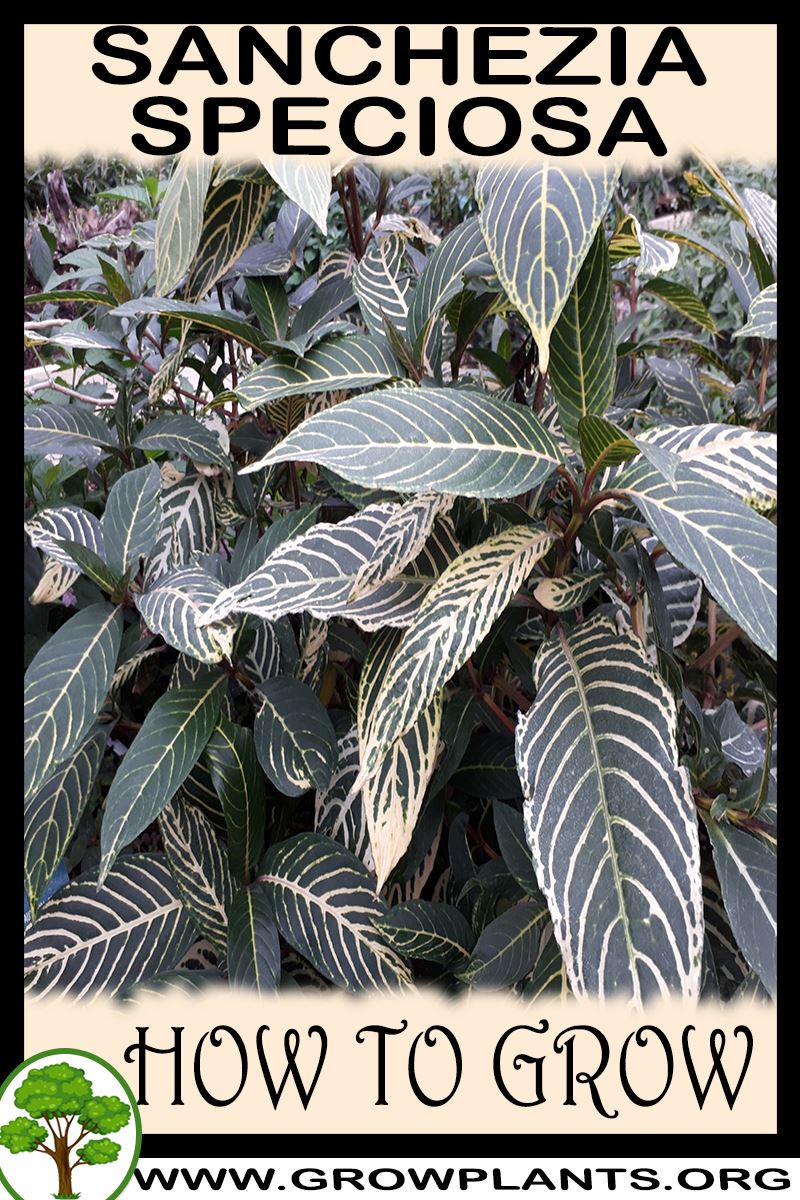
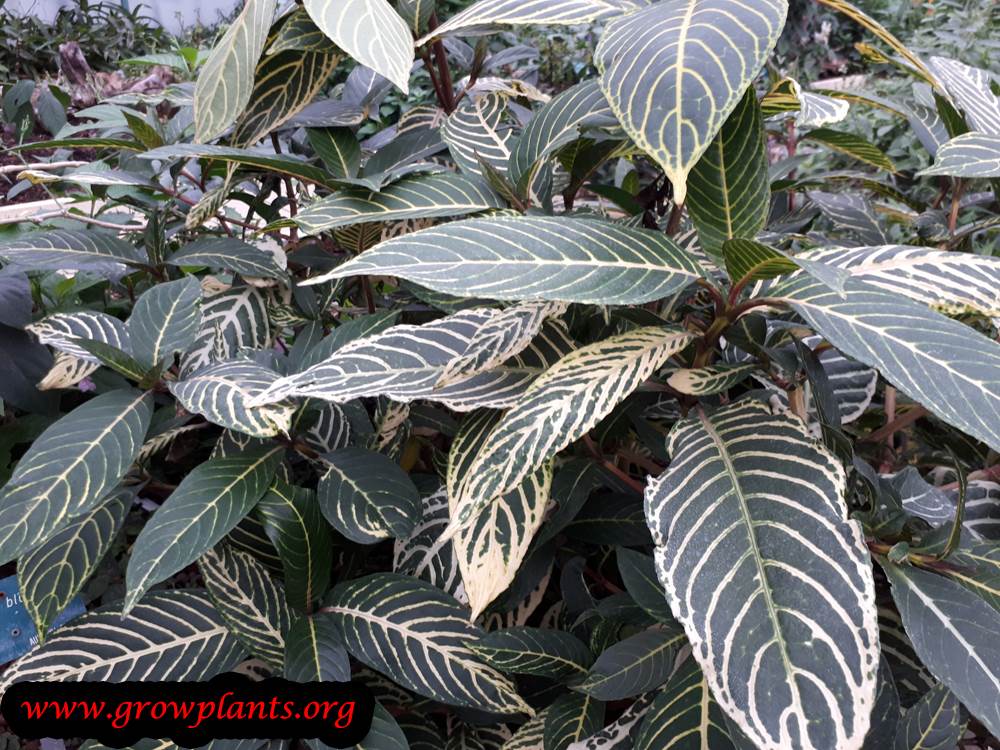
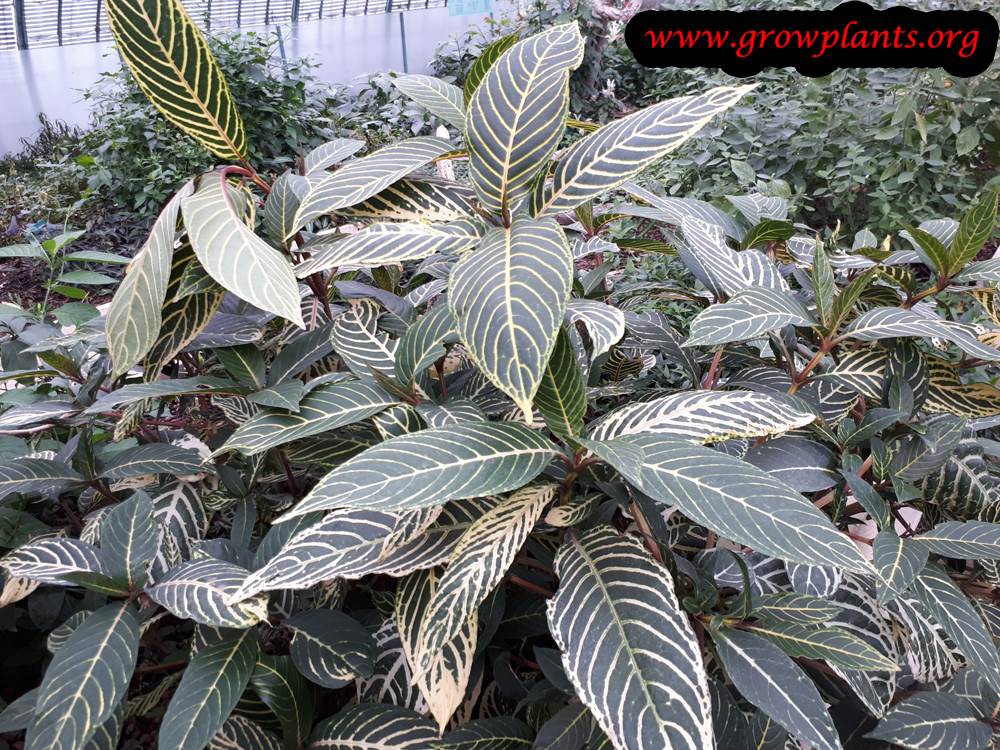
- Leaves & Foliage: Large elliptic green leaves boldly marked with white or yellow veins – the plant’s main ornamental feature (hence “Zebra Plant”).
- Flower Characteristics: Yellow to orange tubular flowers held among showy red, orange and yellow bracts.
Primary Uses & Landscape Value
- Functional & Ornamental Roles: Grown as a striking foliage plant – a tropical border or hedge shrub in warm regions and a bold houseplant elsewhere.
Care Guide: Planting, Soil & Watering
Overview: Sanchezia speciosa (Sanchezia speciosa), the zebra plant, is a tropical evergreen shrub grown for its boldly veined foliage and tubular flowers (hardiness zone 11 and up, or indoors). It thrives in warm, bright shade in rich, moist, slightly acidic soil, with generous watering and high humidity.
Quick Care Requirements
| Requirement | Ideal Condition |
|---|---|
| Planting Season | Year-round in warm, frost-free conditions |
| Growth Rate | Moderate |
| Soil Type | Rich, moist, well-draining; mulched |
| Soil pH | Slightly acidic |
| Water Need | Moderate to high; keep evenly moist |
Planting & Establishment
- Best Planting Season: In frost-free tropical conditions it can be planted year-round. Give it a warm, sheltered spot in bright shade out of harsh direct sun.
- How to Plant:
- Hole Preparation: Dig a hole a little wider than the root ball and loosen the surrounding soil so the roots settle easily.
- Soil Amendments: Work in plenty of compost and organic matter, then mulch over the root zone to lock in the moisture this plant loves.
- Planting Depth: Set the plant at the depth it grew in its pot, keeping the crown level with the soil surface.
- Growth Speed & Expectations: A moderate grower reaching about 1-2 m (3-6 feet), filling out into a lush foliage shrub; it can become invasive in frost-free tropics.
Soil, Watering & Drainage Care
- Soil Mix & Drainage Needs: Give rich, moisture-retentive soil that still drains freely so the roots stay moist but never waterlogged. It grows well in a container of quality potting mix and makes a good warm-room houseplant.
- Watering Schedule & Technique:
- Young / Newly Planted: Keep the soil consistently moist while young plants establish.
- Established: Water generously and regularly once established, never letting the soil dry out; pair with high humidity.
- Seasonal Adjustments: Water more freely through warm growing weather and reduce slightly when growth slows in cooler conditions.
Climate, Light & Hardiness
Sanchezia speciosa (zebra plant) is a true tropical, thriving outdoors only in frost-free warmth and grown as a houseplant everywhere else. It prefers shaded, humid conditions and has essentially no cold tolerance.
Quick Climate Specifications
| Climate Zones | Tropical |
|---|---|
| USDA Hardiness Zones | 11 and warmer outdoors; grown as a houseplant elsewhere |
| Frost Tolerance | None |
| Light Conditions | Full Shade |
Sunlight & Light Exposure
Optimal Light Setup
Sanchezia speciosa is grown in full shade outdoors and does best out of direct sun, which can scorch its variegated leaves; indoors, place it in bright, indirect light away from harsh direct rays.
Temperature Extremes & Hardiness
USDA Hardiness & Regional Limits
Reliably outdoor-hardy only in USDA zone 11 and warmer. Outside that range it must be grown indoors as a houseplant, since it has no tolerance for freezing or near-freezing temperatures.
Cold Damage & Winter Protection
Keep indoor specimens above typical room-temperature minimums and away from cold drafts or windows in winter; chilling well above freezing can already cause leaf damage in this tropical species.
Frost Sensitivity
Frost-tender; any freezing temperature is likely fatal.
Wind, Humidity & Microclimate
Humidity Preferences
Prefers consistently moist, humid air typical of tropical understories; indoors, occasional misting or a pebble tray helps in dry rooms.
Growing in Pots, Balconies & Indoors
Sanchezia is a bold tropical foliage plant grown for its veined leaves, and the grower confirms it as a houseplant. Though it can reach 1-2 m, it takes shade and pot life well, making a dramatic indoor or shaded-balcony specimen in warm conditions.
Quick Details
- Container Size: 15-30 L (4-8 gal) for a large foliage plant
- Indoor Suitability: A good houseplant for a warm, bright-shaded spot
- Best Spot: Full shade to bright indirect light; no harsh direct sun
- Soil & Drainage: Rich, moisture-retentive but free-draining mix
- Watering in Pots: Keep evenly moist; average to plentiful water, never waterlogged
Indoors & On the Windowsill
- A good houseplant: The grower confirms it. Give it a warm room with bright, indirect light – enough to keep the leaf colour strong, but out of scorching sun. Prune to keep it bushy and to size.
- Warmth & humidity: A tropical, it wants steady warmth and humid air; mist or use a pebble tray, and keep it from cold draughts and cold glass in winter.
- Overwintering: Frost-tender, so keep it indoors in a warm, bright room through winter in cold climates.
On a Balcony or Patio
- Light & warmth: In warm weather it enjoys a shaded, sheltered spot outdoors with bright, filtered light – never direct midday sun, which scorches the leaves. Bring it in before cold arrives.
- Practicalities: A filled pot is heavy once watered – check the balcony can take the load, and stand it where drainage runoff will not be a nuisance.
Choosing the Pot, Soil & Long-Term Care
- Pot & drainage: A 15-30 L pot with strong drainage holes and never leave it standing in a saucer of water, or the roots rot. Terracotta breathes and dries faster; glazed or plastic holds moisture longer.
- Potting mix: A well-aerated, organic-rich mix – potting compost, or peat/coir with perlite or vermiculite. It likes a moisture-holding yet open mix.
- Feeding: Potted plants use up their feed quickly as nutrients leach away with each watering, so feed more often than plants in open ground through the growing season. Good feeding keeps the foliage lush.
- Repotting: Refresh the top layer of mix and pot up roughly every couple of years; for perennials, lightly trim the root ball and top growth when you do.
Fertilizing & Feeding
A moderate feeder while actively growing: regular light feedings through the warm season keep the variegated foliage and bracts colorful, with feeding held back right after repotting and again as growth slows in low light.
Quick Fertilizing Specs
| Feeding Level | Moderate feeder |
|---|---|
| Main Nutrient Priority | Balanced feeding with adequate nitrogen to support vigorous, colorful foliage |
| Best Feeding Period | The warm active growing season |
| Organic Options | Compost-enriched potting mix and periodic top-dressing with organic matter |
| Reduce/Stop Feeding | Reduce and then stop feeding as light and growth drop off, and hold off right after repotting |
| Micronutrients | Iron and manganese are typically supplied by a complete houseplant fertilizer; correct only if a specific deficiency is diagnosed |
Feeding by Growth Stage
Establishment after repotting
Let roots recover and settle into fresh potting mix before asking the plant to take up fertilizer.
| Nutrient direction | None – hold off on fertilizer while roots recover from repotting. |
|---|---|
| Timing | Right after repotting or transplanting into a new container. |
| Frequency | No feeding at this stage. |
| Fertilizer types | No feeding at this stage; fresh potting mix and stored nutrients support the plant while roots recover. |
| Precautions | Do not fertilize freshly repotted plants; tender new roots are easily burned by fertilizer salts before they are established. |
Active growth
Support vigorous stems and vividly colored, variegated foliage and bracts during active growth.
| Nutrient direction | A balanced, nitrogen-adequate complete fertilizer sustains steady foliage growth and good leaf color. |
|---|---|
| Timing | Through the warm active growing season, once the plant is established in its pot. |
| Frequency | Regular light feedings through the growing season, tapering off as growth naturally slows. |
| Fertilizer types | A balanced complete houseplant fertilizer, An occasional organic feed such as diluted compost tea |
| Routine trace nutrients | iron, manganese |
| Precautions | Avoid overfeeding, which can cause salt buildup in containers and scorch leaf margins on this foliage plant. |
Low-light slowdown
Let the plant rest through periods of lower light and slower growth without forcing new flushes.
| Nutrient direction | None – withhold fertilizer while growth is slow in lower light. |
|---|---|
| Timing | During shorter, lower-light days or any period when growth visibly slows. |
| Frequency | No feeding at this stage. |
| Fertilizer types | No feeding at this stage; resume only once active growth and brighter light return. |
| Precautions | Do not fertilize while growth is slow; unused fertilizer salts simply accumulate in the potting mix and can injure roots. |
Nutrient Deficiency Signs & Corrections
New leaves emerge yellow between green veins while veins themselves stay green.
| Possible causes | high soil or water pH limiting iron availability, waterlogged, poorly aerated potting mix, low soil iron |
|---|---|
| Appears first on | newest, uppermost leaves |
| What to check | potting mix drainage and moisture, water and soil pH if testable, container drainage |
| Possible correction | Improve drainage and correct pH toward the plant’s preference, then apply a chelated iron product per its label if the issue persists. |
Older, lower leaves fade to pale green or yellow and overall growth slows.
| Possible causes | low available nitrogen in the potting mix, infrequent feeding relative to active growth, roots outgrowing the container |
|---|---|
| Appears first on | older, lower leaves |
| What to check | recent feeding history, how root-bound the container is, overall vigor and leaf color |
| Possible correction | Apply a balanced, nitrogen-containing complete fertilizer during active growth and check whether repotting is needed. |
Leaf tips and margins brown or scorch even with regular watering.
| Possible causes | fertilizer salt buildup in the potting mix, over-fertilizing relative to the plant’s light and growth, insufficient leaching when watering |
|---|---|
| Appears first on | leaf tips and margins |
| What to check | recent fertilizer amounts, how often the pot is watered through to drain, container drainage |
| Possible correction | Ease off feeding and water thoroughly to flush the potting mix, letting water drain freely from the container. |
Pruning, Training & Seasonal Maintenance
Sanchezia speciosa is a fast-to-medium growing tropical evergreen shrub grown for both its colorful bracts/flowers and its variegated foliage; it tolerates pruning well year-round, and regular pinching and cutting back are actually necessary to stop it becoming leggy and to keep it flowering, since fresh flushes of growth are what carry the flowers.
Quick Pruning & Maintenance Specs
| Pruning Tolerance | High |
| Primary Pruning Window | Any time (no true dormant season in its tropical/houseplant setting) |
| Secondary Maintenance Window | After each flowering flush |
| Typical Frequency | Regular, several times a year |
| Main Objective | Control legginess and renew flowering wood |
| Young Plant Priority | Pinch tips early to build multiple branches |
| Mature Plant Priority | Cut back leggy/bare stems to force fresh growth |
| Best Tool Type | Bypass secateurs |
| Avoid Heavy Pruning During | Cold snaps if grown outdoors at the cooler edge of its zone 11+ range |
Pruning by Plant Age & Size
Newly Established
Remove only damaged growth and let the plant establish before any pinching.
Young / Formative
Pinch and tip-prune repeatedly while young to build a multi-branched framework rather than a single leggy stem, which is this species’ natural tendency.
Mature / Established
Periodically cut the oldest, bare or leggy stems back to the ground or to a low bud to force fresh flowering growth; keep a mix of stem ages across the shrub.
Seasonal Pruning Schedule
Post-Flowering
Cut spent flowering stems back by about a third to a node to encourage a fresh flush of both flowers and leaf color; don’t remove all the new growth, since that is exactly what carries the next flowers.
Ongoing Sanitary
Remove dead or yellowing leaves and any cold-damaged tips promptly.
Flowering & Fruiting Wood
Sanchezia flowers on new growth produced after a flush, so cutting back spent flowering stems is what stimulates the next flowering flush rather than sacrificing it; letting stems age and go bare slows the production of new growth and reduces flowering.
Structural Pruning & Training
Thin crowded or crossing interior stems to keep light reaching the leaves, which improves the variegated color display; control height and spread by heading back tall canes; renewal-prune (cutting the oldest canes to the base) every year or two to keep the shrub compact and floriferous rather than tall and bare-based.
Special Growth to Remove
- Leggy, bare-based stems – renewal-cut to force fresh basal breaks.
- Dead or damaged leaves.
Container & Small-Space Pruning
As a common tropical/houseplant subject, pinch more frequently in containers to keep it compact; hard cutting back is well tolerated and is the standard way to keep a potted specimen a manageable size, unlike advice for an unconstrained in-ground planting.
Tools
Bypass secateurs for most cuts on the soft-wooded stems; precision snips for pinching tips and deadheading.
Tool Hygiene & Disease Risk
Routine – aphids are the main reported pest and are not spread by pruning tools, so clean tools are sufficient.
Cut Placement & Technique
Cut just above an outward-facing node or leaf pair; use heading cuts on leggy stems to force branching lower down.
Heavy Pruning & Rejuvenation
Tolerated well – an overgrown, leggy specimen can be cut back hard, to roughly 15-20cm (6-8in) above the soil or pot rim, and will reflush strongly given its fast-to-medium growth rate; expect a temporary loss of flowers and leaf color while it regrows.
Post-Pruning Care
After a hard cutback, keep the soil evenly moist (it prefers moist, acidic soil) and keep it in shade or filtered light, since foliage newly exposed by pruning can scorch if suddenly in stronger light; no extra feeding is needed right after cutting.
Common Pruning Mistakes
- Letting the shrub go too long between cutbacks so it becomes tall, bare at the base and sparsely flowered.
- Removing all the older growth at once instead of staggering renewal cuts across a couple of seasons.
When NOT to Prune
Avoid heavy pruning right before or during the main summer bloom flush if the display is wanted that season; avoid pruning a cold-stressed plant, since it is frost-tender at zone 11+.
Recommended Tools (by task)
- bypass_secateurs – the main tool for tip pruning, deadheading and renewal cuts on soft-wooded stems.
- precision_snips – fine pinching of new growth tips.
Pruning Troubleshooting
| Problem | Possible Cause | What to Check | Corrective Action |
| Leggy, bare-based growth | Infrequent pruning/pinching, low light | Time since last cutback, light levels | Renewal-prune the oldest stems and pinch the remaining tips |
| Poor flowering or dull leaf color | No recent new-growth flush (old, unpruned stems) | Age of stems, recent growth flush | Cut back spent flowering stems to trigger a fresh flush |
| Dieback after cutting back | Cold exposure to a frost-tender tropical plant | Recent temperatures, growing zone | Prune only once new growth resumes in warm conditions |
Propagation Guide
Sanchezia speciosa is best propagated from stem cuttings, which the site confirms is needed to reproduce specific leaf and bract colour forms true to the parent – seedlings are not guaranteed to keep the exact variegation or bract colouring. As a soft-stemmed tropical shrub it roots readily, making propagation easy.
Quick Propagation Specs
| Best Propagation Method | Stem cuttings |
| Alternative Methods | Seed (where available) |
| Propagation Difficulty | Easy |
| Seed True-to-Type | Variable – may not reliably reproduce the parent’s specific leaf variegation or bract colour |
| Vegetative True-to-Type | Yes |
| Best Propagation Season | Warm months; the site lists all-year planting in its tropical/houseplant zone (11+) |
| Cutting Rooting Time | Typically a few weeks under warm, humid conditions |
Growing from Seed
Seed is a secondary option for this species. Because the site notes vegetative propagation is needed to preserve specific colour forms, seed-grown plants should be expected to vary in leaf variegation and bract colour; sow in a warm, humid, well-drained mix typical for tropical Acanthaceae.
Stem Cuttings
Cutting Type
Semi-hardwood tip or node cuttings with at least one or two leaf nodes.
Best Timing
Warm growing months, matching the site’s all-year planting window in its tropical growing zone.
Cutting Preparation
Remove lower leaves and take cuttings from healthy, disease-free stems to keep the desired leaf and bract colouring.
Rooting Setup
A moist, humid, well-drained mix (matching this plant’s preference for moist soil) roots this soft-stemmed shrub readily; bright, indirect light or shade suits it, consistent with its full-shade preference.
Rooting Hormone
Optional – usually beneficial for faster, more even rooting but not strictly required for this genus.
Rooting Time
Often a few weeks under warm, humid conditions.
Bloom & Flower Guide
Quick Details
- Bloom Season: Summer
- Time to First Bloom: On established plants that have reached a good size in warm, humid conditions
- Flower Appearance: Tubular yellow to orange flowers held on showy red-orange bracts
- Edibility: Ornamental / none
Detailed Blooming Overview
The zebra plant is grown mainly for its bold, white- or yellow-veined leaves, but in summer an established plant adds a striking bloom: slender tubular flowers in yellow to orange, held in upright spikes on colourful red, orange and yellow bracts. The bracts stay showy well after the individual flowers fade, and the nectar-filled tubes are attractive to hummingbirds.
Flower Characteristics
- Tubular flowers in yellow to orange.
- Carried on bright bracts in shades of red, orange and yellow.
- Long-lasting bracts extend the display beyond the flowers themselves.
Bloom Care & Thinning
- Managing the bloom: Remove spent flower spikes once they fade to keep the plant looking fresh.
- Encouraging bloom: Warmth, humidity and good light help a mature plant flower.
Pests, Diseases & Troubleshooting
Overview: Sanchezia is a tender tropical foliage shrub grown for its boldly veined leaves, and its troubles are those of any lush, soft-leaved indoor/greenhouse plant: sap-sucking mealybugs, scale, spider mites, whitefly, aphids and thrips, with root rot and leaf scorch as the main non-pest issues. Warmth, humidity and inspection of leaf undersides keep it clean; management is organic and cultural first.
Quick Troubleshooting Overview
| Issue / Pest | Main Symptom | Primary Solution |
|---|---|---|
| Mealybugs | White cottony tufts in leaf axils | Wipe off, alcohol dab, horticultural oil |
| Scale insects | Brown bumps on stems/veins, honeydew | Scrape off, horticultural oil |
| Spider mites | Stippling & webbing in dry air | Raise humidity, rinse, oil/soap spray |
| Whitefly | White flies rising, sooty mould | Sticky traps, airflow, insecticidal soap |
| Leaf spot | Brown/black spots on leaves | Remove leaves, avoid wetting foliage |
| Root rot | Wilting, yellowing, mushy roots | Ease off water, free-draining mix |
Common Pests & Management
- Mealybugs (Planococcus citri / Pseudococcus spp.):
- Symptoms: White, cottony, waxy tufts nestled in leaf axils, along veins and at growing points; sticky honeydew and sooty mould, with stunted, distorted new growth.
- Prevention & Control: Wipe off with a damp cloth and dab colonies with a cotton bud of dilute alcohol; isolate and inspect new plants. For heavier infestations spray horticultural oil or insecticidal soap, repeating to reach hidden crevices, and support with biological controls under glass.
- Scale insects (Coccus / Saissetia spp.):
- Symptoms: Small brown, tan or blackish limpet-like bumps on stems, leaf undersides and along veins; honeydew, sooty mould and general loss of vigour.
- Prevention & Control: Scrape off with a fingernail or soft brush and wipe stems; treat with horticultural oil to smother crawlers and adults, repeating every couple of weeks. Prune out heavily encrusted stems.
- Two-spotted spider mite (Tetranychus urticae):
- Symptoms: Fine pale stippling, dull bronzed leaves and delicate webbing on undersides and shoot tips, worst in warm, dry indoor air.
- Prevention & Control: Raise humidity, rinse foliage, and wipe leaves regularly; treat with insecticidal soap or horticultural oil, covering leaf undersides, or release predatory mites under cover.
- Whitefly (Trialeurodes vaporariorum / Bemisia tabaci):
- Symptoms: Clouds of tiny white flies rising when the plant is disturbed; honeydew, sooty mould and weakened, yellowing foliage.
- Prevention & Control: Hang yellow sticky traps, improve airflow, and spray insecticidal soap or horticultural oil on leaf undersides; introduce Encarsia parasitic wasps in a greenhouse.
- Aphids (Aphis / Myzus spp.):
- Symptoms: Soft green or black insects on tender new shoots and flower spikes; sticky honeydew and distorted young growth.
- Prevention & Control: Rinse off with water, encourage or introduce beneficials, and use insecticidal soap on persistent colonies.
- Thrips (Frankliniella / Heliothrips spp.):
- Symptoms: Silvery flecking and streaking on leaves with tiny black faecal specks; distorted new growth and scarred foliage.
- Prevention & Control: Use blue sticky traps to monitor, remove badly affected leaves, and treat with insecticidal soap or horticultural oil; keep humidity up and introduce predatory mites under cover.
Diseases & Fungal Issues
- Fungal and bacterial leaf spot:
- Symptoms: Brown or black spots, sometimes with yellow haloes or water-soaked margins, spreading in warm, wet, poorly ventilated conditions and on splashed foliage.
- Treatment & Management: Remove affected leaves, water at the base to keep foliage dry, and improve airflow and spacing. A copper-based fungicide can help persistent fungal spotting; prioritise sanitation and ventilation.
- Root and stem rot (Pythium / Phytophthora / Rhizoctonia):
- Symptoms: Wilting despite moist soil, yellowing lower leaves, blackened stem bases and soft, brown roots – the result of overwatering or poor drainage.
- Treatment & Management: Use a free-draining mix, water only when the surface has begun to dry, and never leave the pot standing in water. Repot rotting plants into fresh mix after trimming away dead roots; take cuttings from healthy tips as insurance.
- Botrytis / grey mould (Botrytis cinerea):
- Symptoms: Fuzzy grey mould on damaged or dying leaves and flowers in cool, damp, still air.
- Treatment & Management: Remove faded and damaged tissue promptly, improve ventilation, and avoid overhead watering; good hygiene usually prevents it without fungicide.
Growing Difficulties & Abiotic Problems
- Leaf scorch / bleaching in direct sun:
- Cause & Symptoms: Pale, bleached or brown scorched patches where a plant used to bright shade is exposed to hot direct sun.
- Correction Strategy: Grow in bright, filtered light out of harsh midday sun; acclimatise gradually when moving plants and move indoor plants back from hot glass.
- Brown leaf tips and edges from low humidity:
- Cause & Symptoms: Crisping brown leaf margins and tips in dry indoor air or with erratic watering.
- Correction Strategy: Raise humidity by grouping plants, using a pebble tray or room humidifier, and keep watering even; avoid hot, dry draughts and heating vents.
- Cold damage:
- Cause & Symptoms: Blackened, collapsed or dropped leaves after exposure to cold draughts or temperatures near/below its tropical comfort range.
- Correction Strategy: Keep warm and away from cold windows and doors in winter; this is a tender tropical that will not tolerate chilling.
- Chlorosis / leaf yellowing:
- Cause & Symptoms: General or interveinal yellowing from nutrient shortage, waterlogging, or an exhausted pot.
- Correction Strategy: Feed regularly through the growing season with a balanced feed, check that drainage is good, and pot on when root-bound; correct micronutrients if interveinal yellowing persists.
What Helps – Products & Tools
Sanchezia is managed with a gentle, organic kit: insecticidal soap and horticultural/neem oil for mealybugs, scale, mites, whitefly and thrips; yellow and blue sticky traps to monitor; and a copper fungicide only if leaf spot persists. A free-draining mix and disciplined watering prevent the root rot that is the plant’s most common killer. Spray oils in cooler light and follow labels.