

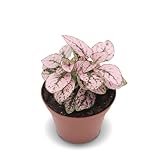


Plant Profile & Key Characteristics
Overview: A small evergreen herbaceous subshrub of 15-40 cm (6-16 in), grown as a foliage houseplant (or cold-climate annual) for its brightly spotted, multi-coloured leaves. Needs strong light and humidity to keep its colours.
Quick Specifications
| Specification | Attribute |
|---|---|
| Plant Type / Life Cycle | Perennial (evergreen); grown as an annual in cold climates |
| Foliage Type | Evergreen |
| Mature Size | 15-40 cm tall (6-16 in) |
| Growth Rate | Moderate to Fast |
| Root System | Fibrous, shallow |
| Toxicity | Non-toxic (considered pet-safe) |
| Hardiness | USDA zone 11+ as perennial; grown as an annual in zone 5+ |
Growth Form & Structure
- Height & Spread: Stays small at 15-40 cm (6-16 in); ideal for pots, starting in a container 50-70% larger than the root ball.
- Growth Habit & Form: Bushy, mounding herbaceous subshrub; pinch regularly to keep it compact.
- Lifespan & Maturity: Short-lived perennial that reaches display size quickly; often refreshed from cuttings.
Anatomy & Physical Features
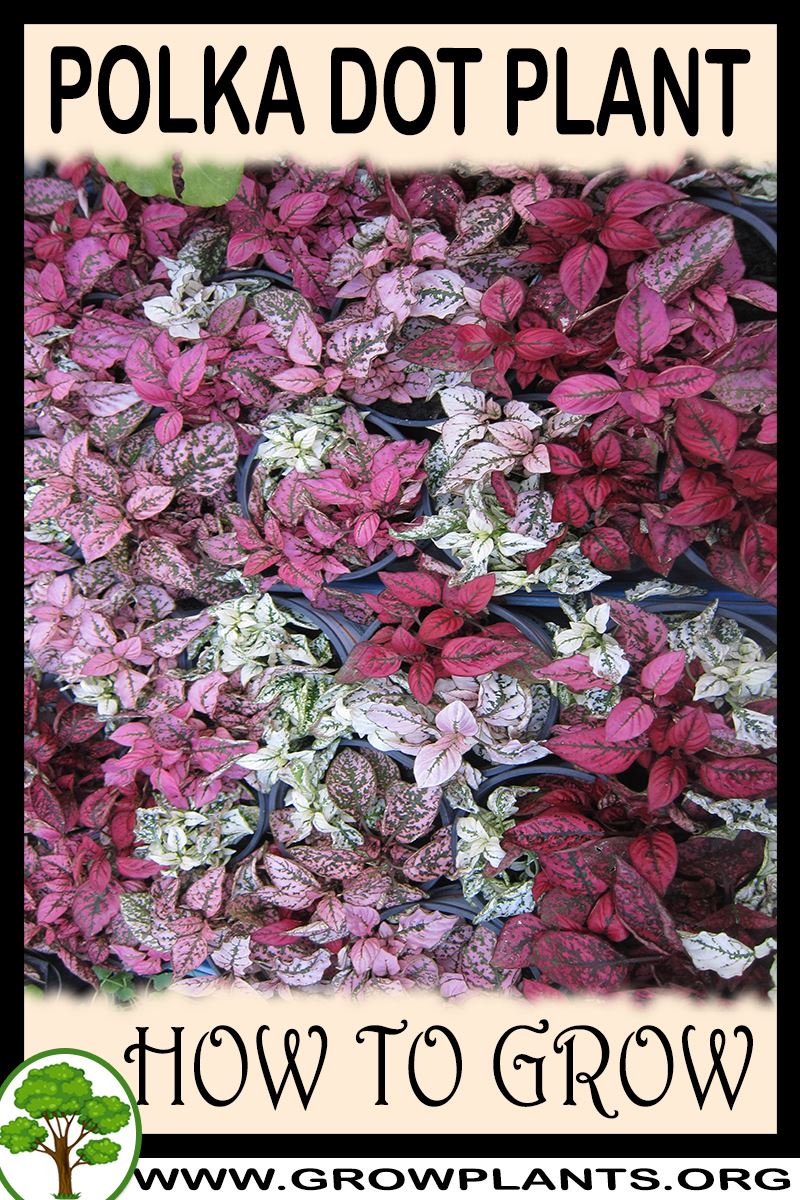
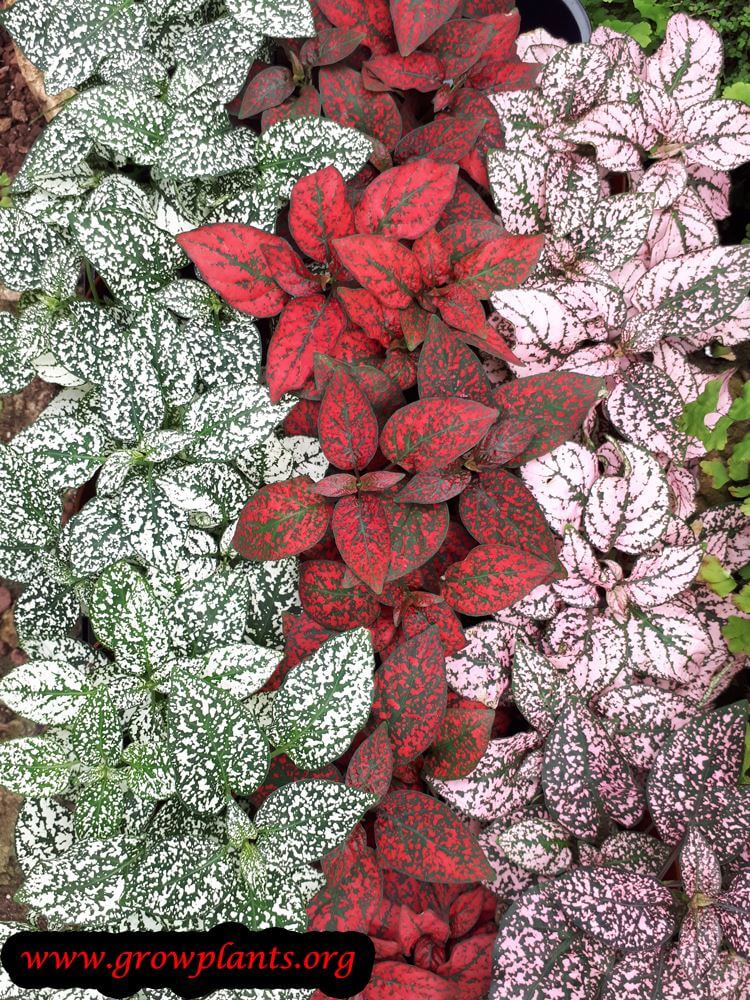
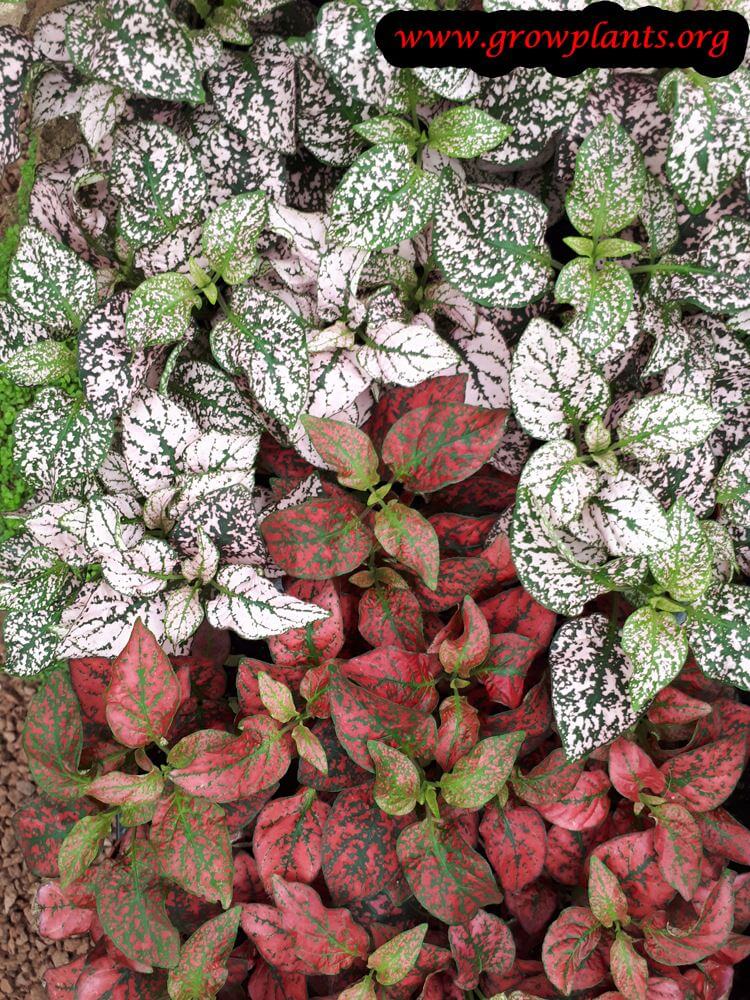
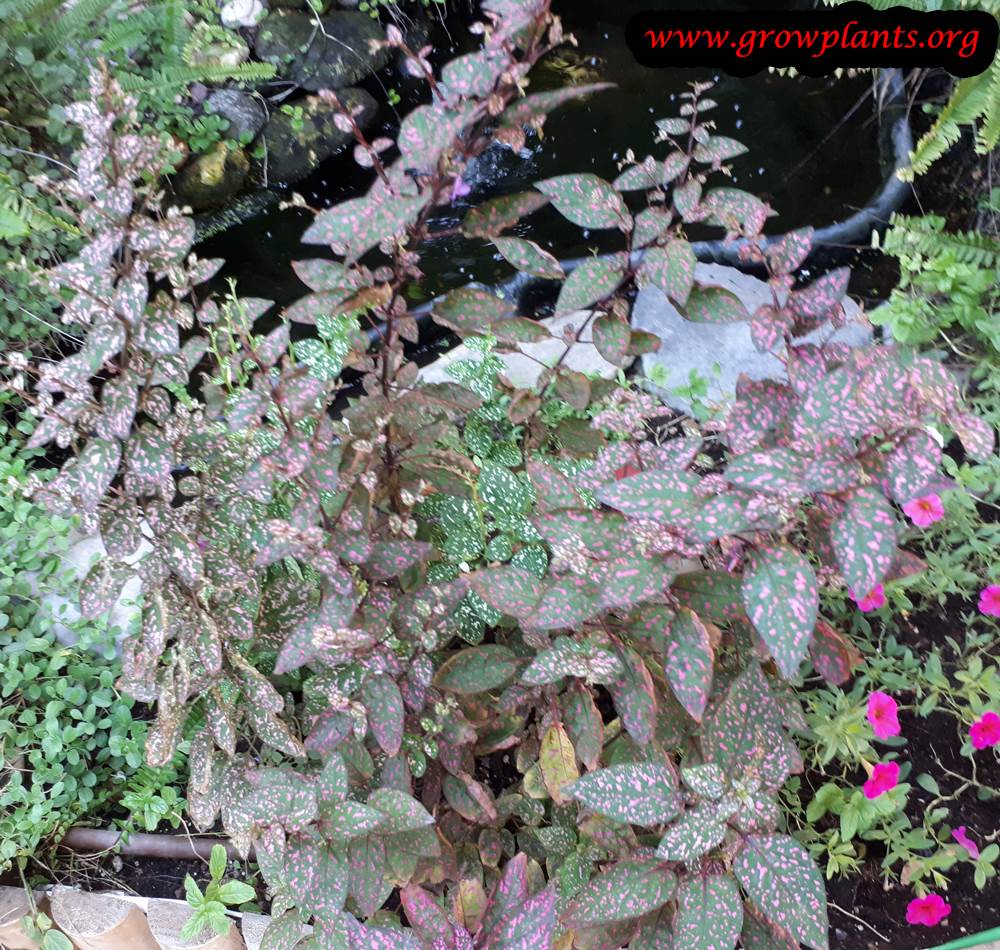
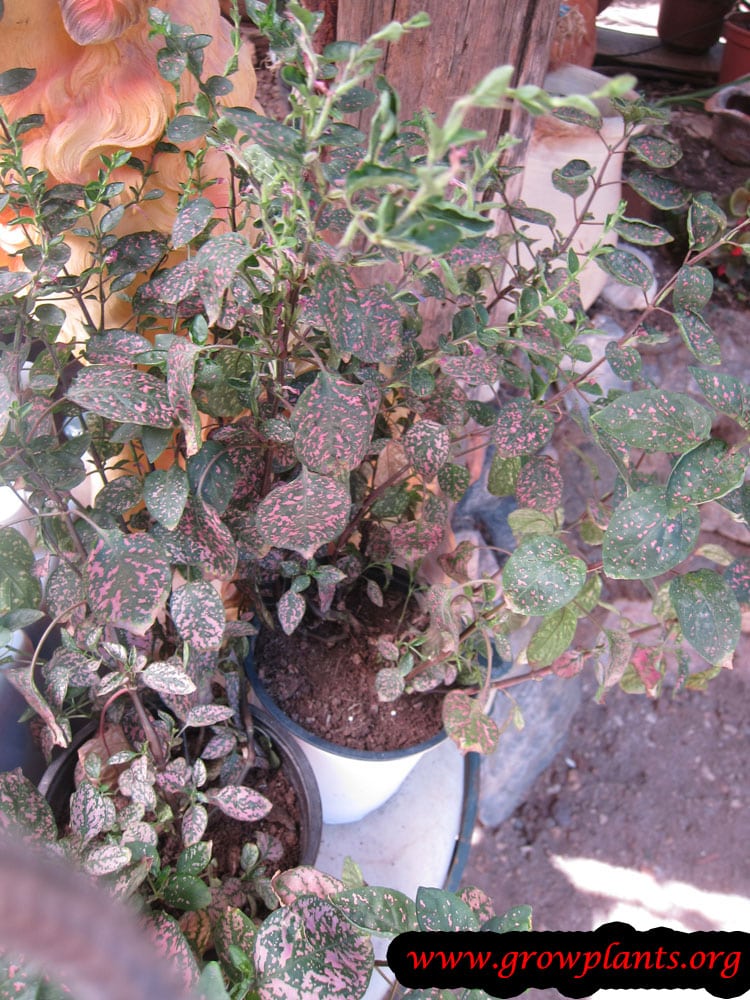
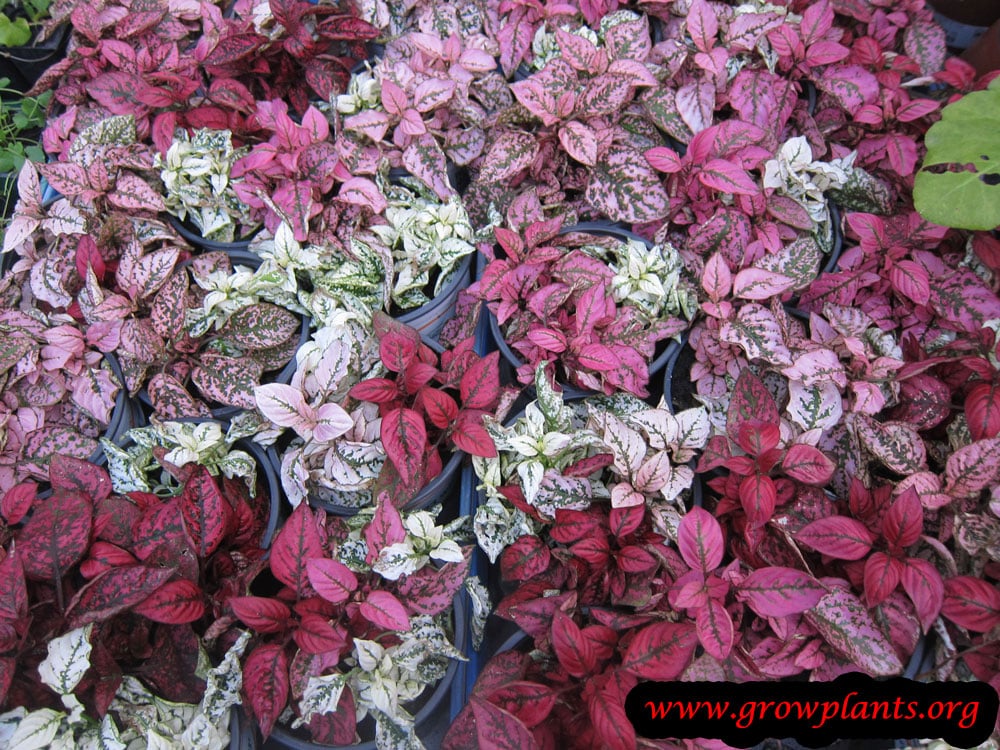
- Leaves & Foliage: The main feature – oval leaves heavily spotted and splashed in pink, red, white, green, brown or purple; colour fades in low light.
- Flower Characteristics: Small, insignificant purple flowers on short stems (see the Bloom guide).
Primary Uses & Landscape Value
- Functional & Ornamental Roles: Popular foliage houseplant, terrarium plant, and seasonal bedding or container plant for shade.
Care Guide: Planting, Soil & Watering
Overview: The polka dot plant is a warmth-loving foliage plant (best above 15–20°C) grown mostly indoors or in sheltered shade, needing bright indirect light and humidity. It grows best in rich, moisture-retentive but well-draining soil kept evenly moist.
Quick Care Requirements
| Requirement | Ideal Condition |
|---|---|
| Planting Season | Year-round indoors; spring outdoors once above 15°C |
| Growth Rate | Moderate to Fast |
| Soil Type | Rich, moisture-retentive, well-draining soil such as peat or potting mix with perlite |
| Water Need | Moderate – keep evenly moist; sensitive to swings in watering |
Planting & Establishment
- Best Planting Season: Grow year-round as a houseplant or plant in spring as an annual; outdoors above 15°C (59°F), and where hardy in zone 11 spring to autumn, year-round in zone 12.
- How to Plant:
- Hole Preparation: Plant into a container or bed of moisture-retentive mix; pot on into a container about 50–70% larger than the root ball.
- Soil Amendments: Blend perlite or vermiculite into peat or potting mix to hold moisture while keeping the soil aerated.
- Planting Depth: Set the crown level with the soil surface; seedlings are best transplanted once they have about five leaves.
- Growth Speed & Expectations: A moderate to fast grower that soon fills out into a bushy mound.
Soil, Watering & Drainage Care
- Soil Mix & Drainage Needs: Use potting mix or peat with perlite for moisture and aeration; in containers with a saucer, let any collected water drain and empty the saucer the same day to prevent rot.
- Watering Schedule & Technique:
- Young / Newly Planted: Keep the soil consistently moist while young plants and cuttings establish; high humidity helps.
- Established: Water to keep the soil evenly moist and avoid sudden swings between wet and dry, which the plant resents and reacts to by wilting.
- Seasonal Adjustments: Water a little more in warm, active growth and less in cool or low-light conditions.
Climate, Light & Hardiness
The polka dot plant (Hypoestes phyllostachya) is a tender tropical foliage plant grown indoors or in warm, frost-free, humid, shaded-to-brightly-lit positions across tropical, subtropical, Mediterranean and temperate regions. It needs steady warmth, bright indirect light for strong leaf colour, and shelter - cold, frost and wind are its main enemies.
Quick Climate Specifications
| Climate Zones | Tropical, subtropical, Mediterranean, temperate (indoors) |
|---|---|
| USDA Hardiness Zones | About 11 and warmer as a perennial; grown as an annual in roughly zone 5 and above |
| Optimal Temp Range | Warm, around 20 °C (68 °F); best above 15 °C (59 °F) |
| Cold Damage Begins | Below about 15 °C (59 °F) growth and colour suffer |
| Approx. Survival Minimum | No frost tolerance; keep well above freezing |
| Frost Tolerance | None |
| Light Conditions | Half shade to full shade / bright indirect light |
| Wind Tolerance | Low |
Sunlight & Light Exposure
Optimal Light Setup
Needs plenty of bright, indirect light to keep its vivid leaf spots - too little light and the markings fade to plain green. However, it burns in full sun, so bright shade or a filtered window is the sweet spot.
Shade & Heat Management
Keep out of hot direct sun, which scorches the leaves; balance is the goal, since deep shade dulls the colour while direct sun damages the foliage.
Best Exposure / Orientation
A bright, stable, draught-free spot indoors, or a sheltered, lightly-shaded position outdoors in warm weather. It also does well in the enclosed light of a terrarium.
Temperature Extremes & Hardiness
Indoor Comfortable Temperature
Prefers warm room conditions around 20 °C (68 °F) and should be kept above about 15 °C (59 °F); it can be grown outdoors only where temperatures stay above roughly 15 °C (59 °F).
USDA Hardiness & Regional Limits
The site data lists about USDA zone 11 and warmer as a perennial, and it is grown as an annual from roughly zone 5 upward. Outdoor year-round culture is limited to frost-free areas; in colder climates it is grown as a summer annual or an indoor plant, with frost forcing the annual treatment.
Cold Damage & Winter Protection
Growth and colour decline below about 15 °C (59 °F); protect from cold windows, unheated rooms and winter draughts.
Frost Sensitivity
No frost tolerance whatsoever - even a light chill damages foliage and frost is fatal.
Wind, Humidity & Microclimate
Humidity Preferences
Wants warm, humid air; higher humidity keeps the leaves turgid and healthy, though it affects leaf colour less than light does.
Dry-Air Tolerance
Poor - dry, heated indoor air causes leaf-edge browning; group plants or use a humidity tray to compensate.
Wind Tolerance
Dislikes wind: the soft stems and leaves are easily battered, so a sheltered position is best when grown outdoors.
Microclimate Recommendations
A warm, humid, brightly-but-indirectly lit, wind-sheltered and draught-free niche - such as a terrarium or a protected patio corner in summer - keeps both colour and health at their best.
Growing in Pots, Balconies & Indoors
The grower confirms the polka dot plant grows happily indoors as a houseplant, with one caveat in his own words: it must have plenty of light to keep its bold leaf colour, and it likes humidity. It is small, fast-growing and colourful – an ideal pot plant for a bright room.
Quick Details
- Container Size: Start with a pot 50-70% larger than the root ball (use the smaller end for bigger plants) – the grower’s own guidance
- Indoor Suitability: Good houseplant – but it needs strong light for colour, plus humidity
- Best Spot: Bright light without direct midday sun, which burns the leaves
- Soil & Drainage: Potting mix or peat soil with perlite; must drain freely
- Watering in Pots: Keep evenly moist – it is sensitive to swings in watering and sulks or loses colour if it dries out or stays soggy
Indoors & On the Windowsill
- A houseplant that needs light: The grower stresses that indoors it must have plenty of light to hold strong colour – too little and the leaves fade toward plain green; too much direct sun and they scorch.
- Humidity and upkeep: It likes humid air; the grower’s indoor routine is to prune once a year, keep the light and humidity up, and feed once a year in spring.
- Windowsill: A bright sill with strong but filtered light keeps the colour vivid; keep it away from cold draughts.
On a Balcony or Patio
- Light & shelter: Outdoors only above about 15C (59F); the grower advises a sheltered spot as it dislikes wind, yet still wants plenty of light to keep the colours from turning green.
- Overwintering: It is frost-tender (a cold-climate annual) – bring it in or take cuttings before the cold and grow it on as a houseplant.
Choosing the Pot, Soil & Long-Term Care
- Pot & drainage (grower’s method): Fit a saucer under the pot; when you water, let it fill the saucer but make sure it also drains away the same day – if water sits, the mix is too heavy or the pot needs more holes.
- Potting mix: Potting mix or peat soil with perlite, as the grower specifies; a light, aerated blend of peat or coir with perlite gives roots both moisture and air.
- Feeding: The grower feeds once a year in spring; potted plants leach nutrients, so a little regular feeding in the growing season also suits it.
- Repotting (grower’s method): Repot into the next size up each time it fills the pot, until it reaches the size you want; refresh the tired soil every few years, and if the plant is hard to lift, replace some soil from the side and lightly prune the plant and roots.
Grower’s Container Tip
- Right-sizing the pot: The grower starts each plant in a pot 50-70% bigger than its root ball – using the smaller percentage for larger plants – then steps it up as it fills out, rather than over-potting from the start.
Growing this plant in a greenhouse
A greenhouse can give polka dot plant frost protection and cold protection. In the right climate it may also be kept growing through winter, depending on how much warmth and light are provided.
Greenhouse at a glance
| Greenhouse suitability | Good - clearly useful |
|---|---|
| Main benefits | frost protection, cold protection |
| Season extension | earlier spring & later autumn |
| Outdoor protection advisable below | about 15°C |
| Maintain greenhouse minimum | around 15°C for active growth |
| Suitable types | heated greenhouse, polycarbonate greenhouse, lean-to |
| Heating | Heating is recommended in cold climates for continuous growth. |
Related greenhouse guides
- Greenhouses: How to Choose the Right Greenhouse
- Best Greenhouse Heaters
- Greenhouse Climate Control: Temperature, Ventilation and Humidity
- Best Lean-To Greenhouses
Fertilizing & Feeding
A light feeder grown for its foliage: keep feeding gentle and regular during active growth, and ease off in low light. These plants show fertilizer-salt damage quickly, so light and steady beats heavy.
Quick Fertilizing Specs
| Feeding Level | Light |
|---|---|
| Main Nutrient Priority | Balanced, nitrogen-forward feeding for lush foliage |
| Best Feeding Period | Warm, bright months of active growth |
| Organic Options | Diluted balanced liquid feeds; a light worm-casting top-dress |
| Soil pH | Prefers a slightly acidic potting mix |
| Reduce/Stop Feeding | Reduce in low light and stop while growth is dormant |
| Micronutrients | Iron and manganese supplied by a complete houseplant fertilizer |
Feeding by Growth Stage
After repotting
Let roots settle into fresh potting mix after repotting before any feeding.
| Nutrient direction | None – fresh potting mix already supplies nutrients, so withhold fertilizer. |
|---|---|
| Timing | Right after repotting. |
| Frequency | No feeding until the plant is established and actively growing. |
| Fertilizer types | No feeding right after repotting – withhold fertilizer until new growth appears. |
| Precautions | Do not fertilize newly repotted plants; wait for active growth. |
Active growth
Support steady leafy growth and strong leaf color.
| Nutrient direction | A balanced, nitrogen-forward houseplant fertilizer to keep foliage lush and well colored. |
|---|---|
| Timing | Through the warm, brighter months of active growth. |
| Frequency | Light, regular feeding while the plant is actively growing. |
| Fertilizer types | A balanced liquid houseplant fertilizer applied to moist soil, A complete fertilizer at a gentle rate |
| Routine trace nutrients | iron, manganese |
| Precautions | Apply to moist soil and keep feeding light – these plants are sensitive to fertilizer-salt buildup. |
Low-light slowdown
Match feeding to slower growth in low light and cool months.
| Nutrient direction | None – growth slows in low light, so withhold fertilizer until light and growth increase. |
|---|---|
| Timing | Winter and other low-light periods. |
| Frequency | No feeding while growth is slow. |
| Fertilizer types | No feeding during the low-light slowdown – withhold fertilizer until active growth resumes. |
| Precautions | Do not fertilize while the plant is resting in low light. |
Salt management
Periodically leach the pot to remove built-up fertilizer salts.
| Nutrient direction | None – this is a maintenance step, not a feeding; withhold fertilizer and flush with plenty of plain water. |
|---|---|
| Timing | When salts crust on the soil surface or pot rim. |
| Frequency | No feeding – occasional leaching only. |
| Fertilizer types | No fertilizer – leach the container with thorough watering to wash out salts. |
| Precautions | Do not add fertilizer during a leaching flush. |
Nutrient Deficiency Signs & Corrections
Overall pale, yellowing foliage with weak new growth.
| Possible causes | Low nitrogen in exhausted potting mix, Nutrients leached by frequent watering, Root-bound plant with little soil left |
|---|---|
| Appears first on | Older, lower leaves. |
| What to check | Time since last repot or feed, Whether roots fill the pot, Watering frequency |
| Possible correction | Resume light balanced feeding during active growth and repot if root-bound. |
Brown, scorched leaf tips and edges with a crust on the soil.
| Possible causes | Fertilizer-salt buildup in the pot, Low humidity or underwatering concentrating salts, Poor drainage |
|---|---|
| Appears first on | Leaf tips and margins. |
| What to check | Feeding rate, Drainage and salt crust, Humidity |
| Possible correction | Leach the pot with thorough watering and reduce the feeding rate. |
Interveinal yellowing on new leaves with green veins.
| Possible causes | High-pH mix or water reducing iron and manganese availability, Cold, overwatered roots limiting uptake, Not necessarily a true shortage in the soil |
|---|---|
| Appears first on | New, young leaves. |
| What to check | Watering and drainage, Mix and water pH |
| Possible correction | Correct watering and pH, then apply a chelated iron product per its label if it persists. |
Pruning, Training & Seasonal Maintenance
Polka dot plant is a fast-growing, colourful-leaved subshrub grown for its spotted foliage, almost always as a houseplant or a summer bedding annual, so its pruning is grooming rather than structure — the aim is a compact, well-coloured mound. Its habit makes pinching essential: it grows quickly, stretches and goes leggy, and it tends to run up to flower and then decline, so hard, frequent tip-pinching keeps it bushy and pinching off the thin lilac flower spikes delays that post-flowering slide and prolongs the plant. Colour intensity is driven by light rather than pruning, but a compact, well-pinched plant simply displays that colour better. It grows year-round indoors, so it can be pinched at any time.
Quick Pruning & Maintenance Specs
| Pruning Tolerance | High for pinching and cut-back — soft-stemmed, no structure |
| Primary Maintenance Window | Year-round indoors; through the growing season outdoors |
| Typical Frequency | Frequent — pinch tips every couple of weeks in active growth |
| Main Objective | A dense, compact, well-coloured plant; delay leggy flowering decline |
| Young Plant Priority | Pinch early and often to force branching |
| Mature Plant Priority | Pinch off flower spikes, cut back leggy stems, remove dead leaves |
| Best Tool Type | Precision snips or fingertips |
| Avoid Heavy Pruning During | Cold below about 15°C, or when the plant is dry-stressed |
Pruning by Plant Age & Size
Newly Established
A young plant needs only dead-leaf removal as it settles, but start pinching the tips as soon as it is growing well — because it stretches so readily, early pinching is what prevents a thin, drawn plant later.
Young / Formative
No structural training applies; formative work is repeated pinching. Nip out each growing point above a leaf pair to force the two buds below into branches, and repeat every couple of weeks. A plant pinched this way stays a full, rounded cushion; one left alone becomes a few long, sparse stems.
Mature / Established
Older plants stretch and start throwing up flower spikes, after which they decline. Keep pinching for density, remove flower spikes as they form to hold the plant in its leafy phase, and when it gets leggy cut the stems back hard to low leaf pairs to force a fresh, compact flush. Many growers simply restart from cuttings once a plant tires, since it roots easily.
Structural Pruning & Training
There is no woody frame to shape — the whole task is keeping the soft stems short and branching. Cutting leggy stems back to a pair of healthy lower leaves and pinching the tips routinely holds a compact habit; left unpinched, the plant becomes bare-based and floppy.
Special Growth to Remove
Remove the flower spikes: the small lilac flowers are insignificant, and because the plant characteristically deteriorates after flowering, pinching the spikes out is a genuine way to extend its useful life. Also remove any dead or faded lower leaves. There are no suckers, runners or woody growth to manage.
Container & Small-Space Pruning
As a pot and terrarium plant, container care is the main event: pinch hard for a compact shape, cut back any stem that outgrows its space, and pinch off flower spikes to keep the plant young. In a terrarium it can grow almost unattended but still benefits from tip-pinching so it does not crowd its companions. Trimmings root readily in water or moist compost, so grooming and propagation are the same job.
Tools
Fingertips or precision snips only. The stems are soft and slender, and pinching by hand above a node is usually the quickest method. There is never any call for secateurs, loppers, saws or shears on this plant.
Tool Hygiene & Disease Risk
Hygiene is Routine: clean, sharp snips (or clean fingers) are enough, since the plant’s troubles are sap-sucking pests — aphids, spider mites and mealybugs — not a blade-transmitted disease. Clean your hands and snips before moving from an infested plant to a healthy one so you do not spread the pests.
Cut Placement & Technique
Pinch or cut just above a leaf pair so the node breaks into two shoots; cutting mid-internode leaves a bare stub that dies back. When rejuvenating a leggy plant, cut each stem back to a low pair of leaves and let it reshoot from there.
Heavy Pruning & Rejuvenation
The plant tolerates hard cutting-back and reshoots quickly from lower nodes, so a stretched, tired specimen can be cut back sharply to force a compact flush — do it in warmth while it is growing. In practice, because polka dot plant is short-lived and roots so easily, many growers replace a worn-out plant with a rooted cutting rather than nursing it back.
Post-Pruning Care
After pinching or cutting back, keep the plant warm, humid and evenly moist to drive the new growth; a light feed in spring supports the flush, but the plant does not need heavy feeding — adequate light is far more important for keeping the leaf colour strong after regrowth.
Common Pruning Mistakes
- Not pinching, so the plant stretches into a few long, bare, floppy stems.
- Letting it flower and run to seed, then wondering why it declines — remove the spikes to keep it leafy.
- Expecting pruning to restore leaf colour — colour is a light problem, not a pruning one; give it bright light out of hot direct sun.
- Cutting mid-stem instead of to a node, leaving stubs that die back.
When NOT to Prune
Avoid hard cutting-back when the plant is cold (below about 15°C) or dry-stressed, since regrowth will be slow and weak. Otherwise there is no season to avoid — pinch and shape whenever the plant is warm and in active growth.
Recommended Tools (by task)
- precision_snips — for frequent tip-pinching, removing flower spikes and cutting soft stems back to a node; fingertips serve equally well on the softest growth.
Propagation Guide
The polka dot plant is quickest and most reliable from stem cuttings, which root easily in water or moist soil and, as the site notes, keep the same leaf colour as the mother plant; seed is also practical but colour strains vary, so seedlings differ. It is an easy plant to multiply.
Quick Propagation Specs
| Best Propagation Method | Stem cuttings (water or soil) |
| Alternative Methods | Seed |
| Propagation Difficulty | Easy |
| Seed True-to-Type | Variable – leaf colour not faithfully reproduced from seed |
| Vegetative True-to-Type | Yes |
| Best Propagation Season | Spring to summer (year-round as a warm houseplant) |
| Seed Germination Time | 2–6 weeks |
| Germination Temperature | 21–25°C (70–77°F) |
| Seed Sowing Depth | 0.5–1 cm (0.25–0.5 in) |
Stem Cuttings
Cutting Preparation
Take a stem cutting carrying two to four leaves at the top and remove about half of the leaf area to cut water loss.
Rooting in Water
Stand the cutting in water in bright light but out of direct sun. Change the water every one to two days and rinse the stem if a slimy film starts to form on it. Pot up once roots have developed.
Rooting in Soil
Alternatively, insert the cutting into moist soil kept under high humidity. A rooting hormone is optional and can help, but is not required.
Growing from Seed
Seed Handling & Storage
Store seed in a dry, dark place until sowing.
Sowing Season, Spacing & Depth
Sow in spring or summer at 0.5–1 cm (0.25–0.5 in) deep, spacing seed about 15 × 20 cm (6–8 in) where grown on in the ground.
Germination Conditions
Germinate in bright light (not direct sun) on moist soil at high humidity and a warm 21–25°C (70–77°F), giving an average amount of water. Seedlings emerge over about two to six weeks.
Seedling Care
Keep seedlings on moist soil at no less than about 20°C (68°F). Transplant once each seedling has made around five leaves.
Bloom & Flower Guide
Quick Details
- Bloom Season: Summer
- Flower Appearance: Small purple flowers carried on slender stems
- Edibility: Ornamental only, but non-toxic and considered safe around pets
Detailed Blooming Overview
The polka dot plant is grown entirely for its pink-, red- or white-freckled leaves, and flowering is a minor affair. In summer it can send up slim stems topped with small purple flowers. Because blooming often signals the plant is stretching and about to fade, many growers pinch out the flower stems to keep the colourful foliage compact.
Flower Characteristics
- Small purple flowers on thin, upright stems.
- Modest and short-lived compared with the showy leaves.
Bloom Care & Thinning
- Managing the bloom: Pinch off the flower stems as they appear to prolong the leafy display and prevent the plant going lanky.
- Keeping it bushy: Regular pinching of shoot tips keeps growth dense and delays flowering.
Pests, Diseases & Troubleshooting
Overview: Polka dot plant is a tender foliage plant whose troubles are the usual indoor and greenhouse sap-suckers plus rots from careless watering; its most common complaint, though, is simply leggy growth and faded color from too little light. Bright indirect light, steady moisture, and humidity prevent most issues.
Quick Troubleshooting Overview
| Issue / Pest | Main Symptom | Primary Solution |
|---|---|---|
| Aphids | Sticky curled new growth on soft tips | Rinse, insecticidal soap |
| Spider mites | Fine stippling, webbing in dry indoor air | Raise humidity, rinse, oil/soap |
| Mealybugs | White cottony tufts in leaf axils | Alcohol swab, oil/soap |
| Whitefly | Tiny white flies rising when disturbed, honeydew | Yellow sticky traps, soap/oil |
| Fading color / legginess | Pale, stretched, sparse growth | More bright indirect light, pinch back |
| Root rot | Wilting, yellowing, mushy base in soggy soil | Ease watering, drainage, repot |
Common Pests & Management
- Aphids (Aphis / Myzus spp.):
- Symptoms: Small green or dark insects on tender shoot tips and leaf undersides, causing sticky, curled, distorted new growth and sooty mold.
- Prevention & Control: Rinse plants under the tap, wipe leaves, and treat with insecticidal soap or neem; isolate new or affected plants to limit spread indoors.
- Spider mites (Tetranychus urticae):
- Symptoms: Fine pale stippling, a dull dusty look, and fine webbing on leaf undersides, thriving in dry indoor heat.
- Prevention & Control: Raise humidity, rinse foliage regularly, keep the plant unstressed, and treat undersides with insecticidal soap or a light horticultural oil, repeating weekly.
- Mealybugs (Planococcus citri):
- Symptoms: White cottony tufts tucked into leaf axils and along veins, with sticky honeydew and stunted, distorted growth.
- Prevention & Control: Dab each insect with an alcohol-dipped swab, rinse the plant, and follow with insecticidal soap or horticultural oil; repeat until clear.
- Whitefly (Trialeurodes vaporariorum):
- Symptoms: Clouds of tiny white flies that lift off when the plant is disturbed, with yellowing leaves, honeydew, and sooty mold.
- Prevention & Control: Hang yellow sticky traps, vacuum adults, and spray undersides with insecticidal soap or horticultural oil, repeating to break the life cycle.
- Fungus gnats (Bradysia spp.):
- Symptoms: Small dark flies running over the soil surface; larvae in constantly moist potting mix feed on roots and organic matter.
- Prevention & Control: Let the top of the mix dry between waterings, use sticky traps and a Bacillus thuringiensis israelensis (Bti) soil drench, and improve drainage.
Diseases & Fungal Issues
- Root & stem rot (Pythium, Rhizoctonia):
- Symptoms: Wilting even in moist soil, yellowing lower leaves, and a soft, darkened, mushy stem base from overwatering or poor drainage.
- Treatment & Management: Water only when the top of the mix begins to dry, use a well-drained pot and mix, remove rotted tissue, and repot into fresh medium if caught early.
- Powdery mildew (Erysiphe spp.):
- Symptoms: White powdery patches on leaves in humid, crowded, still air.
- Treatment & Management: Improve airflow, avoid wetting foliage, space plants, and use sulfur or potassium bicarbonate if it spreads.
- Leaf spot & botrytis (Cercospora, Botrytis cinerea):
- Symptoms: Brown or grey spots and, in cool damp conditions, fuzzy grey mold on leaves and stems.
- Treatment & Management: Remove affected leaves, avoid overhead watering and cold drafts, improve ventilation, and treat persistent cases with a suitable fungicide.
Growing Difficulties & Abiotic Problems
- Faded color & legginess:
- Cause & Symptoms: The signature complaint: leaves lose their bright pink/white spotting and stems stretch pale and sparse in low light.
- Correction Strategy: Move to bright, indirect light (not harsh midday sun, which bleaches it), and pinch growing tips regularly to keep the plant bushy and colorful.
- Leaf drop & wilting from watering swings:
- Cause & Symptoms: Sudden wilting, leaf drop, or crisping when the plant dries out too far, or yellowing and rot when kept soggy — it is sensitive to moisture extremes.
- Correction Strategy: Keep the mix evenly, lightly moist; water when the surface just begins to dry and never let it bone-dry or waterlog.
- Low-humidity leaf curl / crisping:
- Cause & Symptoms: Curling, browning leaf edges in dry indoor air, especially near heaters.
- Correction Strategy: Raise humidity with grouping, a pebble tray, or a humidifier, and keep away from hot dry drafts.
- Legginess after flowering:
- Cause & Symptoms: The plant stretches and declines once it flowers and sets seed.
- Correction Strategy: Pinch off flower spikes to prolong bushy foliage, and start fresh cuttings periodically as plants tire.
What Helps — Products & Tools
Indoors, favor the gentlest tools: a water rinse, insecticidal soap, and neem or light horticultural oil for aphids, mites, mealybugs, and whitefly, with yellow sticky traps and a Bti drench for fungus gnats. The most important ‘fix’ is not a product at all — bright indirect light and even moisture. Sulfur handles powdery mildew.