

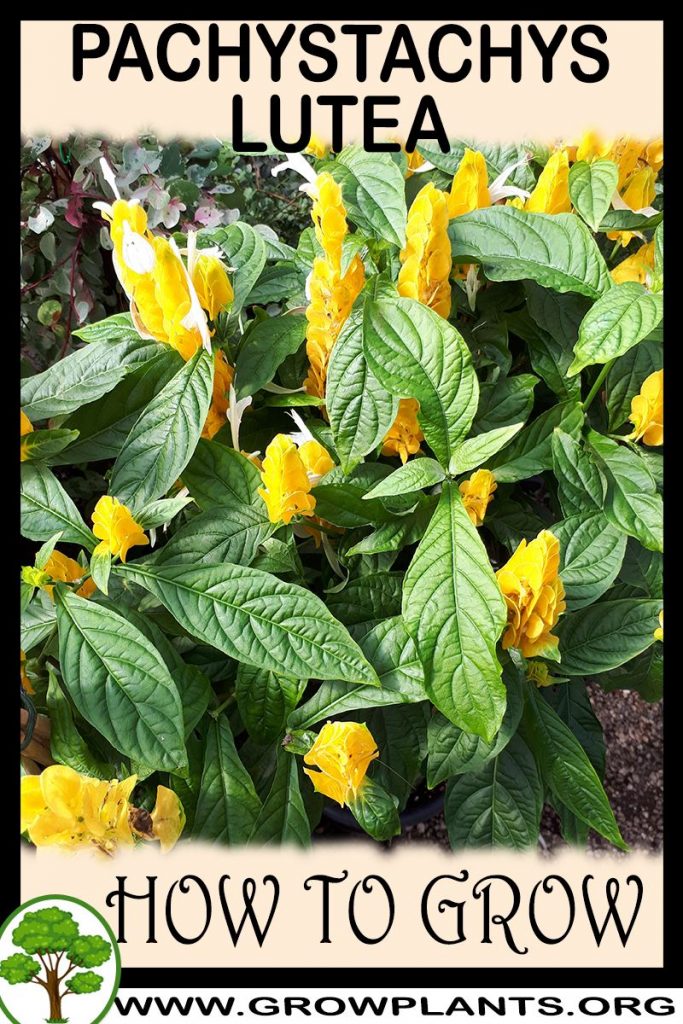
Plant Profile & Key Characteristics
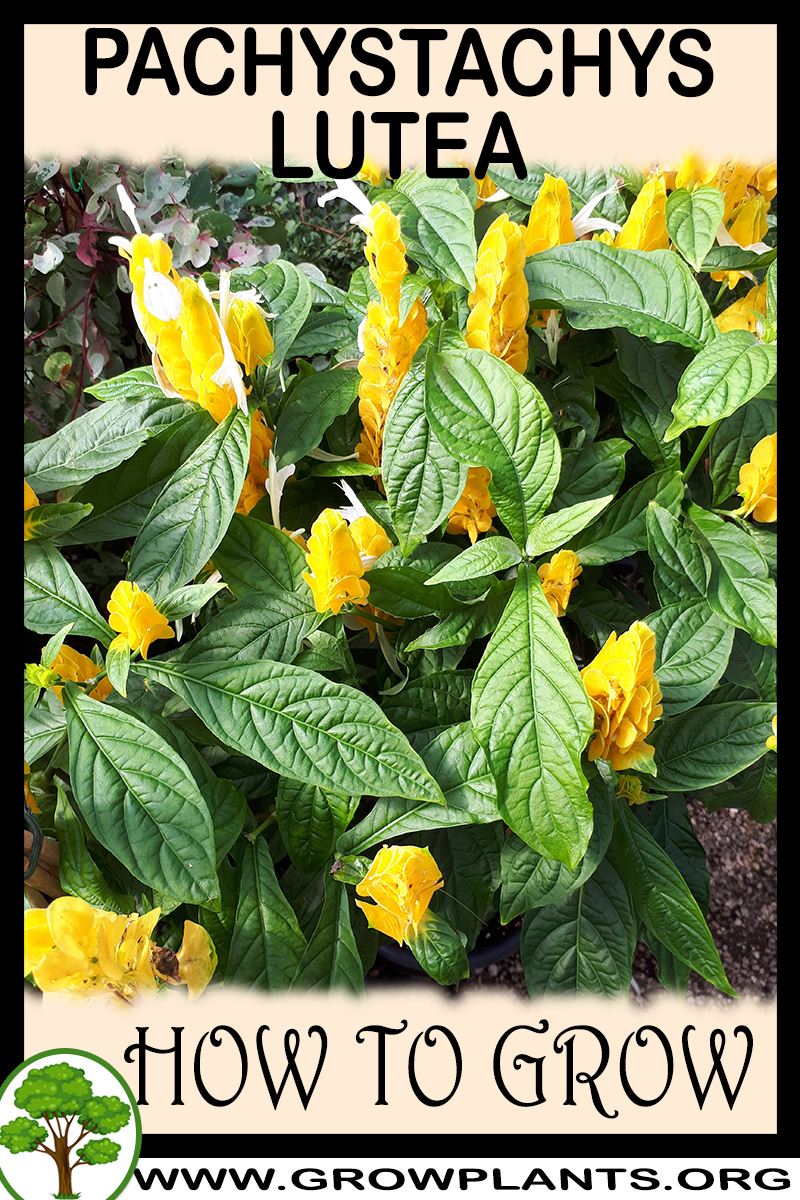
Overview: An evergreen tropical shrub of the genus Pachystachys (golden shrimp / lollipop plant) growing 60-120 cm tall, grown for its long-lasting yellow flower bracts. It is a pollinator-friendly ornamental for warm gardens and containers.
Quick Specifications
| Specification | Attribute |
|---|---|
| Plant Type / Life Cycle | Perennial (evergreen shrub) |
| Foliage Type | Evergreen |
| Mature Size | 60-120 cm (24-48 in) tall |
| Growth Rate | Moderate |
| Hardiness | USDA zone 10b+ |
Growth Form & Structure
- Height & Spread: 60-120 cm (24-48 in); suits large containers as well as open ground.
- Growth Habit & Form: Bushy, soft-stemmed shrub.
- Lifespan & Maturity: Fast-establishing perennial that benefits from regular pruning to stay compact.
Anatomy & Physical Features
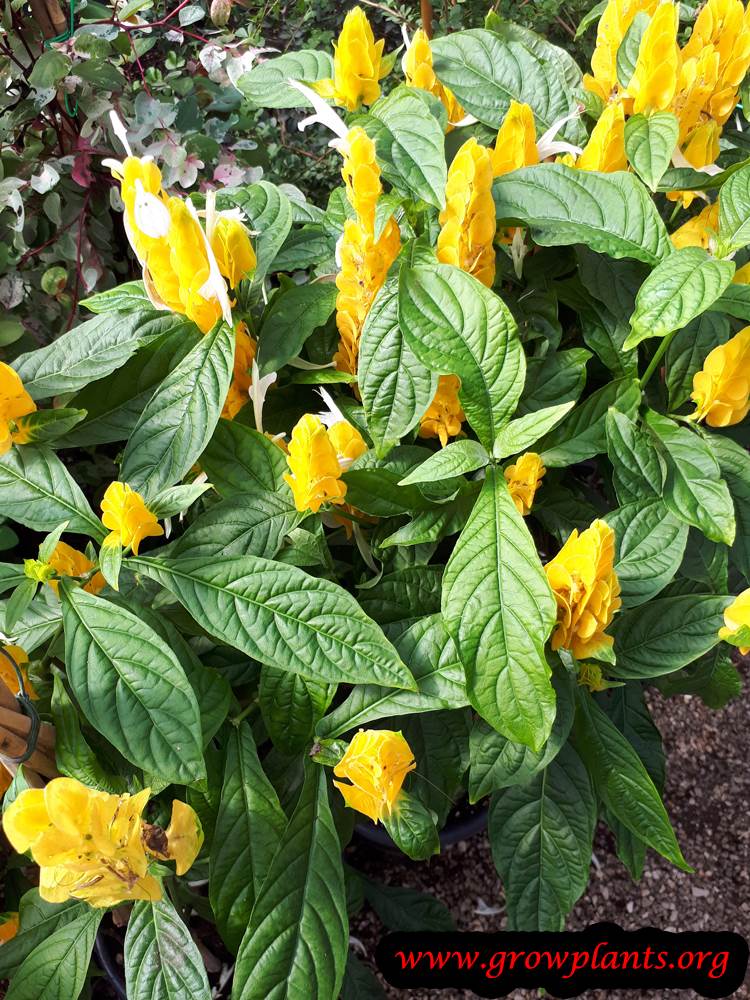
- Leaves & Foliage: Green, elliptic leaves.
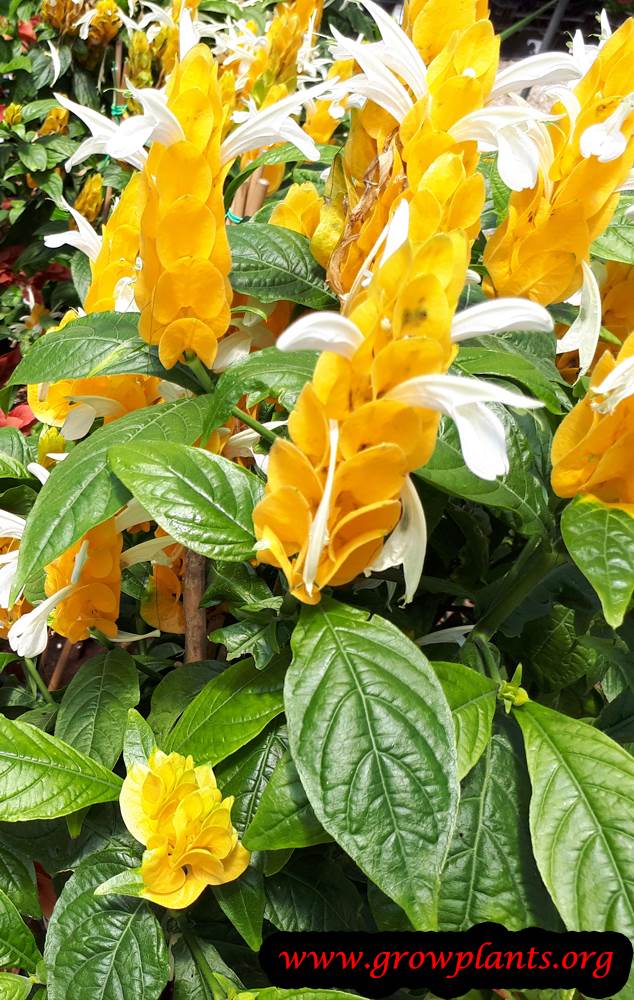
- Flower Characteristics: White, tubular flowers emerging from showy, overlapping yellow bracts that stack into a shrimp- or beehive-like spike.
Primary Uses & Landscape Value
- Functional & Ornamental Roles: Ornamental flowering shrub that attracts pollinators; a good container and border plant.
Care Guide: Planting, Soil & Watering
Overview: The golden shrimp plant is a tender evergreen shrub that flowers best in full sun to part shade in warm, frost-free conditions. It likes rich, well-draining soil kept evenly moist, and resents both drought and soggy roots.
Quick Care Requirements
| Requirement | Ideal Condition |
|---|---|
| Planting Season | In the warm season, after frost has passed |
| Growth Rate | Moderate |
| Soil Type | Rich, moist, well-draining |
| Water Need | Moderate; keep evenly moist |
Planting & Establishment
- Best Planting Season: Plant during the warm season, spring through autumn, once frost risk has passed; in frost-free zones (10b+) timing is flexible.
- How to Plant:
- Hole Preparation: Dig a hole a little wider than the root ball in well-draining soil.
- Soil Amendments: Work in compost and organic matter to enrich the soil and help it hold even moisture.
- Planting Depth: Set the root ball level with the surrounding soil and firm gently.
- Growth Speed & Expectations: A moderate grower reaching about 60-120 cm; pinch and prune to keep it bushy and floriferous.
Soil, Watering & Drainage Care
- Soil Mix & Drainage Needs: Needs a fertile, free-draining mix; in containers use good potting soil with a drainage hole to avoid root rot.
- Watering Schedule & Technique:
- Young / Newly Planted: Keep the soil consistently moist while establishing.
- Established: Water regularly so the soil stays evenly moist, never bone-dry.
- Seasonal Adjustments: More in summer heat; reduce in winter and protect from frost.
Climate, Light & Hardiness
Pachystachys lutea (golden shrimp plant) is a frost-tender tropical/subtropical shrub that needs warmth year-round, making it best suited to USDA zone 10b and up or container/indoor culture elsewhere. It grows well in full sun to half shade with consistent warmth.
Quick Climate Specifications
| Climate Zones | Subtropical, tropic, mediterranean |
|---|---|
| USDA Hardiness Zones | 10b+ |
| Light Conditions | Full sun to half shade |
| Frost Tolerance | None to very low |
Sunlight & Light Exposure
Optimal Light Setup
Full sun to half shade suits this shrub; bright light supports the strongest yellow bract and white flower display.
Shade & Heat Management
In the hottest, most intense sun some afternoon shade can help prevent leaf stress, while it still needs good overall brightness to bloom well.
Temperature Extremes & Hardiness
USDA Hardiness & Regional Limits
Reliably grown outdoors only in USDA zone 10b and warmer; outside this range it is best treated as a container or indoor/greenhouse plant that is moved to warmth for winter.
Frost Sensitivity
Frost-tender – cold below its comfort range causes leaf drop and stem dieback, and a hard freeze can kill the plant outright.
Cold Damage & Winter Protection
As a tropical/subtropical species it should be protected from any chilly drafts or near-freezing temperatures; container specimens should be brought indoors or under cover well before the first frost in marginal climates.
Wind, Humidity & Microclimate
Humidity Preferences
Appreciates the humid conditions typical of tropical and subtropical climates; indoors it benefits from higher ambient humidity.
Wind Tolerance
Moderate – a sheltered position helps protect the somewhat soft growth from wind damage.
Growing in Pots, Balconies & Indoors
Golden shrimp plant is a tropical shrub grown for its long golden flower bracts. The grower does not class it as a full houseplant, but as a tender tropical it does well in a bright, warm spot indoors – a sunny windowsill or conservatory – and moves outdoors for the warm season.
Quick Details
- Container Size: A medium pot, potting on as the shrub fills out
- Indoor Suitability: Not a low-light houseplant, but flowers well in a bright, warm window or conservatory
- Best Spot: Bright light with some direct sun indoors; full sun to part shade outdoors
- Soil & Drainage: Aerated, organic-rich mix (peat or coir with perlite or vermiculite); must drain freely
- Watering in Pots: Keep evenly moist in growth – it likes steady moisture and humidity; ease off when cool
Indoors & On the Windowsill
- In a bright warm spot: Give it the brightest window you can and warm, humid air; in strong indoor light it produces its golden bracts, but it sulks and drops leaves in a dark room.
- Overwintering: It is frost-tender, so bring it in before cold weather; keep it warm and lit, and pinch back leggy stems in spring to rebuild a bushy plant.
On a Balcony or Patio
- Light & wind: Full sun to part shade in the warm season, sheltered from strong wind, which tatters the soft foliage.
- Practicalities: Pots dry fast in heat – keep it evenly moist and mist in very dry air; move it back under cover before cold nights.
Choosing the Pot, Soil & Long-Term Care
- Pot & drainage: A pot with strong drainage holes and no standing-water saucer; terracotta breathes, plastic holds moisture longer.
- Potting mix: A rich, well-aerated organic mix – peat or coir with perlite or vermiculite.
- Feeding: Feed regularly through active growth, as flowering shrubs in pots leach nutrients quickly.
- Repotting & pruning: Pot on every couple of years and prune after flowering to keep it bushy rather than leggy.
Fertilizing & Feeding
With its near-continuous spring-through-autumn bloom of yellow bracts and white flowers, the lollipop plant is a moderate feeder that benefits from regular balanced feeding to keep producing new flower spikes.
Quick Fertilizing Specs
| Feeding Level | moderate |
|---|---|
| Main Nutrient Priority | Balanced feeding with adequate nitrogen to sustain near-continuous bloom |
| Best Feeding Period | Spring through autumn during active growth and flowering |
| Reduce/Stop Feeding | Cut back if growth and flowering pause during any cool-season rest |
| Soil pH | Tolerates a wide range in well-drained soil |
| Organic Options | Compost or aged organic matter at planting |
Feeding by Growth Stage
Spring flush of new growth
Support fresh stem and leaf growth as the plant breaks into active growth ahead of its long bloom season.
| Nutrient direction | A balanced, complete fertilizer supports steady growth and sets up the plant for its extended bloom period. |
|---|---|
| Timing | Spring as active growth resumes in warm climates. |
| Frequency | Regular light feedings as new growth appears, building toward more frequent feeding once blooming begins. |
| Fertilizer types | A balanced, complete fertilizer, Compost or aged organic matter at planting |
| Precautions | Avoid heavy nitrogen alone, which can delay the shift into flowering. |
Extended spring-through-autumn bloom
Sustain the near-continuous white-and-yellow bract flower display from spring through autumn.
| Nutrient direction | Regular balanced feeding with adequate nitrogen supports both continued flowering and the new growth that carries the next flush of blooms; extra phosphorus is not needed to drive flowering. |
|---|---|
| Timing | Spring through autumn while the plant flowers continuously. |
| Frequency | Regular light feedings through the long bloom season support continuous flowering and new growth. |
| Fertilizer types | A balanced, complete fertilizer through the bloom season, Diluted liquid feed for container-grown plants |
| Precautions | Deadheading spent flower bracts alongside regular feeding keeps the plant producing new blooms rather than going to seed. |
Cool-season rest
Let growth and flowering pause during any cooler or shorter-day period at the margins of its warm-climate range.
| Nutrient direction | None – withhold fertilizer if growth and flowering pause in cooler weather. |
|---|---|
| Timing | The coolest part of the year in marginal, non-tropical parts of its range. |
| Frequency | No feeding at this stage. |
| Fertilizer types | No feeding at this stage; do not fertilize while growth and flowering are paused. |
| Precautions | Do not fertilize during a cool-season pause; feeding can resume once active growth and flowering restart. |
Nutrient Deficiency Signs & Corrections
Pale leaves and fewer new flower spikes.
| Possible causes | Nitrogen deficiency during the long bloom season, Root-bound container growth, Poor drainage limiting nutrient uptake |
|---|---|
| Appears first on | Older leaves and overall vigor |
| What to check | Feeding history, Container or pot size, Drainage |
| Possible correction | Apply a balanced, nitrogen-containing fertilizer regularly through the bloom season and repot if root-bound. |
Yellow bracts appear pale or faded and flowering slows.
| Possible causes | Insufficient light, Excess nitrogen relative to overall feeding balance, Natural seasonal slowdown |
|---|---|
| Appears first on | New bract clusters |
| What to check | Light exposure, Recent feeding balance, Time of year |
| Possible correction | Increase light exposure and keep feeding balanced rather than nitrogen-heavy through the bloom season. |
Distorted new shoot tips and sticky residue, often with weaker flowering.
| Possible causes | Aphid infestation, Excess nitrogen producing soft new growth that attracts pests, General plant stress |
|---|---|
| Appears first on | New shoot tips and flower buds |
| What to check | Visible aphids, Recent feeding, Overall plant vigor |
| Possible correction | Manage aphids directly and avoid excess nitrogen that produces soft, pest-attracting growth. |
Pruning, Training & Seasonal Maintenance
Lollipop plant is a soft-wooded tropical evergreen shrub grown for its yellow bract “hives” topped with white flowers. It tolerates pruning year-round, as the source confirms, and responds well to regular pinching and cutback because flowering bracts form on new growth – so cutting back stimulates fresh flowering shoots rather than removing next season’s display. Left unpruned it tends to grow leggy and bare at the base, so shaping is more about maintaining a full, bushy habit than protecting a framework.
Quick Pruning & Maintenance Specs
| Pruning Tolerance | High |
| Primary Pruning Window | Year-round, per source; heaviest shaping cut after a bloom flush fades |
| Secondary Maintenance Window | Continuous deadheading of spent bract clusters |
| Typical Frequency | Regular pinching, plus periodic cutback every few months |
| Main Objective | Keep a bushy, floriferous habit and prevent the bare-legged look this species is prone to |
| Young Plant Priority | Pinch tips early and often to build multiple branching points |
| Mature Plant Priority | Cut back leggy stems by a third to a half to force fresh flowering growth from the base |
| Best Tool Type | Bypass secateurs / precision snips |
| Avoid Heavy Pruning During | Cool-season slowdown, when regrowth is much slower to fill back in |
Pruning by Plant Age & Size
Newly Established
Pinch the growing tips once the young plant has a few sets of leaves, to start branching before it puts energy into a single tall stem.
Young / Formative
No formal training system – repeated pinching is the only “formative” technique this soft-wooded shrub needs, aimed at building several branch points low on the plant before it reaches its 60–120cm mature size.
Mature / Established
Cut back leggy or overly long stems by around a third to a half whenever the plant looks sparse or bare at the base; because bracts and flowers form on new growth, this renews the display rather than delaying it.
Seasonal Pruning Schedule
| Stage | Objective | Remove | Do Not Remove | Response / Impact |
| Ongoing (year-round, per source) | Maintain bushy shape and flowering | Spent flower/bract clusters; leggy overgrown stems as needed | Actively budding new-growth tips | New growth flushes with fresh flowering bracts |
Structural Pruning & Training
Because bracts and flowers form on current-season growth, there is no old-wood flowering-wood tradeoff to protect – cutting back a leggy stem simply produces a new flowering shoot instead of sacrificing bloom. The main structural task is keeping the shrub full from the base rather than tall and sparse.
Special Growth to Remove
- Spent bract/flower clusters – deadhead per the source’s own guidance to keep the display tidy and encourage new flowering shoots.
- Long, leggy, unbranched stems – cut back to a lower node to force branching lower on the plant.
Container & Small-Space Pruning
Container growing is supported (per source). In a pot, pinch and cut back more frequently than an in-ground planting to keep the shrub proportionate to the container and prevent the top-heavy, leggy growth that’s harder to correct once established.
Tools
- Precision snips for pinching tips and deadheading spent bracts.
- Bypass secateurs for cutting back thicker, leggy stems.
Tool Hygiene & Disease Risk
Routine – only aphids are documented as a pest concern for this species, with no disease risk noted; clean, sharp tools are sufficient.
Cut Placement & Technique
Cut or pinch just above a leaf node to direct the next flush of growth; when cutting back a leggy stem, cut to just above a lower, healthy node rather than mid-internode.
Heavy Pruning & Rejuvenation
Well tolerated – a hard cutback of an overgrown, bare-based plant to a low framework of stems is an effective rejuvenation given its medium growth rate and its tendency to flower readily on new growth.
Post-Pruning Care
Water normally; keep the plant in its preferred full sun to half shade after a hard cutback to encourage a strong regrowth flush. No special feeding is required immediately after pruning.
Common Pruning Mistakes
- Letting stems grow long and unpinched, resulting in the bare-legged look this species is prone to.
- Avoiding cutback out of fear of losing flowers, when in fact new growth is exactly where the bracts form.
- Hard-cutting during a cool-season slowdown, when regrowth is much slower to fill back in.
When NOT to Prune
Avoid a hard cutback during a cool-season growth slowdown, since the plant is much slower to push the fresh growth that carries its flowering bracts.
Recommended Tools (by task)
- precision_snips – pinching tips and deadheading spent bract clusters.
- bypass_secateurs – cutting back leggy or overgrown stems to renew flowering growth.
Pruning Troubleshooting
| Problem | Possible Cause | What to Check | Corrective Action |
| Bare, leggy base | Infrequent pinching/cutback | Length of unbranched lower stems | Cut back hard to a low node to force branching from the base |
| Reduced flowering | Lack of fresh new growth | Whether stems have been cut back recently | Cut back a third to a half of stems to stimulate new flowering shoots |
| Slow regrowth after cutback | Pruned during a cool-season slowdown | Season and recent temperatures | Time hard cuts to warm, actively growing periods |
Propagation Guide
Lollipop plant is most commonly and easily propagated from stem cuttings, which root quickly – this is how it’s typically increased in cultivation. The site notes seed is also an option and that vegetative propagation isn’t strictly necessary, but cuttings remain the fastest, most practical route to a flowering-size plant. Overall difficulty: Easy.
Quick Propagation Specs
| Best Propagation Method | Stem/tip cuttings |
| Alternative Methods | Seed |
| Propagation Difficulty | Easy |
| Seed True-to-Type | Usually true-to-type (species) |
| Vegetative True-to-Type | Yes |
| Best Propagation Season | Spring to summer, during active warm-season growth |
| Seed Germination Time | Typically a few weeks |
| Cutting Rooting Time | Often just a few weeks under warm, humid conditions |
| Germination Temperature | 21–27°C (70–80°F) |
| Seed Sowing Depth | Shallow – lightly covered |
Growing from Seed
Sowing Season
Warm season (spring to summer), matching this tropical/subtropical plant’s growing period.
Sowing Depth & Orientation
Sow shallowly, just covering the seed.
Germination Conditions
Warm and humid, in bright but not harsh light.
Germination Time
Typically a few weeks.
Seedling Care
Keep warm – as a tropical/subtropical plant (hardy only to zone 10b+), seedlings need protection from any cold or chill.
Stem Cuttings
Cutting Type
Softwood tip cuttings.
Best Timing
Spring to summer, during active growth.
Cutting Preparation
Take a short tip cutting with a couple of leaf nodes and remove the lower leaves.
Rooting Setup
Roots readily in water or in a moist, free-draining mix; keep warm and humid.
Rooting Hormone
Generally unnecessary – this plant roots easily from cuttings on its own.
Rooting Time
Often just a few weeks under warm, humid conditions.
Bloom & Flower Guide
Quick Details
- Bloom Season: Spring through autumn (nearly year-round in warm, frost-free conditions)
- Flower Appearance: Golden-yellow, overlapping bracts stacked into a cone or beehive shape, with slender white tubular flowers emerging from them
- Edibility: Grown as an ornamental
Detailed Blooming Overview
The golden shrimp plant’s long season of colour comes mainly from its bracts – bright yellow, shingled cones that some see as a beehive and others as a shrimp. The true flowers are short-lived white tubes that poke out from the bracts, but the bracts themselves hold for weeks and draw pollinators.
Flower Characteristics
- White tubular flowers set within a stack of yellow bracts, as the grower describes.
- Bracts persist long after individual flowers fade, giving a long display.
Bloom Care & Thinning
- Keep it fresh: Pinch or cut off old, browning bract cones to keep new ones coming.
- Conditions: Warmth, humidity and steady feeding sustain near-continuous flowering.
- Shape: Pinch growing tips to build a bushier, more free-flowering plant.
Pests, Diseases & Troubleshooting
Overview: The golden shrimp plant is a soft-stemmed tropical shrub whose tender, thin leaves attract the usual greenhouse and houseplant sap-suckers – aphids, whiteflies, spider mites, mealybugs, and scale. It has few serious diseases beyond root rot in soggy soil and the odd leaf spot. Warmth, humidity, bright light, and steady (not sodden) moisture keep it lush and problem-free.
Quick Troubleshooting Overview
| Issue / Pest | Main Symptom | Primary Solution |
|---|---|---|
| Aphids | Sticky, curled new shoots and flower bracts | Rinse off; insecticidal soap |
| Whiteflies | White flies rising from leaves; yellowing; sooty mould | Sticky traps; oil/soap on undersides |
| Spider mites | Fine stippling and webbing in dry air | Raise humidity; horticultural oil |
| Mealybugs | White cottony tufts in axils | Alcohol swab; insecticidal soap/oil |
| Leaf/flower drop | Sudden shedding, wilting bracts | Steady warmth, humidity, and moisture |
| Root rot | Yellowing, wilting in wet soil | Improve drainage; ease off watering |
Common Pests & Management
- Aphids (Aphis / Myzus spp.):
- Symptoms: Green, black, or yellowish soft insects clustered on the soft new shoots and around the yellow flower bracts, leaving sticky honeydew and curled, distorted growth.
- Prevention & Control: Rinse colonies off with water and squash survivors. Encourage predators outdoors; indoors use insecticidal soap or neem/horticultural oil on the tips and undersides, repeating weekly until clear.
- Whiteflies (Trialeurodes vaporariorum):
- Symptoms: Clouds of tiny white flies lifting off the plant when brushed, with yellow-mottled, sticky leaves and sooty mould – a very common problem on this soft-leaved shrub under glass.
- Prevention & Control: Hang yellow sticky traps and spray insecticidal soap or horticultural oil on leaf undersides in the evening, repeating to catch newly hatched scales. Encourage Encarsia parasitoids under cover and remove heavily infested lower leaves.
- Spider mites (Tetranychus urticae):
- Symptoms: Fine pale stippling giving a dull, bronzed look, with delicate webbing on undersides in warm, dry indoor air; leaves yellow, dry, and drop.
- Prevention & Control: Raise humidity, keep the plant off heating vents, and shower the foliage regularly. Introduce predatory mites under cover, or spray horticultural oil / insecticidal soap on undersides every 5–7 days until controlled.
- Mealybugs (Planococcus / Pseudococcus spp.):
- Symptoms: White cottony waxy tufts in leaf axils, along veins, and at the stem base, with honeydew, sooty mould, and stunted new growth.
- Prevention & Control: Dab colonies with a cotton bud of rubbing alcohol, then spray insecticidal soap or neem/horticultural oil. Check the root ball for a root form at repotting; persist over several weeks to break the life cycle.
- Scale insects (Coccus / Saissetia spp.):
- Symptoms: Immobile brown or tan bumps on stems and leaf undersides with sticky honeydew and yellowing leaves.
- Prevention & Control: Scrape off with a soft cloth and treat with horticultural oil or insecticidal soap, covering stems and undersides. Repeat every 1–2 weeks and isolate the plant while treating.
Diseases & Fungal Issues
- Root and stem rot (Pythium / Phytophthora / Rhizoctonia):
- Symptoms: Yellowing, wilting, and collapse with soft, dark roots and stem base in soil kept constantly wet or poorly drained, often in cool conditions.
- Treatment & Management: Use a free-draining potting mix, water when the surface begins to dry, and never let the pot stand in water. Remove rotted tissue, repot into fresh mix, and keep warm and slightly drier while it recovers.
- Leaf spot (Cercospora / Colletotrichum spp.):
- Symptoms: Brown or black spots, sometimes with yellow halos, on leaves kept wet in humid, still air; spots can merge and cause leaf drop.
- Treatment & Management: Remove affected leaves, water at the base to keep foliage dry, and improve airflow. A copper-based fungicide helps in persistent cases, though better ventilation and dry foliage usually solve it.
- Botrytis / grey mould (Botrytis cinerea):
- Symptoms: Fuzzy grey mould on spent flower bracts and soft, damaged foliage in cool, damp, crowded conditions, rotting the tissue.
- Treatment & Management: Deadhead faded bracts, clear debris, and increase ventilation; avoid wetting foliage late in the day. Remove affected parts promptly – sanitation and airflow usually make fungicide unnecessary.
Growing Difficulties & Abiotic Problems
- Leaf and bract drop
- Cause & Symptoms: Sudden leaf loss, wilting bracts, and browning edges from cold draughts, dry air, drought, or a sharp change in conditions – this soft tropical resents stress.
- Correction Strategy: Keep warmth above about 15 °C, steady humidity, and even moisture, away from draughts and heat sources. Avoid letting it dry to wilting point, and make any move gradual.
- Leggy, sparse growth
- Cause & Symptoms: Stretched, bare-stemmed plants with few flower spikes in low light or after flowering.
- Correction Strategy: Give bright, indirect light, pinch and prune regularly to keep it bushy, and cut back hard after flowering to rejuvenate. Feed during active growth to support fresh, floriferous shoots.
- Chlorosis / nutrient issues
- Cause & Symptoms: Pale or yellowing leaves with green veins from nutrient shortage, poor feeding, or high-pH soil locking out iron.
- Correction Strategy: Feed regularly with a balanced fertiliser during growth, use a suitable potting mix, and apply chelated iron if interveinal yellowing points to iron lock-out. Refresh the mix periodically for container plants.
- Overwatering vs. underwatering balance
- Cause & Symptoms: Yellow lower leaves and soft stems from too much water, or crisping and wilting from too little – both common on this thirsty but rot-prone shrub.
- Correction Strategy: Aim for a steady middle ground: water thoroughly when the surface starts to dry, then let excess drain away. Increase water in heat and growth, reduce it in cool, dull periods.
What Helps – Products & Tools
The mainstays are insecticidal soap and neem / horticultural oil for aphids, whiteflies, mites, mealybugs, and scale, plus yellow sticky traps and rubbing alcohol for spot-treating. For the few diseases, a free-draining mix and careful watering prevent rot, and a copper fungicide handles stubborn leaf spot. Chelated iron corrects interveinal chlorosis.