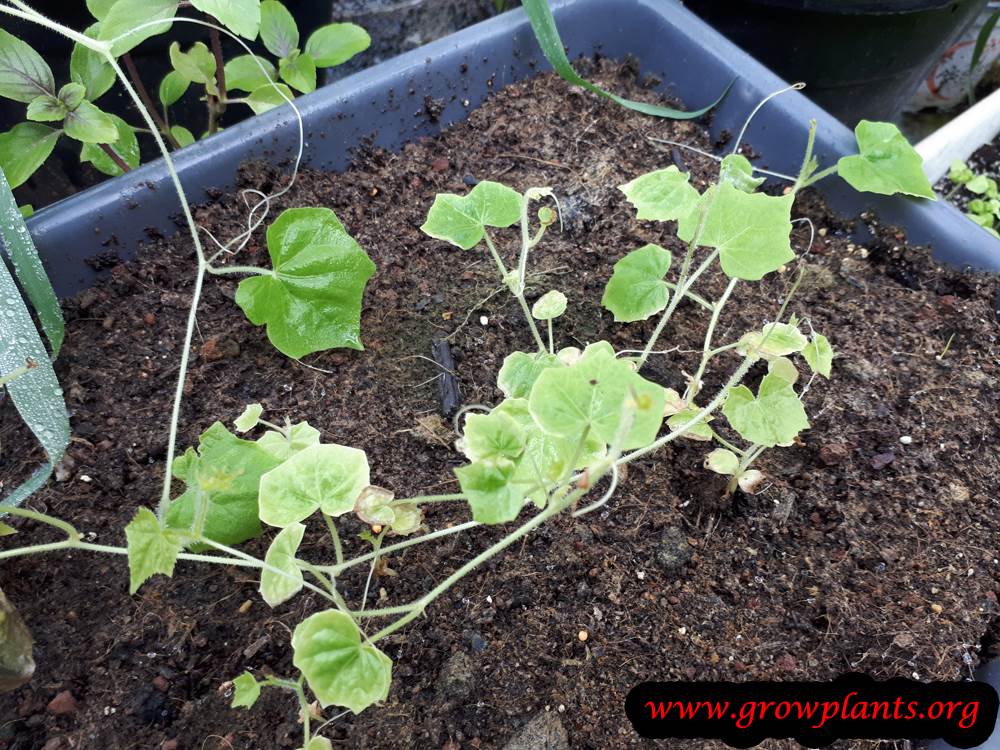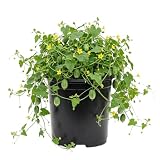

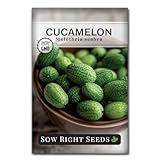
Plant Profile & Key Characteristics
Also known as: Mouse melon, Mexican sour gherkin, Cucamelon, Mexican miniature watermelon, Mexican sour cucumber
Overview: Cucamelon (Melothria scabra) is a fast-growing herbaceous vine reaching 80–160 cm (32–64 in), grown for its edible, grape-sized fruits that look like tiny watermelons; it is also ornamental. Perennial where frost-free, it is grown as an annual in cold climates.
Quick Specifications
| Specification | Attribute |
|---|---|
| Plant Type / Life Cycle | Perennial (evergreen) or grown as an annual |
| Foliage Type | Evergreen (in frost-free climates) |
| Mature Size | Vine 80–160 cm (32–64 in) |
| Growth Rate | Fast to moderate |
| Root System | Tuberous — forms underground tubers |
| Toxicity | Non-toxic — fruit edible |
| Hardiness | USDA zones 11+ as perennial, 5+ as annual |
Growth Form & Structure
- Height & Spread: Climbs 80–160 cm (32–64 in) on a trellis; in a pot use at least a well-drained 10–20 L (2.5–5 gallon) container.
- Growth Habit & Form: Slender climbing/trailing vine, best trellised.
- Lifespan & Maturity: Bears fruit about 5 months from sowing; regrows from tubers where hardy.
Anatomy & Physical Features
- Leaves & Foliage: Green, heart-shaped and lobed leaves.
- Flower Characteristics: Small, flat yellow flowers, male and female on the same plant. (See the Bloom accordion for detail.)
- Fruit Profile: Dark-green fruit with paler speckles, oval and 2–4 cm, resembling a miniature watermelon, with a crisp, cucumber-lime, slightly sour taste.
Primary Uses & Landscape Value
- Edible Uses: Fruit eaten raw or in salads.
- Functional & Ornamental Roles: Edible ornamental climber for fences and trellises.
Care Guide: Planting, Soil & Watering
Overview: The cucamelon is a fast-growing, tender climbing vine that thrives in full sun and warm conditions. It likes rich, light, slightly acidic and well-draining soil kept evenly moist with a mulch, but resents waterlogging.
Quick Care Requirements
| Requirement | Ideal Condition |
|---|---|
| Planting Season | In spring after the last frost (into summer where warm); start indoors in winter in cold climates |
| Growth Rate | Moderate to fast |
| Soil Type | Rich, light, well-draining and mulched |
| Soil pH | Slightly acidic |
| Water Need | Moderate; keep evenly moist but never waterlogged |
Planting & Establishment
- Best Planting Season: Plant out in spring once frost has passed, or into summer where the weather is warm; in cold climates start seed indoors over winter.
- How to Plant:
- Hole Preparation: Plant into light, well-ventilated soil and set up a trellis for the vine to climb.
- Soil Amendments: Enrich with organic matter and mulch, and add fertilizer to fuel strong growth; keep the soil slightly acidic.
- Planting Depth: Set the plant at the level it grew, keeping the soil light and airy around the roots (vermiculite helps).
- Growth Speed & Expectations: Fast-climbing vine reaching 80-160 cm; give it support to scramble up.
Soil, Watering & Drainage Care
- Soil Mix & Drainage Needs: Light, well-ventilated soil that still holds moisture; in containers of at least 10-20 L use potting mix or peat soil with perlite and plenty of drainage holes, as it does not tolerate overwatering.
- Watering Schedule & Technique:
- Young / Newly Planted: Keep the soil moist while young and protect tender seedlings from slugs.
- Established: Water regularly to keep the soil evenly moist through the growing and fruiting season.
- Seasonal Adjustments: More in summer heat, and less as the plant slows or dies back in cold.
Climate, Light & Hardiness
Cucamelon is a warm-season vining vegetable that needs full sun and a genuinely frost-free stretch to fruit, taking around five months from planting to harvest. Per the site data it is reliably perennial only from about USDA zone 11 upward (or zone 10b with careful winter protection), and elsewhere, from about zone 5 up, it is grown as a warm-season annual.
Quick Climate Specifications
| Climate Zones | Tropic, Mediterranean, desert, subtropical, or temperate |
|---|---|
| USDA Hardiness Zones | Approximately 11 and warmer as a perennial (possible in 10b with overwinter care); commonly grown as an annual from about zone 5 upward |
| Frost Tolerance | Very low |
| Light Conditions | Full sun |
Sunlight & Light Exposure
Optimal Light Setup
Needs full sun for strong vine growth and good fruit set.
Direct Sun Requirement
Full direct sun is required; this is a warm-season crop that does not tolerate shade well.
Temperature Extremes & Hardiness
USDA Hardiness & Regional Limits
The underground tubers allow this species to persist as a perennial only where winters stay essentially frost-free (about USDA zone 11 and warmer, or zone 10b with attentive overwinter protection of the tubers); further north, down to about zone 5, it is grown as an annual vegetable, replanted from seed or stored tubers each spring.
Cold Damage & Winter Protection
Frost kills the vines outright; where tubers are overwintered near the cold edge of its perennial range, lifting and storing them, or heavy mulching in place, protects them from freezing.
Frost Sensitivity
Very frost-sensitive vine growth; young seedlings are also notably vulnerable to slugs and cold, damp conditions.
Frost-Free Growing Season
Needs a long, reliably frost-free warm season of roughly five months from planting to fruit maturity, making season length an important factor in cooler climates grown as an annual.
Growing in Pots, Balconies & Indoors
The cucamelon (Melothria scabra) is an edible climbing vine (to about 1.5 m) that fruits little grape-sized watermelons. The grower does not rate it as a houseplant – it needs full sun and a trellis – but it crops well in a large container on a sunny balcony or patio.
Quick Details
- Container Size: At least 10-20 L (2.5-5 gal), with a trellis to climb
- Indoor Suitability: Not a houseplant – needs full sun to grow and fruit
- Best Spot: Full sun
- Soil & Drainage: Well-ventilated, free-draining mix – potting mix or peat/coir with perlite; plenty of drainage holes
- Watering in Pots: Average – it dislikes overwatering; if you use a saucer, it must dry out the same day
Indoors & On the Windowsill
- Not a houseplant: The grower marks it unsuitable indoors; it needs full sun and room to climb, which a room cannot provide.
- Sunniest sill only: At best a very sunny windowsill might raise a small plant, but for real cropping it wants a bright balcony and a trellis.
- Edible: The tiny cucumber-like fruits are eaten fresh – a fun, productive container crop.
On a Balcony or Patio
- Sun & support: Give the sunniest spot and a trellis or netting; it is productive and easy. Being sensitive to overwatering, let the mix drain fully and do not leave it standing in water.
Choosing the Pot, Soil & Long-Term Care
- Pot & drainage: At least a 10-20 L pot with plenty of strong drainage holes and no standing water; if a saucer is used, it should dry the same day.
- Potting mix: Well-ventilated and free-draining – potting mix or peat/coir with perlite.
- Potted plants exhaust and leach nutrients faster than those in the ground, so feed more often – a balanced feed through the growing season.
- As a perennial: It grows from a tuber and can be kept from year to year – in cold areas overwinter the tuber frost-free, and switch the soil about every two years.
Fertilizing & Feeding
A vigorous, fast-growing vine grown for its small edible fruit; steady nitrogen builds the vine early, shifting toward balanced and potassium-aware feeding once fruiting begins.
Quick Fertilizing Specs
| Feeding Level | Moderate feeder |
|---|---|
| Main Nutrient Priority | Nitrogen-forward early, shifting to balanced with attention to potassium during fruiting |
| Best Feeding Period | From planting through active vining and fruit production |
| Organic Options | Compost, well-rotted manure, and mulch worked into rich garden soil |
| Micronutrients | Usually supplied by compost and a complete fertilizer; correct specific issues only when diagnosed |
| Soil pH | Prefers soil on the slightly acidic side, rich in organic matter |
Feeding by Growth Stage
Establishment after transplanting
Support quick rooting and early vine growth in rich, well-amended soil.
| Nutrient direction | A balanced complete fertilizer with steady nitrogen to get young vines off to a strong start. |
|---|---|
| Timing | From transplanting or emergence through early vine establishment in spring. |
| Frequency | A light feeding at planting, refreshed gently as young vines settle in. |
| Fertilizer types | A balanced complete garden fertilizer, Compost or well-rotted manure worked into the planting area |
| Precautions | Keep feeding light on tender young vines and water in well to avoid salt stress. |
Vine growth before trellising
Drive vigorous vine and leaf growth as plants climb and cover the trellis.
| Nutrient direction | Lean nitrogen-forward to fuel rapid vine growth, while keeping other nutrients adequate. |
|---|---|
| Timing | Through the main vegetative growth period as vines lengthen and cover their support. |
| Frequency | Several light feedings across this stage support the vine’s fast growth. |
| Fertilizer types | A nitrogen-forward complete vegetable fertilizer, Side-dressing with compost or a nitrogen-rich organic amendment |
| Precautions | Avoid heavy single doses that push soft, weak vines prone to disease. |
Flowering, fruit set, and harvest
Support flowering, fruit set, and steady production of the small cucumber-flavored fruits through harvest.
| Nutrient direction | Shift toward a balanced fertilizer with adequate potassium to support fruit development, easing back on heavy nitrogen. |
|---|---|
| Timing | From first flowering through the main fruiting and harvest period. |
| Frequency | Continue light, regular feeding through fruit set and the harvest period. |
| Fertilizer types | A balanced or potassium-aware vegetable fertilizer, Compost side-dressing to sustain soil fertility through a long harvest |
| Precautions | Too much nitrogen at this stage favors leafy vines over fruit; keep watering even to support fruit quality. |
Nutrient Deficiency Signs & Corrections
Older, lower leaves fade to pale green or yellow and vine growth slows.
| Possible causes | low available soil nitrogen, nitrogen leaching from heavy watering or rain, thin, low-organic-matter soil |
|---|---|
| Appears first on | older, lower leaves |
| What to check | recent feeding history, soil organic matter, watering and drainage |
| Possible correction | Apply a nitrogen-containing complete fertilizer and build soil organic matter, then water evenly. |
Leaf margins turn yellow to brown and may look scorched, while fruit set or quality declines.
| Possible causes | low soil potassium relative to fruiting demand, sandy soil prone to potassium leaching, uneven watering that limits nutrient uptake during fruiting |
|---|---|
| Appears first on | older leaf margins |
| What to check | soil potassium status, soil texture and drainage, watering consistency during fruiting |
| Possible correction | Apply a balanced or potassium-aware fertilizer during fruiting and keep watering consistent. |
Small fruits develop a sunken, discolored spot at the blossom end.
| Possible causes | inconsistent watering that disrupts calcium movement into fruit, low soil calcium availability, rapid vine growth from excess nitrogen outpacing calcium uptake |
|---|---|
| Appears first on | the blossom end of developing fruit |
| What to check | watering consistency, especially during dry spells, soil calcium status, how heavily the vine has been fed nitrogen |
| Possible correction | Even out watering first, moderate nitrogen feeding, and address soil calcium only if the problem persists. |
Pruning, Training & Seasonal Maintenance
Cucamelon is a fast, soft-stemmed herbaceous vine grown mainly for its small edible fruit, trained up a trellis or support like its cucurbit relatives. It tolerates light pruning well, and the main goals are training the twining stems onto support, encouraging branching so more fruit-bearing laterals develop, and keeping the foliage open enough to avoid the powdery mildew this plant is prone to. There is no woody framework to build; pruning here is ongoing, light, and tied to the growing season rather than to dormancy.
Quick Pruning & Maintenance Specs
| Pruning Tolerance | Moderate (soft vine, but over-thinning removes photosynthetic leaves feeding the fruit) |
| Primary Pruning Window | Ongoing through spring–autumn active growth |
| Secondary Maintenance Window | End-of-season cutback where overwintered from tubers (zone 10b+) |
| Typical Frequency | Weekly tying-in and light trimming during active growth |
| Main Objective | Train onto support, encourage fruiting laterals, maintain airflow against mildew |
| Young Plant Priority | Pinch the main growing tip after 4–6 leaves to force branching laterals |
| Mature Plant Priority | Tie in new growth, remove dead/mildewed leaves, harvest fruit promptly |
| Best Tool Type | Precision snips; soft ties for training |
| Avoid Heavy Pruning During | Active fruit set and ripening, and on wet foliage (mildew spread risk) |
Pruning by Plant Age & Size
Newly Established
Let the young vine establish a few true leaves before any pinching; guide the first tendrils onto the trellis as soon as they reach it.
Young / Formative
Pinch the main growing tip after it has produced 4–6 leaves to encourage side branching – as in other cucurbit vines, most female (fruit-bearing) flowers form on these lateral branches, so early pinching typically increases yield rather than reducing it.
Mature / Established
Continue tying in new growth to the trellis, remove dead or mildew-affected leaves for airflow, and treat routine fruit picking as a form of pruning that also removes spent fruiting nodes.
Seasonal Pruning Schedule
| Stage | Objective | Remove | Do Not Remove | Response / Fruiting Impact |
| Ongoing Sanitary (spring–autumn) | Airflow, plant health | Dead, damaged, or mildewed leaves; lower leaves touching soil | Healthy foliage feeding developing fruit | Reduces disease pressure without cutting fruiting laterals |
| Post-Harvest / End of Season | Close out the season | Frost-killed top growth | Tubers, if overwintering in zone 10b+ | Vine regrows fresh from the tuber the next season where hardy |
Flowering & Fruiting Wood
Like other cucurbits, cucamelon bears separate male and female flowers on the current season’s new growth, with most female (fruiting) flowers appearing on lateral branches rather than the main leader. Pinching the leader early in the season to force laterals therefore tends to increase the number of fruiting sites rather than cost the plant a crop.
Structural Pruning & Training
Train the twining stems onto a trellis as they grow; thin overly dense foliage in the interior of the vine to improve airflow and light penetration to ripening fruit, since dense, humid growth is this plant’s main disease risk.
Special Growth to Remove
- Dead or damaged leaves, at any point noticed.
- Lower leaves resting on or near the soil, to reduce mildew risk.
- Spent, already-picked fruiting nodes as part of routine harvest.
Container & Small-Space Pruning
In a container with a trellis, pinch laterals more assertively to keep the vine’s spread within the trellis footprint, since a container restricts root volume and rampant top growth will outpace it.
Tools
Precision snips for pinching tips and removing leaves/fruiting nodes; soft ties or clips for training the twining vine onto its support.
Tool Hygiene & Disease Risk
Increased – powdery mildew is a documented risk for this plant, so remove and dispose of visibly mildewed leaves promptly and wipe tools between plants if mildew is present, rather than assuming routine cleaning alone is enough.
Cut Placement & Technique
Pinch just above a leaf node to force branching; remove leaves cleanly at the base of the petiole rather than tearing them off the stem.
Heavy Pruning & Rejuvenation
Not really applicable in the woody-shrub sense: as a fast-growing annual (or tuberous perennial that dies back) there is no persistent framework to rejuvenate by hard pruning – the plant is simply replanted from seed, or regrows fresh from its tuber, each cycle.
Post-Pruning Care
Water normally; watch young growth for slugs (a documented pest here), and keep an eye on humidity and airflow around the vine after removing infected leaves to help prevent mildew recurrence.
Common Pruning Mistakes
- Never pinching the leader, leaving one long unbranched vine with fewer fruiting sites.
- Letting foliage stay dense and humid, encouraging powdery mildew.
- Failing to tie the vine in as it grows, leaving a tangled, hard-to-harvest mass instead of a trained trellis vine.
When NOT to Prune
Avoid heavy leaf removal during active fruit set and ripening, since it reduces the photosynthesis feeding the fruit, and avoid cutting or handling wet foliage given the mildew risk.
Recommended Tools (by task)
- precision_snips – pinching, leaf removal, and harvest cuts on this soft vine.
- soft_ties_stakes – training the twining stems onto a trellis as they grow.
Pruning Troubleshooting
| Problem | Possible Cause | What to Check | Corrective Action |
| Poor fruit set despite healthy vine | Vine never pinched, all growth went into one long unbranched leader | Count lateral branches versus one dominant vine | Pinch the main growing tip after 4–6 leaves to force fruiting laterals |
| Powdery mildew on leaves | Dense foliage, poor airflow, wet conditions | Check lower and interior leaves for a white coating | Remove affected leaves promptly, thin dense growth, avoid wetting foliage |
| Vine sprawling and tangled, hard to harvest | Not tied to the trellis as it grew | Check whether tendrils have found support | Train and tie in new growth weekly during active growth |
Propagation Guide
Cucamelon is grown almost entirely from seed, which is easy and needs no special pretreatment; where it is kept as a short-lived perennial (roughly hardiness zone 10b and warmer, or by overwintering indoors), its fleshy tuberous roots can also be lifted and stored to regrow the following season. Propagation is easy.
Quick Propagation Specs
| Best Propagation Method | Seed sowing |
| Alternative Methods | Tuber storage and replanting (perennial growing, warmer zones or overwintered indoors) |
| Propagation Difficulty | Easy |
| Seed True-to-Type | Usually true-to-type |
| Vegetative True-to-Type | Yes |
| Best Propagation Season | Spring (start indoors in winter in cold climates) |
| Seed Germination Time | 7–21 days |
| Germination Temperature | 21–25°C (70–77°F) |
| Seed Sowing Depth | 1–2cm (0.5–1in) |
Growing from Seed
Seed Handling & Viability
Save seed in a dry place at room temperature.
Sowing Season
Sow in spring, or in summer in warm weather; in cold climates, start indoors in winter.
Sowing Depth & Orientation
Sow 1–2cm (0.5–1in) deep. Space plants around 20x30cm (8x12in) apart if trellising, or about 5x5cm (2x2in) from sowing to transplanting.
Germination Conditions
Moist soil in full sun at 21–25°C (70–77°F); the site notes this species is easy to sow with no special treatment needed.
Germination Time
7–21 days.
Seedling Care
Grow on in warm weather with generous water and full sun, with a trellis or support ready as the vines develop.
Rhizomes, Tubers, Bulbs & Corms
The site lists tubers as a propagation route alongside seed, reflecting this vine’s fleshy, perennial tuberous roots (it is grown as a perennial from hardiness zone 11 up, and can sometimes be carried over in zone 10b with the right winter care). Where winters are too cold for the roots to survive outdoors, they can be lifted before frost, similarly to dahlia tubers, and stored in a cool, dry, frost-free place over winter, then replanted once warmth returns in spring.
Bloom & Flower Guide
Quick Details
- Bloom Season: Spring, summer and autumn
- Time to First Bloom: In its first season, once the vines are well grown and the weather is warm
- Flower Appearance: Tiny flat yellow flowers with five petals; separate male and female flowers, the female recognisable by the miniature fruit already forming behind it
- Edibility: The flower is not eaten – cucamelon is grown for its little fruits
Detailed Blooming Overview
Cucamelon is a dainty relative of the cucumber, and its flowers are tiny, flat and bright yellow, dotted along the thread-like vines through spring, summer and autumn. Like other members of the cucumber family it carries separate male and female flowers on the same plant – you can pick out the females at a glance by the miniature, grape-sized fruit already swelling behind the petals.
Flower Characteristics
- Small, flat, five-petalled yellow flowers.
- Male and female flowers borne separately on the same vine.
- Female flowers show a tiny embryonic fruit behind the bloom.
Bloom Care & Thinning
- Pollination & fruit set: Only the female flowers set fruit, and they need pollen moved from the male flowers – insects usually manage this, but a hand-pollinate helps if fruit is slow to set.
- Encouraging bloom: Full sun, warmth and support to climb keep the vine flowering freely.
Fruit & Uses
Cucamelon is grown for its small fruits, which look like miniature striped watermelons but taste like tart, tangy cucumber. The fruits are eaten fresh, whole and raw, straight off the vine or added to salads, and are also popular pickled.
Quick Edible Specs
| Edible Parts | Fruit |
| Main Use(s) | Culinary – fresh eating, salads, pickling |
| Eaten Raw or Cooked | Raw (also pickled in vinegar brine) |
| Preparation Required | None for fresh eating; standard pickling brine if preserving |
| Harvest Season | Spring, summer, autumn |
| Time to First Harvest | Several months after sowing – see Sowing/Propagation for the exact timeframe |
| Storage | Best used fresh soon after picking, similar to cucumbers; pickling extends storage |
| Safety/Toxicity Caveat | None known – a safe cucumber-family food crop |
Fruit
Fruits are small, oval and shaped like a miniature watermelon, with dark green skin marked by lighter green dots and pale green to yellow-green flesh inside. They should be picked while still firm and before they are fully ripe; fruit left too long on the vine turns soft and develops a more sour, less pleasant flavor typical of overripe cucumber-family fruit. Because the vine flowers and sets fruit continuously through the warm season, harvest is a repeat, cut-and-come-again task across spring, summer and autumn rather than a single picking. Birds and powdery mildew are the main things that can affect fruit quality, so picking promptly and regularly helps.
Harvesting
Pick fruits by hand, snipping or gently twisting them off the vine while still small and firm. Check the plant regularly through the season, since ripening is staggered across many fruits rather than all at once, and timely picking encourages the vine to keep setting new fruit.
Preparation, Uses & Safety
Cucamelons are eaten raw, whole (skin and all), on their own or in salads, with a cucumber-like crunch and a tangy, slightly citrusy finish. Their small size and thin skin also make them well suited to pickling whole in a vinegar brine, much like gherkins, for longer storage. No cooking or special preparation is required for either use, and no toxicity or safety concerns are known for the fruit.
Pests, Diseases & Troubleshooting
Overview: Cucamelon is a cucumber relative but notably tougher and more pest- and disease-resistant than true cucumbers; its main issues are the sap-sucking aphid/mite/whitefly complex (and the mosaic viruses aphids spread), powdery and downy mildew in humid weather, slug damage to seedlings, and slow, cold-sensitive establishment. Grow it warm, in full sun on a trellis, and manage soft-bodied pests early.
Quick Troubleshooting Overview
| Issue / Pest | Main Symptom | Primary Solution |
|---|---|---|
| Aphids | Curled tips, honeydew, virus spread | Water jet, reflective mulch, soap |
| Cucumber beetles | Chewed leaves, spread bacterial wilt | Mesh young plants, hand-pick, traps |
| Slugs / snails | Seedlings holed & slimed | Grit/copper collars, iron-phosphate bait |
| Powdery / downy mildew | White or yellow leaf blotching | Airflow, base-water, bicarb/copper |
| Mosaic virus | Mottled distorted leaves & fruit | Remove plants, control aphids |
Common Pests & Management
- Aphids (esp. Melon Aphid) (Aphis gossypii / Myzus persicae):
- Symptoms: Colonies on growing tips, flower buds and leaf undersides, curling and yellowing new growth, sticky honeydew and sooty mould; they also transmit mosaic viruses.
- Prevention & Control: Blast off with water; pinch out infested tips; use reflective mulch to deter them; encourage lady beetles, lacewings and hoverflies; insecticidal soap on the tips for persistent colonies.
- Two-Spotted Spider Mite (Tetranychus urticae):
- Symptoms: Fine pale stippling, bronzing and webbing on leaf undersides in hot, dry weather; leaves dry and drop.
- Prevention & Control: Raise humidity and hose down foliage; avoid drought stress; encourage predatory mites; a soap or light oil spray, repeated, in severe cases.
- Whitefly (Bemisia / Trialeurodes spp.):
- Symptoms: Clouds of tiny white flies rising from the foliage, yellowing and honeydew; also a virus vector.
- Prevention & Control: Hang yellow sticky traps; hose undersides; support Encarsia parasitic wasps; soap sprays for heavy pressure, especially under cover.
- Cucumber Beetles (Diabrotica / Acalymma spp.):
- Symptoms: Small yellow-and-black striped or spotted beetles chewing leaves, flowers and young fruit; they spread bacterial wilt as they feed.
- Prevention & Control: Cover young plants with fine mesh until flowering; hand-pick and use yellow sticky traps; keep beds weed-free; remove crop debris at season’s end to reduce overwintering.
- Slugs & Snails (Deroceras / Helix spp.):
- Symptoms: Ragged holes and slime trails on seedlings and young vines – the source notes young plants are very sensitive to slugs.
- Prevention & Control: Protect seedlings with grit, copper collars or wool pellets; hand-pick after dark; use iron-phosphate baits, which are safe around pets and wildlife, until plants are established.
Diseases & Fungal Issues
- Powdery Mildew (Podosphaera xanthii):
- Symptoms: White powdery patches spreading over leaves and stems, causing yellowing and early leaf death – the commonest cucumber-family disease and noted in the source.
- Treatment & Management: Space and trellis vines for airflow and sun; water at the base; remove affected leaves; grow in an open position; potassium-bicarbonate, milk or sulfur sprays as a protectant, though cucamelon is more resistant than true cucumbers.
- Downy Mildew (Pseudoperonospora cubensis):
- Symptoms: Angular yellow blotches on the upper leaf bounded by veins, with grey-purple fuzz beneath in humid weather; rapid leaf death.
- Treatment & Management: Improve airflow and avoid wetting foliage; remove infected leaves promptly; a copper fungicide can protect in humid, disease-prone climates.
- Mosaic Viruses (Cucumber mosaic virus and others):
- Symptoms: Mottled yellow-green, distorted, puckered leaves, stunted vines and deformed fruit; spread mainly by aphids.
- Treatment & Management: There is no cure – remove and destroy infected plants; control aphids and weeds that harbour the virus; use reflective mulch and disinfect tools between plants.
- Root Rot / Damping-Off:
- Symptoms: Collapse of seedlings at the soil line and rotted roots in cold, wet soil.
- Treatment & Management: Sow into warm, free-draining soil or mix; avoid overwatering seedlings; don’t plant out until the soil warms.
Growing Difficulties & Abiotic Problems
- Poor Fruit Set in Cold:
- Cause & Symptoms: Few fruits, flower drop and slow growth in cool weather or a cold start to the season.
- Correction Strategy: Sow in warmth and plant out only once it is reliably warm; give full sun, warmth and a sturdy trellis for best fruiting.
- Slow to Establish:
- Cause & Symptoms: The tuberous vine is slow off the mark, especially from a cold start.
- Correction Strategy: Start plants early under cover and be patient; growth and cropping accelerate once warmth arrives and the vine climbs.
- Root Rot from Overwatering:
- Cause & Symptoms: Yellowing and wilting in soggy soil.
- Correction Strategy: Water consistently but ensure free drainage; the tuber can be lifted and stored dry over winter in cold areas.
- Bird & Wildlife Damage to Fruit:
- Cause & Symptoms: Birds peck the tiny watermelon-like fruit (noted in the source).
- Correction Strategy: Net accessible vines as fruit ripens and pick promptly at the grape-sized stage.
What Helps – Products & Tools
Useful tools here are insecticidal soap for aphids, mites and whitefly, fine insect mesh and yellow sticky traps for beetles and whitefly, iron-phosphate slug bait for seedlings, reflective mulch to deter virus-carrying aphids, and potassium-bicarbonate, sulfur or copper fungicides for the mildews – all backed by warmth, sun and airflow.