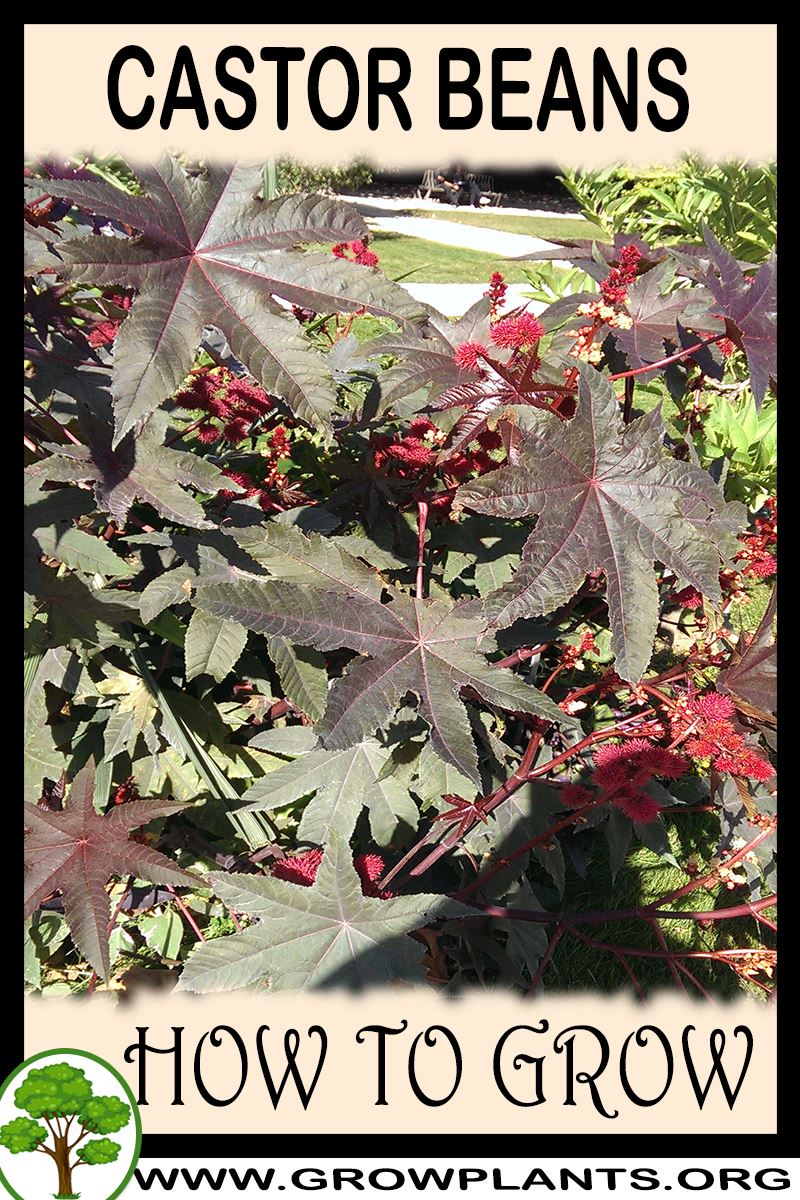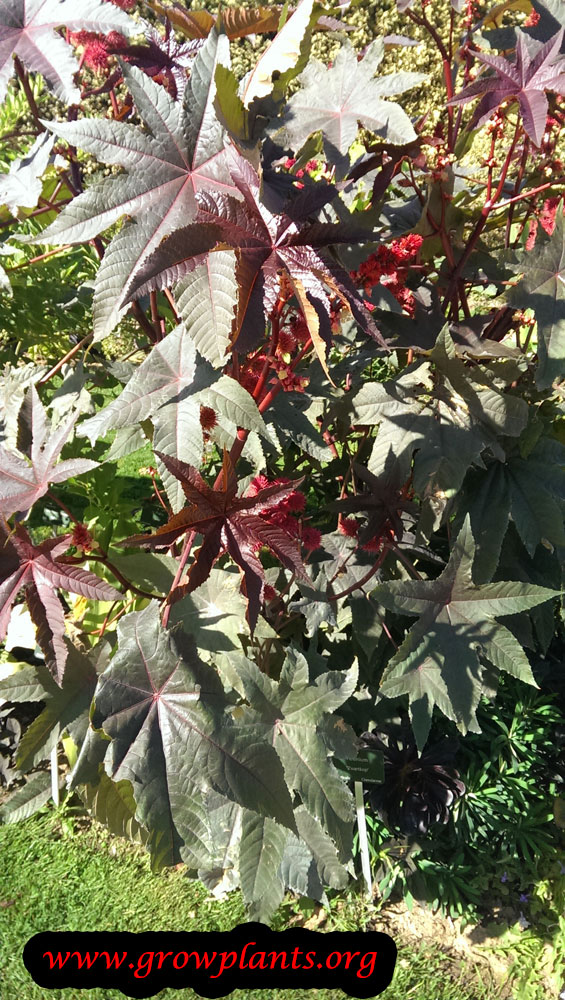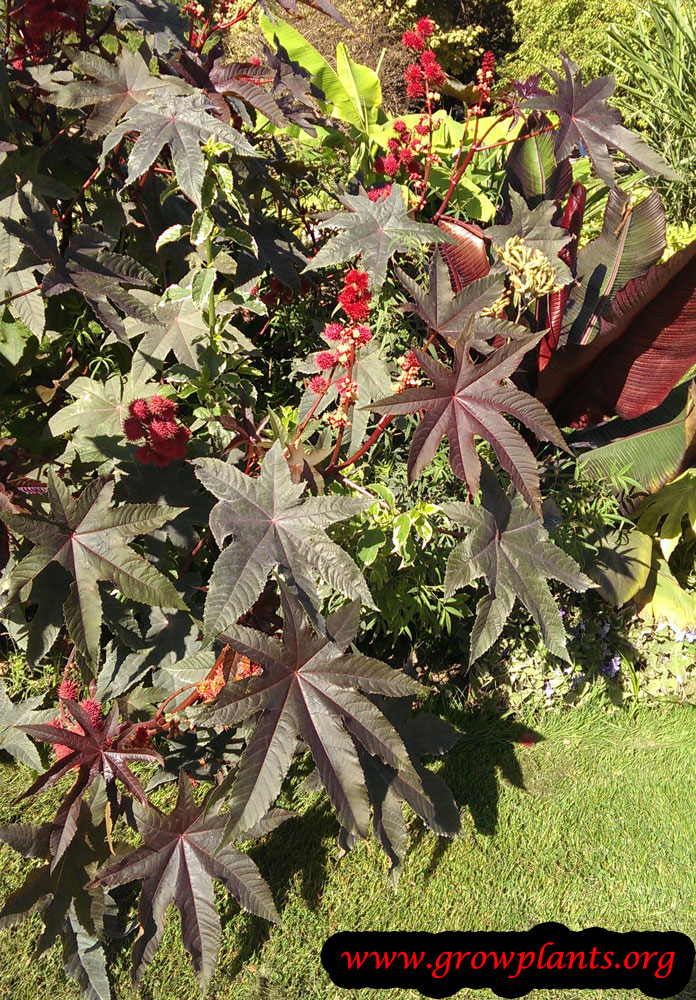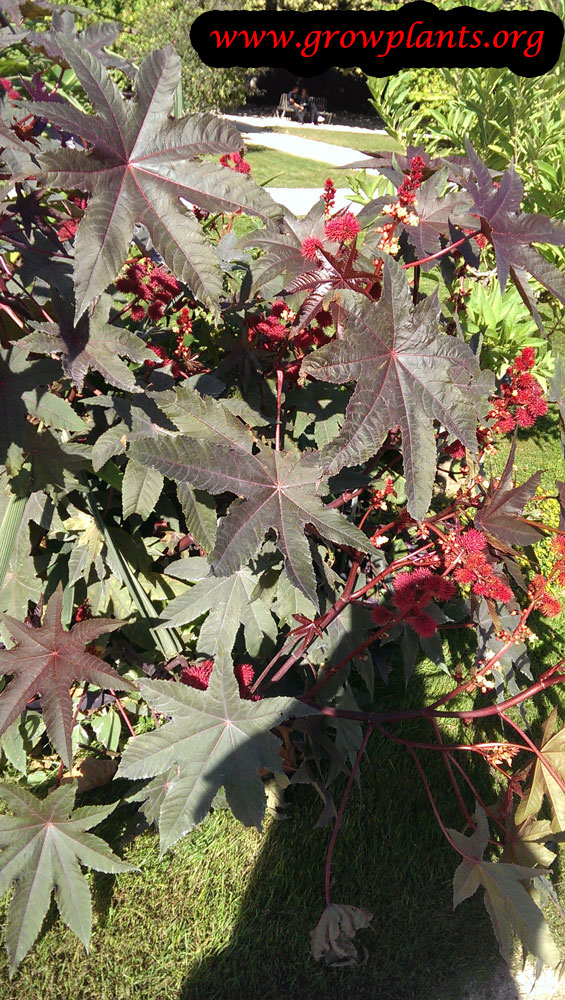
Plant Profile & Key Characteristics
Overview: A fast-growing shrub or small tree of tropical origin, perennial and evergreen in warm regions and grown as an annual where winters are cold, ranging from 1 m to 10 m (3-30 ft). It is planted as a bold ornamental, drought-tolerant screen or medicinal plant — but every part is highly poisonous.
Quick Specifications
| Specification | Attribute |
|---|---|
| Plant Type / Life Cycle | Perennial in mild climates; grown as an annual where frost-tender |
| Foliage Type | Evergreen in warmth; cold-deciduous, killed to the ground by frost |
| Mature Size | 1-10 m (3-30 ft) tall |
| Growth Rate | Fast |
| Root System | Strong taproot |
| Toxicity | Highly toxic — all parts, and especially the seeds, contain ricin; can be fatal if ingested |
| Hardiness | USDA zones 9+ as a perennial, 6+ grown as an annual |
Growth Form & Structure
- Height & Spread: Reaches 1-10 m (3-30 ft) in a single season in the ground; readily grown in large containers where its ultimate size stays more restrained.
- Growth Habit & Form: Vigorous, fast-growing shrub to small tree with stout, often reddish stems building a broad, coarse-textured canopy; can be trained as a hedge or screen.
- Lifespan & Maturity: Grows to full size very quickly within one warm season; short-lived where hardy and treated as a bedding annual in cold regions.
Anatomy & Physical Features
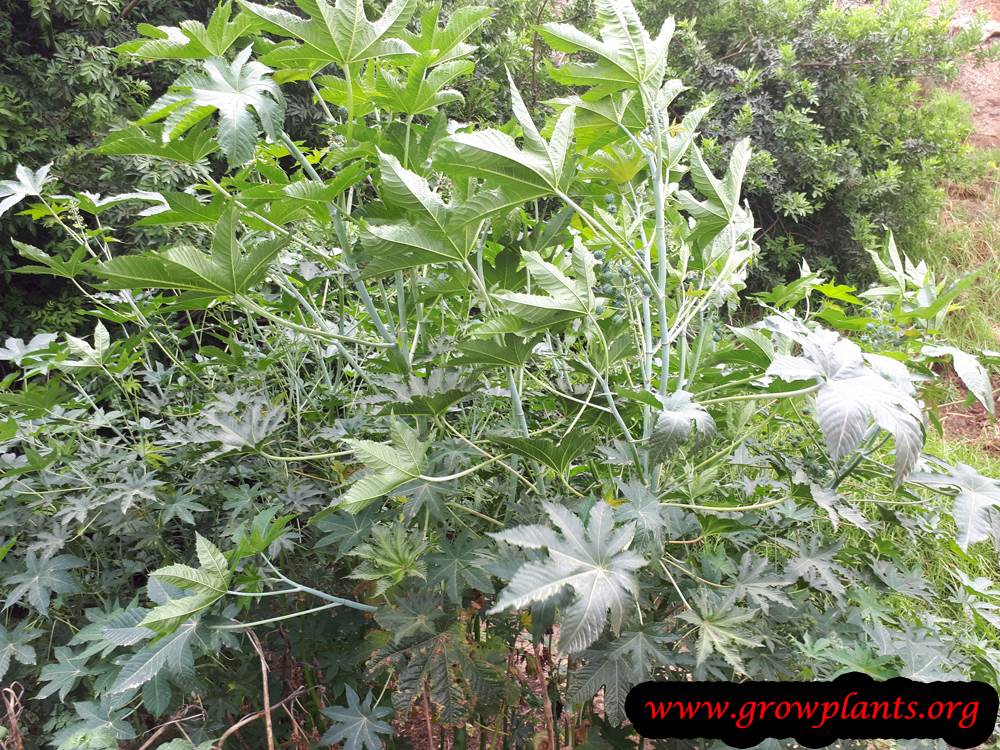
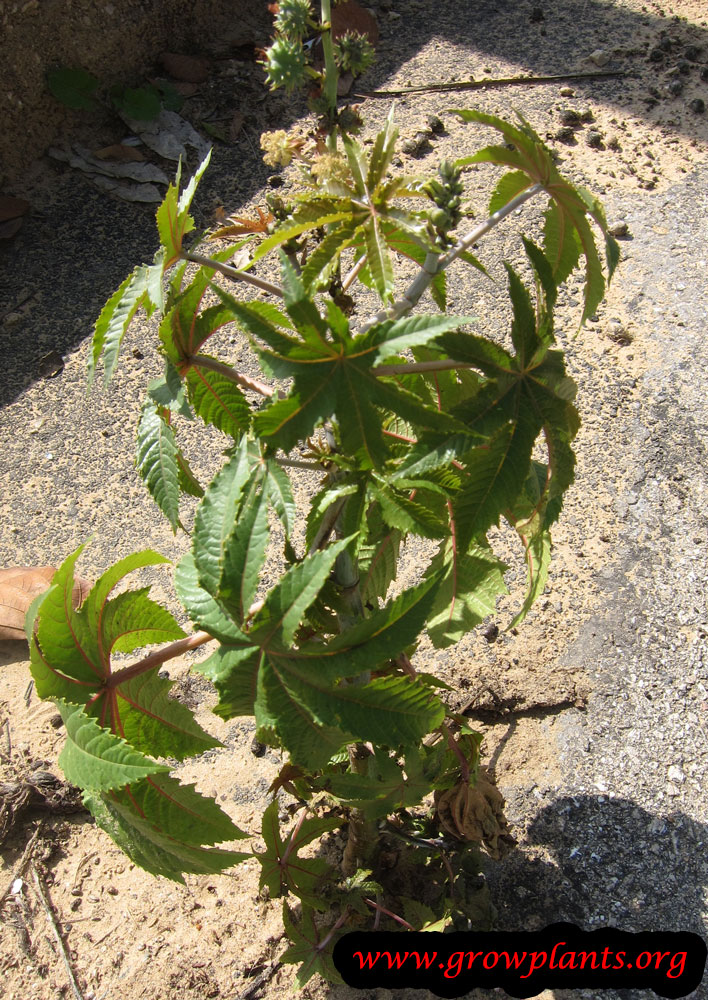
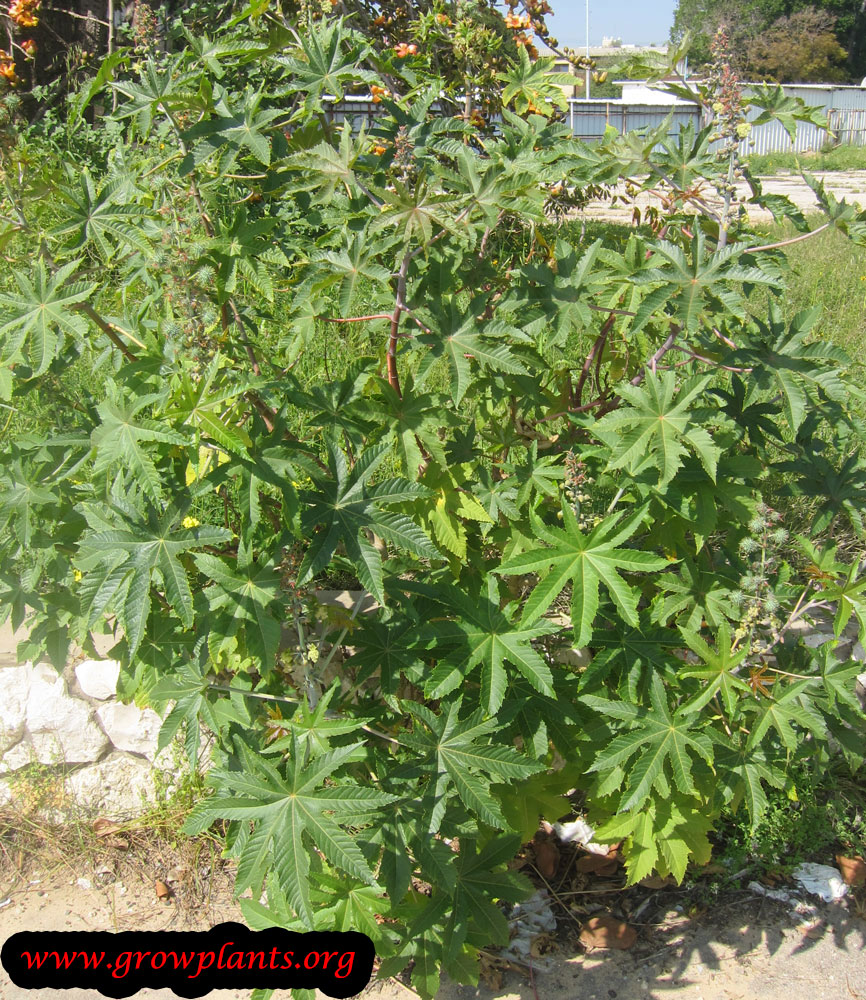
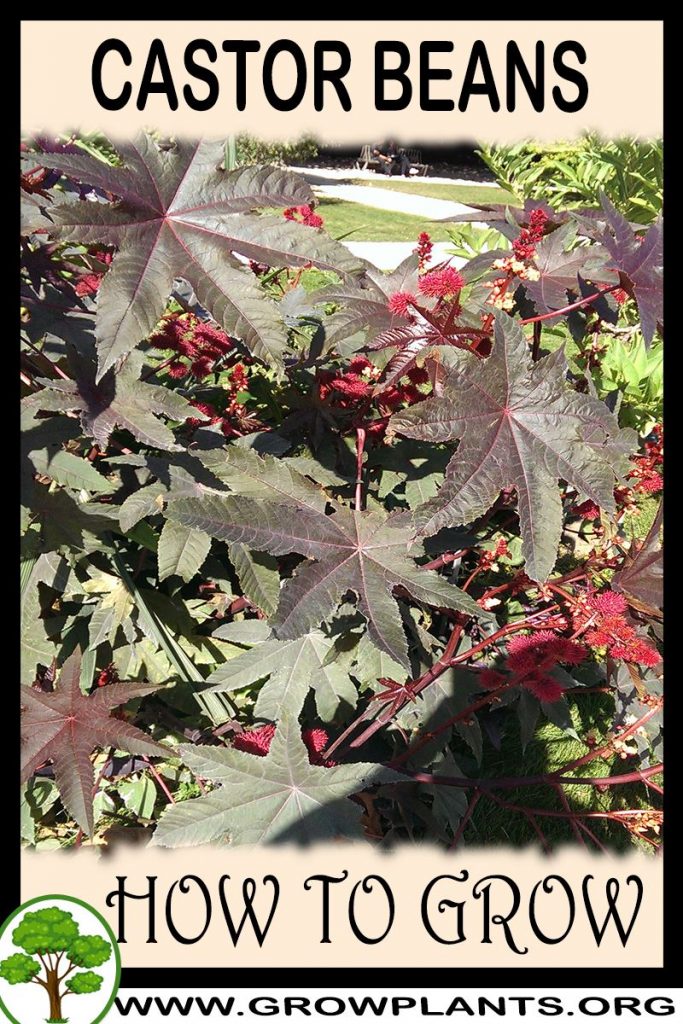
- Leaves & Foliage: Large, deeply lobed palmate leaves with 5-10 (mostly about 9) pointed lobes; colour can be green, red or a mix, giving strong architectural foliage.
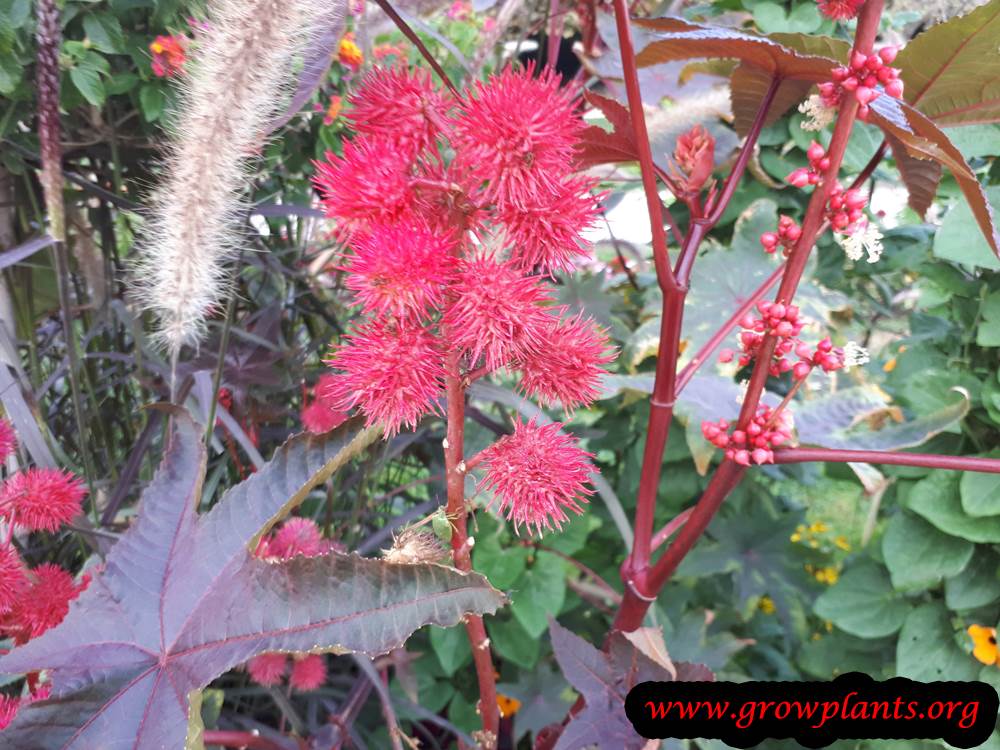
- Flower Characteristics: Pompon-like inflorescences; female flowers red, orange or green-and-red, male flowers green and yellow.
Primary Uses & Landscape Value
- Functional & Ornamental Roles: Grown as a dramatic architectural ornamental, drought-tolerant hedge or screen, and as a medicinal/oil plant; site with care away from children and pets because of its toxicity, and note it can be invasive.
Care Guide: Planting, Soil & Watering
Overview: Castor bean is a fast, bold-growing shrub (grown as an annual in cold climates) that loves full sun and warmth and adapts to most well-drained soils. It is drought tolerant but grows lushest and largest with rich soil and steady moisture.
Quick Care Requirements
| Requirement | Ideal Condition |
|---|---|
| Planting Season | Warm season — spring, after the last frost |
| Growth Rate | Fast |
| Soil Type | Adaptable; rich, well-draining soil for best growth |
| Water Need | Low — drought tolerant, but responds to richer, moister soil |
Planting & Establishment
- Best Planting Season: Plant at the start of the warm season, after all danger of frost has passed, as it needs heat to grow and is damaged by cold. In warm, frost-free areas it can also be set out in autumn.
- How to Plant:
- Hole Preparation: Dig a hole about twice the width of the root ball and the same depth, loosening the surrounding soil to accommodate its vigorous roots.
- Soil Amendments: Mix plenty of compost or organic matter into the planting soil — rich, fertile ground fuels its fast, dramatic growth.
- Planting Depth: Set the top of the root ball level with the soil surface and keep the stem base at grade.
- Growth Speed & Expectations: A very fast grower that can shoot up to several metres in a single warm season, quickly making a large, tropical-looking specimen.
Soil, Watering & Drainage Care
- Soil Mix & Drainage Needs: It tolerates a wide range of soils provided they drain freely; richer soil gives bigger, lusher plants. It can also be grown in a large, well-drained container.
- Watering Schedule & Technique:
- Young / Newly Planted: Water generously and regularly while young to fuel rapid growth, keeping the soil moist but not waterlogged.
- Established: Established plants tolerate dry spells, but consistent watering produces the largest, most luxuriant foliage; water deeply in dry weather.
- Seasonal Adjustments: Water freely through the warm growing season; reduce in cool weather, when growth slows or the plant dies back.
Climate, Light & Hardiness
Castor bean is a very fast shrub or small tree grown in full sun to half shade as a bold ornamental, evergreen in warm climates but grown as an annual where winters are cold, and it is drought-tolerant once established. The site data gives it two hardiness figures - roughly USDA zone 9 and warmer as a perennial, and zone 6 and warmer when grown as an annual - because frost kills or cuts back the top while, in mild areas, the plant persists and resprouts.
Quick Climate Specifications
| Climate Zones | Tropical, subtropical, mediterranean, desert, temperate (warm-season) |
|---|---|
| USDA Hardiness Zones | Approximately 9+ as a perennial; 6+ grown as an annual (site data) |
| Optimal Temp Range | Approximately 20–32°C (68–90°F) |
| Cold Damage Begins | Foliage and soft growth suffer near 0–3°C (32–37°F); frost cuts back the top |
| Approx. Survival Minimum | In zone 9+ the base may survive light frost and resprout; in colder zones the plant is killed and regrown from seed - varies by age, exposure duration, and conditions |
| Frost Tolerance | Very low to low |
| Light Conditions | Full sun to half shade |
| Wind Tolerance | Low to moderate (large soft leaves) |
Sunlight & Light Exposure
Optimal Light Setup
Full sun gives the largest leaves and fastest growth; it also grows in half shade.
Direct Sun Requirement
Strong direct light drives its dramatic, rapid growth.
Best Exposure / Orientation
A warm, open, sheltered spot suits the big, sail-like leaves.
Temperature Extremes & Hardiness
USDA Hardiness & Regional Limits
The two site zones capture its dual habit: in zone 9 and warmer it behaves as a frost-free perennial (evergreen or cold-deciduous), while in zone 6 and up it is grown as a fast warm-season annual, sown after frost and killed by the first hard freeze. Hardiness and lifecycle are distinct - the same plant is perennial where mild and annual where cold.
Cold Damage & Winter Protection
Frost damages the foliage and can cut the plant to the ground; in mild areas the base often resprouts, while in cold-winter regions it is regrown from seed each year.
Frost Sensitivity
Frost-tender top growth - young plants especially so; it makes no attempt at true winter hardiness in freezing climates.
Extreme Heat Tolerance
Excellent - it revels in heat and, being drought-tolerant, powers through hot, dry summers.
Wind, Humidity & Microclimate
Dry-Air Tolerance
Good - adapted to dry as well as humid warm climates.
Wind Tolerance
The tall, soft-stemmed growth and large leaves are easily torn or toppled by strong wind, so give it shelter.
Microclimate Recommendations
A warm, sunny, wind-sheltered position gives the boldest plants; note all parts are poisonous and it can be invasive, so site it accordingly.
Growing in Pots, Balconies & Indoors
Castor bean is a fast, statuesque plant that can be grown in a large pot while young, but it soon becomes too big for a long-term container and is not a houseplant. Every part – especially the seeds – is highly poisonous.
Quick Details
- Container Size: A large pot, 40 L (10 gal) or more, and only while the plant is young
- Indoor Suitability: Not an indoor plant; large and highly toxic – not suited to living spaces
- Best Spot: Full sun to light shade
- Soil & Drainage: Aerated, organic-rich mix – peat or coir with perlite or vermiculite; must drain freely
- Watering in Pots: Water sparingly to moderately – it needs less than many leafy plants; let the surface dry and never leave it standing wet
Indoors & On the Windowsill
- Houseplant limits: Not a houseplant – it grows too large and every part is highly poisonous, so it does not belong in living or sleeping spaces.
- SAFETY: Highly toxic – the seeds contain ricin and can be fatal if eaten. Keep well away from children and pets; never grow it where its seeds are within reach. Wear gloves when handling.
On a Balcony or Patio
- Light, heat & wind: Give it the sunniest spot you can. Walls, railings and paving reflect heat, so pots dry quickly – check moisture daily in warm weather, and shelter tall growth from wind. A drip irrigation kit with a timer can take over that watering check automatically.
- Balcony caution: If grown on a balcony where children or pets have access, site it out of reach and remove the seed heads before they ripen.
Choosing the Pot, Soil & Long-Term Care
- Pot & drainage: A large pot (40 L or more) with strong drainage holes; skip a standing water saucer to avoid root rot. Terracotta breathes and dries fast; glazed or plastic holds moisture longer.
- Potting mix: Use a well-aerated, organic-rich mix – peat or coir blended with perlite or vermiculite for free drainage.
- Feeding: Potted plants lose nutrients as watering leaches them from the mix, so feed more often than in open ground – a balanced liquid feed through the growing season.
- Long term: It outgrows any pot within a season or two – usually grown as a fast annual and replaced rather than kept for years.
Growing this plant in a greenhouse
A greenhouse can give castor beans frost protection and cold protection. In the right climate it may also be kept growing through winter, depending on how much warmth and light are provided.
Greenhouse at a glance
| Greenhouse suitability | Conditional - depends on your climate |
|---|---|
| Main benefits | frost protection, cold protection |
| Season extension | earlier spring & later autumn |
| Outdoor protection advisable below | about 5°C |
| Maintain greenhouse minimum | around 5°C for active growth |
| Suitable types | unheated greenhouse, polycarbonate greenhouse, lean-to |
| Heating | Heating is optional - useful mainly for winter growing in cold areas. |
Related greenhouse guides
- Greenhouses: How to Choose the Right Greenhouse
- Best Lean-To Greenhouses
- Polycarbonate Greenhouses: What to Look for Before Buying
Fertilizing & Feeding
A moderate to hungry feeder grown for bold, fast foliage; a balanced, nitrogen-forward feed suits it, but remember every part of this plant is highly poisonous.
Quick Fertilizing Specs
| Feeding Level | Moderate – a hungry, fast-growing foliage plant. |
|---|---|
| young_feeding | A modest balanced feed as new plants establish. |
| mature_feeding | Light, occasional balanced feeding through bloom. |
| Main Nutrient Priority | Balanced nutrition leaning on nitrogen for bold foliage. |
| Best Feeding Period | Through spring growth and the blooming period. |
| Organic Options | Compost or well-rotted organic matter. |
| Soil pH | Tolerates a range; near neutral is fine. |
| Reduce/Stop Feeding | Stop feeding as the plant enters dormancy. |
| Micronutrients | Rarely needed; correct only if a deficiency shows. |
Feeding by Growth Stage
Spring flush of growth
Fuel fast, bold foliage growth as the season starts.
| Nutrient direction | A balanced, nitrogen-forward complete fertilizer to support this hungry, fast-growing foliage plant. |
|---|---|
| Timing | As new growth begins in spring. |
| Frequency | Regular light feedings through the vigorous growth period. |
| Fertilizer types | Balanced complete fertilizer with ample nitrogen, Compost or well-rotted organic matter |
| Precautions | Keep this poisonous plant away from children and pets; wash hands after handling. |
Flowering and seed heads
Support flowering and ornamental seed heads without forcing soft growth.
| Nutrient direction | Continue a balanced feed; extra phosphorus does not force more bloom. |
|---|---|
| Timing | Through the flowering and seed-head period. |
| Frequency | Light, occasional feeding while flowering. |
| Fertilizer types | Balanced complete fertilizer |
| Precautions | Seeds are highly toxic; remove seed heads where children may reach them. |
Cold-season decline / dormancy
Let the plant rest as growth stops in cold weather.
| Nutrient direction | None – withhold fertilizer while the plant is dormant. |
|---|---|
| Timing | Through cold-season decline or dormancy. |
| Frequency | No feeding at this stage. |
| Fertilizer types | No feeding at this stage – withhold fertilizer until active growth resumes. |
| Precautions | Do not fertilize until active growth resumes; excess salts on a resting plant only risk root injury. |
Nutrient Deficiency Signs & Corrections
Uniform pale, yellow-green older leaves with slow, thin growth.
| Possible causes | Low soil nitrogen on a hungry, fast-growing plant, Nitrogen leached away by heavy watering or rain, Cold soil slowing uptake |
|---|---|
| Appears first on | Older, lower leaves first. |
| What to check | Recent feeding history, Rainfall and leaching, Soil temperature and organic matter |
| Possible correction | Apply a balanced, nitrogen-forward complete fertilizer during active growth and enrich the soil with organic matter. |
Yellowing between the veins of the youngest leaves while the veins stay green.
| Possible causes | High or alkaline soil pH locking up iron and manganese, Waterlogged or cold roots reducing micronutrient uptake, Occasionally low available iron or manganese in the soil |
|---|---|
| Appears first on | New growth at the shoot tips. |
| What to check | Soil pH, Drainage and watering habits, Whether symptoms follow cool, wet spells |
| Possible correction | Correct soil pH toward the plant’s preferred range, improve drainage, and if it persists apply a chelated iron or manganese product per its label. |
Scorched leaf edges, wilting, or white crusting on the soil despite adequate water.
| Possible causes | Over-application of fertilizer, Poor leaching in containers or heavy soil, Letting the root zone dry out between heavy feeds |
|---|---|
| Appears first on | Leaf margins and tips; container plants first. |
| What to check | Recent fertilizer amounts, Drainage, Soil crusting or white surface residue |
| Possible correction | Ease off feeding, water thoroughly to flush excess salts from the root zone, then feed only lightly. |
Pruning, Training & Seasonal Maintenance
Castor bean is a very fast, semi-woody shrub or small tree (1–10 m) usually grown for one season or cut back where it is not hardy; it tolerates pruning well and regrows vigorously, but every cut on this plant is also a safety decision. All parts are poisonous — the seeds contain ricin — and the sap can irritate skin, so the most important “pruning” is often the deliberate removal of spent flower and developing seed spikes where children or pets have access. Otherwise pruning is limited to height and shape control and removing frost- or storm-damaged growth.
Quick Pruning & Maintenance Specs
| Pruning Tolerance | High (regrows strongly from cut stems and the base) |
| Primary Pruning Window | Spring, and any time to remove seed spikes for safety |
| Secondary Maintenance Window | After frost damage in cut-back climates |
| Typical Frequency | Low, plus seed-spike removal as flowers fade |
| Main Objective | Control height/spread; remove poisonous seed heads; tidy damage |
| Young Plant Priority | Optional tip pinch for a bushier, lower plant |
| Mature Plant Priority | Height reduction and prompt seed-spike removal |
| Best Tool Type | Bypass secateurs to loppers on the thick, hollow stems |
| Avoid Heavy Pruning During | Cold, wet spells when this frost-tender plant is stressed |
Pruning by Plant Age & Size
Newly Established
Let it grow; remove only damaged growth. An early tip pinch is optional and will produce a lower, multi-stemmed, bushier plant instead of a single tall trunk — useful where the towering habit is unwanted.
Young / Formative
No formal framework is built. Choose between a single dominant stem (tall, dramatic) or a pinched, multi-stem bush; both are valid because the plant flowers on whatever current-season growth it makes. Wear gloves — the sap is an irritant.
Mature / Established
Reduce height and spread as needed and, critically, cut off spent flower spikes before the spiny seed capsules mature if the plant is near children, pets or play areas. Where grown as a perennial, hard cutting back in spring renews the plant.
Seasonal Pruning Schedule
Pre-Growth / Early-Spring
Objective: reset size where the plant is kept as a perennial. Remove: frost-killed or leggy top growth back to live wood or the base. Do NOT remove: emerging basal shoots you intend to keep. Expected response: rapid, vigorous regrowth. Flowering impact: delayed slightly but abundant on the new growth.
Summer Canopy Management
Objective: manage the poisonous seed crop and size. Remove: fading flower spikes and forming seed capsules where safety requires; over-tall stems. Do NOT remove: healthy leaves needed to fuel the fast canopy. Flowering impact: cutting spikes prevents seed set (the desired outcome for safety).
Structural Pruning & Training
Control is about height and density, not a permanent branch framework. Shorten dominant stems to hold height; thin crowded stems on a multi-stem bush for light and stability, since the large leaves make a wind-catching canopy on a soft, hollow stem.
Special Growth to Remove
Remove basal shoots to keep a single-trunk form, or retain a few to build a bush. The stand-out task is removing the flower and seed spikes to prevent the toxic seeds forming where they could be eaten. Bag and dispose of seed heads securely rather than leaving them on the ground.
Container & Small-Space Pruning
In a large container, pinch early and shorten stems to keep the naturally huge plant in proportion; the confined roots also limit ultimate size. Continue to remove seed spikes — a container plant is often on a patio close to people.
Tools
Bypass secateurs handle young stems and flower spikes; loppers or a pruning saw are needed for the thick, hollow mature stems. Always wear gloves for skin protection against the sap.
Tool Hygiene & Disease Risk
Routine for disease: no major tool-borne pathogen of concern. The real caution is human safety — clean sap from blades and wash hands and tools after cutting, because all parts, and especially the seeds, are toxic.
Cut Placement & Technique
Cut stems just above a node or an outward bud; remove flower spikes at their base. On thick hollow stems make a clean cut to avoid crushing, and keep the cut face away from your skin as sap runs freely.
Heavy Pruning & Rejuvenation
Tolerated well: where kept as a perennial it can be cut hard to a low framework or near the base in spring and will regrow rapidly the same season, with flowering following on the new growth. Expect a short vegetative delay before bloom returns.
Post-Pruning Care
Water to support the fast regrowth this drought-tolerant but responsive plant will make. Because leaves are large, a canopy opened hard in strong sun can expose lower growth to scorch briefly. No feeding is needed to force regrowth — the plant is already vigorous.
Common Pruning Mistakes
- Leaving seed spikes to mature within reach of children or pets — the seeds are the most poisonous part.
- Pruning bare-handed and letting irritant sap contact skin or eyes.
- Composting seed heads casually instead of bagging them securely.
- Hard-cutting during a cold, wet spell, when this frost-tender plant recovers poorly.
When NOT to Prune
Avoid hard pruning in cold or wet conditions that stress this tender plant, and do not open the canopy heavily just before frost. Delay major cuts until settled warm weather when rapid regrowth is assured.
Recommended Tools (by task)
- bypass_secateurs — for young stems, tips and removing flower/seed spikes cleanly.
- loppers — for the thick, hollow mature stems beyond hand-pruner size.
- pruning_saw — for the trunk of a tree-form specimen when reducing height.
Pruning Troubleshooting
| Problem | Possible Cause | What to Check | Corrective Action |
| Plant too tall and top-heavy | Grown as single stem, never tipped | Stem height vs. support and wind exposure | Pinch early next time; shorten and consider a multi-stem bush form |
| Unwanted seed capsules forming | Flower spikes left in place | Fading spikes turning to spiny pods | Cut and securely bag spikes before capsules ripen |
| Slow, weak recovery after cutback | Pruned in cold/wet conditions | Season and soil warmth | Reserve hard pruning for warm, active growth |
Propagation Guide
Castor bean is almost always grown from its large seed, sown after frost into warm soil, with an overnight soak improving germination of the hard-coated seed. Coloured-leaf ornamental selections are open-pollinated so seedlings vary, and the plant self-sows freely and can become weedy. Note that every part, and the seed most of all, is highly poisonous (ricin) — handle seed with gloves and keep it away from children and pets.
Quick Propagation Specs
| Best Propagation Method | Seed |
| Alternative Methods | Basal shoots (minor; self-sows readily) |
| Propagation Difficulty | Easy |
| Seed True-to-Type | Variable / cultivar-dependent; leaf-colour forms are not stable from seed |
| Best Propagation Season | Spring, into warm soil |
| Germination Temperature | Warm, roughly 20–30°C (68–86°F) |
| Seed Sowing Depth | About 2–3 cm (1 in) |
Growing from Seed
Seed Handling & Viability
Seed is highly toxic (ricin) — wear gloves, wash hands afterwards, and keep it from children and pets. Store dry.
Dormancy & Pre-Sowing Treatment
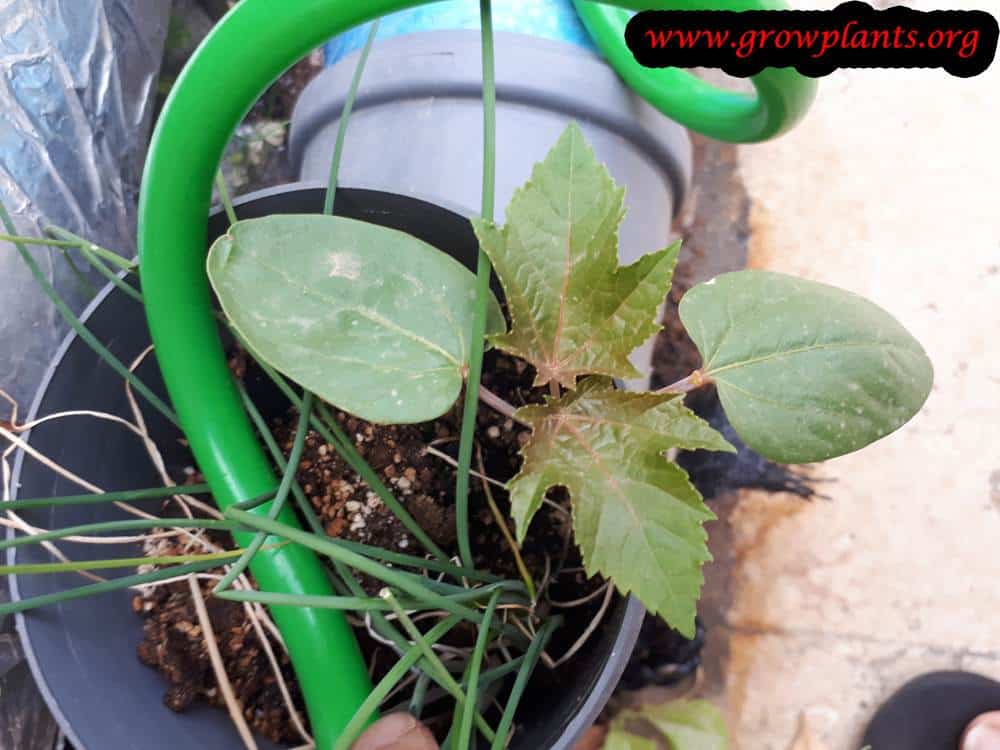
The hard seed coat responds to about a 24-hour soak (some growers also nick the coat) to speed and even out germination.
Germination Conditions
Sow into warm soil; the plant is frost-tender and germinates best with steady warmth.
Division, Offsets, Pups & Suckers
In frost-free areas the plant can be cut back and re-shoots from the base, and the site notes basal shoots. These are not a standard nursery method — seed is simpler and more reliable.
Bloom & Flower Guide
Quick Details
- Bloom Season: Summer, autumn and winter (rarely in the hottest part of summer)
- Time to First Bloom: In its first season when grown as an annual, often by mid to late summer
- Flower Appearance: Pompom-like spikes bearing separate male and female flowers; females show red styles, males are greenish-yellow
- Edibility: None, the whole plant is highly toxic; never eat any part
Detailed Blooming Overview
Castor bean carries its flowers on upright spikes where the male and female flowers sit separately on the same plant. The female flowers, with their red stigmas, are the eye-catching part and later give way to the spiny seed capsules. Striking as it is, this is an ornamental to admire and not to taste, since every part, above all the seeds, is dangerously poisonous.
Flower Characteristics
- Flowers in pompom-like clusters on erect spikes.
- Female flowers red or red-tinged with prominent styles; male flowers green and yellow.
- Male and female flowers on the same plant (monoecious).
Bloom Care & Thinning
- Safety first: The plant, and especially the seeds that follow the flowers, contain ricin and are highly toxic; site it away from children and pets, and wear gloves when handling.
- Site for flowering: Full sun and warmth bring on the strongest flowering spikes.
- Managing seed set: Removing spent flower spikes before they set capsules reduces both self-seeding and the number of toxic seeds around the garden.
Pests, Diseases & Troubleshooting
Overview: Castor bean (Ricinus communis) is a fast, vigorous tropical plant whose chief pests are the castor semilooper caterpillar, the capsule/shoot borer, sap-feeding leafhoppers, whiteflies and spider mites, while its most damaging disease is grey-mould inflorescence blight, alongside fusarium wilt and leaf spots. Note that all parts — especially the seeds — are highly toxic (ricin) and must be handled with care. Manage pests culturally and with soft controls first.
Quick Troubleshooting Overview
| Issue / Pest | Main Symptom | Primary Solution |
|---|---|---|
| Castor semilooper | Leaves defoliated to the midribs | Hand-pick; Bt or spinosad on young larvae |
| Capsule / shoot borer | Bored, frassy spikes and hollowed seeds | Cut out bored spikes; Bt/spinosad at set |
| Leafhoppers | Yellowed, curled, browning leaf margins | Vigour, reflective mulch, neem/soap |
| Whiteflies | Clouds of white flies; honeydew; virus | Sticky traps, parasitic wasps, oil/soap |
| Grey mould (botrytis) | Flower spikes and capsules rot grey | Airflow, remove spikes, protectant fungicide |
| Fusarium wilt | Wilting, browning internal stem tissue | Resistant types, rotation, drainage, remove plants |
Common Pests & Management
- Castor semilooper (Achaea janata):
- Symptoms: Green-to-brown looping caterpillars chew leaves voraciously, often defoliating plants and leaving only midribs; this is almost certainly the “castor butterfly/larva” of the source note.
- Prevention & Control: Hand-pick caterpillars and egg batches on small plantings and encourage birds and parasitic wasps. A targeted spray of the caterpillar-specific bacterium Bacillus thuringiensis (Bt) or spinosad controls outbreaks while sparing beneficials; apply to young larvae in the evening per label.
- Castor capsule / shoot borer (Conogethes punctiferalis (Dichocrocis)):
- Symptoms: Bored, frassy holes in shoots, flower spikes and seed capsules, with webbing and hollowed, damaged seeds; growing tips may wilt.
- Prevention & Control: Cut out and destroy bored spikes and shoots with their larvae, and remove crop debris after the season. Encourage parasitic wasps. Where borer pressure is high, treat spikes at early capsule set with Bt or spinosad, timed to young larvae before they tunnel in.
- Leafhoppers (jassids) (Empoasca spp.):
- Symptoms: Leaf margins yellow, curl downward and brown (“hopperburn”), and growth stunts; tiny wedge-shaped hoppers scatter when leaves are disturbed.
- Prevention & Control: Tolerate light numbers and protect natural enemies. Reflective mulch and keeping plants vigorous reduce damage. Insecticidal soap or neem oil on the undersides curbs heavy infestations; avoid routine broad-spectrum sprays.
- Whiteflies (Bemisia tabaci / Trialeurodes vaporariorum):
- Symptoms: Clouds of tiny white flies rise from disturbed foliage; leaves yellow and are coated with sticky honeydew and sooty mould, and the whitefly can transmit viruses.
- Prevention & Control: Use yellow sticky traps to monitor and reduce adults, and encourage Encarsia parasitic wasps and other predators. Wash off honeydew and treat undersides with insecticidal soap or neem/horticultural oil, repeating to catch newly hatched crawlers.
- Spider mites (Tetranychus spp.):
- Symptoms: Fine stippling, bronzing and webbing on leaves in hot, dry weather; heavy feeding yellows and desiccates foliage.
- Prevention & Control: Avoid drought and dust stress and hose foliage in hot spells. Encourage predatory mites. Horticultural oil or insecticidal soap on leaf undersides controls outbreaks.
Diseases & Fungal Issues
- Grey mould / botrytis inflorescence blight (Botrytis ricini / B. cinerea):
- Symptoms: The most serious castor disease: developing flower spikes and capsules turn brown-to-grey and rot, covered in a fuzzy grey mould in humid or wet weather, destroying the seed crop.
- Treatment & Management: Space plants for airflow and avoid overhead irrigation, and choose more tolerant types where available. Remove and destroy infected spikes promptly. In humid seasons a protectant fungicide at flowering, per label, may be justified; sanitation of crop debris reduces carry-over.
- Fusarium wilt (Fusarium oxysporum f. sp. ricini):
- Symptoms: Plants yellow, wilt and die from the base up; a cut stem shows brown-stained internal tissue. The soil-borne fungus enters through the roots and blocks the water vessels.
- Treatment & Management: There is no cure once infected, so rely on prevention: rotate away from castor, plant resistant varieties, ensure good drainage, and remove and destroy affected plants. Do not replant castor in known infested ground.
- Alternaria / Cercospora leaf spot (Alternaria ricini / Cercospora ricinella):
- Symptoms: Brown concentric-ringed (Alternaria) or greyish angular (Cercospora) spots spread on leaves and can reach capsules, causing blight and premature leaf fall in wet weather.
- Treatment & Management: Improve airflow, avoid wetting foliage, and clear infected debris. Rotate crops and use clean seed. A copper or labelled fungicide from first spots, repeated per label, checks severe outbreaks.
Growing Difficulties & Abiotic Problems
- Seed and plant toxicity (all parts, especially seeds):
- Cause & Symptoms: Not a disease but a critical safety issue: castor seeds contain ricin, one of the most potent natural toxins; the whole plant is poisonous to people, pets and livestock if eaten.
- Correction Strategy: Site away from children and animals, wear gloves when handling, and consider removing the spiny seed capsules before seeds ripen if poisoning risk is a concern. Never allow seeds to be eaten; dispose of prunings safely.
- Cold / frost sensitivity:
- Cause & Symptoms: Leaves blacken and the plant collapses at the first frost, as castor is a frost-tender tropical perennial usually grown as an annual in cool climates.
- Correction Strategy: Grow as a warm-season annual, plant out only after frost, and give a long, warm season. In borderline areas start early under cover and choose faster-maturing types.
- Chlorosis / nutrient stress:
- Cause & Symptoms: Pale or yellowing leaves and weak growth on poor, waterlogged or very alkaline soils, since this fast, hungry plant needs fertile, well-drained ground.
- Correction Strategy: Plant in rich, free-draining soil in full sun, feed during active growth, and correct drainage; chelated iron greens up lime-induced interveinal yellowing.
What Helps — Products & Tools
For castor the soft toolkit is Bacillus thuringiensis (Bt) or spinosad for the semilooper and capsule borer, neem or horticultural oil and insecticidal soap for leafhoppers, whiteflies and mites, and yellow sticky traps for whitefly monitoring; copper or a labelled fungicide addresses botrytis and leaf spots. Fertile, well-drained soil and crop rotation prevent wilt. Above all, remember the ricin toxicity: wear gloves, keep seeds away from children and animals, follow every label, and protect pollinators by spraying in the evening.