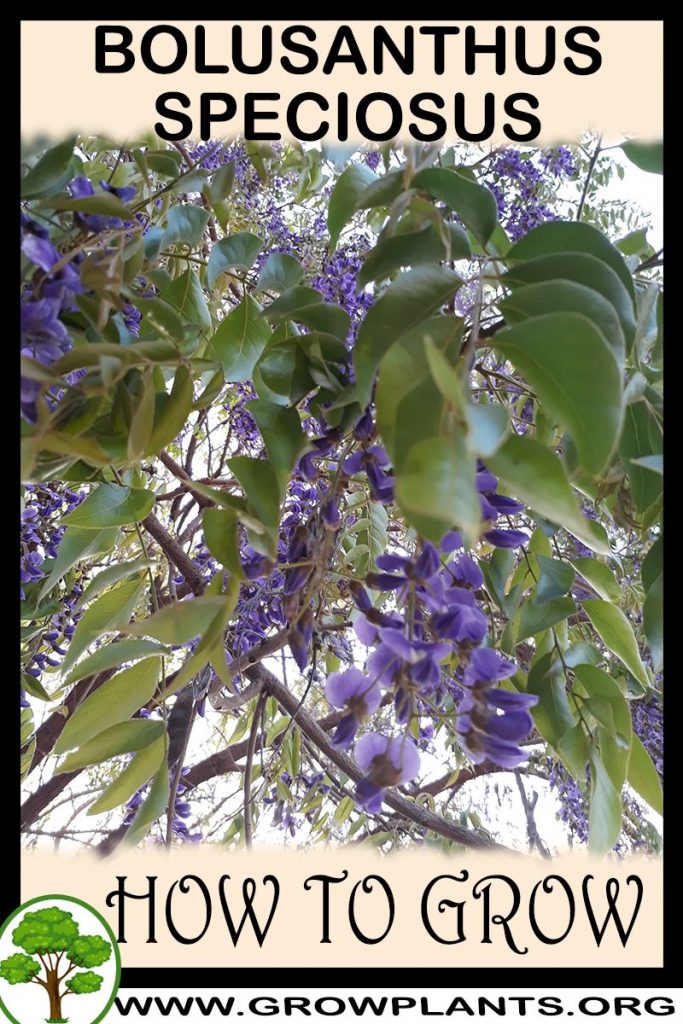
Plant Profile & Key Characteristics
Overview: A deciduous (sometimes evergreen) legume shrub or small tree 4-8 m (12-22 ft) tall, grown as an ornamental for its fragrant wisteria-like purple flowers. It is a nitrogen-fixing, drought-adapted species also used for bonsai.
Quick Specifications
| Specification | Attribute |
|---|---|
| Plant Type / Life Cycle | Perennial |
| Foliage Type | Deciduous (sometimes evergreen) |
| Mature Size | 4-8 m (12-22 ft) tall |
| Growth Rate | Fast to moderate |
| Hardiness | USDA zone 10-12 |
Growth Form & Structure
- Height & Spread: 4-8 m (12-22 ft) tall; can be container grown or trained as bonsai.
- Growth Habit & Form: Slender shrub or small tree with pinnate foliage; a nitrogen-fixing legume.
- Lifespan & Maturity: Fast to moderate growth to a small ornamental tree.
Anatomy & Physical Features
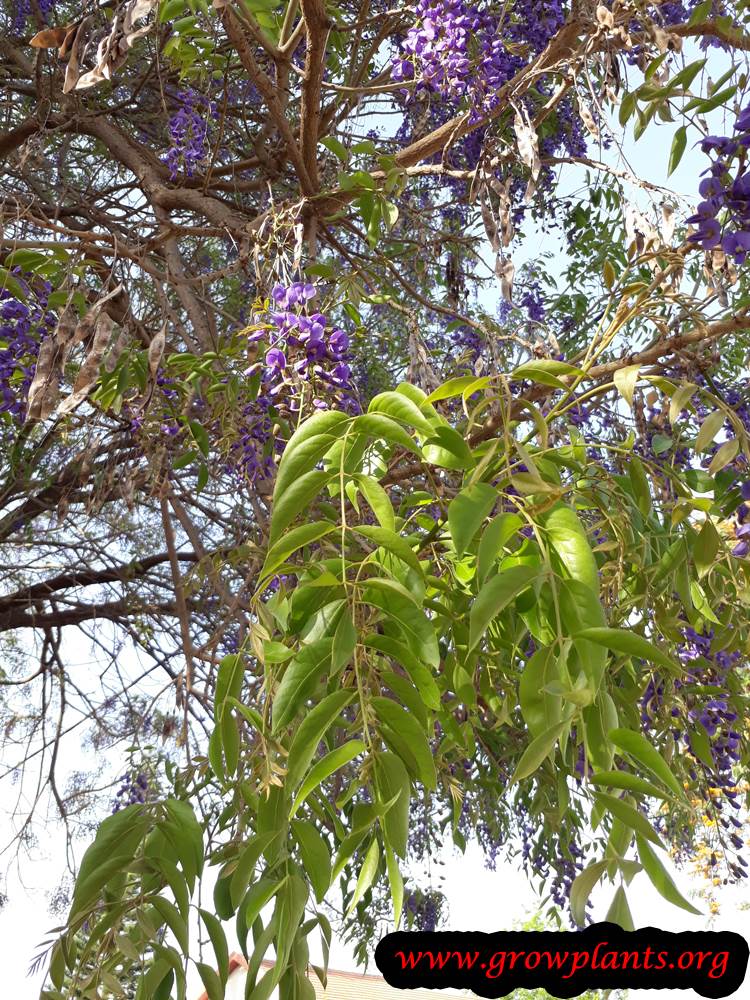
- Leaves & Foliage: Green, elliptic leaflets in a pinnate arrangement.
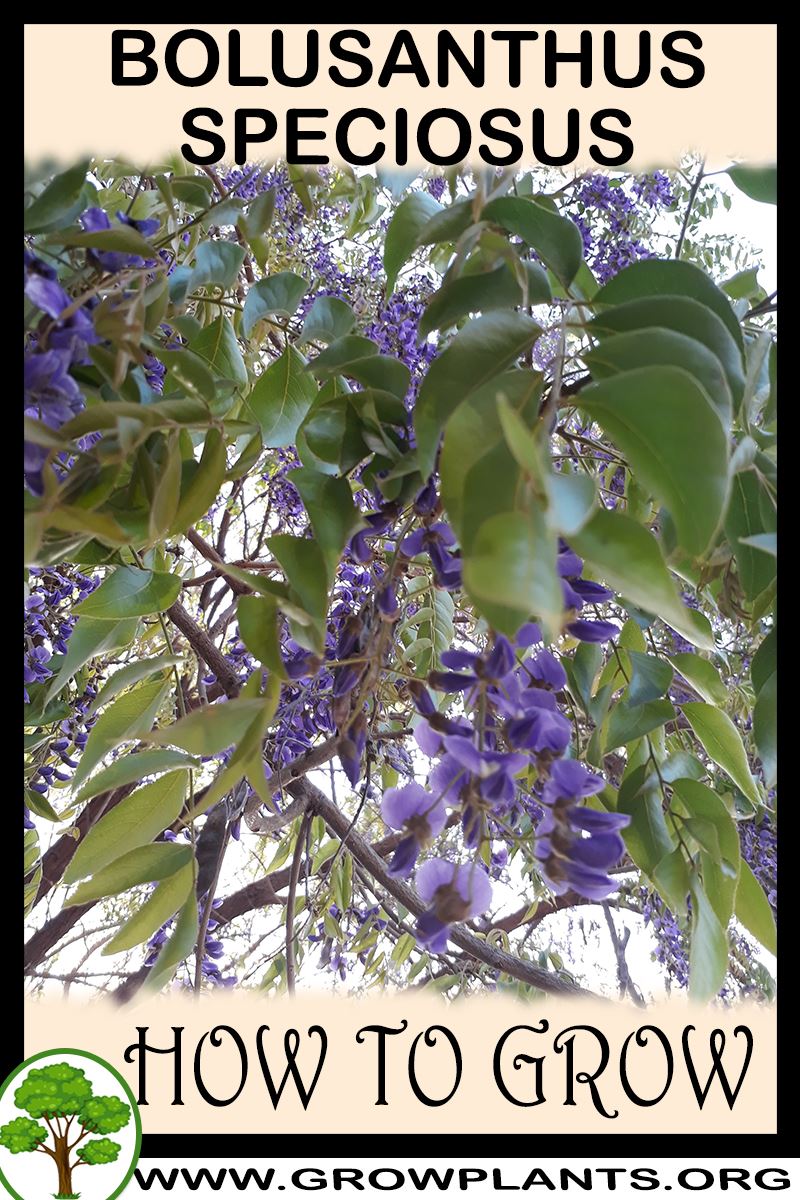
- Flower Characteristics: Fragrant purple pea-shaped flowers in hanging sprays (full detail in the Bloom section).
Primary Uses & Landscape Value
- Functional & Ornamental Roles: Flowering ornamental and street/garden tree; nitrogen-fixing; also grown as bonsai.
Care Guide: Planting, Soil & Watering
Overview: Bolusanthus speciosus (tree wisteria) is a nitrogen-fixing legume tree or shrub for warm climates that needs full sun to part shade and a well-drained soil. It is fairly drought-tolerant with low-to-moderate water needs and survives light frost once established.
Quick Care Requirements
| Requirement | Ideal Condition |
|---|---|
| Planting Season | In spring, or in winter in frost-free areas |
| Growth Rate | Moderate to fast |
| Soil Type | Well-draining |
| Water Need | Low to moderate; let the soil dry between waterings once established |
Planting & Establishment
- Best Planting Season: Plant in spring, or in winter where frost is not a concern, so roots establish before summer.
- How to Plant:
- Hole Preparation: Dig a hole about twice the width of the root ball.
- Soil Amendments: Improve drainage on heavy soil with grit; as a legume it needs little added nitrogen.
- Planting Depth: Set the root collar at soil level; do not bury the trunk base.
- Growth Speed & Expectations: Moderate to fast; reaches 4–8 m (12–22 ft) as a small tree or large shrub.
Soil, Watering & Drainage Care
- Soil Mix & Drainage Needs: Needs free-draining soil; avoid waterlogged sites that rot the roots.
- Watering Schedule & Technique:
- Young / Newly Planted: Water regularly to establish deep roots.
- Established: Drought-tolerant – water deeply but infrequently, letting the soil dry well between waterings.
- Seasonal Adjustments: More in prolonged summer heat; minimal in cool weather.
Climate, Light & Hardiness
The tree wisteria is a subtropical, semi-arid small tree or shrub that enjoys full sun to half shade, heat and free drainage, and it is fairly drought-tolerant. The site data places it at roughly USDA zone 10–12 and notes it can survive light frost, so it suits warm, largely frost-free gardens.
Quick Climate Specifications
| Climate Zones | Subtropical, mediterranean, desert / semi-arid |
|---|---|
| USDA Hardiness Zones | Approximately 10–12 (site data) |
| Optimal Temp Range | Approximately 20–32°C (68–90°F) |
| Cold Damage Begins | Light frost is tolerated; growth suffers as temperatures fall below freezing |
| Approx. Survival Minimum | Established plants survive light frost briefly; harder freezes cause damage - varies by age, exposure duration, and conditions |
| Frost Tolerance | Low (survives light frost) |
| Light Conditions | Full sun to half shade |
| Wind Tolerance | Moderate to high |
Sunlight & Light Exposure
Optimal Light Setup
Full sun gives the best form and its fragrant purple pea-flower display; it also accepts half shade.
Direct Sun Requirement
A sun-loving tree - strong light supports compact growth and good flowering.
Best Exposure / Orientation
A warm, open, well-drained aspect suits its semi-arid character.
Temperature Extremes & Hardiness
USDA Hardiness & Regional Limits
The site classes it around zone 10–12. It is best in warm, dry-winter subtropical and mediterranean climates; it tolerates light frost but is not suited to areas with hard or prolonged freezes.
Cold Damage & Winter Protection
Light frost is taken in stride, but temperatures well below freezing damage growth; protect young plants at the cool edge of its range.
Frost Sensitivity
Only lightly frost-tolerant - young plants are more sensitive than established ones.
Extreme Heat Tolerance
Very good - it is adapted to hot, dry conditions and copes with heat well once established.
Wind, Humidity & Microclimate
Dry-Air Tolerance
Excellent - a natural fit for dry, low-humidity air.
Wind Tolerance
A tough, deep-rooted small tree that handles wind well once established.
Microclimate Recommendations
A warm, sunny, well-drained pocket protected from hard frost extends its range at the cool edge.
Growing in Pots, Balconies & Indoors
The tree wisteria is a small, elegant flowering tree – not a houseplant, but the grower rates it for containers. While young it makes a lovely flowering patio pot before it wants more root room.
Quick Details
- Container Size: A large, deep pot while young – a 4-8 m (12-22 ft) tree eventually wants the ground
- Indoor Suitability: No – it needs full sun
- Best Spot: Full sun to half shade
- Soil & Drainage: Free-draining mix – it is drought tolerant
- Watering in Pots: Small to average, but do not let a pot fully parch
Indoors & On the Windowsill
- Not a houseplant: It needs full sun and open air – grow it outdoors.
- Overwintering: Fairly tender when young; shelter a potted young tree from frost.
On a Balcony or Patio
- Sun & shelter: A young tree flowers beautifully in a big pot in full sun; stake it against wind.
- Drought but drying pots: Drought tolerant in the ground, but pots dry fast – keep it from fully parching.
Choosing the Pot, Soil & Long-Term Care
- Large deep pot: A large, deep pot with a free-draining mix and strong drainage.
- Feeding: Potted plants exhaust their soil faster as nutrients leach with each watering – feed a little more often than plants in the ground, at reduced strength.
- Repotting: Pot up or refresh every couple of years and root-prune to hold its size.
Fertilizing & Feeding
A light to moderate feeder. As a nitrogen-fixing legume it supplies much of its own nitrogen, so it needs only modest, balanced feeding through spring and the flowering season; heavy nitrogen produces leaves at the expense of flowers.
Quick Fertilizing Specs
| Feeding Level | Light to moderate |
|---|---|
| Main Nutrient Priority | Balanced nutrition; go easy on nitrogen |
| Best Feeding Period | Spring through the flowering season |
| Organic Options | Compost, aged manure or leaf mulch |
| Soil pH | Adapts to a wide range; needs well-drained soil |
| Reduce/Stop Feeding | Ease off as growth slows into dormancy |
Feeding by Growth Stage
Spring flush and canopy growth
Support the new season’s shoot and leaf growth so the plant enters bloom in good health.
| Nutrient direction | A balanced complete fertilizer; because this is a nitrogen-fixing legume it needs only gentle nitrogen, so favour a light balanced feed over a heavy nitrogen push. |
|---|---|
| Timing | As growth resumes in spring. |
| Frequency | A few light feedings spread through the active growing season. |
| Fertilizer types | A balanced granular or slow-release complete fertilizer, Compost or other organic matter worked into the surface |
| Precautions | Keep fertilizer off the trunk and avoid overfeeding nitrogen, which pushes foliage at the expense of flowers. |
Flowering
Sustain flowering without forcing excessive leafy growth.
| Nutrient direction | Continue a balanced complete fertilizer; adequate overall nutrition, not high phosphorus, drives good bloom. |
|---|---|
| Timing | Through the flowering period. |
| Frequency | Light, steady feeding during bloom. |
| Fertilizer types | A balanced complete fertilizer |
| Precautions | Avoid high-phosphorus bloom-booster products; balanced, light nutrition suits this plant better. |
Dormancy or winter rest
Let the plant rest as growth and nutrient demand fall away in the cool season.
| Nutrient direction | None – withhold fertilizer while the plant is dormant. |
|---|---|
| Timing | Autumn into winter, as growth slows. |
| Frequency | No feeding at this stage. |
| Fertilizer types | No feeding at this stage while the plant is dormant. |
| Precautions | Do not fertilize until active growth resumes in spring. |
Nutrient Deficiency Signs & Corrections
Older, lower leaves turn uniformly pale or yellow and overall growth is weak.
| Possible causes | Low soil nitrogen or poor root-nodule activity on this legume, Waterlogged or compacted roots limiting uptake, Very sandy, low-fertility soil |
|---|---|
| Appears first on | Older, lower leaves |
| What to check | How wet the root zone stays and whether the soil drains freely, Whether the plant has been fed at all this season, General soil fertility and organic matter |
| Possible correction | Improve drainage, work in organic matter, and apply a balanced complete fertilizer at a modest rate. |
New leaves are pale or yellow between green veins while the veins stay green.
| Possible causes | High (alkaline) soil pH locking up iron, Waterlogged or cold soil reducing root uptake, A genuine iron shortage in the soil |
|---|---|
| Appears first on | Youngest leaves at the shoot tips |
| What to check | Soil pH and whether the soil is chalky or alkaline, How well the soil drains and whether symptoms follow wet spells, Whether only the new growth is affected |
| Possible correction | Correct soil pH where possible and apply a chelated iron product according to its label; improve drainage. |
Older leaves develop browning, scorched margins.
| Possible causes | Potassium shortage in the soil, Fertilizer or soil salt build-up in the root zone, Drought stress between waterings |
|---|---|
| Appears first on | Margins of older leaves |
| What to check | Recent fertilizer use and any salt crust on the soil surface, Soil moisture and the watering pattern, Whether only leaf edges, not whole leaves, are affected |
| Possible correction | Water thoroughly to rinse excess salts through, even out watering, and use a balanced fertilizer with adequate potassium at a modest rate. |
Pruning, Training & Seasonal Maintenance
Tree wisteria is a slender, small deciduous tree grown for its pendulous, fragrant spring racemes, and it needs little pruning — mainly early shaping into a clean single trunk (or a tidy multi-stem) and light thinning thereafter. Because it flowers in spring on wood formed the previous season, the safest time to shape it is just after flowering or in the cool, dry season, so you are not cutting away the bloom-bearing wood. It is naturally narrow, so heavy structural work is rarely warranted.
Quick Pruning & Maintenance Specs
| Pruning Tolerance | Moderate; rebuilds a naturally light canopy slowly |
| Primary Pruning Window | Just after flowering, or autumn–winter (cool, dry) |
| Typical Frequency | Formative years, then occasional |
| Main Objective | Clean trunk/shape when young; deadwood and light shape when mature |
| Young Plant Priority | Single clear leader (or selected multi-stem); remove low/competing shoots |
| Mature Plant Priority | Deadwood, crossing wood, light shaping |
| Best Tool Type | Bypass secateurs; loppers for occasional larger stems |
| Avoid Heavy Pruning During | Bud-break and spring flowering |
Pruning by Plant Age & Size
Newly Established
Remove only damaged growth. Let the young tree gain height, then decide on a single-trunk or multi-stem form.
Young / Formative
Train either a single clear leader for a small standard tree or select a few stems for a multi-stem form, removing low and competing shoots. Little is needed beyond this — the tree is naturally slender and upright.
Mature / Established
Remove deadwood and any crossing branches, and shape lightly. Avoid opening up a canopy that is already light and airy.
Seasonal Pruning Schedule
After Flowering (preferred for shaping)
Objective: shape without sacrificing bloom. Do light shaping and thinning immediately after the spring racemes fade, when this season’s new growth will form next spring’s flowering wood. Do NOT hard-cut the new growth later in winter or you remove the coming display.
Autumn–Winter (deadwood/structure)
Objective: deadwood and minor structure. Remove dead, damaged or crossing wood in the cool dry season, keeping cuts light.
Flowering & Fruiting Wood
The pendulous racemes appear in spring on wood formed during the previous season. This means late-winter shortening of that wood reduces the spring flowers, so favour light shaping just after bloom instead. It is grown for flower, not a harvest.
Structural Pruning & Training
Minor. Establish the trunk form when young; thereafter only remove crossing or misplaced branches and manage height and shape modestly.
Special Growth to Remove
Remove spent racemes and seed pods, since the tree can self-seed and become weedy where conditions suit it. Remove any low or competing shoots that spoil a clean trunk.
Container & Small-Space Pruning
Well suited to containers and to bonsai. Container and bonsai work focus on trunk development and ramification by pinching new shoots, with root-pruning at repotting — a different aim from the light in-ground shaping of a garden tree.
Tools
Bypass secateurs handle almost all cuts on this small tree; loppers cover the occasional larger stem. A pruning saw is needed only for renovation of an old trunk. Hedge shears are not appropriate.
Tool Hygiene & Disease Risk
Routine. Aphids are the main pest rather than a pruning-borne disease; keep tools clean and sharp.
Cut Placement & Technique
Cut to the branch collar and to outward buds; remove low shoots cleanly at the trunk to keep a clean stem. Keep cuts small on this slender tree.
Heavy Pruning & Rejuvenation
Tolerates a moderate reduction and will resprout, but it rebuilds its light canopy and its flowering wood slowly, so a hard cut costs a season or two of bloom. Prefer light, well-timed shaping over heavy reduction.
Post-Pruning Care
Little needed. This nitrogen-fixer wants no heavy feeding; keep soil well drained and watch soft regrowth for aphids.
Common Pruning Mistakes
- Winter-heading the previous season’s wood and losing the spring bloom.
- Over-thinning a canopy that is naturally light and open.
- Leaving low competing shoots that spoil a clean single trunk.
When NOT to Prune
Avoid pruning at bud-break and during flowering, and immediately after transplanting a young tree.
Recommended Tools (by task)
- bypass_secateurs — the great majority of cuts: shaping, deadwood and removal of low/competing shoots.
- loppers — the occasional thicker stem or basal shoot on an older plant.
Pruning Troubleshooting
| Problem | Possible Cause | What to Check | Corrective Action |
| Few spring flowers after a winter prune | Previous-season wood (the flowering wood) was cut back in winter | Whether new growth was shortened before spring | Shift shaping to just after flowering; leave prior-season wood intact over winter |
| Sparse, thin canopy after pruning | Over-thinning a naturally light crown | How much interior wood was removed | Prune conservatively; let the canopy refill before further thinning |
| Multiple competing low stems on a “standard” | Low shoots not removed during training | Trunk for competing shoots below the head | Select one leader; remove competing low shoots at the trunk |
Propagation Guide
Tree wisteria is usually raised from seed, its main and practical method; the hard legume coat germinates far better after a hot-water soak or scarification. Cuttings are possible but slow and less reliable, so seed is preferred. Seedlings are reasonably uniform. Easy to moderate.
Quick Propagation Specs
| Best Propagation Method | Seed |
| Alternative Methods | Semi-hardwood cuttings (slow) |
| Propagation Difficulty | Easy to Moderate |
| Seed True-to-Type | Mostly uniform |
| Best Propagation Season | Spring (site) |
Growing from Seed
Dormancy & Pre-Sowing Treatment
The hard coat needs breaking: pour hot water over the seed and soak until swollen, or scarify, before sowing.
Sowing Season
Spring, into warm, well-drained soil (site: well-drained; the plant tolerates light frost).
Germination Conditions
Warm and moist but not wet; treated seed usually germinates within a few weeks.
Seedling Care
Grow on in full sun with sharp drainage.
Stem Cuttings
Semi-hardwood cuttings can be tried under warmth and humidity but root slowly and unreliably; seed is the dependable route.
Bloom & Flower Guide
Quick Details
- Bloom Season: Spring to summer
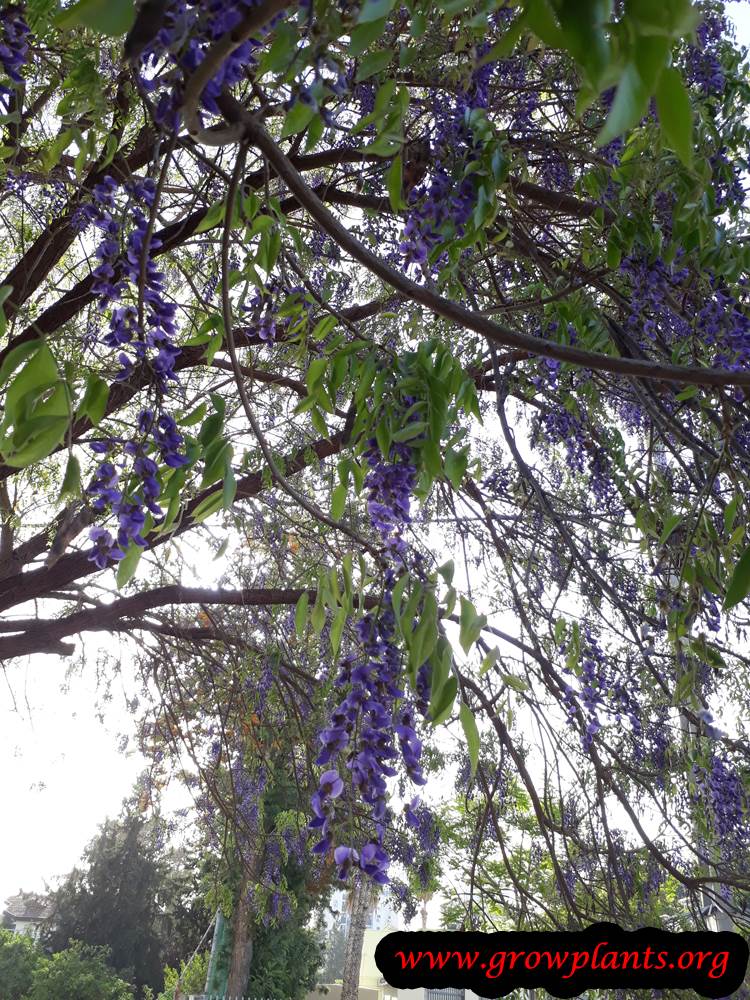
- Flower Appearance: Drooping sprays of fragrant pea-shaped flowers in light to dark purple
- Edibility: Ornamental – the flowers are not eaten
Detailed Blooming Overview
Aptly named the tree wisteria, this small legume tree carries drooping sprays of fragrant purple pea flowers in spring and summer. It fixes nitrogen and its blooms draw bees.
Flower Characteristics
- Purple pea-shaped flowers, light to dark.
- Held in fragrant, drooping sprays (racemes).
Bloom Care & Thinning
- Pollination: By bees.
- Enjoying the bloom: Fragrant and nectar-rich – a lovely pollinator draw.
Pests, Diseases & Troubleshooting
Overview: The African tree wisteria is a hardy leguminous tree (Fabaceae) and is generally robust and pest-resistant. Aphids on soft new growth are the routine nuisance, with scale, mealybugs and leaf-eating caterpillars occasional, and borers only on stressed wood. Its most real risk is root or collar rot in heavy, waterlogged soil. Vigorous growth and good drainage keep it healthy; pests are mostly minor.
Quick Troubleshooting Overview
| Issue / Pest | Main Symptom | Primary Solution |
|---|---|---|
| Aphids | Honeydew and sooty mould on new shoots | Water blast, insecticidal soap, predators |
| Scale / mealybugs | Bumps or cottony masses, sticky, ants | Horticultural oil, insecticidal soap, control ants |
| Caterpillars | Chewed leaves and defoliated shoots | Handpick, Bacillus thuringiensis |
| Borers | Frass and dieback of branches | Prune out, keep tree vigorous |
| Root / collar rot | Wilting and dieback in wet soil | Improve drainage; avoid waterlogging |
Common Pests & Management
- Aphids (Aphididae):
- Symptoms: Colonies on soft new shoots and flower stalks curl growth and leave honeydew and sooty mould.
- Prevention & Control: Hose them off, spray insecticidal soap or neem on young growth, and encourage ladybirds and lacewings; control ants.
- Scale insects (Coccidae / Diaspididae):
- Symptoms: Immobile brown or waxy bumps on twigs and leaf undersides; soft scales leave honeydew and sooty mould.
- Prevention & Control: Prune heavily encrusted wood, apply horticultural oil to smother crawlers, and control the ants that tend them.
- Mealybugs (Pseudococcidae):
- Symptoms: White cottony masses in branch forks and leaf axils with honeydew and sooty mould.
- Prevention & Control: Spray insecticidal soap or horticultural oil, wash off colonies, and manage ants.
- Leaf-eating caterpillars (various Lepidoptera):
- Symptoms: Chewed and skeletonised leaves and defoliated shoots from caterpillar feeding.
- Prevention & Control: Handpick where reachable, tolerate light damage on an established tree, and use Bacillus thuringiensis on young larvae.
- Borers (Cerambycidae / Buprestidae):
- Symptoms: Tunnels, frass and dieback in branches, usually attacking stressed or damaged wood.
- Prevention & Control: Keep the tree vigorous and well-watered, prune out and destroy infested wood, and avoid bark injury.
Diseases & Fungal Issues
- Root and collar rot (Phytophthora / Pythium spp.):
- Symptoms: Wilting, thinning canopy and branch dieback in heavy, poorly drained or overwatered soil, with dark rotted roots or collar.
- Treatment & Management: Plant in free-draining soil, avoid waterlogging and deep planting, water deeply but infrequently, and remove severely affected trees.
- Leaf spot (Cercospora / Phyllosticta spp.):
- Symptoms: Brown spots and blotches on leaves in prolonged wet weather, occasionally causing early leaf drop.
- Treatment & Management: Rake and destroy fallen leaves, improve airflow, and use copper only if it recurs.
- Sooty mould ((saprophytic fungi)):
- Symptoms: A black superficial coating on leaves growing on aphid, scale and mealybug honeydew.
- Treatment & Management: Control the sap-suckers producing the honeydew; the mould then weathers away.
Growing Difficulties & Abiotic Problems
- Waterlogging / root rot:
- Cause & Symptoms: Heavy, wet soil suffocates roots and invites rot – the main real risk for this tree.
- Correction Strategy: Plant on free-draining ground, avoid low wet spots, and never overwater established trees.
- Frost sensitivity when young:
- Cause & Symptoms: Young trees are tender to hard frost, though they toughen with age.
- Correction Strategy: Shelter and mulch young trees in cold areas; mature trees are more frost-hardy.
- Chlorosis:
- Cause & Symptoms: Waterlogged or very alkaline soil yellows the foliage.
- Correction Strategy: Improve drainage and soil; apply iron chelate only if a deficiency is confirmed.
What Helps – Products & Tools
For tree wisteria keep insecticidal soap and horticultural oil for aphids, scale and mealybugs, and Bacillus thuringiensis for occasional caterpillars; copper is rarely needed. The decisive measure is cultural – free-draining soil and unstressed, vigorous growth to keep rot and borers away.