Plant Profile & Key Characteristics
Also known as: Faba bean, Broad bean, Field bean, Tic bean, Tick bean, Horse bean
Overview: Fava (broad) bean is a fast-growing, upright annual legume 20-70 cm (8-28 in) tall, grown for its edible beans, pods, young leaves and flowers, and as a nitrogen-fixing crop. It is a cool-season crop grown across many climates (USDA zones 2-11 depending on planting season).
Quick Specifications
| Specification | Attribute |
|---|---|
| Plant Type / Life Cycle | Annual (legume) |
| Mature Size | 20-70 cm (8-28 in) tall |
| Growth Rate | Fast |
| Root System | Taproot with nitrogen-fixing root nodules |
| Toxicity | Edible (see favism note) |
| Hardiness | USDA zones 2-11 (season-dependent) |
Growth Form & Structure
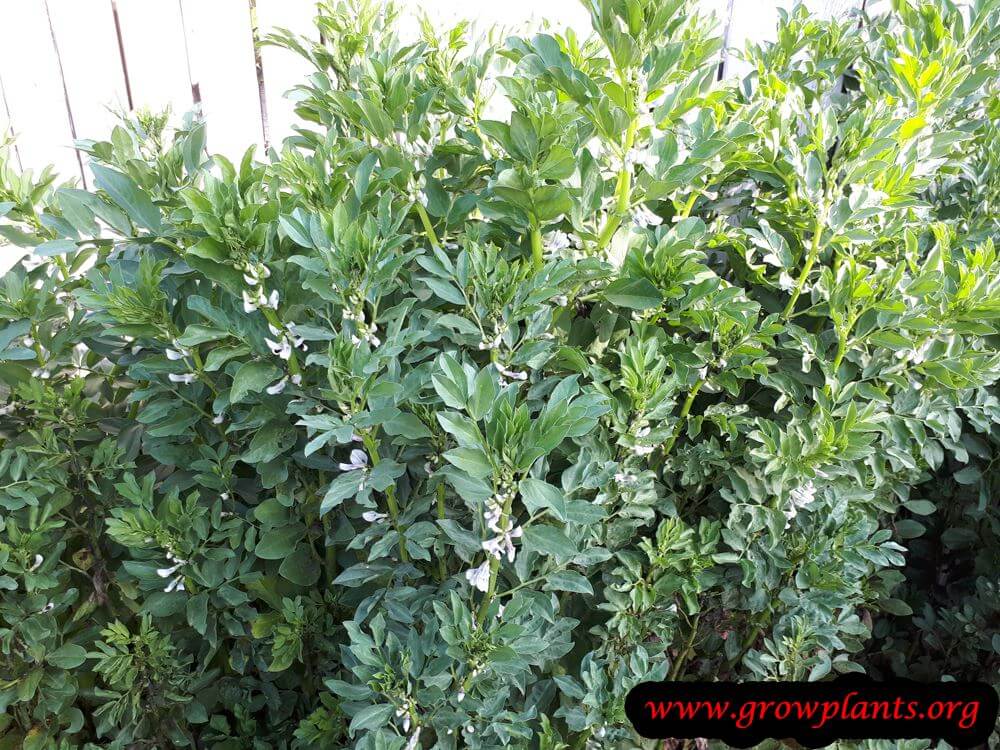
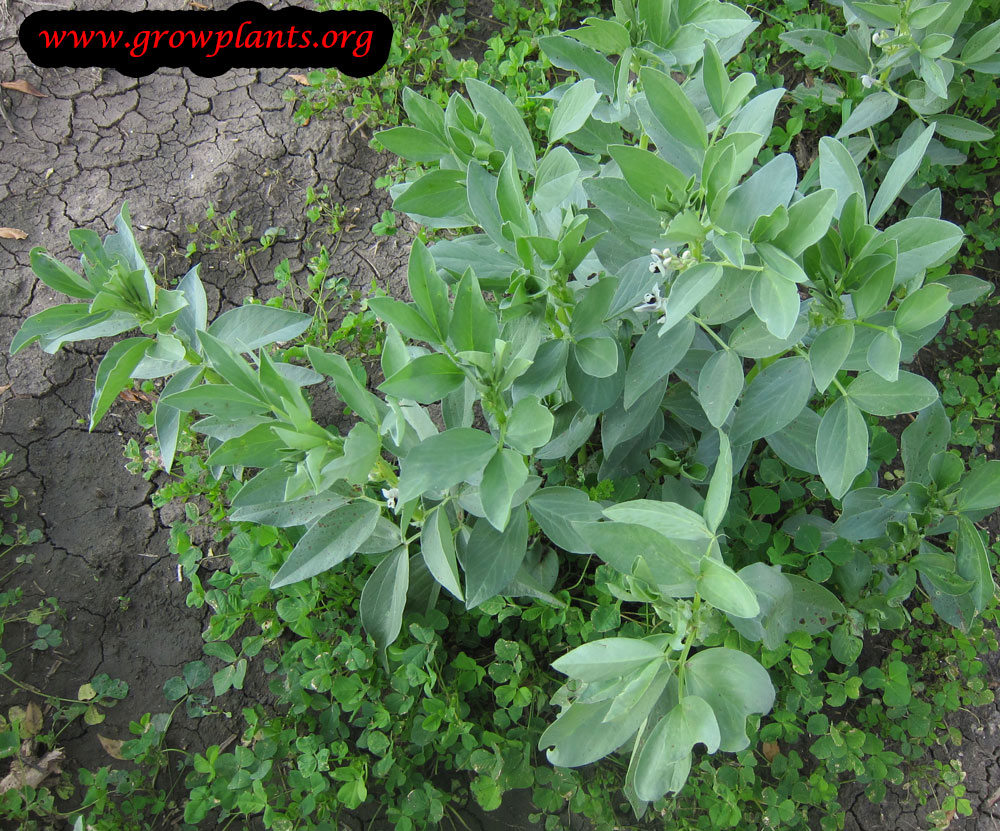
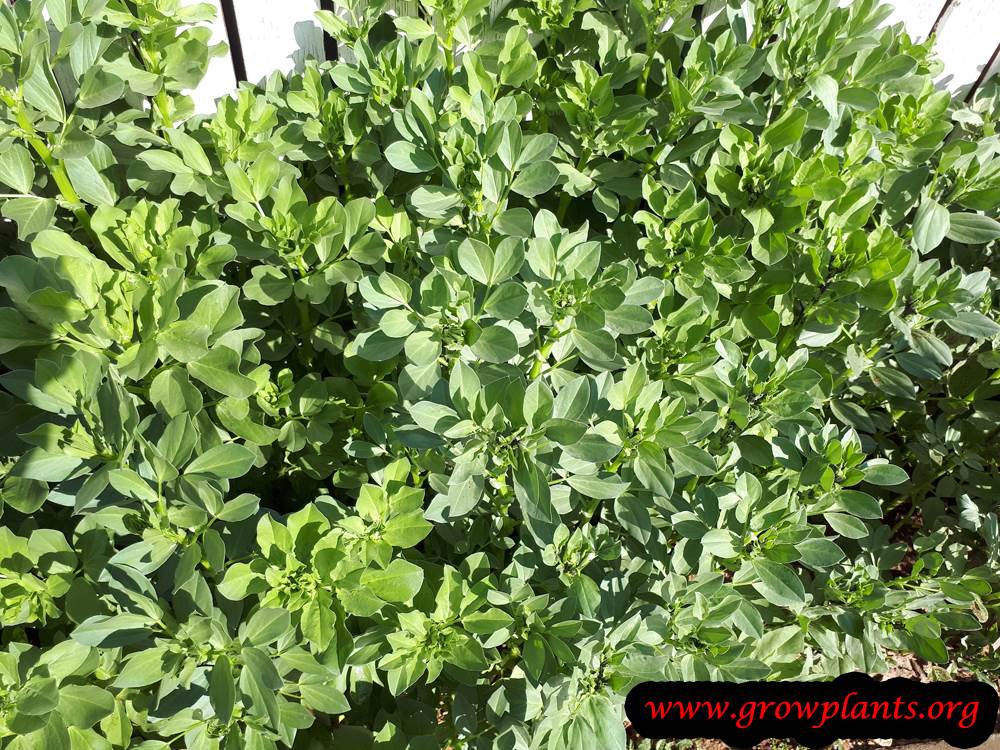
- Height & Spread: Erect at 20-70 cm (8-28 in); plants support one another when grown close; container-friendly.
- Growth Habit & Form: Upright, sturdy-stemmed annual herb.
- Lifespan & Maturity: Annual; bears pods in about 3-4 months from seed.
Anatomy & Physical Features
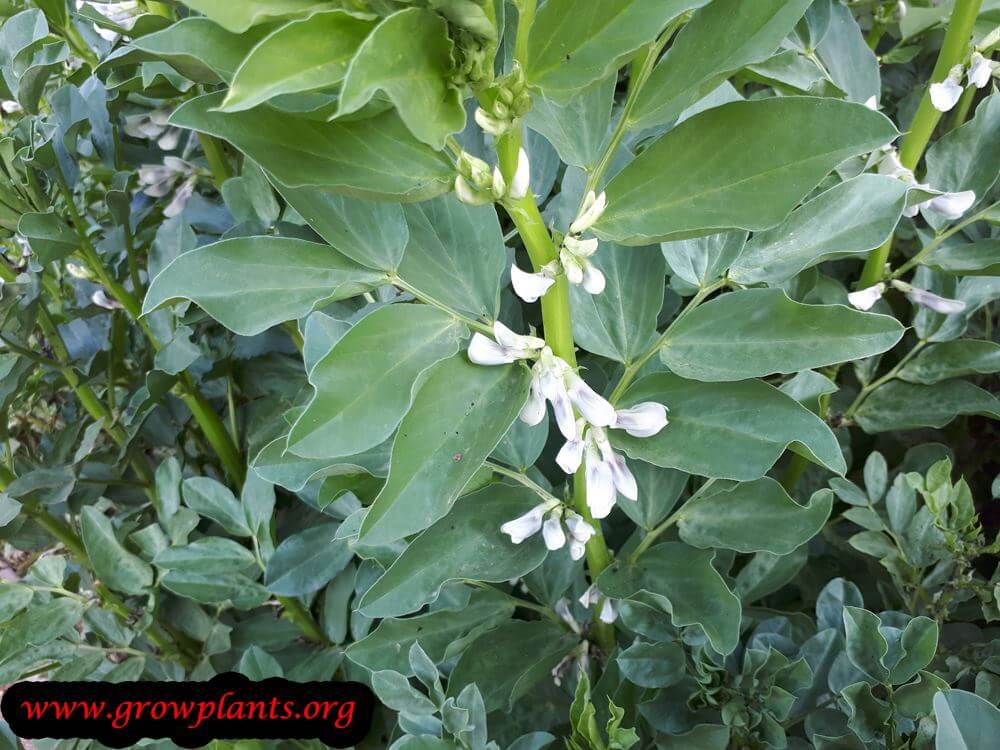
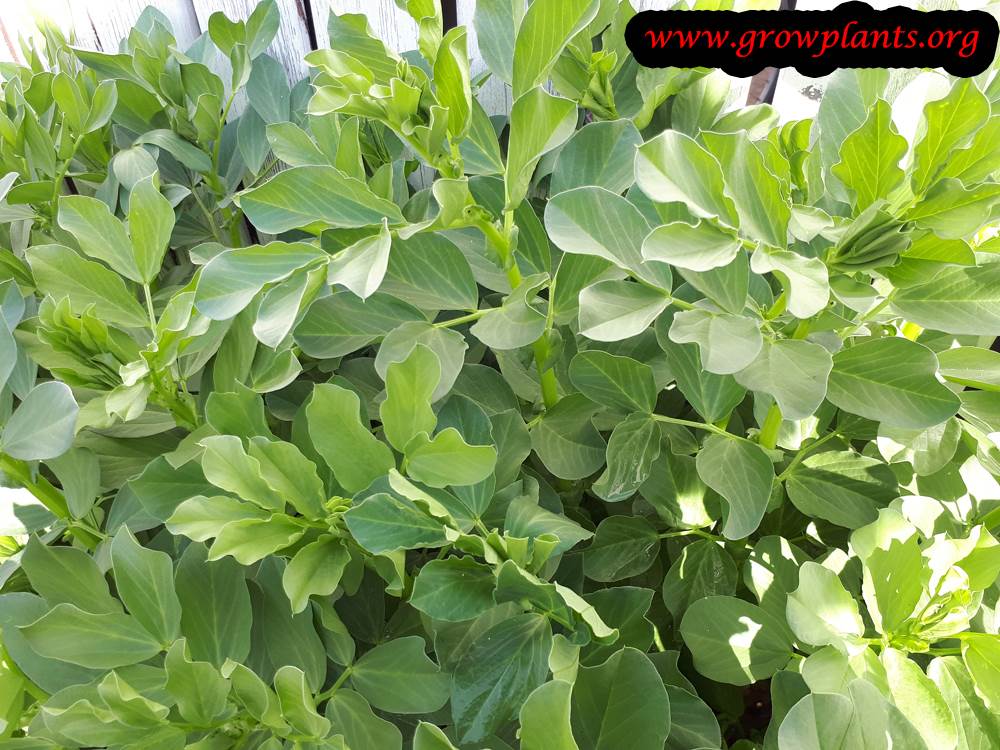
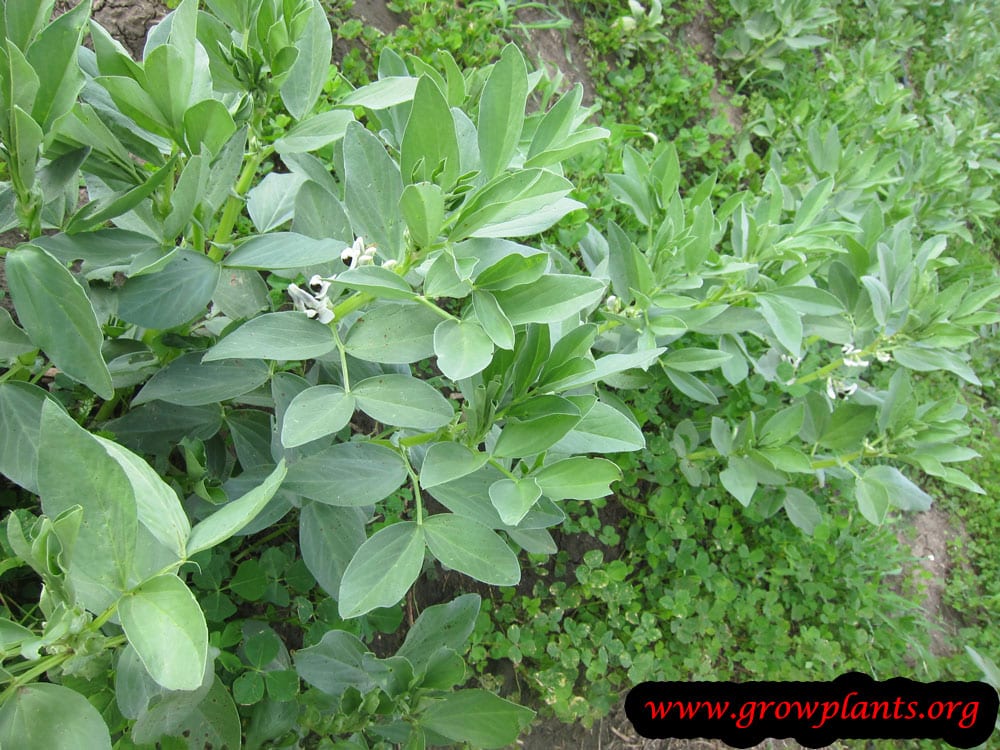
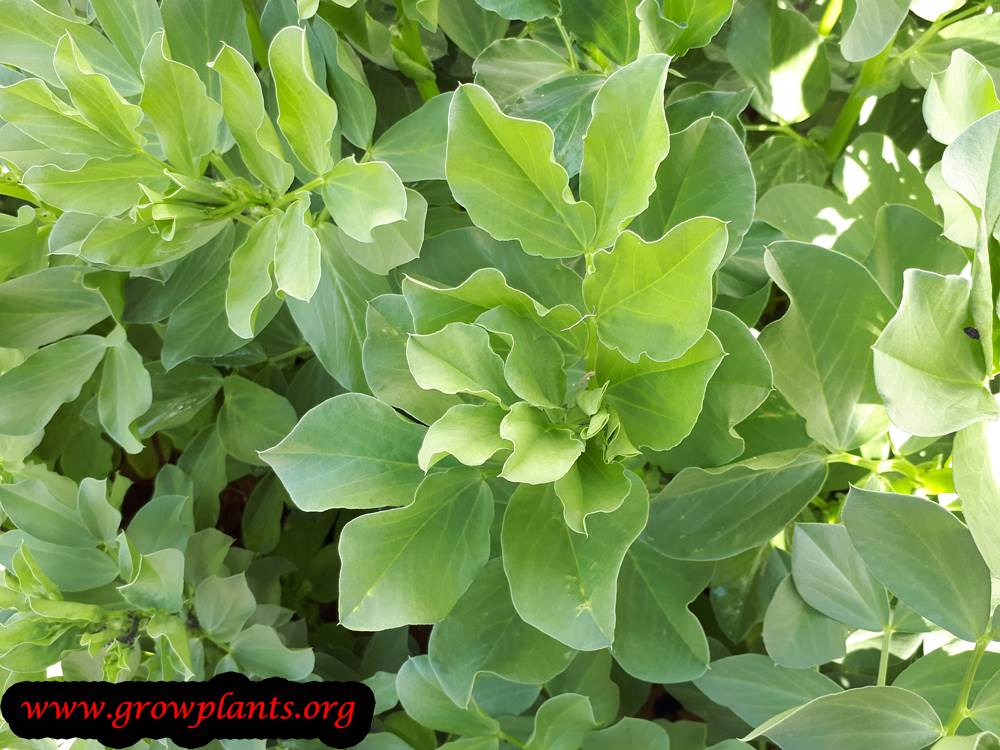
- Leaves & Foliage: Green, edible elliptic leaflets, sometimes pointed at the tip.
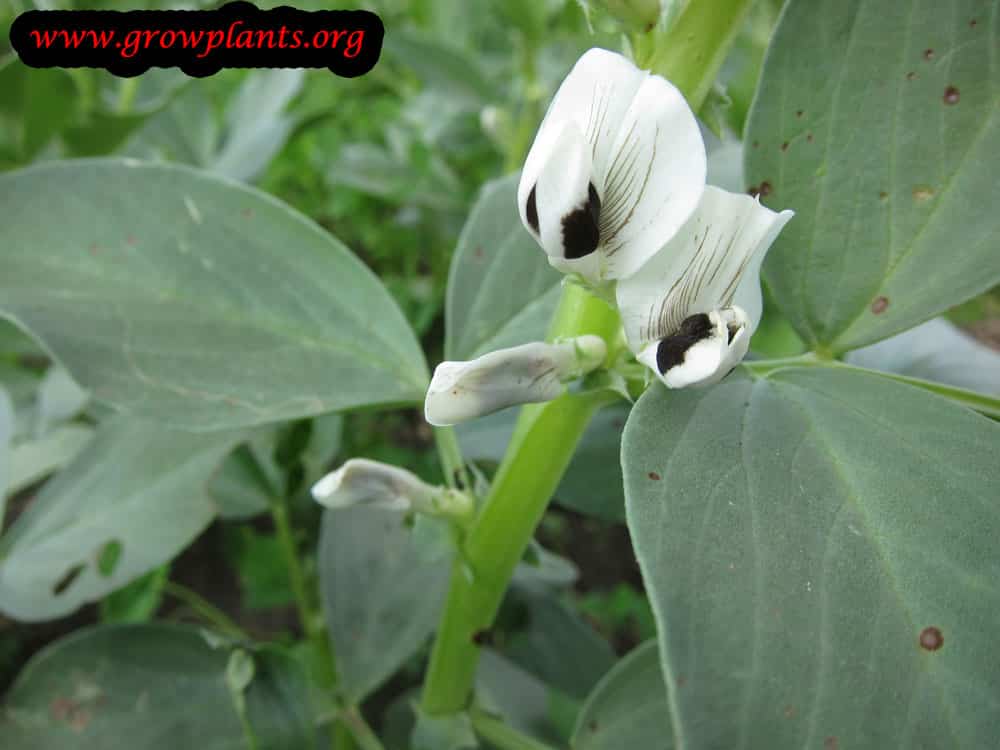
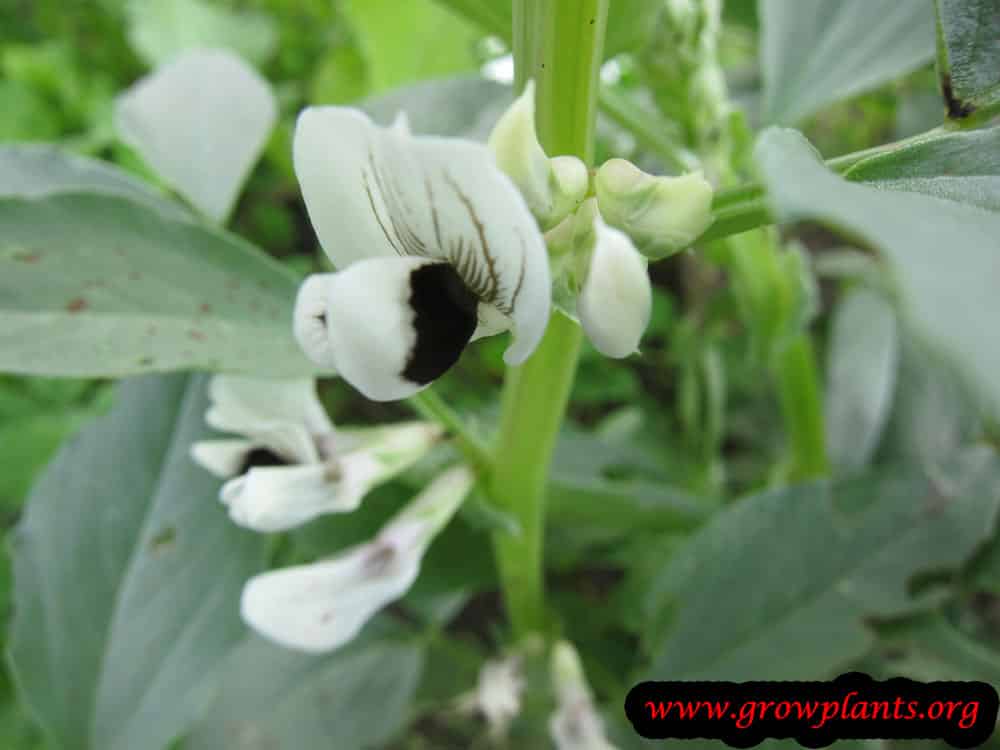
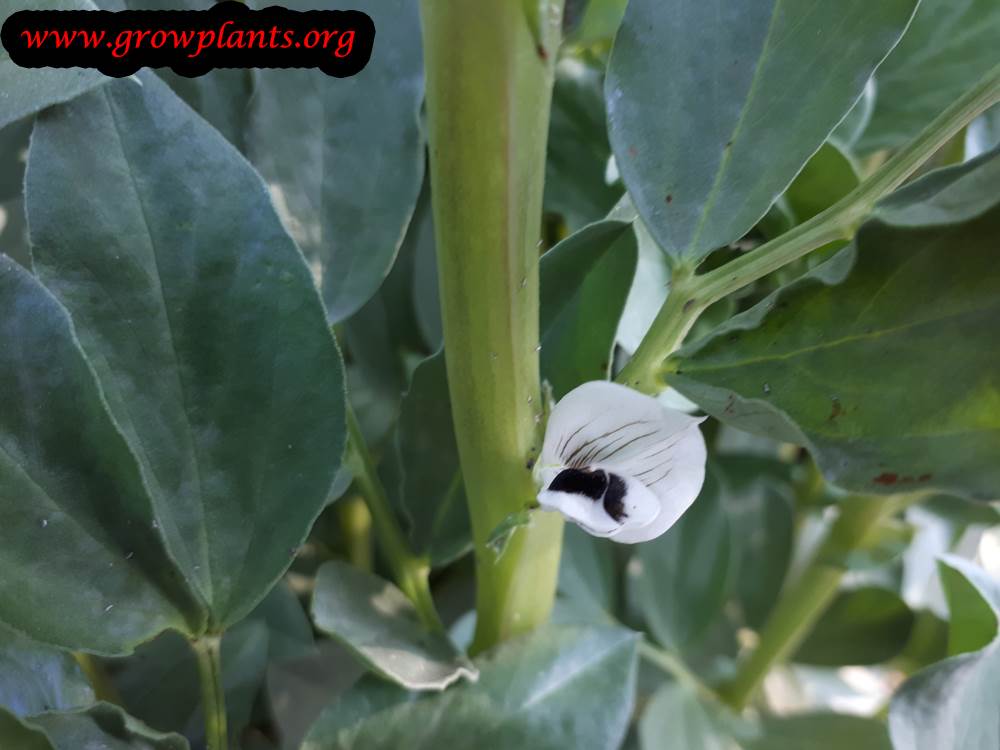
- Flower Characteristics: Edible white pea-type flowers with a black blotch and a lightly sweet taste.
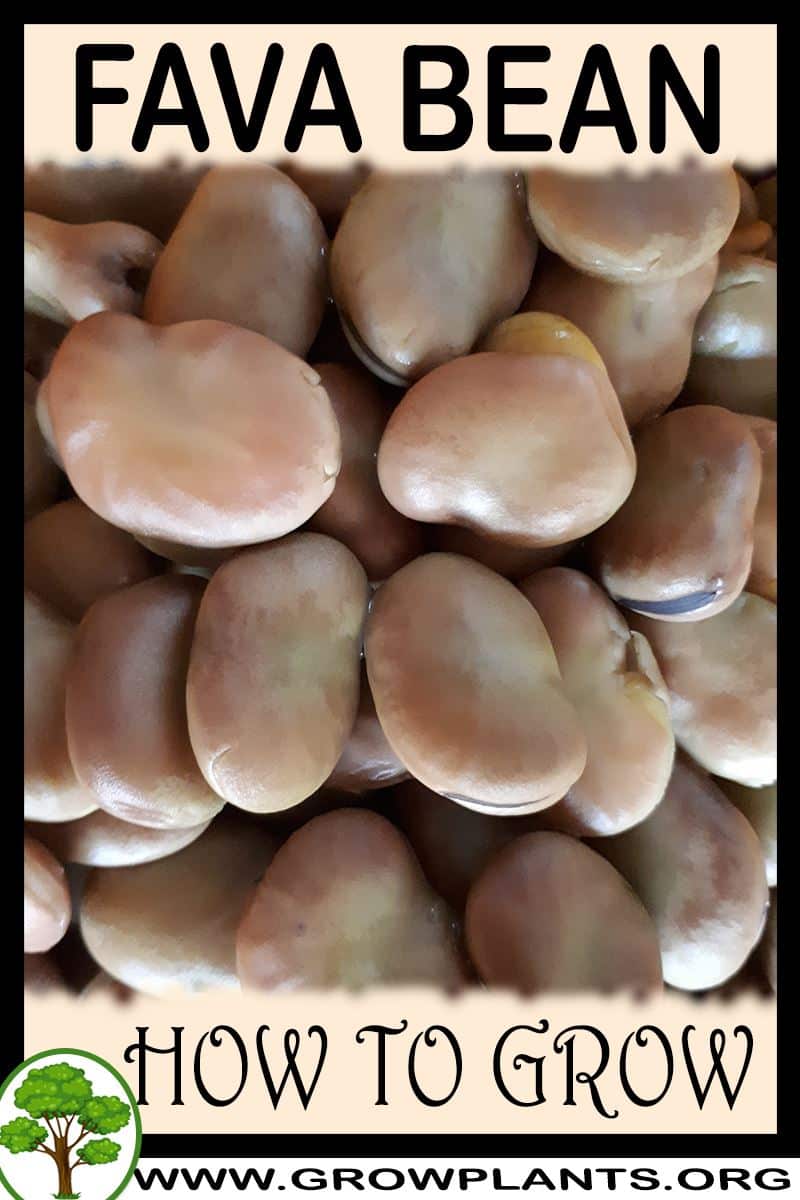
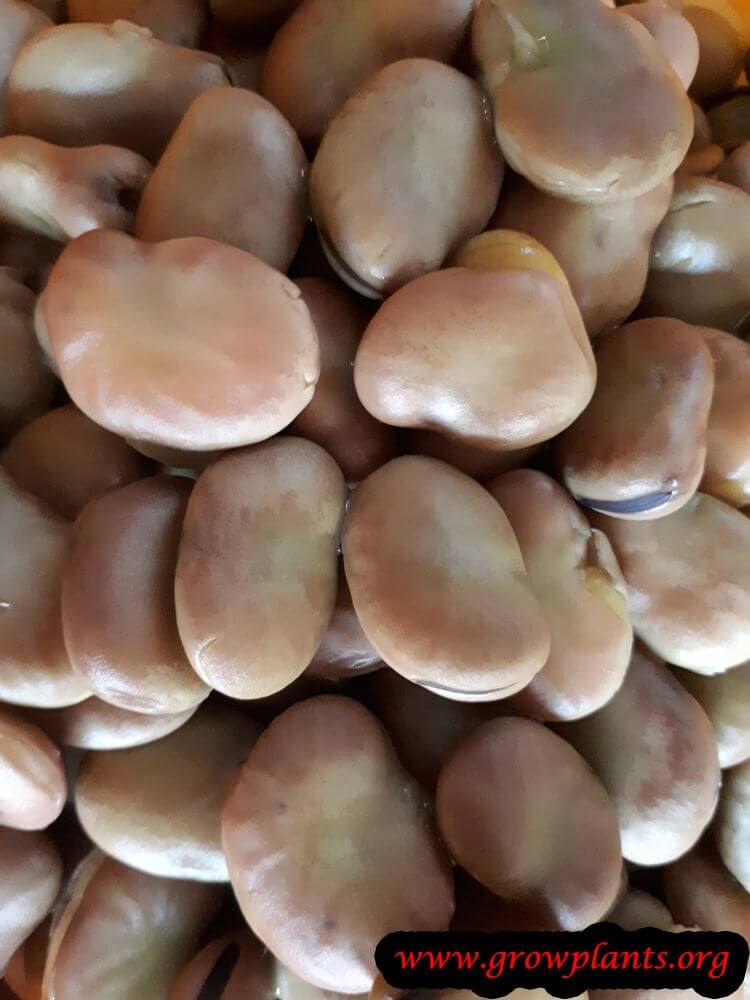
- Fruit Profile: Oval beans borne in edible green pods, eaten green or mature.
Primary Uses & Landscape Value
- Edible Uses: Beans eaten raw (young) or cooked (falafel and other dishes); young pods, leaves and flowers are also edible.
- Functional & Ornamental Roles: Nitrogen-fixing cover / green-manure crop and cool-season vegetable.
Note: Botanical name: Vicia faba.
Care Guide: Planting, Soil & Watering
Overview: Fava (broad) bean is a fast-growing, cool-season annual legume for full sun that prefers rich, heavy soil kept steadily moist. As a nitrogen fixer it is not a heavy feeder, but it needs consistent water and some support as the pods fill.
Quick Care Requirements
| Requirement | Ideal Condition |
|---|---|
| Planting Season | In the cool season – autumn-to-winter in mild zones (10b-11), spring-to-early-summer in colder zones (2-10a) |
| Growth Rate | Fast |
| Soil Type | Rich, heavy, well-draining |
| Soil pH | Neutral, around 6.0-7.0 |
| Water Need | Moderate to High (no drought) |
Planting & Establishment
- Best Planting Season: Sow or plant in cool weather – autumn to winter in warm zones (10b-11), or spring to early summer in colder zones (2-10a).
- How to Plant:
- Hole Preparation: Plant into rich, well-worked soil; space plants close together so they support one another, or provide stakes and string.
- Soil Amendments: Dig in compost or well-rotted organic matter; as a legume it fixes its own nitrogen, so avoid heavy nitrogen feeding.
- Planting Depth: Set seedlings at the depth they were growing; sow seed about 2-5 cm deep.
- Growth Speed & Expectations: A fast grower reaching 20-70 cm (8-28 in) and cropping within a few months.
Soil, Watering & Drainage Care
- Soil Mix & Drainage Needs: Prefers a rich, heavy soil that holds moisture yet still drains; avoid waterlogging, which rots the roots.
- Watering Schedule & Technique:
- Young / Newly Planted: Keep the soil evenly moist while plants establish and grow.
- Established: Water regularly and generously, especially as the plants flower and set pods.
- Seasonal Adjustments: Water more in warm, dry spells; the cool growing season usually supplies much of the moisture.
Climate, Light & Hardiness
Fava (broad) bean is a cool-season annual legume for Mediterranean, desert, subtropical and temperate gardens, grown in full sun. It is one of the more frost-hardy legumes - the dataset gives zones 2–10a for spring sowing and 10b–11 for autumn sowing - but heat, not cold, is usually the limiting factor.
Quick Climate Specifications
| Climate Zones | Mediterranean, desert, subtropical, temperate (cool-season crop) |
|---|---|
| USDA Hardiness Zones | Approximately 2–10a spring-sown, 10b–11 autumn-sown (per dataset) |
| Optimal Temp Range | Approximately 15–20 °C / 59–68 °F |
| Cold Damage Begins | Flowers and young pods are set back by hard frost below roughly −2 °C / 28 °F, though hardened foliage takes more |
| Approx. Survival Minimum | Hardened plants survive brief frost to around −6 °C / 21 °F (some overwintering types more); varies by cultivar, age and exposure |
| Frost Tolerance | Moderate |
| Light Conditions | Full sun |
| Wind Tolerance | Low–Moderate (tall stems benefit from support) |
Sunlight & Light Exposure
Optimal Light Setup
Give full sun for sturdy stems and good pod set; in warm regions the crop is timed for the cooler half of the year rather than the heat of summer.
Temperature Extremes & Hardiness
USDA Hardiness & Regional Limits
Commonly grown as an annual, but its hardiness still shapes timing: in cold-winter zones (about 2–10a) it is spring-sown, while in frost-free and mild zones (10b–11) it is autumn-sown to crop through the cool season. Cold limits when it can stand outdoors rather than whether it survives at all.
Cold Damage & Frost Sensitivity
Hardened plants tolerate light frost, which is why autumn sowing works in mild areas, but open flowers and forming pods are more tender than the foliage and are damaged by sharper freezes.
Extreme Heat Tolerance
Heat is the real limit: sustained temperatures above roughly 27 °C / 81 °F cause flower drop and poor pod set, so the crop is grown to mature before high summer.
Wind, Humidity & Microclimate
Wind Tolerance
Tall, brittle stems are prone to wind-rock and lodging; sheltered rows, or plants set close so they support one another, hold up better.
Microclimate Recommendations
An open, sunny, cool-season slot with some shelter from strong wind gives the steady mild conditions this crop prefers.
Growing in Pots, Balconies & Indoors
The fava (broad) bean is a sturdy, upright annual that crops well in a deep pot on a sunny balcony or patio – and a compact sowing can pod on a very bright windowsill. It is not a houseplant.
Quick Details
- Container Size: About 15-30 L (4-8 gal), a deep pot; taller types like a cane or two for support
- Indoor Suitability: Not a deep-indoor houseplant; can pod on a very sunny, bright sill
- Best Spot: Full sun – the sunniest balcony, patio or windowsill you have
- Soil & Drainage: Aerated, organic-rich mix – peat or coir with perlite or vermiculite; must drain freely
- Watering in Pots: Keep the mix consistently moist, especially at flowering and podding; never waterlogged
Indoors & On the Windowsill
- Houseplant limits: Not a true houseplant – it needs strong direct sun that a room interior cannot give.
- Windowsill growing: On the brightest, sunniest sill a short sowing can crop in a deep pot; support taller stems with a cane.
- Note: Raw beans are not safe to eat – cook them first.
On a Balcony or Patio
- Light, heat & wind: Give it the sunniest spot you can. Walls, railings and paving reflect heat, so pots dry quickly – check moisture daily in warm weather, and shelter tall growth from wind.
- Support: Stake or ring taller plants on exposed balconies so wind does not rock or snap them.
Choosing the Pot, Soil & Long-Term Care
- Pot & drainage: A 15-30 L pot with strong drainage holes; skip a standing water saucer to avoid root rot. Terracotta breathes and dries fast; glazed or plastic holds moisture longer.
- Potting mix: Use a well-aerated, organic-rich mix – peat or coir blended with perlite or vermiculite for free drainage.
- Feeding: Potted plants lose nutrients as watering leaches them, so feed more often than in open ground. As a legume it fixes much of its own nitrogen, so favour a low-nitrogen feed richer in phosphorus and potassium.
- Annual crop: Grown fresh each season – clear the pot and replant rather than repotting.
Fertilizing & Feeding
This is a light feeder: as a legume it fixes much of its own nitrogen, so rely on soil organic matter and only a light balanced feed, leaning on potassium as pods fill.
Quick Fertilizing Specs
| Feeding Level | Light – a legume that fixes much of its own nitrogen. |
|---|---|
| young_feeding | A modest balanced feed as seedlings establish. |
| mature_feeding | Light feeding that leans on potassium as pods fill. |
| Main Nutrient Priority | Balanced nutrition with restrained nitrogen; potassium at pod fill. |
| Best Feeding Period | Through the active growing season. |
| Organic Options | Compost or well-rotted organic matter worked into the bed. |
| Soil pH | Near neutral to slightly acidic suits most legumes. |
| Reduce/Stop Feeding | Ease off as the crop matures and pods dry. |
| Micronutrients | Rarely needed; correct only if a deficiency shows. |
Feeding by Growth Stage
Establishment after sowing
Settle young seedlings and encourage steady early root and shoot growth.
| Nutrient direction | A modest, balanced complete fertilizer; lean on soil organic matter rather than heavy feeding. |
|---|---|
| Timing | As seedlings emerge and begin active growth. |
| Frequency | A light feeding as the seedlings establish, no more than the young plants need. |
| Fertilizer types | Balanced complete fertilizer, Compost or well-rotted organic matter worked into the bed |
| Precautions | Avoid pushing tender seedlings with strong fertilizer; water it in well. |
Leafy vegetative growth
Build a healthy leafy framework without forcing soft, pod-poor growth.
| Nutrient direction | Go easy on nitrogen – as a legume this plant fixes much of its own; favor a balanced feed with restrained nitrogen. |
|---|---|
| Timing | Through the main flush of leafy growth before flowering. |
| Frequency | Light, spread-out feedings during active growth. |
| Fertilizer types | Balanced complete fertilizer, nitrogen kept modest |
| Precautions | Excess nitrogen delays flowering and drives leaves over pods. |
Flowering, pod set and harvest
Support flowering, pod set and seed fill for a full harvest.
| Nutrient direction | Shift toward potassium as flowers and pods form while keeping nitrogen modest. |
|---|---|
| Timing | From first flowering through pod and seed fill. |
| Frequency | Light feeding that leans on potassium as pods develop. |
| Fertilizer types | Balanced fertilizer supplying adequate potassium |
| Precautions | Keep watering steady during pod fill; do not overfeed with nitrogen now. |
Nutrient Deficiency Signs & Corrections
Overall pale, yellow-green foliage and weak growth even on reasonable soil.
| Possible causes | Poor rhizobial nodulation, so little nitrogen is being fixed, Cold or waterlogged soil suppressing root and nodule activity, Genuinely low soil nitrogen on very poor ground |
|---|---|
| Appears first on | Older, lower leaves first. |
| What to check | Dig a root and look for pink, active nodules, Soil drainage and temperature, Whether the seed or bed carried the right legume inoculant |
| Possible correction | Ensure the right rhizobia are present, improve drainage and warmth, and give only a modest balanced feed if the ground is truly poor. |
Yellowing between the veins of the youngest leaves while the veins stay green.
| Possible causes | High or alkaline soil pH locking up iron and manganese, Waterlogged or cold roots reducing micronutrient uptake, Occasionally low available iron or manganese in the soil |
|---|---|
| Appears first on | New growth at the shoot tips. |
| What to check | Soil pH, Drainage and watering habits, Whether symptoms follow cool, wet spells |
| Possible correction | Correct soil pH toward the plant’s preferred range, improve drainage, and if it persists apply a chelated iron or manganese product per its label. |
Browning, scorched margins on older leaves, worst as pods and seeds fill.
| Possible causes | Low soil potassium, Sandy soils where potassium leaches readily, Drought stress concentrating demand during pod fill |
|---|---|
| Appears first on | Older, lower leaves. |
| What to check | Soil test for potassium, Soil texture and leaching, Watering consistency during pod fill |
| Possible correction | Use a balanced fertilizer that supplies adequate potassium and keep watering steady through pod fill. |
Scorched leaf edges, wilting, or white crusting on the soil despite adequate water.
| Possible causes | Over-application of fertilizer, Poor leaching in containers or heavy soil, Letting the root zone dry out between heavy feeds |
|---|---|
| Appears first on | Leaf margins and tips; container plants first. |
| What to check | Recent fertilizer amounts, Drainage, Soil crusting or white surface residue |
| Possible correction | Ease off feeding, water thoroughly to flush excess salts from the root zone, then feed only lightly. |
Pruning, Training & Seasonal Maintenance
Fava (broad) bean is a cool-season annual legume that needs almost no cutting except for one genuinely valuable operation: pinching out the soft growing tip once the lowest flowers have set pods. This removes the tender shoot that aphids (the noted pest, especially blackfly) colonise and redirects energy into filling the pods rather than adding more leaf. It is an upright, non-twining crop that supports itself best when grown in a block, and it is harvested out at the end of a single cool season, so there is no structural, seasonal or renewal pruning beyond tipping and sanitary removal.
Pruning & the Edible Harvest
Fava bean gives edible beans, pods, young leaves and sweet flowers. The one purposeful cut — pinching out the growing tip once the lowest flowers have set pods — channels energy into filling the beans and strips out the aphid-prone soft tips, so it moderately improves the bean yield. Harvesting young leaves and flowers is a secondary crop that competes slightly with pod fill, and tipping too early (before pods set) costs flowers.
Quick Pruning & Maintenance Specs
| Pruning Tolerance | Low need — one purposeful tip pinch, otherwise none |
| Primary Pruning Window | When the lowest trusses have set pods |
| Typical Frequency | Once (tipping), plus sanitary removal |
| Main Objective | Deter aphids and channel energy into pod fill |
| Young Plant Priority | None — let it grow and flower |
| Mature Plant Priority | Pinch out the tip at first pod set; remove infested tips |
| Best Tool Type | Fingertips or precision snips |
Pruning by Plant Age & Size
Newly Established
No cutting. Grow the plants close (about 10–15 cm apart) so they lean on and support each other; this block planting is the main “support” strategy for the 20–70 cm stems.
Young / Formative
No training system is used. Allow the upright stems to flower from the base upward; support the outside of a block with string and stakes rather than pruning to shape.
Mature / Established
When the lowest flower clusters have set young pods, pinch out the top 8–10 cm of each main stem. This is the classic fava-bean tip: it strips out the aphid-magnet soft growth and pushes the plant to fill existing pods rather than keep extending.
Seasonal Pruning Schedule
Post-Flowering
Objective: aid pod fill and cut aphid pressure. Remove: the soft growing tips once lower pods have set. Do NOT remove: the flowering and pod-bearing lower stem. Expected response: fatter, faster-filling pods and fewer blackfly. Fruiting impact: strongly positive when timed at first pod set; too early it costs flowers, too late it wastes energy on excess tip growth.
Ongoing Sanitary
Objective: control aphids and disease. Remove: aphid-crusted tips and any mildewed lower leaves. Do NOT remove: healthy foliage shading and feeding the pods.
Structural Pruning & Training
There is no framework to build. Keep the block upright with a perimeter of stakes and string; individual stem selection is not part of growing this crop.
Special Growth to Remove
The one deliberate removal is the growing tip at pod set, as above. Otherwise simply pull aphid-infested tips. The whole plant is cleared once cropping finishes; the roots, carrying nitrogen nodules, are best cut off and left in the soil.
Container & Small-Space Pruning
In a deep planter, grow several plants together for mutual support and still tip them at pod set. The confined block may need a cane-and-string corral more than open-ground rows do.
Tools
Fingertips are enough to pinch the soft tips; precision snips suit removing infested growth cleanly. No coarse tools are relevant to this soft annual.
Tool Hygiene & Disease Risk
Routine: clean snips suffice. Increase care where chocolate spot or rust is present — remove and bin affected leaves rather than composting, and wipe the blade so spores are not carried to healthy plants.
Cut Placement & Technique
Pinch cleanly just above a leaf node when tipping; remove infested or diseased leaves back to the stem. Avoid tearing the hollow stem, which invites rot.
Post-Pruning Care
Keep moisture up during pod fill — the plant likes generous, even water at this stage. No feeding is needed after tipping. Keep watching for aphids on any regrowth below the pinch.
Common Pruning Mistakes
- Tipping too early, before pods have set, which sacrifices flowers and lowers yield.
- Never tipping, leaving soft tips to fuel blackfly infestations.
- Stripping healthy lower leaves that are needed to fill the pods.
- Composting chocolate-spot-infected foliage instead of binning it.
When NOT to Prune
Do not tip before the lowest flowers have set pods, and do not remove foliage during flowering except aphid-infested tips. Beyond the single tip pinch, leave the plant alone until harvest.
Recommended Tools (by task)
- precision_snips — for tipping the growing points and removing aphid-infested or diseased tips cleanly.
- soft_ties_stakes — string and stakes to corral the self-supporting block against wind and heavy pods.
Pruning Troubleshooting
| Problem | Possible Cause | What to Check | Corrective Action |
| Heavy blackfly on the tips | Soft growing points left in place | Whether lower pods have set yet | Pinch out the tips once lower pods set; remove infested growth |
| Tall, leafy plants with poor pod fill | Not tipped; energy still going to growth | Ratio of new tip growth to filling pods | Tip at pod set to redirect energy into the pods |
| Plants flopping and pods soiled | Block unsupported in wind | Perimeter staking and spacing | Corral the block with stakes and string |
Propagation Guide
Broad beans are grown only from their large seed, sown direct where they are to crop, and the site’s soak-and-sow routine gives fast, even emergence. They are partly cross-pollinated by bees, so saved seed is mostly uniform but can show some variation between plants.
Quick Propagation Specs
| Best Propagation Method | Seed, direct-sown |
| Propagation Difficulty | Easy |
| Seed True-to-Type | Mostly uniform; some bee cross-pollination |
| Best Propagation Season | Autumn to mid-winter in zones 10b–11; late winter to spring in zones 2–10a |
| Seed Germination Time | 5–20 days |
| Germination Temperature | Cool, about 5–20°C (41–68°F) |
| Seed Sowing Depth | 2–5 cm (about 1–2 in) |
| Nursery Spacing | About 10×15 cm (4–6 in) |
Growing from Seed
Seed Handling & Viability
Dry the harvested seed at room temperature and store it; sow whole, undamaged beans.
Dormancy & Pre-Sowing Treatment
There is no true dormancy. The site pre-soaks seed for 24–48 hours, changing the water every few hours, to hasten germination.
Sowing Season
Sow autumn to mid-winter in zones 10b–11, and late winter to spring in zones 2–10a — in cooler zones it is often better started mid-to-late winter under cover.
Sowing Depth & Spacing
Sow 2–5 cm (about 1–2 in) deep at roughly 10×15 cm (4–6 in) spacing. Grown close together the plants help support one another.
Germination Conditions
Keep the soil moist in full sun; a little humidity helps, and average-to-plentiful water (rain is ideal) suits germination. Broad beans show hypogeal germination, keeping the growing point below soil, which adds to their cold tolerance.
Germination Time
Seedlings emerge in about 5–20 days depending on soil warmth.
Seedling Care
Grow on in cool weather, full sun, moist soil and higher humidity.
Bloom & Edible Flower Guide
Quick Details
- Bloom Season: Autumn and winter in mild areas; spring where winters are frosty
- Time to First Bloom: Around ten to fifteen weeks from sowing, so autumn-sown plants flower in late winter to spring
- Flower Appearance: White pea-shaped flowers marked with a distinctive black blotch on the wings
- Edibility: Edible, lightly sweet, and good raw scattered through salads
Detailed Blooming Overview
Fava, or broad bean, is one of the pea family’s genuinely useful edible flowers. The white blooms, each set off by a velvety black spot, are carried in clusters where the leaves meet the stem and have a gentle sweet flavour that suits a salad. They are also strongly scented and much loved by bees, which do most of the pollinating alongside visiting flies.
Flower Characteristics
- White flowers with a bold black blotch on each side, in the classic pea shape.
- Lightly sweet and pleasant to eat raw.
- Fragrant and very attractive to bees.
Bloom Care & Thinning
- Pollination: Handled mainly by bees, with flies also visiting; good visits improve pod set.
- Harvesting flowers vs pods: Take a few flowers for the kitchen and leave the rest if you also want a bean crop.
- Pinching the tips: Once the lower clusters are flowering well, pinching out the soft growing tips helps set and, handily, removes the growth that aphids most favour.
Bloom Health & Protection
- Black bean aphid on flowering tips: Colonies pile onto the soft tops just as the plant flowers; pinching out the tips is the classic remedy, and an insecticidal soap or neem oil helps if numbers climb, worth keeping gentle since the flowers may be eaten.
- Chocolate spot: In damp, crowded conditions this brown-speckling fungal disease can mar flowers and pods; open spacing and good airflow are the first defence, with a suitable fungicide only if it takes hold.
Fruit & Uses
The fava (broad) bean is unusually versatile: the seeds (beans), the young pods, the leaves and the flowers are all eaten. The beans are the main crop – eaten green and raw when very young, or, more commonly, cooked – while pods, leafy tops and the lightly sweet flowers are used in salads and cooked dishes.
Quick Edible Specs
| Edible Parts | Seeds (beans), young pods, leaves, flowers |
|---|---|
| Main Use(s) | Culinary – beans cooked (including falafel) or eaten raw when young; young pods eaten fresh; leaves in salad or cooked; flowers raw in salad |
| Eaten Raw or Cooked | Young beans, tender leaves and flowers can be raw; mature beans are cooked |
| Preparation Required | Mature beans: shell and cook (many cooks also skin each bean); young pods and greens: rinse |
| Harvest Season | Beans/pods in winter, spring and summer; leaves and flowers alongside the plant’s flowering |
| Time to First Harvest | A few months from sowing (see Sowing) |
| Safety/Toxicity Caveat | Fava beans can trigger a serious reaction (favism) in people with G6PD deficiency; mature beans should be cooked |
Seeds, Pods & Nuts
The oval beans grow inside pods that are themselves edible while young and fresh. Beans are eaten green and raw while small and immature, but are most often shelled and cooked – boiled, added to dishes, or ground for falafel. Harvest runs through winter, spring and summer depending on planting time.
Leaves & Greens
The green, elliptic leaves are picked fully grown but still tender and used in salads or cooked like other greens. Taking the leafy tips is a traditional way to use the plant, but heavy leaf-picking reduces the plant’s growth and its bean yield.
Flowers & Flower Buds
The white-and-black, pea-shaped flowers have a lightly sweet taste and are eaten raw in salads. Flowers picked for eating will not go on to set pods, so leave enough blooms if beans are the goal.
Preparation, Uses & Safety
Young immature beans, tender leaves and the flowers can be used raw; mature beans are shelled and cooked (many cooks also slip off each bean’s tough skin). Important safety note: fava beans can cause favism – a serious breakdown of red blood cells – in people who are G6PD-deficient, who should avoid them entirely; others should cook mature beans before eating. This is a food-safety caveat, not a medical claim.
Pests, Diseases & Troubleshooting
Overview: The broad bean is dominated by two problems: black bean aphid, controlled by pinching out the tips, and chocolate spot (Botrytis fabae), controlled by spacing and airflow. Pea-and-bean weevil notching, bean seed fly, rust and root/foot rots are secondary and largely managed by early sowing into warm soil, good drainage and sanitation.
Quick Troubleshooting Overview
| Issue / Pest | Main Symptom | Primary Solution |
|---|---|---|
| Black bean aphid | Black colonies smothering tips/pods | Pinch out tips; beneficials; soap |
| Pea & bean weevil | U-shaped notches on leaf edges | Sow early; fleece seedlings; tolerate |
| Bean seed fly | Poor, patchy germination | Warm soil; no fresh manure; module-sow |
| Chocolate spot | Brown blotches on leaves/pods | Spacing; airflow; potassium; drainage |
| Rust | Rust-brown pustules on leaves | Sanitation; airflow; sulfur if valued |
| Foot/root rot | Blackened stem base, wilting | Rotate; well-drained soil |
Common Pests & Management
- Black bean aphid (Aphis fabae):
- Symptoms: Dense colonies of black aphids smothering the growing tips, flower clusters and pods, causing curling, stunting, honeydew and sooty mould and reducing pod set; a classic and damaging broad-bean pest.
- Prevention & Control: Pinch out the soft growing tips once the lower trusses have set pods — this removes the aphids’ favourite site and is the key cultural control. Encourage ladybirds, lacewings and hoverflies, and sow early so plants are strong before aphids peak. Knock colonies off with water or use insecticidal soap if numbers explode before beneficials arrive.
- Pea and bean weevil (Sitona lineatus):
- Symptoms: Distinctive U-shaped notches eaten around the leaf margins by the adult weevils, mainly on young plants; the root-feeding larvae damage the nitrogen-fixing nodules below ground. Established plants usually outgrow it.
- Prevention & Control: Sow into warm soil for fast, vigorous early growth that shrugs off notching, and protect seedlings with fleece; keep plants growing strongly with good conditions. Damage is rarely worth spraying — healthy plants tolerate the leaf notching and go on to crop well.
- Bean seed fly (Delia platura):
- Symptoms: Poor, patchy germination with seedlings failing to emerge or coming up blind and distorted; small white maggots tunnel into the germinating seeds and shoots, worst in cold, wet, manure-rich soil.
- Prevention & Control: Sow into warm, well-prepared soil to speed germination, avoid fresh manure just before sowing, and start seed in modules to transplant sturdy plants. Firm, warm seedbeds and quick emergence are the best defence against this soil pest.
- Thrips (Thysanoptera):
- Symptoms: Silvery-white flecking and streaking on leaves and petals, tiny black frass dots, and distorted new growth; slender pale-to-dark insects that dart away when disturbed. Thrips can also spread viruses.
- Prevention & Control: Remove weeds and spent flowers that harbour them, and use blue sticky traps to monitor and reduce adults. Encourage predatory mites, minute pirate bugs and lacewings. Where control is needed, spinosad or insecticidal soap applied to growing points in the evening helps; rotate products to avoid resistance.
Diseases & Fungal Issues
- Chocolate spot (Botrytis fabae):
- Symptoms: Reddish-brown spots and blotches on leaves, stems and pods that can merge into large dark dead areas in wet, humid, crowded conditions; severe attacks blacken and kill plants and cut yields sharply.
- Treatment & Management: Space plants and keep beds weed-free and open for airflow, avoid overcrowding and excess nitrogen, and ensure good drainage and adequate potassium. Remove badly affected debris. In wet regions a protectant fungicide helps, but airflow, spacing and balanced feeding are the main controls.
- Broad bean rust (Uromyces viciae-fabae):
- Symptoms: Numerous small rust-brown pustules scattered over the leaves and stems, later with dark spore masses; heavy infection yellows and defoliates plants late in the season.
- Treatment & Management: Remove and destroy affected crop debris, avoid overcrowding, and grow in an open, airy site; late sowings often escape the worst. Sulfur can be used on a valued crop, but rust usually arrives late enough to have little effect on yield.
- Downy mildew (Peronosporaceae):
- Symptoms: Pale yellow angular blotches on upper leaf surfaces with a grey-purple downy growth on the undersides in damp weather; leaves brown and fall. Distinct from powdery mildew, which coats the upper surface.
- Treatment & Management: Space and prune for airflow, water early in the day at the base, and remove infected leaves promptly. Rotate plantings and clear debris. In persistent cases a copper-based fungicide, applied preventively before wet spells, limits spread; overhead watering should be avoided.
- Foot and root rot (Fusarium / Pythium spp.):
- Symptoms: Blackening and rotting of the stem base and roots with wilting, yellowing and collapse, worst in cold, wet, compacted or repeatedly cropped soil.
- Treatment & Management: Rotate beans onto fresh ground each year, improve drainage and structure, and avoid sowing into cold, waterlogged soil; remove affected plants. Good drainage and rotation are the only reliable controls.
Growing Difficulties & Abiotic Problems
- Waterlogging and cold, wet soil:
- Cause & Symptoms: Yellowing, stunting, poor nodulation and rotting in heavy, waterlogged or cold soil; germination is poor and root disease follows.
- Correction Strategy: Grow in well-drained soil improved with organic matter, raise beds on heavy ground, and time sowings to avoid the coldest, wettest spells; warm soil gives strong, disease-resistant plants.
- Failure to set pods / flower drop:
- Cause & Symptoms: Plenty of flowers but few pods, from cold, drought at flowering, or poor pollinator activity.
- Correction Strategy: Keep plants evenly watered through flowering and podding, mulch to hold moisture, and encourage bees; avoid drought stress at the critical flowering stage.
- Manganese / boron and nutrient issues:
- Cause & Symptoms: Interveinal yellowing or ‘marsh spot’ (brown centres in the seeds) from manganese deficiency, common on high-pH or peaty soils.
- Correction Strategy: Maintain balanced fertility and a suitable pH, add organic matter, and correct confirmed deficiencies with a foliar micronutrient feed; steady, balanced nutrition prevents most disorders.
What Helps — Products & Tools
Broad beans need few products: pinch out tips and use insecticidal soap for black bean aphid, fleece to protect seedlings from weevil and bean seed fly, and manage chocolate spot and rust mainly by spacing, airflow and sanitation, with sulfur or a protectant fungicide only on a valued crop in a wet season. Rotation and drainage handle the root rots.