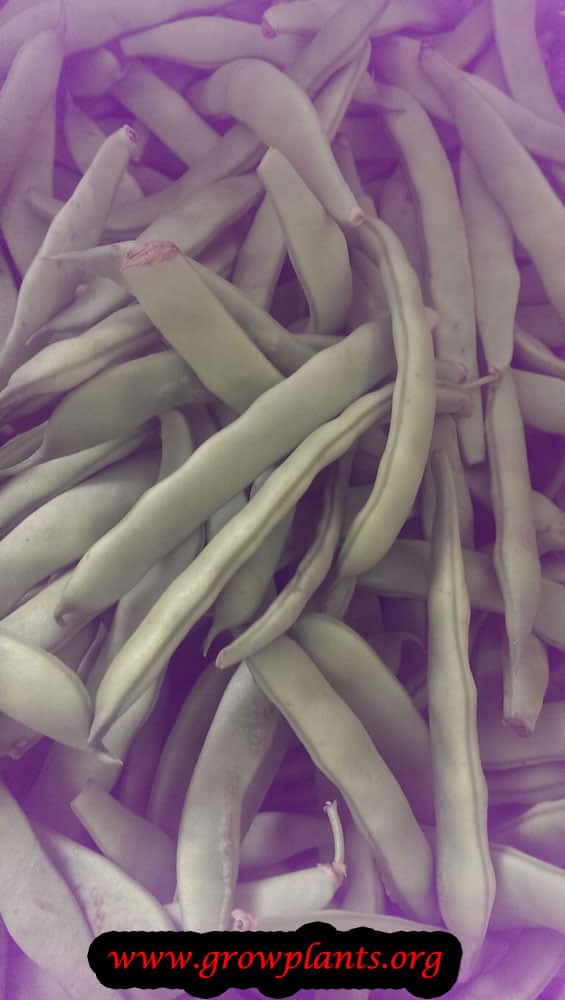
Plant Profile & Key Characteristics
Overview: A fast-growing annual legume available in low bush forms 30-80 cm (12-32 in) tall and pole (climbing) forms reaching 2-3 m (6.5-10 ft). It is grown as an edible crop for its young pods and dried beans, with pea-like flowers borne through the warm season.
Quick Specifications
| Specification | Attribute |
|---|---|
| Plant Type / Life Cycle | Annual |
| Mature Size | Bush 30-80 cm (12-32 in); pole/vine 2-3 m (6.5-10 ft) |
| Growth Rate | Fast |
| Root System | Taproot with nitrogen-fixing root nodules |
| Toxicity | Cooked pods and beans are edible; raw beans contain lectins and must be cooked |
| Hardiness | Frost-tender; grown in the warm season in USDA zones 2+ |
Growth Form & Structure
- Height & Spread: Bush cultivars stay compact at 30-80 cm (12-32 in); pole types climb 2-3 m (6.5-10 ft) up a trellis and both grow readily in the ground or in containers.
- Growth Habit & Form: Either a low freestanding bush or a twining climber that needs trellising; as a legume it fixes nitrogen at its roots.
- Lifespan & Maturity: A single-season crop — fast to flower, with young pods ready about 60 days from sowing and dry beans at around 90 days.
Anatomy & Physical Features
- Leaves & Foliage: Soft green trifoliate leaves on bushy or twining stems.
- Flower Characteristics: Purple or creamy-white pea-like (butterfly-shaped) flowers in small clusters.
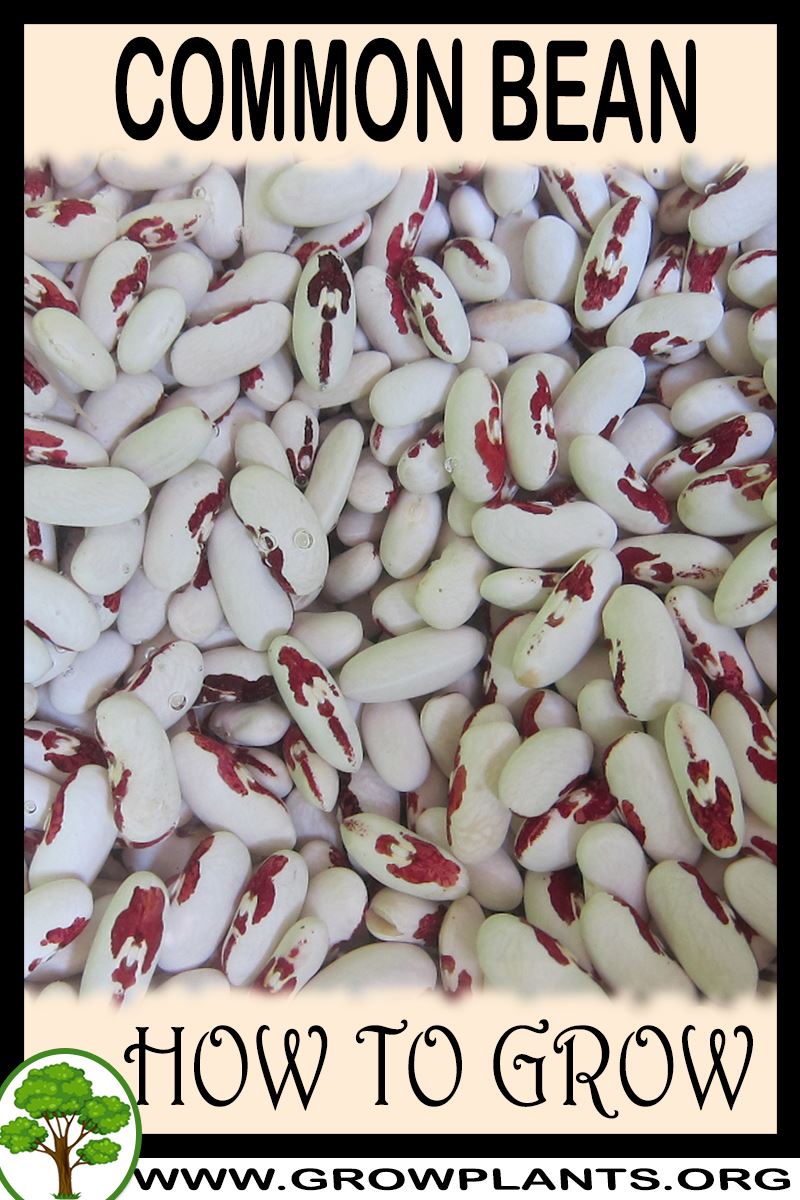
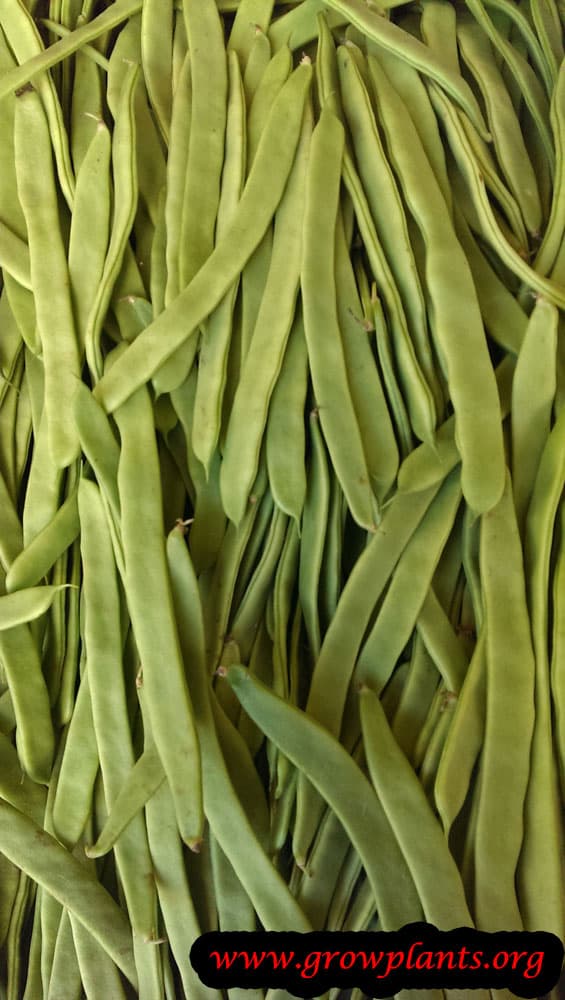
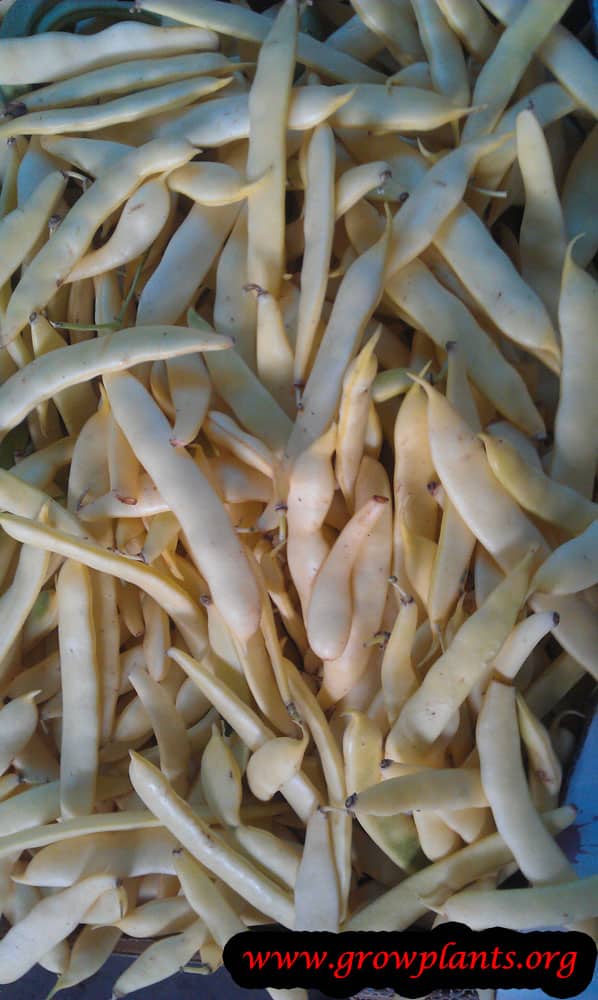
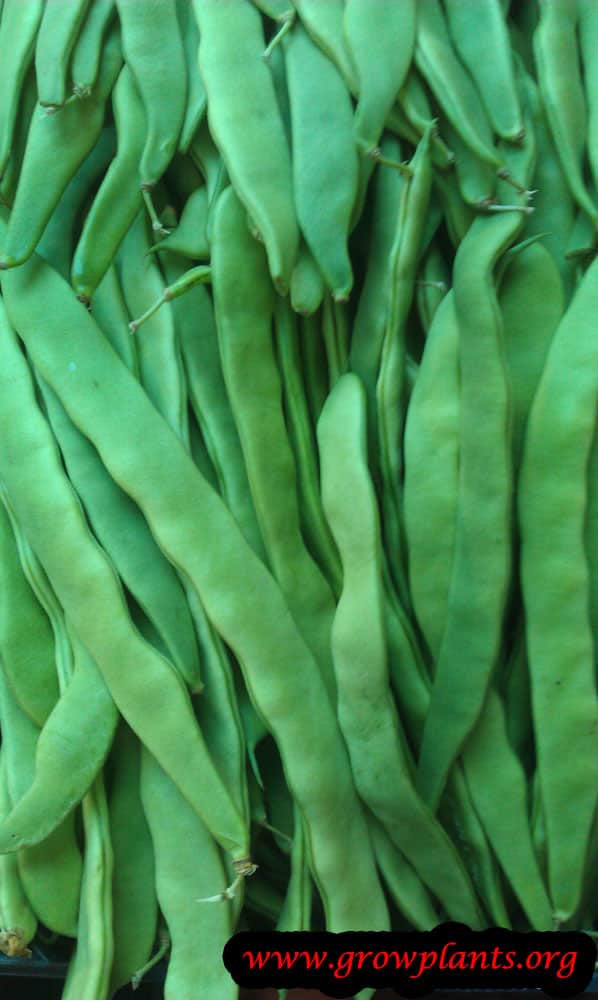
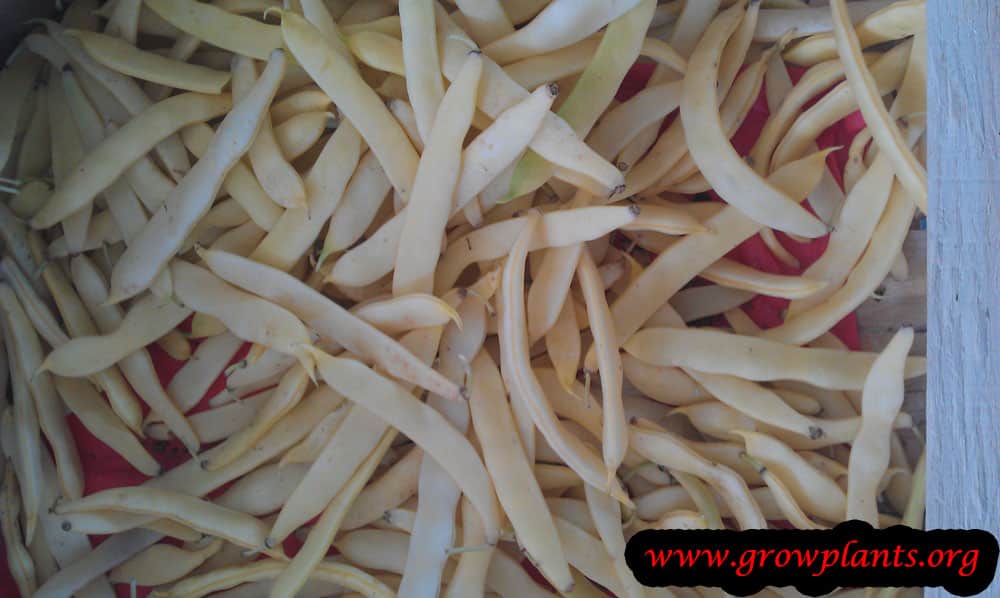
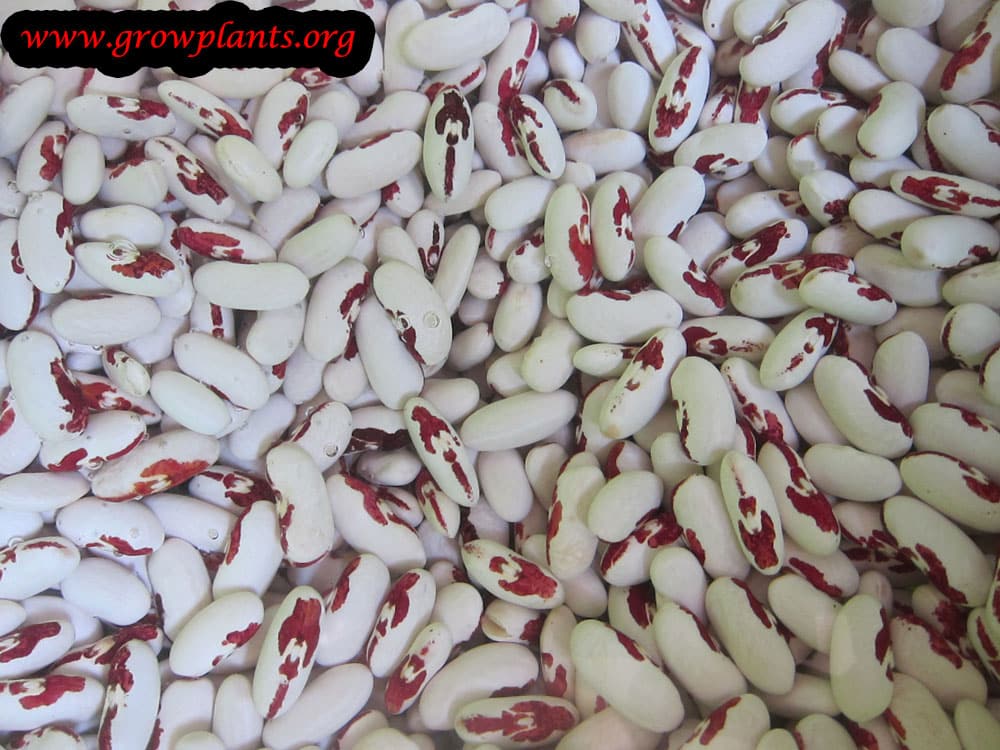
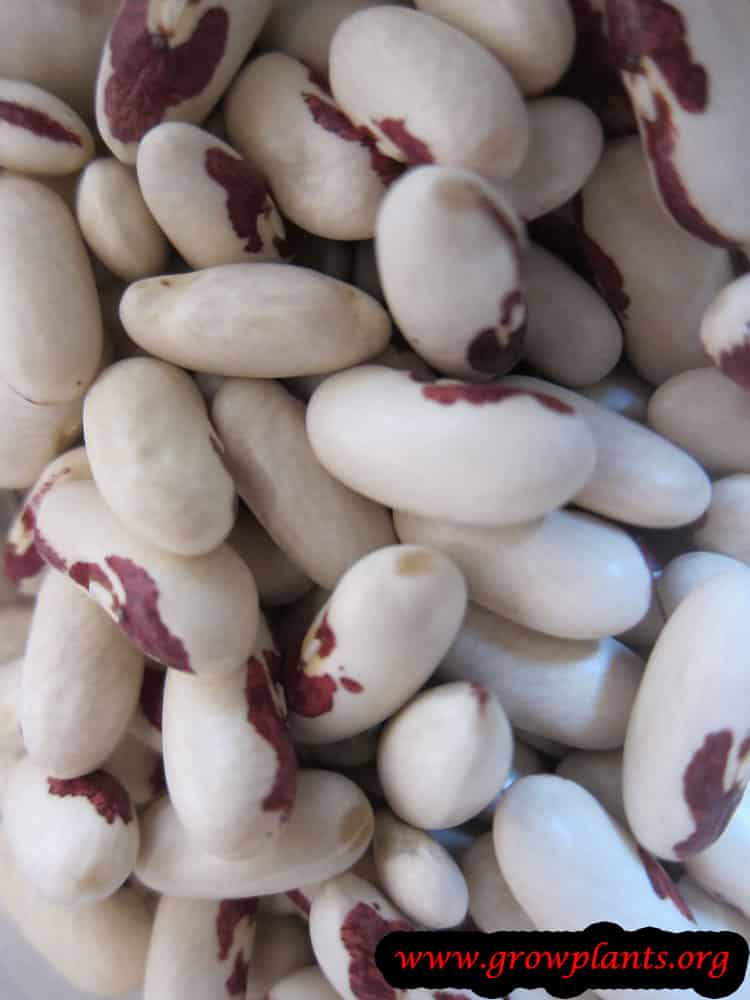
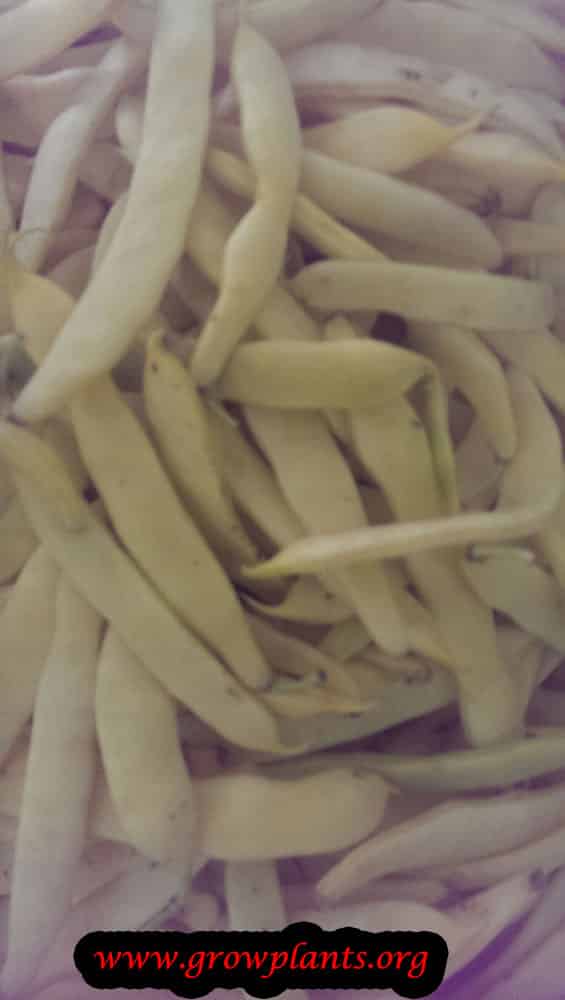
- Fruit Profile: Edible pods, green or yellow when young, holding beans that may be one colour or mottled in purple, brown, white, black or yellow.
Primary Uses & Landscape Value
- Edible Uses: Young pods cooked or stewed as green beans; mature seeds dried and cooked as pulses in soups and stews.
- Functional & Ornamental Roles: A staple vegetable-garden and container crop; as a nitrogen-fixing legume it also benefits the soil.
Care Guide: Planting, Soil & Watering
Overview: The common bean is a fast-growing, warm-season annual that needs full sun and fertile, well-drained soil. It likes steady, moderate moisture, and pole types need a trellis or support to climb.
Quick Care Requirements
| Requirement | Ideal Condition |
|---|---|
| Planting Season | In spring, after the last frost once the soil has warmed |
| Growth Rate | Fast |
| Soil Type | Fertile, well-drained loam |
| Soil pH | Neutral, about 6.0–7.0 |
| Water Need | Moderate — keep evenly moist, especially at flowering and pod set |
Planting & Establishment
- Best Planting Season: Sow or plant in spring after the last frost, once the soil is reliably warm; beans sulk and rot in cold, wet ground.
- How to Plant:
- Hole Preparation: Loosen the soil well; for climbing types set up a trellis, poles or netting at planting time so roots are not disturbed later.
- Soil Amendments: Work in compost for a fertile, free-draining bed, but go easy on nitrogen — as a legume the bean fixes much of its own.
- Planting Depth: Set transplants with the root collar at soil level; keep the stem base above the surface to avoid rot.
- Growth Speed & Expectations: Expect fast growth — bush types reach 30–80 cm and vining types 2–3 m within a single warm season.
Soil, Watering & Drainage Care
- Soil Mix & Drainage Needs: Good drainage is essential to avoid root rot; in a container use a rich, free-draining potting mix and ensure drainage holes.
- Watering Schedule & Technique:
- Young / Newly Planted: Keep the soil evenly moist while seedlings establish, but avoid waterlogging the seed bed.
- Established: Water deeply and consistently, letting the surface dry slightly between waterings; water at the base to keep foliage dry.
- Seasonal Adjustments: Increase water during hot, dry spells and through flowering and pod filling; reduce it in cool weather.
Climate, Light & Hardiness
The common bean is a fast warm-season annual grown in full sun for its edible pods and dry seed, thriving in warm days and warm soil. It is frost-sensitive, and although the site data notes it can be grown from about USDA zone 2 upward, that reflects fitting the crop into the frost-free warm season rather than any winter cold-hardiness.
Quick Climate Specifications
| Climate Zones | Tropical, subtropical, mediterranean, temperate, desert (warm-season crop) |
|---|---|
| USDA Hardiness Zones | Approximately 2 and warmer, as a warm-season annual (site data) |
| Optimal Temp Range | Approximately 18–30°C (64–86°F) |
| Cold Damage Begins | Chilled and checked below about 10°C (50°F); frost damages or kills the plant |
| Frost Tolerance | None to very low |
| Light Conditions | Full sun |
| Wind Tolerance | Low to moderate (climbers need support) |
Sunlight & Light Exposure
Optimal Light Setup
Full sun is essential for productive plants and a good pod set.
Direct Sun Requirement
It is a full-sun crop - shade reduces yield and slows ripening.
Temperature Extremes & Hardiness
USDA Hardiness & Regional Limits
The site retains a hardiness figure even though the bean is grown as an annual: it can be grown almost anywhere (from zone 2 up) provided it is sown into the frost-free part of the year. Cold, not a fixed zone, sets the limit - it is sown after the last spring frost and must mature before the first autumn frost.
Cold Damage & Winter Protection
Cool soil below about 10°C (50°F) causes poor, patchy germination; any frost damages or kills the plant. It does not overwinter outdoors where winters freeze.
Frost Sensitivity
Frost-tender at every stage - there is no useful frost tolerance, which is exactly why it is grown as a warm-season annual.
Extreme Heat Tolerance
Moderate - it loves warmth, but very high temperatures during flowering can cause blossom drop and poor pod set, so extreme heat is a real limit in hot climates.
Frost-Free Growing Season
The crop needs a frost-free run of roughly 60 days for green pods and about 90 days for dry beans; the length of the warm, frost-free season is the key climatic requirement.
Wind, Humidity & Microclimate
Dry-Air Tolerance
Grows in humid and drier climates alike, given warmth and adequate moisture.
Wind Tolerance
Climbing types need firm support; strong wind can damage foliage and topple unsupported plants.
Microclimate Recommendations
A warm, sunny, sheltered bed with warm soil at sowing gets the crop off to the best start; in short-season areas, warm the soil and sow after frost risk passes.
Growing in Pots, Balconies & Indoors
The common bean is not a true houseplant, but it grows well in a pot on a sunny balcony or patio – and a compact bush type can even crop on the brightest windowsill. Bush forms stay small; climbing forms need a tall support.
Quick Details
- Container Size: About 15-30 L (4-8 gal); a deep pot for climbing types, smaller for bush beans
- Indoor Suitability: Not a deep-indoor houseplant; a compact bush cultivar can crop on a very sunny sill
- Best Spot: Full sun – the sunniest balcony, patio or windowsill you have
- Soil & Drainage: Aerated, organic-rich mix – peat or coir with perlite or vermiculite; must drain freely
- Watering in Pots: Keep the mix evenly moist – pots dry faster than open ground; water when the surface dries, never waterlogged
Indoors & On the Windowsill
- Houseplant limits: Not a true houseplant – deep in a room the light is far too weak for this sun-loving crop.
- Windowsill growing: On the brightest, sunniest sill a compact bush cultivar can be podded in a pot; expect lighter yields than outdoors.
- Note: Raw or dried beans are not safe to eat – they must be cooked before eating.
On a Balcony or Patio
- Light, heat & wind: Give it the sunniest spot you can. Walls, railings and paving reflect heat, so pots dry quickly – check moisture daily in warm weather, and shelter tall growth from wind.
- Support: On a balcony or patio give it a trellis, netting or a cane wigwam to climb; mind the weight of large filled pots and where drainage water runs off shared balconies.
Choosing the Pot, Soil & Long-Term Care
- Pot & drainage: A 15-30 L pot with strong drainage holes; skip a standing water saucer to avoid root rot. Terracotta breathes and dries fast; glazed or plastic holds moisture longer.
- Potting mix: Use a well-aerated, organic-rich mix – peat or coir blended with perlite or vermiculite for free drainage.
- Feeding: Potted plants lose nutrients as watering leaches them, so feed more often than in open ground. As a legume it fixes much of its own nitrogen, so favour a low-nitrogen feed richer in phosphorus and potassium.
- Annual crop: Grown fresh each season – clear the pot and replant rather than repotting.
Growing this plant in a greenhouse
A greenhouse can give common bean frost protection, cold protection, humidity control and extra warmth. In the right climate it may also be kept growing through winter, depending on how much warmth and light are provided.
Greenhouse at a glance
| Greenhouse suitability | Conditional - depends on your climate |
|---|---|
| Main benefits | frost protection, cold protection, humidity control, extra warmth |
| Season extension | earlier spring & later autumn |
| Outdoor protection advisable below | about 10°C |
| Maintain greenhouse minimum | around 15°C for active growth |
| Suitable types | heated greenhouse, polycarbonate greenhouse, lean-to |
| Heating | Heating is recommended in cold climates for continuous growth. |
Related greenhouse guides
- Greenhouses: How to Choose the Right Greenhouse
- Best Greenhouse Heaters
- Greenhouse Climate Control: Temperature, Ventilation and Humidity
- Best Lean-To Greenhouses
Fertilizing & Feeding
This is a light feeder: as a legume it fixes much of its own nitrogen, so rely on soil organic matter and only a light balanced feed, leaning on potassium as pods fill.
Quick Fertilizing Specs
| Feeding Level | Light – a legume that fixes much of its own nitrogen. |
|---|---|
| young_feeding | A modest balanced feed as seedlings establish. |
| mature_feeding | Light feeding that leans on potassium as pods fill. |
| Main Nutrient Priority | Balanced nutrition with restrained nitrogen; potassium at pod fill. |
| Best Feeding Period | Through the active growing season. |
| Organic Options | Compost or well-rotted organic matter worked into the bed. |
| Soil pH | Near neutral to slightly acidic suits most legumes. |
| Reduce/Stop Feeding | Ease off as the crop matures and pods dry. |
| Micronutrients | Rarely needed; correct only if a deficiency shows. |
Feeding by Growth Stage
Establishment after sowing
Settle young seedlings and encourage steady early root and shoot growth.
| Nutrient direction | A modest, balanced complete fertilizer; lean on soil organic matter rather than heavy feeding. |
|---|---|
| Timing | As seedlings emerge and begin active growth. |
| Frequency | A light feeding as the seedlings establish, no more than the young plants need. |
| Fertilizer types | Balanced complete fertilizer, Compost or well-rotted organic matter worked into the bed |
| Precautions | Avoid pushing tender seedlings with strong fertilizer; water it in well. |
Leafy vegetative growth
Build a healthy leafy framework without forcing soft, pod-poor growth.
| Nutrient direction | Go easy on nitrogen – as a legume this plant fixes much of its own; favor a balanced feed with restrained nitrogen. |
|---|---|
| Timing | Through the main flush of leafy growth before flowering. |
| Frequency | Light, spread-out feedings during active growth. |
| Fertilizer types | Balanced complete fertilizer, nitrogen kept modest |
| Precautions | Excess nitrogen delays flowering and drives leaves over pods. |
Flowering, pod set and harvest
Support flowering, pod set and seed fill for a full harvest.
| Nutrient direction | Shift toward potassium as flowers and pods form while keeping nitrogen modest. |
|---|---|
| Timing | From first flowering through pod and seed fill. |
| Frequency | Light feeding that leans on potassium as pods develop. |
| Fertilizer types | Balanced fertilizer supplying adequate potassium |
| Precautions | Keep watering steady during pod fill; do not overfeed with nitrogen now. |
Nutrient Deficiency Signs & Corrections
Overall pale, yellow-green foliage and weak growth even on reasonable soil.
| Possible causes | Poor rhizobial nodulation, so little nitrogen is being fixed, Cold or waterlogged soil suppressing root and nodule activity, Genuinely low soil nitrogen on very poor ground |
|---|---|
| Appears first on | Older, lower leaves first. |
| What to check | Dig a root and look for pink, active nodules, Soil drainage and temperature, Whether the seed or bed carried the right legume inoculant |
| Possible correction | Ensure the right rhizobia are present, improve drainage and warmth, and give only a modest balanced feed if the ground is truly poor. |
Yellowing between the veins of the youngest leaves while the veins stay green.
| Possible causes | High or alkaline soil pH locking up iron and manganese, Waterlogged or cold roots reducing micronutrient uptake, Occasionally low available iron or manganese in the soil |
|---|---|
| Appears first on | New growth at the shoot tips. |
| What to check | Soil pH, Drainage and watering habits, Whether symptoms follow cool, wet spells |
| Possible correction | Correct soil pH toward the plant’s preferred range, improve drainage, and if it persists apply a chelated iron or manganese product per its label. |
Browning, scorched margins on older leaves, worst as pods and seeds fill.
| Possible causes | Low soil potassium, Sandy soils where potassium leaches readily, Drought stress concentrating demand during pod fill |
|---|---|
| Appears first on | Older, lower leaves. |
| What to check | Soil test for potassium, Soil texture and leaching, Watering consistency during pod fill |
| Possible correction | Use a balanced fertilizer that supplies adequate potassium and keep watering steady through pod fill. |
Scorched leaf edges, wilting, or white crusting on the soil despite adequate water.
| Possible causes | Over-application of fertilizer, Poor leaching in containers or heavy soil, Letting the root zone dry out between heavy feeds |
|---|---|
| Appears first on | Leaf margins and tips; container plants first. |
| What to check | Recent fertilizer amounts, Drainage, Soil crusting or white surface residue |
| Possible correction | Ease off feeding, water thoroughly to flush excess salts from the root zone, then feed only lightly. |
Pruning, Training & Seasonal Maintenance
Common bean is an annual crop and is not pruned in any structural sense — management depends entirely on the type. Bush (determinate) beans need essentially nothing beyond removing damaged leaves; pole (indeterminate) beans need training onto a support and, optionally, having the growing tip pinched once they top the trellis to steer energy into pods. Flowers and pods form continuously on the current growth, and regular harvesting of pods is itself the “pruning” that keeps the plant productive.
Pruning & the Edible Harvest
Common bean is not pruned in a structural sense — harvesting is the key operation, and training or tipping pole types only affects how easily you can pick. The plant has two edible stages: pick young pods continuously for green beans, which keeps new flowers and pods coming, or let a batch of pods mature and dry for shelling beans, which stops further set on those stems.
Quick Pruning & Maintenance Specs
| Pruning Tolerance | Low — annual crop, no structural pruning |
| Primary “Maintenance” Window | Through the growing season: support, tidy, and harvest |
| Typical Frequency | Ongoing — keep picking pods; guide pole types onto the support |
| Main Objective | Support pole types; keep picking; remove damaged/diseased leaves |
| Bush Type Priority | Little to nothing beyond removing damaged growth |
| Pole Type Priority | Train onto the trellis; pinch the tip at the top (optional) |
| Best Tool Type | Precision snips; ties/stakes/trellis for pole types |
| Avoid Handling During | Wet foliage (blight, rust and anthracnose spread on moisture) |
Pruning by Plant Age & Size
Seedling / Establishing
Nothing to prune. For pole types, provide the support early and guide the first tendrils onto it.
Growing / Cropping
Bush beans: remove yellowing or diseased lower leaves for airflow, and otherwise leave the plant alone. Pole beans: keep tying or guiding the vine onto its support, and once it reaches the top you may pinch the growing tip to cap height and concentrate the plant on flowering and pod set.
Structural Pruning & Training
The only “training” is supporting pole (indeterminate) types on a trellis, netting, poles or teepee — they climb by twining and simply need something to climb. Bush (determinate) types are self-supporting and need no training.
Special Growth to Remove
For pole types, pinch the terminal once it tops the support to limit height. Remove yellow or diseased lower leaves to improve airflow. There are no suckers or watersprouts. Above all, keep picking pods — harvest them before they over-mature (and before beans start to drop), because regular picking keeps new flowers and pods coming.
Container & Small-Space Pruning
Beans grow well in containers — bush types are ideal and self-supporting, while pole types need a support in the pot. Either way there is no structural pruning; just tidy damaged leaves and keep harvesting.
Tools
Precision snips are all that is needed for harvesting and removing damaged leaves; soft ties, stakes or a trellis support the pole types. No loppers, saws or shears are relevant.
Tool Hygiene & Disease Risk
The key hygiene point for beans is not tool sterilisation but handling: bean foliar diseases — bacterial blight, anthracnose and rust — spread readily on wet foliage and on hands and tools moving through a wet crop. Do not pick, tie or remove leaves while the plants are wet, and remove and destroy diseased material rather than composting it.
Cut Placement & Technique
Pinch the pole-bean tip with fingers or snips at the top of the support; snip damaged leaves cleanly at the base of the leaf stalk. Harvest pods by pinching or snipping to avoid tearing the plant.
Heavy Pruning & Rejuvenation
Not applicable. As an annual, common bean does not rejuvenate from hard cutting; when cropping declines the plant is spent and is removed, not renewed.
Post-Pruning / General Care
Keep even moisture and full sun, and keep supports secure for pole types. As a nitrogen-fixer, beans need little nitrogen; avoid working the plants when wet.
Common Pruning Mistakes
- Stripping off healthy leaves, which reduces yield — beans are not shrubs to be thinned.
- Handling, tying or picking when the foliage is wet, spreading blight, anthracnose and rust.
- Not supporting pole types, so they tangle, shade themselves and hold moisture.
- Leaving over-mature pods on the plant, which slows new flowering and set.
When NOT to Prune / Handle
Do not work, tie or pick beans when the foliage is wet (disease spread), and do not remove healthy leaves — they drive pod production.
Recommended Tools (by task)
- precision_snips — harvesting pods, pinching pole-bean tips and removing damaged leaves.
- soft_ties_stakes — supporting and guiding pole (indeterminate) types onto a trellis, poles or netting.
Propagation Guide
Common bean is an annual grown only from seed, sown directly where it is to crop — it comes true to type (open-pollinated and largely self-pollinating) and resents transplanting. The seed needs no pre-treatment but does need warm soil, as the plant is frost- and cold-sensitive. Easy.
Quick Propagation Specs
| Best Propagation Method | Seed (direct-sown) |
| Propagation Difficulty | Easy |
| Seed True-to-Type | Yes |
| Best Propagation Season | Spring, after the last frost (site) |
| Seed Germination Time | Usually about 1–2 weeks in warm soil |
| Germination Temperature | Warm soil, roughly 16–30°C (60–86°F); best near 21–27°C (70–81°F) |
| Seed Sowing Depth | About 3–5 cm (1–2 in) |
Growing from Seed
Seed Handling & Viability
Save dry, fully mature seed from pods left to ripen on the plant; it stores well kept dry and comes true.
Dormancy & Pre-Sowing Treatment
None needed — do not soak for long, as the large seed can crack; sow it dry into moist, warm soil.
Sowing Season
Spring, only after the last frost and once the soil has warmed (site: frost-sensitive).
Sowing Depth & Spacing
About 3–5 cm (1–2 in) deep; space to habit — bush types (about 30–80 cm plants) closer together, and pole/climbing types (2–3 m) trained on supports or a trellis (site).
Germination Conditions
Warm soil, roughly 16–30°C (60–86°F) and best near 21–27°C (70–81°F); cold, wet soil rots the seed. The bean germinates epigeally, lifting its cotyledons above ground.
Germination Time
Usually about 1–2 weeks in warm soil.
Seedling Care
Direct-sown seedlings need no transplanting; as a legume, an appropriate rhizobium inoculant can aid nodulation on ground new to beans.
Bloom & Flower Guide
Quick Details
- Bloom Season: Spring and summer
- Time to First Bloom: Roughly five to seven weeks after sowing, in the same season
- Flower Appearance: Purple or creamy-white pea (butterfly-shaped) flowers carried in small clusters
- Edibility: Not eaten as a flower; the plant is grown for its pods and beans
Detailed Blooming Overview
Common bean flowers quickly once the plant is growing well, opening the classic pea-family bloom with its upright banner and folded keel. Flowers appear over several weeks in flushes, and each pollinated flower sets a pod, so a steady bloom means a steady pick.
Flower Characteristics
- Purple or cream-white flowers in the typical butterfly (pea) shape.
- Held in short clusters (inflorescences) along the stems.
Bloom Care & Thinning
- Pollination: Largely self-pollinating, with bees and butterflies helping and improving set.
- Steady water at bloom: Keep moisture even while flowering; heat stress and drought are the main causes of blossom drop and poor pod set.
- Feeding: Avoid heavy nitrogen, which pushes leaves over flowers on this nitrogen-fixing crop.
Bloom Health & Protection
- Aphids on flower buds and shoot tips: They cluster on soft growth and can spoil bloom; a strong jet of water or an insecticidal soap or neem oil keeps them in check.
- Blossom drop in heat: Flowers often fall in prolonged high heat; mulch and consistent watering help the plant hold its bloom.
Fruit & Uses
The common bean is grown for two crops from the same plant: tender young pods eaten as green (snap) beans, and the mature dry seeds shelled out as dry beans. Young pods can be lightly cooked, while dry beans must be thoroughly cooked before eating.
Quick Edible Specs
| Edible Parts | Pods (young) and seeds (mature dry beans). |
|---|---|
| Main Use(s) | Culinary — young pods cooked or in stews; dry beans cooked in stews and dishes. |
| Eaten Raw or Cooked | Cooked. Young pods are cooked; dry beans must be boiled thoroughly. |
| Preparation Required | Cook. Dry beans should be soaked and then boiled fully. |
| Harvest Season | Spring / summer / autumn. |
| Time to First Harvest | Young pods within roughly two months of sowing; dry beans need about a month longer (see the growing notes). |
| Storage | Fresh pods are perishable; fully dried beans store for a long time in a cool, dry place. |
| Safety/Toxicity Caveat | Never eat raw or under-cooked dry beans — they contain lectins (phytohaemagglutinin) that cause nausea and vomiting. Boil until fully cooked. |
Seeds, Pods & Nuts
Young pods (snap beans): pick while green or yellow, slim and tender, before the seeds swell and the pod turns fibrous; cook lightly or add to stews. Dry beans: leave the pods on the plant until they mature and dry, then shell out the seeds (single- or multi-coloured). Pick before the pods shatter and drop their beans.
Harvesting
Harvest runs through the warm season. Snap beans are picked young and repeatedly, which keeps the plant productive; for dry beans, wait for the pods to dry on the plant, then shell. Pick before ripe pods split and spill.
Preparation, Uses & Safety
Young pods are cooked or stewed. Dry beans must be soaked and then boiled thoroughly: raw or under-cooked beans contain the toxic lectin phytohaemagglutinin, which causes stomach upset and vomiting — so dry beans are never eaten raw. Properly cooked, both crops are staple foods.
Pests, Diseases & Troubleshooting
Overview: Common beans are fast, productive legumes but attract a well-known set of problems: black bean aphid on the shoot tips, spider mite in hot dry spells, bean beetles chewing leaves, and a suite of seed-borne diseases – halo blight, anthracnose, rust and bean mosaic virus. The best defence is clean certified seed, crop rotation, keeping foliage dry, and encouraging the many beneficial insects that patrol a bean patch.
Quick Troubleshooting Overview
| Issue / Pest | Main Symptom | Primary Solution |
|---|---|---|
| Black bean aphid | Dense black colonies on shoot tips | Pinch tips, water jet, encourage ladybirds |
| Spider mite | Stippled bronzed leaves in dry heat | Keep watered, hose foliage, horticultural oil |
| Halo blight / bacterial blight | Water-soaked spots with yellow halos | Clean seed, avoid wet-leaf handling, rotate |
| Anthracnose | Dark sunken lesions on pods and stems | Certified seed, rotate, remove debris |
| Bean rust | Rusty pustules on leaf undersides | Airflow, resistant varieties, remove infected leaves |
| Bean mosaic virus | Mottled, puckered leaves, stunting | Resistant varieties, control aphids, remove plants |
Common Pests & Management
- Black bean aphid (Aphis fabae):
- Symptoms: Dense black colonies smother growing tips, flowers and young pods, causing distortion, honeydew and sooty mould; a classic bean pest.
- Prevention & Control: Pinch out infested soft tips, blast colonies off with water, and encourage ladybirds, lacewings and hoverflies. Insecticidal soap for heavy early attacks; sturdy plants usually outgrow it.
- Two-spotted spider mite (Tetranychus urticae):
- Symptoms: Fine pale stippling on leaves, faint webbing on undersides and leaf axils, and a dusty bronzed look in warm dry conditions. Tiny moving specks visible with a hand lens.
- Prevention & Control: Raise humidity and hose foliage regularly, as mites thrive in hot dry air; introduce predatory mites (Phytoseiulus persimilis) under cover. Treat hotspots with insecticidal soap or horticultural oil, ensuring thorough coverage of leaf undersides.
- Mexican bean beetle (Epilachna varivestis):
- Symptoms: Coppery, spotted ‘ladybird-like’ adults and spiny yellow larvae skeletonise leaves from below, leaving a lacy appearance.
- Prevention & Control: Hand-pick adults, larvae and yellow egg clusters; encourage predatory stink bugs and parasitic wasps; use floating row cover early. Neem or spinosad for heavy infestations, applied in the evening.
- Bean weevil / seed beetle (Acanthoscelides obtectus):
- Symptoms: Small beetles whose grubs bore into stored and drying beans, leaving neat round exit holes.
- Prevention & Control: Harvest promptly, dry seed thoroughly, and freeze saved seed for a few days to kill grubs; store in sealed containers.
- Whitefly (Trialeurodes vaporariorum):
- Symptoms: Clouds of tiny white moth-like insects rise when foliage is disturbed; leaf undersides carry scale-like nymphs, and honeydew fuels sooty mould.
- Prevention & Control: Hang yellow sticky traps to monitor and reduce adults; introduce the parasitic wasp Encarsia formosa under cover; keep plants unstressed. Treat with insecticidal soap or horticultural oil to leaf undersides, repeating regularly.
- Slugs & snails (Gastropoda spp.):
- Symptoms: Irregular ragged holes in leaves and soft new shoots, worst in damp shady conditions, with tell-tale slime trails at night.
- Prevention & Control: Hand-pick after dark; remove damp hiding places; set beer traps or copper barriers; encourage frogs and ground beetles. Scatter iron-phosphate pellets, which are safe around pets and wildlife, only where needed.
Diseases & Fungal Issues
- Halo & common bacterial blight (Pseudomonas savastanoi pv. phaseolicola / Xanthomonas):
- Symptoms: Water-soaked spots that dry to brown with a yellow ‘halo’, spreading on leaves and pods; seed-borne and splashed by rain.
- Treatment & Management: Use clean certified seed, rotate for 2–3 seasons, never work among wet plants, and remove infected debris; copper sprays give some protection but cannot cure it.
- Anthracnose (Colletotrichum lindemuthianum):
- Symptoms: Dark, sunken, sometimes pink-centred lesions on pods, stems and leaf veins in cool, wet weather; seed-borne.
- Treatment & Management: Sow certified seed, rotate crops, avoid overhead watering and handling wet plants, and clear debris; grow resistant varieties.
- Bean rust (Uromyces appendiculatus):
- Symptoms: Rusty-brown powdery pustules, mostly on leaf undersides, yellowing and dropping leaves late in the season.
- Treatment & Management: Space plants for airflow, water at the base, remove infected leaves and grow resistant varieties; sulfur fungicide for severe cases.
- Bean common mosaic virus (BCMV):
- Symptoms: Mottled light-and-dark green, puckered, curled leaves with stunting and poor yield; aphid- and seed-transmitted.
- Treatment & Management: No cure – grow resistant varieties, use virus-free seed, control aphid vectors, and remove infected plants promptly.
- Root & damping-off rots (Rhizoctonia / Fusarium / Pythium spp.):
- Symptoms: Poor emergence, pinched reddish stems and stunting in cold, wet soil.
- Treatment & Management: Sow into warm, well-drained soil, avoid overwatering, and rotate; do not sow too early into cold ground.
Growing Difficulties & Abiotic Problems
- Blossom / pod drop:
- Cause & Symptoms: High heat, cold snaps, drought or erratic watering during flowering cause flowers and young pods to abort.
- Correction Strategy: Keep soil evenly moist, mulch to buffer temperature, and choose heat-tolerant varieties for hot climates.
- Nutrient issues & poor nodulation:
- Cause & Symptoms: As legumes, beans fix their own nitrogen; over-feeding nitrogen gives lush leaf and few pods, while poor nodulation on new ground yellows plants.
- Correction Strategy: Avoid high-nitrogen feeds, ensure phosphorus and potassium, and inoculate seed with rhizobia on ground new to beans.
- Sunscald & tough pods:
- Cause & Symptoms: Intense sun and heat scald exposed pods and toughen over-mature ones.
- Correction Strategy: Maintain leaf cover, water steadily, and pick pods young and regularly to keep plants productive.
What Helps – Products & Tools
Beans reward cultural care: certified seed, rotation, dry-foliage handling and beneficial insects. Where products are needed, use insecticidal soap for aphids, horticultural oil for mites, neem or spinosad for bean beetles, copper for bacterial blights and sulfur for rust – always respecting the harvest interval on an edible crop. A rhizobial inoculant improves nodulation on new ground.