

Plant Profile & Key Characteristics
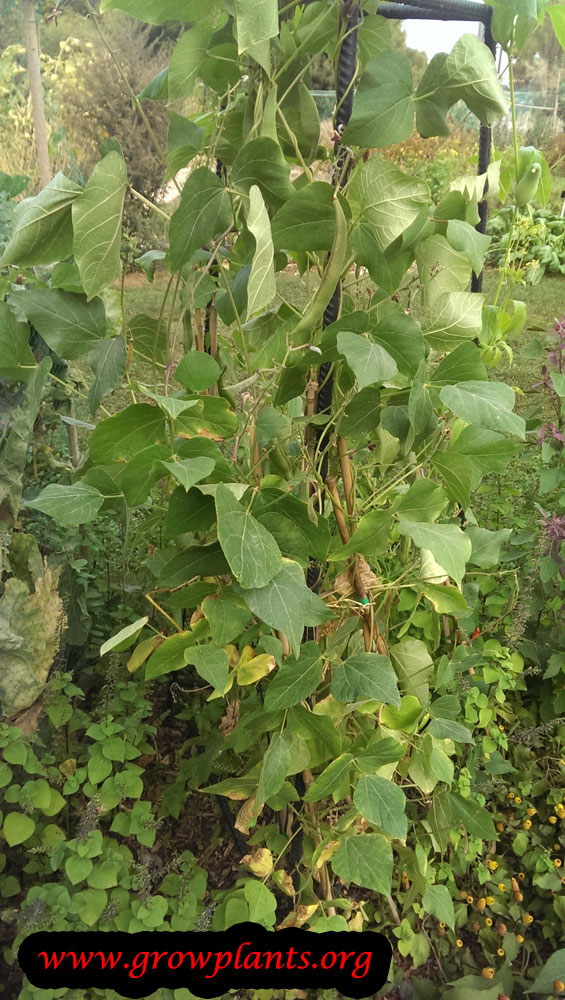
Overview: Runner bean is a fast-growing, twining perennial vine (usually grown as an annual in cooler climates) reaching 2-6 m, valued both as an ornamental climber and as an edible crop. Its flowers, young pods, leaves and swollen roots are all edible.
Quick Specifications
| Specification | Attribute |
|---|---|
| Plant Type / Life Cycle | Perennial (grown as annual in cold climates) |
| Foliage Type | Evergreen in warm climates (herbaceous) |
| Mature Size | 2-6 m (6-20 ft) climbing |
| Growth Rate | Fast |
| Root System | Tuberous / perennial storage root |
| Toxicity | Young pods and beans edible; mature raw seeds contain lectins – cook before eating |
| Hardiness | USDA zones 2-10 |
Growth Form & Structure
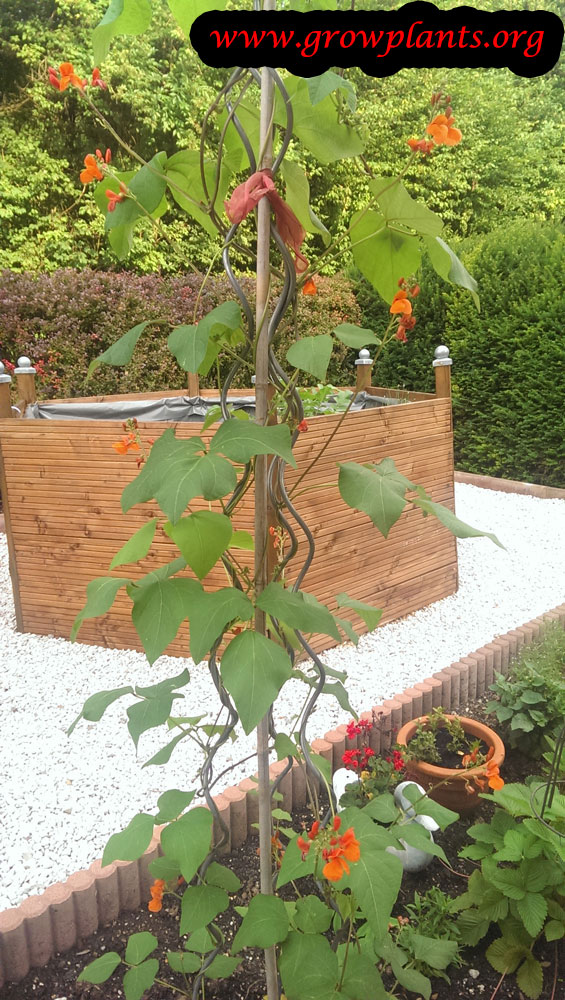
- Height & Spread: Climbs 2-6 m (6-20 ft) on a trellis or support; grows readily in large containers, though not as an indoor houseplant.
- Growth Habit & Form: Twining herbaceous vine that needs trellising; vigorous and can be aggressive.
- Lifespan & Maturity: Perennial from tuberous roots in frost-free areas; starts bearing pods about 2-3 months after planting.
Anatomy & Physical Features
- Leaves & Foliage: Edible, light green, deltoid (triangular) leaves.
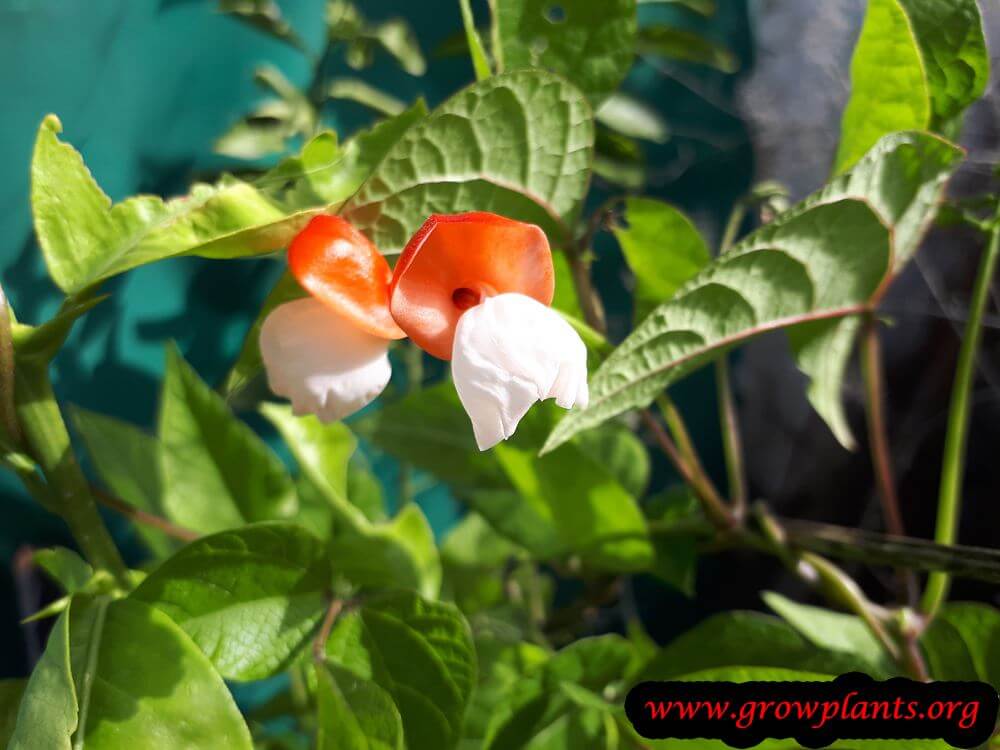
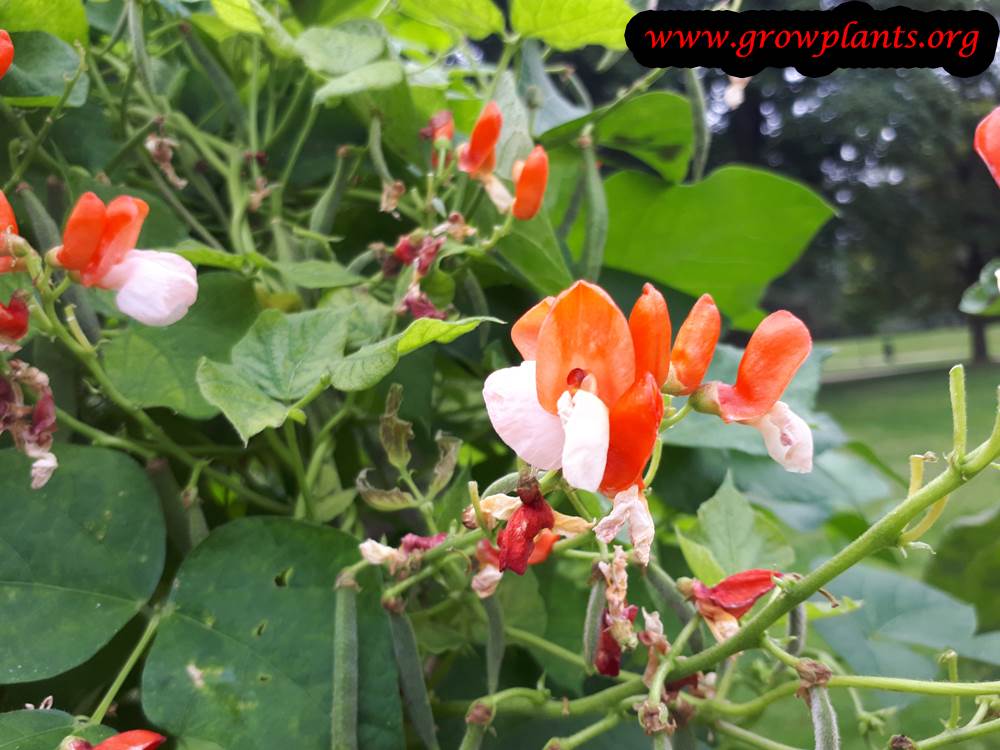
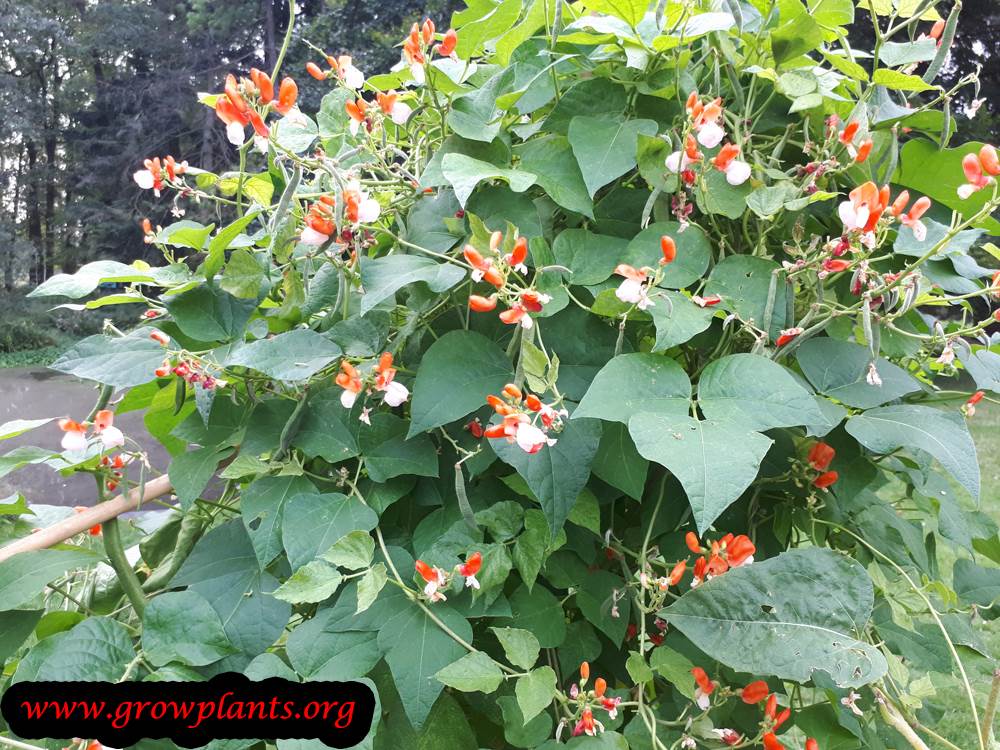
- Flower Characteristics: Edible orange, butterfly-shaped (pea-like) flowers borne in inflorescences; pollinated by bees, butterflies and hummingbirds.
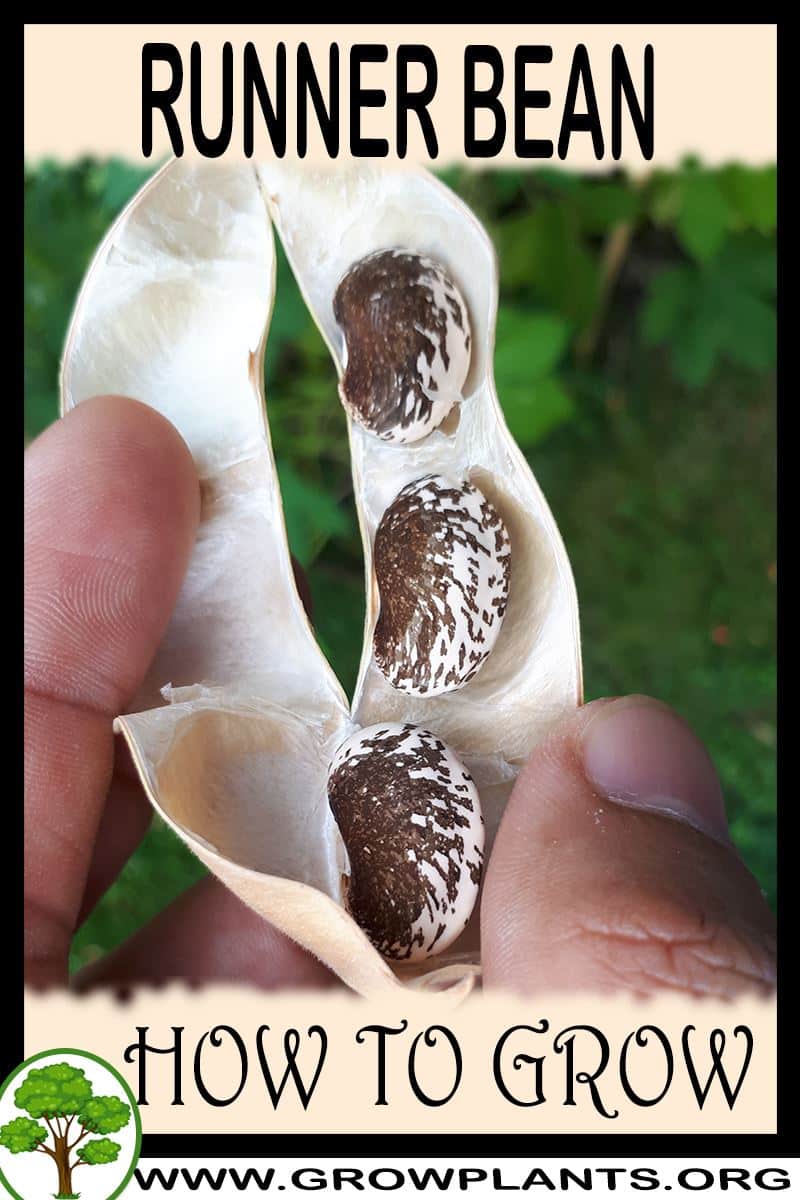
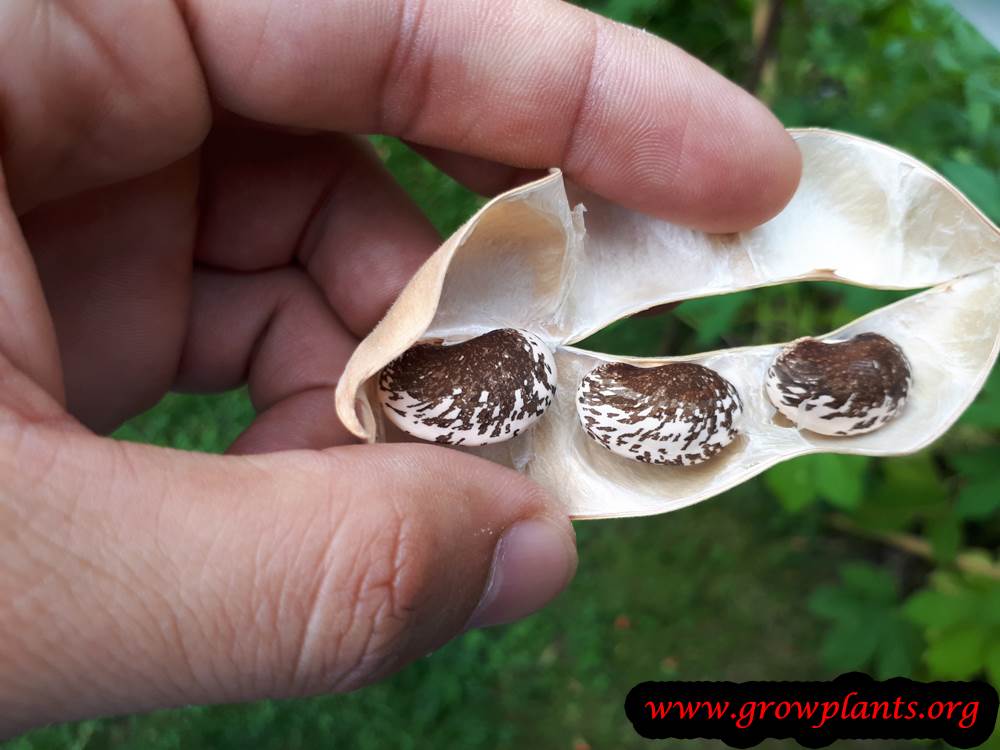
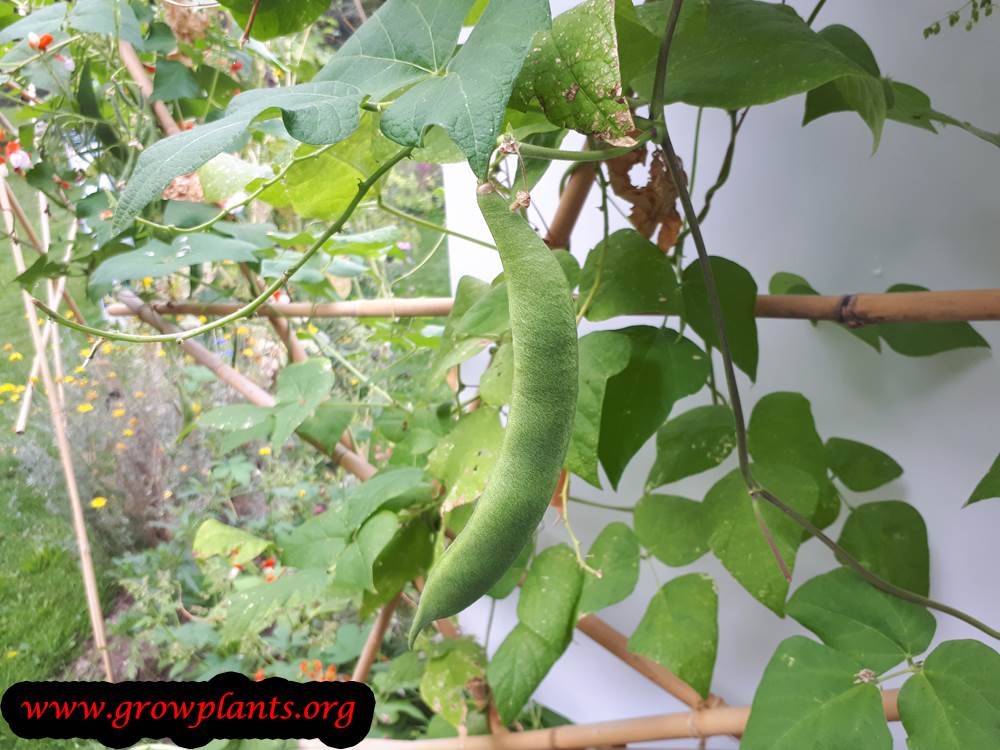
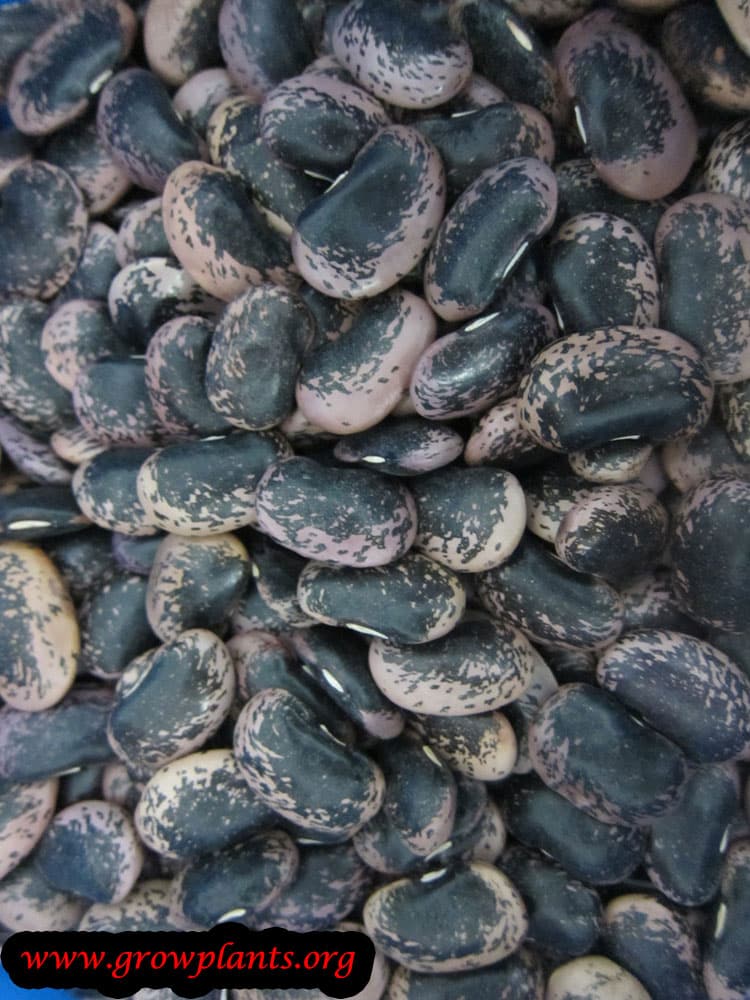
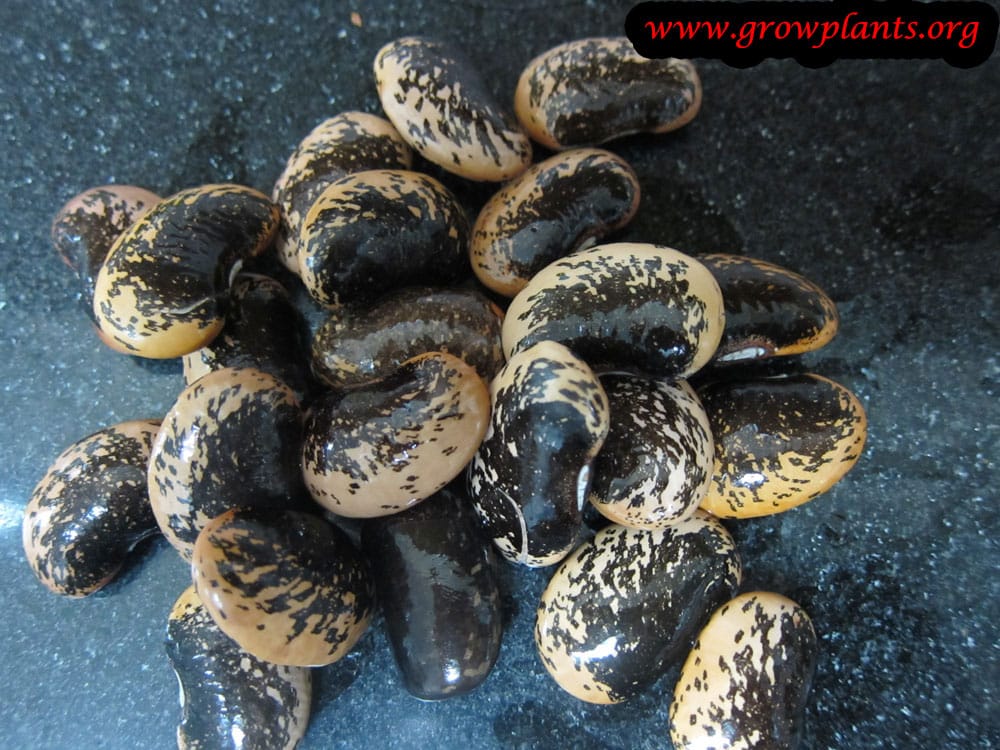
- Fruit Profile: Edible green pods holding multicoloured beans (purple, brown, white or black).
Primary Uses & Landscape Value
- Edible Uses: Young pods cooked or stewed; young beans raw and mature beans cooked; young leaves in salad or soup; flowers eaten raw or in jams; tuberous roots cooked.
- Functional & Ornamental Roles: Ornamental flowering climber for trellises, arbours and screens; nitrogen-fixing legume; suited to container growing.
Care Guide: Planting, Soil & Watering
Overview: Runner bean is a fast-growing climbing legume grown for its edible pods, flowers and leaves, thriving in full sun on a trellis in moist, fertile soil. It likes steady, even moisture.
Quick Care Requirements
| Requirement | Ideal Condition |
|---|---|
| Planting Season | Spring in temperate climates; autumn in frost-free areas |
| Growth Rate | Fast |
| Soil Type | Moist, fertile, well-drained soil |
| Soil pH | 6.0-7.0 |
| Water Need | Moderate – keep evenly moist |
Planting & Establishment
- Best Planting Season: Sow or plant in spring in temperate climates, or in autumn where frost-free.
- How to Plant:
- Hole Preparation: Provide a trellis or poles first, then sow seed or set transplants at the base of the support.
- Soil Amendments: Enrich with compost and organic matter; as a legume it needs little nitrogen feeding.
- Planting Depth: Sow seed a few cm deep and set transplants at their original soil level.
- Growth Speed & Expectations: A fast climber reaching 2-6 m, starting to bear pods within about 2-3 months.
Soil, Watering & Drainage Care
- Soil Mix & Drainage Needs: Wants moist, free-draining soil; grows in large containers with support. Keep the roots cool and moist.
- Watering Schedule & Technique:
- Young / Newly Planted: Keep the soil evenly moist for germination and establishment.
- Established: Water regularly, especially once flowering and podding – dry spells reduce the set.
- Seasonal Adjustments: More in summer heat; ease off in cool weather.
Climate, Light & Hardiness
The runner bean is a vigorous climbing legume grown in full sun (light shade in hot climates) for its edible pods, beans, flowers and even roots; it is a short-lived perennial in mild, frost-free areas but is grown as an annual where winters freeze. The site data spans roughly USDA zone 2–10: frost kills the top growth, yet in frost-free conditions its tuberous root can overwinter and reshoot - so lifecycle and cold-hardiness are two separate things here.
Quick Climate Specifications
| Climate Zones | Temperate, mediterranean, subtropical (cool-to-warm season) |
|---|---|
| USDA Hardiness Zones | Approximately 2–10 (site data) |
| Optimal Temp Range | Approximately 15–25°C (59–77°F) |
| Cold Damage Begins | Top growth is frost-tender; the tuberous root survives light frost in mild ground |
| Frost Tolerance | Low (top); root can persist where frost is light |
| Light Conditions | Full sun; half shade in warmer climates |
| Wind Tolerance | Low to moderate (tall climber, needs support) |
Sunlight & Light Exposure
Optimal Light Setup
Full sun in cooler climates gives the best cropping; in hot regions a little afternoon shade helps flowers set.
Shade & Heat Management
Light shade in the heat of the day reduces flower drop where summers are hot.
Temperature Extremes & Hardiness
USDA Hardiness & Regional Limits
The site gives a wide zone 2–10 range. In frost-free areas (autumn planting) it can persist and grow year-round as a short-lived perennial; in temperate, freezing-winter areas it is spring-sown and treated as an annual because frost ends the top growth. The hardiness range and the annual/perennial habit are not in conflict.
Cold Damage & Winter Protection
Frost cuts down the vine; where the ground stays above freezing, the fleshy root can overwinter and resprout. In cold regions grow it fresh from seed each spring.
Frost Sensitivity
The leafy top is frost-tender; it is slightly hardier and much better in cool weather than the common bean, but a real freeze still kills the top.
Extreme Heat Tolerance
Limited - it prefers cooler summers, and prolonged heat causes flowers to drop and pods to fail to set, making high summer temperature its main limiting factor.
Frost-Free Growing Season
It needs a frost-free spell of a couple of months to crop, ideally through mild rather than scorching weather; where the season allows, autumn and spring plantings both work.
Wind, Humidity & Microclimate
Wind Tolerance
As a tall climber it needs sturdy support; exposed sites tear foliage and knock plants about.
Microclimate Recommendations
A sunny but not baking spot with steady moisture and support suits it; in hot climates favour a cooler, lightly shaded aspect to keep flowers setting.
Growing in Pots, Balconies & Indoors
The runner bean is a vigorous climber, not a houseplant, but it crops heavily in a large, deep pot on a sunny balcony or patio given a tall support to scramble up.
Quick Details
- Container Size: About 30-50 L (8-13 gal) – a large, deep pot per two or three plants
- Indoor Suitability: Not an indoor plant; too tall and light-hungry for a windowsill beyond the seedling stage
- Best Spot: Full sun, with light shade tolerated in hot climates
- Soil & Drainage: Aerated, organic-rich mix – peat or coir with perlite or vermiculite; must drain freely
- Watering in Pots: Keep the mix consistently moist – a cropping plant in a pot may need daily water in heat; never let it dry out at flowering
Indoors & On the Windowsill
- Houseplant limits: Not a houseplant – it is a tall, vigorous climber that needs full sun and a 2 m-plus support, far more than a windowsill offers.
- Windowsill growing: A sunny sill can start seedlings, but they soon outgrow it and must move outdoors.
- Note: Raw or dried beans are not safe to eat – cook them first.
On a Balcony or Patio
- Light, heat & wind: Give it the sunniest spot you can. Walls, railings and paving reflect heat, so pots dry quickly – check moisture daily in warm weather, and shelter tall growth from wind. A drip irrigation kit with a timer can take over that watering check automatically.
- Support: On a balcony or patio give it a trellis, netting or a cane wigwam to climb; mind the weight of large filled pots and where drainage water runs off shared balconies.
Choosing the Pot, Soil & Long-Term Care
- Pot & drainage: A 30-50 L pot with strong drainage holes; skip a standing water saucer to avoid root rot. Terracotta breathes and dries fast; glazed or plastic holds moisture longer.
- Potting mix: Use a well-aerated, organic-rich mix – peat or coir blended with perlite or vermiculite for free drainage.
- Feeding: Potted plants lose nutrients as watering leaches them, so feed more often than in open ground. As a legume it fixes much of its own nitrogen, so favour a low-nitrogen feed richer in phosphorus and potassium.
- Annual crop: Grown fresh each season – clear the pot and replant rather than repotting.
Fertilizing & Feeding
This is a light feeder: as a legume it fixes much of its own nitrogen, so rely on soil organic matter and only a light balanced feed, leaning on potassium as pods fill.
Quick Fertilizing Specs
| Feeding Level | Light – a legume that fixes much of its own nitrogen. |
|---|---|
| young_feeding | A modest balanced feed as seedlings establish. |
| mature_feeding | Light feeding that leans on potassium as pods fill. |
| Main Nutrient Priority | Balanced nutrition with restrained nitrogen; potassium at pod fill. |
| Best Feeding Period | Through the active growing season. |
| Organic Options | Compost or well-rotted organic matter worked into the bed. |
| Soil pH | Near neutral to slightly acidic suits most legumes. |
| Reduce/Stop Feeding | Ease off as the crop matures and pods dry. |
| Micronutrients | Rarely needed; correct only if a deficiency shows. |
Feeding by Growth Stage
Establishment after sowing
Settle young seedlings and encourage steady early root and shoot growth.
| Nutrient direction | A modest, balanced complete fertilizer; lean on soil organic matter rather than heavy feeding. |
|---|---|
| Timing | As seedlings emerge and begin active growth. |
| Frequency | A light feeding as the seedlings establish, no more than the young plants need. |
| Fertilizer types | Balanced complete fertilizer, Compost or well-rotted organic matter worked into the bed |
| Precautions | Avoid pushing tender seedlings with strong fertilizer; water it in well. |
Leafy vegetative growth
Build a healthy leafy framework without forcing soft, pod-poor growth.
| Nutrient direction | Go easy on nitrogen – as a legume this plant fixes much of its own; favor a balanced feed with restrained nitrogen. |
|---|---|
| Timing | Through the main flush of leafy growth before flowering. |
| Frequency | Light, spread-out feedings during active growth. |
| Fertilizer types | Balanced complete fertilizer, nitrogen kept modest |
| Precautions | Excess nitrogen delays flowering and drives leaves over pods. |
Flowering, pod set and harvest
Support flowering, pod set and seed fill for a full harvest.
| Nutrient direction | Shift toward potassium as flowers and pods form while keeping nitrogen modest. |
|---|---|
| Timing | From first flowering through pod and seed fill. |
| Frequency | Light feeding that leans on potassium as pods develop. |
| Fertilizer types | Balanced fertilizer supplying adequate potassium |
| Precautions | Keep watering steady during pod fill; do not overfeed with nitrogen now. |
Nutrient Deficiency Signs & Corrections
Overall pale, yellow-green foliage and weak growth even on reasonable soil.
| Possible causes | Poor rhizobial nodulation, so little nitrogen is being fixed, Cold or waterlogged soil suppressing root and nodule activity, Genuinely low soil nitrogen on very poor ground |
|---|---|
| Appears first on | Older, lower leaves first. |
| What to check | Dig a root and look for pink, active nodules, Soil drainage and temperature, Whether the seed or bed carried the right legume inoculant |
| Possible correction | Ensure the right rhizobia are present, improve drainage and warmth, and give only a modest balanced feed if the ground is truly poor. |
Yellowing between the veins of the youngest leaves while the veins stay green.
| Possible causes | High or alkaline soil pH locking up iron and manganese, Waterlogged or cold roots reducing micronutrient uptake, Occasionally low available iron or manganese in the soil |
|---|---|
| Appears first on | New growth at the shoot tips. |
| What to check | Soil pH, Drainage and watering habits, Whether symptoms follow cool, wet spells |
| Possible correction | Correct soil pH toward the plant’s preferred range, improve drainage, and if it persists apply a chelated iron or manganese product per its label. |
Browning, scorched margins on older leaves, worst as pods and seeds fill.
| Possible causes | Low soil potassium, Sandy soils where potassium leaches readily, Drought stress concentrating demand during pod fill |
|---|---|
| Appears first on | Older, lower leaves. |
| What to check | Soil test for potassium, Soil texture and leaching, Watering consistency during pod fill |
| Possible correction | Use a balanced fertilizer that supplies adequate potassium and keep watering steady through pod fill. |
Scorched leaf edges, wilting, or white crusting on the soil despite adequate water.
| Possible causes | Over-application of fertilizer, Poor leaching in containers or heavy soil, Letting the root zone dry out between heavy feeds |
|---|---|
| Appears first on | Leaf margins and tips; container plants first. |
| What to check | Recent fertilizer amounts, Drainage, Soil crusting or white surface residue |
| Possible correction | Ease off feeding, water thoroughly to flush excess salts from the root zone, then feed only lightly. |
Pruning, Training & Seasonal Maintenance
Runner bean tolerates and benefits from light, ongoing management rather than true pruning: it is a fast twining vine reaching 2–6 m that needs directing onto a trellis, tipping at the top of its support, and thinning of tangled or shaded growth. The plant flowers and sets edible pods continuously on current-season shoots, so cutting is aimed at airflow, reach for picking, and keeping the vine within its support rather than at building a framework. Because it is grown as an annual over most of its range, no dormant or renewal pruning applies.
Pruning & the Edible Harvest
Runner bean offers several edible parts — young leaves, sweet flowers, green pods, the beans themselves and a small cooked root — and pruning trades them off. Tipping the leaders and harvesting tender leaves or shoots diverts energy away from flowering and pod set, so leaf/tip harvesting competes with the pod and bean crop; letting shoots run on to bloom feeds the flower, pod and seed harvest instead. Training and tipping otherwise just ease picking, and the root is a minor bonus lifted when the plant is cleared.
Quick Pruning & Maintenance Specs
| Pruning Tolerance | High (herbaceous – regrows readily from pinched shoots) |
| Primary Pruning Window | Growing season, as vines climb |
| Typical Frequency | Light and ongoing while cropping |
| Main Objective | Train to support, ease harvest, keep foliage open |
| Young Plant Priority | Guide the leading shoots onto the trellis |
| Mature Plant Priority | Tip at support top; remove spent, shaded and damaged growth |
| Best Tool Type | Fingertips (pinching) and precision snips |
Pruning by Plant Age & Size
Newly Established
Do not cut back. Let the seedling put out its twining leaders and guide them by hand onto strings, canes or netting; runner bean climbs by twining, so it needs only direction, not tying. Remove a leaf only if damaged.
Young / Formative
This is a vine, not a plant that carries a permanent structure — the only useful “training” is choosing one or two strong leaders per support and wrapping them in the twining direction. Pinching the very tip early encourages side shoots and a bushier, more productive column if you have height to fill.
Mature / Established
Once a leader reaches the top of its support, pinch out the growing tip so energy shifts into pods and lower laterals instead of unmanageable overhead growth. Thin any dense inner tangle that shades developing pods and reduces airflow.
Seasonal Pruning Schedule
Summer Canopy Management
Objective: keep pods visible, lit and easy to pick. Remove: crossed, congested and heavily shaded interior stems, plus any yellowing lower leaves. Do NOT remove: healthy leaves subtending flower trusses or young pods. Expected response: renewed lateral flowering; cropping continues on new shoots. Flowering/fruiting impact: neutral to positive — opening the canopy improves pod set and reduces mildew.
Ongoing Sanitary
Objective: prevent pest and rot build-up. Remove: larva-chewed, mildewed or collapsed foliage as it appears (larvae are the noted pest). Do NOT remove: lightly blemished but functional leaves. Regular picking of pods before they over-mature is itself the most important “cut” — it keeps the vine flowering.
Structural Pruning & Training
Height and spread are controlled almost entirely by the height of the support and by tipping at the top. There is no branch-selection or canopy-density framework to build; simply keep leaders spread across the support so no single point becomes a shaded mass.
Special Growth to Remove
Pick pods continuously and remove any that have been missed and are drying on the vine — leaving mature pods signals the plant to stop flowering. Deadhead and clear fallen flowers only where hygiene demands it. There are no suckers or watersprouts to manage on this herbaceous vine.
Container & Small-Space Pruning
In a planter (confirmed suitable), give a tall but narrow support and tip leaders sooner, at a reachable height, so the whole column stays pickable. Pinch side shoots more often to hold width in check; do not root-prune — it is an annual and simply cropped out at season’s end.
Tools
Soft tips and young laterals: pinch with fingertips. Firmer stems and spent growth: precision snips or light bypass secateurs. No loppers, saw or hedge shears are ever needed on this soft-stemmed vine.
Tool Hygiene & Disease Risk
Routine: clean, sharp snips are sufficient. Increase to wiping the blade if you are cutting out mildewed material, so spores are not smeared onto healthy leaves. No systemic, tool-borne pathogen of note requires disinfecting between cuts.
Cut Placement & Technique
Pinch or cut just above a leaf node so a fresh lateral breaks from that node. Tip the leader cleanly at the support top. Cut spent or diseased leaves back to the stem rather than leaving stubs that rot.
Post-Pruning Care
Little is needed: maintain even moisture (the plant prefers a steady, average water supply) and keep picking. No feeding is triggered by this light pinching. Watch cut and pinched tips for larvae and remove affected growth promptly.
Common Pruning Mistakes
- Letting leaders run unchecked over the top of the support, creating a shaded overhead mass that flowers poorly and hides pods.
- Leaving mature pods on the vine, which halts further flowering.
- Hard-cutting a healthy annual vine mid-season in the belief it needs “pruning” — it only needs tipping and thinning.
- Tying twining stems tightly instead of letting them wind naturally, which chafes the soft stem.
When NOT to Prune
Avoid removing healthy foliage during peak flowering and pod set, and do not tip young plants that still have support height to fill. In a cold-climate annual crop there is no benefit to cutting back late in the season — simply harvest to the end.
Recommended Tools (by task)
- precision_snips — for tipping leaders and clean-cutting spent leaves and missed pods on soft stems.
- soft_ties_stakes — to secure the trellis, netting or cane wigwam the twining vine climbs.
Propagation Guide
Runner beans are almost always started from their large seed, sown direct once frost has passed or raised in pots for transplanting; as a short-lived perennial they can also be lifted as tuberous roots, overwintered frost-free and replanted. Because the flowers are largely cross-pollinated by bees, saved seed from a garden growing several types may not come fully true, so isolate a variety or buy fresh seed to keep it pure.
Quick Propagation Specs
| Best Propagation Method | Seed, direct-sown |
| Alternative Methods | Overwintering the perennial tuberous root (lift, store, replant) |
| Propagation Difficulty | Easy |
| Seed True-to-Type | Variable – cross-pollinated; named varieties need isolation |
| Vegetative True-to-Type | Yes – saved tubers clone the parent |
| Best Propagation Season | Spring after the last frost; autumn in frost-free areas |
| Germination Temperature | Warm soil, roughly 12–25°C (54–77°F) |
| Seed Sowing Depth | About 3–5 cm (1–2 in) |
Growing from Seed
Seed Handling & Viability
The large seeds store well kept cool and dry and stay usable for several years. Use plump, undamaged beans.
Sowing Season
Sow in spring in temperate climates once the soil warms, or in autumn where winters are frost-free.
Sowing Depth & Germination
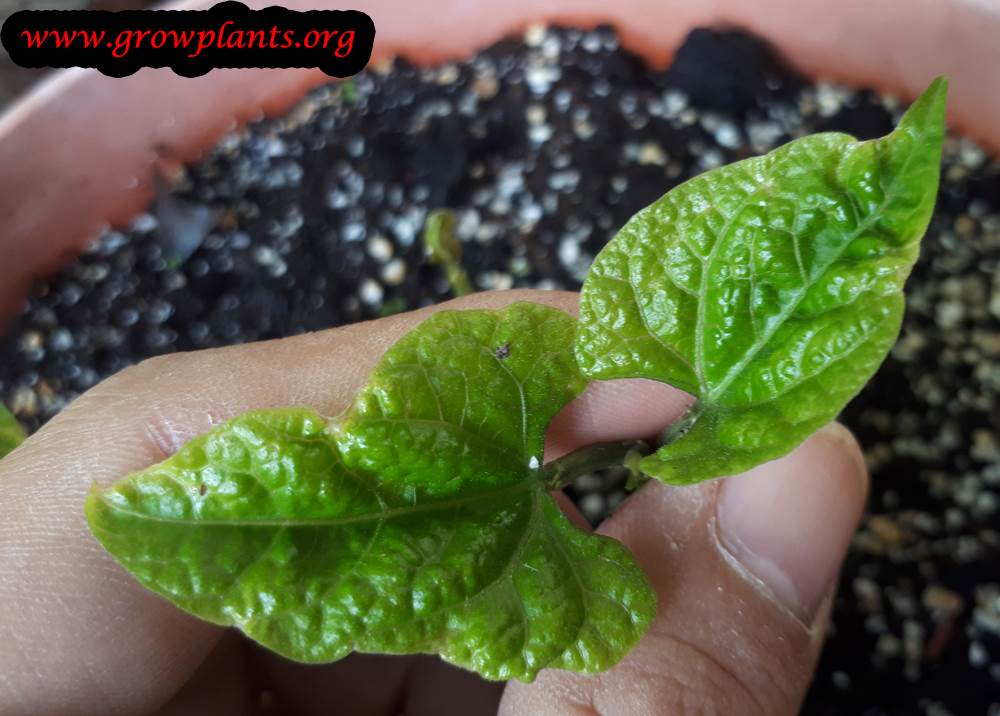
Sow about 3–5 cm (1–2 in) deep into warm, moist soil. Runner beans are frost-tender, so wait for warm soil or start in pots. They show hypogeal germination — the seed leaves stay below ground and the growing point is protected, so a plant nipped by late cold can re-shoot. Emergence usually follows within one to two weeks in warm soil and is slower when cold.
Division, Offsets, Pups & Suckers
Runner bean is perennial from a starchy, cone-shaped tuberous root. In frost-free zones the crown persists in the ground; elsewhere lift the tubers after the tops die down, store them cool and frost-free, and replant in spring. Overwintered tubers give an earlier, more vigorous plant that is genetically identical to its parent.
Bloom & Edible Flower Guide
Quick Details
- Bloom Season: Can flower most of the year in mild climates, but mainly spring and autumn
- Time to First Bloom: About eight weeks after sowing
- Flower Appearance: Vivid orange (scarlet) pea, or butterfly-shaped, flowers carried in clusters along the climbing stems
- Edibility: Edible and sweet, good raw scattered over salads, and also used in jams and drinks
Detailed Blooming Overview
The runner bean, also known as scarlet runner (Phaseolus coccineus), is as much an ornamental as a crop. Its bright orange flowers appear in long clusters up the vine and have a pleasant sweet taste, so they are one of the pea family’s genuinely edible blooms. Beyond bees and butterflies, the hot colour and nectar draw in hummingbirds where they occur.
Flower Characteristics
- Orange, butterfly-shaped flowers in showy clusters on twining stems.
- Sweet-tasting and edible, usable raw or in preserves and beverages.
- Rich in nectar and highly attractive to pollinators.
Bloom Care & Thinning
- Pollination: Worked by bees, butterflies and hummingbirds; good insect visits mean better pod set.
- Harvesting flowers vs pods: Picking a few flowers for the kitchen is fine, but leave most to set if you also want a pod crop.
- Steady water at bloom: Keep moisture even; hot, dry spells cause the flowers to drop before they set.
Bloom Health & Protection
- Blossom drop in heat: Prolonged high temperatures make flowers fall; mulching and consistent watering help the plant keep its bloom.
- Aphids on buds and shoot tips: They gather on soft flowering growth; a jet of water or an insecticidal soap or neem oil manages them, and it is worth choosing gentle options since the flowers may be eaten.
Fruit & Uses
The runner bean is unusually versatile: the site records the young pods, the seeds, the leaves, the flowers and even the root as edible. Young pods and greens are the everyday crop, while mature seeds must be cooked before eating.
Quick Edible Specs
| Edible Parts | Pods, seeds, leaves, flowers and roots. |
|---|---|
| Main Use(s) | Culinary — young pods cooked/stewed; beans cooked; young leaves in salad then in soup/quiche; sweet flowers raw, in jams and drinks; roots cooked. |
| Eaten Raw or Cooked | Both: flowers, very young beans and young leaves can be eaten raw; pods, mature beans, older leaves and roots are cooked. |
| Preparation Required | Cook the pods, mature beans and roots; leaves and flowers need little or none. |
| Harvest Season | Pods and seeds through the season (site notes all year in mild climates); leaves and roots harvested as needed. |
| Time to First Harvest | Pods begin roughly two to three months after sowing (see the growing notes). |
| Storage | Pods, leaves and flowers are perishable; fully dried beans store well. |
| Safety/Toxicity Caveat | Cook mature beans thoroughly before eating — like other Phaseolus beans they contain lectins when raw. |
Seeds, Pods & Nuts
Pick pods young and green while still tender for cooking or stews. Left to mature, the pods yield multi-coloured beans; these are cooked, though very young beans can be eaten raw. Pick before ripe pods dry and shed their seeds.
Leaves & Greens
The light-green deltoid leaves are edible. Use fully grown but still tender leaves, harvested as needed year-round: the youngest in salad, older leaves in soup or quiche. Taking leaves competes with pod production, so harvest sparingly if you also want a bean crop.
Flowers & Flower Buds
The orange flowers are edible and sweet-tasting — eaten raw, made into jams or used in drinks. Note that picking flowers removes potential pods, so there is a trade-off between a flower harvest and a bean harvest.
Roots & Tubers
The site records the small, light-brown, cone-shaped root as edible when cooked; it can be lifted at any time of year. Lifting the root ends the plant, so this is typically done at the close of the season.
Preparation, Uses & Safety
Young pods are cooked or stewed; leaves are used young in salad and later in cooked dishes; flowers are eaten raw or preserved; roots are cooked. Mature beans should be cooked thoroughly before eating, as raw Phaseolus seeds contain lectins. Because several parts are harvested from one plant, balance the harvests — taking leaves and flowers reduces the pod and bean crop.
Pests, Diseases & Troubleshooting
Runner beans are vigorous, generally trouble-free climbers whose worst enemies are sap-sucking aphids, red spider mite in hot dry spells, and slugs on tender seedlings; most fungal problems follow wet, crowded, poorly ventilated growth. Manage them culturally first – good spacing, airflow, steady moisture and clean seed – and reach for sprays only when a pest is clearly building.
Quick Troubleshooting Overview
| Issue / Pest | Main Symptom | Primary Solution |
|---|---|---|
| Black bean aphid | Black colonies smothering shoot tips and pods | Water-jet, encourage ladybirds, then insecticidal soap |
| Spider mite | Bronzed, stippled leaves with fine webbing in heat | Raise humidity, hose foliage, horticultural oil |
| Slugs | Seedlings grazed, slime trails | Hand-pick at night, grit barriers, iron-phosphate pellets |
| Anthracnose | Dark sunken spots on pods and stems | Clean resistant seed, remove debris, copper spray |
| Poor pod set | Flowers drop without forming beans | Steady watering, mulch, plant to attract pollinators |
Common Pests & Management
- Aphids (Aphis / Myzus / Macrosiphum spp.):
- Symptoms: Small soft-bodied insects (green, black or grey) clustering on shoot tips, flower stalks and developing pods, especially the black bean aphid; they suck sap, causing curled, distorted and yellowing growth plus a sticky honeydew that blackens with sooty mould and draws ants. Winged forms spread them plant to plant and can carry viruses.
- Prevention & Control: Blast colonies off with a firm jet of water and pinch out badly infested tips; encourage and protect ladybirds, lacewings and hoverflies, and grow flowering companions to feed them. For persistent outbreaks use insecticidal soap or a light horticultural/neem oil, wetting leaf undersides in the cool of the evening to spare pollinators.
- Two-spotted spider mite (Tetranychus urticae):
- Symptoms: Fine pale stippling that bronzes whole leaves, with delicate webbing on the undersides and growing tips in hot, dry, dusty spells; heavily fed leaves dry and drop. Look for the moving specks with a hand lens.
- Prevention & Control: Raise humidity and hose foliage down regularly, and never let plants suffer dust or drought stress. Introduce predatory mites (Phytoseiulus persimilis) under cover. Treat hot-spots with insecticidal soap or horticultural oil, repeating at 5-7 day intervals to catch newly hatched mites.
- Bean seed fly / bean fly (Delia platura / Ophiomyia phaseoli):
- Symptoms: Maggots tunnel into germinating seed and stem bases, so seedlings fail to emerge or wilt and snap at soil level; survivors are stunted.
- Prevention & Control: Sow into warm soil for fast germination, and protect early sowings with fleece or fine mesh to exclude the egg-laying flies; raise transplants in modules where fly pressure is high. Rotate and clear old crop debris that harbours them.
- Slugs & snails (Deroceras / Helix spp.):
- Symptoms: Irregular holes in leaves and stems with tell-tale silvery slime trails, worst on soft young growth in damp, shady conditions and after rain or watering; seedlings can be grazed to the ground overnight.
- Prevention & Control: Clear hiding places, water in the morning so surfaces dry by nightfall, and hand-pick after dark. Set beer traps or ring vulnerable plants with grit, copper tape or crushed shell. Where pressure is high, scatter iron-phosphate pellets, which are safe around pets and wildlife.
- Bean weevils (bruchids) (Acanthoscelides / Callosobruchus spp.):
- Symptoms: Neat round exit holes in dried beans and small grubs inside stored seed; infested seed loses viability.
- Prevention & Control: Harvest and dry seed promptly, then store it airtight; a few days in the freezer, or a dusting of diatomaceous earth, kills any hidden grubs before they spread.
Diseases & Fungal Issues
- Anthracnose (Colletotrichum lindemuthianum):
- Symptoms: Dark, sunken, reddish-brown cankers on pods, stems and leaf veins, often with pink spore ooze in wet weather; seed-borne and spread by rain-splash.
- Treatment & Management: Start with certified disease-free, resistant seed, rotate away from beans for two to three years, and never work among wet plants. Remove and destroy infected material and apply a copper fungicide preventively in prolonged wet spells.
- Halo blight (Pseudomonas syringae pv. phaseolicola):
- Symptoms: Small angular spots each ringed by a pale yellow ‘halo’ on leaves, and greasy patches on pods; worst in cool, wet conditions.
- Treatment & Management: Use clean seed, avoid overhead watering and handling wet foliage, and rogue out infected plants early. Copper sprays give some protection but hygiene and resistant varieties are key.
- Bean rust (Uromyces appendiculatus):
- Symptoms: Rusty-brown powdery pustules mainly on leaf undersides, later yellowing and dropping leaves; favoured by warm, humid, crowded growth.
- Treatment & Management: Space and support plants for airflow, water at the base, and clear infected debris at season’s end. Sulphur or copper fungicide checks spread on valued crops.
Growing Difficulties & Abiotic Problems
- Poor pod set / flower drop:
- Cause & Symptoms: Runner beans drop their flowers without setting when it is too hot and dry, when the roots go short of water, or when few pollinators visit – the flowers need insects and moist air to set.
- Correction Strategy: Keep the root run consistently moist and heavily mulched, mist or damp the foliage in heatwaves, and grow nectar plants nearby to draw in bees; some heat-tolerant or self-fertile varieties set more reliably.
- Magnesium / general chlorosis:
- Cause & Symptoms: Interveinal yellowing on older leaves points to magnesium shortage, often after heavy cropping or on light, leached soils.
- Correction Strategy: Feed with a balanced organic fertiliser, mulch to hold nutrients, and correct acute cases with a foliar Epsom-salt (magnesium sulphate) spray.
What Helps – Products & Tools
Reach for insecticidal soap and light horticultural or neem oil against aphids, mites and whitefly; Bacillus thuringiensis (Bt) targets pod-boring caterpillars without harming bees; yellow sticky traps monitor whitefly and bean fly. For seed pests store dry seed with diatomaceous earth or freeze it for a few days. Copper-based fungicide checks anthracnose, rust and halo blight, and choosing certified disease-free, resistant seed prevents most trouble.