

Plant Profile & Key Characteristics
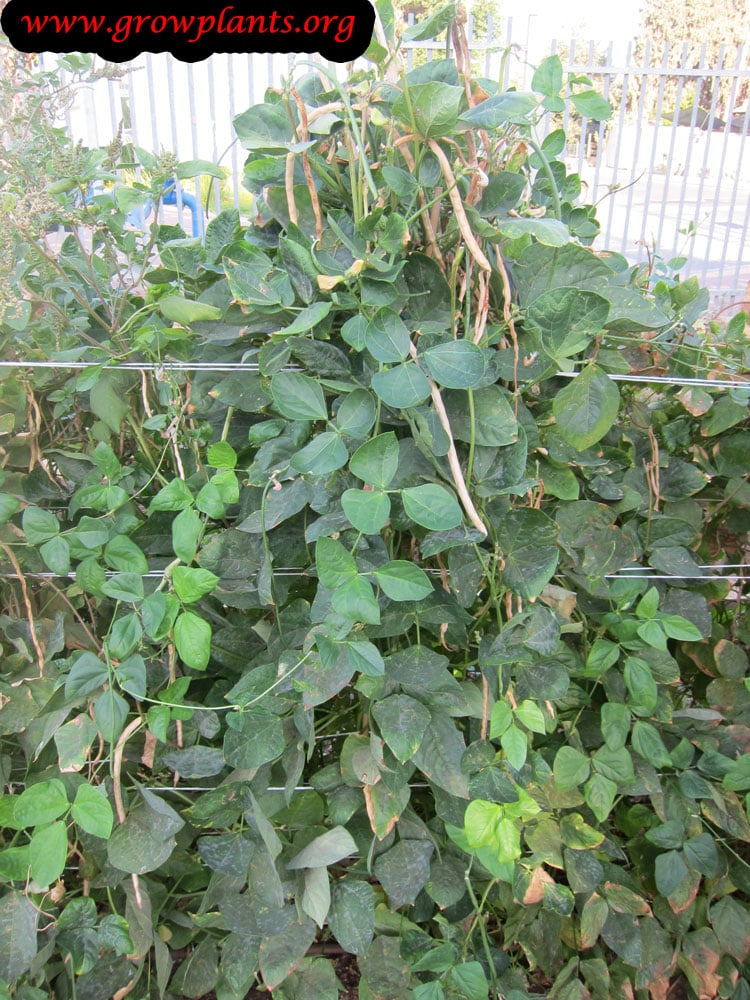
Overview: Cowpea is a fast-growing annual climbing legume grown for its edible young pods and dried beans. Vining types can be long and vigorous, and benefit from trellising.
Quick Specifications
| Specification | Attribute |
|---|---|
| Plant Type / Life Cycle | Annual |
| Mature Size | 2-10 m (6-30 ft) climbing (vining types) |
| Growth Rate | Fast |
| Root System | Taproot with nitrogen-fixing nodules |
| Toxicity | Edible; dried beans cooked before eating |
| Hardiness | USDA zones 2+ |
Growth Form & Structure
- Height & Spread: Vining types climb 2-10 m on a support; also grown in containers, but not as an indoor houseplant.
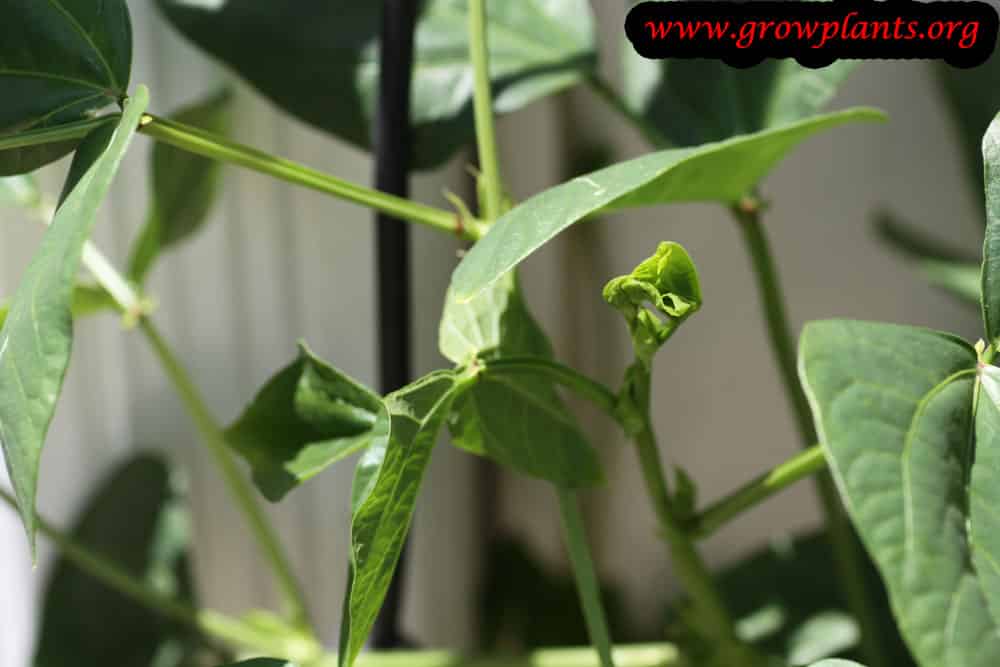
- Growth Habit & Form: Twining/trailing annual vine that benefits from trellising; vigorous and can be aggressive or invasive.
- Lifespan & Maturity: Annual; bears pods in about 4-8 weeks.
Anatomy & Physical Features
- Flower Characteristics: Purple, white or yellow pea-like (butterfly-shaped) flowers; bee-pollinated.
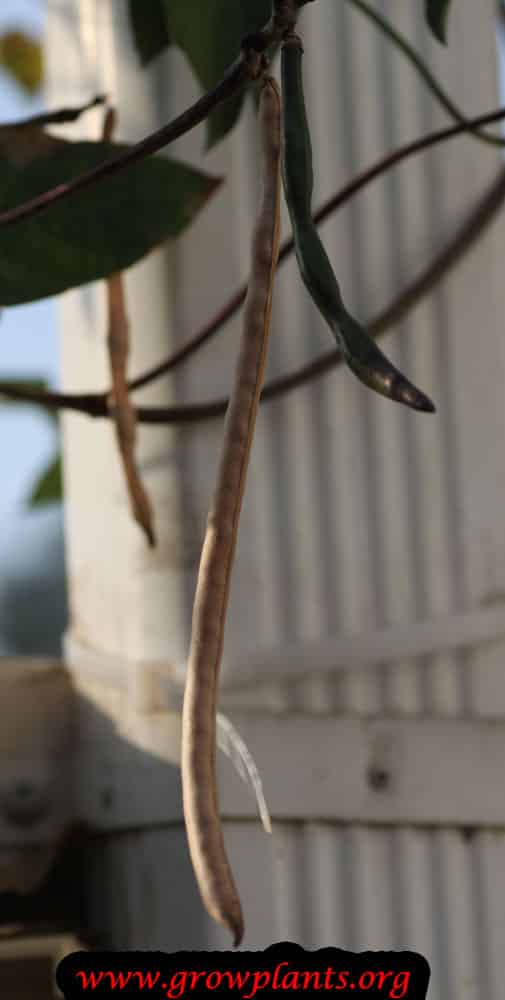
- Fruit Profile: Edible green pods 5-20 cm; also dried as beans.
Primary Uses & Landscape Value
- Edible Uses: Young pods and beans cooked or stir-fried; mature beans dried and cooked.
- Functional & Ornamental Roles: Nitrogen-fixing food and cover crop; suited to containers.
Care Guide: Planting, Soil & Watering
Overview: Cowpea is a fast-growing annual legume grown for its edible pods and beans, thriving in full sun and warm, well-drained soil. As a legume it fixes nitrogen and needs only moderate, even watering.
Quick Care Requirements
| Requirement | Ideal Condition |
|---|---|
| Planting Season | Spring to early summer, once the soil is warm |
| Growth Rate | Fast |
| Soil Type | Well-drained soil, adaptable |
| Soil pH | 6.0-7.0 |
| Water Need | Moderate – keep evenly moist, drought-tolerant once established |
Planting & Establishment
- Best Planting Season: Sow or plant in spring to early summer once the soil has warmed; it thrives in heat.
- How to Plant:
- Hole Preparation: Provide support for climbing types, then sow seed or set transplants at the base.
- Soil Amendments: It tolerates poorer soils and needs little nitrogen; just ensure good drainage.
- Planting Depth: Sow seed a few cm deep and set transplants at their original soil level.
- Growth Speed & Expectations: A fast grower reaching 2-10 m as a climber and bearing pods in about 4-8 weeks.
Soil, Watering & Drainage Care
- Soil Mix & Drainage Needs: Wants well-drained soil and is heat- and drought-tolerant once established. Grows in large containers with support.
- Watering Schedule & Technique:
- Young / Newly Planted: Keep evenly moist during germination and early growth.
- Established: Water moderately; it tolerates some drought but crops best with steady moisture.
- Seasonal Adjustments: More during flowering and podding in heat; less otherwise.
Climate, Light & Hardiness
Cowpea is a heat-loving, sun-demanding warm-season legume grown through Mediterranean, desert, subtropical, temperate and tropical summers. It needs full sun and thrives in real heat, but has essentially no frost tolerance, so it is kept entirely within the frost-free warm season.
Quick Climate Specifications
| Climate Zones | Mediterranean, desert, subtropical, temperate and tropical – a warm-season crop that excels in heat |
| USDA Hardiness Zones | Site lists zone 2+, i.e. grown as a summer annual across a wide zone range wherever the frost-free season is long and warm enough; it does not overwinter where frosts occur |
| Optimal Temp Range | Approximately 25–35 °C (77–95 °F) |
| Cold Damage Begins | Growth slows and chilling stress appears below roughly 15 °C (59 °F) |
| Approx. Survival Minimum | Frost-tender – killed at or near 0 °C (32 °F) |
| Frost Tolerance | None |
| Light Conditions | Full sun |
| Wind Tolerance | Moderate – vining types need trellis support |
Sunlight & Light Exposure
Optimal Light Setup
Grow in full sun for the strongest growth, flowering and pod set.
Direct Sun Requirement
This is a sun-loving warm-season crop; it wants all-day direct sun and does not perform in shade.
Best Exposure / Orientation
A warm, open, sun-facing bed that heats up quickly suits it, especially in cooler-summer regions.
Temperature Extremes & Hardiness
USDA Hardiness & Regional Limits
The site lists hardiness zone 2+, which reflects how widely cowpea can be grown as a warm-season annual rather than any winter hardiness – it survives no frost. Cold winters simply limit it to the frost-free stretch of the year; in frost-free climates sowings can run across a longer warm season.
Cold Damage & Winter Protection
There is no meaningful cold hardiness. Sow into warm soil after the last frost and grow through the hottest months, re-sowing from seed each season.
Frost Sensitivity
Frost is fatal: even a light freeze blackens the foliage and kills unprotected plants, so keep it wholly within the frost-free window.
Extreme Heat Tolerance
Outstanding heat tolerance - cowpea is one of the most heat-adapted legumes and keeps flowering and podding through very hot spells that stall other beans.
Frost-Free Growing Season
It matures fast (often about 4–8 weeks to first pods) and revels in heat, so it fits short but hot, frost-free seasons, including desert summers.
Wind, Humidity & Microclimate
Humidity Preferences
It adapts to both dry desert heat and humid tropical air, tolerating a wide range of summer conditions.
Wind Tolerance
Vining types climb and catch the wind, so give them support; bushier types are more self-supporting.
Microclimate Recommendations
A warm, sheltered, sunny pocket that stays frost-free lengthens the productive season; a sun-facing wall that stores daytime heat helps in marginal-summer climates.
Growing in Pots, Balconies & Indoors
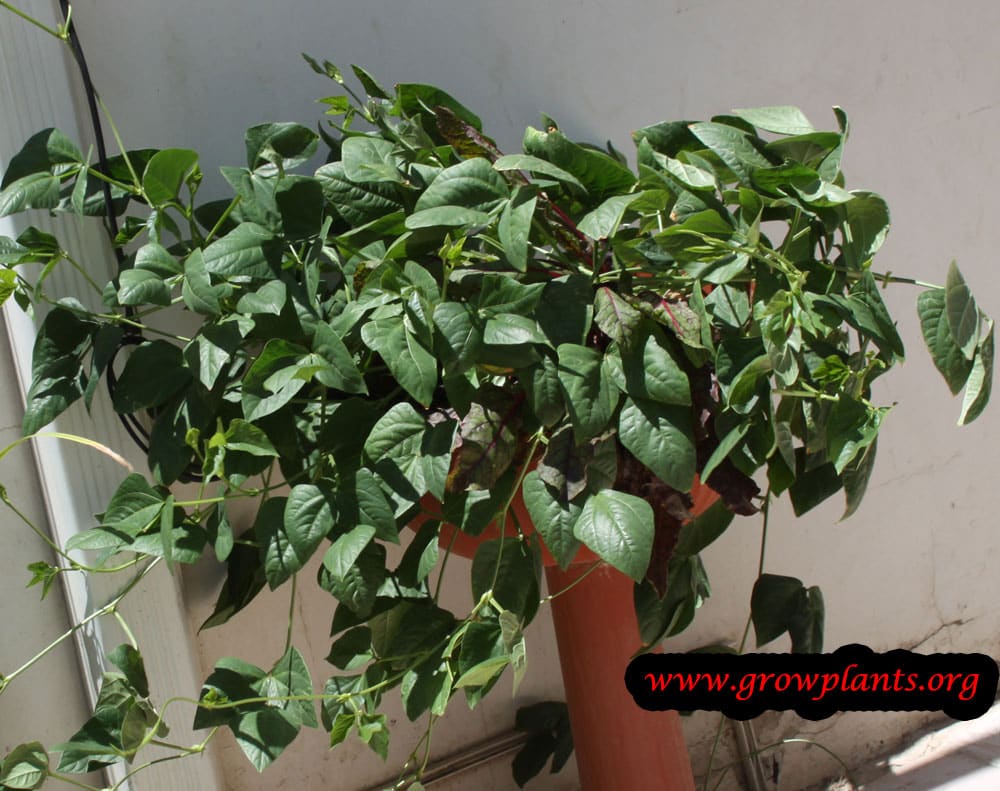
The cowpea is a warm-season legume; climbing types are large and vigorous, though bush forms exist. It grows well in a deep pot with a support on a hot, sunny balcony or patio, but it is not a houseplant.
Quick Details
- Container Size: A deep pot, 20-40 L (5-10 gal); climbing types need a tall support
- Indoor Suitability: Not an indoor plant; climbing types are too large and light-hungry for a windowsill
- Best Spot: Full sun – the warmest, sunniest spot available
- Soil & Drainage: Aerated, organic-rich mix – peat or coir with perlite or vermiculite; must drain freely
- Watering in Pots: Keep the mix evenly moist through the warm season; it is heat-tolerant but pots dry fast
Indoors & On the Windowsill
- Houseplant limits: Not a houseplant – the climbing types need full sun and a tall support, far beyond a windowsill.
- Windowsill growing: A sunny sill can start seedlings; bush types stay smaller, but they still crop best moved outdoors in full sun.
On a Balcony or Patio
- Light, heat & wind: Give it the sunniest spot you can. Walls, railings and paving reflect heat, so pots dry quickly – check moisture daily in warm weather, and shelter tall growth from wind. A drip irrigation kit with a timer can take over that watering check automatically.
- Support: On a balcony or patio give it a trellis, netting or a cane wigwam to climb; mind the weight of large filled pots and where drainage water runs off shared balconies.
Choosing the Pot, Soil & Long-Term Care
- Pot & drainage: A deep 20-40 L pot with strong drainage holes; skip a standing water saucer to avoid root rot. Terracotta breathes and dries fast; glazed or plastic holds moisture longer.
- Potting mix: Use a well-aerated, organic-rich mix – peat or coir blended with perlite or vermiculite for free drainage.
- Feeding: Potted plants lose nutrients as watering leaches them, so feed more often than in open ground. As a legume it fixes much of its own nitrogen, so favour a low-nitrogen feed richer in phosphorus and potassium.
- Annual crop: Grown fresh each season – clear the pot and replant rather than repotting.
Growing this plant in a greenhouse
A greenhouse can give cowpea plant frost protection, cold protection, a longer growing season and controlled production.
Greenhouse at a glance
| Greenhouse suitability | Excellent - a major practical advantage |
|---|---|
| Main benefits | frost protection, cold protection, a longer growing season, controlled production |
| Season extension | can grow through winter |
| Outdoor protection advisable below | about 15°C |
| Maintain greenhouse minimum | around 15°C for active growth |
| Suitable types | heated greenhouse, polycarbonate greenhouse, lean-to |
| Heating | Heating is recommended in cold climates for continuous growth. |
Related greenhouse guides
- Greenhouses: How to Choose the Right Greenhouse
- Best Greenhouse Heaters
- Greenhouse Climate Control: Temperature, Ventilation and Humidity
- Best Lean-To Greenhouses
Fertilizing & Feeding
As a nitrogen-fixing legume, Cowpea is a light feeder: it supplies much of its own nitrogen through root nodules, so it needs only modest, balanced nutrition and responds poorly to heavy nitrogen.
Quick Fertilizing Specs
| Feeding Level | Light; a modest feeder thanks to nitrogen fixation. |
|---|---|
| Main Nutrient Priority | Balanced nutrition with restrained nitrogen; potassium and phosphorus support flowering and pods. |
| Best Feeding Period | During early growth and again as flowering begins. |
| Organic Options | Compost and other organic matter suit this legume well and reduce the need for concentrated fertilizer. |
| Soil pH | Prefers slightly acidic to near-neutral soil. |
| Reduce/Stop Feeding | Ease off feeding as pods mature and the plant winds down. |
Feeding by Growth Stage
Establishment
Help young Cowpea plants settle in and build an early root system and first true leaves.
| Nutrient direction | Modest, balanced nutrition to support early root and shoot growth; as a legume this crop partners with soil bacteria to supply much of its own nitrogen, so keep nitrogen restrained. |
|---|---|
| Timing | From germination or transplanting through the first weeks of growth. |
| Frequency | A single light feeding as growth begins is usually enough on decent soil. |
| Fertilizer types | A balanced complete garden fertilizer used lightly, Compost or other organic matter worked into the bed before planting |
| Precautions | Avoid heavy nitrogen, which pushes soft leafy growth, can discourage nodulation, and delays flowering. |
Vegetative growth
Build a healthy, vigorous canopy of stems and leaves ahead of flowering.
| Nutrient direction | Steady, balanced nutrition with a light hand on nitrogen; because this legume fixes its own nitrogen, extra nitrogen mostly favors foliage over flowers and pods. |
|---|---|
| Timing | Through the main leafy growth phase before flowers appear. |
| Frequency | Feed sparingly during active growth on poor soil; rich, well-composted soil rarely needs more. |
| Fertilizer types | A balanced complete fertilizer used sparingly, A light compost side-dressing |
| Precautions | Too much nitrogen makes plants lush but unproductive and can delay pod set. |
Flowering and podding
Support strong flowering and the filling of pods and seeds.
| Nutrient direction | Shift the emphasis toward potassium and phosphorus support for flowering and pod fill while keeping nitrogen modest. |
|---|---|
| Timing | From the start of flowering through pod and bean development. |
| Frequency | A light feeding as flowering begins can support a heavier pod set on lean soil. |
| Fertilizer types | A balanced or slightly potassium-leaning complete fertilizer used lightly |
| Precautions | Keep nitrogen in check during flowering so the plant invests in pods rather than more leaves. |
Nutrient Deficiency Signs & Corrections
Older, lower leaves fade from green to pale yellow and overall growth is slow and weak.
| Possible causes | Poor nodulation, so the plant’s root bacteria are fixing little nitrogen, Cold or waterlogged soil that limits root and bacterial activity, Genuinely low soil nitrogen where no active nodules have formed |
|---|---|
| Appears first on | Older, lower leaves. |
| What to check | Whether the roots carry healthy pinkish nodules, Soil drainage and temperature, Recent history of organic matter and any nitrogen inputs |
| Possible correction | Improve drainage and soil warmth, make sure the right rhizobia are present (inoculate the seed if needed), and give a light balanced feeding only if nodulation is clearly poor. |
The youngest leaves yellow between the veins while the veins themselves stay green.
| Possible causes | High soil pH reducing the availability of iron or manganese, Cold or waterlogged roots that cannot take micronutrients up, A genuine iron or manganese shortage in the soil |
|---|---|
| Appears first on | New, upper leaves. |
| What to check | Soil pH, Drainage and whether roots are sitting wet, Whether only the newest growth is affected |
| Possible correction | Correct soil pH and drainage first; if the pattern persists, apply a chelated iron or manganese product according to its label. |
Plenty of leafy growth but few flowers or pods actually form.
| Possible causes | Excess nitrogen pushing foliage at the expense of flowering, Heat or uneven moisture stress during flowering, Low potassium limiting flowering and pod fill |
|---|---|
| Appears first on | Flowering shoots and developing pods. |
| What to check | Recent nitrogen inputs and overall soil richness, Temperature and watering steadiness during bloom, General balance of the fertility program |
| Possible correction | Ease off nitrogen, keep watering steady through flowering, and support the plant with a balanced to potassium-leaning feed. |
Pruning, Training & Seasonal Maintenance
The cowpea (Vigna unguiculata, also grown as the black-eyed pea) is a fast annual legume that in its vining forms climbs 2–10 m and can be aggressive to the point of invasiveness. It needs no structural pruning — the growing notes say as much — but on the long vining types the useful jobs are the same as for other vigorous bean vines: an optional tip-pinch to force branching, topping over-tall shoots so pods stay reachable, and thinning the tangle to manage vigour and let light in. Flowers and pods form on current-season growth, so there is no woody structure to preserve.
Where a bushier, shorter-podded type is grown, even these tasks fall away and the plant is left to crop and be cleared.
Pruning & the Edible Harvest
The cowpea is grown for its green pods and dry beans; it fruits on current-season growth. Bush types need no pruning, and on the long vining forms the useful cuts mainly keep the pods reachable and the aggressive vine in bounds rather than controlling yield.
The pods can be picked green as a vegetable or left to mature as dry beans (black-eyed peas); harvesting green pods reduces the dry-bean yield, so pick young for a vegetable crop or let pods mature for dry beans.
Quick Pruning & Maintenance Specs
| Pruning Tolerance | Moderate–High (vigorous herbaceous annual; no structural need) |
| Primary Pruning Window | Through the warm growing season, on vining types |
| Typical Frequency | Little to none; light tipping/thinning on long vines |
| Main Objective | Manage vigour and keep pods reachable on climbing forms |
| Young Plant Priority | Guide climbing types onto a support; optional tip-pinch |
| Mature Plant Priority | Top and thin long vines; keep flowering/podding growth |
| Best Tool Type | Precision snips and bypass secateurs |
| Avoid Heavy Pruning During | Peak flowering/podding (removes the crop) |
Pruning by Plant Age & Size
Newly Established
Remove only damaged growth and, for vining types, get the seedling onto a trellis; bush types need nothing at all.
Young / Formative
On long vining forms you may pinch the tips to encourage branching and a fuller, more productive plant; there is no framework to build, only growth to place on the support.
Mature / Established
On vigorous vines, top shoots that climb out of reach and thin overlapping runners so pods can be found and light reaches the interior. Keep the productive laterals; bush forms are simply left to crop.
Seasonal Pruning Schedule
Warm-season growth (vining types): objective is access and containment — tip and top vigorous leaders and thin the densest growth; keep flowering and podding shoots; expect quick regrowth on this fast, sometimes invasive plant. End of crop: the annual is pulled and cleared once cropping finishes; nitrogen-fixing roots can be left in the soil. There is no dormant or renewal stage.
Structural Pruning & Training
For climbing types, support and restraint are the approach: a trellis, tying-in, then vigour managed by tipping and thinning. Bush types need no training. No framework pruning is done on either.
Special Growth to Remove
On vines, remove escaping or over-topping shoots and thin self-shading runners — but keep the strong laterals that carry pods. Given its invasive tendency, also cut off stray runners before they root and extend the plant beyond its space.
Container & Small-Space Pruning
A bush cowpea suits a container with no pruning; a vining type needs a tall support plus frequent tipping and thinning to hold a 2–10 m vine in scale. Choose the habit to fit the space rather than relying on hard cutting.
Tools
Precision snips handle tip-pinching; bypass secateurs deal with thicker runners when topping and thinning long vines. The stems never become woody enough for loppers or a saw.
Tool Hygiene & Disease Risk
Routine. Aphids, slugs and birds are the recorded issues, not a tool-borne pathogen, so clean, sharp blades suffice; disinfect only if deliberately cutting out suspect material.
Cut Placement & Technique
Pinch or cut above a node to direct branching, and top back to a strong lateral to keep the vine at a workable height. Remove surplus runners at their origin without leaving stubs.
Heavy Pruning & Rejuvenation
Not applicable. As an annual there is no woody base to renew; a finished plant is cleared rather than cut back.
Post-Pruning Care
Keep steady, average moisture after any tipping or thinning, and watch new shoots and pods for aphids, slugs and birds. Avoid heavy feeding after cutting, which pushes foliage over pods.
Common Pruning Mistakes
- Cutting hard during flowering and podding, removing the current crop from a fast vine.
- Letting an invasive vining type run and root unchecked instead of thinning stray runners.
- Pruning a bush type for “shape” when it needs none.
When NOT to Prune
Avoid heavy cutting during peak flowering and pod fill, and do not disturb newly transplanted plants beyond removing damage. Bush forms need no pruning at all.
Recommended Tools (by task)
- precision_snips — for pinching tips to promote flowering laterals on vining types.
- bypass_secateurs — for topping and thinning the thicker runners of long, vigorous vines.
- soft_ties_stakes — to secure climbing forms to a support and keep pods reachable.
Pruning Troubleshooting
| Problem | Possible Cause | What to Check | Corrective Action |
| Rampant vine, few pods | Excess vigour/nitrogen on a vining type; tips not pinched | Tipping history and soil fertility | Pinch tips to force laterals; ease nitrogen and let laterals flower and pod |
| Pods hard to reach / plant spreading | Long runners left to climb and root freely | Height and spread of the runners | Top over-tall shoots and cut back stray runners before they root |
Propagation Guide
Cowpea is grown from seed sown directly in warm soil; it is a mainly self-pollinating legume, so seed comes largely true to type and grafting or cuttings are not used. It is easy and quick from seed and thrives in heat.
Quick Propagation Specs
| Best Propagation Method | Seed (direct-sown in warm soil) |
| Propagation Difficulty | Easy |
| Seed True-to-Type | Mostly uniform — largely self-pollinating |
| Best Propagation Season | Warm season: spring to early summer |
| Seed Germination Time | Fast — usually within about a week in warm soil |
| Germination Temperature | Warm, roughly 20–35°C (68–95°F) |
| Seed Sowing Depth | About 2–3 cm (0.75–1.25 in) |
Growing from Seed
Seed Handling & Viability
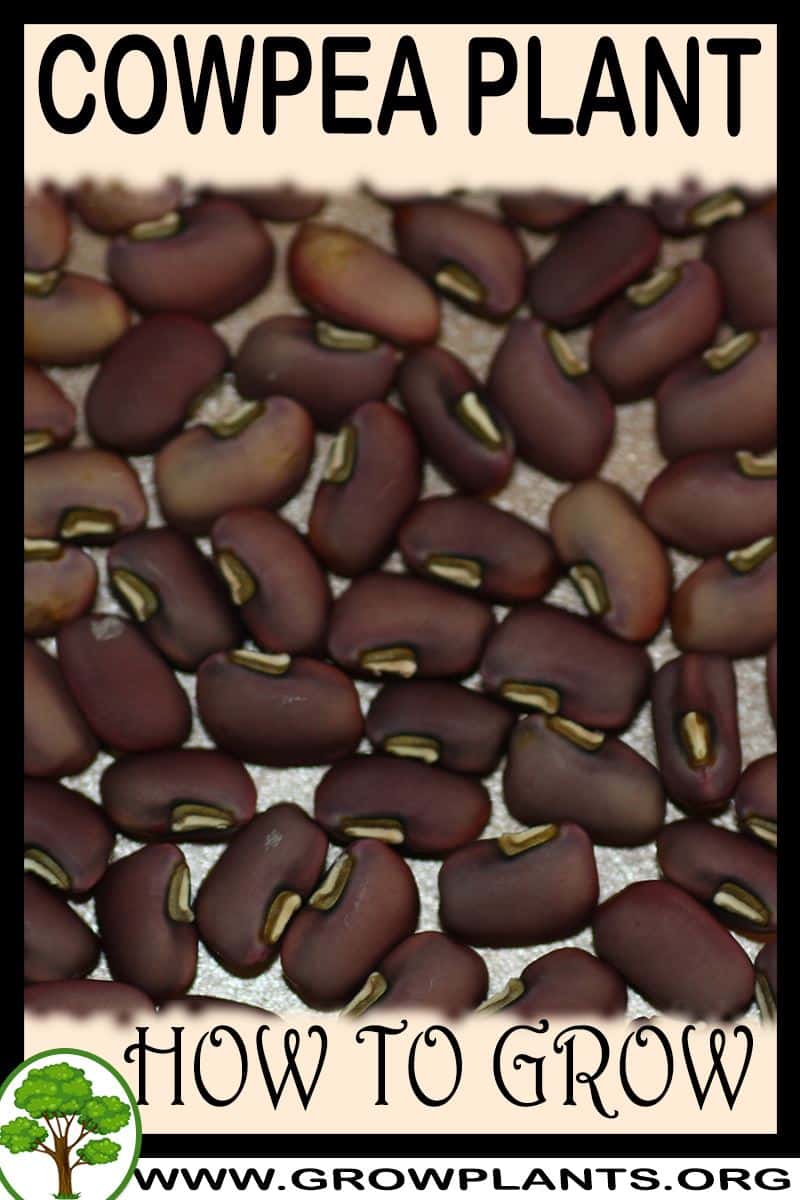
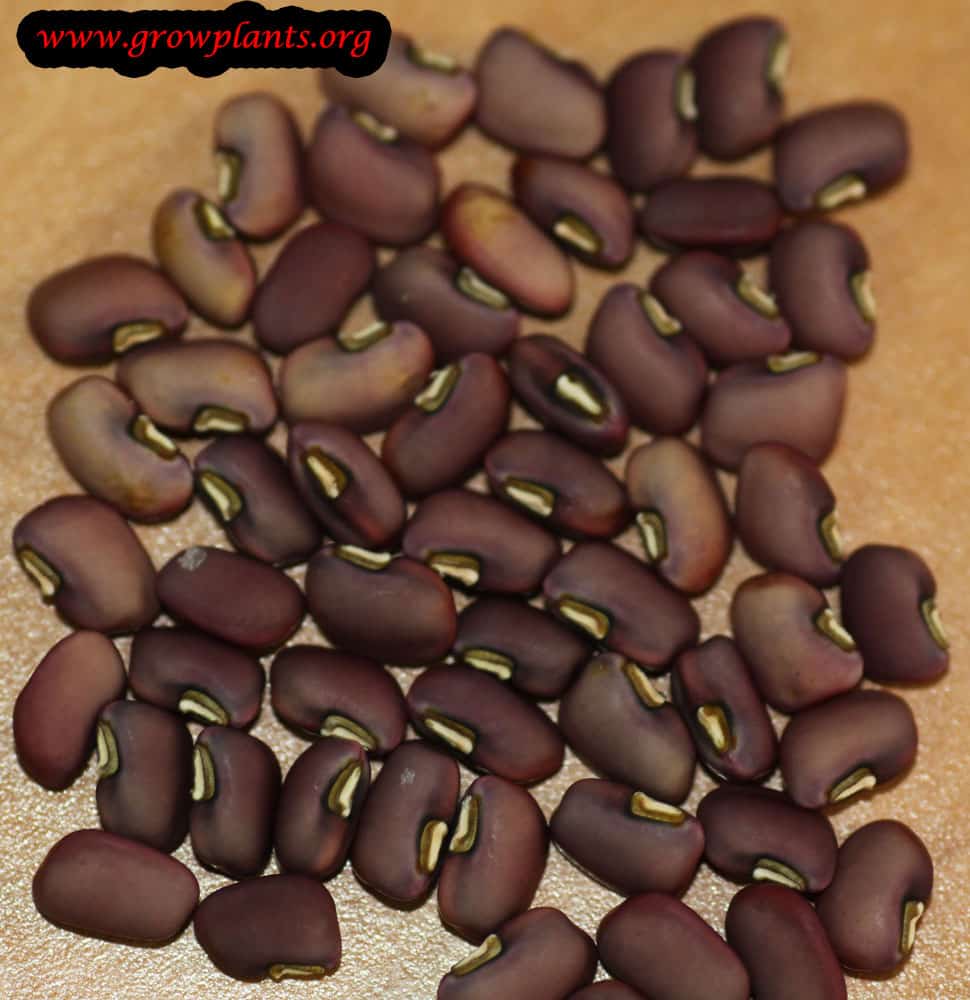
The dry beans store well kept cool and dry.
Dormancy & Pre-Sowing Treatment
No dormancy treatment is needed; cowpea germinates readily in warm soil. On new ground a compatible cowpea-group inoculant is beneficial for nitrogen fixation, though not required for germination.
Sowing Season & Conditions
Sow in spring to early summer once the soil is warm; the plant is vigorous and can climb, so give it space or support.
Germination Time
Seed usually germinates within about a week in warm, moist soil.
Bloom & Flower Guide
Quick Details
- Bloom Season: Spring through autumn in warm conditions
- Time to First Bloom: In its first season, often within about two months of sowing
- Flower Appearance: Butterfly-shaped (pea-type) flowers in purple, white or yellow
- Edibility: The flowers are not the harvested part; the plant is grown for its pods and beans (non-toxic)
Detailed Blooming Overview
Cowpea (Vigna unguiculata) is a fast warm-season legume that comes into flower quickly once the weather is reliably warm. The blooms have the classic “butterfly” form of the pea family and each one is short-lived, soon giving way to a slender pod.
Flower Characteristics
- Pea-family flowers with the familiar keel-and-wing shape, in purple, white or yellow.
- Borne on short stalks among the foliage; each flower opens briefly before setting a pod.
Bloom Care & Thinning
- Encouraging bloom: Steady warmth and full sun bring on flowering; avoid heavy nitrogen feeding, which favours leaves over flowers.
- Pollination & seed set: Cowpea is mainly self-pollinating, with bees as helpful visitors that can improve pod set.
Bloom Health & Protection
- Cowpea aphids can cluster on the flower stalks and buds. What helps: a strong jet of water, or an insecticidal soap or neem oil.
Fruit & Uses
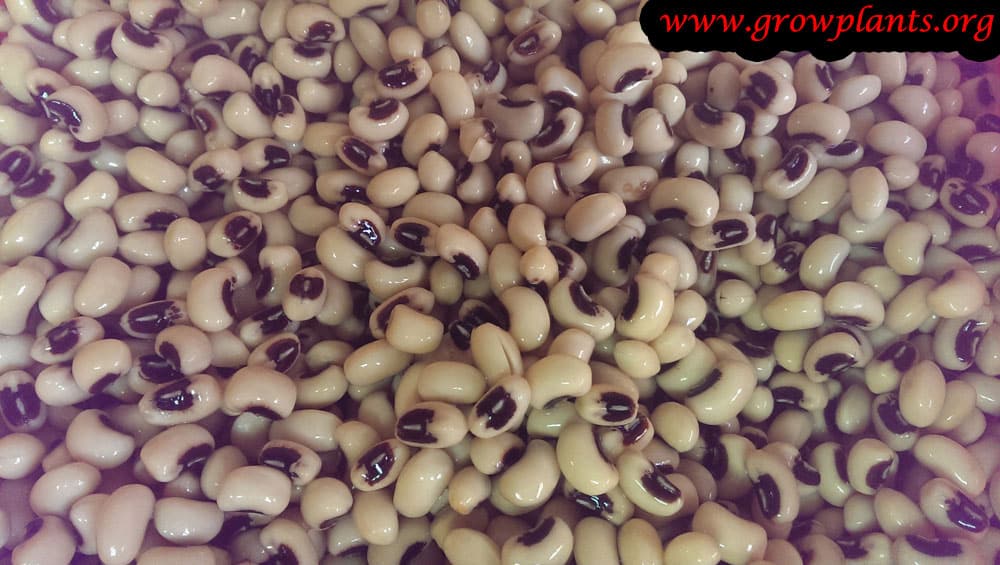
Cowpea is grown for its seeds, which are eaten as young green pods or as mature dry beans, both of which are cooked before eating. Dry cowpea beans, like other pulses, must be thoroughly cooked and are not eaten raw.
Quick Edible Specs
| Edible Parts | Young green pods (about 5–20 cm long) and the mature dry beans (seeds) |
|---|---|
| Main Use(s) | Culinary – cooked and stir-fried |
| Eaten Raw or Cooked | Cooked |
| Preparation Required | Cook – young pods cooked fresh like green beans; mature dry beans soaked and thoroughly cooked |
| Harvest Season | Spring, summer and autumn |
| Time to First Harvest | A few weeks from sowing to the first green pods – see the growing/care notes for the exact bearing time |
| Storage | Fully dried mature beans keep well in a cool, dry place; young pods are used fresh |
| Safety/Toxicity Caveat | Dry beans (pulses) should be thoroughly cooked before eating, not consumed raw or undercooked |
Seeds, Pods & Nuts
Cowpea can be picked young, when the whole green pod (roughly 5–20 cm long) is tender and cooked like a green bean, or left to mature so the pods dry and the beans harden into storable dry beans. Both the green-pod stage and the dry-bean stage are used; the choice determines whether you cook fresh pods or dried seed.
Harvesting
For green pods, pick while they are still tender. For dry beans, let the pods ripen and dry on the plant, then collect them in time – or place a sheet under the plant to catch the beans – so the seeds are not lost as the pods shatter.
Preparation, Uses & Safety
Young green pods are cooked fresh and can be stir-fried; mature dry beans are soaked and cooked in stews and other dishes. As with other pulses, dry beans should be thoroughly cooked before eating and not consumed raw or undercooked.
Pests, Diseases & Troubleshooting
Cowpea is a tough, heat-loving legume, but it draws several specialist pests – above all the cowpea aphid, which both weakens plants and spreads viruses – along with pod borers, pod-feeding weevils and, below ground, root-knot nematodes. Because heat suits it, most problems here are pests and soil-borne diseases rather than heat stress; rotation, clean seed and early scouting are the backbone of control.
Quick Troubleshooting Overview
| Issue / Pest | Main Symptom | Primary Solution |
|---|---|---|
| Cowpea aphid | Dense black colonies on stems; virus spread | Water-jet, beneficials, insecticidal soap |
| Pod borer / curculio | Holed, scarred pods and damaged seeds | Scout at flowering, remove pods, Bt/rotate |
| Root-knot nematode | Galled roots, stunting, wilting | Rotate, resistant lines, add organic matter |
| Whitefly | White clouds, honeydew, virus spread | Sticky traps, oil/soap under leaves |
| Anthracnose / leaf spot | Sunken pod cankers, leaf spots | Clean seed, rotate, copper spray |
Common Pests & Management
- Cowpea aphid (Aphis craccivora):
- Symptoms: Shiny black aphids with pale legs forming dense colonies on stems, growing points and pods; they stunt and distort plants, coat them in honeydew, and transmit several damaging viruses.
- Prevention & Control: Scout early and hose off colonies, protect ladybirds and lacewings, and control weeds that host them. Because of the virus risk, treat building colonies promptly with insecticidal soap or neem/horticultural oil, spraying in the cool of the evening.
- Legume pod borer (Maruca vitrata):
- Symptoms: Larvae web and bore into flowers and pods, hollowing seeds and leaving frass; a major cause of pod loss in warm climates.
- Prevention & Control: Inspect at flowering and remove webbed buds and holed pods; encourage parasitic wasps and birds. Bacillus thuringiensis (Bt) or spinosad at flowering kills young larvae; clear residue after harvest.
- Cowpea curculio (Chalcodermus aeneus):
- Symptoms: Dark snout weevils whose feeding and egg-laying leave wart-like scars and ‘stung’ spots on pods, with grubs destroying seeds inside.
- Prevention & Control: Rotate crops and destroy old cowpea debris to break the cycle, harvest promptly, and pick off adults where practical; a well-timed organic insecticide at pod set helps in bad years.
- Root-knot nematodes (Meloidogyne spp.):
- Symptoms: Knobbly galls swelling the roots, with stunting, wilting in the heat of the day and poor yields on infested ground.
- Prevention & Control: Rotate with non-host crops, grow root-knot-resistant cowpea lines, and build soil organic matter and beneficial microbes; solarising or resting infested beds reduces populations.
- Glasshouse whitefly (Trialeurodes vaporariorum):
- Symptoms: Tiny white moth-like insects that rise in a cloud when foliage is disturbed; scale-like nymphs on leaf undersides suck sap and excrete honeydew, leading to sooty mould and weak, yellowing growth.
- Prevention & Control: Hang yellow sticky traps to monitor and thin the adults; encourage the parasitic wasp Encarsia formosa under cover and keep plants unstressed. Spray insecticidal soap or horticultural oil onto leaf undersides, repeating every few days to break the life cycle.
Diseases & Fungal Issues
- Anthracnose (Colletotrichum spp.):
- Symptoms: Dark, sunken spots and cankers on pods, stems and leaves, with pink spore masses in wet weather; seed-borne.
- Treatment & Management: Use clean, resistant seed, rotate, keep foliage dry, and remove infected debris; copper fungicide protects in prolonged wet spells.
- Cercospora leaf spot (Cercospora / Pseudocercospora spp.):
- Symptoms: Reddish-brown spots with pale centres on leaves, merging and causing defoliation in humid weather.
- Treatment & Management: Space for airflow, water at the base, and clear residue; resistant varieties and a protective copper or appropriate fungicide help under heavy pressure.
- Cowpea mosaic / aphid-borne viruses (e.g. Cowpea aphid-borne mosaic virus):
- Symptoms: Mottling, vein-banding, leaf distortion and stunting; spread by aphids and often through seed.
- Treatment & Management: No cure – remove affected plants, control aphids rigorously, and plant certified clean, resistant seed.
Growing Difficulties & Abiotic Problems
- Excess vigour / invasiveness:
- Cause & Symptoms: Cowpea can sprawl and self-seed freely, crowding neighbours – the ‘aggressive, invasive’ trait noted.
- Correction Strategy: Trellis or space it deliberately, harvest pods before they shed seed, and pull volunteers early.
- Poor set on heavy or waterlogged soil:
- Cause & Symptoms: Though heat-tolerant, cowpea resents wet, compacted ground, which invites root rots and poor nodulation.
- Correction Strategy: Grow on free-draining soil, inoculate seed with rhizobia where beans are new to the plot, and avoid overwatering.
What Helps – Products & Tools
Reach for insecticidal soap and light horticultural or neem oil against aphids, mites and whitefly; Bacillus thuringiensis (Bt) targets pod-boring caterpillars without harming bees; yellow sticky traps monitor whitefly and bean fly. For seed pests store dry seed with diatomaceous earth or freeze it for a few days. Copper-based fungicide checks anthracnose, rust and halo blight, and choosing certified disease-free, resistant seed prevents most trouble.