Plant Profile & Key Characteristics
Overview: A fast-growing annual legume reaching 15-40 cm (6-16 in), grown for its edible seeds (chickpeas) and as a soil-enriching, nitrogen-fixing crop. It completes its life cycle in a single season and suits both beds and containers.
Quick Specifications
| Specification | Attribute |
|---|---|
| Plant Type / Life Cycle | Annual (herbaceous legume) |
| Mature Size | 15-40 cm (6-16 in) tall |
| Growth Rate | Fast |
| Root System | Fibrous, with nitrogen-fixing root nodules |
| Toxicity | Non-toxic / edible |
| Hardiness | USDA zones 2-10a |
Growth Form & Structure
- Height & Spread: 15-40 cm (6-16 in); grows well in the ground or in containers
- Growth Habit & Form: Low, bushy herbaceous annual
- Lifespan & Maturity: Annual; sown and harvested within one growing season
Anatomy & Physical Features
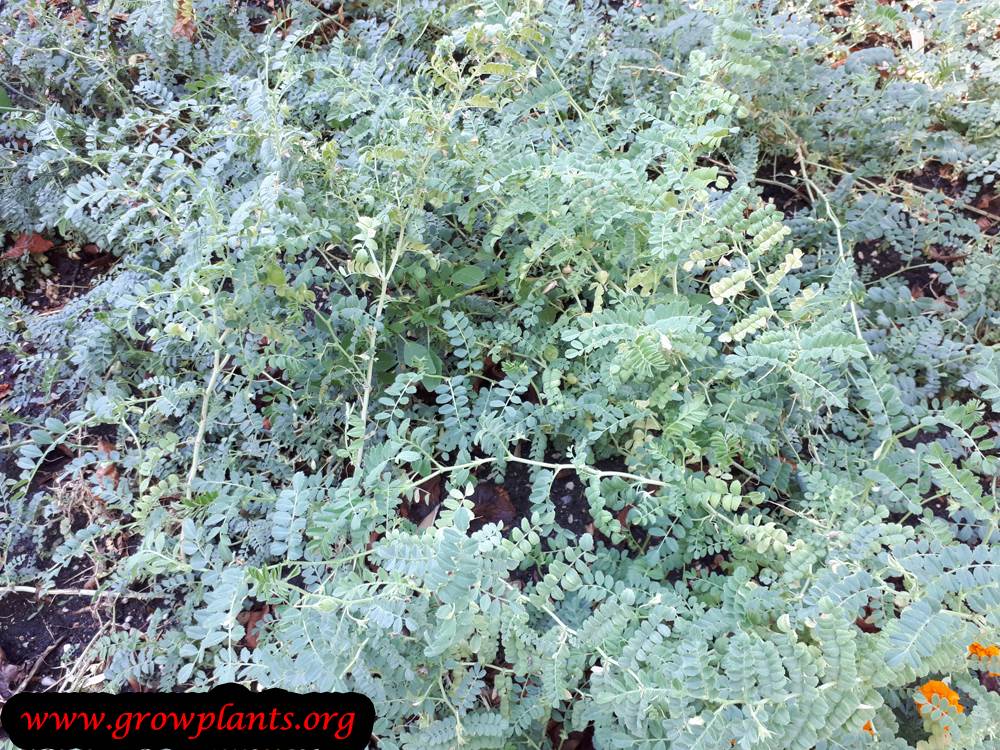
- Leaves & Foliage: Green, finely hairy leaves, pinnate with small elliptic leaflets
- Flower Characteristics: Small pea-type flowers in purple, pink or blue
- Fruit Profile: Short green pods ripening to brown, each holding 1-3 edible seeds
Primary Uses & Landscape Value
- Edible Uses: Seeds cooked, made into hummus/paste, or added to soups
- Functional & Ornamental Roles: Nitrogen-fixing legume used to enrich soil as a green-manure or rotation crop
Care Guide: Planting, Soil & Watering
Overview: The chickpea (Cicer arietinum) is a warm-season annual legume that wants full sun and light, well-drained soil. It needs only low to moderate water and is quite drought-tolerant, fixing its own nitrogen as it grows.
Quick Care Requirements
| Requirement | Ideal Condition |
|---|---|
| Planting Season | Spring, once the soil has warmed (autumn crop in frost-free zones 10b–11) |
| Growth Rate | Fast |
| Soil Type | Light, well-draining |
| Water Need | Low to Moderate – let the soil dry between waterings; avoid waterlogging |
Planting & Establishment
- Best Planting Season: Sow in spring after the soil warms; in warm zones (10b–11) it can be grown as an autumn or winter crop. It needs a warm summer to fill its pods.
- How to Plant:
- Hole Preparation: Prepare a loose, well-drained seedbed in full sun, and give plants space – a worthwhile crop needs room.
- Soil Amendments: It fixes its own nitrogen, so do not over-feed; a little compost for structure is enough, and make sure drainage is sharp.
- Planting Depth: Sow or set plants so the seed or roots sit a few centimetres down; set transplants at the same depth they grew – do not bury the stem.
- Growth Speed & Expectations: A fast grower; a compact plant 15–40 cm tall that yields seed in about 80–120 days.
Soil, Watering & Drainage Care
- Soil Mix & Drainage Needs: Light, free-draining soil is essential – chickpeas dislike wet feet. They also grow in containers with a well-drained mix and drainage holes.
- Watering Schedule & Technique:
- Young / Newly Planted: Keep the soil lightly moist while seedlings establish, but never soggy.
- Established: Fairly drought-tolerant – water sparingly to moderately and let the soil dry between waterings; too much water invites disease.
- Seasonal Adjustments: A little more water during flowering and pod-fill in dry heat; keep it on the dry side otherwise.
Climate, Light & Hardiness
Chickpea is an annual, nitrogen-fixing pulse grown in full sun that establishes in cool conditions but needs a warm, dry finish to fill and ripen its seed. The site data retains a hardiness range - roughly USDA zone 2–10a for spring sowing and zone 10b–11 for autumn sowing - because the sowing season is shifted to give the crop cool early growth followed by warm, frost-free maturation.
Quick Climate Specifications
| Climate Zones | Mediterranean, temperate, subtropical, desert (semi-arid) |
|---|---|
| USDA Hardiness Zones | Approximately 2–10a (spring-sown) or 10b–11 (autumn-sown) - site data |
| Optimal Temp Range | Approximately 18–28°C (64–82°F) |
| Cold Damage Begins | Young plants take light frost; hard freeze damages growth, and cold at flowering hurts pod set |
| Frost Tolerance | Low to moderate (young plants take light frost) |
| Light Conditions | Full sun |
| Wind Tolerance | Moderate |
Sunlight & Light Exposure
Optimal Light Setup
Full sun is needed for sturdy plants and good seed fill.
Direct Sun Requirement
A full-sun crop - shade thins the stand and cuts yield.
Temperature Extremes & Hardiness
USDA Hardiness & Regional Limits
The site keeps a hardiness range despite the annual habit: cold-winter regions sow in spring for a summer crop, while frost-free zone 10b–11 sows in autumn to grow through the cool season and ripen before summer heat. This is a shift in planting window, not a change in the plant's cold tolerance.
Cold Damage & Winter Protection
Seedlings tolerate light frost, which allows autumn/winter sowing in mild climates, but a hard freeze damages the crop and cold, wet weather at flowering reduces pod set.
Frost Sensitivity
Fairly frost-tolerant when young for a legume, but not reliably hardy through hard freezes; time sowing so flowering avoids both severe frost and extreme heat.
Extreme Heat Tolerance
Good for vegetative growth - it is a heat- and drought-adapted, semi-arid crop - but very high temperatures during flowering can reduce pod and seed set.
Frost-Free Growing Season
A warm, frost-free spell of roughly 80–120 days is needed to flower, fill and dry the seed; the crop is timed so this maturation period falls in warm, rain-free weather.
Wind, Humidity & Microclimate
Dry-Air Tolerance
Excellent - it is well suited to dry air and semi-arid, low-humidity conditions, which also reduce foliar disease.
Wind Tolerance
Reasonably sturdy; the short, bushy plants handle moderate wind.
Rainfall & Seasonal Moisture
Adapted to a cool-moist start and a dry finish; humid or wet weather during pod fill encourages disease, so a drier ripening period is ideal.
Microclimate Recommendations
An open, sunny, well-drained site with a dry maturation window gives the cleanest, best-filled crop.
Growing in Pots, Balconies & Indoors
The chickpea is a small, bushy annual that grows happily in a pot on a sunny balcony, patio or bright windowsill – it is not a houseplant, but it is compact enough to crop on a very sunny sill.
Quick Details
- Container Size: About 10-20 L (3-5 gal), one or two plants per pot
- Indoor Suitability: Not a deep-indoor houseplant; compact enough to crop on a very sunny sill
- Best Spot: Full sun – the sunniest balcony, patio or windowsill you have
- Soil & Drainage: Aerated, organic-rich mix – peat or coir with perlite or vermiculite; must drain freely
- Watering in Pots: Water moderately – let the surface dry slightly between waterings; avoid standing water
Indoors & On the Windowsill
- Houseplant limits: Not a true houseplant – it needs strong direct sun that a room interior cannot supply.
- Windowsill growing: On the brightest, sunniest sill a plant or two can be podded in a pot; expect a modest harvest.
On a Balcony or Patio
- Light, heat & wind: Give it the sunniest spot you can. Walls, railings and paving reflect heat, so pots dry quickly – check moisture daily in warm weather, and shelter tall growth from wind. A drip irrigation kit with a timer can take over that watering check automatically.
Choosing the Pot, Soil & Long-Term Care
- Pot & drainage: A 10-20 L pot with strong drainage holes; skip a standing water saucer to avoid root rot. Terracotta breathes and dries fast; glazed or plastic holds moisture longer.
- Potting mix: Use a well-aerated, organic-rich mix – peat or coir blended with perlite or vermiculite for free drainage.
- Feeding: Potted plants lose nutrients as watering leaches them, so feed more often than in open ground. As a legume it fixes much of its own nitrogen, so favour a low-nitrogen feed richer in phosphorus and potassium.
- Annual crop: Grown fresh each season – clear the pot and replant rather than repotting.
Fertilizing & Feeding
This is a light feeder: as a legume it fixes much of its own nitrogen, so rely on soil organic matter and only a light balanced feed, leaning on potassium as pods fill.
Quick Fertilizing Specs
| Feeding Level | Light – a legume that fixes much of its own nitrogen. |
|---|---|
| young_feeding | A modest balanced feed as seedlings establish. |
| mature_feeding | Light feeding that leans on potassium as pods fill. |
| Main Nutrient Priority | Balanced nutrition with restrained nitrogen; potassium at pod fill. |
| Best Feeding Period | Through the active growing season. |
| Organic Options | Compost or well-rotted organic matter worked into the bed. |
| Soil pH | Near neutral to slightly acidic suits most legumes. |
| Reduce/Stop Feeding | Ease off as the crop matures and pods dry. |
| Micronutrients | Rarely needed; correct only if a deficiency shows. |
Feeding by Growth Stage
Establishment after sowing
Settle young seedlings and encourage steady early root and shoot growth.
| Nutrient direction | A modest, balanced complete fertilizer; lean on soil organic matter rather than heavy feeding. |
|---|---|
| Timing | As seedlings emerge and begin active growth. |
| Frequency | A light feeding as the seedlings establish, no more than the young plants need. |
| Fertilizer types | Balanced complete fertilizer, Compost or well-rotted organic matter worked into the bed |
| Precautions | Avoid pushing tender seedlings with strong fertilizer; water it in well. |
Leafy vegetative growth
Build a healthy leafy framework without forcing soft, pod-poor growth.
| Nutrient direction | Go easy on nitrogen – as a legume this plant fixes much of its own; favor a balanced feed with restrained nitrogen. |
|---|---|
| Timing | Through the main flush of leafy growth before flowering. |
| Frequency | Light, spread-out feedings during active growth. |
| Fertilizer types | Balanced complete fertilizer, nitrogen kept modest |
| Precautions | Excess nitrogen delays flowering and drives leaves over pods. |
Flowering, pod set and harvest
Support flowering, pod set and seed fill for a full harvest.
| Nutrient direction | Shift toward potassium as flowers and pods form while keeping nitrogen modest. |
|---|---|
| Timing | From first flowering through pod and seed fill. |
| Frequency | Light feeding that leans on potassium as pods develop. |
| Fertilizer types | Balanced fertilizer supplying adequate potassium |
| Precautions | Keep watering steady during pod fill; do not overfeed with nitrogen now. |
Nutrient Deficiency Signs & Corrections
Overall pale, yellow-green foliage and weak growth even on reasonable soil.
| Possible causes | Poor rhizobial nodulation, so little nitrogen is being fixed, Cold or waterlogged soil suppressing root and nodule activity, Genuinely low soil nitrogen on very poor ground |
|---|---|
| Appears first on | Older, lower leaves first. |
| What to check | Dig a root and look for pink, active nodules, Soil drainage and temperature, Whether the seed or bed carried the right legume inoculant |
| Possible correction | Ensure the right rhizobia are present, improve drainage and warmth, and give only a modest balanced feed if the ground is truly poor. |
Yellowing between the veins of the youngest leaves while the veins stay green.
| Possible causes | High or alkaline soil pH locking up iron and manganese, Waterlogged or cold roots reducing micronutrient uptake, Occasionally low available iron or manganese in the soil |
|---|---|
| Appears first on | New growth at the shoot tips. |
| What to check | Soil pH, Drainage and watering habits, Whether symptoms follow cool, wet spells |
| Possible correction | Correct soil pH toward the plant’s preferred range, improve drainage, and if it persists apply a chelated iron or manganese product per its label. |
Browning, scorched margins on older leaves, worst as pods and seeds fill.
| Possible causes | Low soil potassium, Sandy soils where potassium leaches readily, Drought stress concentrating demand during pod fill |
|---|---|
| Appears first on | Older, lower leaves. |
| What to check | Soil test for potassium, Soil texture and leaching, Watering consistency during pod fill |
| Possible correction | Use a balanced fertilizer that supplies adequate potassium and keep watering steady through pod fill. |
Scorched leaf edges, wilting, or white crusting on the soil despite adequate water.
| Possible causes | Over-application of fertilizer, Poor leaching in containers or heavy soil, Letting the root zone dry out between heavy feeds |
|---|---|
| Appears first on | Leaf margins and tips; container plants first. |
| What to check | Recent fertilizer amounts, Drainage, Soil crusting or white surface residue |
| Possible correction | Ease off feeding, water thoroughly to flush excess salts from the root zone, then feed only lightly. |
Pruning, Training & Seasonal Maintenance
Chickpea is a small annual grain legume (15–40 cm) that needs no structural pruning — the source rightly notes there is no pruning requirement, and the plant simply grows, flowers, sets its 1–3-seed pods and is harvested whole. Any intervention is limited to an optional early tip pinch to encourage branching and to removing diseased or collapsed growth. Because the crop matures and is pulled at the end of a single season (about 80–120 days to seed), there is no seasonal, renewal or flowering-wood pruning to consider.
Pruning & the Edible Harvest
Chickpea is grown for its edible dry seeds and runs a single season to harvest, so pruning has minimal effect on the crop. At most an optional early tip pinch adds a little branching and a few more pod-bearing points; removing healthy leaves only reduces the seeds you are growing.
Quick Pruning & Maintenance Specs
| Pruning Tolerance | Low need — not a plant that is pruned |
| Primary Pruning Window | Optional early tip pinch while young |
| Typical Frequency | None routinely; sanitary removal only |
| Main Objective | Let the plant grow undisturbed to seed |
| Young Plant Priority | Optional pinch for a bushier, multi-branch plant |
| Mature Plant Priority | Remove only diseased or damaged growth |
| Best Tool Type | Precision snips (rarely needed) |
Pruning by Plant Age & Size
Newly Established
Do not cut. Let the seedling establish; the plant branches naturally into a low, bushy form.
Young / Formative
No training system applies. At most, pinch the main growing tip once early on to encourage side branches and more pod-bearing points — a purely optional step, not a requirement.
Mature / Established
Leave the plant to flower and fill its pods undisturbed. Remove only aphid- or mite-damaged or diseased shoots.
Seasonal Pruning Schedule
Ongoing Sanitary
Objective: keep the small crop clean. Remove: shoots damaged by aphids or mites, or any diseased tissue. Do NOT remove: healthy foliage — every leaf is fuelling the seed you are growing. Impact: sanitary removal protects yield; no other cutting benefits the plant.
Special Growth to Remove
There are no suckers, watersprouts or spent woody stems to manage. The whole plant is lifted at harvest once the pods dry.
Container & Small-Space Pruning
In a pot the approach is identical — no pruning, just an optional early pinch for a fuller plant. Chickpea foliage exudes a mildly acidic film, so wear gloves when handling wet plants closely.
Tools
Only precision snips, and only for the rare removal of a diseased shoot. No secateurs, loppers or saw are ever needed.
Tool Hygiene & Disease Risk
Routine: if you do cut out diseased tissue, use a clean blade and remove the material from the bed to limit spread of the noted pests and any leaf disease. No tool-borne pathogen otherwise applies.
Cut Placement & Technique
For an optional pinch, nip the soft growing tip just above a leaf. For sanitary cuts, remove the affected shoot back to healthy tissue.
Post-Pruning Care
Keep the plant in full sun with modest, even water; chickpea is fairly drought-tolerant and dislikes waterlogging. No feeding or special aftercare follows the minimal cutting described.
Common Pruning Mistakes
- Cutting back a healthy plant in the mistaken belief it needs pruning — it does not, and removing leaves reduces the seed crop.
- Handling wet foliage bare-handed and ignoring the acidic leaf exudate.
- Overhead watering after removing diseased tissue, which spreads leaf pathogens.
When NOT to Prune
Essentially always: do not prune a healthy chickpea. Intervene only to remove clearly diseased or damaged growth, and never strip foliage during flowering and pod fill.
Recommended Tools (by task)
- precision_snips — the only tool that fits: occasional removal of a diseased shoot or a single early tip pinch.
Propagation Guide
Chickpea is grown only from seed, and because it is a self-pollinating annual, saved seed comes true to type. Sow it directly into warm, well-drained soil; no dormancy treatment is needed.
Quick Propagation Specs
| Best Propagation Method | Seed, direct-sown |
| Propagation Difficulty | Easy |
| Seed True-to-Type | Yes — self-pollinating |
| Best Propagation Season | Spring |
| Germination Temperature | Roughly 15–25°C (59–77°F) |
| Seed Sowing Depth | About 4–6 cm (1.5–2.5 in) |
Growing from Seed
Seed Handling & Viability
Store dry and sow plump, whole seed. Each pod carries only one to three seeds, so keep back enough for the space you plan to plant.
Sowing Season, Depth & Germination
Sow in spring, about 4–6 cm (1.5–2.5 in) deep, into warm soil that is moist but never waterlogged — seed rots easily in cold, wet ground.
Seedling Care
Grow in full sun with room to spread; a worthwhile crop needs a fair area of plants.
Bloom & Flower Guide
Quick Details
- Bloom Season: Spring
- Time to First Bloom: Roughly six to eight weeks after sowing, in the same season
- Flower Appearance: Small pea (butterfly-shaped) flowers in shades of purple, pink or blue, and sometimes white
- Edibility: Grown for its peas, not as an edible flower
Detailed Blooming Overview
Chickpea produces delicate pea-family flowers, usually carried one at a time on short stalks from the leaf joints rather than in showy clusters. Each pollinated flower forms a short pod holding one or two seeds. The plant flowers over an extended spell in spring as it comes into its cropping stride.
Flower Characteristics
- Small butterfly-shaped flowers in purple, pink or blue tones.
- Borne singly on the plant rather than in large clusters.
Bloom Care & Thinning
- Pollination: Largely self-pollinating, so a good crop sets even with few insect visits.
- Steady conditions at bloom: Even moisture and warmth during flowering give the best pod set; this is a drought-tolerant crop but flowering is the moment it most values water.
- Feeding: As a nitrogen-fixer it needs little extra nitrogen, which would favour foliage over flowers.
Fruit & Uses
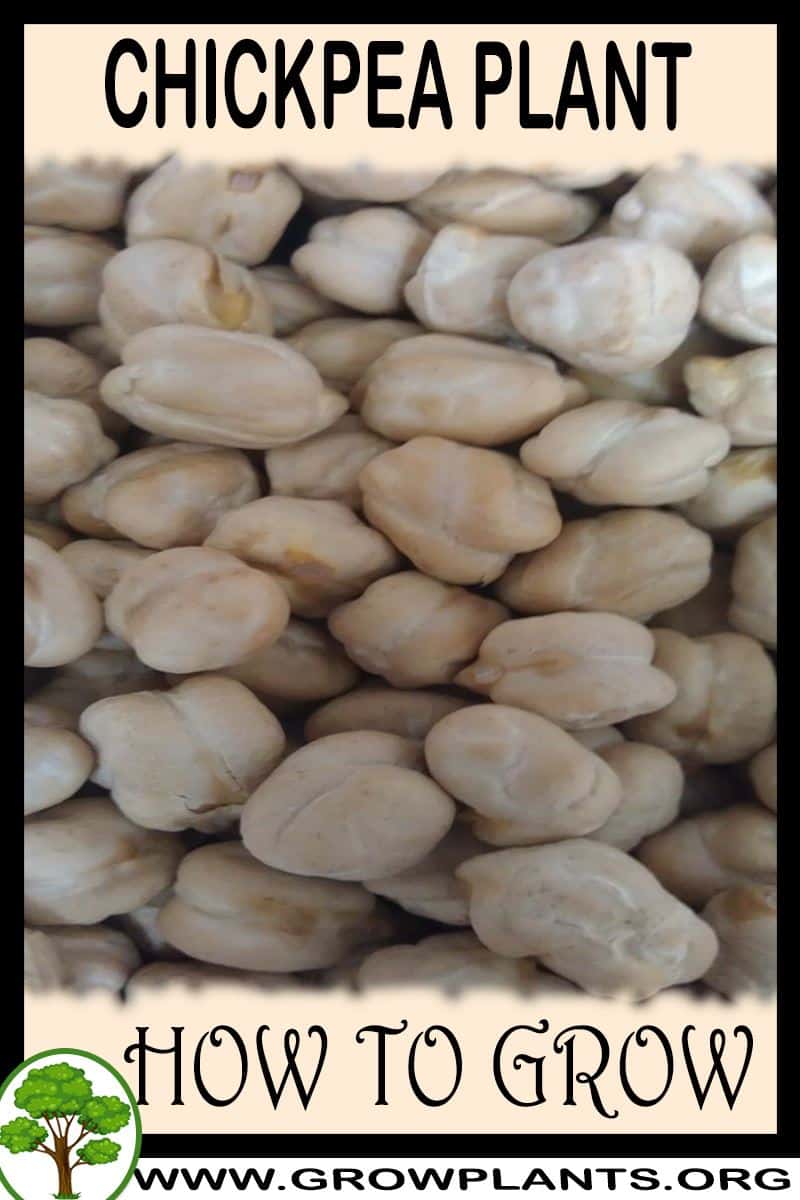
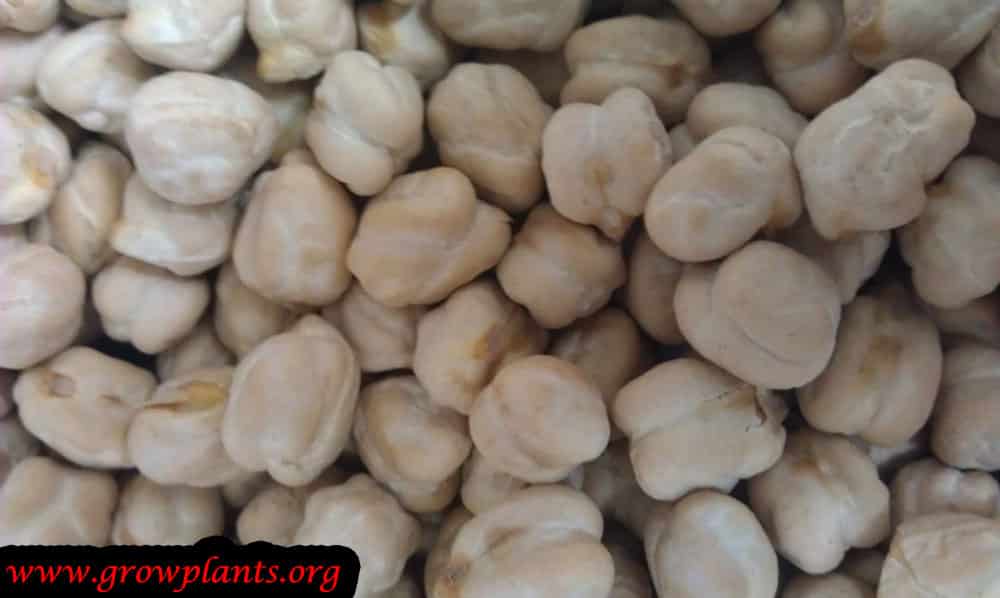
Chickpea is grown for its edible seeds, which develop 1–3 to a pod. The dried seeds are cooked and are the base of dishes such as hummus paste and soups.
Quick Edible Specs
| Edible Parts | Seeds (the chickpeas) |
|---|---|
| Main Use(s) | Cooked pulse – hummus (paste), soups and stews |
| Eaten Raw or Cooked | Cooked |
| Preparation Required | Dried seeds are soaked and then cooked |
| Harvest Season | Yield in spring and summer; seeds gathered once the pods turn brown and dry |
| Safety/Toxicity Caveat | Eat the seeds cooked, not raw |
Seeds, Pods & Nuts
Each green pod holds 1–3 seeds and turns brown when ripe. Let the pods dry on the plant, then collect and shell the seeds. Young immature seeds can also be eaten fresh as green chickpeas, but the main crop is the dried, mature seed.
Preparation, Uses & Safety
Soak the dried chickpeas and boil them until tender before using in hummus, soups and stews. Cook before eating.
Pests, Diseases & Troubleshooting
Overview: Chickpea’s headline pest is the pod borer, while its make-or-break disease is ascochyta blight, followed by soil-borne Fusarium wilt and root rots. The crop rewards clean, disease-free seed, wide rotations away from other legumes, well-drained soil and resistant varieties; scout pods as they fill and act early on blight in wet weather.
Quick Troubleshooting Overview
| Issue / Pest | Main Symptom | Primary Solution |
|---|---|---|
| Pod borer (Helicoverpa) | Round holes in pods, hollowed seeds | Scout, Bt/spinosad, pheromone traps, encourage parasitoids |
| Aphids | Curled tips, honeydew, virus spread | Beneficials, insecticidal soap, remove weeds |
| Leaf miner | Serpentine mines / blotches in leaves | Remove leaves, sticky traps, parasitic wasps |
| Ascochyta blight | Tan lesions with dark specks on stems/pods | Clean seed, rotation, resistant vars, airflow |
| Fusarium wilt | Sudden yellowing, wilting, stem browning | Resistant varieties, rotation, well-drained soil |
| Botrytis grey mould | Grey fuzz on dense wet canopy, flower/pod rot | Wider spacing, airflow, avoid dense lush growth |
Common Pests & Management
- Gram pod borer / cotton bollworm (Helicoverpa armigera):
- Symptoms: The key pest: caterpillars chew round entry holes in pods and hollow out the developing seeds, often with the head thrust inside the pod; they also graze foliage and buds. Frass and empty pods signal heavy loss.
- Prevention & Control: Scout pods from flowering onward and act at low thresholds. Hang pheromone traps to time control and encourage Trichogramma egg parasitoids and predators. Bacillus thuringiensis (Bt), NPV virus or spinosad target young larvae selectively; rotate modes of action and avoid broad-spectrum sprays that flare secondary pests.
- Aphids (Aphis craccivora, Acyrthosiphon pisum):
- Symptoms: Colonies on shoot tips, undersides and flowers cause curling, stunting and honeydew; more damagingly, they transmit viruses (e.g. bean/pea leafroll and mosaic viruses) that yellow and stunt plants.
- Prevention & Control: Conserve ladybirds, lacewings and parasitic wasps, and manage weeds that host aphids and viruses. Reflective mulch deters landing. Treat hot-spots with insecticidal soap or neem oil; reserve stronger products for early, virus-risk infestations.
- Leaf miner (Liriomyza spp.):
- Symptoms: Pale serpentine tunnels and blotches within leaflets; heavy mining bleaches and drops leaves, reducing pod fill.
- Prevention & Control: Remove and destroy mined leaves, monitor adults on yellow sticky traps, and conserve parasitic wasps, which usually keep it in check. Avoid unnecessary sprays that kill those natural enemies.
- Cutworms and armyworms (Agrotis spp., Spodoptera spp.):
- Symptoms: Cutworms sever young seedlings at soil level overnight; armyworms defoliate in patches and can strip large areas quickly.
- Prevention & Control: Clear weeds before sowing, use collars around scarce seedlings, and scout at dusk. Encourage birds and ground beetles; treat outbreaks with Bt (young larvae) or spinosad, targeting evenings.
- Bruchid seed beetles (Callosobruchus chinensis, C. maculatus):
- Symptoms: A storage pest: adults lay on drying/stored seed and grubs bore inside, leaving round exit holes and powdery frass; germination and quality collapse.
- Prevention & Control: Harvest and dry promptly, store in clean, sealed containers, and use cold storage or hermetic bags. Freezing or solar heating of small lots kills eggs and larvae; discard infested seed.
Diseases & Fungal Issues
- Ascochyta blight (Ascochyta rabiei):
- Symptoms: The major disease: tan to brown lesions with concentric rings and tiny dark fruiting bodies (pycnidia) on leaves, stems and pods; stem girdling breaks plants, and pod lesions infect the seed. Spreads fast by rain-splash in cool, wet weather.
- Treatment & Management: Start with certified, disease-free (and where available seed-treated) seed and grow resistant varieties. Rotate 3+ years away from chickpea, bury or remove infested stubble, and avoid working plants when wet. Wider rows and airflow slow spread; apply protectant fungicides preventively in wet seasons.
- Fusarium wilt (Fusarium oxysporum f. sp. ciceris):
- Symptoms: Sudden drooping and yellowing of whole plants or one side, stunting, and internal brown-black discolouration of the lower stem and roots; patches of dead plants appear. Soil-borne and long-lived.
- Treatment & Management: Grow resistant/tolerant varieties – the mainstay of control. Use long rotations, sow into warm well-drained soil (cool wet soils worsen it), and remove and destroy affected plants. Avoid moving infested soil between fields.
- Dry root rot & collar rot (Rhizoctonia bataticola (Macrophomina phaseolina), Sclerotium rolfsii):
- Symptoms: Dry root rot causes wilting in warm, dry, late-season conditions with shredded, brittle roots and tiny black sclerotia; collar rot rots the stem base with white fungal threads and mustard-seed-like sclerotia in warm, moist soil.
- Treatment & Management: Improve drainage, avoid moisture stress, and rotate away from susceptible crops. Remove debris and affected plants; where used, a Trichoderma seed/soil biocontrol and balanced irrigation reduce pressure.
- Botrytis grey mould (Botrytis cinerea):
- Symptoms: Grey fuzzy mould on flowers, pods and stems in dense, humid canopies, causing flower drop and pod rot; a major yield-robber in wet, lush crops.
- Treatment & Management: Avoid over-dense, over-fertilised stands; use wider spacing and orientation for airflow and quick drying. Remove infected material. Protectant fungicides help in prolonged wet, humid conditions during flowering.
- Root rot / damping-off complex (Pythium spp., Fusarium solani):
- Symptoms: Poor emergence, seedling collapse and soft, browned roots in cold, wet, poorly drained seedbeds.
- Treatment & Management: Sow quality seed into warm, well-drained soil at the right depth, avoid waterlogging, and consider a fungicide or Trichoderma seed treatment on risky ground.
Growing Difficulties & Abiotic Problems
- Waterlogging sensitivity:
- Cause & Symptoms: Chickpea is very intolerant of wet feet; waterlogged soil yellows and wilts plants, promotes root rots and stunts growth.
- Correction Strategy: Grow on well-drained or raised beds, avoid heavy, low-lying wet ground, and irrigate carefully – the crop prefers it on the dry side.
- Flower and pod drop:
- Cause & Symptoms: Heat spikes, cold nights at flowering, drought or waterlogging cause blossoms and young pods to abort.
- Correction Strategy: Time sowing so flowering avoids extreme heat or frost, keep moisture steady but not excessive during pod fill, and maintain balanced nutrition.
- Iron chlorosis on alkaline soil:
- Cause & Symptoms: Interveinal yellowing of new growth on high-pH, calcareous or waterlogged soils.
- Correction Strategy: Improve drainage, choose tolerant varieties, and apply chelated iron or a foliar micronutrient feed where lime-induced chlorosis appears.
- Herbicide and salinity injury:
- Cause & Symptoms: Cupping, yellowing or scorch from residual herbicides or salty soils/water, which chickpea tolerates poorly.
- Correction Strategy: Check herbicide plant-back intervals, avoid saline sites and water, and leach salts with good-quality irrigation where possible.
What Helps – Products & Tools
Build the crop on clean seed, rotation and resistant varieties, then scout pods and canopy. Useful products include Bacillus thuringiensis (Bt), spinosad or NPV and pheromone traps for pod borer, insecticidal soap or neem for aphids, yellow sticky traps for leaf miner, and protectant fungicides (and where available, seed treatments and Trichoderma) for ascochyta blight, botrytis and root rots. Follow labels and spray in the evening to protect pollinators.