Plant Profile & Key Characteristics
Overview: Wisteria is a deciduous, twining legume climber reaching 3-8 m (12-26 ft) or more, grown as an ornamental for its dramatic hanging clusters of pea flowers and as a shade or hedge plant. It is fast-growing and aggressive, with toxic seeds and pods, and needs strong support and regular pruning.
Quick Specifications
| Specification | Attribute |
|---|---|
| Plant Type / Life Cycle | Perennial (woody vine, legume) |
| Foliage Type | Deciduous |
| Mature Size | 3-8 m (12-26 ft) climbing |
| Growth Rate | Fast to moderate |
| Root System | Deep, vigorous, aggressive roots |
| Toxicity | Toxic (seeds and pods contain wisterin) |
| Hardiness | USDA zones 3-7 |
Growth Form & Structure
- Height & Spread: Climbs 3-8 m (12-26 ft) in the ground on a sturdy structure; can be grown in large containers and trained as a standard.
- Growth Habit & Form: Vigorous woody twiner; lower branches are removed to train it into a shade canopy or standard, and it needs firm support and hard pruning to control.
- Lifespan & Maturity: Very long-lived; may take several years to begin flowering, then blooms heavily each spring.
Anatomy & Physical Features
- Trunk & Bark: Thick, gnarled woody stems that can distort supports over time.
- Leaves & Foliage: Green pinnate leaves of pointed elliptic leaflets.
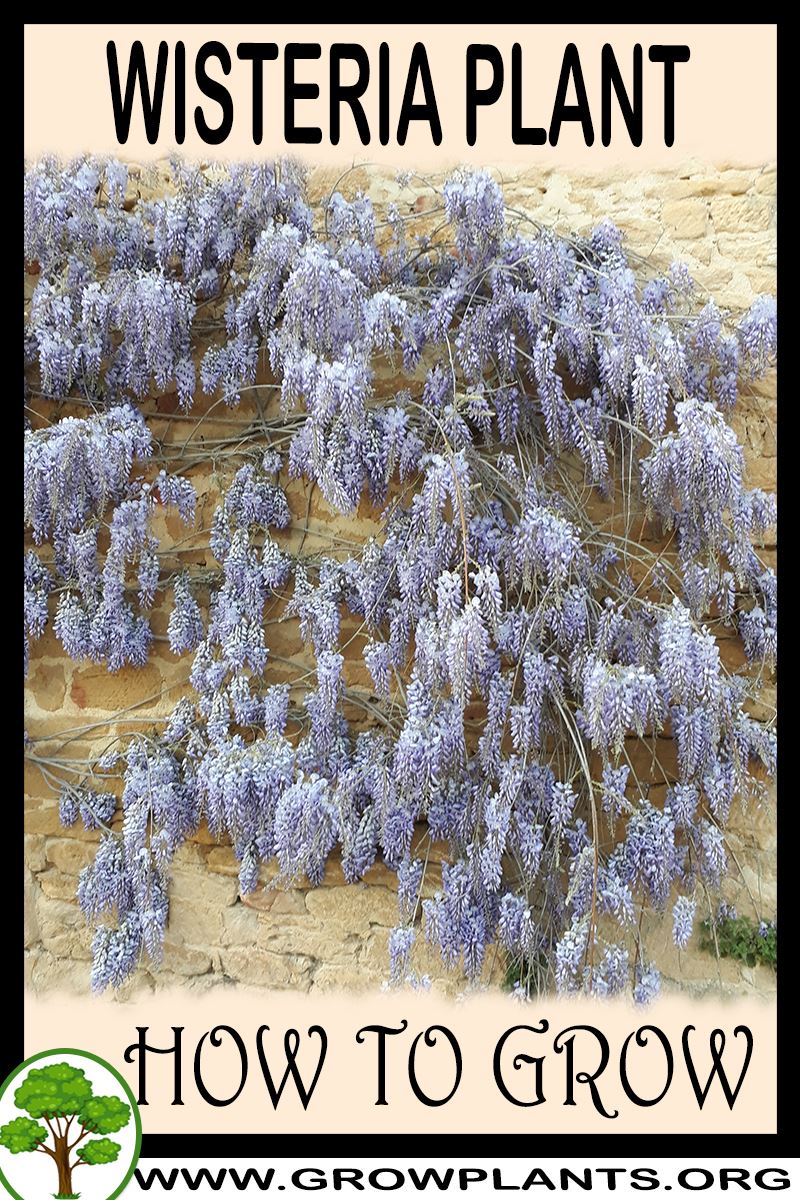
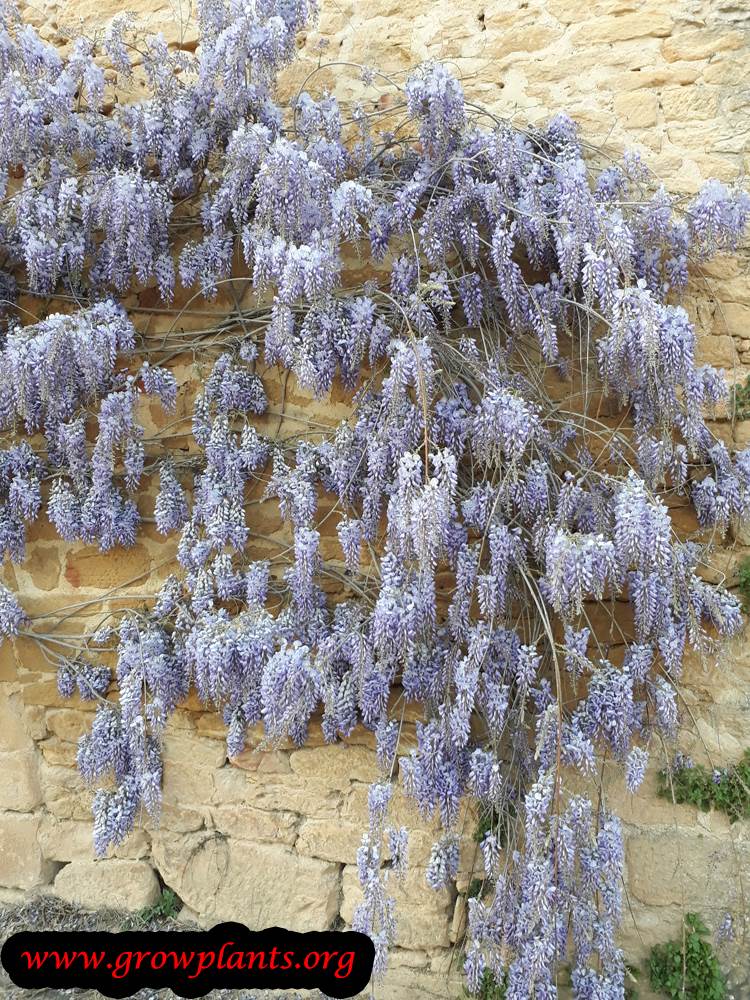
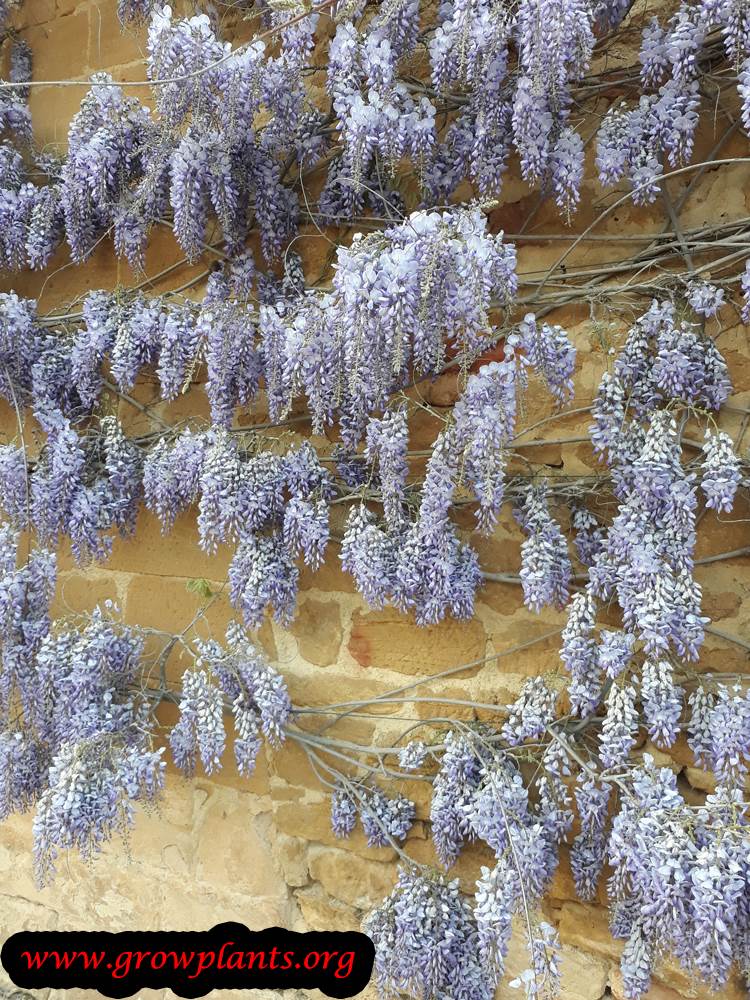
- Flower Characteristics: Long pendent racemes of pea-shaped flowers in purple, pink or white, often fragrant.
Primary Uses & Landscape Value
- Functional & Ornamental Roles: Ornamental flowering climber for pergolas, arbours and walls, shade cover and screening; site with care due to its size and invasive vigour.
Care Guide: Planting, Soil & Watering
Overview: Wisteria is a vigorous deciduous climbing legume that needs full sun, fertile, moist, well-drained soil, and winter chill to bloom. It is a thirsty, fast grower that appreciates steady, moderate-to-generous watering.
Quick Care Requirements
| Requirement | Ideal Condition |
|---|---|
| Planting Season | Winter to spring while dormant |
| Growth Rate | Moderate to Fast |
| Soil Type | Fertile, moist, well-drained soil |
| Water Need | Moderate to High – keep evenly moist |
Planting & Establishment
- Best Planting Season: Plant in winter to spring while dormant; it needs winter chill hours to flower well (zone 3-7).
- How to Plant:
- Hole Preparation: Dig a hole about twice the width of the root ball and as deep, and set a strong support in place first – mature vines are heavy.
- Soil Amendments: Work compost and organic matter into fertile, moisture-retentive but free-draining soil.
- Planting Depth: Set the plant at its original soil level, keeping any graft union above the surface.
- Growth Speed & Expectations: A fast, vigorous grower reaching 3-8 m; it can take several years to begin flowering.
Soil, Watering & Drainage Care
- Soil Mix & Drainage Needs: Wants fertile, moist, well-drained soil; it can be container-grown if pruned hard, but its roots are strong and spreading.
- Watering Schedule & Technique:
- Young / Newly Planted: Keep the soil consistently moist while it establishes.
- Established: Water regularly, especially in summer; it likes moderate to generous moisture.
- Seasonal Adjustments: More in the growing season, less over winter dormancy.
Climate, Light & Hardiness
Wisteria is a vigorous deciduous climbing legume for temperate and mild-subtropical gardens, flowering best in full sun after a proper cold winter. It is cold-hardy - the site data gives roughly USDA zone 3–7 - and actually needs winter chill to bloom well, so a cold dormant season is a requirement rather than a hazard.
Quick Climate Specifications
| Climate Zones | Temperate, mild subtropical |
|---|---|
| USDA Hardiness Zones | Approximately 3–7 (site data) |
| Optimal Temp Range | Approximately 15–28°C (59–82°F) in growth |
| Cold Damage Begins | Deciduous and winter-hardy; a late spring frost can nip opening buds and new growth |
| Frost Tolerance | High (dormant, deciduous vine) |
| Light Conditions | Full sun (tolerates half shade, blooms less) |
| Wind Tolerance | Moderate (needs sturdy support) |
Sunlight & Light Exposure
Optimal Light Setup
Full sun gives the heaviest flowering; in half shade it grows well but blooms noticeably less.
Direct Sun Requirement
Direct sun on the wood ripens it and improves bud set - important for a good spring display.
Best Exposure / Orientation
A warm, sunny wall or pergola suits it; where late frosts threaten, avoid the earliest-warming spots so buds do not open too soon.
Temperature Extremes & Hardiness
USDA Hardiness & Regional Limits
The site places it around zone 3–7. As a hardy deciduous vine it overwinters bare and resprouts vigorously; its limit at the warm end is more about insufficient winter chill than about heat damage.
Cold Damage & Winter Protection
The dormant vine shrugs off hard winter cold. The main cold risk is a late spring frost catching swelling buds or young shoots, which can cost that season's flowers.
Chilling Requirement
Wisteria needs adequate winter chill to flower reliably; in climates with mild winters and too little cold, bud set and bloom are reduced - a genuine chilling requirement, unlike frost-free subtropical climbers.
Wind, Humidity & Microclimate
Wind Tolerance
The heavy, twining growth needs a strong, permanent support; exposed sites can tear young growth and shred the flower trusses, so some shelter helps.
Rainfall & Seasonal Moisture
Adapted to temperate climates with distinct seasons - a moist growing season and a cold, dormant winter.
Microclimate Recommendations
A sunny, sheltered wall or pergola in a region with real winter cold gives the best flowering; this vigorous, potentially invasive vine needs room and firm support.
Growing in Pots, Balconies & Indoors
Wisteria is a big, vigorous flowering climber – not a houseplant, but the grower says it grows in containers. In a large pot, kept well pruned (or trained as a standard or bonsai), it flowers on a sunny balcony or patio.
Quick Details
- Container Size: A big, heavy, sturdy pot for a vine of 3-8 m (12-26 ft)
- Indoor Suitability: No – too big and too light-hungry
- Best Spot: Full sun (half shade gives far fewer flowers)
- Soil & Drainage: Rich, free-draining mix
- Watering in Pots: Average to plenty in growth; less when dormant
Indoors & On the Windowsill
- Not a houseplant: Too big and too light-hungry; it needs full sun to flower. Grow it outside.
- Overwintering: Hardy and deciduous; a potted plant rests leafless in winter – keep it barely moist and shelter the exposed pot from hard freezes.
On a Balcony or Patio
- Full sun & support: Give it the sunniest spot and a strong support or frame; in half shade it flowers poorly. Prune hard twice a year to keep a pot plant in bounds and flowering.
- Weight & vigour: A mature vine is heavy and strong – use a big, sturdy pot and secure supports, and watch that roots do not escape the drainage holes.
- Safety: The seeds and pods are toxic if eaten – keep them away from children and pets.
Choosing the Pot, Soil & Long-Term Care
- Large sturdy pot: A big, heavy pot with strong drainage; refresh or pot up every couple of years and root-prune to control size.
- Mix & feeding: A rich, free-draining mix; feed for flower with a low-nitrogen feed – too much nitrogen gives leaf, not bloom.
- Training: Keep it to a single stem or standard and prune twice yearly (after flowering, then again in dormancy) to build flowering spurs.
Fertilizing & Feeding
A moderate feeder best kept lean on nitrogen. This vigorous legume fixes its own nitrogen, and excess nitrogen drives rampant leafy growth and delays flowering; favour balanced, light feeding.
Quick Fertilizing Specs
| Feeding Level | Moderate |
|---|---|
| Main Nutrient Priority | Balanced nutrition kept low in nitrogen |
| Best Feeding Period | Spring through the flowering season |
| Organic Options | Compost, aged manure or leaf mulch |
| Soil pH | Adapts to a wide range; needs well-drained soil |
| Reduce/Stop Feeding | Ease off as growth slows into dormancy |
Feeding by Growth Stage
Establishment after planting
Help the young vine settle in and build roots.
| Nutrient direction | A light balanced feed and organic matter are enough; go easy on nitrogen from the start. |
|---|---|
| Timing | The first season after planting. |
| Frequency | A light balanced feed as growth begins. |
| Fertilizer types | A light balanced complete fertilizer, Compost or other organic matter |
| Precautions | Avoid rich nitrogen feeding, which drives leafy growth on this vigorous vine. |
Vegetative growth
Keep growth steady while holding back the leafy vigour that suppresses flowering.
| Nutrient direction | Keep nitrogen modest and rely on the vine’s own fixation; excess nitrogen delays and reduces flowering. |
|---|---|
| Timing | Through the active growing season. |
| Frequency | Light feeding; less is better than more on an established vine. |
| Fertilizer types | A low-nitrogen balanced fertilizer, Compost or organic matter |
| Precautions | Do not overfeed nitrogen; a well-fed, leafy vine flowers poorly. |
Flowering
Support the spring flush of flowers.
| Nutrient direction | Balanced nutrition with adequate potassium supports flowering; high phosphorus is not the driver of bloom. |
|---|---|
| Timing | Around and through the flowering period. |
| Frequency | Light, steady feeding during bloom. |
| Fertilizer types | A balanced complete fertilizer with adequate potassium |
| Precautions | Avoid bloom-booster claims; balanced feeding and full sun matter more than extra phosphorus. |
Winter dormancy
Let the deciduous vine rest through winter.
| Nutrient direction | None – withhold fertilizer while the vine is dormant. |
|---|---|
| Timing | Autumn into winter after leaf drop. |
| Frequency | No feeding at this stage. |
| Fertilizer types | No feeding at this stage while the vine is dormant. |
| Precautions | Do not fertilize until active growth resumes in spring. |
Nutrient Deficiency Signs & Corrections
Older, lower leaves turn uniformly pale or yellow and overall growth is weak.
| Possible causes | Low soil nitrogen or poor root-nodule activity on this legume, Waterlogged or compacted roots limiting uptake, Very sandy, low-fertility soil |
|---|---|
| Appears first on | Older, lower leaves |
| What to check | How wet the root zone stays and whether the soil drains freely, Whether the plant has been fed at all this season, General soil fertility and organic matter |
| Possible correction | Improve drainage, work in organic matter, and apply a balanced complete fertilizer at a modest rate. |
New leaves are pale or yellow between green veins while the veins stay green.
| Possible causes | High (alkaline) soil pH locking up iron, Waterlogged or cold soil reducing root uptake, A genuine iron shortage in the soil |
|---|---|
| Appears first on | Youngest leaves at the shoot tips |
| What to check | Soil pH and whether the soil is chalky or alkaline, How well the soil drains and whether symptoms follow wet spells, Whether only the new growth is affected |
| Possible correction | Correct soil pH where possible and apply a chelated iron product according to its label; improve drainage. |
Older leaves develop browning, scorched margins.
| Possible causes | Potassium shortage in the soil, Fertilizer or soil salt build-up in the root zone, Drought stress between waterings |
|---|---|
| Appears first on | Margins of older leaves |
| What to check | Recent fertilizer use and any salt crust on the soil surface, Soil moisture and the watering pattern, Whether only leaf edges, not whole leaves, are affected |
| Possible correction | Water thoroughly to rinse excess salts through, even out watering, and use a balanced fertilizer with adequate potassium at a modest rate. |
Pruning, Training & Seasonal Maintenance
Wisteria is the most pruning-dependent plant in this legume group: it is a vigorous, aggressive deciduous climber whose flowering is governed almost entirely by how it is cut. The reliable method is a two-stage regime — shorten the long, whippy summer shoots, then in winter cut those laterals back to short spurs of two to three buds. Flowers are borne on these short spurs on older wood, so a plant left to make unchecked extension growth produces leaf and little bloom. Because it is invasive and can overwhelm structures, it also needs firm containment on a sturdy support.
Quick Pruning & Maintenance Specs
| Pruning Tolerance | High — withstands hard pruning and renovation |
| Primary Pruning Window | Late winter (dormant), for spur pruning |
| Secondary Maintenance Window | Mid-summer, about two months after flowering |
| Typical Frequency | Twice a year (summer shorten + winter spur) |
| Main Objective | Control extension growth and build/maintain flowering spurs |
| Young Plant Priority | Establish permanent leaders/arms on the support; tie in |
| Mature Plant Priority | Maintain the spur system; contain vigour |
| Best Tool Type | Bypass secateurs (spurs), loppers (old stems), ties for training |
| Avoid Heavy Pruning During | Spring bud-break/flowering (you cut off the bloom) |
Pruning by Plant Age & Size
Newly Established
Concentrate on framework. Select one or two strong stems as permanent leaders, tie them onto the support in the pattern you want (a trunk with horizontal arms for a pergola), and remove competing basal growth. Do not expect flowers yet — young and seed-raised plants can take years to bloom.
Young / Formative
Continue building the permanent structure, tying in extension growth to extend the arms, then begin the summer-and-winter spur routine on side-shoots off that framework.
Mature / Established
Maintain the spur system with the twice-yearly cuts, remove tangled and dead stems, and keep the vigorous extension growth off gutters, roofs and neighbouring plants.
Seasonal Pruning Schedule
Summer (about two months after flowering)
Objective: control vigour and expose developing buds. Shorten the long, whippy current-season laterals back to about five or six leaves. Do NOT cut into the permanent framework. Expected response: energy is redirected from extension into flower-bud formation for next spring.
Late Winter (Dormant, main spur prune)
Objective: finish forming the spurs. Cut the summer-shortened laterals back further, to two or three buds from the base, and remove any dead or tangled wood. Expected response: strong, well-placed flowering spurs and an open framework that displays the racemes.
Flowering & Fruiting Wood
Wisteria flowers on short spurs on wood that is two or more years old. The summer-plus-winter routine is precisely what builds and renews these spurs; skipping the summer prune leaves the plant all vegetative, and random hard cutting removes the spur wood. High-nitrogen feeding likewise pushes leaf at the expense of flower. The pods and seeds are toxic, another reason to remove spent flower trusses where children are about.
Structural Pruning & Training
Build and keep a permanent framework on a strong support — wisteria is heavy and long-lived, so the structure must be robust. Remove twining stems that strangle the support or each other, and, for a standard or shade form, remove lower stems to lift the head (as when training it over a walkway).
Special Growth to Remove
Remove root suckers and basal watersprouts, which help it spread invasively, and strip stems off gutters and cladding. Deadhead spent racemes both for tidiness and to prevent the toxic pods forming where unwanted.
Container & Small-Space Pruning
Wisteria can be grown in a large container, often trained as a free-standing standard. This is not simply the in-ground plant scaled down: it needs harder restriction of both roots and top, and the summer-and-winter spur pruning becomes even more important to keep it compact and flowering rather than running to growth.
Tools
Bypass secateurs handle the spurs and laterals; loppers take out older, thicker stems; soft ties and stakes hold the framework onto its support; and a pruning saw is needed only to renovate very old, thick trunks. Hedge shears are wrong — wisteria needs precise, selective cuts to specific bud counts.
Tool Hygiene & Disease Risk
Routine. Wisteria is generally free of serious pruning-borne disease (aphids are the usual pest); keep tools clean and sharp for accurate spur cuts.
Cut Placement & Technique
In summer, cut a whippy lateral just above roughly the fifth or sixth leaf; in winter, cut the same lateral back to two or three plump buds above its base. Cut to an outward-facing bud, and remove suckers cleanly at their point of origin.
Heavy Pruning & Rejuvenation
A neglected, tangled wisteria tolerates hard renovation: in winter, cut the mess back to the main framework (using a saw on thick trunks). It resprouts strongly and may skip a season’s bloom while the spur system rebuilds; spread severe work over one or two winters and re-establish the summer-plus-winter routine afterwards.
Post-Pruning Care
Tie in the retained framework growth, and keep an eye on the vigorous regrowth that follows. Avoid high-nitrogen feeding, which worsens the leaf-versus-flower problem; if a plant is all growth and no bloom, restrict feeding rather than adding it.
Common Pruning Mistakes
- Skipping the summer prune, so the plant makes leaf and few flowers.
- Feeding high nitrogen and getting yet more growth, fewer blooms.
- Letting extension growth engulf the support, gutters and roof.
- Hard-pruning in spring as buds swell, cutting off that year’s bloom.
When NOT to Prune
Do not prune as buds break or during flowering in spring, and do not strip away the spur-bearing wood; save hard renovation for the dormant season.
Recommended Tools (by task)
- bypass_secateurs — the twice-yearly shortening of laterals and cutting back to two or three-bud spurs.
- loppers — removing older, thicker tangled stems and suckers at the base.
- soft_ties_stakes — tying the permanent leaders and arms onto a sturdy support as they extend.
Pruning Troubleshooting
| Problem | Possible Cause | What to Check | Corrective Action |
| Lush growth but few or no flowers | No summer pruning and/or high-nitrogen feeding | Whether laterals were shortened in summer; feeding regime | Adopt the summer-plus-winter spur routine; stop high-N feeding |
| Plant swamping its support and structures | Extension growth not contained | Stems on gutters/roof and strangling the framework | Cut back to the framework; remove wayward and twining stems; tie in |
| Old plant tangled and shy-flowering | Spur system lost under years of unpruned growth | Presence of a clear framework and defined spurs | Winter-renovate to the framework; rebuild spurs; may miss a year’s bloom |
| Suckering and spreading beyond the support | Basal/root suckers left in place | Base of the plant for suckers and runners | Remove suckers at origin promptly; deadhead to prevent seed spread |
Propagation Guide
Seed-raised wisteria is variable and unpredictable, so named, free-flowering plants are increased vegetatively — by softwood or semi-hardwood cuttings, by layering, or by grafting a selected cultivar onto seedling rootstock. The hard-coated seed germinates after soaking but is best kept for rootstock or where variation is acceptable. Moderate.
Quick Propagation Specs
| Best Propagation Method | Semi-hardwood cuttings or layering |
| Alternative Methods | Grafting (named cultivars); seed (rootstock) |
| Propagation Difficulty | Moderate |
| Seed True-to-Type | Variable |
| Vegetative True-to-Type | Yes |
| Best Propagation Season | Late spring to summer (cuttings/layering) |
| Cutting Rooting Time | Typically several weeks under warmth and humidity |
Growing from Seed
Dormancy & Pre-Sowing Treatment
The hard, impermeable coat needs a warm-water soak (or nicking) until the seed swells before sowing. Note that wisteria seeds are toxic — keep them away from children and pets.
Germination Conditions
Warm, moist soil; germination usually follows within a few weeks after soaking. Seedlings are variable, so use them mainly as rootstock.
Stem Cuttings
Cutting Type & Timing
Softwood cuttings in early summer, or semi-hardwood/basal cuttings later in the season.
Rooting Setup
Nodal cuttings in a gritty, moist medium under high humidity.
Rooting Hormone
Beneficial — wisteria can be slow to root.
Rooting Time
Typically several weeks; results are variable.
Air & Ground Layering
The easiest home method: in spring or summer, peg or wound a low, flexible shoot into the soil (simple or serpentine layering); it usually roots by the following season and is then severed and lifted.
Grafting & Budding
Named cultivars are commonly bench-grafted (for example whip-and-tongue) or root-grafted onto seedling wisteria rootstock to guarantee the selected flower colour and free-flowering habit.
Bloom & Flower Guide
Quick Details
- Bloom Season: Spring, sometimes into early summer
- Time to First Bloom: Can be slow – seed-grown plants may take several years, while grafted plants flower sooner
- Flower Appearance: Long, drooping clusters of fragrant pea-shaped flowers in purple, pink or white
- Edibility: Not edible – the seeds and pods are toxic; treat the plant as poisonous
Detailed Blooming Overview
Wisteria is famous for its cascading, fragrant flower clusters in spring. The blooms are rich in nectar and are pollinated mainly by bees, especially carpenter bees.
Flower Characteristics
- Long, drooping clusters (racemes) of pea-shaped flowers.
- Fragrant, in purple, pink or white.
Bloom Care & Thinning
- Encouraging bloom: Prune in summer and again in winter to build up flowering spurs and improve the display; seed-grown plants can be slow to start flowering.
- Pollination: By bees.
- Safety: Seeds and pods are toxic if eaten.
Pests, Diseases & Troubleshooting
Overview: Wisteria (Wisteria spp.) is a robust Fabaceae climber that is relatively pest-tough: aphids on new growth, the conspicuous large wisteria scale on the stems, Japanese beetles and occasional mites are the main insects, with powdery mildew and leaf spot the usual foliage diseases. Its most famous ‘problems’ are not pests at all but abiotic and cultural – refusal to flower, and a rampant, wood-crushing vigour that must be pruned and supported.
Quick Troubleshooting Overview
| Issue / Pest | Main Symptom | Primary Solution |
|---|---|---|
| Failure to bloom | Vigorous leafy growth but few or no flowers | Prune twice yearly, avoid high-N feed, phosphorus, patience |
| Aphids | Colonies on new shoots, honeydew, sooty mould | Water jet, beneficials, insecticidal soap |
| Wisteria scale | Large dark scale bumps encrusting older stems | Prune out, scrub off, horticultural oil at crawler stage |
| Japanese beetles | Skeletonised leaves in summer | Hand-pick into soapy water; avoid lure traps |
| Powdery mildew / leaf spot | Powder or brown spots on leaves | Airflow, prune congestion, sulfur if needed |
| Rampant vigour / dieback | Stems crush supports; branches suddenly die | Strong supports, hard pruning; cut out dieback |
Common Pests & Management
- Aphids (Aphis, Aulacorthum spp.):
- Symptoms: Colonies of green or dark aphids on soft new shoots and flower stalks with sticky honeydew and sooty mould; curled, distorted young growth.
- Prevention & Control: Encourage ladybirds, lacewings and parasitic wasps and hose off colonies; insecticidal soap or horticultural oil for heavy outbreaks, and avoid excess nitrogen.
- Wisteria Scale (Eulecanium excitatum (and other soft scales)):
- Symptoms: Large (up to ~1 cm) dark brown, dome-shaped scales encrusting older stems and branch joints, often in conspicuous rows; honeydew, sooty mould and, when heavy, dieback of shoots.
- Prevention & Control: Prune out heavily encrusted wood and scrub scales off by hand, encourage parasitic wasps and lady beetles, and apply horticultural oil timed to the mobile crawler stage; repeat as needed.
- Japanese & Leaf Beetles (Popillia japonica and allies):
- Symptoms: Adults skeletonise leaves, leaving a lacy network of veins, feeding openly in summer.
- Prevention & Control: Hand-pick into soapy water in the cool of the day and avoid lure traps that draw in more beetles; vigorous plants tolerate light feeding.
- Mealybugs & Spider Mites (Pseudococcus / Tetranychus spp.):
- Symptoms: Cottony mealybug tufts in leaf axils with honeydew, or fine mite stippling and webbing in hot, dry conditions.
- Prevention & Control: Wipe or hose off, encourage beneficials, and treat hot-spots with horticultural oil or insecticidal soap.
- Leafhoppers (Cicadellidae):
- Symptoms: Pale stippling and flecking on leaves, cast skins beneath, and a risk of spreading pathogens; adults hop away when disturbed.
- Prevention & Control: Encourage predators and keep plants vigorous; insecticidal soap for heavy numbers is rarely needed.
Diseases & Fungal Issues
- Powdery Mildew (Erysiphe, Podosphaera spp.):
- Symptoms: White powdery patches on leaves and shoots, mainly late in the season, with yellowing and early leaf fall.
- Treatment & Management: Prune out congested growth for light and airflow, remove affected leaves, and apply sulfur or potassium bicarbonate if persistent.
- Leaf Spot (Phyllosticta, Septoria, Cercospora spp.):
- Symptoms: Brown or angular spots on the leaflets in warm, humid weather; heavy spotting yellows and drops foliage.
- Treatment & Management: Improve airflow, rake up fallen leaves, and avoid overhead wetting; copper only under sustained pressure.
- Crown Gall (Agrobacterium tumefaciens):
- Symptoms: Rough, warty tumour-like galls on stems, roots or the graft union, entering through wounds; can weaken growth.
- Treatment & Management: Avoid wounding, buy clean plants, and prune out galled wood with sterilised tools; there is no cure, so remove badly affected plants and do not replant susceptible stock in the same spot.
- Root Rot & Branch Dieback (Phytophthora / Botryosphaeria and ‘wisteria dieback’):
- Symptoms: Wilting and rotted roots in waterlogged soil, or the sudden death of individual branches with cankers and vascular staining, sometimes linked to graft incompatibility.
- Treatment & Management: Plant in free-draining soil and avoid waterlogging, prune dead and cankered wood back to clean tissue with sterile tools, and keep plants unstressed with steady water and mulch.
Growing Difficulties & Abiotic Problems
- Failure to Flower:
- Cause & Symptoms: The classic wisteria complaint: seed-grown plants that are too immature, excess nitrogen driving leafy growth, over- or mis-timed pruning removing flower buds, or too much shade.
- Correction Strategy: Buy a named, grafted, flowering-size plant, grow in full sun, avoid high-nitrogen feed (a phosphorus-rich feed can help), and prune twice a year – cut back the whippy summer growth to a few buds, then shorten again in winter – to build flowering spurs. Mature plants reward patience.
- Rampant, Structure-Crushing Vigour:
- Cause & Symptoms: Powerful twining stems thicken over years and can crush trellises, gutters, downpipes and even girdle small trees.
- Correction Strategy: Give a very strong, dedicated support, keep it off buildings and other plants, and prune hard twice yearly to contain it; never let stems wrap load-bearing structures.
- Chlorosis in Alkaline Soil:
- Cause & Symptoms: Yellowing between green veins on limy, alkaline soils where iron uptake fails.
- Correction Strategy: Grow in neutral-to-slightly-acidic soil, add organic matter, and apply chelated iron as a short-term correction.
- Frost Damage to Buds & Toxic Seeds:
- Cause & Symptoms: Late frosts can brown opening flower buds; and all parts, especially the seeds in their velvety pods, are poisonous if eaten.
- Correction Strategy: Site away from frost pockets to protect early buds, and keep the toxic pods and seeds away from children and pets.
What Helps – Products & Tools
For wisteria, pruning tools matter more than sprays: sharp secateurs for the twice-yearly flowering prune and to cut out scale-encrusted or dead wood, plus horticultural oil for wisteria scale and mealybug, insecticidal soap for aphids, sulfur for powdery mildew, and chelated iron for chlorosis. Strong supports are the key ‘product’.