Plant Profile & Key Characteristics
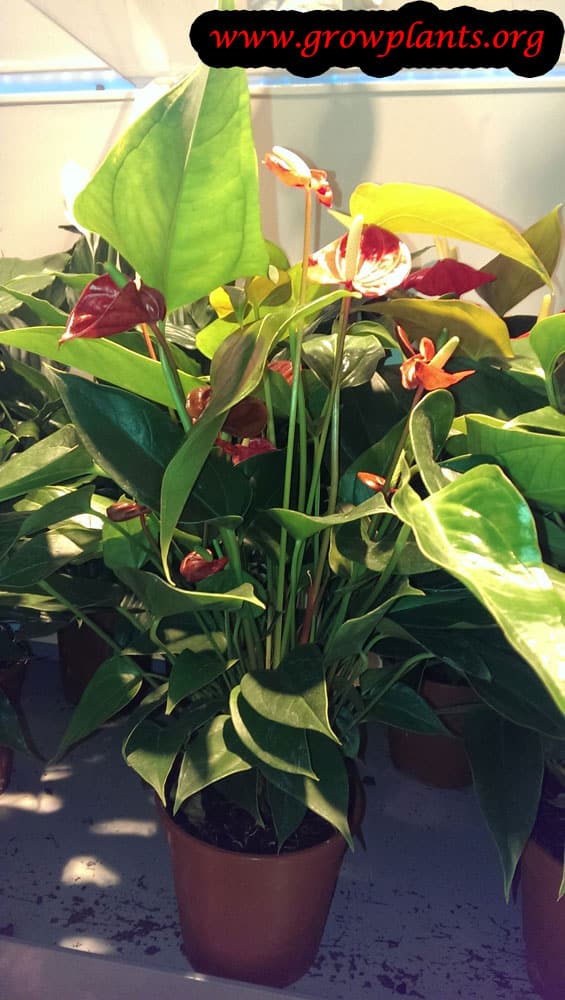
Overview: Anthurium is an evergreen tropical perennial 20-70 cm tall, grown for its glossy heart-shaped leaves and brightly coloured, long-lasting flower spathes. It is a leading ornamental houseplant.
Quick Specifications
| Specification | Attribute |
|---|---|
| Plant Type / Life Cycle | Perennial (epiphyte) |
| Foliage Type | Evergreen |
| Mature Size | 20-70 cm (8-28 in) |
| Growth Rate | Moderate to Slow |
| Root System | Epiphytic (fibrous, partly aerial roots) |
| Toxicity | Toxic – contains calcium oxalate, an irritant to people and pets |
| Hardiness | USDA zone 13 (tropical / indoors) |
Growth Form & Structure
- Height & Spread: 20-70 cm (8-28 in); well suited to pots and as a houseplant.
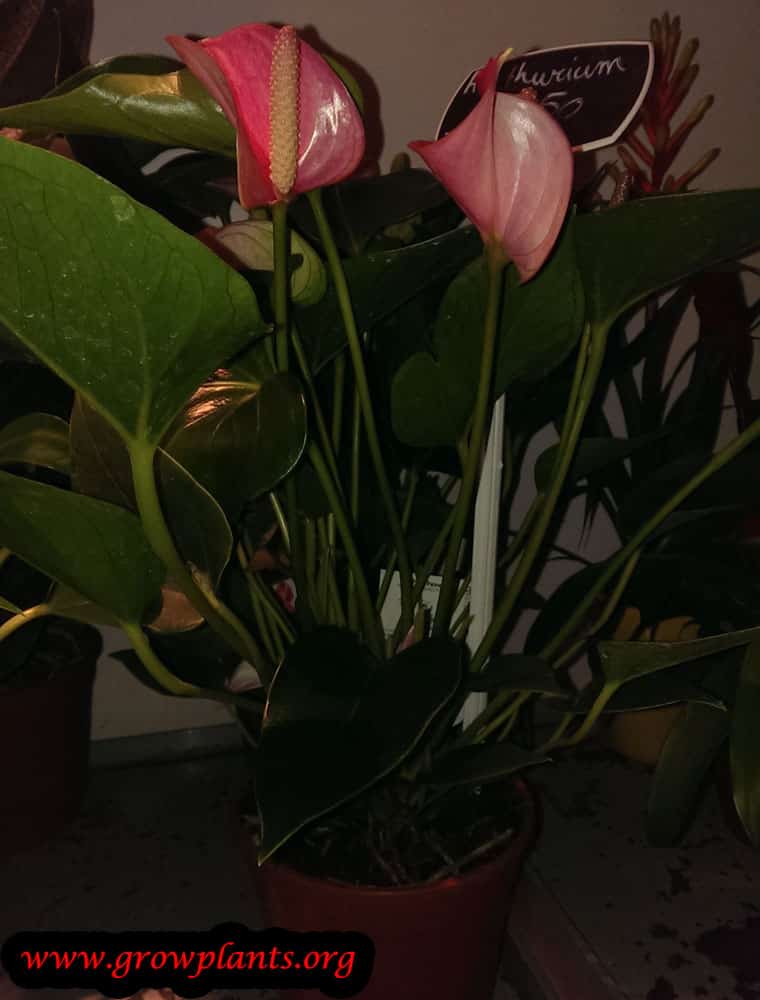
- Growth Habit & Form: Clump-forming epiphytic perennial with upright leaves and flower stalks.
- Lifespan & Maturity: Long-lived perennial that grows steadily to mature size.
Anatomy & Physical Features
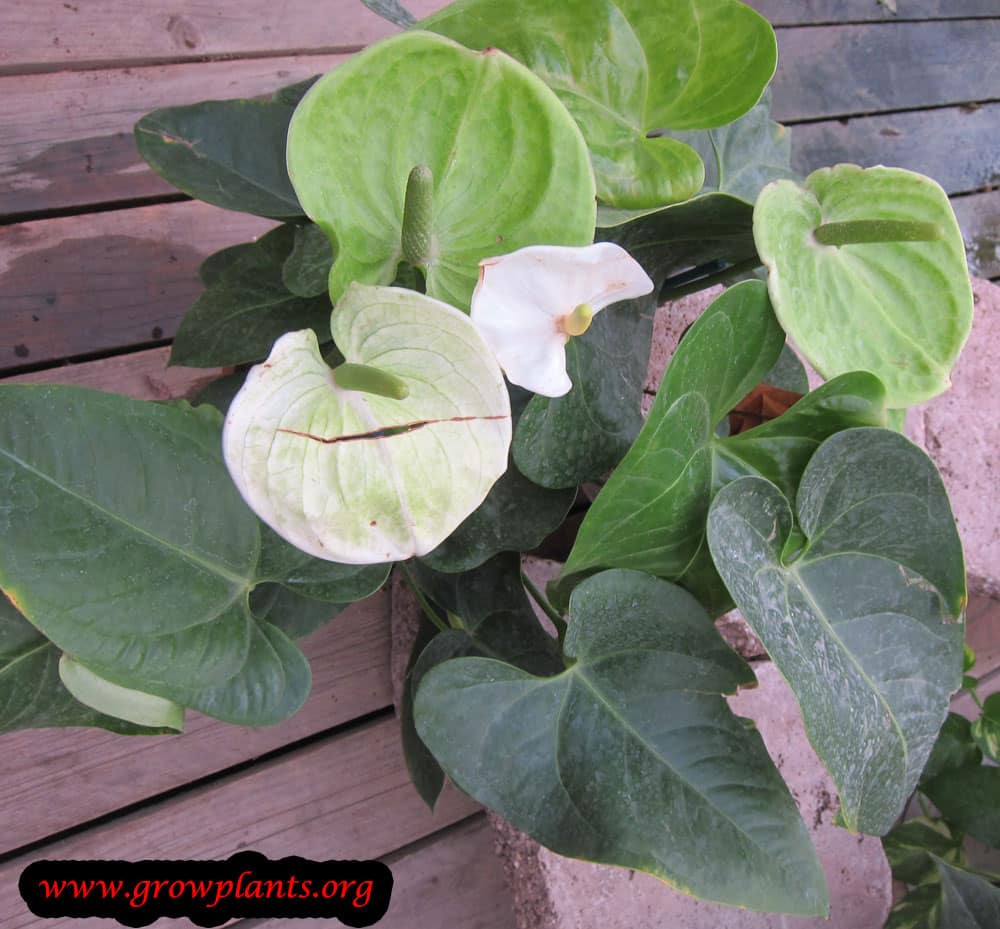
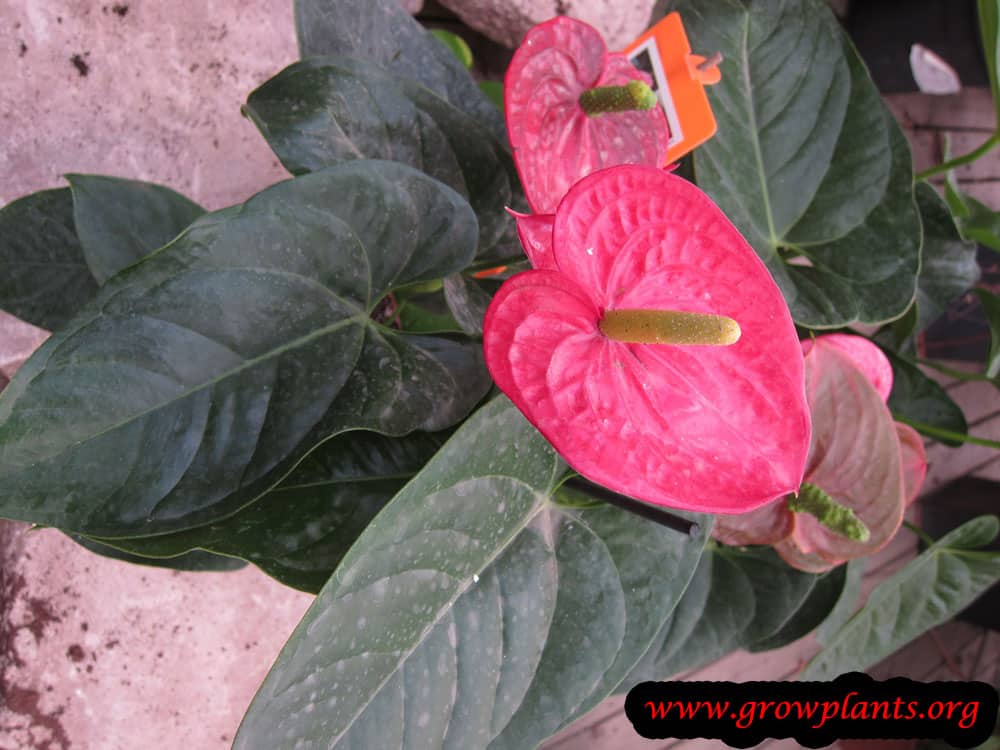
- Leaves & Foliage: Glossy green (sometimes white-veined variegated) heart-shaped leaves.
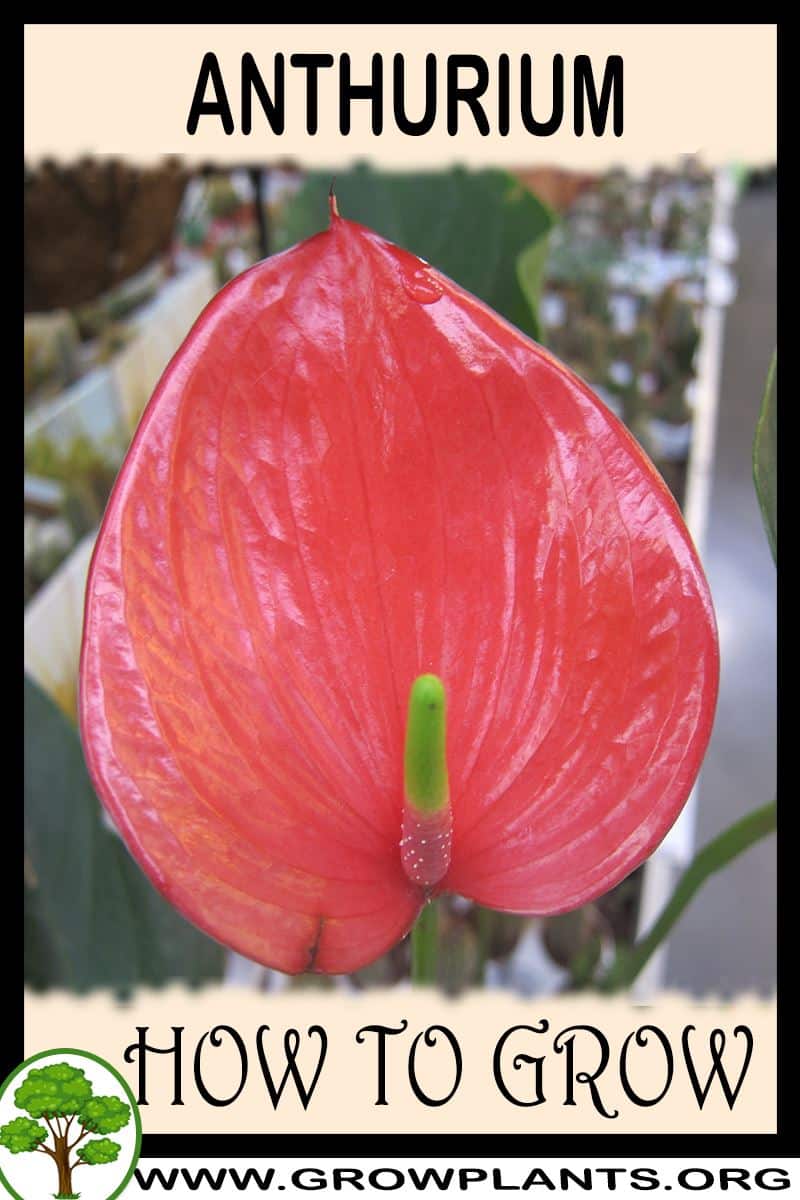
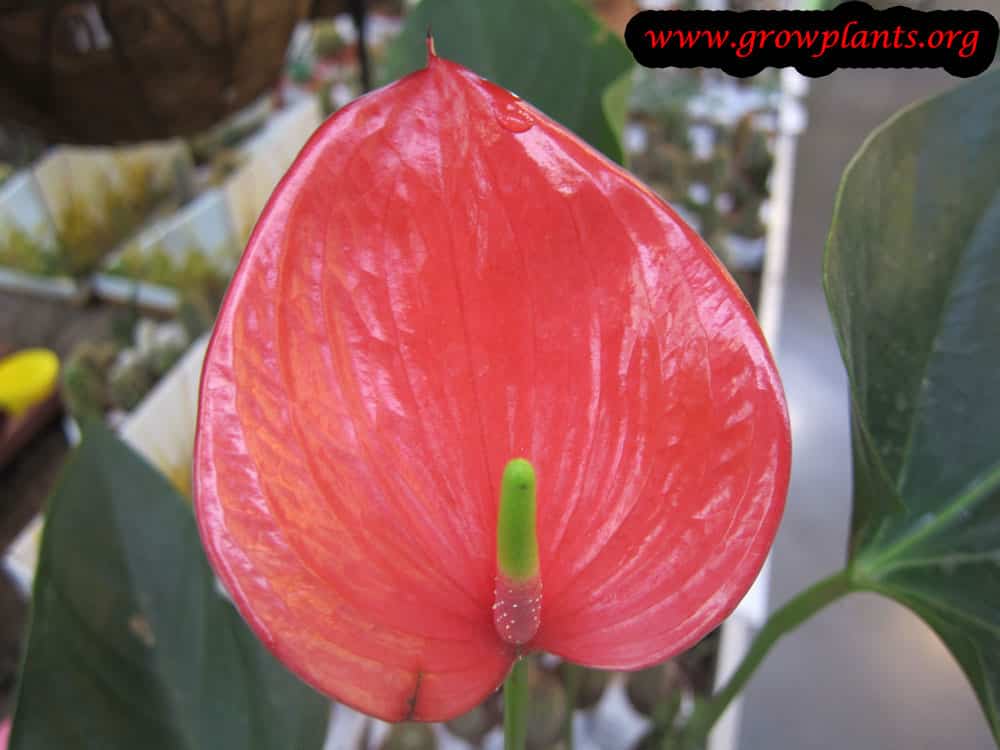
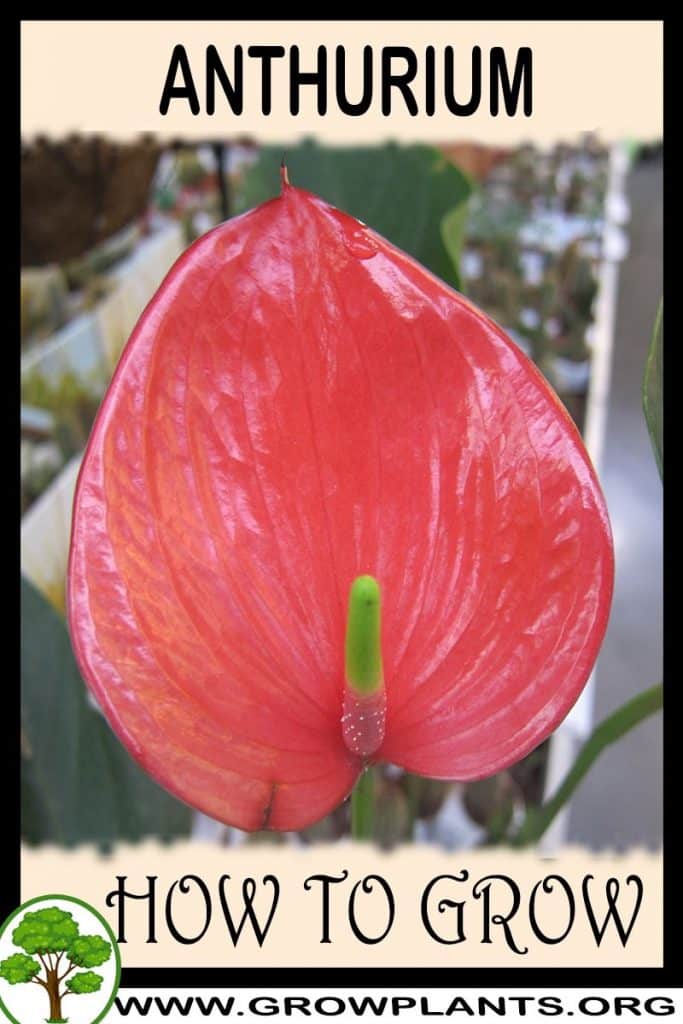
- Flower Characteristics: Tiny true flowers on a coloured spadix, backed by a showy waxy spathe in white, green, red, purple, pink, yellow or magenta (see the Bloom accordion).
Primary Uses & Landscape Value
- Functional & Ornamental Roles: Grown as a container plant and houseplant for its foliage and colourful, long-lasting spathes; also used as a cut flower.
Care Guide: Planting, Soil & Watering
Overview: Anthurium is a tropical epiphyte that wants warmth (above 15°C), bright indirect light and a loose, chunky, very airy mix that drains fast. Keep it evenly moist with high humidity, never soggy.
Quick Care Requirements
| Requirement | Ideal Condition |
|---|---|
| Planting Season | Year-round in warm, frost-free or indoor conditions |
| Growth Rate | Slow to Moderate |
| Soil Type | Loose, chunky, very well-aerated (epiphytic mix) |
| Water Need | Moderate to High (keep evenly moist, never waterlogged) |
Planting & Establishment
- Best Planting Season: Plant or repot at any time of year in warm, frost-free or indoor conditions.
- How to Plant:
- Hole Preparation: Settle the plant into an open, chunky mix in a pot with free drainage.
- Soil Amendments: Use a coarse, airy blend such as bark, perlite and orchid or aroid mix rather than dense soil.
- Planting Depth: Set the crown at the surface so the base of the plant is not buried or waterlogged.
- Growth Speed & Expectations: Slow to moderate, producing new heart-shaped leaves and long-lasting bracts over time.
Soil, Watering & Drainage Care
- Soil Mix & Drainage Needs: A loose, chunky, fast-draining mix keeps air around the roots; standing water quickly causes root rot.
- Watering Schedule & Technique:
- Young / Newly Planted: Keep the mix evenly moist while the plant establishes.
- Established: Water when the top centimetre or two dries, and maintain high humidity around the leaves.
- Seasonal Adjustments: Ease off in cooler winter conditions; keep humidity up year-round.
Climate, Light & Hardiness
Anthurium is a strictly tropical evergreen grown outdoors only in true tropical climates and otherwise as a warm, humidity-loving houseplant. It has no cold tolerance, and the site sets its warmth floor above about 15°C (59°F).
Quick Climate Specifications
| Climate Zones | Tropical; elsewhere a houseplant |
|---|---|
| USDA Hardiness Zones | 13 (site data) |
| Optimal Temp Range | Approx. 18–28°C (64–82°F); keep above 15°C (59°F) |
| Cold Damage Begins | Below about 15°C (59°F) growth slows and foliage suffers |
| Approx. Survival Minimum | Keep above roughly 10–13°C (50–55°F); no frost tolerance |
| Frost Tolerance | None |
| Light Conditions | Half shade (bright, indirect light) |
Sunlight & Light Exposure
Optimal Light Setup
Bright, indirect light in half shade gives the best foliage and flower-spathe production.
Shade & Heat Management
Direct sun scorches the leaves and spathes; filtered light or shade is essential.
Best Exposure / Orientation
Indoors, an east-facing window or bright interior spot out of direct sun; outdoors in the tropics, dappled shade.
Temperature Extremes & Hardiness
USDA Hardiness & Regional Limits
Site data places it in zone 13 - essentially frost-free, warm tropical conditions year-round. This is the outdoor cold limit; in all cooler regions it is grown indoors.
Cold Damage & Winter Protection
Growth stalls and leaves discolour below about 15°C (59°F); prolonged cool, damp conditions invite rot. Indoors, keep it well away from cold draughts and chilly winter glass.
Frost Sensitivity
No frost tolerance whatsoever.
Extreme Heat Tolerance
Good in warm tropical heat provided humidity is high and light is filtered.
Wind, Humidity & Microclimate
Humidity Preferences
Requires high humidity for glossy foliage and good flowering.
Dry-Air Tolerance
Low - dry indoor air browns leaf tips; group plants or raise local humidity.
Wind Tolerance
Low; protect from drying wind and draughts.
Microclimate Recommendations
A warm, humid, brightly shaded and draught-free spot - such as a bright bathroom or a tropical patio - is ideal.
Growing in Pots, Balconies & Indoors
Anthurium is a classic flowering houseplant – the grower confirms it grows indoors as long as it gets enough light. In a pot it produces glossy leaves and waxy spathes for months on end.
Quick Details
- Container Size: A snug pot for its 20-70 cm (8-28 in) size
- Indoor Suitability: Yes, with good (bright, indirect) light
- Best Spot: Half shade / bright indirect light
- Soil & Drainage: Airy, chunky aroid mix; free-draining
- Watering in Pots: Average to plenty – keep lightly moist, never soggy
Indoors & On the Windowsill
- A flowering houseplant: Grows well indoors given bright, indirect light – too little light and it stops flowering, while direct sun scorches.
- Humidity: A tropical – mist it or use a humidity tray in dry rooms.
- Safety: Sap contains calcium oxalate – keep away from children and pets.
On a Balcony or Patio
- Bright shade: Best in warm, bright shade outdoors; protect from direct midday sun and wind, and never let it get cold.
- Water & drainage: Keep the pot lightly moist with free drainage; empty the saucer so the roots do not sit wet.
Choosing the Pot, Soil & Long-Term Care
- Pot & mix: A snug pot with strong drainage and a chunky, airy aroid mix (bark, perlite, coir) – it resents heavy, wet soil.
- Feeding: Feed lightly and regularly in growth; potted plants leach faster.
- Repotting: Refresh the mix every year or two.
Growing this plant in a greenhouse
A greenhouse can give anthurium frost protection, cold protection, humidity control and extra warmth. In the right climate it may also be kept growing through winter, depending on how much warmth and light are provided.
Greenhouse at a glance
| Greenhouse suitability | Good - clearly useful |
|---|---|
| Main benefits | frost protection, cold protection, humidity control, extra warmth |
| Season extension | earlier spring & later autumn |
| Outdoor protection advisable below | about 15°C |
| Maintain greenhouse minimum | around 15°C for active growth |
| Suitable types | heated greenhouse, polycarbonate greenhouse |
| Heating | Heating is recommended in cold climates for continuous growth. |
Related greenhouse guides
- Greenhouses: How to Choose the Right Greenhouse
- Best Greenhouse Heaters
- Greenhouse Climate Control: Temperature, Ventilation and Humidity
- Polycarbonate Greenhouses: What to Look for Before Buying
Fertilizing & Feeding
A light to moderate feeder: feed with a balanced fertilizer only while the plant is in active growth, and hold off in low light or cool conditions. Grown as a warm, humidity-loving houseplant in well-drained, airy mix; steady dilute feeding in active growth supports both the glossy leaves and the long-lasting bracts.
Quick Fertilizing Specs
| Feeding Level | Light to moderate feeder |
|---|---|
| Main Nutrient Priority | Balanced feeding with adequate nitrogen for healthy foliage |
| Best Feeding Period | Spring through the warm, brighter active growing season |
| Organic Options | Compost or worm castings worked into the potting mix, plus a diluted complete liquid feed |
| Reduce/Stop Feeding | Hold off feeding in low light, cool weather, and right after repotting |
| Micronutrients | Usually supplied by a complete fertilizer; correct only diagnosed iron or manganese shortages |
| Soil pH | Slightly acidic to near neutral |
Feeding by Growth Stage
Settling in after potting or repotting
Let fresh roots establish in new mix before any feeding begins.
| Nutrient direction | None – withhold fertilizer while the plant is not in active growth. |
|---|---|
| Timing | The first weeks after potting up or repotting into fresh mix. |
| Frequency | No feeding at this stage; resume only when active growth returns. |
| Fertilizer types | No feeding at this stage; hold off fertilizing until active growth resumes. |
| Precautions | Withhold fertilizer now; feeding a plant that is not actively growing wastes nutrients and risks salt buildup in the root zone. |
Warm-season active growth
Support steady, well-colored foliage while the plant is actively growing.
| Nutrient direction | A balanced complete fertilizer with adequate nitrogen to fuel leafy growth, kept dilute for a containerized plant. |
|---|---|
| Timing | Through the warm, brighter part of the year when new leaves are forming. |
| Frequency | Light, regular feeding spread across the active growing season. |
| Fertilizer types | A balanced complete liquid fertilizer, applied dilute, Compost or worm castings top-dressed into the mix |
| Routine trace nutrients | iron, manganese |
| Precautions | Keep feeding light and always water first; overfeeding a containerized foliage plant scorches roots and dulls leaf color. |
Low-light or cool-season slowdown
Let the plant coast through low light or cool conditions without pushing weak growth.
| Nutrient direction | None – withhold fertilizer while the plant is not in active growth. |
|---|---|
| Timing | During short winter days, low indoor light, or cool spells when growth stalls. |
| Frequency | No feeding at this stage; resume only when active growth returns. |
| Fertilizer types | No feeding at this stage; hold off fertilizing until active growth resumes. |
| Precautions | Withhold fertilizer now; feeding a plant that is not actively growing wastes nutrients and risks salt buildup in the root zone. |
Nutrient Deficiency Signs & Corrections
Older, lower leaves fade to pale green or uniform yellow and overall growth slows.
| Possible causes | low available soil nitrogen, nitrogen leaching from heavy watering or rain, thin, low-organic-matter soil |
|---|---|
| Appears first on | older, lower leaves |
| What to check | recent feeding history, soil organic matter, watering and drainage |
| Possible correction | Apply a nitrogen-containing complete fertilizer and build soil organic matter, then water evenly. |
New leaves yellow between the veins while the veins themselves stay green.
| Possible causes | low available iron, high soil pH locking up iron, cold or waterlogged roots limiting uptake |
|---|---|
| Appears first on | youngest leaves |
| What to check | soil pH, drainage and root health, whether symptoms are on new growth |
| Possible correction | Correct soil pH and improve drainage, then apply a chelated iron product per its label if new growth stays chlorotic. |
Leaf margins and tips brown or scorch and growth stalls despite adequate watering.
| Possible causes | fertilizer salt buildup in the root zone, under-watering that concentrates salts, excessive or too-frequent feeding |
|---|---|
| Appears first on | leaf margins and tips |
| What to check | recent fertilizer amounts, watering consistency, drainage, especially in containers |
| Possible correction | Ease off feeding, water thoroughly to flush accumulated salts from the root zone, then return to lighter feeding. |
Pruning, Training & Seasonal Maintenance
Anthurium is an evergreen epiphytic aroid grown as a flowering houseplant that blooms more or less continuously from its central crown. It has no woody structure and needs no structural pruning — upkeep is grooming: removing spent flowers (spathe and spadix) and old leaves at the base, and dividing offsets when the clump crowds. The most important discipline is hygiene, because anthuriums are prone to bacterial blight spread by cutting tools.
Quick Pruning & Maintenance Specs
| Pruning Tolerance | Grooming only — single crown, no structural pruning |
| Primary Pruning Window | Any time — groom as flowers and leaves fade |
| Secondary Maintenance Window | Divide crowded clumps when repotting |
| Typical Frequency | Ongoing, light |
| Main Objective | Remove spent blooms and old leaves; keep a tidy crown; manage offsets |
| Best Tool Type | Precision snips (disinfected) |
| Avoid Heavy Pruning During | Any time — never cut into the central crown |
Pruning by Plant Age & Size
A young plant needs only the odd damaged leaf removed. On an established plant, groom faded flower stalks and old outer leaves at the base and remove or pot up offsets to control size. There is no formative training — the plant builds a single rosette-like crown.
Seasonal Pruning & Ongoing Maintenance
Flowering runs year-round, so there is no seasonal calendar — simply remove each spent spathe and any yellowing leaf as it occurs. This continuous sanitary grooming is the whole of anthurium pruning.
Structural Pruning & Training
No framework to build. The only structural action is dividing an overcrowded clump into separate crowns when repotting, and removing tired outer leaves so the rosette stays open and tidy.
Special Growth to Remove
Remove spent spathes (cut the stalk at the base), old and yellowing leaves, and surplus offsets. Aerial roots can be left, tucked into the medium, or lightly trimmed — they are natural, not unwanted growth.
Container & Small-Space Pruning
Almost always potted: groom spent blooms and leaves, divide when the pot fills with crowns, and refresh the chunky, airy medium periodically. Do not attempt to reduce size by cutting the crown — divide instead.
Tools
Precision snips only, for the soft flower stalks and leaf petioles. No heavier tool is ever appropriate.
Tool Hygiene & Disease Risk
High-risk. Anthuriums are notably susceptible to bacterial blight (Xanthomonas), which spreads through wounds and on cutting tools. Disinfect blades before working, and especially between plants and after any cut on tissue that looks water-soaked or yellow-edged. Remove and discard suspect leaves rather than composting them.
Cut Placement & Technique
Cut spent flower stalks and old leaf petioles cleanly at the base, close to the crown but without gouging it, so no stub is left to rot.
Heavy Pruning & Rejuvenation
Not tolerated. With a single growing crown, anthurium cannot be hard-pruned or cut back for rejuvenation without destroying the plant — renew a tired specimen by dividing healthy crowns and offsets, not by cutting it down.
Post-Pruning Care
Keep warm, humid and in bright indirect light after grooming; there is no wound care beyond keeping the crown dry and clean to avoid blight entry.
Common Pruning Mistakes
- Cutting into or damaging the central crown.
- Spreading bacterial blight with un-sterilised tools.
- Leaving stubs of flower stalks that rot back into the crown.
When NOT to Prune
Do not cut the crown at any time, and avoid grooming with dirty tools when any leaf shows blight-like water-soaked or yellow-margined lesions — sterilise first.
Recommended Tools (by task)
- precision_snips — removing spent spathes and old leaves.
- blade_disinfectant — sterilising blades to prevent spread of bacterial blight.
Propagation Guide
Anthurium is usually increased vegetatively — by dividing basal offsets or rooting a top stem cutting that already bears aerial roots — which is the only way to keep a hybrid’s flower colour. Seed is possible but slow, and hybrid seedlings vary; difficulty is moderate.
Quick Propagation Specs
| Best Propagation Method | Division / offsets |
| Alternative Methods | Stem (top) cuttings; seed |
| Propagation Difficulty | Moderate |
| Seed True-to-Type | Hybrid offspring vary (species mostly uniform) |
| Vegetative True-to-Type | Yes |
| Best Propagation Season | Warm conditions, year-round indoors |
| Germination Temperature | Warm, about 24–27°C (75–81°F) |
| Cutting Rooting Time | Several weeks in warm, humid conditions |
Division, Offsets, Pups & Suckers
Separate basal offsets that carry their own roots and pot them up individually; keep warm and humid until they take hold. This is the simplest way to keep a plant identical to its parent.
Stem Cuttings
Cutting Type
A top cutting bearing several aerial roots.
Rooting Setup
Pot into an open, airy medium kept warm and humid; the remaining stump usually resprouts.
Rooting Time
Several weeks.
Growing from Seed
Seed Handling & Viability
Take seed from the ripe berries, wash off the pulp, and sow fresh — it does not store.
Germination Conditions
Surface-sow onto a moist medium and keep warm, about 24–27°C (75–81°F), with high humidity.
Germination Time
Slow to germinate and slow to establish; hybrid seedlings will not come true.
Bloom & Flower Guide
Quick Details
- Bloom Season: On and off all year on well-grown plants
- Flower Appearance: A glossy, waxy spathe – white, red, pink, purple, magenta, green or yellow – backing a straight spadix; the spathe is the showy part
- Edibility: Not edible – contains calcium oxalate and is an irritant
Detailed Blooming Overview
Anthurium long-lasting “flower” is really a colorful, waxy spathe set behind a pencil-like spadix that carries the tiny true flowers. Given bright indirect light and steady feeding, healthy plants bloom on and off all year.
Flower Characteristics
- Waxy, brightly colored spathe (many colors, sometimes multicolored).
- Straight spadix tail holding the true flowers.
Bloom Care & Thinning
- Encouraging bloom: Bright indirect light and light, regular feeding keep the flowers coming.
- Safety: Sap is an irritant – handle with care.
Pests, Diseases & Troubleshooting
Overview: Anthurium’s single most important problem is bacterial blight (Xanthomonas axonopodis pv. dieffenbachiae), a systemic, largely incurable disease that spreads through wet, humid conditions and contaminated tools; bacterial wilt and Phytophthora/Pythium root rot are the other serious diseases. Its main pests are sap-suckers — mealybugs, scale, thrips, spider mites and aphids — while its everyday struggles are abiotic: leaf-tip burn from salts and hard water, and browning in dry indoor air. Because the key diseases cannot be cured, clean stock, strict sanitation and dry foliage are the heart of management.
Quick Troubleshooting Overview
| Issue / Pest | Main Symptom | Primary Solution |
|---|---|---|
| Bacterial blight | Water-soaked leaf-edge spots with yellow halos, systemic collapse | Destroy plant, clean stock, sanitation, no overhead water |
| Mealybugs / scale | Cottony tufts or brown bumps, honeydew | Wipe off, isolate, horticultural oil |
| Thrips | Silvery scarring on leaves and spathe | Blue traps, spinosad, remove damaged growth |
| Root & stem rot | Wilting in wet mix, black stem base | Open free-draining mix, water less |
| Leaf-tip burn | Brown tips and margins | Flush salts, use soft water, feed lightly |
| Low humidity | Brown leaf edges, poor growth | Raise humidity, avoid dry drafts |
Common Pests & Management
- Mealybugs (Pseudococcus / Planococcus spp.):
- Symptoms: White cottony tufts in leaf axils, on undersides along the veins, and hidden down in the crown and roots; honeydew and sooty mould follow, and growth is stunted with distorted new leaves.
- Prevention & Control: Wipe off with a damp cloth or an alcohol-dipped cotton bud, isolate affected plants, and encourage lacewings and ladybirds; horticultural oil or insecticidal soap clears persistent colonies, with repeat treatments to catch crawlers.
- Scale insects (Coccidae / Diaspididae):
- Symptoms: Brown or greyish limpet-like bumps along stems, petioles and leaf undersides, often with honeydew (soft scale) and sooty mould; leaves yellow and growth slows.
- Prevention & Control: Scrape off light infestations, prune out heavily encrusted growth, and smother with horticultural oil timed to the crawler stage; keep new plants isolated until clean.
- Thrips (Frankliniella / Heliothrips spp.):
- Symptoms: Silvery-bronze scarring and tiny black frass specks on leaves and on the prized spathe, with distorted new growth; thrips also spread viruses and can deform the flowers.
- Prevention & Control: Remove damaged growth, use blue sticky traps, and encourage predatory mites and minute pirate bugs; spinosad or insecticidal soap helps when the spathes are being scarred.
- Spider mites (Tetranychus urticae):
- Symptoms: Fine pale stippling, bronzing and faint webbing on leaf undersides in warm, dry, low-humidity air; foliage dulls and may drop.
- Prevention & Control: Raise humidity, sponge and hose the foliage, and introduce predatory mites; horticultural oil or insecticidal soap on the undersides controls outbreaks.
- Aphids (Aphidoidea):
- Symptoms: Clusters of soft insects on tender new leaves and flower stalks, with honeydew, sooty mould and distorted growth.
- Prevention & Control: Wipe or rinse off, encourage beneficials, and treat persistent colonies with insecticidal soap or oil.
Diseases & Fungal Issues
- Bacterial blight (Xanthomonas axonopodis pv. dieffenbachiae):
- Symptoms: The key and most destructive Anthurium disease: water-soaked spots along leaf margins that turn yellow then brown, with a bright yellow halo; from the leaves the bacterium becomes systemic, moving into the vascular system to cause yellowing, bronzing and collapse of the whole plant, with a characteristic yellow bacterial ooze from cut veins. It spreads fast in warm, humid, wet conditions and through contaminated tools and splashing water.
- Treatment & Management: This is largely incurable once systemic, so prevention is everything: start with clean, culture-indexed stock, remove and destroy infected plants promptly, sanitise tools and hands between plants, avoid overhead watering and leaf wetness, keep humidity and temperature from staying high and stagnant, and quarantine new arrivals. Copper bactericides only slow leaf-phase spread; they do not cure systemic infection.
- Bacterial wilt (Ralstonia solanacearum):
- Symptoms: Rapid wilting without the marginal yellowing of blight; a bronzed, systemically collapsing plant with brown vascular tissue and a milky bacterial ooze from cut stems in warm conditions.
- Treatment & Management: As with blight, remove and destroy infected plants, use clean stock and sterile media, sanitise tools, and avoid moving contaminated soil or water; there is no chemical cure, so exclusion and hygiene are the only reliable measures.
- Phytophthora / Pythium root & stem rot (Phytophthora / Pythium spp.):
- Symptoms: Blackened, water-soaked lesions at the stem base, wilting despite moist medium, and brown, mushy, rotted roots in overwatered or poorly drained, poorly aerated potting mix.
- Treatment & Management: Grow in a very open, free-draining epiphytic mix (bark, perlite, coir), never let the plant sit in water, and water only when the top of the mix approaches dryness. Discard collapsed plants; a biological or phosphonate drench can protect valuable specimens.
- Anthracnose / black nose (Colletotrichum gloeosporioides):
- Symptoms: Dark sunken spots on leaves and, notably, blackening and rotting of the spadix (‘black nose’), spoiling the flower; worst in warm, wet, humid air.
- Treatment & Management: Improve airflow, keep foliage and flowers dry, remove affected leaves and spadices, and avoid overhead watering; a protective copper or suitable fungicide helps under sustained humidity.
Growing Difficulties & Abiotic Problems
- Leaf-tip & margin burn:
- Cause & Symptoms: Salt build-up in the mix, or sensitivity to fluoride/chloride and hard water and over-feeding, browns the leaf tips and margins.
- Correction Strategy: Flush the mix periodically with clean, low-salt water, feed lightly and dilutely, and use rainwater or filtered water where the supply is hard or fluoridated.
- Low-humidity browning:
- Cause & Symptoms: As a tropical epiphyte, it browns at the leaf edges and grows poorly in dry indoor air.
- Correction Strategy: Maintain high humidity with grouping, trays of moist pebbles or a humidifier, and avoid hot dry drafts and radiators.
- Sunburn / scorch:
- Cause & Symptoms: Direct sun bleaches and scorches the foliage of this shade-adapted plant, leaving pale, papery patches.
- Correction Strategy: Grow in bright, indirect light; introduce it gradually to brighter conditions and shade from harsh midday sun.
- Poor flowering / all leaves:
- Cause & Symptoms: Too little light, or over-feeding with nitrogen, gives lush leaves but few spathes; cold checks flowering entirely.
- Correction Strategy: Provide bright indirect light, a balanced feed with adequate phosphorus, warm stable temperatures, and avoid cold drafts below its comfort range.
What Helps — Products & Tools
Prevention and hygiene matter more than any product here: culture-indexed clean plants, sanitised tools, an open free-draining epiphytic mix, and dry foliage. Where treatment is warranted, appropriate types are horticultural oil or insecticidal soap for mealybugs, scale, mites and aphids, blue sticky traps and spinosad for thrips, copper bactericide to slow (not cure) bacterial leaf spread, and a phosphonate or biological drench for root rot. Use soft, low-salt water and a humidifier as cultural ‘tools’.
Frequently Asked Questions
How do you grow and care for an Anthurium?
Grow Anthurium in bright, indirect light with warmth above 15°C (59°F), in a loose, chunky, fast-draining epiphytic mix. Keep the mix evenly moist with high humidity, watering established plants once the top centimetre or two of mix dries out, and ease off watering in cooler winter conditions.
What does the Anthurium flower look like, and how often does it bloom?
The showy part of an Anthurium “flower” is a glossy, waxy spathe in white, red, pink, purple, magenta, green or yellow that backs a straight spadix carrying the true flowers. Given bright indirect light and steady feeding, healthy plants bloom on and off all year.
Can Anthurium be grown from seed?
Yes, but it is slow and difficulty is moderate, and hybrid seedlings will not come true to the parent’s flower color. Take seed from ripe berries, wash off the pulp, and sow it fresh since it does not store; surface-sow onto a moist medium and keep warm, about 24–27°C (75–81°F), with high humidity, and expect slow germination and establishment.
Is Anthurium toxic to pets or people?
Yes. Anthurium contains calcium oxalate, an irritant to people and pets, so its sap should be kept away from children and pets. It is not edible for the same reason.