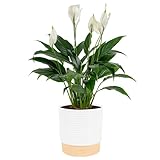




Plant Profile & Key Characteristics
Overview: A clump-forming evergreen perennial reaching 30–80 cm (12–32 in), grown as an ornamental foliage-and-flower houseplant. It is toxic if eaten.
Quick Specifications
| Specification | Attribute |
|---|---|
| Plant Type / Life Cycle | Herbaceous evergreen perennial |
| Foliage Type | Evergreen |
| Mature Size | 30–80 cm (12–32 in) |
| Growth Rate | Slow |
| Root System | Rhizomatous, clump-forming |
| Toxicity | Toxic — all parts contain insoluble calcium oxalate crystals that irritate the mouth and are harmful to cats and dogs |
| Hardiness | USDA zones 11+ outdoors; grown as a houseplant elsewhere |
Growth Form & Structure
- Height & Spread: Reaches 30–80 cm (12–32 in) as a rounded clump, whether in a pot indoors or in the ground in the tropics.
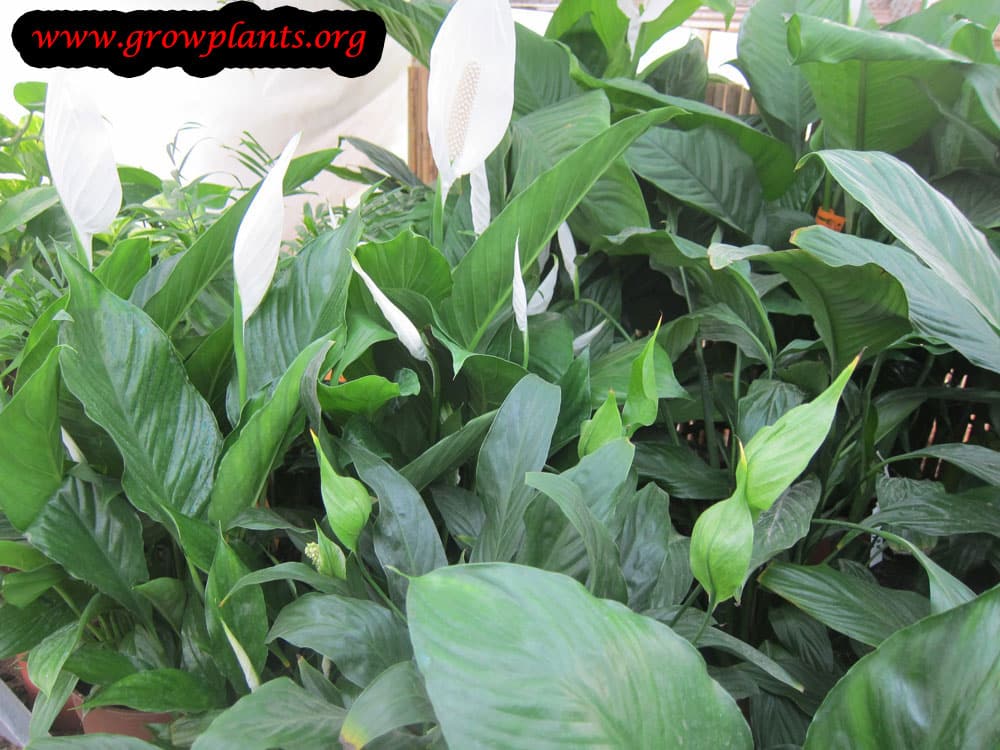
- Growth Habit & Form: Stemless, clump-forming plant; leaves and flowers rise directly from the base to build a dense rosette.
- Lifespan & Maturity: A long-lived perennial that slowly enlarges its clump year on year.
Anatomy & Physical Features
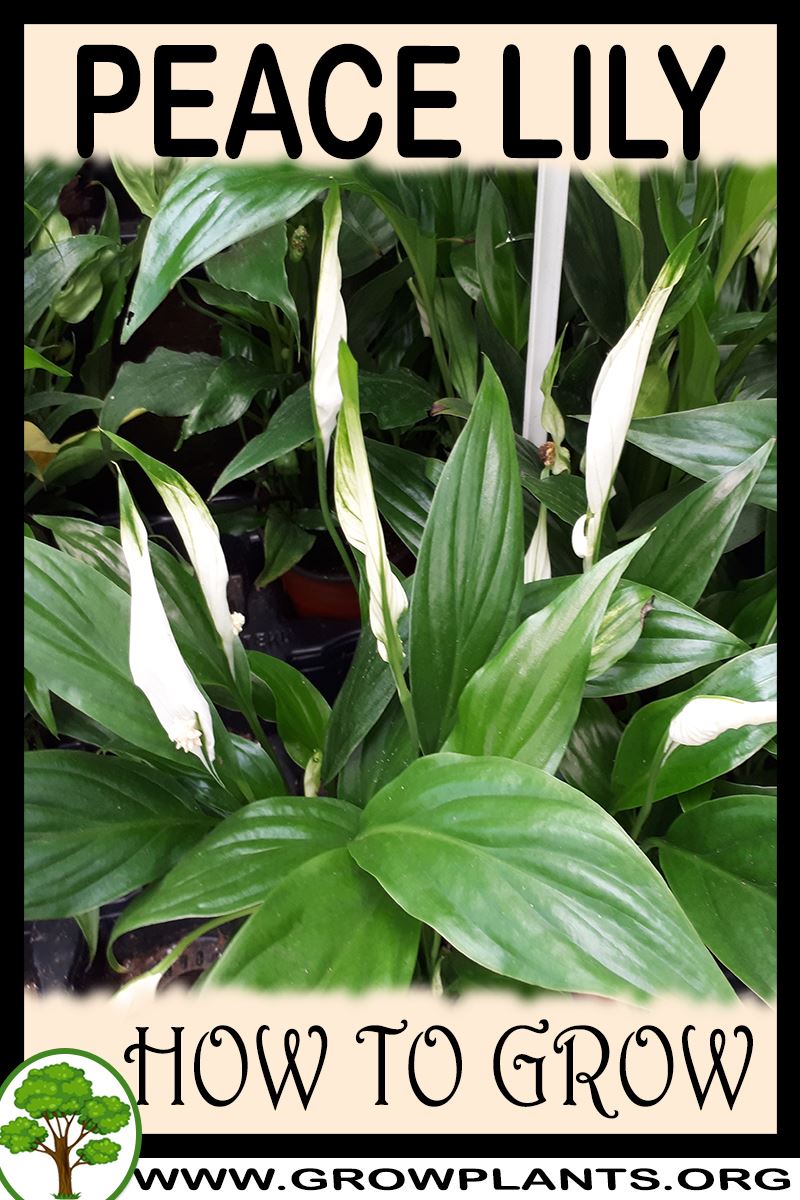
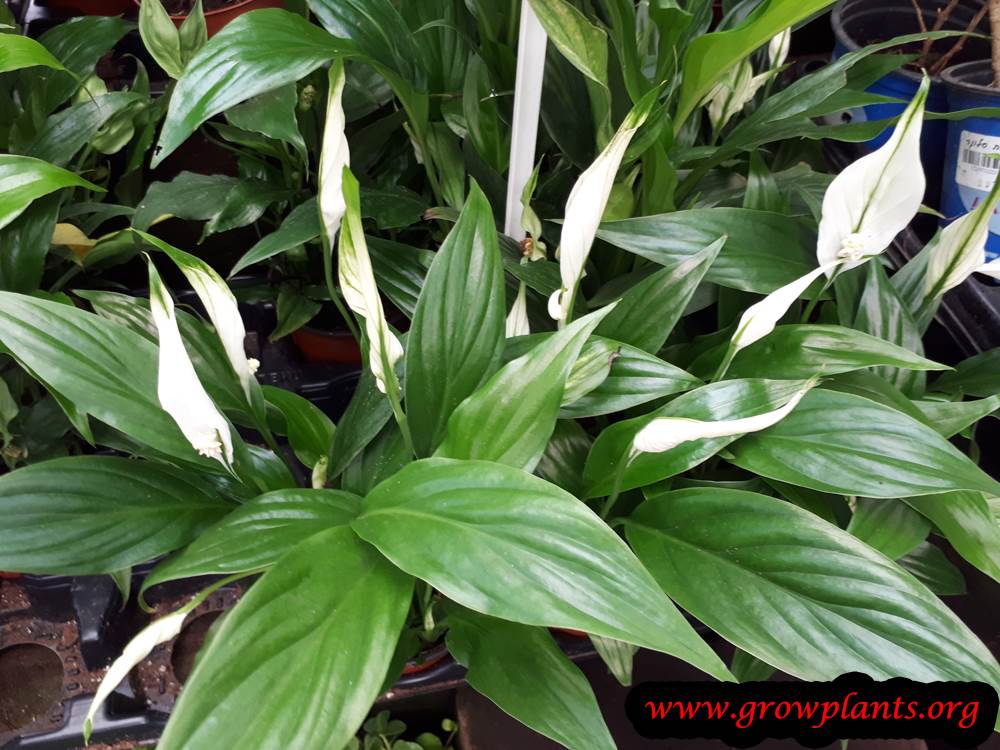
- Leaves & Foliage: Glossy dark-green, oval to lance-shaped leaves on long stalks.
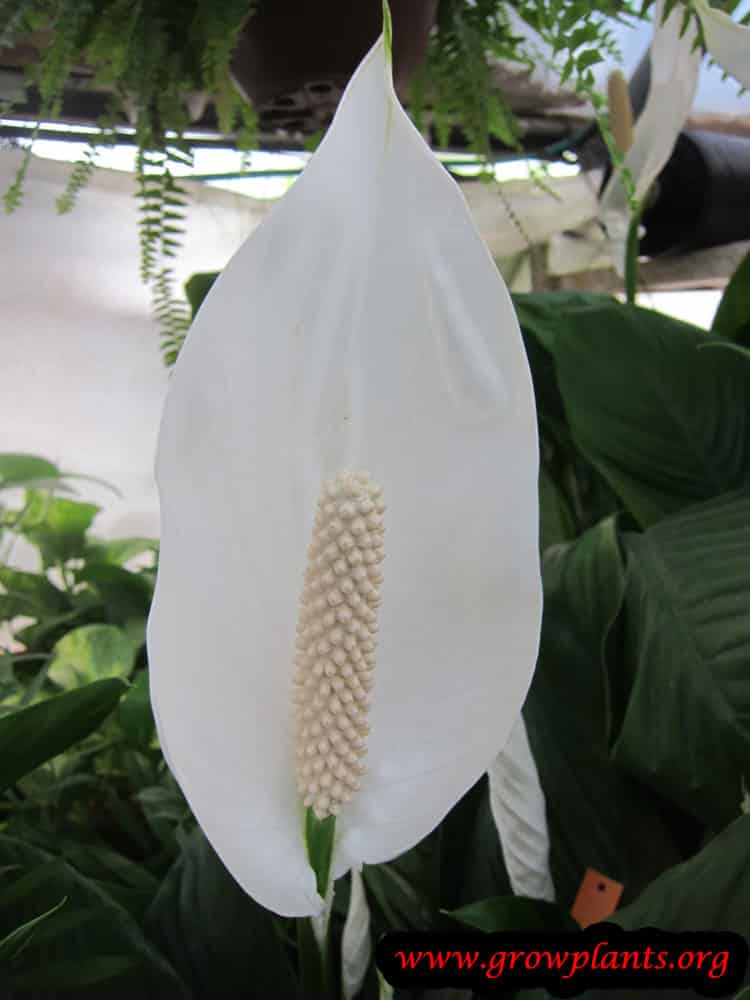
- Flower Characteristics: A white leaf-like spathe wrapped around a central spadix, held above the foliage.
Primary Uses & Landscape Value
- Functional & Ornamental Roles: A popular indoor foliage and flowering houseplant, valued for tolerating low light and for its reputation as an air-cleaning plant; used outdoors as a shade groundcover only in frost-free climates.
Care Guide: Planting, Soil & Watering
Overview: Peace lily is a shade-loving tropical evergreen usually grown indoors, thriving in warm conditions and rich, moisture-retentive but well-draining soil. It likes its soil kept lightly and evenly moist, never soggy, and must stay above about 9°C.
Quick Care Requirements
| Requirement | Ideal Condition |
|---|---|
| Planting Season | Year-round (as a houseplant or in frost-free tropics) |
| Growth Rate | Slow |
| Soil Type | Rich, moisture-retentive and well-draining |
| Water Need | Low to moderate; keep the soil lightly and evenly moist |
Planting & Establishment
- Best Planting Season: As an indoor plant it can be potted or planted at any time of year; keep it above about 9°C.
- How to Plant:
- Hole Preparation: Loosen a hole or choose a pot a little larger than the root ball.
- Soil Amendments: Use a rich, organic, moisture-retentive mix that still drains freely.
- Planting Depth: Set the crown level with the soil surface; do not bury it deeper than it grew.
- Growth Speed & Expectations: A slow grower reaching about 30–80 cm; it stays compact and needs little more than repotting as it fills its container.
Soil, Watering & Drainage Care
- Soil Mix & Drainage Needs: Use a rich, well-aerated potting mix that holds moisture but drains freely, so the roots stay damp but never waterlogged.
- Watering Schedule & Technique:
- Young / Newly Planted: Keep the mix lightly and evenly moist while the plant settles in.
- Established: Water when the top of the mix begins to dry; it will wilt as a clear sign it needs a drink, then recover after watering.
- Seasonal Adjustments: Water a little more in warm growth periods and less in winter; keep it warm and out of cold draughts.
Climate, Light & Hardiness
The peace lily (Spathiphyllum) is a tropical evergreen grown outdoors only in frost-free zone 11 and warmer, and otherwise as a warmth-loving houseplant. It prefers shade to bright indirect light and warm, humid, draught-free conditions; it has no frost tolerance and needs to be kept above roughly 9 °C (48 °F).
Quick Climate Specifications
| Climate Zones | Tropical; elsewhere grown as a houseplant |
|---|---|
| USDA Hardiness Zones | Approximately 11 and warmer (outdoors) |
| Optimal Temp Range | Warm indoor comfort, roughly 18–27 °C (65–80 °F) |
| Cold Damage Begins | Below about 10–13 °C (50–55 °F); growth stalls and leaves can be chilled |
| Approx. Survival Minimum | Keep above roughly 9 °C (48 °F); no frost tolerance |
| Frost Tolerance | None |
| Light Conditions | Shade to bright indirect light (no direct sun) |
Sunlight & Light Exposure
Optimal Light Setup
Shade to bright, indirect light suits it best - a spot near a window that never receives harsh direct rays, or a well-lit interior position. Deep gloom reduces flowering; too little light keeps it green but shy to bloom.
Shade & Heat Management
Direct sun scorches the foliage, so filter or diffuse any strong light. As a forest-floor plant it is well adapted to lower light than most flowering houseplants.
Best Exposure / Orientation
An east- or north-facing window (or set back from a brighter one) gives the gentle light it likes without leaf burn.
Temperature Extremes & Hardiness
USDA Hardiness & Regional Limits
Outdoors it is limited to frost-free tropical climates, roughly zone 11 and warmer; anywhere colder it is grown indoors year-round or moved out only for frost-free warm spells.
Cold Damage & Chilling
Chilling below about 10–13 °C (50–55 °F) stalls growth and can mark the leaves; the dataset’s guidance to keep it above roughly 9 °C (48 °F) is the practical lower limit. Cold draughts and cold window glass in winter are common causes of leaf damage.
Frost Sensitivity
None - any frost is fatal.
Extreme Heat Tolerance
Comfortable in tropical warmth; in very hot, dry air it needs added humidity to keep the foliage from browning.
Wind, Humidity & Microclimate
Humidity Preferences
Prefers moderate to high humidity, reflecting its rainforest origins; ample humidity keeps the leaves lush.
Dry-Air Tolerance
Low - dry indoor air, especially near heating, causes brown leaf tips and edges; grouping plants or adding humidity helps.
Microclimate Recommendations
A warm, humid, draught-free interior position away from cold windows, heaters and air-conditioning vents keeps it healthiest.
Growing in Pots, Balconies & Indoors
The peace lily is the quintessential low-light houseplant – the grower rates it a clear yes for indoors. It thrives in full shade where few plants do, staying a tidy 30-80 cm, and its glossy leaves and white flower spathes make it one of the easiest indoor plants to grow.
Quick Details
- Container Size: A small to medium pot; it flowers best when slightly snug, potting up only when roots fill the pot
- Indoor Suitability: Yes – an excellent, easy houseplant for shade and low light
- Best Spot: Full to bright shade; no direct sun
- Soil & Drainage: Aerated, organic mix, kept lightly moist but free-draining
- Watering in Pots: Small and even – it wilts as a clear signal when thirsty, then recovers after watering; avoid waterlogging
Indoors & On the Windowsill
- A genuine houseplant: The grower marks it yes for indoors, and it’s ideal for shady rooms and north-facing spots. Give it bright to full shade, warmth and a little humidity; it tells you when it’s thirsty by drooping.
- Windowsill growing: A north or shaded sill is perfect; keep it off hot, direct glass, which scorches the leaves.
- Overwintering: A year-round indoor plant; keep it warm (it dislikes cold) and out of drafts in winter.
On a Balcony or Patio
- Light & wind: Only for a warm, deeply shaded, sheltered balcony in the frost-free season – it burns in sun and hates cold and wind. Most growers simply keep it indoors.
Choosing the Pot, Soil & Long-Term Care
- Pot & drainage: Use a pot with strong drainage holes and skip a standing-water saucer, which invites root rot; terracotta breathes and dries faster, while glazed or plastic holds moisture longer.
- Potting mix: A light, aerated organic mix – peat or coir with perlite or vermiculite – gives the roots both moisture and air.
- Feeding: Potted plants use up their feed faster because each watering leaches nutrients away, so feed a little more often than plants in open ground.
- Repotting: Refresh the top of the mix and pot up every couple of years; a light root and top prune at repotting keeps established plants vigorous.
Safety: Peace lily is toxic – its sap contains calcium oxalate crystals that irritate the mouth and throat if chewed. Keep it out of reach of children and pets, and never eat any part.
Growing this plant in a greenhouse
A greenhouse can give peace lily frost protection, cold protection, humidity control and extra warmth. In the right climate it may also be kept growing through winter, depending on how much warmth and light are provided.
Greenhouse at a glance
| Greenhouse suitability | Good - clearly useful |
|---|---|
| Main benefits | frost protection, cold protection, humidity control, extra warmth |
| Season extension | earlier spring & later autumn |
| Outdoor protection advisable below | about 13°C |
| Maintain greenhouse minimum | around 15°C for active growth |
| Suitable types | heated greenhouse, polycarbonate greenhouse |
| Heating | Heating is recommended in cold climates for continuous growth. |
Related greenhouse guides
- Greenhouses: How to Choose the Right Greenhouse
- Best Greenhouse Heaters
- Greenhouse Climate Control: Temperature, Ventilation and Humidity
- Polycarbonate Greenhouses: What to Look for Before Buying
Fertilizing & Feeding
A light feeder: the peace lily grows best with dilute, occasional feeding during active growth, and no feeding while it rests in low light or has just been repotted.
Quick Fertilizing Specs
| Feeding Level | Light |
|---|---|
| young_feeding | Dilute balanced feeding once established and growing |
| mature_feeding | Dilute balanced feeding during active growth |
| Main Nutrient Priority | Balanced, with steady nitrogen for foliage |
| Best Feeding Period | Spring and summer active growth |
| Organic Options | Worm castings or a diluted organic liquid feed |
| Micronutrients | Iron and manganese, usually supplied by a complete houseplant fertilizer |
| Soil pH | Slightly acidic, well-drained potting mix |
| Reduce/Stop Feeding | Stop in low light and winter, and after repotting |
Feeding by Growth Stage
Settling in after potting
Let a newly potted the peace lily settle before feeding.
| Nutrient direction | None – hold off fertilizer while roots recover. |
|---|---|
| Timing | The first weeks after potting or moving into fresh mix. |
| Frequency | No feeding at this stage. |
| Fertilizer types | No feeding at this stage; fresh potting mix supplies enough to start. |
| Precautions | Do not fertilize until the plant is actively growing in its new mix. |
Active growth
Support steady new leaves and flowering during active growth on the peace lily.
| Nutrient direction | A dilute, balanced houseplant fertilizer while the plant is actively growing in the warmer, brighter months. |
|---|---|
| Timing | During active growth in spring and summer. |
| Frequency | Light, occasional feeding while in active growth. |
| Fertilizer types | Balanced water-soluble houseplant fertilizer, used dilute, Nothing stronger, since this is a light feeder |
| Routine trace nutrients | iron, manganese |
| Precautions | Over-application causes leaf-tip burn and salt build-up, so feed sparingly. |
Low-light slowdown
Match feeding to slow growth in lower light.
| Nutrient direction | None – withhold fertilizer while growth is slow in low light. |
|---|---|
| Timing | Autumn and winter, or whenever light and growth drop. |
| Frequency | No feeding at this stage. |
| Fertilizer types | No feeding at this stage; do not fertilize a resting, low-light plant. |
| Precautions | Do not fertilize until brighter conditions and active growth return. |
Salt management
Clear fertilizer-salt build-up from the pot.
| Nutrient direction | None – this is a maintenance step, not a feeding. |
|---|---|
| Timing | Whenever a white salt crust or leaf-tip burn appears. |
| Frequency | No feeding at this stage. |
| Fertilizer types | No feeding; instead leach the pot with plenty of plain water to flush salts. |
| Precautions | Do not fertilize while flushing; feed again lightly only once growth is active. |
Nutrient Deficiency Signs & Corrections
Brown, crispy leaf tips and margins.
| Possible causes | Fertilizer-salt build-up in the pot, Under-watering or inconsistent moisture, Low humidity |
|---|---|
| Appears first on | Leaf tips and margins of older leaves |
| What to check | Feeding frequency and strength, Salt crust on soil or pot rim, Watering routine |
| Possible correction | Ease off feeding, leach the pot with plain water and keep moisture even. |
Uniformly pale, yellowing older leaves with slow growth.
| Possible causes | Depleted potting mix, No feeding during active growth, A root-bound plant |
|---|---|
| Appears first on | Older, lower leaves |
| What to check | When it was last fed or repotted, Root condition, Light levels |
| Possible correction | Feed a dilute balanced fertilizer during active growth and refresh or upsize the mix. |
Young leaves yellow between still-green veins.
| Possible causes | High pH or hard water limiting iron, Overwatering and poor drainage, Micronutrient shortage in old mix |
|---|---|
| Appears first on | Newest leaves |
| What to check | Water and mix pH, Drainage, Whether only new growth is affected |
| Possible correction | Improve drainage and, if needed, apply a chelated iron product per its label. |
Pruning, Training & Seasonal Maintenance
Peace lily needs grooming, not pruning in the structural sense: it is a stemless, rhizomatous herbaceous plant with no wood or branches to train. The only routine tasks are removing spent flower stalks and tired or yellowing leaves at their base, which can be done at any time of year without affecting future flowering, since new blooms and leaves arise continuously from the crown rather than from older growth.
Quick Pruning & Maintenance Specs
| Pruning Tolerance | Low (grooming only) |
| Primary Pruning Window | Year-round, as needed |
| Typical Frequency | Light, ongoing grooming |
| Main Objective | Remove spent flower stalks and yellowing leaves |
| Mature Plant Priority | Deadhead faded spathes; remove old leaves at the base |
| Best Tool Type | Precision snips |
Pruning by Plant Age & Size
Newly Established
Leave alone while it settles in; remove only leaves damaged in transplanting.
Mature / Established
Snip off each flower stalk at its base once the white-to-yellowish spathe has faded and turned green or brown (it will not rebloom on the same stalk); remove individual leaves at the base as they yellow or brown.
Special Growth to Remove
Spent flower stems, cut at the base once the spathe fades, and old yellowing or browning leaves, also removed at the base, close to the crown.
Container & Small-Space Pruning
Grown almost exclusively as a container/houseplant here. Compactness is maintained by grooming, not cutting back stems – there is no cane or branch structure to shorten. If the clump becomes crowded or floppy in its pot, dividing and repotting is the appropriate fix rather than hard pruning.
Tools
Precision snips only, for the soft, fleshy leaf and flower stalks – loppers, saws or shears have no role on this plant.
Tool Hygiene & Disease Risk
Routine – clean, sharp snips are sufficient. The plant’s sap is irritating (it is toxic), so wearing gloves when removing leaves or stalks protects the handler more than it protects the plant.
Cut Placement & Technique
Cut flower stalks and spent leaves cleanly at the base near the soil line rather than pulling them, which can tear the surrounding leaf sheaths and crown tissue.
Heavy Pruning & Rejuvenation
Not applicable – this plant has no woody framework to rejuvenate by cutting back. A congested or tired-looking clump is refreshed by lifting and dividing it, not by hard pruning.
Post-Pruning Care
Keep the soil evenly moist and the plant in shade as usual after grooming; no special aftercare is needed beyond normal watering.
Common Pruning Mistakes
Pulling off dead leaves or spent spathes instead of cutting them, which can tear the crown; removing spathes while still green and functional rather than once truly faded; over-trimming healthy green leaves purely for tidiness.
When NOT to Prune
Avoid heavy grooming immediately after repotting or transplanting, while the plant is re-establishing.
Recommended Tools (by task)
- Precision snips – clean removal of spent flower stalks and yellowing leaves at the base.
Propagation Guide
Peace lily is propagated almost exclusively by dividing the clump — each division must carry several leaves and its own roots. Seed is possible but slow, and most garden plants are hybrids that will not come true from seed. Overall easy by division.
Quick Propagation Specs
| Best Propagation Method | Clump (crown) division |
| Alternative Methods | Seed (slow; hybrids not true) |
| Propagation Difficulty | Easy |
| Seed True-to-Type | No — most are hybrids and do not come true |
| Vegetative True-to-Type | Yes |
| Best Propagation Season | Year-round in warm, humid conditions (indoors) |
Division, Offsets, Pups & Suckers
Lift a congested plant and gently tease or cut the crown into sections, each with at least two leaves and a healthy portion of root. Pot the divisions up, keep them warm, shaded and humid with the medium evenly moist while they re-establish. Because growth is from a short rhizome/crown, division can be done at any time under warm indoor conditions. All parts contain irritant calcium oxalate — wear gloves.
Growing from Seed
Fresh seed can be sown warm, moist and humid, but germination and growth are slow and named hybrids will not reproduce true, so seed is rarely used for garden plants. Note that a detached leaf will not form a new plant — always divide with roots attached.
Bloom & Flower Guide
Quick Details
- Bloom Season: Year-round, in on-and-off flushes
- Time to First Bloom: Once the plant is mature and well established; it can rebloom through the year
- Flower Appearance: Tiny true flowers packed on a slender spike, backed by a showy white, green, yellow or cream bract
- Edibility: Toxic – not edible; all parts contain calcium oxalate
Detailed Blooming Overview
The peace lily’s famous “flower” is really two parts working together. The true flowers are the tiny ones crowded onto the upright spike (the spadix), while the broad, sail-like white part behind it is a modified leaf called a spathe. Given steady warmth and moderate light, a healthy plant will throw these elegant blooms on and off all year.
Flower Characteristics
- Small white-to-yellowish true flowers borne on an upright spike (the “ice-pop” spadix).
- The showy backing bract can be white, green, yellow or cream.
Bloom Care & Thinning
- Managing the bloom: Snip each flower stalk down to the base once the bract fades and turns green, to keep the plant looking fresh.
- Safety: Every part contains needle-like calcium oxalate crystals, so the blooms and leaves can cause painful mouth and throat irritation if chewed by people or pets – keep it out of reach and never eat any part.
Pests, Diseases & Troubleshooting
Overview: The peace lily (Spathiphyllum) is a popular indoor aroid whose troubles are mostly cultural – over- and under-watering, low humidity and water-quality issues – with a handful of sap-sucking pests and root rot rounding out the list. Manage it by getting watering, light and humidity right first, and wiping or spot-treating pests early. The sap contains calcium-oxalate crystals, so it is toxic to pets and mildly irritating to handle.
Quick Troubleshooting Overview
| Issue / Pest | Main Symptom | Primary Solution |
|---|---|---|
| Mealybugs | White cottony fluff in leaf axils; sticky honeydew | Alcohol swab, horticultural oil |
| Spider mites | Stippling and fine webbing in dry indoor air | Raise humidity, rinse, oil/soap |
| Scale | Brown bumps on stems and leaf veins | Scrape off, horticultural oil |
| Fungus gnats | Tiny flies from constantly wet mix; larvae in soil | Let mix dry, sticky traps, BTi |
| Root rot | Yellowing, wilt, mushy black roots | Repot, drain, water correctly |
| Brown leaf tips | Crispy tip/edge browning | Filtered water, steady moisture, humidity |
Common Pests & Management
- Mealybugs (Planococcus citri):
- Symptoms: White cottony clusters tucked into leaf bases, sheaths and along veins, with sticky honeydew and stunted new leaves.
- Prevention & Control: Dab colonies with an alcohol swab, wipe the plant down, and follow with horticultural oil or insecticidal soap, repeating to catch crawlers; check the root zone at repotting.
- Spider mites (Tetranychus urticae):
- Symptoms: Fine pale stippling, a dull look and delicate webbing on leaf undersides in dry, warm indoor air.
- Prevention & Control: Raise humidity, wipe and rinse the foliage, and treat with insecticidal soap or horticultural oil.
- Scale insects (Coccus, Saissetia spp.):
- Symptoms: Brown or tan limpet-like bumps on stems and along the midrib, with honeydew and sooty mould.
- Prevention & Control: Scrape off, prune badly infested leaves, and coat with horticultural oil; keep the plant healthy.
- Aphids (Aphis, Myzus spp.):
- Symptoms: Soft green clusters on new leaves and flower stalks with honeydew and distortion.
- Prevention & Control: Rinse off, wipe down, and spot-treat with insecticidal soap.
- Fungus gnats (Bradysia spp.):
- Symptoms: Small dark flies drifting up from the pot; larvae in constantly wet mix feed on roots and organic matter.
- Prevention & Control: Let the top of the mix dry between waterings, use yellow sticky traps, and drench with Bti (Bacillus thuringiensis israelensis) if larvae persist.
Diseases & Fungal Issues
- Root rot (Pythium, Phytophthora, Cylindrocladium):
- Symptoms: Yellowing, wilting despite wet soil, and blackened mushy roots from overwatering or a waterlogged, dense mix.
- Treatment & Management: Repot into fresh, airy, free-draining mix, trim rotted roots, water only when the top of the mix dries, and ensure the pot drains freely.
- Fungal & bacterial leaf spots (Cercospora, Xanthomonas, Erwinia):
- Symptoms: Brown or black spots, sometimes water-soaked or yellow-ringed, on leaves in wet, poorly ventilated conditions.
- Treatment & Management: Remove affected leaves, avoid wetting foliage, improve airflow, and use copper only if spread continues.
- Dasheen mosaic virus (Dasheen mosaic virus):
- Symptoms: Feathery yellow mosaic or streaking on leaves and some distortion; incurable in aroids.
- Treatment & Management: Isolate or discard confirmed plants, control aphids, and disinfect tools.
Growing Difficulties & Abiotic Problems
- Brown leaf tips & edges:
- Cause & Symptoms: Low humidity, inconsistent watering, salt/fertiliser build-up, or fluoride/chlorine in tap water cause crispy brown tips and margins.
- Correction Strategy: Water with filtered or stood tap water, keep moisture steady, raise humidity, flush the pot periodically, and feed lightly.
- Yellow, drooping leaves:
- Cause & Symptoms: Overwatering (or, if crisp, under-watering) is the usual cause; peace lilies dramatically wilt when dry but recover when watered.
- Correction Strategy: Check the mix and water when the top feels dry – not on a fixed schedule – and ensure good drainage.
- No flowers & leaf scorch:
- Cause & Symptoms: Too little light stops flowering; harsh direct sun bleaches and scorches leaves.
- Correction Strategy: Give bright, indirect light for reblooming and keep it out of hot direct sun.
What Helps – Products & Tools
For the peace lily the useful kit is isopropyl alcohol swabs and horticultural oil or insecticidal soap for mealybugs, mites, scale and aphids, yellow sticky traps and Bti for fungus gnats, and a fresh free-draining aroid mix plus filtered water for the root-rot and leaf-tip problems. Correct watering, humidity and light prevent most of its troubles. Keep it away from pets, as it is toxic.