Plant Profile & Key Characteristics
Overview: Friar’s cowl (Arisarum vulgare) is a small deciduous rhizomatous perennial of 5-25 cm (2-10 in), grown as a drought-tolerant ornamental for its arrow-shaped leaves and curious hooded flowers. It is a Mediterranean aroid that is partly poisonous.
Quick Specifications
| Specification | Attribute |
|---|---|
| Plant Type / Life Cycle | Perennial (rhizomatous geophyte) |
| Foliage Type | Deciduous |
| Mature Size | 5-25 cm tall (2-10 in) |
| Growth Rate | Slow to moderate |
| Root System | Rhizomatous / tuberous |
| Toxicity | Toxic (partly poisonous; calcium oxalate, as in other aroids) |
| Hardiness | USDA zones 8-11 |
Growth Form & Structure
- Height & Spread: Low clump 5-25 cm (2-10 in) tall in the ground; grown from a rhizome and better in the open ground than in pots.
- Growth Habit & Form: Ground-hugging clump of leaves rising from a spreading rhizome; dies back in the dry season.
- Lifespan & Maturity: Long-lived, slowly forming colonies via its rhizome.
Anatomy & Physical Features
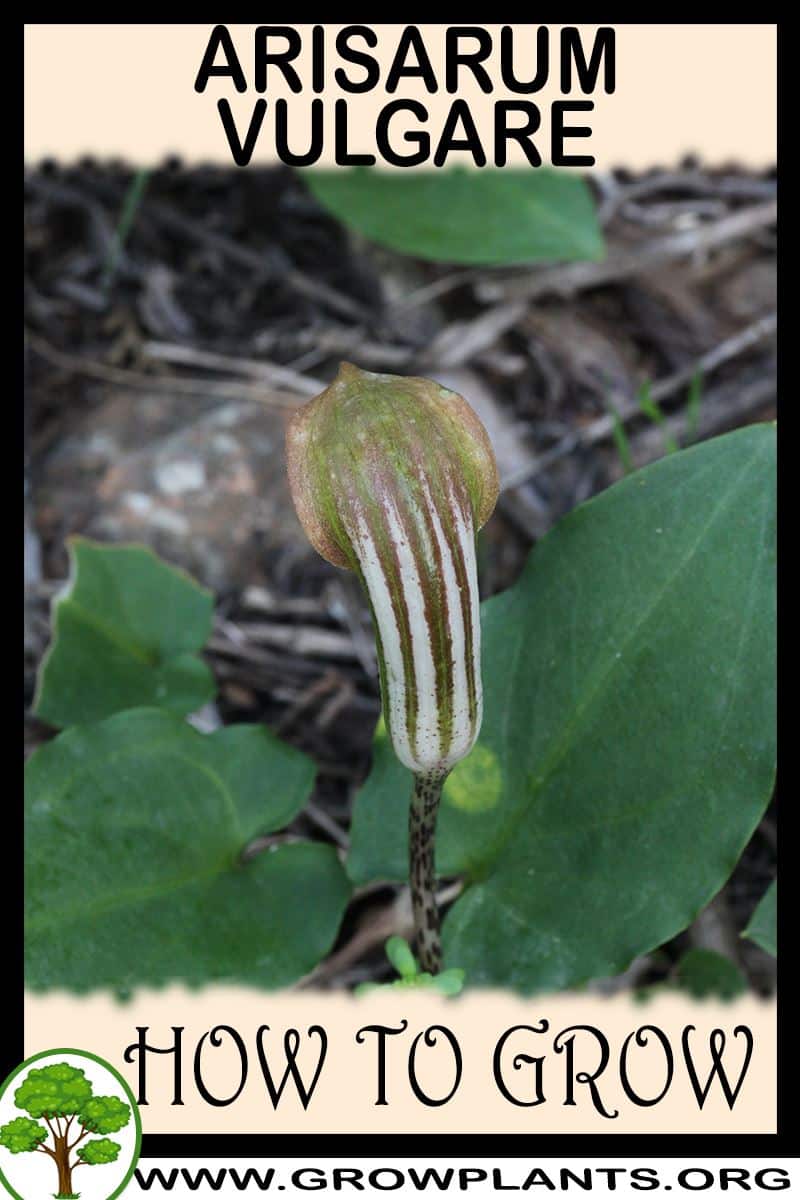
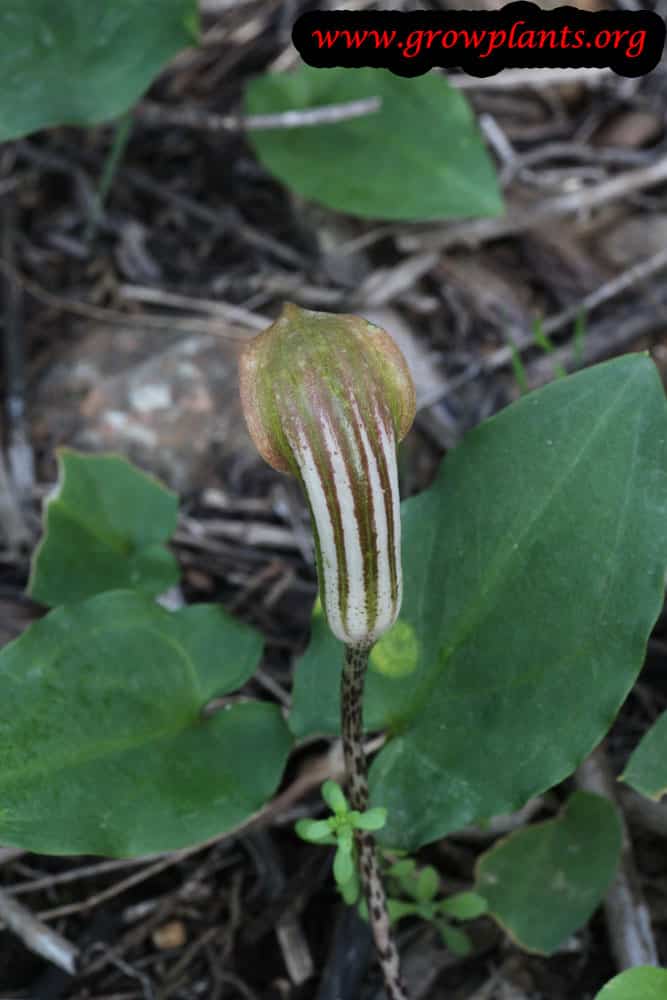
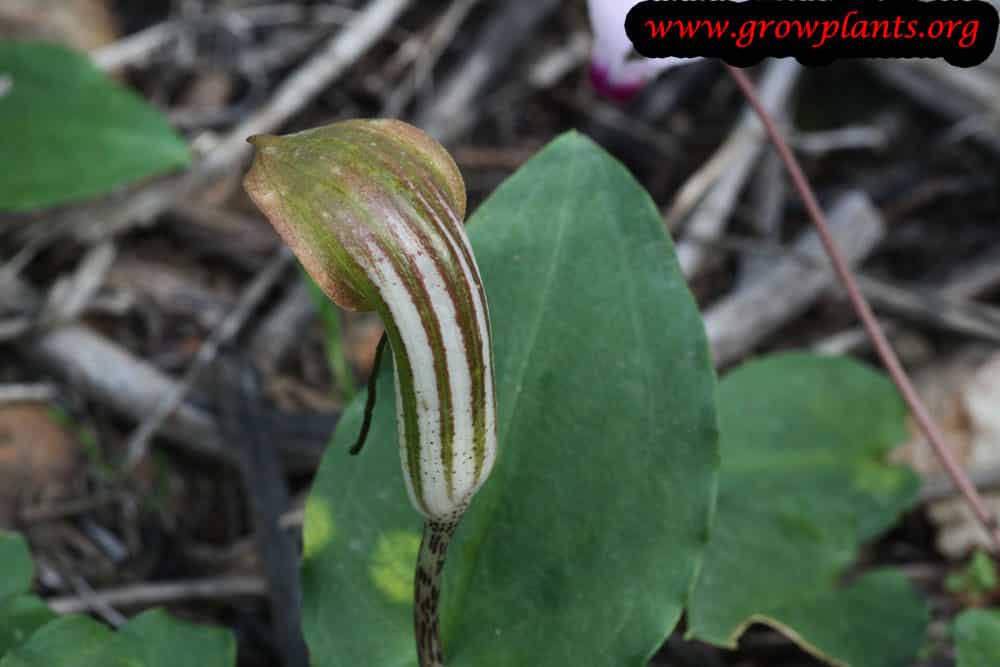
- Leaves & Foliage: Heart- to arrow-shaped green leaves, sometimes marked with white spots.
- Flower Characteristics: Curious hooded, bottle-shaped spathes striped in white, green, red or black, giving the “friar’s cowl” name.
Primary Uses & Landscape Value
- Functional & Ornamental Roles: Drought-tolerant ornamental groundcover for rockeries and shaded Mediterranean-style plantings; can also be grown as a house plant.
Care Guide: Planting, Soil & Watering
Overview: Friar’s cowl is a small tuberous perennial that grows from a rhizome in full sun to full shade and needs only well-drained soil. It is drought-tolerant, wanting light watering during growth and a dry rest when dormant.
Quick Care Requirements
| Requirement | Ideal Condition |
|---|---|
| Planting Season | In the mild season – spring or autumn |
| Growth Rate | Slow to Moderate |
| Soil Type | Well-drained soil |
| Water Need | Low to Moderate – dry rest when dormant |
Planting & Establishment
- Best Planting Season: Plant the rhizome in spring or autumn (in warm zones 10-11, autumn suits it best).
- How to Plant:
- Hole Preparation: Dig a shallow hole in free-draining soil to seat the rhizome.
- Soil Amendments: Add grit to sharpen drainage; it is otherwise undemanding.
- Planting Depth: Set the rhizome just below the surface, not deeply buried.
- Growth Speed & Expectations: A slow-to-moderate grower, a low plant of about 5-25 cm that dies back after flowering.
Soil, Watering & Drainage Care
- Soil Mix & Drainage Needs: Needs free-draining soil; it can be grown as a houseplant but is not well suited to standard container culture. Avoid waterlogging.
- Watering Schedule & Technique:
- Young / Newly Planted: Water lightly as growth appears to settle the rhizome.
- Established: Water moderately during active growth; it tolerates dry spells.
- Seasonal Adjustments: Keep dry during summer dormancy and water again as it regrows in the cooler season.
Climate, Light & Hardiness
Friar's Cowl is a small Mediterranean tuberous aroid that grows through the cool, moist season and rests in summer, tolerating drought and a range of light from full sun to full shade. It is a fairly hardy geophyte whose dormant rhizome survives mild-winter cold, dying back rather than being killed by seasonal chill.
Quick Climate Specifications
| Climate Zones | Mediterranean, subtropical, mild temperate |
|---|---|
| USDA Hardiness Zones | 8–11 (site data) |
| Optimal Temp Range | Approx. 10–22°C (50–72°F) during the cool growing season |
| Cold Damage Begins | Foliage around light frost near 0°C (32°F) |
| Approx. Survival Minimum | Dormant rhizome hardy to roughly −9°C (16°F) in zone 8 |
| Frost Tolerance | Foliage Low to Moderate; rhizome Moderate |
| Light Conditions | Full sun to full shade |
Sunlight & Light Exposure
Optimal Light Setup
Very adaptable - it grows in full sun, half shade or full shade, often naturalising under shrubs and trees.
Shade & Heat Management
In hot Mediterranean summers it retreats to dormancy, so shade mainly benefits it during the active cool season.
Best Exposure / Orientation
Tolerant of shaded and sunny positions alike; a spot that stays on the drier side in summer suits its dormancy.
Temperature Extremes & Hardiness
USDA Hardiness & Regional Limits
Site data rates it for zones 8–11. As a Mediterranean geophyte it is active in the cool, moist season and dormant in summer heat, with the tuber carrying it through both extremes.
Cold Damage & Winter Protection
Hard frost marks the winter foliage near 0°C (32°F), but the dormant rhizome tolerates the mild-winter cold of its zones; a light mulch protects it at the colder margin.
Frost Sensitivity
Low to moderate for the foliage; the underground rhizome is more cold-tolerant, so seasonal frost is not fatal within its range.
Extreme Heat Tolerance
It sidesteps summer heat by going dormant, which is its natural drought- and heat-avoidance strategy.
Wind, Humidity & Microclimate
Humidity Preferences
Adapted to the humid cool season and dry summer of Mediterranean climates.
Dry-Air Tolerance
High during dormancy; it naturally tolerates hot, dry summer air.
Wind Tolerance
Moderate; the low-growing foliage is not much troubled by wind.
Rainfall & Seasonal Moisture
Keyed to the wet-winter / dry-summer Mediterranean rhythm - moisture in the cool growing season, dry rest in summer.
Microclimate Recommendations
A spot that receives cool-season moisture but dries out in summer mimics its native conditions best.
Growing in Pots, Balconies & Indoors
Friar’s cowl is a small Mediterranean woodland tuber. The grower says it can be kept indoors but does not rate it as a long-term container plant – it naturalises better in open ground. On a cool, bright windowsill it can be grown as a curiosity, going dormant in the dry season.
Quick Details
- Container Size: Small if potted at all – a shallow pot for a 5-25 cm (2-10 in) tuber
- Indoor Suitability: Possible on a cool, bright sill, but the grower does not rate it as a container plant
- Best Spot: Sun to full shade, kept cool
- Soil & Drainage: Gritty, sharply free-draining
- Watering in Pots: Small to average in growth; keep nearly dry when dormant
Indoors & On the Windowsill
- Windowsill curiosity: Can be kept on a cool, bright sill for its odd hooded flowers; give bright light and let it dry off and go dormant after flowering.
- Grower’s caution: He does not recommend it as a permanent pot plant – it does better naturalised in open ground.
- Safety: Like other arums the sap is irritant – keep it off children and pets.
On a Balcony or Patio
- Cool & shaded: If tried in a pot, keep it in a cool, partly shaded spot with sharp drainage and protect the dormant tuber from waterlogging.
Choosing the Pot, Soil & Long-Term Care
- Pot & drainage: If potted, use a gritty, free-draining mix in a pot with strong drainage; avoid standing water, which rots the tuber.
- Dormancy: Keep nearly dry while dormant and resume watering when growth returns.
Growing this plant in a greenhouse
A greenhouse can give arisarum vulgare frost protection, cold protection, a longer growing season and winter growing.
Greenhouse at a glance
| Greenhouse suitability | Good - clearly useful |
|---|---|
| Main benefits | frost protection, cold protection, a longer growing season, winter growing |
| Season extension | can grow through winter |
| Outdoor protection advisable below | about 0°C |
| Suitable types | unheated greenhouse, polycarbonate greenhouse |
| Heating | No added heat is normally needed. |
Related greenhouse guides
- Greenhouses: How to Choose the Right Greenhouse
- Polycarbonate Greenhouses: What to Look for Before Buying
- Greenhouse Propagation Equipment
Fertilizing & Feeding
A light feeder that grows in the cool season and rests in summer: feed lightly while leaves are up, keep drainage sharp, and stop feeding as it dies back into summer dormancy.
Quick Fertilizing Specs
| Feeding Level | Light feeder |
|---|---|
| Main Nutrient Priority | Light balanced feeding during the cool-season growing period |
| Best Feeding Period | During the cool-season phase when leaves are up and growing |
| Organic Options | Leaf mould and compost worked into well-drained soil |
| Reduce/Stop Feeding | Stop feeding as leaves die back into summer dormancy |
| Micronutrients | Usually met by organic matter and a complete fertilizer; correct only diagnosed issues |
| Soil pH | Near neutral, in well-drained soil |
Feeding by Growth Stage
Cool-season leaf emergence
Support the flush of leaves as this geophyte breaks dormancy in cooler weather.
| Nutrient direction | A light balanced complete fertilizer as leaves emerge and growth begins. |
|---|---|
| Timing | As leaves emerge with the return of cool, moist weather. |
| Frequency | A light feeding as leaves appear. |
| Fertilizer types | A balanced complete fertilizer, used lightly, Leaf mould or compost worked into the soil |
| Precautions | Keep feeding light and drainage sharp; this is a low-demand plant that dislikes soggy, over-rich soil. |
Cool-season growth and bloom
Sustain foliage and the curious hooded flowers through the growing period.
| Nutrient direction | A light balanced feeding maintains foliage without forcing soft growth. |
|---|---|
| Timing | Through the cool-season growth and flowering period. |
| Frequency | An occasional light feeding while in active growth. |
| Fertilizer types | A balanced complete fertilizer, used lightly, Compost as a top-dressing |
| Precautions | Avoid overfeeding; excess feeding gives floppy leaves and does not improve this quiet-flowering plant. |
Summer dormancy
Let the plant die back and rest through the dry summer dormant period.
| Nutrient direction | None – withhold fertilizer while the plant is not in active growth. |
|---|---|
| Timing | As foliage yellows and dies back into summer dormancy. |
| Frequency | No feeding at this stage; resume only when active growth returns. |
| Fertilizer types | No feeding at this stage; hold off fertilizing until active growth resumes. |
| Precautions | Withhold fertilizer now; feeding a plant that is not actively growing wastes nutrients and risks salt buildup in the root zone. |
Nutrient Deficiency Signs & Corrections
Older, lower leaves fade to pale green or uniform yellow and overall growth slows.
| Possible causes | low available soil nitrogen, nitrogen leaching from heavy watering or rain, thin, low-organic-matter soil |
|---|---|
| Appears first on | older, lower leaves |
| What to check | recent feeding history, soil organic matter, watering and drainage |
| Possible correction | Apply a nitrogen-containing complete fertilizer and build soil organic matter, then water evenly. |
Leaf margins and tips brown or scorch and growth stalls despite adequate watering.
| Possible causes | fertilizer salt buildup in the root zone, under-watering that concentrates salts, excessive or too-frequent feeding |
|---|---|
| Appears first on | leaf margins and tips |
| What to check | recent fertilizer amounts, watering consistency, drainage and watering consistency |
| Possible correction | Ease off feeding, water thoroughly to flush accumulated salts from the root zone, then return to lighter feeding. |
Interveinal yellowing on older leaves while the veins stay green.
| Possible causes | low soil magnesium, potassium-heavy feeding competing with magnesium uptake, leaching in light soils |
|---|---|
| Appears first on | older, lower leaves |
| What to check | soil magnesium status, how potassium-heavy recent feeding has been, soil texture and leaching |
| Possible correction | Apply a labeled magnesium source such as Epsom salt or a dolomitic amendment and rebalance feeding. |
Pruning, Training & Seasonal Maintenance
Friar’s Cowl is a small Mediterranean woodland geophyte (a rhizomatous, tuber-like perennial) that grows in the cooler, moister months and goes dormant in summer heat. It has no woody parts and needs no structural pruning — maintenance is purely grooming: deadhead the curious hooded spathes and let the foliage die back naturally before clearing it, so the underground rhizome is fully fed for next season. The sap is partly poisonous, so wear gloves.
Quick Pruning & Maintenance Specs
| Pruning Tolerance | Grooming only — no structural pruning |
| Primary Pruning Window | After flowering and as foliage yellows toward summer dormancy |
| Secondary Maintenance Window | Autumn, as fresh growth returns — remove any old debris |
| Typical Frequency | A little tidying once or twice a year |
| Main Objective | Remove spent flowers and dead foliage; feed the rhizome for next year |
| Best Tool Type | Precision snips |
| Avoid Heavy Pruning During | While foliage is still green and feeding the rhizome |
Pruning by Plant Age & Size
At every stage this is a hands-off plant. On a newly planted or young clump, remove only damaged leaves. A mature clump needs nothing more than deadheading and end-of-season tidying — there is no formative or renewal pruning to do.
Seasonal Pruning Schedule
Post-Flowering — Deadheading
Objective: neaten and, if you do not want seed, prevent set. Snip the spent hooded spathes off at the base. Do NOT cut the still-green leaves.
Summer Dormancy — Let it die back
Objective: bank energy in the rhizome. As the plant naturally yellows and retreats for summer, let the leaves die down fully, then clear the withered remains. Fresh growth returns with autumn moisture.
Structural Pruning & Training
None applies. There is no stem structure to shape, thin or renew — this is a low geophyte, not a branching plant.
Special Growth to Remove
Only spent flower stems and naturally withered leaves. When fully dormant, the rhizomes can be lifted and divided to propagate — a division task rather than pruning.
Container & Small-Space Pruning
In a pot, treat it identically: deadhead, allow summer die-back, and divide the crowded rhizomes when dormant. Do not keep cutting or watering it into growth through its natural summer rest.
Tools
Precision snips are the only tool needed for the soft flower stems and leaves.
Tool Hygiene & Disease Risk
Routine — no notable pruning-borne disease. Because it is partly poisonous (an aroid), wear gloves and wash your hands after handling.
Cut Placement & Technique
Snip spent spathe stems off cleanly at the base; do not pull, which can disturb the shallow rhizome.
Heavy Pruning & Rejuvenation
Not applicable. This geophyte is not rejuvenated by cutting — renewal comes from dividing the rhizomes when dormant, not from hard pruning.
Post-Pruning Care
After summer die-back keep the dormant rhizome on the dry side until autumn, when cooler, moister conditions bring it back into growth.
Common Pruning Mistakes
- Cutting off green leaves before natural die-back, starving the rhizome for next season.
- Trying to keep it in leaf through summer instead of allowing dormancy.
When NOT to Prune
Do not remove the foliage while it is still green — those leaves are recharging the rhizome. Wait for natural yellowing.
Recommended Tools (by task)
- precision_snips — deadheading spent spathes and clearing withered foliage.
Propagation Guide
This small Mediterranean aroid is easiest to increase by dividing its creeping rhizome while dormant in summer. It also sets seed in fleshy berries that can be sown fresh, though seedlings are slow; overall it is easy to moderate.
Quick Propagation Specs
| Best Propagation Method | Rhizome division |
| Alternative Methods | Seed (fresh berry seed) |
| Propagation Difficulty | Easy |
| Seed True-to-Type | Mostly uniform (species) |
| Vegetative True-to-Type | Yes |
| Best Propagation Season | Divide when dormant (summer); plant in autumn |
| Seed Germination Time | Slow and erratic |
| Seed Sowing Depth | Barely covered |
Rhizomes, Tubers, Bulbs & Corms
Rhizome Division
Lift the dormant rhizome in summer, separate it into sections each with a growth point, and replant in autumn as growth resumes.
Growing from Seed
Seed Handling & Viability
Clean the seed from ripe berries and sow it fresh; do not let it dry out.
Germination Conditions
Cool and moist.
Germination Time
Slow and erratic, sometimes taking a full season.
Sowing Depth & Orientation
Barely cover the seed.
Bloom & Flower Guide
Quick Details
- Bloom Season: Spring and autumn (the cooler seasons)
- Flower Appearance: A hooded, bottle-shaped spathe striped white, green, red or blackish, sheltering a slender spadix – the “friar cowl”
- Edibility: Not edible – an aroid containing calcium oxalate
Detailed Blooming Overview
This Mediterranean aroid produces a striped, hooded spathe that forms the familiar cowl shape. It blooms in the cooler seasons – autumn and spring – when small flies are drawn down into the hood to pollinate it.
Flower Characteristics
- Bottle-shaped, hooded spathe.
- Striped in white, green, red or blackish tones, over a slender spadix.
Bloom Care & Thinning
- Pollination: By small flies lured into the hood (a trap-style bloom).
- Safety: Sap is an irritant; handle with care.
Pests, Diseases & Troubleshooting
Overview: Friar’s cowl (Arisarum vulgare) is a small Mediterranean tuberous aroid that grows in the cool, moist season and rests dormant in summer. It is genuinely easy and nearly pest-free; slugs and snails on the soft new leaves and hooded spathes, and the odd aphid, are the only regular pests, while its one real danger is rotting if the dormant tuber sits wet and warm.
Quick Troubleshooting Overview
| Issue / Pest | Main Symptom | Primary Solution |
|---|---|---|
| Slugs & snails | Ragged holes in leaves and spathes, slime | Night hand-pick, grit/copper barriers, iron-phosphate bait |
| Aphids | Colonies on new leaves/flower stalks, honeydew | Water jet, beneficials, insecticidal soap |
| Spider mites | Stippling in hot, dry conditions | Raise humidity, hose foliage; minor |
| Fungal leaf spot | Brown spots on leaves in damp weather | Airflow, remove leaves; rarely serious |
| Tuber rot | Soft, rotten tuber; no reshoot | Keep dry in summer dormancy, sharp drainage |
| Botrytis | Grey mould on spathes in cool damp | Airflow, remove faded flowers |
Common Pests & Management
- Slugs & Snails (Gastropoda):
- Symptoms: Ragged holes chewed in the soft leaves and the curious hooded spathes, with slime trails; worst in the damp, shaded conditions this plant enjoys.
- Prevention & Control: Remove hiding places, hand-pick after dark, and ring clumps with grit or copper; iron-phosphate bait where pressure is high.
- Aphids (Aphis, Myzus spp.):
- Symptoms: Small colonies on emerging leaves and flower stalks with honeydew; occasional and minor.
- Prevention & Control: Hose off, encourage beneficials, and use insecticidal soap only if colonies persist.
- Spider Mites (Tetranychus spp.):
- Symptoms: Fine stippling on leaves in unusually hot, dry conditions; uncommon on this cool-season plant.
- Prevention & Control: Raise humidity and hose foliage; treatment is rarely needed.
Diseases & Fungal Issues
- Fungal Leaf Spot (Cercospora, Phyllosticta spp.):
- Symptoms: Brown spots and blotches on leaves in prolonged damp, cool weather; largely cosmetic on this seasonal plant.
- Treatment & Management: Improve airflow, remove spotted leaves, and avoid overhead wetting; no spray usually needed.
- Tuber / Crown Rot (Pythium, Phytophthora, Sclerotium):
- Symptoms: Failure to reshoot, soft brown rotten tubers – the main way this plant is lost – when the resting tuber stays wet and warm through summer dormancy.
- Treatment & Management: Grow in free-draining, gritty soil, keep the tuber dry during its summer rest, and lift or protect from summer irrigation; discard rotted tubers.
- Botrytis (Grey Mould) (Botrytis cinerea):
- Symptoms: Fuzzy grey mould on ageing spathes and leaves in cool, still, humid conditions.
- Treatment & Management: Improve airflow, remove faded flowers and dead leaves; rarely needs more.
Growing Difficulties & Abiotic Problems
- Summer Dormancy (normal):
- Cause & Symptoms: The plant naturally dies down and disappears in summer heat and drought; growers may think it has died.
- Correction Strategy: Recognise this as normal – keep the dormant tuber dry, mark its position, and it reshoots with autumn moisture and cooler weather.
- Tuber Rot from Summer Watering:
- Cause & Symptoms: Watering the bare ground where a dormant tuber rests, or heavy summer soil, rots it.
- Correction Strategy: Site in sharply drained soil that dries in summer, and withhold water while dormant; container plants can be kept dry under cover.
- Scorch in Full Hot Sun:
- Cause & Symptoms: Soft foliage bleaches and scorches in intense direct sun; it is a woodland-edge plant.
- Correction Strategy: Give dappled shade to part sun and shelter from the fiercest midday heat.
What Helps – Products & Tools
Barely anything is needed: iron-phosphate slug bait and copper/grit barriers for molluscs, insecticidal soap for the rare aphid, and – most important – a free-draining, summer-dry site to protect the dormant tuber. Sprays are seldom justified.
Frequently Asked Questions
What is Arisarum vulgare?
Arisarum vulgare, known as friar’s cowl, is a small Mediterranean woodland geophyte grown for its curious hooded, striped spathes and arrow-shaped leaves, spreading slowly from rhizomes.
How do you grow Arisarum vulgare from seed?
Collect the seed from ripe berries and sow it fresh rather than letting it dry out. Keep it cool and moist; germination is slow and erratic, sometimes taking a full season, and the seed only needs to be barely covered.
What is Arisarum vulgare used for?
It’s grown mainly as a drought-tolerant ornamental groundcover for rockeries and shaded Mediterranean-style plantings, and it can also be grown as a house plant.
How do you grow Arisarum vulgare?
Plant the rhizome in spring or autumn (autumn suits it best in the warmest zones) in free-draining soil, setting it just below the surface rather than deeply buried. It’s drought-tolerant: water lightly as growth appears, water moderately through active cool-season growth, then keep it dry during summer dormancy and resume watering as it regrows in the cooler season.
Is Arisarum vulgare poisonous?
Yes, it’s partly poisonous, containing calcium oxalate as in other aroids, and the sap is an irritant. Handle it with care and keep it off children and pets.
Why does Arisarum vulgare disappear in summer?
This is normal, not a sign it has died. The plant naturally dies down and disappears in summer heat and drought as it goes dormant. Keep the dormant tuber dry, mark its position, and it reshoots with autumn moisture and cooler weather.