

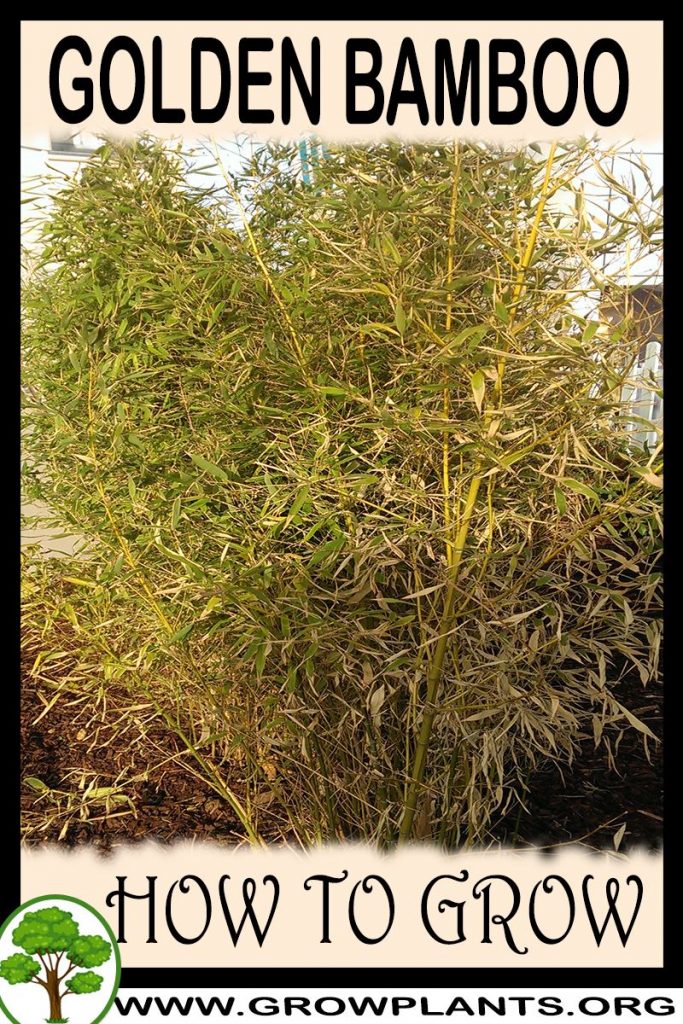
Plant Profile & Key Characteristics
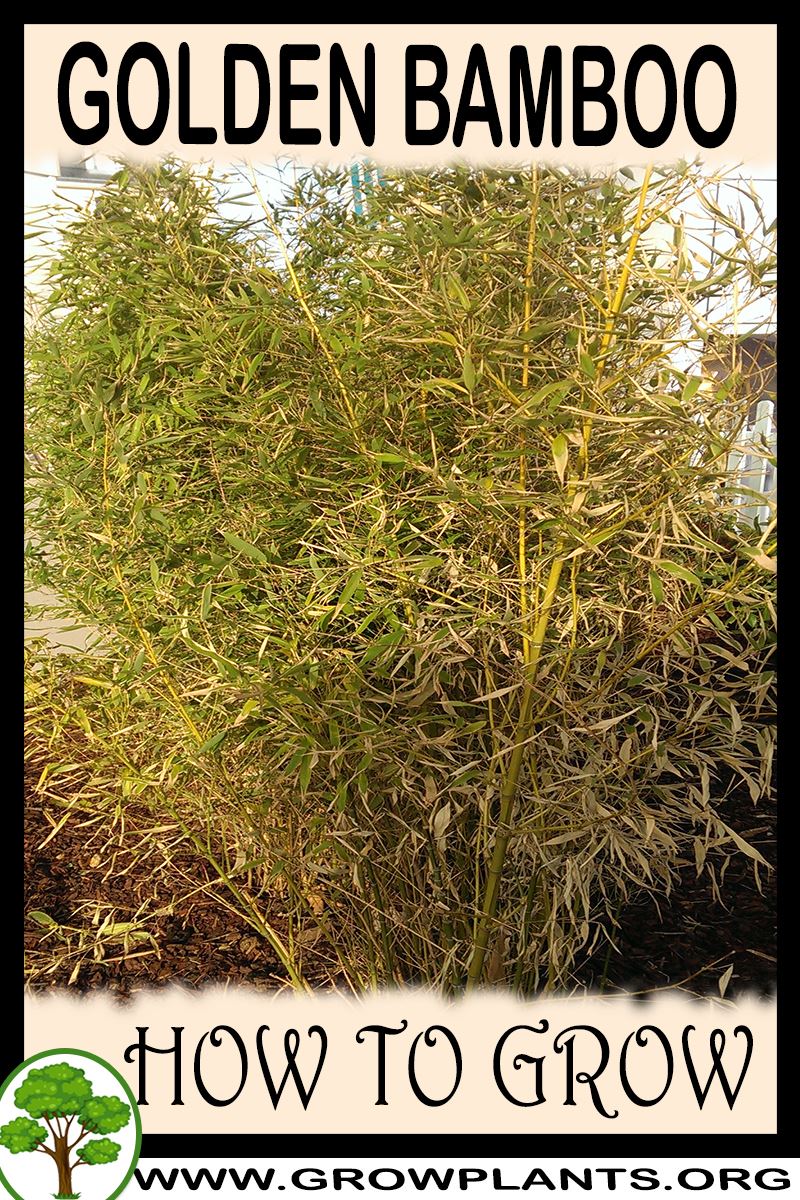
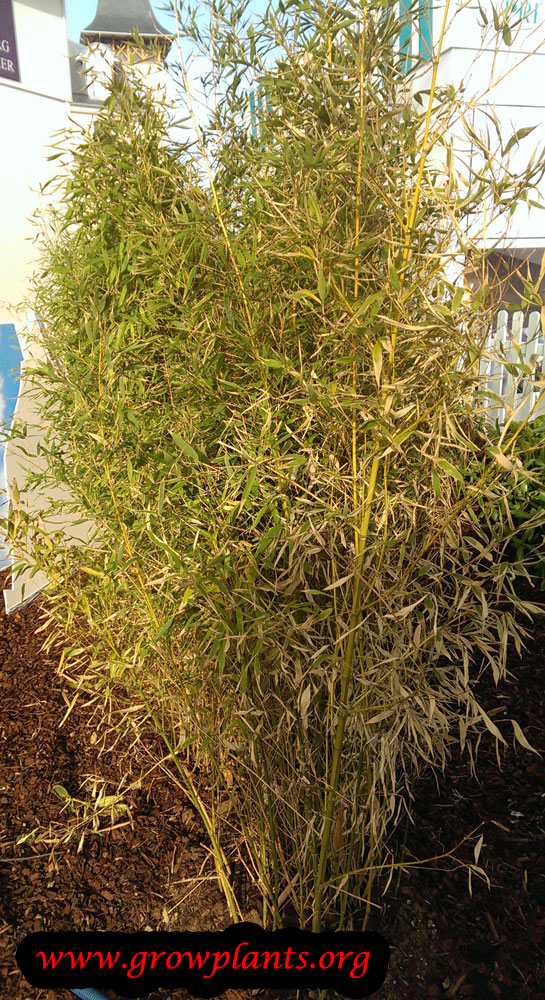
Overview: An evergreen running bamboo 2-5 m (6-16 ft) tall, forming upright canes of green-and-yellow culms. It is grown as a fast ornamental screen and hedge, though its spreading rhizomes make it aggressive without containment.
Quick Specifications
| Specification | Attribute |
|---|---|
| Plant Type / Life Cycle | Perennial (evergreen bamboo / grass) |
| Foliage Type | Evergreen |
| Mature Size | 2-5 m (6-16 ft) tall |
| Growth Rate | Fast |
| Root System | Running rhizomes (spreads aggressively; needs a root barrier) |
| Toxicity | Non-toxic; young shoots are edible after cooking |
| Hardiness | USDA zones 6-10 |
Growth Form & Structure
- Height & Spread: Upright canes 2-5 m (6-16 ft) tall spreading indefinitely by rhizome; best confined in a barrier or a large container to keep it in bounds.
- Growth Habit & Form: Running bamboo; new canes shoot up quickly from spreading underground rhizomes to build a dense grove.
- Lifespan & Maturity: A long-lived evergreen that fills in fast to form a screen; it flowers only very rarely, at intervals of many decades.
Anatomy & Physical Features
- Culms & Canes: Green-and-yellow canes, sometimes with crowded lower nodes typical of golden bamboo.
- Leaves & Foliage: Narrow linear-to-lance-shaped green leaves, some with yellow stripes.
- Flower Characteristics: Yellowish grass flowers held in wheat-like bracts, produced only very rarely.
Primary Uses & Landscape Value
- Edible Uses: Young shoots are edible once cooked.
- Functional & Ornamental Roles: A fast ornamental hedge, screen and windbreak; the canes are also used for stakes and craft — best sited where its spread can be managed.
Care Guide: Planting, Soil & Watering
Overview: Golden bamboo is a fast-growing running bamboo that grows in full sun to part shade and is undemanding about soil, doing well in ordinary well-drained ground. It needs only modest water once established but spreads aggressively by underground rhizomes.
Quick Care Requirements
| Requirement | Ideal Condition |
|---|---|
| Planting Season | Spring or autumn |
| Growth Rate | Fast |
| Soil Type | Adaptable, well-drained; not fussy |
| Water Need | Low to moderate — more while young, then let the soil dry between waterings |
Planting & Establishment
- Best Planting Season: Plant in spring or autumn.
- How to Plant:
- Hole Preparation: Dig a hole as deep as and a little wider than the root ball; to control its spread, install a deep rhizome barrier or plant it in a large container.
- Soil Amendments: No special enrichment is needed; some compost helps establishment in poor ground, but it grows almost anywhere that drains.
- Planting Depth: Set the root ball level with the surface, keeping the rhizome mass just below soil level.
- Growth Speed & Expectations: Expect fast growth and vigorous spread to a grove 2–5 m tall.
Soil, Watering & Drainage Care
- Soil Mix & Drainage Needs: Almost any well-drained soil suits it; in a container use a rich, free-draining mix, which also conveniently contains the runners.
- Watering Schedule & Technique:
- Young / Newly Planted: Water regularly to keep the soil moist while new plants establish and send up canes.
- Established: Water moderately once established, letting the surface dry between waterings; it tolerates some dryness.
- Seasonal Adjustments: Water more in summer heat and less in cool weather.
Climate, Light & Hardiness
Golden bamboo is a vigorous running bamboo for subtropical, Mediterranean, desert-edge and temperate climates, growing in full sun to half shade. It is among the hardier bamboos, with a rhizome that survives cold temperate winters and resprouts each spring.
Quick Climate Specifications
| Climate Zones | Subtropical, Mediterranean, temperate, desert margins |
|---|---|
| USDA Hardiness Zones | 6–10 (site data) |
| Optimal Temp Range | Approx. 18–32°C (64–90°F) |
| Cold Damage Begins | Foliage and canes around −15 to −18°C (5 to 0°F) |
| Approx. Survival Minimum | Rhizomes hardy to roughly −20 to −23°C (−4 to −10°F) in zone 6 |
| Frost Tolerance | Moderate to High |
| Light Conditions | Full sun to half shade |
| Wind Tolerance | Moderate |
Sunlight & Light Exposure
Optimal Light Setup
Full sun to half shade both work; a little afternoon shade in hot climates keeps the foliage from scorching.
Shade & Heat Management
Light shade eases summer heat; deep shade thins the clump and slows caning.
Best Exposure / Orientation
A sheltered, evenly moist exposure produces the densest screen.
Temperature Extremes & Hardiness
USDA Hardiness & Regional Limits
Site data rates it hardy in zones 6–10, making it one of the more cold-tolerant bamboos. As usual, the rhizome survives colder than the evergreen top growth.
Cold Damage & Winter Protection
Severe freezes burn foliage and can kill exposed canes, but the plant regrows from the hardy rhizome. A winter mulch protects the root zone at the cold margin.
Frost Sensitivity
Moderately to highly frost tolerant - hardier than black bamboo.
Extreme Heat Tolerance
Good with adequate soil moisture; hot dry wind scorches leaf edges more than heat alone.
Wind, Humidity & Microclimate
Humidity Preferences
Adaptable, but foliage stays best with moderate humidity and steady moisture.
Dry-Air Tolerance
Moderate; tolerates drier air better than many bamboos.
Wind Tolerance
Moderate; flexible canes screen well but exposed sites dry the leaves.
Microclimate Recommendations
A sheltered, moist site is ideal; because it runs aggressively, contain it with a rhizome barrier.
Growing in Pots, Balconies & Indoors
Golden bamboo is a vigorous running bamboo, not a houseplant, but it grows well in a large container on a patio or balcony – and a pot is actually the best way to keep its spreading roots in check.
Quick Details
- Container Size: A large, strong pot of 40 L or more for a 2-5 m (6-15 ft) clump
- Indoor Suitability: Not suited to indoors
- Best Spot: Full sun to half shade, sheltered from drying wind
- Soil & Drainage: Rich, free-draining mix
- Watering in Pots: Small to average, but never bone dry; pots dry fast
Indoors & On the Windowsill
- Houseplant limits: Too large and too light-hungry for indoors – keep it outside.
- Overwintering: Fairly hardy, but pot-grown roots are more exposed than in the ground; shelter the container against a wall in hard winters.
On a Balcony or Patio
- A living screen: Excellent for privacy on a balcony or patio; give it sun to half shade and shelter from drying wind, which scorches the canes.
- Contain the runner: In a pot its aggressive runners cannot escape – but they can split thin containers, so use a strong, wide pot and divide every few years.
- Weight & runoff: A large filled pot is heavy – check the balcony load and manage drainage runoff.
Choosing the Pot, Soil & Long-Term Care
- Pot & drainage: A big, strong-sided pot with good drainage holes; no standing saucer water.
- Potting mix: Well-aerated, organic-rich mix – peat or coir with perlite or vermiculite.
- Feeding: Bamboo is hungry – feed regularly through the growing season as nutrients leach from the pot.
- Repotting: Divide and root-prune every two to three years when it fills the pot.
Fertilizing & Feeding
A moderate, nitrogen-forward feeder: feed as new canes and foliage push in spring and through the warm season, then hold off in the cool dormant season.
Quick Fertilizing Specs
| Feeding Level | Moderate feeder |
|---|---|
| Main Nutrient Priority | Nitrogen-forward feeding to drive canes and lush foliage |
| Best Feeding Period | Spring and early summer as new canes and leaves push |
| Organic Options | Compost and aged manure as a top-dressing, plus mulch |
| Reduce/Stop Feeding | Hold off feeding through the cool dormant season |
| Micronutrients | Usually met by a complete fertilizer; correct only diagnosed iron shortage in alkaline soil |
| Soil pH | Slightly acidic to near neutral |
Feeding by Growth Stage
Spring cane and leaf flush
Fuel the vigorous spring push of new canes and foliage.
| Nutrient direction | A nitrogen-forward complete fertilizer to support fast leafy, grassy growth. |
|---|---|
| Timing | As new shoots and canes emerge in spring. |
| Frequency | A feeding as growth starts, renewed as the flush continues. |
| Fertilizer types | A nitrogen-forward complete fertilizer, Compost or aged manure as a top-dressing |
| Precautions | Keep the spread in check; vigorous feeding fuels an already aggressive spreader, so contain the planting. |
Warm-season active growth
Maintain dense, well-colored foliage through the growing season.
| Nutrient direction | A balanced-to-nitrogen complete fertilizer keeps a bamboo screen full and green. |
|---|---|
| Timing | Through the warm active growing season. |
| Frequency | Light, regular feeding across the season with mulch renewed. |
| Fertilizer types | A balanced or nitrogen-forward complete fertilizer, Mulch and compost as a top-dressing |
| Precautions | Keep soil evenly moist and avoid salt buildup by watering thoroughly when feeding. |
Cool-season rest
Let the planting coast through the cool dormant season.
| Nutrient direction | None – withhold fertilizer while the plant is not in active growth. |
|---|---|
| Timing | During cool weather when top growth slows or stops. |
| Frequency | No feeding at this stage; resume only when active growth returns. |
| Fertilizer types | No feeding at this stage; hold off fertilizing until active growth resumes. |
| Precautions | Withhold fertilizer now; feeding a plant that is not actively growing wastes nutrients and risks salt buildup in the root zone. |
Nutrient Deficiency Signs & Corrections
Older, lower leaves fade to pale green or uniform yellow and overall growth slows.
| Possible causes | low available soil nitrogen, nitrogen leaching from heavy watering or rain, thin, low-organic-matter soil |
|---|---|
| Appears first on | older, lower leaves |
| What to check | recent feeding history, soil organic matter, watering and drainage |
| Possible correction | Apply a nitrogen-containing complete fertilizer and build soil organic matter, then water evenly. |
New leaves yellow between the veins while the veins themselves stay green.
| Possible causes | low available iron, high soil pH locking up iron, cold or waterlogged roots limiting uptake |
|---|---|
| Appears first on | youngest leaves |
| What to check | soil pH, drainage and root health, whether symptoms are on new growth |
| Possible correction | Correct soil pH and improve drainage, then apply a chelated iron product per its label if new growth stays chlorotic. |
Leaf margins and tips brown or scorch and growth stalls despite adequate watering.
| Possible causes | fertilizer salt buildup in the root zone, under-watering that concentrates salts, excessive or too-frequent feeding |
|---|---|
| Appears first on | leaf margins and tips |
| What to check | recent fertilizer amounts, watering consistency, drainage and watering consistency |
| Possible correction | Ease off feeding, water thoroughly to flush accumulated salts from the root zone, then return to lighter feeding. |
Pruning, Training & Seasonal Maintenance
Golden bamboo is a running woody grass, not a tree, so maintenance is about managing culms and rhizomes rather than shaping a branch framework. Each spring new culms emerge from the rhizomes already at close to their final diameter and height; a cut culm never regrows thicker or taller, so pruning is limited to thinning old culms, topping to a chosen height, and — most importantly — containing an aggressive, spreading root system. It flowers only rarely (gregariously, after many years) and those culms then die back.
Pruning & the Edible Harvest
Young spring shoots are the edible crop but MUST be sliced and boiled (changing the water) to remove bitterness and cyanogenic compounds before eating – never raw; annual thinning of older culms and clump renewal drives strong new edible-shoot production.
Quick Pruning & Maintenance Specs
| Pruning Tolerance | High for culm removal; culms do not re-extend after topping |
| Primary Pruning Window | Late spring / early summer (after new shoots harden), for thinning and topping |
| Secondary Maintenance Window | Spring shoot emergence — remove unwanted new culms; ongoing rhizome patrol |
| Typical Frequency | Annual culm thinning; rhizome containment checked through the growing season |
| Main Objective | Thin old culms, control height and spread, keep the grove open and healthy |
| Young Plant Priority | Let the grove establish; select and keep the strongest culms |
| Mature Plant Priority | Remove oldest culms; sever escaping rhizomes |
| Best Tool Type | Loppers and a pruning saw for culms; sharp spade for rhizomes |
| Avoid Heavy Pruning During | Peak spring shoot emergence, if you are still building the grove |
Pruning by Plant Age & Size
Newly Established
Do very little for the first year or two beyond removing any weak or damaged shoots — let the rhizome mass build so the grove can throw strong culms.
Young / Formative
No structural training in the tree sense. Instead, select culms: keep the strongest, straightest ones and cut spindly or crowded shoots at ground level to steer vigour into a well-spaced grove.
Mature / Established
Each year remove the oldest culms (roughly those over three to five years, recognisable by weathering and lichen) at ground level to admit light and keep the grove young. Top individual culms to your screen height by cutting just above a node.
Seasonal Pruning Schedule
Spring — Shoot management
Objective: control spread at the source. Snap or dig out new shoots emerging where you do not want culms (this is far easier than cutting hardened canes later). Do NOT remove the vigorous shoots you intend to keep — these become this year’s culms.
Early Summer — Thinning and topping
Objective: open the grove and set height. Once new culms have leafed out, thin congestion at the base and top tall culms above a node. Expected response: better light penetration and a tidier screen; topped culms branch a little more but do not gain height.
Ongoing — Rhizome patrol and sanitation
Objective: prevent escape and remove dead material. Through the season, check the grove perimeter and cut back any rhizomes running past the barrier; remove dead or broken culls as noticed.
Structural Pruning & Training
The two real levers are culm selection (which canes to keep) and thinning for light. Remove weak, damaged, crossing or overcrowded culms at ground level; a grove thinned to open spacing stays healthier and shows off the coloured canes. Topping controls height but must always land just above a node.
Special Growth to Remove
The critical target is escaping rhizomes and the errant new culms they send up outside the intended footprint — sever and remove these promptly. Also remove dead culms and old lower branches on culms you are cleaning up for a bare-cane look. Do not treat wanted new shoots as unwanted growth.
Container & Small-Space Pruning
A large, sturdy container is one of the best ways to enjoy this bamboo safely, because it contains the rhizomes. In pots the plant becomes root-bound within a few years; lift and root-divide it, cutting the rhizome mass into sections, rather than trying to control it by topping alone.
Tools
Match the tool to culm diameter: loppers for thinner canes, a pruning saw for thick mature culms cut at ground level, and a sharp spade or mattock to chop through rhizomes. Hedge shears are not appropriate even for a screen — height is set by topping individual culms above nodes, not by shearing.
Tool Hygiene & Disease Risk
Routine. Golden bamboo has no major transmissible pruning-borne disease; clean, sharp blades that leave a smooth cut are all that is needed. Rinse soil off the spade after cutting rhizomes to keep it sharp.
Cut Placement & Technique
Cut culms you are removing flush at ground level so no tripping stub remains. When topping, cut just above a node — cutting mid-internode leaves a hollow, water-collecting stub that dies back and looks unsightly.
Heavy Pruning & Rejuvenation
Very tolerant: an old, congested or tired grove can be cut entirely to the ground and it will regenerate from the rhizomes with fresh culms the following spring. Note that this same resilience is why cutting tops alone never eradicates it — only rhizome removal does.
Post-Pruning Care
Water and a spring feed support strong new culms after thinning. After a full rejuvenation cut, expect a flush of new shoots and thin them to the strongest.
Common Pruning Mistakes
- Topping culms expecting them to regrow taller — they never do; height comes only from new culms.
- Neglecting rhizome containment, then facing an escaped grove.
- Cutting mid-internode and leaving hollow, water-holding stubs.
- Removing this year’s wanted new shoots by mistake.
When NOT to Prune
Avoid removing new spring shoots you want to keep, and hold major thinning until this season’s culms have hardened and leafed out.
Recommended Tools (by task)
- loppers — thinning and topping thinner culms.
- pruning_saw — removing thick mature culms cleanly at ground level.
- garden_spade — severing escaping rhizomes and dividing potted clumps.
Pruning Troubleshooting
| Problem | Possible Cause | What to Check | Corrective Action |
| Grove spreading beyond bounds | Unchecked rhizomes | Perimeter for runners and stray shoots | Install/repair a rhizome barrier; sever and remove escaping rhizomes each season |
| Thin, weak, crowded culms | Grove too congested | Culm density and light penetration | Thin oldest culms at ground level annually to open the stand |
| Dead or dying culms after topping | Cut left in mid-internode | Position of the cut and hollow stubs | Recut just above a node; remove hollow stubs |
Propagation Guide
Golden bamboo is increased vegetatively — seed is rarely available because the plant flowers only at long, unpredictable intervals — most easily by dividing the clump or lifting rooted rhizome sections. As a running bamboo it establishes readily but is aggressive, so contain it; difficulty is easy to moderate.
Quick Propagation Specs
| Best Propagation Method | Clump / rhizome division |
| Alternative Methods | Rhizome cuttings (offsets) |
| Propagation Difficulty | Easy |
| Vegetative True-to-Type | Yes |
| Best Propagation Season | Spring/autumn, around the shoot flush |
| Time Until Division Establishes | Over the following season |
Division, Offsets, Pups & Suckers
Clump Division
Lift and split the clump into pieces, each with several culms and attached rhizome and roots; reduce the tops and keep moist and shaded until re-established. This is the quickest, most reliable method.
Rhizomes, Tubers, Bulbs & Corms
Rhizome Cuttings
Lengths of rhizome with two or three nodes and live buds can be planted shallowly in warm, moist soil; slower than moving a rooted clump.
Containment note: confine the running rhizomes to keep the plant in bounds.
Bloom & Flower Guide
Quick Details
- Bloom Season: Summer, but flowering is rare and irregular
- Time to First Bloom: Only after decades – bamboos are monocarpic and may flower just once in a lifetime
- Flower Appearance: Yellowish, linear, hollow flowers borne among red-to-brown oval bracts that resemble ears of wheat
- Edibility: Ornamental / none – the flowers are not eaten
Detailed Blooming Overview
Golden bamboo rarely flowers – a stand can go decades without bloom. Flowering is often gregarious across a whole planting, and the canes typically weaken or die back afterward. Summer is the usual window when it happens.
Flower Characteristics
- Yellow, linear, hollow flowers.
- Carried in red-to-brown oval bracts shaped like wheat.
Bloom Care & Thinning
- Pollination: Wind-pollinated, as with all grasses.
- If a clump flowers: Feed and water well to support recovery; spent flower stems can be cut back.
Fruit & Uses
Safety first: raw golden-bamboo shoots are not safe to eat – like other Phyllostachys shoots they contain cyanogenic compounds and must be sliced and thoroughly boiled (changing the water) before any use. The site describes this plant only as an ornamental hedge; only the young shoots are edible, and only after this cooking.
Quick Edible Specs
| Edible Parts | Young shoots (only after thorough boiling) |
|---|---|
| Main Use(s) | Culinary – boiled bamboo shoots in cooked dishes |
| Eaten Raw or Cooked | Cooked only – never raw |
| Preparation Required | Peel the tough outer sheaths, slice thinly, and boil (typically in one or more changes of water) to drive off the bitter, cyanogenic compounds |
| Harvest Season | Spring, while shoots are young and emerging |
| Safety/Toxicity Caveat | Raw shoots are toxic (cyanogenic); safe only after thorough boiling. Grown here as an ornamental – confirm identity before eating |
Shoots & Stems
The edible part is the young shoot, taken while it is just emerging and still tender; the mature canes (green with yellow) are not eaten. Because this plant is grown as an ornamental hedge, the site records no culinary data for it, so the guidance here is a conservative, safety-led supplement.
Preparation, Uses & Safety
Young shoots must be peeled of their outer sheaths, sliced thinly and boiled thoroughly – often in one or more changes of water – to remove the bitter cyanogenic compounds that make raw bamboo shoots toxic. Only then are they used, cooked, in stir-fries and other dishes. Never eat the shoots raw, and be certain of the plant’s identity before harvesting.
Pests, Diseases & Troubleshooting
Overview: Golden bamboo is a vigorous, largely trouble-free running bamboo whose single biggest issue is not a pest at all but its aggressively spreading rhizomes, which demand a physical root barrier. Its main true pest is the bamboo mite, which stipples the canes’ foliage, alongside bamboo aphids, scale and mealybugs that feed honeydew to sooty mould. New shoots are grazed by slugs. Vigour, airflow and containment keep it healthy.
Quick Troubleshooting Overview
| Issue / Pest | Main Symptom | Primary Solution |
|---|---|---|
| Invasive spreading | Shoots erupting far from the clump | Install a deep root barrier; sever escaping rhizomes |
| Bamboo mite | Fine pale stippling, webbing under leaves | Rinse foliage, horticultural oil, remove worst canes |
| Bamboo aphids | Sticky honeydew, sooty mould, ant activity | Water jet, insecticidal soap, control ants |
| Scale / mealybugs | Bumps or white fluff on canes, sooty mould | Prune out, horticultural oil |
| Slugs & snails | Grazed, holed emerging shoots | Hand-pick, iron-phosphate pellets around shoots |
Common Pests & Management
- Bamboo spider mite (Schizotetranychus / Stigmaeopsis spp.):
- Symptoms: Fine pale-yellow stippling and elongated bleached patches on the upper leaf surface, with characteristic webbing ‘nests’ on the underside; foliage looks dull and mottled in hot, dry conditions.
- Prevention & Control: Hose the foliage regularly and raise humidity, thin congested canes for airflow, and cut out the worst-affected canes; horticultural oil to leaf undersides for heavy infestations.
- Bamboo aphids (Takecallis spp. / Melanaphis):
- Symptoms: Colonies on leaf undersides and new shoots produce copious honeydew and black sooty mould, and attract ants.
- Prevention & Control: Blast off with water, encourage ladybirds and lacewings, and control the ants that protect them; insecticidal soap for heavy colonies.
- Scale insects (Coccidae & Diaspididae spp.):
- Symptoms: Immobile brown or tan bumps along stems and leaf veins, often with sticky honeydew and sooty mould; slow decline and yellowing.
- Prevention & Control: Scrape off light infestations by hand or with a soft toothbrush; prune out heavily encrusted stems. Smother remaining scale with horticultural oil, targeting the mobile crawler stage with repeat applications.
- Mealybugs (Pseudococcidae spp.):
- Symptoms: White cottony masses in leaf axils, on stems and around the crown; feeding causes yellowing, stunting and honeydew with sooty mould.
- Prevention & Control: Dab individual colonies with a cotton bud dipped in surgical spirit; isolate affected plants; keep humidity moderate. For wider spread use insecticidal soap or horticultural oil, repeating every 7–10 days to catch newly hatched crawlers.
- Slugs & snails (new shoots) (Gastropoda spp.):
- Symptoms: Emerging soft shoots are grazed, holed or ruined at ground level in damp conditions.
- Prevention & Control: Hand-pick at night and protect emerging shoots with iron-phosphate pellets or copper barriers; tidy debris where they shelter.
Diseases & Fungal Issues
- Sooty mould (Capnodium spp.):
- Symptoms: Black film over leaves and canes, growing on aphid and scale honeydew.
- Treatment & Management: Control the sap-suckers and their attendant ants; the mould then weathers away, and hosing helps clean the canes.
- Fungal leaf spots & rust (various fungi):
- Symptoms: Brown or rusty spots and streaks on leaves, mainly cosmetic on a vigorous clump.
- Treatment & Management: Thin canes for airflow, remove badly affected foliage and debris; healthy bamboo rarely needs fungicide.
- Root rot (Phytophthora / Pythium spp.):
- Symptoms: Yellowing and dieback of canes in waterlogged soil.
- Treatment & Management: Plant in well-drained soil and avoid constant waterlogging; improve drainage around the clump.
Growing Difficulties & Abiotic Problems
- Invasive rhizome spread:
- Cause & Symptoms: As a running bamboo, Phyllostachys sends out fast, far-travelling rhizomes that erupt as new canes metres from the parent, invading lawns, beds and neighbouring gardens.
- Correction Strategy: Install a deep (60 cm+) HDPE root barrier at planting or a wide rhizome-pruning trench, inspect the edges each season, and sever and remove any escaping rhizomes; grow in a large container where space is tight.
- Yellowing / leaf drop:
- Cause & Symptoms: Some leaf yellowing and shedding is natural as bamboo replaces foliage, but widespread yellowing signals drought, waterlogging, or nutrient (nitrogen/iron) shortage.
- Correction Strategy: Water deeply in dry spells, ensure drainage, mulch, and feed with a high-nitrogen or grass-type fertiliser in the growing season; correct iron chlorosis on alkaline soil.
- Cold / wind scorch:
- Cause & Symptoms: Cold winds desiccate and brown the evergreen foliage in winter.
- Correction Strategy: Shelter from harsh wind, keep roots watered before hard frost, and tidy scorched canes in spring as fresh growth emerges.
What Helps – Products & Tools
For golden bamboo the single most important ‘product’ is a deep HDPE rhizome barrier to contain its spread. Against pests, horticultural oil handles bamboo mite, scale and mealybugs, insecticidal soap the aphids (with ant control), and iron-phosphate pellets the slugs on new shoots. A high-nitrogen feed keeps the clump vigorous and naturally pest-resistant.