Plant Profile & Key Characteristics
Overview: Tasteless stonecrop (Sedum sexangulare) is a low, evergreen, drought-tolerant succulent groundcover, 5-15 cm (2-6 in) tall, grown for its fleshy foliage and star-like flower clusters. This moderate-growing perennial is used mainly as ornamental groundcover in rock gardens, containers and green roofs (hardiness zone 3-9 (10a with care)).
Quick Specifications
| Specification | Attribute |
|---|---|
| Plant Type / Life Cycle | Perennial (evergreen succulent, groundcover) |
| Foliage Type | Evergreen (fleshy, succulent) |
| Mature Size | 5-15 cm (2-6 in), spreading |
| Growth Rate | Moderate |
| Root System | Shallow, fibrous |
| Toxicity | Toxic to cats |
| Hardiness | USDA zone 3-9 (10a with care) |
Growth Form & Structure
- Height & Spread: Reaches 5-15 cm (2-6 in); a low, drought-tolerant groundcover well suited to shallow, wide containers, rock gardens and green roofs.
- Growth Habit & Form: Low, mat- or cushion-forming succulent subshrub that spreads into a dense evergreen groundcover.
Anatomy & Physical Features
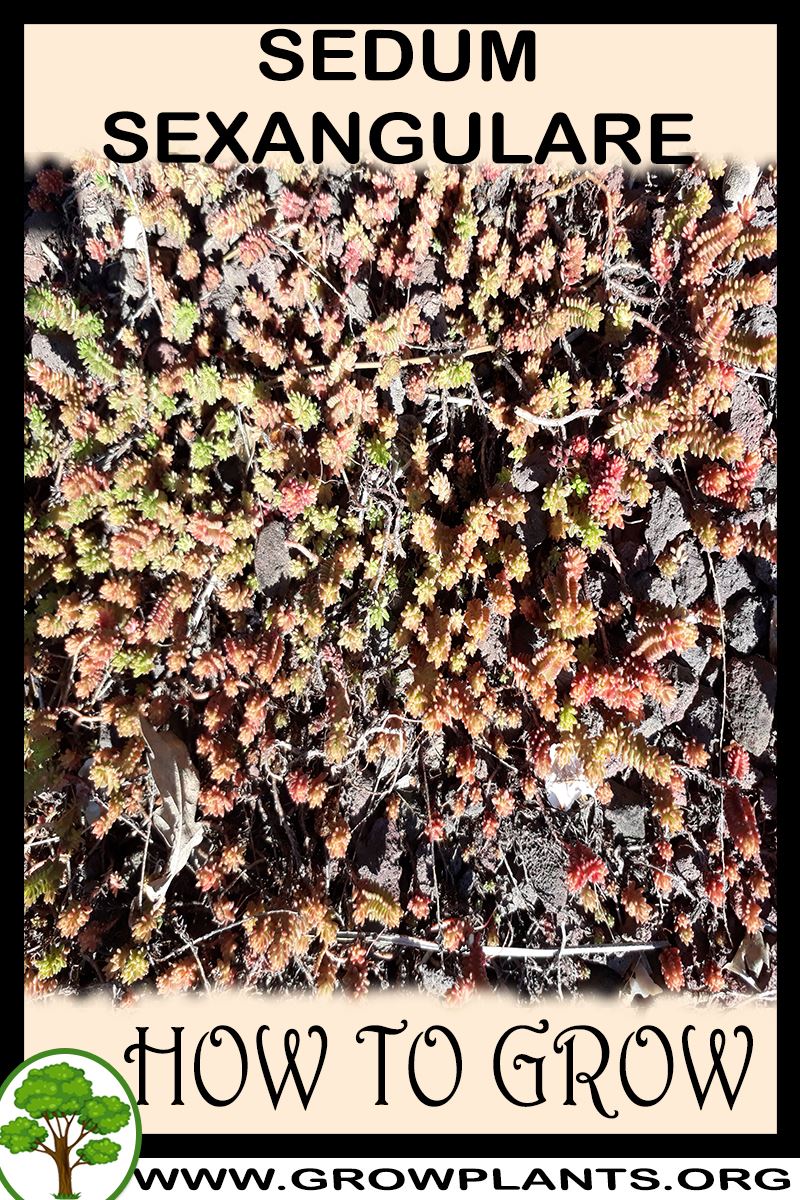
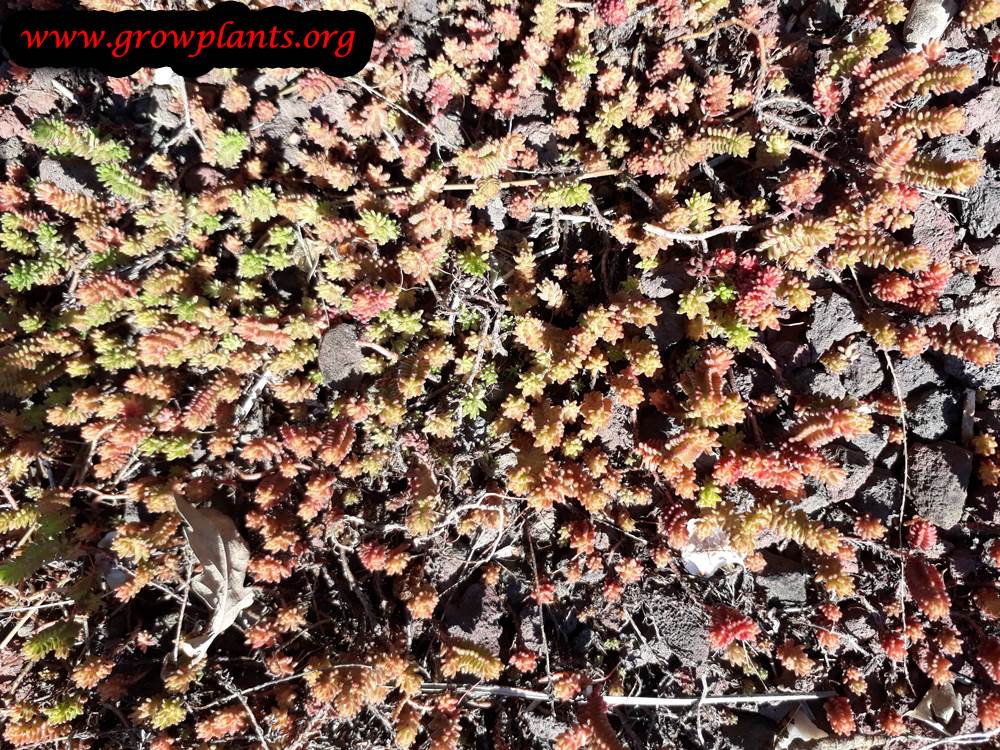
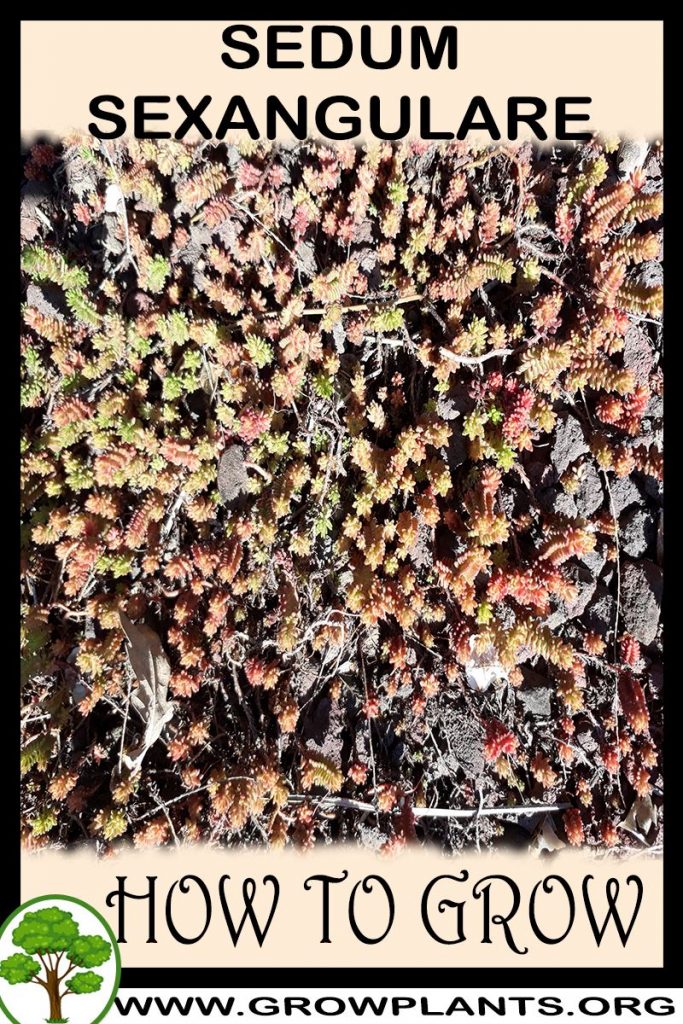
- Leaves & Foliage: Tiny, cylindrical (linear) fleshy leaves spiralled along the stems, green and often flushing red, pink or white.
- Flower Characteristics: Yellow, five-petalled star flowers in clusters on short stems.
Primary Uses & Landscape Value
- Functional & Ornamental Roles: Ornamental groundcover, rock-garden, green-roof and container plant, green-roof and rock-garden groundcover.
Care Guide: Planting, Soil & Watering
Overview: Sedum sexangulare (Tasteless stonecrop) is a hardy, drought-tolerant succulent that thrives in bright light and gritty, sharply draining soil. It stores water in its fleshy leaves, so it needs only occasional watering and quickly rots in heavy, wet ground.
Quick Care Requirements
| Requirement | Ideal Condition |
|---|---|
| Planting Season | Spring in zones 3–5; spring to summer in zones 6–8; spring to autumn zones 9–10a; year-round in zone 10b |
| Growth Rate | Moderate |
| Soil Type | Light, sandy, well-draining soil — a cactus/succulent mix or soil opened up with grit |
| Water Need | Low to Moderate — let the soil dry out between waterings |
Planting & Establishment
- Best Planting Season: Set out plants in the warmth of spring so the roots settle before winter; in the mildest zones the window stretches further (spring in zones 3–5; spring to summer in zones 6–8; spring to autumn zones 9–10a; year-round in zone 10b). In cold-winter areas grow it in containers that can be moved under cover.
- How to Plant:
- Hole Preparation: Dig a shallow hole just wide and deep enough for the small root ball — these succulents are shallow-rooted and resent sitting in a deep, water-holding pocket.
- Soil Amendments: Mix coarse sand, grit or perlite into the bed to sharpen drainage; aim for a lean, airy soil rather than a rich, moisture-retentive one.
- Planting Depth: Set the crown level with the soil surface so the fleshy stems and leaves rest on top — never bury them, which invites rot.
- Growth Speed & Expectations: Expect moderate growth; as a spreading groundcover it knits together steadily into a low mat rather than shooting upward.
Soil, Watering & Drainage Care
- Soil Mix & Drainage Needs: Give it a light, well-aerated mix; in pots use a shallow, wide container of free-draining cactus/succulent soil with ample drainage holes. Waterlogged soil is the single biggest threat, quickly rotting the roots and stems.
- Watering Schedule & Technique:
- Young / Newly Planted: Water lightly after planting and then only once the soil has dried, just enough to help new roots settle — overwatering now is the main cause of failure.
- Established: Water deeply but infrequently, always letting the soil dry out completely first; established plants shrug off real drought.
- Seasonal Adjustments: Cut watering back sharply in winter while the plant rests, and water a little more often only during prolonged summer heat.
Climate, Light & Hardiness
Tasteless stonecrop is one of the hardiest sedums in this group, adapted to temperate, Mediterranean, and subtropical climates with severe winter cold. It grows best in full sun to half shade and forms a tight, resilient groundcover mat.
Quick Climate Specifications
| Climate Zones | Temperate, Mediterranean, subtropical |
|---|---|
| USDA Hardiness Zones | 3–9, with the right care into 10a |
| Optimal Temp Range | Approximately 15–27°C (59–80°F) |
| Approx. Survival Minimum | Established plants in zone 3 typically endure winter minimums around −34°C to −40°C (−30°F to −40°F) |
| Frost Tolerance | High |
| Light Conditions | Full Sun / Half Shade |
| Wind Tolerance | High |
Sunlight & Light Exposure
Optimal Light Setup
Full sun keeps the mat densest and brings out its multi-colored foliage (green, red, pink, or white tones); half shade is tolerated.
Direct Sun Requirement
Needs a good amount of direct sun for its tightest, most colorful growth.
Shade & Heat Management
Handles hot, sunny sites well once established.
Best Exposure / Orientation
Rock gardens, gravel beds, or green roofs in full sun suit it well.
Temperature Extremes & Hardiness
USDA Hardiness & Regional Limits
One of the more cold-hardy sedums, reliably surviving in zones 3–9 and extending to 10a with attentive care - comfortable with genuinely severe continental winters.
Cold Damage & Winter Protection
Winter foliage color shifts are normal; genuine cold injury within its rated zones is uncommon.
Frost Sensitivity
Very frost tolerant once established.
Extreme Heat Tolerance
Good heat tolerance for a cold-hardy sedum, consistent with its Mediterranean and subtropical range.
Wind, Humidity & Microclimate
Humidity Preferences
Prefers dry, well-ventilated conditions; humid, wet winters raise rot risk more than cold alone.
Dry-Air Tolerance
High.
Wind Tolerance
Its very low, mat-forming habit handles open, exposed sites well.
Rainfall & Seasonal Moisture
Best suited to climates with a distinct dry season.
Microclimate Recommendations
Fast-draining rock or gravel gardens suit it across a very wide range of climates.
Growing in Pots, Balconies & Indoors
Sedum sexangulare (Sedum sexangulare) is a low, mat-forming succulent, 5-15 cm (2-6 in) tall. The grower notes it is not a true houseplant, but it is excellent in outdoor containers and on a sunny windowsill. In pots it is easy and forgiving – a shallow, gritty container on a sunny sill, balcony or patio is all it asks.
Quick Details
- Container Size: Shallow and wide; minimum 5-8 L, only about 70-150% larger than the root ball
- Indoor Suitability: Not a deep-room houseplant, but thrives on a bright, sunny windowsill
- Best Spot: Full sun to part shade – the brightest spot available
- Soil & Drainage: Fast-draining cactus/gritty mix; never soggy
- Watering in Pots: Sparingly – let the mix dry out between waterings; overwatering is the main risk
Indoors & On the Windowsill
- Not a true houseplant: The grower marks it ‘No’ – like most stonecrops it needs strong, direct light that an ordinary room interior cannot supply. A ready-made cactus and succulent soil mix provides that structure without mixing it yourself.
- Windowsill: It does well on your brightest, sunniest windowsill (south or west facing) with several hours of direct sun; leggy, stretched stems signal too little light.
- Overwintering: Most creeping sedums are hardy and happier outdoors, but a prized pot can shelter on a cold, bright sill through a severe winter.
On a Balcony or Patio
- Light & heat: Ideal for a hot, sunny balcony – it shrugs off reflected heat from walls and paving. Give it the brightest spot and it will colour up beautifully.
- Rain & drainage: In prolonged wet weather move pots under cover; combined with cold, standing water is what kills these succulents, not drought.
Choosing the Pot, Soil & Long-Term Care
- Pot & drainage: A shallow, wide pot with strong drainage holes; skip a standing water saucer to avoid root rot. Terracotta breathes and dries fast (good for succulents), while glazed or plastic holds moisture longer.
- Potting mix: A gritty, free-draining blend – cactus mix or potting mix cut with sharp sand, perlite and a topping of gravel or lava rock.
- Feeding: Succulents need very little; a weak feed once or twice in the growing season is ample in a pot.
- Refreshing the mix: Container mix loses its drainage after a few years – replace it and pot on as the clump spreads.
Grower’s Container Tip
- Shallow and wide: pick a pot only about 70-150% larger than the root ball. A depth of 10-15 cm (4-6 in) is plenty – going deeper adds nothing. A minimum of 5-8 L works, but bigger is better.
- To keep the plant compact you can trim the roots and let them regrow into fresh space.
- Drainage is everything: use a free-draining potting mix, cactus mix or sandy soil, and add coarse grit – gravel, lava rock or pebbles. After a few years the mix stops draining well, so replace it with fresh mix.
Fertilizing & Feeding
A very light feeder: this tiny, mat-forming stonecrop stays tight and colorful in lean soil, needing only an occasional light feeding while growing and none while dormant.
Quick Fertilizing Specs
| Feeding Level | Light feeder |
|---|---|
| Main Nutrient Priority | Low-nitrogen balanced feeding to preserve its compact mat and multi-color foliage |
| Best Feeding Period | During the warm active growing season |
| Organic Options | A light topdressing of compost worked into sandy, well-drained soil |
| Reduce/Stop Feeding | Hold off feeding through winter dormancy or cold rest |
| Micronutrients | Rarely needed in lean, well-drained soil |
| Soil pH | Tolerates a wide range, doing well in average to slightly alkaline soil |
Feeding by Growth Stage
Warm-season active growth
Keep this small groundcover’s tight mat and green-to-red-and-pink foliage color coming without stretching it out.
| Nutrient direction | A dilute, low-nitrogen balanced feeding maintains color and density without softening the tiny leaves. |
|---|---|
| Timing | During the warm active growing season as the mat spreads and fills in. |
| Frequency | An occasional light feeding is plenty for this very low-demand groundcover. |
| Fertilizer types | A diluted, low-nitrogen balanced fertilizer, A light topdressing of compost in sandy, fast-draining soil |
| Precautions | Rich or frequent feeding stretches this naturally tight, mat-forming plant into loose, floppy growth that rots more easily. |
Dormant or cold-season rest
Let the mat rest through cold weather or slow growth without encouraging tender new shoots.
| Nutrient direction | None – withhold fertilizer while the plant is dormant or resting. |
|---|---|
| Timing | During winter dormancy or whenever growth has clearly stopped. |
| Frequency | No feeding at this stage. |
| Fertilizer types | No feeding at this stage; do not fertilize until active growth resumes in spring. |
| Precautions | Do not fertilize dormant growth; the very shallow root system is quick to show salt stress from unused nutrients. |
Nutrient Deficiency Signs & Corrections
The mat fades to a uniform pale green, losing its usual red or pink tones, and fills in slowly.
| Possible causes | low available nitrogen in very lean, sandy soil, heavy shade reducing overall vigor and color, root competition where the mat has grown dense over several seasons |
|---|---|
| Appears first on | older sections of the mat |
| What to check | recent feeding history, light exposure, mat density and whether thinning or dividing is overdue |
| Possible correction | Apply a diluted, low-nitrogen balanced fertilizer during active growth and confirm adequate sun. |
New growth emerges pale yellow while the veins stay green.
| Possible causes | compacted or poorly drained soil restricting root function, overly alkaline soil tying up iron, root stress from overwatering in heavier soil |
|---|---|
| Appears first on | newest growth |
| What to check | soil drainage and texture, watering frequency, soil pH if chlorosis persists |
| Possible correction | Improve drainage with a sandier mix and correct pH before considering a chelated iron product per its label. |
Leaf tips brown or shrivel and patches of the mat look dull or thin despite regular watering.
| Possible causes | fertilizer salt buildup from feeding too rich or too often, underwatering concentrating salts in shallow, fast-draining soil, poor drainage trapping salts near the shallow roots |
|---|---|
| Appears first on | leaf tips and margins |
| What to check | recent fertilizer strength and frequency, watering consistency, drainage of the growing medium |
| Possible correction | Ease off feeding, flush the soil with water to move salts past the root zone, then resume only light feeding. |
Pruning, Training & Seasonal Maintenance
Sedum sexangulare forms a very low, tight, evergreen carpet only 2–6cm tall, so pruning here means edging and light grooming rather than shaping a subshrub. It is hardy to zone 3, so unlike less cold-tolerant stonecrops, timing is driven by tidiness and spread control rather than frost risk. The safest window is early spring, before the new flush, with a second light pass after summer flowering to remove spent stems. Grooming has no effect on next season’s bloom.
Quick Pruning & Maintenance Specs
| Pruning Tolerance | Low–Moderate |
| Primary Pruning Window | Early spring, before new growth |
| Secondary Maintenance Window | After summer bloom (deadheading) |
| Typical Frequency | Once or twice a year |
| Main Objective | Control spread at bed edges; remove spent flower stems |
| Young Plant Priority | Leave undisturbed to establish and knit together |
| Mature Plant Priority | Edge back over-spreading growth; refresh thin patches |
| Best Tool Type | Precision snips |
| Avoid Heavy Pruning During | Prolonged wet weather (rot risk) |
Pruning by Plant Age & Size
Newly Established
Leave a newly planted patch alone except to remove any damaged stems; it needs full leaf cover to knit into a solid mat.
Young / Formative
No structural training is used; the plant self-forms its carpet. Light pinching can thicken sparse young patches.
Mature / Established
Once established, its vigorous creeping habit means the main task is trimming back runners at bed, path, or lawn edges before they root beyond the intended area.
Seasonal Pruning Schedule
| Stage | Objective | Remove | Do Not Remove | Response / Impact |
| Pre-Growth / Early Spring | Tidy and edge the carpet before the growth flush | Dead or shriveled stems; runners past the bed edge | Healthy low rosettes | Encourages dense regrowth; no impact on summer bloom |
| Ongoing Sanitary | Remove spent flowers after summer bloom | Dried flower clusters | Vegetative growth | Tidier carpet; no bloom-timing consequence |
Special Growth to Remove
- Creeping stems that have rooted beyond the intended planting edge
- Spent flower stems after summer bloom
- Any patches gone soft or mushy after wet weather
Container & Small-Space Pruning
In shallow pots or troughs, trim trailing stems back to the container edge regularly — because of its vigor, sexangulare will otherwise spill and root wherever it touches soil, including neighboring pots.
Tools
- Precision snips — for edging runners and removing spent flower stems
Tool Hygiene & Disease Risk
Routine care only — clean, sharp snips are sufficient; no notable transmissible disease risk beyond rot in waterlogged conditions.
Cut Placement & Technique
Snip runners cleanly where they cross the bed edge rather than tearing them free, which can uproot adjacent healthy mat.
Heavy Pruning & Rejuvenation
Hard rejuvenation is rarely needed since this species stays low and self-renews by creeping; a patchy mat is better refreshed by replanting healthy stem sections into gaps than by cutting back old growth.
Post-Pruning Care
No feeding is needed after trimming; let cut edges dry briefly before the next watering.
Common Pruning Mistakes
- Letting edging lapse, so runners root into lawn or neighboring beds
- Overwatering after a cutback, risking rot
- Pulling runners instead of cutting them, which uproots surrounding mat
When NOT to Prune
- During prolonged wet weather (rot risk)
- Immediately after transplanting divisions, until they root in
Recommended Tools (by task)
- precision_snips — the only cuts needed are on thin creeping stems and spent flower stalks
Propagation Guide
Sedum sexangulare, a very low, mat-forming stonecrop, propagates most easily from stem or leaf cuttings in free-draining soil; seed also works and gives plants similar to the parent, but takes longer to establish a mat. Vegetative propagation is not strictly required, but it is easier and faster than seed, and overall this is an easy plant to increase.
Quick Propagation Specs
| Best Propagation Method | Stem or leaf cuttings |
| Alternative Methods | Seed sowing; simple layering (pinning a stem into soil) |
| Propagation Difficulty | Easy |
| Seed True-to-Type | Usually true-to-type (species, not a named cultivar) |
| Vegetative True-to-Type | Yes |
| Best Propagation Season | Spring |
| Seed Germination Time | 2–4 weeks |
| Cutting Rooting Time | Typically a few weeks under warm, lightly moist conditions |
| Seed Sowing Depth | About 0.5cm (0.25in) |
Growing from Seed
Seed Handling & Viability
Keep saved seed dry, dark and at room temperature until sowing.
Sowing Season
Spring is best; in warmer hardiness zones sowing can extend into summer or autumn, but avoid the peak of summer heat.
Sowing Depth & Orientation
Sow shallowly, about 0.5cm (0.25in) deep.
Germination Conditions
Use a light, sandy, well-ventilated, free-draining mix in bright light. Keep evenly moist without waterlogging — overwatering is the main cause of poor germination, though letting the bed dry out also causes problems.
Germination Time
Germination typically takes about 2–4 weeks.
Seedling Care
Keep seedlings in bright light with moist, well-ventilated soil. Space roughly 2x2cm (1x1in) when pricking out, and allow 20–30cm (8–12in) between plants at final spacing given this species’ spreading habit.
Stem Cuttings
Cutting Type
Short stem-tip cuttings.
Best Timing
Spring through summer.
Cutting Preparation
Let the cut end sit in a shaded spot for a few days to heal and dry slightly before inserting into soil.
Rooting Setup
Insert into free-draining, sandy soil; keep lightly moist, never soggy.
Rooting Hormone
Not necessary; this species roots readily unaided.
Rooting Time
Roots typically form within a few weeks.
Leaf & Root Cuttings
Leaves can also be used: cutting cleanly at the leaf base tends to work better than snapping it mid-leaf, though a mid-leaf piece can still root. Let it heal and dry in shade for a few days, then set the cut end onto moist, free-draining soil, keeping it lightly moist until a new plantlet forms at the base.
Air & Ground Layering
Given its low, spreading growth, simply bending a stem down and covering part of it with soil while still attached to the parent works well; once that section has rooted, sever it and grow the new plant on its own.
Bloom & Flower Guide
Quick Details
- Bloom Season: Summer
- Flower Appearance: Yellow, five-petalled star flowers carried in clusters on short stems
- Edibility: Grown as an ornamental groundcover, not for eating
Detailed Blooming Overview
Tasteless stonecrop flowers in summer, raising sprays of small yellow stars above a fine, needle-leaved mat. The common name comes from its leaves lacking the peppery bite of some related stonecrops. It is a tough, drought-tolerant carpeter, and the bloom lights it up in the warmer months.
Flower Characteristics
- Yellow, star-shaped flowers with five petals.
- Held in clusters on stems above the foliage.
- Nectar-rich – a good draw for bees and other small pollinators.
Bloom Care & Thinning
- Managing the bloom: Shear off the spent flower stems once flowering ends to keep the mat neat.
- Pollination: The open flowers are easily worked by bees and hoverflies.
Fruit & Uses
Sedum sexangulare – commonly called tasteless stonecrop because its leaves lack the hot, peppery bite of related stonecrops – has a modest foraging history as a mild salad or garnish leaf. It is the mildest-flavored of the commonly foraged sedums and is eaten raw in small amounts, though it remains a marginal, non-commercial edible rather than a cultivated food crop.
Quick Edible Specs
| Edible Parts | Leaves and young flowering stems |
| Main Use(s) | Foraged salad/garnish leaf (culinary, marginal) |
| Eaten Raw or Cooked | Raw, in small quantities; can also be lightly cooked |
| Preparation Required | None for small raw amounts; rinse before eating |
| Harvest Season | Spring through summer, picking young leaves and tips |
| Time to First Harvest | Not a cultivated food crop – sample lightly once the groundcover mat is established |
| Storage | Best eaten fresh; does not store |
| Safety/Toxicity Caveat | mild-tasting, but still a yellow-flowered Sedum – eating large amounts can cause stomach upset, and the site notes this species is toxic to cats, so keep it away from pets. |
Leaves & Greens
The small, fleshy, needle-like leaves (green, red, pink or white depending on the plant) are the edible part. They are mildest when young and fresh; older, sun-stressed leaves can turn more astringent. A few rinsed leaves can be added raw to a salad as a crunchy, mildly tart garnish, or the tips can be lightly sauteed as a minor pot-herb.
Preparation, Uses & Safety
No cooking is strictly required for small quantities, but this remains a foraged curiosity rather than a leafy green to eat in volume – like other Sedum species, larger amounts can upset the stomach. Keep pets away from the plant, since the site notes toxicity to cats. There is no established medicinal or other use for this species beyond its ornamental groundcover role.
Pests, Diseases & Troubleshooting
Overview: Tasteless stonecrop is a hardy European mat-former resembling biting stonecrop but without the acrid taste, with six-ranked green leaves and yellow flowers. Like all stonecrops, Sedum sexangulare is far more often harmed by cultivation mistakes-above all overwatering-than by any pest. The insects it does attract (mealybugs and aphids under cover, slugs and snails outdoors) are few and easily managed by hand or with gentle organic sprays. Grow it hard in sharply drained gritty soil with strong light, water only when the soil is dry, and most problems never begin.
Quick Troubleshooting Overview
| Issue / Pest | Main Symptom | Primary Solution |
|---|---|---|
| Mealybugs | White cottony tufts tucked into leaf axils and rosette centres, sticky honeydew and sooty mould | Dab with alcohol, rinse, then insecticidal soap or neem |
| Aphids | Clusters of soft green/black insects on new growth and flower stems, distortion and sticky sap | Blast with water, insecticidal soap, encourage ladybirds |
| Slugs & snails | Ragged holes and slime trails over the fleshy leaves, worst in damp weather | Hand-pick after dark, grit/copper barriers, iron-phosphate bait |
| Root & stem rot | Blackened, mushy, translucent stems that collapse at the base | Withhold water, improve drainage, cut back to firm tissue and re-root |
| Etiolation | Stems stretch pale and floppy with wide gaps between leaves | Move to much brighter light; behead and re-root compact tips |
| Sedum rust | Rusty-orange pustules on undersides of leaves and stems | Remove affected growth, improve airflow, sulphur if severe |
Common Pests & Management
- Mealybugs (Planococcus citri / Pseudococcus spp.):
- Symptoms: Slow-moving, soft insects coated in white waxy fluff, hiding deep in leaf axils, rosette centres and among trailing stems. They excrete sticky honeydew that turns black with sooty mould; heavy infestations stunt and yellow the plant. Do not mistake the cottony masses for the natural waxy bloom on the leaves.
- Prevention & Control: Inspect new plants before introducing them and isolate any that are infested. Touch each colony with a cotton bud dipped in isopropyl alcohol, then rinse. For wider outbreaks spray insecticidal soap or neem oil, wetting the hidden crevices, and repeat weekly until clear. A bad potted infestation is best cured by unpotting, washing the roots (root mealybugs hide there too) and repotting into fresh gritty mix.
- Aphids (Aphis sedi and other Aphis spp.):
- Symptoms: Dense clusters of soft green, grey or black insects on tender new shoots and especially on the flower stalks, causing curling and sticky honeydew. Aphis sedi is the stonecrop specialist and swarms flowering heads.
- Prevention & Control: Knock them off with a firm jet of water, repeated every few days. Encourage ladybirds, lacewings and hoverflies, which clear light infestations on their own. If they persist, an insecticidal soap or a light neem spray in the cool of evening works well; avoid spraying open flowers to protect pollinators.
- Slugs & Snails (Deroceras reticulatum, Cornu aspersum):
- Symptoms: Irregular holes chewed in the plump leaves and stems, tender new mat growth grazed away, and tell-tale silvery slime trails; damage appears overnight and in wet spells.
- Prevention & Control: Keep the crown dry and the surrounding ground open. Hand-pick after dark by torchlight, set beer traps, and ring vulnerable plants with sharp grit, crushed shell or copper tape. Where pressure is high, scatter iron-phosphate pellets, which are safe around pets and wildlife.
- Vine weevil (Otiorhynchus sulcatus):
- Symptoms: Adults notch neat bites from leaf margins at night; the real damage is done below ground by fat, legless, C-shaped white grubs that devour roots, causing sudden wilting and collapse of an otherwise healthy plant-most serious in containers.
- Prevention & Control: Check the rootball of new plants. Water in a drench of beneficial nematodes (Steinernema/Heterorhabditis) into moist, warm compost to kill the grubs; repot survivors into fresh mix and remove any adults found at night.
Diseases & Fungal Issues
- Crown, stem & root rot (Pythium, Phytophthora, Fusarium, Rhizoctonia):
- Symptoms: By far the commonest killer of stonecrops. Stems and the base of the plant turn black, soft, translucent and foul-smelling, then collapse; roots are brown and mushy. It follows soggy soil, buried crowns or cold wet conditions.
- Treatment & Management: Prevention is everything-use a fast-draining gritty mix, pots with drainage holes, and water only when dry, never letting the plant sit wet. If rot appears, cut cleanly back into firm green tissue, let the cutting callus, and re-root it; discard badly rotted plants and the contaminated soil.
- Botrytis / grey mould (Botrytis cinerea):
- Symptoms: Fuzzy grey-brown mould on leaves, stems and faded flowers in cool, damp, crowded conditions; affected tissue rots and drops.
- Treatment & Management: Improve air movement, avoid overhead watering, and remove dead leaves and spent flower heads promptly. Thin congested growth; a copper or biological fungicide helps only if the underlying damp is corrected.
- Sedum rust (Puccinia spp.):
- Symptoms: Powdery rusty-orange to brown pustules on the undersides of leaves and on stems, with yellow blotches above; heavy attacks weaken and disfigure the plant.
- Treatment & Management: Pick off and destroy infected leaves at first sign, space plants for good airflow and keep foliage dry. Persistent cases respond to a sulphur or other organic fungicide applied to protect new growth.
- Powdery mildew (Erysiphe/Golovinomyces spp.):
- Symptoms: A less frequent, white powdery film on leaves and stems in warm, humid, still air, sometimes distorting new growth.
- Treatment & Management: Increase spacing and airflow, remove affected parts, and treat if needed with a potassium-bicarbonate or sulphur spray.
Growing Difficulties & Abiotic Problems
- Overwatering & waterlogging:
- Cause & Symptoms: The single most common problem-leaves and stems turn yellow, translucent, soft and mushy, and the plant rots from the base. Caused by too-frequent watering, water-retentive soil or pots without drainage.
- Correction Strategy: Let the soil dry fully between waterings, switch to a gritty free-draining mix, and always use a pot that drains. When in doubt, water less-a stonecrop recovers from drought far more readily than from rot.
- Etiolation (stretching for light):
- Cause & Symptoms: In too little light the stems elongate, grow pale, and the leaves space out and point down, losing the tight compact form and any bright colour.
- Correction Strategy: Move to the brightest position available or add a grow light. Stretched growth will not re-compact, so behead the plant and re-root the tidy tips for a fresh, dense start.
- Vigorous spreading:
- Cause & Symptoms: It forms fast, dense low mats that root as they go and can crowd out smaller neighbours or spread beyond bounds.
- Correction Strategy: Use it where its vigour is an asset (green roofs, paving, gravel) and pull or lift surplus mats, which lift away easily.
- Sunburn / scorch:
- Cause & Symptoms: A plant moved abruptly from shade or indoors into strong summer sun develops bleached white or brown scabby patches on the most exposed leaves.
- Correction Strategy: Harden it off over one to two weeks, increasing sun gradually. Scarred leaves will not heal but new growth adapts; provide light afternoon shade in the hottest, driest climates.
What Helps – Products & Tools
For this stonecrop keep the toolkit simple and gentle: isopropyl alcohol on a cotton bud for spot-treating mealybugs, insecticidal soap and neem oil for aphids, scale and mites, and-outdoors-iron-phosphate slug pellets, copper barrier tape or sharp grit against slugs and snails. Beneficial nematodes deal with vine weevil grubs in pots, sulphur or potassium-bicarbonate spray checks rust and mildew, and a bag of horticultural grit or pumice is the best long-term insurance against the rot that causes most losses.