Plant Profile & Key Characteristics
Overview: A clump-forming herbaceous perennial succulent of 30-60 cm (12-24 in), grown as a drought-tolerant ornamental and groundcover. Its flat umbels of star flowers are a magnet for late-season pollinators.
Quick Specifications
| Specification | Attribute |
|---|---|
| Plant Type / Life Cycle | Perennial (herbaceous succulent) |
| Foliage Type | Evergreen (herbaceous, dies back in cold winters) |
| Mature Size | 30-60 cm tall (12-24 in) |
| Growth Rate | Moderate to Fast |
| Root System | Fibrous, clump-forming |
| Toxicity | Generally regarded as non-toxic |
| Hardiness | USDA zones 5-9 |
Growth Form & Structure
- Height & Spread: Forms upright clumps 30-60 cm (12-24 in) tall in the ground; also grows well in containers.
- Growth Habit & Form: Upright, clumping herbaceous perennial with fleshy stems.
- Lifespan & Maturity: Long-lived perennial; clumps bulk up quickly and can be divided.
Anatomy & Physical Features
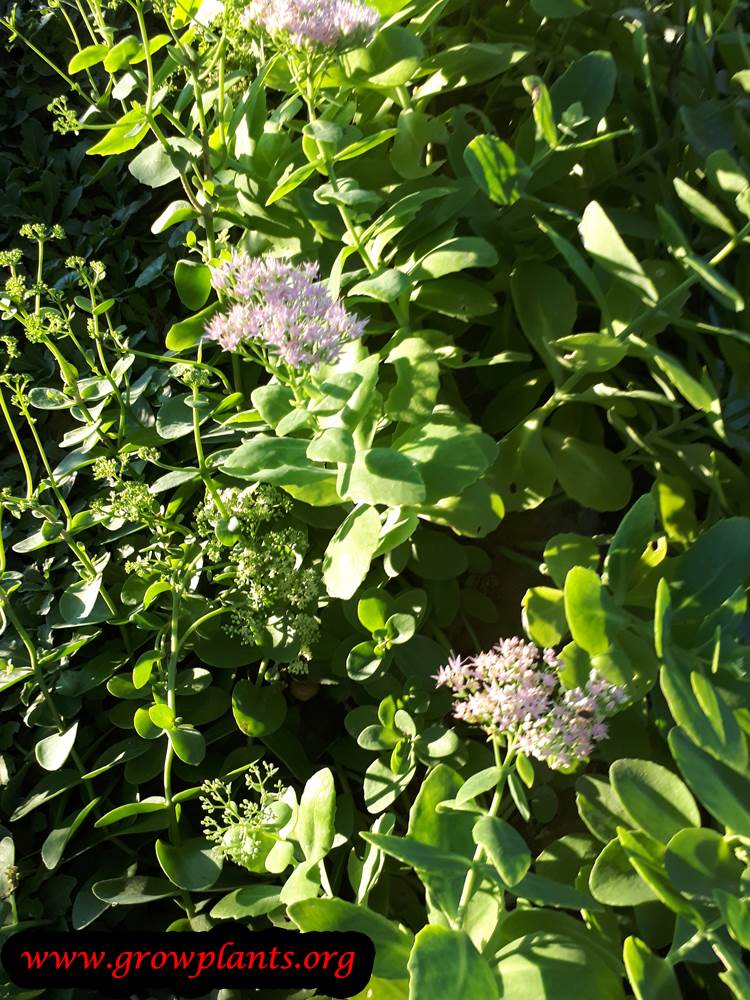
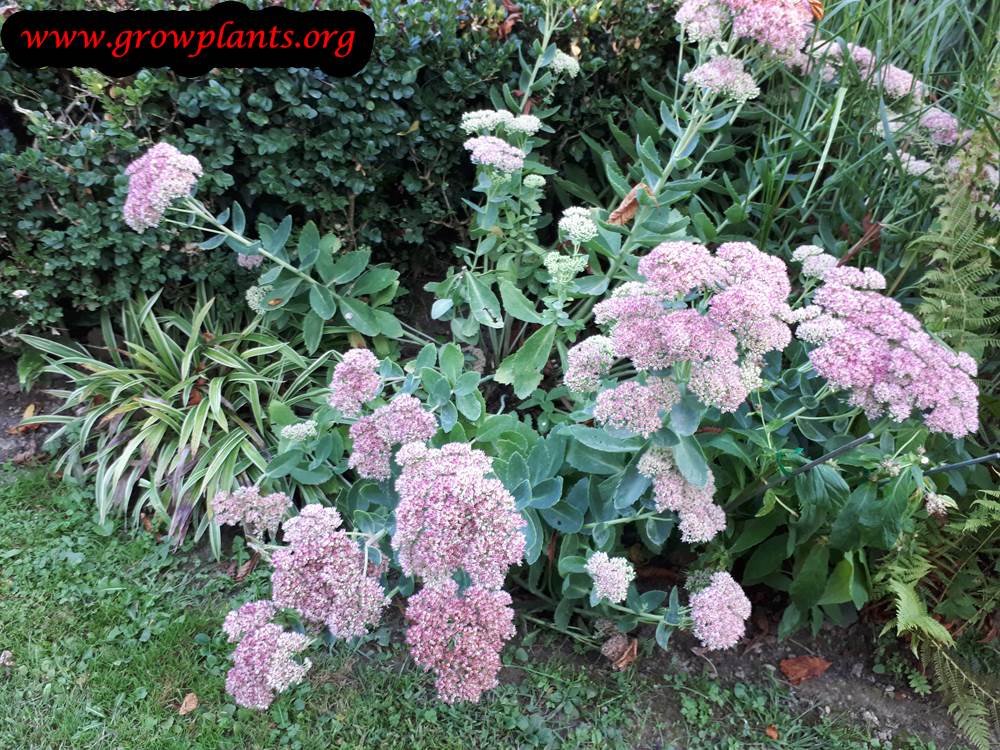
- Leaves & Foliage: Fleshy, green, oval leaves with a serrated margin – succulent and drought-storing.
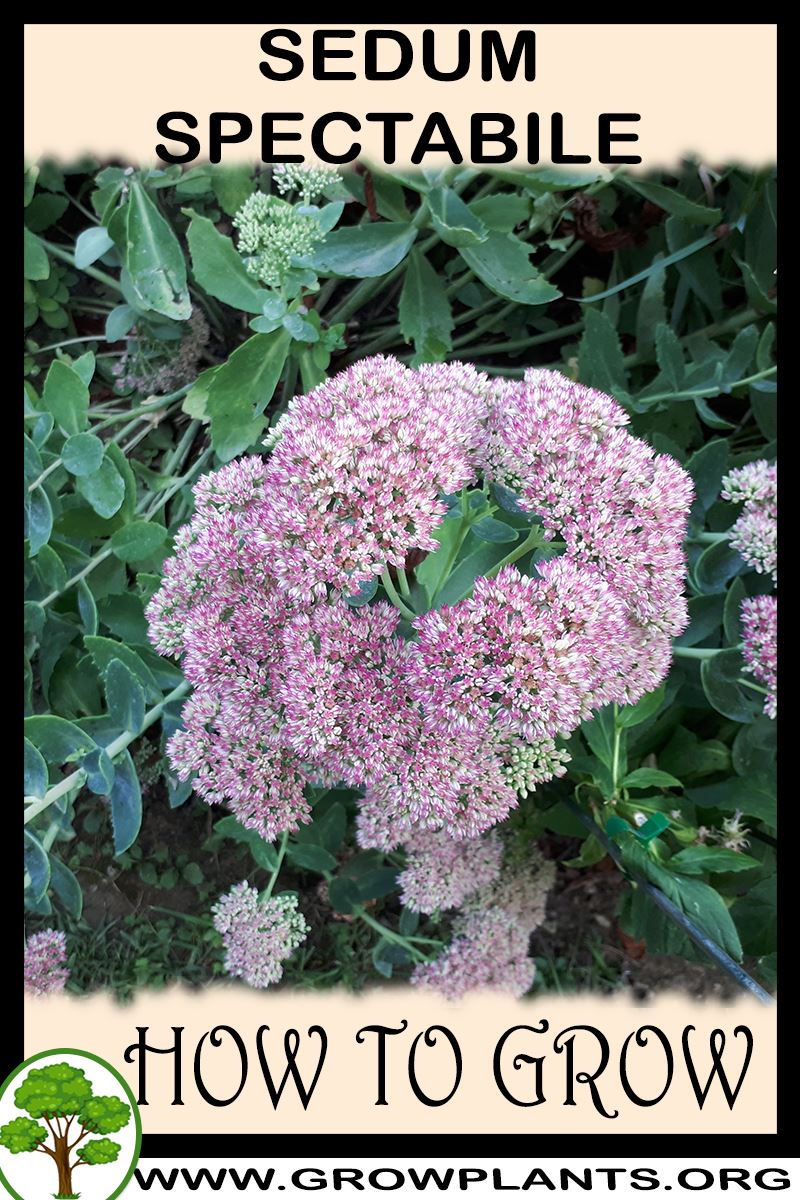
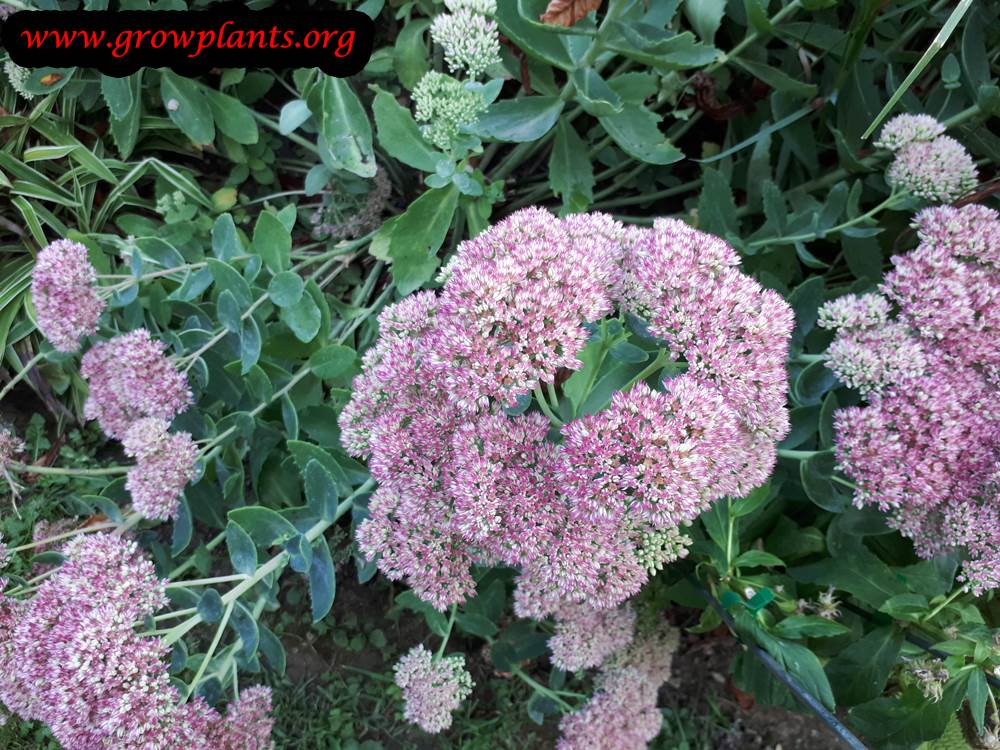
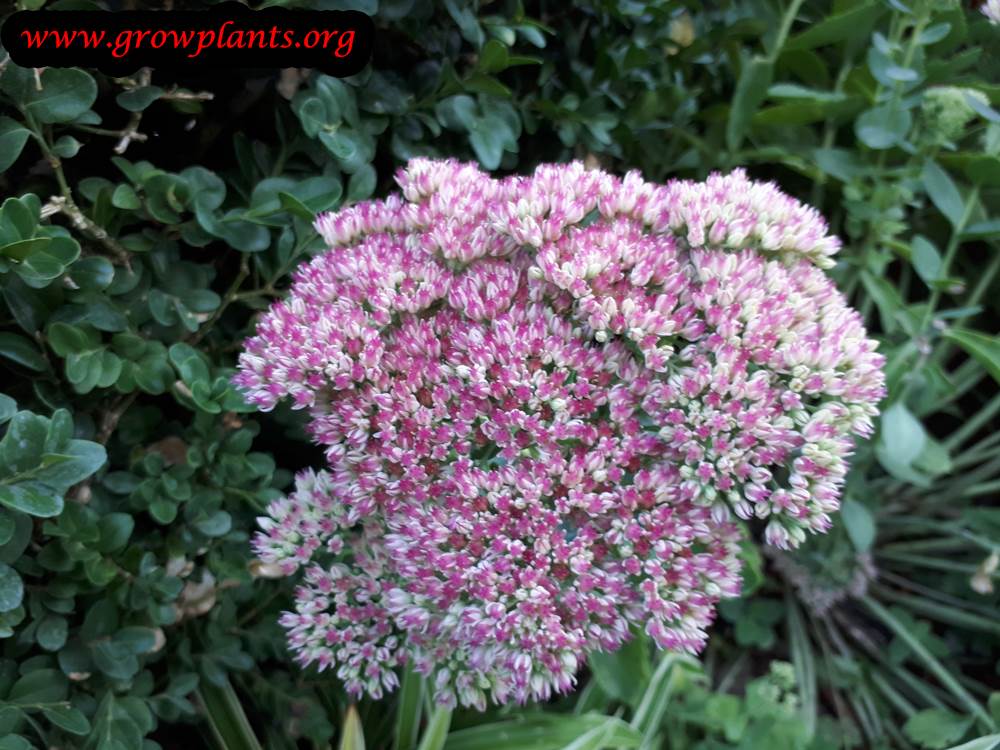
- Flower Characteristics: Flat umbels of small pink, white or purple star flowers from summer into autumn (see the Bloom guide).
Primary Uses & Landscape Value
- Functional & Ornamental Roles: Drought-tolerant ornamental for borders, rockeries and groundcover; excellent late-season nectar plant.
Care Guide: Planting, Soil & Watering
Overview: Showy stonecrop is a hardy, drought-tolerant succulent perennial for full sun to light shade in temperate to subtropical gardens. It asks only for light, well-draining soil and very little water once established.
Quick Care Requirements
| Requirement | Ideal Condition |
|---|---|
| Planting Season | Spring, summer or autumn |
| Growth Rate | Moderate to Fast |
| Soil Type | Light, well-draining soil; tolerates poor and sandy ground |
| Water Need | Low – drought tolerant; let the soil dry between waterings |
Planting & Establishment
- Best Planting Season: Plant during the growing season, in spring, summer or autumn.
- How to Plant:
- Hole Preparation: Dig a hole a little wider than the root ball in a spot with good drainage.
- Soil Amendments: Little enrichment is needed; add grit to heavy soils to sharpen drainage rather than rich compost.
- Planting Depth: Set the crown level with the soil surface so it does not sit wet.
- Growth Speed & Expectations: A moderate to fast grower that bulks up into a clump within a season or two.
Soil, Watering & Drainage Care
- Soil Mix & Drainage Needs: Any free-draining soil suits it; the key is avoiding wet, heavy ground that rots the fleshy roots. It also grows well in containers.
- Watering Schedule & Technique:
- Young / Newly Planted: Water lightly to settle new plants, keeping the soil just moist until roots take hold.
- Established: Once established it is very drought tolerant – water only occasionally and deeply, letting the soil dry fully between waterings.
- Seasonal Adjustments: Water a little in prolonged summer heat and withhold water in winter.
Climate, Light & Hardiness
Sedum spectabile (Showy Stonecrop) is a herbaceous perennial suited to subtropical, Mediterranean, and temperate climates, growing best in full sun to half shade. It is considerably more cold-hardy than most fleshy-leaved sedums, dying back to the ground each winter and regrowing in spring.
Quick Climate Specifications
| Climate Zones | Subtropical, Mediterranean, Temperate |
| USDA Hardiness Zones | Approximately 5–9 |
| Optimal Temp Range | Approximately 13–27°C (55–80°F) during the growing season |
| Approx. Survival Minimum | In zone-5 locations, the dormant crown can survive typical zone-5 winter lows near −29°C to −23°C (−20°F to −10°F) even though top growth dies back |
| Frost Tolerance | High (at the dormant crown; top growth is not frost-persistent) |
| Light Conditions | Full Sun / Half Shade |
Sunlight & Light Exposure
Optimal Light Setup
Full sun produces the sturdiest stems and best flowering; half shade is tolerated but can lead to floppier growth.
Direct Sun Requirement
Yes - full sun is preferred for compact habit and abundant late-season bloom.
Shade & Heat Management
In hot-summer climates it tolerates the heat well; light afternoon shade can help where summers are extreme, at some cost to flowering.
Best Exposure/Orientation
An open, sunny border position.
Temperature Extremes & Hardiness
USDA Hardiness & Regional Limits
The site places it in hardiness zone 5–9, a notably cold-hardy range reflecting its herbaceous, die-back-to-the-ground habit - the below-ground crown, not the top growth, is what carries it through winter.
Cold Damage & Winter Protection
Foliage and stems naturally die back with the first hard frosts each autumn; this is normal dormancy, not damage. Cutting back dead growth in winter (per the site's pruning guidance) tidies the plant for spring regrowth.
Frost Sensitivity
Top growth is frost-sensitive and expected to die back seasonally; the dormant crown itself is quite frost-hardy within its zone range.
Extreme Heat Tolerance
Good - it tolerates warm subtropical and Mediterranean summers well.
Wind, Humidity & Microclimate
Humidity Preferences
Tolerates average garden humidity; avoid constantly waterlogged, muggy soil conditions that favor rot.
Dry-Air Tolerance
Good - as a drought-tolerant groundcover it copes well with drier air and soil.
Wind Tolerance
Moderate; sturdy stems in full sun generally stand up well, though very floppy shaded growth can lodge in wind.
Rainfall & Seasonal Moisture
Adapts to a range of rainfall patterns provided the soil is well-drained; it does not need a pronounced dry season the way many succulents do.
Microclimate Recommendations
An open, sunny border with well-drained soil suits it across its full hardiness range.
Growing in Pots, Balconies & Indoors
Showy stonecrop (Hylotelephium spectabile) is a hardy herbaceous perennial grown for its flat, late-season flower heads and its appeal to bees and butterflies. It is a border and patio-pot plant rather than a houseplant – it needs full sun and a cold winter dormancy, so it belongs outdoors, where it grows very well in a container on a sunny patio.
Quick Details
- Container Size: A roomy pot (several litres or more) to support the clump and keep it stable in flower
- Indoor Suitability: Not a houseplant – an outdoor perennial that needs a cold winter rest
- Best Spot: Full sun; it tolerates a little light shade
- Soil & Drainage: Free-draining and not too rich – lush feeding makes it flop
- Watering in Pots: Moderate; drought-tolerant once established, but never waterlogged
Indoors & On the Windowsill
- As a houseplant: No – it is a hardy garden perennial that dies back and needs a cold winter dormancy a warm room cannot provide. Grow it outdoors.
- On a sill: Not suited to windowsill life; treat it purely as an outdoor container plant.
On a Balcony or Patio
- Light & exposure: Give it full sun for sturdy, upright growth and good flowering; too little light makes it lean and flop. The top dies back in winter and returns in spring.
- Through winter: Being hardy, the pot can stay outdoors, but stand it where it will not sit waterlogged in cold, wet weather.
Choosing the Pot, Soil & Long-Term Care
- Pot & drainage: A roomy pot with strong drainage holes and no standing saucer.
- Potting mix: Free-draining and only moderately fertile – a gritty, loam-based mix suits it.
- Feeding: Feed sparingly; over-rich soil produces soft, floppy growth.
- Dividing: Lift and divide the clump every few years during dormancy to keep it vigorous and free-flowering.
Fertilizing & Feeding
A light feeder despite its showy autumn flower clusters: this stonecrop relative blooms well in lean soil, and heavy feeding only trades flowers for floppy leaf growth.
Quick Fertilizing Specs
| Feeding Level | Light feeder |
|---|---|
| Main Nutrient Priority | Balanced feeding kept light so flower stems stay sturdy rather than tall and weak |
| Best Feeding Period | Spring into summer as new growth and flower buds develop |
| Organic Options | Compost worked into the bed or used as a light top-dressing |
| Reduce/Stop Feeding | Hold off feeding once flowering finishes and growth slows for the year |
| Micronutrients | Rarely needed; treat only a diagnosed issue |
| Soil pH | Tolerates a wide range; well-drained soil matters more than exact pH |
Feeding by Growth Stage
Spring flush of growth
Fuel fresh top growth as new shoots emerge in spring.
| Nutrient direction | A light, balanced feeding supports steady new growth without producing weak, floppy stems. |
|---|---|
| Timing | As new growth emerges in spring. |
| Frequency | A single light feeding at the start of the season is usually enough. |
| Fertilizer types | A diluted balanced fertilizer, used sparingly, Compost worked into the bed |
| Precautions | Keep nitrogen modest; overfeeding this naturally thrifty plant leads to tall, weak stems that flop before bloom. |
Summer into autumn bloom
Support the developing flower clusters from summer buds through their autumn display.
| Nutrient direction | Continued light, balanced feeding sustains bud and flower development; this plant blooms well without heavy feeding. |
|---|---|
| Timing | Through summer as flower buds form, continuing into the autumn bloom. |
| Frequency | Occasional light feeding at most while buds are developing. |
| Fertilizer types | A diluted balanced fertilizer, used sparingly, Organic matter such as compost as a light top-dressing |
| Precautions | Avoid rich, high-nitrogen feeding, which trades flower quality for soft leafy growth and floppy stems. |
Post-bloom rest
Let the plant move through its natural rest with no feeding pressure.
| Nutrient direction | None – withhold fertilizer while the plant is not in active growth. |
|---|---|
| Timing | Once flowering finishes and growth slows into the cooler part of the year. |
| Frequency | No feeding at this stage. |
| Fertilizer types | No feeding at this stage; do not fertilize until new growth resumes in spring. |
| Precautions | Do not fertilize during this rest period; feeding now only encourages weak late growth or salt buildup. |
Nutrient Deficiency Signs & Corrections
Overall growth is stunted and older leaves fade pale or yellow ahead of flowering.
| Possible causes | low soil nitrogen, the naturally poor, lean soil this plant is often grown in, nitrogen leaching after heavy rain or watering |
|---|---|
| Appears first on | older, lower leaves |
| What to check | feeding history, soil richness, watering pattern |
| Possible correction | Apply a light, balanced feeding during active growth rather than skipping feeding altogether. |
Leaf edges show yellowing or scorch and flower clusters come smaller or fewer than expected.
| Possible causes | low soil potassium, competition from a very high-nitrogen feeding program, sandy soil that leaches potassium readily |
|---|---|
| Appears first on | older leaf margins |
| What to check | recent fertilizer balance, soil texture, overall plant vigor |
| Possible correction | Shift toward a balanced feeding rather than a nitrogen-heavy one and build soil organic matter. |
New leaves emerge pale yellow while the veins remain green.
| Possible causes | high soil pH limiting iron availability, waterlogged soil restricting root function, recent heavy liming or alkaline irrigation water |
|---|---|
| Appears first on | newest growth |
| What to check | soil pH, drainage, irrigation water quality |
| Possible correction | Address soil pH and drainage first; use a chelated iron product per its label if the pattern continues. |
Pruning, Training & Seasonal Maintenance
Unlike the evergreen succulent Sedums, Sedum spectabile (now correctly Hylotelephium spectabile, Showy stonecrop) is a true herbaceous perennial: its top growth dies back to the ground each year and regrows fresh from the crown in spring. Pruning tolerance is moderate and mostly a matter of timing — when to cut the old stems down, and, optionally, when to pinch young growth to keep the upright 30–60cm flowering stems from flopping open later in the season. The plant’s own facts point to winter as the pruning season for removing dead leaves and flower stems.
Quick Pruning & Maintenance Specs
| Pruning Tolerance | Moderate |
| Primary Pruning Window | Late Winter / Pre-Growth (cutting down old dead top growth before new shoots emerge) |
| Secondary Maintenance Window | Mid–late Spring (optional pinch-back to control height and flopping) |
| Typical Frequency | Once yearly cutback, plus an optional once-yearly spring pinch |
| Main Objective | Remove dead top growth before new shoots emerge; optionally pinch spring growth for sturdier, less floppy stems; divide congested clumps every few years |
| Young Plant Priority | Let the clump establish for a season or two before pinching |
| Mature Plant Priority | Annual cutback of dead stems; pinch in spring if flopping has been an issue; divide overcrowded clumps |
| Best Tool Type | Bypass secateurs (for the old, slightly woody-based flower stems) or precision snips for pinching |
| Avoid Heavy Pruning During | Active summer bloom; the pinch window should not be delayed too late, or it removes the current season’s flower buds |
Pruning by Plant Age & Size
Newly Established
Minimal intervention while the clump settles in; skip the spring pinch in the first year so the plant can build up size and root reserves.
Young / Formative
Once established, an optional technique many gardeners use on this species is pinching or shearing the new spring shoots back by roughly a third to a half when they’re around 10–15cm tall (commonly called the ‘Chelsea chop’). This delays and shortens bloom slightly but produces sturdier, bushier stems that are far less prone to splitting open or flopping under the weight of the flower heads later in the year.
Mature / Established
Annual removal of the previous year’s dead stems in late winter; every 3–4 years, congested clumps benefit from division to keep them vigorous and to control spread — more a renewal technique than routine pruning, but it serves the same purpose of preventing the center of the clump from thinning out.
Structural Pruning & Training
The spring pinch described above is the main structural tool for this plant — it substitutes for staking on a species that can otherwise flop open once flower heads get heavy. No woody framework training applies.
Special Growth to Remove
- Dead top growth (stems and leaves) from the previous season — cut down to just above the crown in late winter before new shoots emerge.
- Spent flower heads, though many gardeners leave these standing through winter for structural interest and for seed-eating birds, removing them only as part of the late-winter cutback rather than deadheading immediately after bloom.
Container & Small-Space Pruning
Grown in larger outdoor planters rather than as an indoor houseplant (per the plant’s own facts); in a container, division to control size becomes necessary sooner than in open ground, since the clump has less room to spread before crowding itself.
Tools
Bypass secateurs handle the old dead stems at cutback time (they can be lightly fibrous at the base by winter); precision snips suit the finer spring pinch-back.
Tool Hygiene & Disease Risk
Routine — clean, sharp blades are sufficient; slugs are the main pest noted for this species, not a transmissible disease that would call for disinfecting between cuts.
Cut Placement & Technique
Cut dead stems down close to the crown without gouging into it; for the spring pinch, cut or pinch just above a leaf node on each stem so regrowth branches from that point.
Heavy Pruning & Rejuvenation
There’s no woody rejuvenation cut here since the whole top dies back annually anyway; the equivalent renewal technique is clump division every few years, lifting and splitting the crown to replant vigorous sections and discard the tired center.
Post-Pruning Care
After the late-winter cutback, no special aftercare beyond normal spring watering as new growth resumes; after the spring pinch, keep the plant on its normal watering schedule — no need for extra feeding just because it’s been cut back.
Common Pruning Mistakes
- Pinching too late in spring, which removes the current season’s flower buds instead of just shaping the stems.
- Cutting old growth down too early, before it has died back naturally, wasting stored energy still moving to the crown.
- Never dividing an old clump, letting the center thin out and the whole plant flop more each year.
When Not to Prune
Don’t pinch late in spring once flower buds are forming, and avoid cutting into the crown itself when removing old stems.
Recommended Tools (by task)
| Task | Tool Category | Why |
| Annual late-winter cutback of dead stems | bypass_secateurs | Old stems can be slightly fibrous at the base by winter; a bypass blade gives a clean cut close to the crown |
| Spring pinch-back of young shoots | precision_snips | Fine, precise cuts on soft new growth to shape without crushing |
| Dividing a congested mature clump every few years | garden_spade | Lifting and splitting the crown into sections is a spade task, not a cutting-tool task |
Propagation Guide
Hylotelephium spectabile (Showy stonecrop) is most reliably increased by dividing its clump-forming crowns, which is quick and true to the parent; soft stem cuttings root easily too, while seed works for the plain species but not for named garden forms. Overall this is an easy perennial to propagate by any method.
Quick Propagation Specs
| Best Propagation Method | Division of the clump |
| Alternative Methods | Softwood stem cuttings; seed (species type only) |
| Propagation Difficulty | Easy |
| Seed True-to-Type | Usually true-to-type for the wild species; named garden cultivars and hybrids in this group do not come true from seed |
| Vegetative True-to-Type | Yes |
| Best Propagation Season | Divide in spring as new shoots emerge from the crown; take stem cuttings in late spring to summer, in keeping with the site’s recorded spring/summer/autumn planting window |
| Seed Germination Time | Typically a few weeks, but can be irregular |
| Cutting Rooting Time | Usually within a few weeks under warm, humid conditions |
| Germination Temperature | Roughly 18–22°C / 64–72°F |
Growing from Seed
Sowing Season
Sow in spring, or start indoors ahead of the site’s recorded spring planting window.
Sowing Depth & Orientation
Seed is fine; surface-sow or cover only very lightly, and keep the mix from drying out until seedlings appear.
Germination Conditions & Time
Germinates at moderate temperatures, roughly 18–22°C / 64–72°F, in bright but not scorching light. Expect a few weeks to germination, with some unevenness typical of perennial seed.
Seedling Care
Grow seedlings on in a well-drained mix, pot up once large enough to handle, and expect only the true species – not hybrids or named cultivars – to resemble the parent plant.
Stem Cuttings
Cutting Type
Soft, non-flowering tip cuttings a few centimetres long, taken before the plant sets flower buds.
Best Timing
Late spring to summer, during active growth.
Cutting Preparation
Cut cleanly below a node and remove the lowest leaves before inserting.
Rooting Setup
Insert into a well-drained, gritty mix, keep lightly moist, and avoid waterlogging the fleshy stems.
Rooting Hormone
Unnecessary – these cuttings root readily on their own.
Rooting Time
Usually within a few weeks in warm conditions.
Division, Offsets, Pups & Suckers
The most practical method for this species: lift and split established clumps in spring, once new shoots (‘noses’) are visible emerging from the crown, or in autumn after flowering. Each division should have healthy roots and at least one growth point attached; replant immediately at the same depth and keep watered until re-established.
Bloom & Flower Guide
Quick Details
- Bloom Season: Summer into autumn (peaking as the season cools)
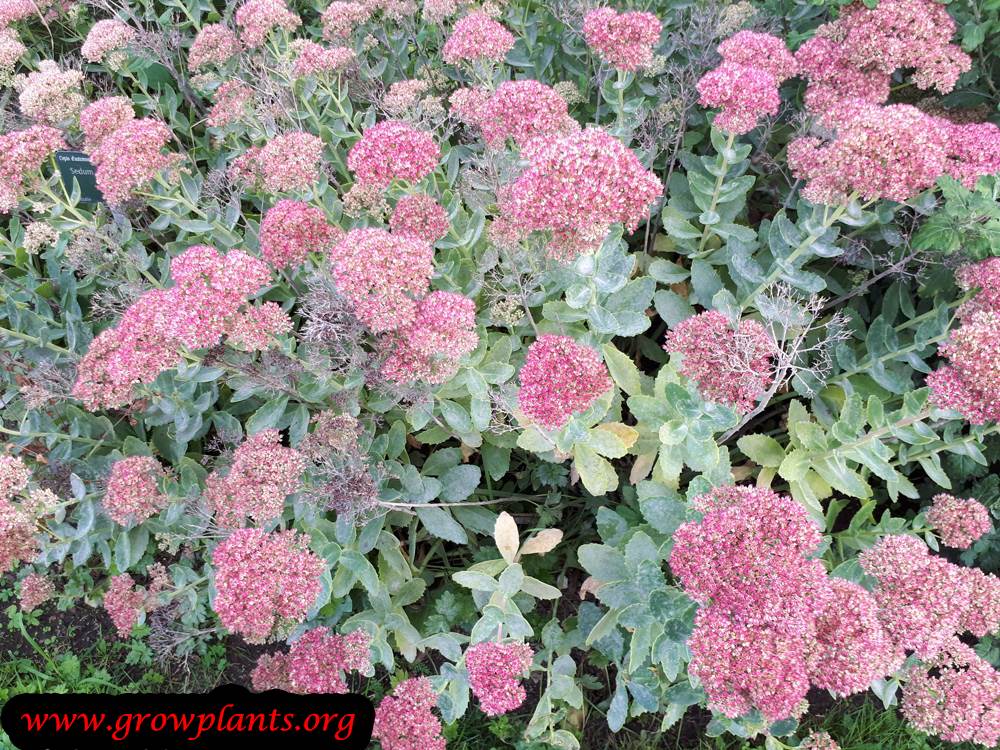
- Flower Appearance: Broad, flat heads of tiny star-shaped flowers in pink, white or purple, held above fleshy foliage
- Edibility: Grown as an ornamental succulent; not a recognised edible flower
Detailed Blooming Overview
Showy stonecrop is one of the great late-season perennials: flat, plate-like heads of tiny star flowers open over the fleshy grey-green foliage, drawing bees and butterflies in droves as summer turns to autumn.
Flower Characteristics
- Flat, umbel-like heads of small star-shaped flowers in pink, white or purple.
Bloom Care & Thinning
- Leave the seedheads: The dried flower heads stand well into winter and give structure – cut back in early spring.
- Pollinators: Among the best plants for late-season bees and butterflies.
Pests, Diseases & Troubleshooting
Overview: Showy stonecrop is a hardy, largely trouble-free succulent perennial; its biggest risk by far is root and crown rot from wet, heavy soil rather than any insect. A sunny, sharply drained spot keeps it healthy, and only a short list of opportunistic pests ever appears.
Quick Troubleshooting Overview
| Issue / Pest | Main Symptom | Primary Solution |
|---|---|---|
| Root / crown rot | Blackened base, collapse, mushy roots in wet soil | Sharp drainage, lean dry soil, avoid overwatering |
| Flopping stems | Center splays open, stems fall outward | Full sun, lean soil, cut back in early growth |
| Slugs & snails | Chewed holes in fleshy leaves, slime trails | Iron-phosphate bait, clear debris |
| Aphids | Sticky clustered growth on stems and buds | Water jet, insecticidal soap |
| Mealybugs / scale | Cottony or bumpy specks in leaf axils | Alcohol swab, horticultural oil |
| Powdery mildew | White film in humid, shaded, crowded plantings | Sun, spacing, sulfur if needed |
Common Pests & Management
- Slugs & snails (Gastropoda):
- Symptoms: Irregular chewed holes in the thick fleshy leaves and soft new shoots, with slime trails, worst in damp shade and after rain.
- Prevention & Control: Site in sun with good airflow, clear damp mulch and debris, set iron-phosphate bait or copper barriers, and hand-pick after dark.
- Aphids (Aphis / Macrosiphum spp.):
- Symptoms: Soft green or black insects massing on succulent stems and developing flower heads, leaving sticky honeydew and sooty mold.
- Prevention & Control: Knock them off with water, support natural predators, and use insecticidal soap or neem only on stubborn colonies, sprayed in the evening.
- Mealybugs (Pseudococcus spp.):
- Symptoms: White cottony tufts hidden in leaf axils and at the crown, more common on stressed or container plants, with weak growth.
- Prevention & Control: Dab colonies with an alcohol-dipped swab, hose the plant, and follow with horticultural oil or insecticidal soap; control attending ants.
- Black vine weevil (Otiorhynchus sulcatus):
- Symptoms: Notched leaf edges from night-feeding adults and, more damaging, white grubs eating the crown and roots of potted plants.
- Prevention & Control: Inspect for notching, trap adults, keep pots gritty and off the ground, and drench with beneficial nematodes for larvae.
Diseases & Fungal Issues
- Root & crown rot (Pythium, Phytophthora, Rhizoctonia):
- Symptoms: Base of the plant blackens and softens, stems collapse, and roots turn brown and mushy — almost always from wet, heavy, or overwatered soil.
- Treatment & Management: Prevention is the whole battle: plant in gritty, sharply drained soil in full sun, water sparingly, and avoid winter wet; lift and divide crowded clumps.
- Powdery mildew (Erysiphe spp.):
- Symptoms: White powdery coating on leaves and stems in humid, shaded, or crowded conditions.
- Treatment & Management: Give it sun and space, avoid overhead watering, and apply sulfur or potassium bicarbonate only if it becomes unsightly.
- Botrytis & rust (occasional):
- Symptoms: Grey fuzzy mold on damaged tissue in cool wet spells, or orange rust pustules on leaves in some seasons.
- Treatment & Management: Remove affected parts, improve airflow, keep foliage dry; rarely needs fungicide on a healthy plant.
Growing Difficulties & Abiotic Problems
- Flopping / open center:
- Cause & Symptoms: Stems splay outward and the clump opens up in the middle, caused by too-rich soil, too much water, or shade.
- Correction Strategy: Grow in lean soil and full sun, avoid feeding, and cut stems back by half in early growth (the ‘Chelsea chop’) for a sturdier, denser habit.
- Overwatering decline:
- Cause & Symptoms: Yellowing, soft translucent leaves, and general decline in soggy soil — the leading killer of this drought-lover.
- Correction Strategy: Let soil dry between waterings, ensure drainage, and never let the crown sit wet, especially in cool weather.
- Winter wet rot:
- Cause & Symptoms: Crown collapse over a cold, wet dormant season in heavy ground.
- Correction Strategy: Improve drainage or grow on a slope or raised bed; grit around the crown helps shed water.
What Helps — Products & Tools
This plant rarely needs sprays. Keep iron-phosphate slug bait and insecticidal soap on hand for the occasional slug or aphid, and horticultural oil for mealybugs. The real ‘tool’ is cultural: gritty free-draining soil, full sun, and restraint with water. Sulfur handles the rare powdery mildew.