


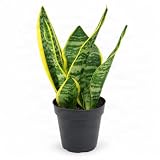


Plant Profile & Key Characteristics
Overview: The Sansevieria stuckyi is a slow-growing evergreen succulent perennial reaching 1–2 m (3–6 ft), grown almost entirely as a low-maintenance ornamental and houseplant. It forms an upright cluster of long, sub-cylindrical leaves and tolerates low light, drought and neglect.
Quick Specifications
| Specification | Attribute |
|---|---|
| Plant Type / Life Cycle | Perennial (evergreen succulent) |
| Foliage Type | Evergreen |
| Mature Size | 1–2 m (3–6 ft) tall |
| Growth Rate | Slow |
| Root System | Rhizomatous – spreads by thick underground rhizomes with fibrous roots |
| Toxicity | Toxic – leaves contain saponins, harmful to cats, dogs and humans if ingested |
| Hardiness | USDA zone 10b and above (10a with the right care) |
Growth Form & Structure
- Height & Spread: In the ground it reaches 1–2 m (3–6 ft) and slowly widens into a clump by rhizome. In a container it can be started in about 5 L, but 15–20 L (shallow and wide) is needed for a large, potentially flowering specimen.
- Growth Habit & Form: Upright, near-cylindrical leaves rising stiffly from the rhizome; can reach striking heights for a Sansevieria.
- Lifespan & Maturity: Long-lived perennial; slow to establish and an infrequent bloomer, often flowering only after several years once the pot is well filled.
Anatomy & Physical Features
- Leaves & Foliage: Long, cone-shaped (sub-cylindrical) green leaves standing stiffly upright.
- Flower Characteristics: Small white flowers borne on an upright spike in summer; grown for its foliage, as flowering is occasional.
Primary Uses & Landscape Value
- Functional & Ornamental Roles: Architectural ornamental and popular easy-care houseplant; used in low-light interiors, containers and drought-tolerant plantings.
Care Guide: Planting, Soil & Watering
Overview: Sansevieria stuckyi is a tough, drought-tolerant snake plant (Sansevieria, now classified under Dracaena) that thrives in warm, frost-free conditions and rewards a hands-off approach. Give it a loose, sharply drained soil and only occasional water, letting the mix dry out between drinks to keep the fleshy roots and rhizomes healthy.
Quick Care Requirements
| Requirement | Ideal Condition |
|---|---|
| Planting Season | Spring in zone 10a; spring to autumn in zones 10b–11a; year-round in zone 11b and warmer |
| Growth Rate | Slow |
| Soil Type | Loose and sharply draining — a gritty cactus/succulent mix or sandy loam with a little organic matter |
| Water Need | Low to moderate — let the soil dry out between waterings |
Planting & Establishment
- Best Planting Season: Plant in spring once temperatures stay reliably above about 5°C (41°F); in frost-free zones (11b and warmer) you can plant at almost any time of year.
- How to Plant:
- Hole Preparation: Dig a hole no deeper than the root ball and slightly wider, so the rhizome sits at the level it grew before. In wet or rainy ground, plant on a mound or raised bed so the roots never sit in standing water.
- Soil Amendments: Work in compost or organic matter for a nutrient boost, and add grit or coarse sand if drainage is poor — sharp drainage matters far more than richness for this succulent.
- Planting Depth: Set the plant so the crown, where the leaves meet the roots, sits right at the soil surface; burying the base invites rot.
- Growth Speed & Expectations: Expect slow, steady growth even in ideal conditions — established, well-fed plants fill out gradually over several seasons.
Soil, Watering & Drainage Care
- Soil Mix & Drainage Needs: Sharp drainage is essential — a puddle-prone spot can quickly kill the plant. In containers use a free-draining cactus mix, make sure the pot has ample holes, and never leave water standing in the saucer.
- Watering Schedule & Technique:
- Young / Newly Planted: For the first couple of weeks after planting or dividing, water a little more often to help the roots settle in.
- Established: Water deeply but infrequently, then let the top few centimetres of soil dry before watering again; when in doubt, underwater rather than over.
- Seasonal Adjustments: Cut back sharply in cool weather and winter dormancy, and water a little more during hot, dry spells.
Climate, Light & Hardiness
Sansevieria stuckyi (Snake plant) is an architectural succulent with tall, single cone-shaped leaves, suited to Mediterranean, desert, subtropical, and tropical climates outdoors, and it also grows well as an adaptable houseplant. It tolerates full sun through full shade (with some ambient light), is hardy to about USDA zone 10b and warmer (zone 10a possible with attentive care), and grows best kept above roughly 5°C (41°F).
Quick Climate Specifications
| Climate Zones | Mediterranean, desert, subtropical, and tropical climates outdoors; widely grown as a houseplant |
|---|---|
| USDA Hardiness Zones | Approximately Zone 10b and warmer, or Zone 10a with extra winter protection; young plants in marginal zones as cool as 8–10a need winter protection |
| Optimal Temp Range | Generally above about 5°C (41°F); comfortable indoor/outdoor growing range roughly 18–27°C (65–80°F) |
| Cold Damage Begins | Growth slows and leaf/root damage risk rises as temperatures approach 5°C (41°F) |
| Approx. Survival Minimum | Established plants may briefly tolerate cool conditions near 5°C (41°F); young plants are notably more cold-sensitive and benefit from winter protection in marginal zones |
| Frost Tolerance | Very Low |
| Light Conditions | Full Sun / Half Shade / Full Shade (with some ambient light) |
| Wind Tolerance | Moderate |
Sunlight & Light Exposure
Optimal Light Setup
Highly light-adaptable, growing acceptably from bright full sun down to low indoor light with only some ambient brightness.
Direct Sun Requirement
Direct sun is tolerated and supports firm, upright leaf growth, but is not strictly required.
Shade & Heat Management
Grows fine in half shade or full shade with some light; indoors, low light is tolerated but growth slows and flowering becomes less likely.
Best Exposure / Orientation
Any bright-to-moderate exposure works; when moving a shade-grown plant into full sun, acclimate it gradually on cooler, partly cloudy days to avoid scorching.
Temperature Extremes & Hardiness
USDA Hardiness & Regional Limits
Hardy to roughly USDA zone 10b and warmer, with zone 10a achievable given extra winter care. Outdoor planting timing reflects this: spring planting in zone 10a, spring through autumn in zones 10b–11a, and possible year-round in zone 11b and warmer; young plants started in cooler zones (as low as zone 8) need extra winter protection to get established. In colder climates, grow strictly as an indoor houseplant.
Cold Damage & Winter Protection
Best kept above about 5°C (41°F); protect outdoor plantings, especially young ones, when winter temperatures in marginal zones approach this threshold.
Frost Sensitivity
Frost-sensitive with very low cold tolerance; not suited to freezing conditions outdoors and should be grown in containers that can be brought indoors where winters are cold.
Extreme Heat Tolerance
Tolerates heat well as a drought-tolerant succulent adapted to desert, subtropical, and tropical climates.
Wind, Humidity & Microclimate
Humidity Preferences
Adapts to a wide range of humidity levels, from dry desert air to humid tropical conditions and typical indoor air.
Dry-Air Tolerance
High; well suited to dry indoor environments.
Wind Tolerance
The stiff, upright leaves generally handle moderate outdoor wind without damage.
Rainfall & Seasonal Moisture
Prefers climates or sites without prolonged standing moisture; in high-rainfall locations, planting above grade with good drainage helps avoid root and rhizome rot.
Microclimate Recommendations
Outdoors, choose a well-drained spot; in marginal zones or colder climates, container culture that can be moved indoors for winter is the most reliable way to grow it year-round.
Growing in Pots, Balconies & Indoors
Sansevieria stuckyi (botanically Dracaena (Sansevieria) stuckyi, now placed under Dracaena) is one of the most forgiving of all container plants – it thrives in pots indoors, on a balcony or patio, and shrugs off neglect. Reaching about 1-2 m (3-6 ft), indoors it tolerates low light but grows slowly and rarely blooms away from a brighter spot.
Quick Details
- Container Size: Start around 5 L (1.5 gal) for a small clump; give it 15-20 L (4-5 gal), and preferably a shallow pot, for a strong, potentially flowering specimen
- Indoor Suitability: Excellent – a classic, low-care houseplant
- Best Spot: Bright, indirect light indoors; tolerates shade but keeps its form and flowers best with good light
- Soil & Drainage: Free-draining potting mix; good drainage is essential
- Watering in Pots: Sparingly – let the mix dry out between waterings
Indoors & On the Windowsill
- A genuine houseplant: Yes – this is a true, easy houseplant. The grower’s advice: clean off any pests before bringing a plant inside, since there are no natural predators indoors, and remember that deep shade can cause problems and may stop it blooming.
- Windowsill growing: A bright sill with a little direct sun keeps the strongest colour and form and gives the best chance of flowers.
- Overwintering: As a tender succulent it dislikes cold; keep it above about 10 C (50 F). In cold climates a pot lets you simply bring it indoors for winter.
On a Balcony or Patio
- Light & wind: Happy from full sun to part shade outdoors, but move a shade-grown plant into sun gradually to avoid scorch – choose cooler, cloudier days to make the switch. Pots on hot, wall-reflected balconies dry quickly, so check the mix.
- Practicalities: Tall clumps can get top-heavy; a wide, heavy pot adds stability, and free drainage keeps runoff away from the roots.
Choosing the Pot, Soil & Long-Term Care
- Pot & drainage: Use a pot with strong drainage holes and skip a standing saucer of water to avoid root rot; shallow pots suit the shallow roots. Terracotta breathes and dries faster than glazed or plastic, which hold moisture longer.
- Potting mix: A free-draining, aerated mix – potting mix lightened with extra perlite or coarse sand.
- Feeding: Potted plants need feeding a little more often as nutrients leach out; a light, occasional succulent feed in the growing season is plenty.
- Repotting: Only when crowded, roughly every couple of years – refresh, or wash off and replace, tired mix.
Grower’s Container Tip
- Keep it blooming: The grower’s method – you can start a clump in about 5 L, but for an impressive, flowering plant give it 15-20 L and keep the pot shallow. To keep it flowering year after year, don’t let the roots fill the whole planter; if they do, divide and thin the clump, cut back some roots, and pull out old plants after flowering, pruning leaves and roots so fresh growth can develop. Every few years, check the mix and wash it off and replace it if it has lost its structure.
Safety: Sansevieria is mildly toxic if eaten – keep it away from pets and small children who might chew the leaves.
Growing this plant in a greenhouse
A greenhouse can give sansevieria stuckyi frost protection and cold protection.
Greenhouse at a glance
| Greenhouse suitability | Conditional - depends on your climate |
|---|---|
| Main benefits | frost protection, cold protection |
| Outdoor protection advisable below | about 5°C |
| Maintain greenhouse minimum | around 5°C for active growth |
| Suitable types | unheated greenhouse, polycarbonate greenhouse |
| Heating | Heating is optional - useful mainly for winter growing in cold areas. |
Related greenhouse guides
- Greenhouses: How to Choose the Right Greenhouse
- Polycarbonate Greenhouses: What to Look for Before Buying
- Greenhouse Climate Control: Temperature, Ventilation and Humidity
Fertilizing & Feeding
A light feeder: it needs little fertilizer and grows best in a lean, well-drained mix with only occasional dilute feeding during active growth.
Quick Fertilizing Specs
| Feeding Level | Light feeder |
|---|---|
| Main Nutrient Priority | Lean, low-nitrogen feeding |
| Best Feeding Period | Active growing season only |
| Reduce/Stop Feeding | Stop feeding during cool, dark, or dormant rest periods |
| Organic Options | A little compost or worm castings worked into the gritty mix |
| Soil pH | Tolerates a wide range; slightly acidic to near neutral |
| Micronutrients | Rarely needed; correct only if a deficiency shows |
Feeding by Growth Stage
Active growth
Support steady, firm growth during the active growing season without forcing soft, weak tissue.
| Nutrient direction | Lean, low-nitrogen complete feeding; keep it dilute and light. |
|---|---|
| Timing | During the active growing season when new leaves are forming. |
| Frequency | Feed sparingly, with only occasional light feedings while the plant is actively growing. |
| Fertilizer types | A balanced or low-nitrogen complete fertilizer, well diluted, A specialized cactus and succulent fertilizer |
| Precautions | Avoid heavy or high-nitrogen feeding, which forces soft, stretched growth and makes roots prone to rot; always apply to moist soil rather than a bone-dry mix. |
Dormant rest
Let the plant rest; there is no active growth to support, so added nutrients are not needed.
| Nutrient direction | None – withhold fertilizer during the rest period. |
|---|---|
| Timing | During the cool, low-light, or dormant rest period. |
| Frequency | No feeding at this stage. |
| Fertilizer types | No feeding at this stage; do not fertilize until active growth resumes. |
| Precautions | Do not fertilize resting plants; feeding now pushes weak growth and lets salts build up in the mix. |
Nutrient Deficiency Signs & Corrections
Older leaves turn uniformly pale and growth slows over a long stretch.
| Possible causes | Low nitrogen availability in an old, depleted mix, Roots damaged or restricted by soggy, poorly drained soil, Very low light limiting overall growth |
|---|---|
| Appears first on | Oldest, lower leaves |
| What to check | Whether the mix is old and has never been refreshed, Drainage and whether roots are sitting wet, Light levels |
| Possible correction | Refresh into a fresh, gritty mix, correct drainage and light, then resume light feeding once the plant is actively growing. |
Brown, dry leaf tips or margins with a white crust on the soil surface.
| Possible causes | Fertilizer salts accumulating in the mix from overfeeding, Infrequent, incomplete watering that never flushes the pot |
|---|---|
| Appears first on | Leaf tips and margins |
| What to check | Whether feeding has been too strong or too frequent, Whether the pot ever drains freely when watered |
| Possible correction | Leach the pot thoroughly with clean water to flush accumulated salts, then ease back on feeding. |
Newest leaves yellow between still-green veins.
| Possible causes | High soil pH reducing iron and manganese availability, Cold, waterlogged soil impairing root uptake |
|---|---|
| Appears first on | Youngest leaves |
| What to check | Whether the soil is alkaline, Whether the soil stays cold and wet |
| Possible correction | Improve drainage and correct pH; if it persists, apply a chelated iron or manganese product per its label. |
Pruning, Training & Seasonal Maintenance
Sansevieria stuckyi is the tallest and most architectural plant in this group (reliably 1-2m/3-6ft), growing as a small cluster of thick, upright, cone-tipped cylindrical leaves rather than a dense fan – species of this type typically hold only a handful of leaves per rosette at any time, so each one represents a large share of the plant’s total leaf area. Pruning tolerance is correspondingly low: the only real work is removing dead or damaged leaf tissue and, occasionally, dividing an old clump. Cuts can be made any time of year, though winter is the safer window for plants kept near the cold edge of their range.
Quick Pruning & Maintenance Specs
| Pruning Tolerance | Low – very few leaves per rosette, so each removal is significant |
| Primary Pruning Window | Year-round; winter preferred near zone 8-10a |
| Secondary Maintenance Window | After the summer bloom fades, to remove the spent flower spike |
| Typical Frequency | Infrequent – only as dead tissue or pest damage appears |
| Main Objective | Preserve leaf count while removing only dead/damaged tissue |
| Young Plant Priority | Protect from cold; never remove a healthy leaf while establishing |
| Mature Plant Priority | Sanitary tip trims; divide only when the clump is genuinely crowded |
| Best Tool Type | Precision snips or a clean, sharp knife |
| Avoid Heavy Pruning During | Cold snaps near 5C (41F); dry soil (before division) |
Pruning by Plant Age & Size
Newly Established
Leave the plant alone beyond removing obviously dead or rotted tissue. Protect young, seed-grown plants over winter in the cooler part of their range. With so few leaves total, a young plant cannot afford to lose a healthy one.
Young / Formative
No structural training applies – there is no branch or canopy structure, just a slowly thickening rosette of individual leaves.
Mature / Established
Sanitary trimming of dead tips only. Because a mature clump is tall and top-heavy on relatively few leaves, division is a bigger event here than for bushier sansevierias – do it only when the clump is genuinely overcrowded, not on a routine schedule.
Seasonal Pruning Schedule
Ongoing Sanitary
Objective: remove dead or pest-damaged tissue without reducing overall leaf count more than necessary. Remove: brown/dead tips and tissue damaged by snails, slugs, weevils, spider mites or aphids. Do not remove: any living leaf, even a partially discolored one, unless the damage is beyond the dead-tip line. Expected response: none – trimming does not stimulate new growth. Flowering impact: none, as long as the flower spike is left until it finishes.
Special Growth to Remove
- Basal offsets – this species is slower to offset than bushier relatives; retain them to build the clump, and only divide once well established, after watering the soil so the rhizome parts cleanly.
- Spent flower stems – cut out at the base once the summer bloom fades; it will not rebloom.
- Dead/damaged leaf tissue – trim only the dead portion, about 1cm (0.5in) below the dead/live boundary.
Container & Small-Space Pruning
Because stuckyi grows tall on relatively few, heavy cylindrical leaves, a mature specimen in a pot can become top-heavy – a wider, heavier container does more for stability here than trimming ever would. Start divisions in 5L (1.5 gal) pots, but give a mature, bloom-capable clump 15-20L (4-5 gal) in a shallow container. Refresh potting mix every few years as it loses structure, and clean off pests before moving any plant indoors.
Tools
Precision snips or a clean, sharp knife for dead-tip trims; the same clean blade for base-cutting a leaf or separating an offset, since a single clean cut on this thick, fleshy tissue calluses far better than a torn one.
Tool Hygiene & Disease Risk
Routine for dead-tip trims. Increased for any cut into living tissue – a whole-leaf or offset cut on a plant with so few leaves is a wound worth protecting; let it callus before watering, and avoid cutting into damp tissue.
Cut Placement & Technique
Cut about 1cm (0.5in) below the dead/live boundary, into solid green tissue. For a base-cut leaf or offset division, let the wound dry and callus for at least 24 hours before it touches soil or water.
Heavy Pruning & Rejuvenation
Not tolerated – there is no canopy to cut back, and removing multiple healthy leaves from a plant that only carries a handful at a time would set it back for years. Clump renewal is handled by division, not by cutting the plant down.
Post-Pruning Care
Hold off watering until a fresh wound has visibly dried and calluses. Avoid standing water around the base generally. Feed ahead of the bloom season on the plant’s normal schedule rather than as a reaction to trimming, and check divisions for the pests already noted for this genus while they re-root.
Common Pruning Mistakes
- Removing a whole healthy leaf for tidiness – on a plant with only a few leaves total, this is a much bigger setback than on a bushy clumping sansevieria.
- Dividing a dry clump, tearing roots that should separate cleanly after watering.
- Cutting and then watering immediately, before the wound has calloused.
When NOT to Prune
- When the soil is dry, before a planned division.
- During a cold snap or as temperatures approach the plant’s 5C (41F) minimum.
- Before the flower spike has finished blooming.
Recommended Tools (by task)
- precision_snips – trimming dead leaf-tip sections; controlled, clean cuts on thick succulent tissue.
- grafting_knife – the rare base-cut or offset division; a single sharp blade cut heals cleanly on tissue too thick and fleshy for scissors.
- blade_disinfectant – between plants; protects a low-leaf-count plant from soft rot or mite/aphid transfer through any wound.
Propagation Guide
Sansevieria stuckyi is propagated most easily by dividing rooted rhizome offsets from an established clump; leaf cuttings work well too and root readily in well-drained soil, just more slowly. Seed is possible but a minor, less-used route since the plant flowers only occasionally. Overall, propagation is easy.
Quick Propagation Specs
| Best Propagation Method | Division of rhizome offsets |
| Alternative Methods | Leaf cuttings; seed |
| Propagation Difficulty | Easy |
| Seed True-to-Type | Usually true-to-type |
| Vegetative True-to-Type | Yes, both division and leaf cuttings reproduce this plain green form true to type |
| Best Propagation Season | Leaf cuttings: late spring to early summer outdoors (indoors any time). Division: during the warm growing season |
| Seed Germination Time | 2–8 weeks |
| Cutting Rooting Time | A few weeks to about a month |
| Germination Temperature | 22–28°C (72–82°F) |
| Seed Sowing Depth | 0.5–1cm (0.25–0.5in) |
Growing from Seed
Seed Handling & Viability
Store saved seed in a dry, dark location until sowing.
Sowing Season
Spring to summer in hardiness zone 10; can be sown year-round in zone 11 and warmer.
Sowing Depth & Orientation
Sow about 0.5–1cm (0.25–0.5in) deep. In nursery rows allow roughly 20x30cm (8x12in) between seedlings, or about 2x2cm (1x1in) when sown thickly for later transplanting.
Germination Conditions
Keep the soil moist with light humidity in a sunny, well-drained spot around 22–28°C (72–82°F) – the seed tolerates a fairly wide temperature range. Water lightly, keeping the soil just moist without letting it dry out or become waterlogged.
Germination Time
About 2–8 weeks.
Seedling Care
Grow seedlings in full sun with regular watering, keeping the soil consistently moist. Young plants raised from seed (or planted late in the season) should be given winter protection in hardiness zone 8–10a.
Leaf Cuttings
Cutting Type
A whole leaf, or a section cut from a leaf. Removing a leaf at its base by hand rather than with a blade keeps the most basal tissue attached and tends to root fastest; a cutting taken from the middle of a leaf (or a stem piece) also works but takes a bit longer to heal.
Cutting Preparation
Let the cut surface callus before planting – at least 24 hours for a base cutting, a few extra days for a mid-leaf or stem cutting, until the wound has healed over and is no longer wet.
Rooting Setup
Insert the cured cutting into well-drained soil. Water every few days to every two weeks, letting the soil dry somewhat but not fully between waterings.
Rooting Hormone
Not necessary – leaf cuttings root without it, though a rooting hormone is optional and may speed things along.
Rooting Time
Roots typically begin forming after a few weeks to about a month. Best started outdoors in late spring to early summer, though cuttings can be started indoors at any time of year.
Division, Offsets & Pups
Once the clump is well established, separate its rhizome offsets. Wet the soil first – this loosens it, makes separation easier, and helps keep the offset’s roots as long as possible – then sever the rhizome connecting the plants. After replanting, water more heavily than usual for at least the first two weeks, ideally continuing until the offset produces its first new leaf.
Bloom & Flower Guide
Quick Details
- Bloom Season: Summer
- Time to First Bloom: Only on mature, well-established plants – often once comfortably pot-bound; timing is unpredictable and can take years
- Flower Appearance: White flowers on a tall spike
- Edibility: Toxic if eaten – the plant contains saponins that are harmful to cats, dogs and people, so it is grown as an ornamental foliage plant, never for eating.
Detailed Blooming Overview
Snake plants flower only now and then, and it is always a bit of an event. A slender flowering spike rises from the crown, carrying clusters of narrow, tubular greenish-white to white flowers. They open toward evening and are strongly, sweetly fragrant, beading with sticky, glistening droplets of nectar that draw in night-flying moths – the plant’s natural pollinators. Blooming does the plant no harm; it simply signals a mature, contented specimen, often one that has grown comfortably pot-bound.
Flower Characteristics
- Flowers: White flowers on a tall spike.
- Fragrance & nectar: Sweetly scented, strongest in the evening, with sticky droplets of nectar along the spike.
- Habit: Blooming is sporadic and unpredictable rather than reliably seasonal, appearing on settled, mature plants.
Bloom Care & Thinning
- Encouraging bloom: Flowering tends to follow maturity and a slightly pot-bound, well-lit position, so there is little point trying to force it.
- Nectar drip: The fragrant nectar can drip and leave sticky spots, so place a blooming plant away from furniture and wipe the leaves if needed.
- After flowering: Once the blooms fade, cut the spent spike back to the base, and avoid over-feeding.
- Safety: Every part contains saponins and is toxic to cats, dogs and people if eaten – enjoy the flowers for their scent, never as food.
Pests, Diseases & Troubleshooting
Snake plants (long classified as Sansevieria, now placed in Dracaena) are tough, semi-succulent evergreens whose single greatest vulnerability is not an insect at all but water: their thick rhizomes and leaves rot quickly in soggy, cold, or poorly drained conditions. Sap-feeding pests (mealybugs, spider mites, thrips and scale) do appear, especially on stressed or crowded indoor plants, but they are secondary. Manage this species by keeping it lean and dry — sharp drainage, warmth, and restraint with the watering can — and treat pests early with cultural methods and mild oils before reaching for anything stronger.
Quick Troubleshooting Overview
| Issue / Pest | Main Symptom | Primary Solution |
|---|---|---|
| Root & rhizome rot | Soft, mushy, foul-smelling base; leaves fall over, yellow or collapse | Stop watering; unpot, cut to firm tissue, repot in gritty mix |
| Mealybugs | White cottony tufts in leaf bases and crevices; sticky residue | Wipe/dab with alcohol; insecticidal soap or horticultural oil |
| Spider mites | Fine stippling, faint webbing, dull greyish leaves in dry air | Rinse foliage; raise humidity; horticultural oil or miticidal soap |
| Thrips | Silvery scarring and tiny black frass specks on leaves | Blue sticky traps; insecticidal soap or spinosad |
| Fusarium leaf spot | Reddish-brown sunken spots with yellow halos on leaves | Remove affected leaves; keep foliage dry; copper fungicide |
| Cold / overwatering damage | Mushy translucent patches, base collapse after cold or wet spells | Warmth above ~10°C, dry soil, improve drainage |
Common Pests & Management
- Mealybugs (Pseudococcus / Planococcus spp.):
- Symptoms: White, cottony, waxy tufts nestled in leaf axils, along leaf bases and on rhizomes; a sticky honeydew film and sometimes sooty mould follow. Root mealybugs may also infest the rootball, showing as white waxy deposits on roots and stalled growth.
- Prevention & Control: Isolate the plant. Physically remove colonies by wiping leaves and dabbing individual insects with a cotton swab dipped in rubbing alcohol. Follow with insecticidal soap or horticultural (neem) oil, repeating every 7–10 days to catch hatchlings. For root mealybugs, bare-root, rinse, and repot into fresh, gritty mix.
- Spider mites (Tetranychus urticae):
- Symptoms: Fine pale stippling and a dull, bronzed cast to the leaves; in heavy cases delicate webbing appears between leaves. Thrives in hot, dry indoor air. Look for slow-moving specks on the leaf underside against white paper.
- Prevention & Control: Raise humidity and periodically wipe or rinse the foliage — mites hate moisture and disturbance. Introduce predatory mites in larger collections. Treat with horticultural oil or insecticidal soap, coating both leaf surfaces and repeating to break the life cycle.
- Thrips (Frankliniella / Thrips spp.):
- Symptoms: Silvery-white scarring, faint streaking, and pinpoint black fecal specks on leaf surfaces; distorted new growth in heavy infestations. Slender, fast-moving insects that scatter when disturbed.
- Prevention & Control: Hang blue sticky traps to monitor and reduce adults. Rinse foliage and remove badly scarred leaves. Apply insecticidal soap or spinosad, and encourage natural predators such as lacewings and predatory mites.
- Scale insects (Coccus / Aspidiotus spp.):
- Symptoms: Small brown, tan or grey bumps clinging to leaves and margins, often along the midrib; soft scale exudes honeydew that fosters sooty mould. They look like part of the leaf until scraped off.
- Prevention & Control: Scrape off with a fingernail or soft brush and dab with alcohol. Smother remaining scale with horticultural oil, ensuring thorough coverage; repeat until crawlers are gone. Prune heavily infested leaves.
- Fungus gnats (Bradysia spp.):
- Symptoms: Tiny black flies drifting around the pot; larvae live in persistently moist potting mix and can nibble young roots, worsening rot on an already over-watered plant.
- Prevention & Control: Let the top few centimetres of mix dry fully between waterings — the single best control. Use yellow sticky traps for adults and a Bacillus thuringiensis israelensis (Bti) drench or a top-dressing of grit for larvae.
Diseases & Fungal Issues
- Fusarium (red) leaf spot (Fusarium moniliforme):
- Symptoms: Reddish-brown, sunken, oval spots with tan centres and yellow halos, usually on younger leaves; spots enlarge and merge in humid, wet conditions. The classic fungal disease of snake plants.
- Treatment & Management: Keep water off the foliage and improve air circulation. Remove and destroy spotted leaves and avoid overhead watering. A copper-based fungicide checks spread; isolate new or affected plants until clean.
- Bacterial soft rot (Erwinia / Pectobacterium carotovorum):
- Symptoms: Rapidly spreading soft, water-soaked, foul-smelling mush at the leaf base or along leaves, often after cold or waterlogging; tissue slimes and collapses.
- Treatment & Management: There is no cure once advanced. Cut well back into firm, healthy tissue with a sterilised blade, discard rotten material, and keep the plant dry and warm. Prevent by avoiding cold, wet, crowded conditions and overhead watering.
- Southern blight (Sclerotium rolfsii):
- Symptoms: White cottony fungal threads and small tan, mustard-seed-like sclerotia at the soil line; leaf bases rot and the plant wilts. Favoured by warm, moist, organic-rich media.
- Treatment & Management: Remove infected plants and the surrounding media promptly. Improve drainage and lower moisture at the crown. Drench with an appropriate fungicide only as a last resort; prevention through sanitation and dry surfaces is far more reliable.
- Root & rhizome rot (Pythium / Phytophthora spp.):
- Symptoms: Underground rot spreading from waterlogged soil: mushy brown roots and rhizomes, a soft base, and yellowing, toppling leaves. The most common killer of snake plants.
- Treatment & Management: Reduce watering immediately. Unpot, cut away all soft, dark tissue to firm white flesh, dust cuts, and repot into a fast-draining, gritty succulent mix in a pot with drainage holes. Water sparingly thereafter.
Growing Difficulties & Abiotic Problems
- Overwatering & poor drainage (signature issue):
- Cause & Symptoms: Semi-succulent leaves and rhizomes store water, so soggy soil suffocates roots and triggers rot — the leading cause of decline. Symptoms are yellowing, soft mushy bases, and leaves that flop or pull away easily.
- Correction Strategy: Water only when the mix is thoroughly dry, and less in cool or low-light periods. Use a gritty, free-draining mix and a pot with drainage holes; never leave the pot standing in water.
- Cold damage:
- Cause & Symptoms: Exposure below about 10°C, and especially near-freezing cold, damages the succulent tissue, producing soft translucent patches, whitened scarring, and base collapse.
- Correction Strategy: Keep the plant in a warm spot away from cold draughts, windows, and unheated rooms in the cool season. Move indoors before temperatures drop; remove damaged leaves once the plant is warm and stable.
- Sunburn:
- Cause & Symptoms: An abrupt move from low light into strong direct sun scorches the leaves, leaving bleached, tan or brown dry patches that do not recover.
- Correction Strategy: Acclimatise gradually to brighter light over a couple of weeks. Provide bright, mostly indirect light; filter the harshest midday sun. Trim disfigured leaf tips for appearance only.
- Salt & fertiliser buildup / tip browning:
- Cause & Symptoms: Over-feeding or hard water leaves a salt crust that browns and crisps leaf tips and margins; these plants are naturally light feeders.
- Correction Strategy: Feed sparingly with a dilute balanced fertiliser only in active growth. Flush the pot periodically with clean water to leach salts, and use rainwater or filtered water where tap water is hard.
What Helps – Products & Tools
For this plant the useful toolkit is deliberately gentle: insecticidal soap and neem or horticultural oil for mealybugs, mites, thrips and scale; rubbing alcohol on a swab for spot-treating; blue and yellow sticky traps for thrips and fungus gnats; Bti drench for gnat larvae; and a copper fungicide for Fusarium or bacterial leaf issues. Most of all, a gritty, free-draining succulent mix and a pot with drainage holes prevent the rot that no spray can fix.