


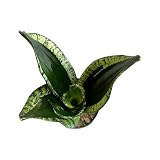


Plant Profile & Key Characteristics
Overview: Evergreen succulent grown for its stiff, upright, architectural leaves. Extremely tough, drought-tolerant and shade-tolerant, and one of the most popular low-care houseplants.
Quick Specifications
| Specification | Attribute |
|---|---|
| Plant Type / Life Cycle | Perennial (evergreen succulent) |
| Foliage Type | Evergreen (succulent) |
| Mature Size | 30-90 cm tall (12-36 in) |
| Growth Rate | Slow |
| Root System | Rhizomatous (spreads by thick rhizomes) |
| Toxicity | Mildly toxic – leaves contain saponins and are toxic to pets and irritant if ingested |
| Hardiness | USDA zone 10+ |
Growth Form & Structure
- Height & Spread: 30-90 cm tall in the ground; in a container start around 5 L, better 15-20 L, wide and shallow.
- Growth Habit & Form: Clump-forming rhizomatous succulent; stiff leaves in an upright rosette, spreading by rhizomes into dense colonies.
- Lifespan & Maturity: Slow-growing but long-lived; flowers only rarely.
Anatomy & Physical Features
- Leaves & Foliage: Rigid green succulent leaves, spear-shaped with a pointed tip, borne in a rosette.
- Flower Characteristics: Occasional spikes of small, fragrant white flowers (rarely produced).
Primary Uses & Landscape Value
- Functional & Ornamental Roles: Low-care ornamental houseplant and a drought- and shade-tolerant landscape accent; architectural container and foliage plant.
Care Guide: Planting, Soil & Watering
Overview: Snake plants (Dracaena, formerly Sansevieria) grow best in warm conditions (above about 5°C / 41°F) in gritty, sharply draining soil. They are true low-water succulents — the quickest way to kill one is to overwater it or leave it in soggy ground, so let the soil dry out well between waterings.
Quick Care Requirements
| Requirement | Ideal Condition |
|---|---|
| Planting Season | Spring in zone 10a; spring to autumn in zones 10b–11a; year-round in zone 11b+ |
| Growth Rate | Slow |
| Soil Type | Gritty, fast-draining (cactus/succulent-type mix) |
| Water Need | Low — let the soil dry out well between waterings; reduce further if drainage is poor |
Planting & Establishment
- Best Planting Season: Plant during the warm season: in zone 10a in spring, in zones 10b–11a from spring through autumn, and year-round in zone 11b and warmer. Where the plant is young or planted late, protect it over winter in zone 10a.
- How to Plant:
- Hole Preparation: Plant in a spot with excellent drainage; because the plant rots if it sits in a puddle, in rainy areas grow it on raised ground or in a raised bed.
- Soil Amendments: Mix in some organic matter and a little fertiliser at planting, but add grit or coarse sand to heavy soils — sharp drainage matters far more than richness.
- Planting Depth: Set the plant at the same depth it grew before, with the base of the leaves at soil level — do not bury the growing point.
- Growth Speed & Expectations: Growth is slow, picking up once the plant is established and lightly fed; clumps slowly widen by underground rhizomes and can be divided.
Soil, Watering & Drainage Care
- Soil Mix & Drainage Needs: Use a very free-draining, gritty mix — a cactus/succulent potting mix is ideal in containers, in a pot with ample drainage holes. Good drainage is critical, as standing water quickly causes root and rhizome rot.
- Watering Schedule & Technique:
- Young / Newly Planted: For the first couple of weeks after planting or dividing, water a little more often to help the roots settle, then taper off.
- Established: Water sparingly and deeply, always letting the soil dry out almost completely before watering again; when drainage is poor, water even less.
- Seasonal Adjustments: Water very little in cool weather and through winter dormancy, and only somewhat more during warm, active growth.
Climate, Light & Hardiness
Sansevieria arborescens (Snake plant) is an architectural rosette succulent suited to Mediterranean, desert, subtropical, and tropical climates outdoors, and it also grows well as an adaptable houseplant. It tolerates full sun through full shade (with some ambient light), is hardy to about USDA zone 10 and warmer, and grows best kept above roughly 5°C (41°F).
Quick Climate Specifications
| Climate Zones | Mediterranean, desert, subtropical, and tropical climates outdoors; widely grown as a houseplant |
|---|---|
| USDA Hardiness Zones | Approximately Zone 10 and warmer; young plants in marginal zones as cool as 8–10a need winter protection |
| Optimal Temp Range | Generally above about 5°C (41°F); comfortable indoor/outdoor growing range roughly 18–27°C (65–80°F) |
| Cold Damage Begins | Growth slows and leaf/root damage risk rises as temperatures approach 5°C (41°F) |
| Approx. Survival Minimum | Established plants may briefly tolerate cool conditions near 5°C (41°F); young plants are notably more cold-sensitive and benefit from winter protection in marginal zones |
| Frost Tolerance | Very Low |
| Light Conditions | Full Sun / Half Shade / Full Shade (with some ambient light) |
| Wind Tolerance | Moderate |
Sunlight & Light Exposure
Optimal Light Setup
Highly light-adaptable, growing acceptably from bright full sun down to low indoor light with only some ambient brightness.
Direct Sun Requirement
Direct sun is tolerated and supports firm, compact rosette growth, but is not strictly required.
Shade & Heat Management
Grows fine in half shade or full shade with some light; indoors, low light is tolerated but growth slows and flowering becomes less likely.
Best Exposure / Orientation
Any bright-to-moderate exposure works; when moving a shade-grown plant into full sun, acclimate it gradually on cooler, partly cloudy days to avoid scorching.
Temperature Extremes & Hardiness
USDA Hardiness & Regional Limits
Hardy to roughly USDA zone 10 and warmer. Outdoor planting timing reflects this: spring planting in zone 10a, spring through autumn in zones 10b–11a, and possible year-round in zone 11b and warmer; young plants started in cooler zones (as low as zone 8) need extra winter protection to get established. In colder climates, grow strictly as an indoor houseplant.
Cold Damage & Winter Protection
Best kept above about 5°C (41°F); protect outdoor plantings, especially young ones, when winter temperatures in marginal zones approach this threshold.
Frost Sensitivity
Frost-sensitive with very low cold tolerance; not suited to freezing conditions outdoors and should be grown in containers that can be brought indoors where winters are cold.
Extreme Heat Tolerance
Tolerates heat well as a drought-tolerant succulent adapted to desert, subtropical, and tropical climates.
Wind, Humidity & Microclimate
Humidity Preferences
Adapts to a wide range of humidity levels, from dry desert air to humid tropical conditions and typical indoor air.
Dry-Air Tolerance
High; well suited to dry indoor environments.
Wind Tolerance
The firm, upright leaves generally handle moderate outdoor wind without damage.
Rainfall & Seasonal Moisture
Prefers climates or sites without prolonged standing moisture; in high-rainfall locations, planting above grade with good drainage helps avoid root and rhizome rot.
Microclimate Recommendations
Outdoors, choose a well-drained spot; in marginal zones or colder climates, container culture that can be moved indoors for winter is the most reliable way to grow it year-round.
Growing in Pots, Balconies & Indoors
Sansevieria arborescens, a snake plant (now classified under Dracaena), is one of the easiest of all houseplants. The grower confirms it grows well indoors, tolerating shade and irregular watering. It also thrives in a pot on a balcony or patio, and its stiff, upright leaves (30-90 cm / 12-36 in) make a striking container plant.
Quick Details
- Container Size: From about 5 L (1.5 gal) for a small clump up to 15-20 L (4-5 gal) – and preferably shallow – for a full, blooming specimen
- Indoor Suitability: Excellent houseplant – thrives indoors, though deep shade may stop it flowering
- Best Spot: Very adaptable – full sun to full shade (with some light); brighter light encourages blooming
- Soil & Drainage: Well-draining potting mix; let it dry between waterings
- Watering in Pots: Sparing – small to moderate amounts; if drainage is poor, water less and let it dry out
Indoors & On the Windowsill
- Excellent houseplant: One of the toughest indoor plants – it copes with low light and infrequent watering. Deep shade may keep it from blooming, so give it some brightness if you want flowers.
- Check for pests first: The grower notes that before you bring a plant indoors you should clean off any pests, since there are no natural predators inside to keep them in check.
- Windowsill & light: Happy on almost any sill; move it from shade into brighter light gradually so the leaves do not scorch.
On a Balcony or Patio
- Light & wind: It takes full sun to shade on a balcony; introduce it to direct sun slowly, ideally on cooler, cloudier days, so it can adjust. Walls and paving reflect heat and dry pots faster – but it prefers to run on the dry side anyway.
- Practicalities: A tall, top-heavy clump can catch the wind – use a stable, weighty pot, and make sure water drains away freely.
Choosing the Pot, Soil & Long-Term Care
- Pot & drainage: Start around 5 L and move up to 15-20 L, shallow rather than deep, with strong drainage holes; do not let it sit in a water-filled saucer. Terracotta breathes and dries faster, which suits this rot-prone plant.
- Potting mix: A well-draining potting mix (a cactus-type blend works well).
- Feeding: Feed lightly during the growing season only; container plants lose nutrients as water drains through, but this one is a light feeder.
- Refreshing the soil: Every few years, check the mix – if it is tired, wash the old soil off the roots and repot into fresh mix.
Grower’s Container Tip
- Keep it blooming: For flowers, do not let the rhizomes fill the whole pot. After blooming, pull out the old shoots and trim the leaves and roots to make room for new growth, or move up a pot size – a slightly snug, shallow pot flowers best.
Note: Snake plants are mildly toxic if eaten – keep them out of reach of children and pets indoors.
Growing this plant in a greenhouse
A greenhouse can give sansevieria arborescens frost protection and cold protection.
Greenhouse at a glance
| Greenhouse suitability | Conditional - depends on your climate |
|---|---|
| Main benefits | frost protection, cold protection |
| Outdoor protection advisable below | about 5°C |
| Maintain greenhouse minimum | around 5°C for active growth |
| Suitable types | unheated greenhouse, polycarbonate greenhouse |
| Heating | Heating is optional - useful mainly for winter growing in cold areas. |
Related greenhouse guides
- Greenhouses: How to Choose the Right Greenhouse
- Polycarbonate Greenhouses: What to Look for Before Buying
- Greenhouse Climate Control: Temperature, Ventilation and Humidity
Fertilizing & Feeding
A very light feeder that stores its own reserves: a well-diluted, low-nitrogen feeding while growth is active in the warm season is all it needs, and feeding is skipped through the cool dormant rest.
Quick Fertilizing Specs
| Feeding Level | Very light feeder |
|---|---|
| Main Nutrient Priority | A low-nitrogen, well-diluted balanced feeding; nitrogen kept modest so growth stays firm and compact |
| Best Feeding Period | During active growth in the warm season |
| Organic Options | A little compost or worm castings worked into a gritty, fast-draining mix |
| Reduce/Stop Feeding | Stop feeding through the cool-season dormant rest |
| Micronutrients | Usually supplied by a complete fertilizer; correct only a diagnosed deficiency |
| Soil pH | Slightly acidic to near neutral |
Feeding by Growth Stage
Warm-season active growth
Support steady, compact growth and good leaf color during the active warm season.
| Nutrient direction | A well-diluted, low-nitrogen complete fertilizer; keep nitrogen modest so growth stays firm rather than soft and stretched. |
|---|---|
| Timing | During the warm active growing season. |
| Frequency | An occasional light feeding while the plant is actively growing is plenty. |
| Fertilizer types | A well-diluted balanced or low-nitrogen fertilizer, A little compost or worm castings in a gritty, fast-draining mix |
| Precautions | Feed sparingly; these plants store reserves, so overfeeding produces soft, stretched, weak growth and salt buildup in fast-draining mixes. |
Cool-season dormant rest
Let the plant rest through cool, low-light conditions without pushing soft growth.
| Nutrient direction | None – withhold fertilizer while the plant is resting and not in active growth. |
|---|---|
| Timing | During cool weather and the low-light dormant rest. |
| Frequency | No feeding at this stage; resume only when warm-season growth returns. |
| Fertilizer types | No feeding at this stage; do not fertilize until warm-season growth resumes. |
| Precautions | Do not fertilize a resting succulent; feeding now wastes nutrients and risks salt and root damage in the dry, slow period. |
Nutrient Deficiency Signs & Corrections
Older leaves fade to a pale, washed-out green and new growth is small and slow.
| Possible causes | low available nitrogen in a lean, gritty mix, nitrogen leached out by watering a fast-draining medium, an old, exhausted potting mix |
|---|---|
| Appears first on | older, lower leaves |
| What to check | how long since the mix was refreshed or fed, watering and leaching in the fast-draining mix, overall light levels |
| Possible correction | Apply a well-diluted, low-nitrogen complete fertilizer during active growth and refresh the mix, avoiding overfeeding. |
Leaf tips and margins brown or scorch and growth becomes soft and stretched.
| Possible causes | fertilizer salt buildup in a fast-draining mix, overfeeding beyond this plant’s low needs, infrequent leaching so salts concentrate |
|---|---|
| Appears first on | leaf tips and margins |
| What to check | recent feeding amounts and strength, salt crust on the soil surface or pot, drainage and how often the mix is flushed |
| Possible correction | Ease off feeding, flush the mix thoroughly with plain water to leach salts, then return to very light feeding. |
New leaves turn pale or yellow between the veins while the veins themselves stay green.
| Possible causes | reduced micronutrient uptake in cold, wet, poorly drained soil, alkaline conditions locking up iron and manganese, root stress from overwatering |
|---|---|
| Appears first on | youngest leaves at the growing point |
| What to check | drainage and how wet the mix stays, soil and water alkalinity, root health for rot from overwatering |
| Possible correction | Improve drainage and correct alkalinity; if a true deficiency is confirmed, apply a chelated iron or manganese product per its label. |
Pruning & Maintenance
This snake plant needs very little pruning. Remove dead, damaged or badly discolored leaves and spent flower stalks, but otherwise allow the plant to keep its natural form.
Quick Pruning Specs
| Pruning Need | Low |
| Main Tasks | Remove damaged leaves and spent flower stalks |
| Best Time | As needed during active growth |
| Structural Pruning | Not required |
Removing Damaged Leaves
If an entire leaf is badly damaged or declining, remove it close to the soil line with a clean, sharp tool. Avoid routinely cutting healthy leaf tips for height control because the cut edge remains visible and the leaf will not regain its original pointed form.
Flower Stalks
Spent flower stalks can be removed at the base after flowering.
Controlling Size
When the clump becomes too large for its container or space, divide rooted offsets or rhizomes rather than repeatedly cutting healthy leaves.
Propagation Guide
Sansevieria arborescens can be propagated vegetatively by dividing the rhizome or separating established offsets. Leaf cuttings may also root on some forms, but they should not be relied on to preserve variegation or a selected cultivar form. Vegetative propagation is not biologically required – seed propagation is possible – but it is strongly preferred in practice because this plant flowers infrequently as a houseplant (often taking several years to bloom) and even flowering plants frequently set little or no viable seed. Detach or cut the leaf at its base by hand rather than with a blade, and let the cut heal for at least 24 hours before potting; water every few days to every two weeks afterward. Rooting can take a few weeks to a month, and late spring to early summer is the best time to take the cutting.
Quick Propagation Specs
| Preferred Method | Rhizome division / offsets |
| Leaf Cuttings | Possible on some forms, but may not preserve variegation or cultivar traits |
Rhizome Division and Offsets
Separate a healthy rooted section with viable shoots and rhizome tissue, then replant it in a clean, free-draining medium. Allow damaged surfaces to dry briefly before potting if necessary.
Leaf Cuttings
Where leaf cuttings are used, take healthy mature leaf material and root it in a free-draining medium. Do not promise that offspring from leaf cuttings will retain variegation or a distinctive selected form.
Aftercare
Keep newly propagated plants warm and avoid prolonged wet conditions until roots are established.
Bloom & Flower Guide
Quick Details
- Bloom Season: Summer
- Time to First Bloom: Only on mature, well-established plants – often once comfortably pot-bound; timing is unpredictable and can take years
- Flower Appearance: White flowers on a spike rising from the centre of the rosette
- Edibility: Toxic if eaten – the plant contains saponins that are harmful to cats, dogs and people, so it is grown as an ornamental foliage plant, never for eating.
Detailed Blooming Overview
Snake plants flower only now and then, and it is always a bit of an event. A slender flowering spike rises from the crown, carrying clusters of narrow, tubular greenish-white to white flowers. They open toward evening and are strongly, sweetly fragrant, beading with sticky, glistening droplets of nectar that draw in night-flying moths – the plant’s natural pollinators. Blooming does the plant no harm; it simply signals a mature, contented specimen, often one that has grown comfortably pot-bound.
Flower Characteristics
- Flowers: White flowers on a spike rising from the centre of the rosette.
- Fragrance & nectar: Sweetly scented, strongest in the evening, with sticky droplets of nectar along the spike.
- Habit: Blooming is sporadic and unpredictable rather than reliably seasonal, appearing on settled, mature plants.
Bloom Care & Thinning
- Encouraging bloom: Flowering tends to follow maturity and a slightly pot-bound, well-lit position, so there is little point trying to force it.
- Nectar drip: The fragrant nectar can drip and leave sticky spots, so place a blooming plant away from furniture and wipe the leaves if needed.
- After flowering: Once the blooms fade, cut the spent spike back to the base, and avoid over-feeding.
- Safety: Every part contains saponins and is toxic to cats, dogs and people if eaten – enjoy the flowers for their scent, never as food.
Pests, Diseases & Troubleshooting
Overview: This snake plant (Dracaena trifasciata, syn. Sansevieria trifasciata) is a tough, drought-tolerant succulent (now placed in Dracaena but long grown as Sansevieria) that is nearly indestructible except for one thing: overwatering. Its few pests are mealybugs, spider mites, scale and thrips plus fungus gnats in wet mix, but its real danger is root and rhizome rot from too much water, cold-wet conditions or a heavy mix. Grown in a gritty, free-draining mix, watered sparingly and kept warm, it thrives on neglect; kept wet and cold, it rots from the base.
Quick Troubleshooting Overview
| Issue / Pest | Main Symptom | Primary Solution |
|---|---|---|
| Root / rhizome rot | Soft, mushy, foul base and yellowing leaves in wet soil | Cut out rot, repot in gritty mix, water far less |
| Mealybugs | White cottony tufts in leaf bases and folds, honeydew | Wipe with alcohol, horticultural oil; isolate plant |
| Spider mites | Fine stippling and webbing in warm, dry indoor air | Wipe leaves, raise humidity; horticultural oil |
| Scale | Brown limpet-like bumps on the leaves, sticky | Scrape off, horticultural oil; repeat for crawlers |
| Cold damage | Mushy, scarred or creased patches after chilling | Keep above cool-room temperature; remove damaged leaves |
| Tip / edge browning | Brown, crispy leaf tips and margins | Use filtered water, ease off feeding, avoid cold/dry stress |
Common Pests & Management
- Mealybugs (Planococcus citri and others):
- Symptoms: White cottony tufts tucked into the leaf bases, folds and along the leaves, with sticky honeydew and sooty mould, causing yellowing, weak growth and, in the tight crowns of cylindrical types, hidden colonies.
- Prevention & Control: Wipe visible colonies with a cotton bud dipped in diluted alcohol, and treat with horticultural or neem oil, working into the leaf bases and crowns where they hide. Isolate the plant, repeat every couple of weeks to catch the crawlers, and inspect the roots for root mealybug when repotting.
- Two-spotted spider mite (Tetranychus urticae):
- Symptoms: Fine pale stippling, dull scarred patches and a dusty look to the leaves with faint webbing, worst in warm, dry indoor air and on plants against hot windows or under lights.
- Prevention & Control: Wipe the leaves and raise humidity, and improve air movement. Horticultural oil or insecticidal soap controls infestations; keep the plant un-dusty and unstressed, since dry heat favours mites.
- Soft and armoured scale (Coccus / Aspidiotus spp.):
- Symptoms: Small brown, tan or waxy limpet-like bumps stuck to the leaves, sometimes with honeydew (soft scale) and sooty mould, weakening the plant as they suck sap and disfiguring the bold foliage.
- Prevention & Control: Scrape or rub off scale by hand, and treat with horticultural or neem oil to smother them, repeating every couple of weeks. Isolate the plant from other houseplants and inspect new arrivals, which are the usual source.
- Thrips (Frankliniella spp.):
- Symptoms: Silvery flecking, fine scarring and pale streaks on the leaves with black frass specks, and some distortion of new growth, mainly on indoor and greenhouse plants and those grown warm.
- Prevention & Control: Use blue sticky traps to monitor, wipe or rinse affected leaves, and quarantine new plants. Spinosad or insecticidal soap controls heavy pressure; light thrips damage is cosmetic on these tough plants.
- Fungus gnats (Bradysia spp.):
- Symptoms: Small dark flies over the potting mix whose larvae live in constantly moist media and can damage fine roots of stressed or newly potted plants; their presence is a sign the mix is being kept too wet.
- Prevention & Control: Let the mix dry well between waterings (which suits these succulents anyway), use yellow sticky traps for adults, and drench with Bacillus thuringiensis var. israelensis (Bti). A grittier, faster-draining mix removes the damp conditions they need.
Diseases & Fungal Issues
- Root and rhizome rot (Fusarium / Pythium / Phytophthora spp.):
- Symptoms: Yellowing, softening and toppling leaves with a mushy, foul-smelling, brown-black rot of the rhizome and roots, from overwatering, cold-wet conditions or a heavy, poorly draining mix; the usual killer of snake plants.
- Treatment & Management: Grow in a gritty, free-draining cactus/succulent mix, water sparingly and only when the mix is dry, and never leave the plant cold and wet. Cut away all soft, rotted rhizome and root tissue back to firm clean growth, let it callus, and repot into fresh dry mix; propagate healthy leaf or rhizome sections to save the plant.
- Southern blight (Sclerotium rolfsii):
- Symptoms: Rapid wilting and collapse with white cottony fungal growth and small tan, mustard-seed-like sclerotia at the soil line and leaf bases, rotting the base in warm, humid, wet conditions.
- Treatment & Management: Remove and destroy infected plants along with the surrounding mix and sclerotia, improve drainage and airflow, and avoid dense wet media against the leaf bases. Keep the base dry and uncrowded; the sclerotia persist, so discard affected soil rather than reusing it.
- Red leaf spot (Fusarium moniliforme / Fusarium spp.):
- Symptoms: Small reddish-brown, sunken, often light-centred spots with a red or reddish-brown margin on the leaves, mainly on new growth, enlarging and merging in warm, wet, humid conditions with overhead watering.
- Treatment & Management: Keep water off the foliage and avoid wetting new growth, improve airflow, and remove badly spotted leaves. Water at the base, keep the plant on the dry side, and use a copper fungicide only under persistent damp pressure.
- Bacterial soft rot and anthracnose (Pectobacterium / Erwinia / Colletotrichum spp.):
- Symptoms: Soft, wet, foul-smelling rotting of leaves and base (bacterial soft rot), and sunken dark leaf spots or blights (anthracnose), both entering through wounds and favoured by warm, wet, overcrowded conditions.
- Treatment & Management: Avoid injuring the leaves, keep the foliage dry and the plant uncrowded and well-ventilated, and remove and destroy affected leaves and any slimy rotted tissue. There is no cure for the bacterial rot, so prevention through dry, airy, careful culture is essential.
Growing Difficulties & Abiotic Problems
- Overwatering rot (the main problem):
- Cause & Symptoms: Yellowing, soft, mushy leaves that topple from a rotting base, caused by too-frequent watering, a heavy water-retentive mix, or a pot without drainage; snake plants store water and rot readily if kept wet.
- Correction Strategy: Water only when the mix is thoroughly dry, use a gritty free-draining succulent mix in a pot with drainage holes, and never leave the plant standing in water. In low light and cool conditions, water even less; when unsure, wait. This is by far the most common cause of decline.
- Cold damage:
- Cause & Symptoms: Mushy, water-soaked, scarred or creased patches and collapse after exposure to cold (below about cool-room temperatures) or frost, since these are warmth-loving tropical succulents.
- Correction Strategy: Keep the plant comfortably warm, away from cold draughts, cold windows and unheated rooms in winter, and never let it get cold and wet together. Remove cold-damaged leaves, which do not recover, and move the plant to a warmer spot.
- Sunburn from sudden sun exposure:
- Cause & Symptoms: Bleached, scorched, brown or yellow patches on the leaves when a plant grown in low or indirect light is suddenly moved into intense direct sun without acclimatisation.
- Correction Strategy: Acclimatise plants gradually to brighter light over a couple of weeks, and give bright indirect light or gentle direct sun rather than harsh midday sun through glass. Snake plants tolerate a wide light range but must be eased into strong sun.
- Fluoride/salt tip burn and wrinkling:
- Cause & Symptoms: Brown, crispy leaf tips and margins from fluoride, chlorine or salts in tap water and from over-fertilising, and puckered, wrinkled, folded leaves when the plant is kept too dry for too long or the roots have rotted.
- Correction Strategy: Water with filtered or rainwater where the supply is heavily treated or hard, feed only lightly and occasionally, and flush the mix periodically to leach salts. For wrinkling, water when the mix is dry and check the roots, since rot as well as drought can cause leaves to wrinkle and fold.
What Helps — Products & Tools
For snake plants the priority is cultural: a gritty free-draining mix, sparing watering and warmth prevent the root and rhizome rot that is by far their main killer. For pests, use alcohol swabs and horticultural or neem oil for mealybug and scale, horticultural oil or insecticidal soap for spider mites and thrips, and Bti with a drier, grittier mix for fungus gnats. Keep foliage dry and airy to prevent red leaf spot, southern blight and bacterial soft rot; a copper fungicide helps only under persistent damp pressure. The source pest names are unreliable and were not used.