Plant Profile & Key Characteristics
Overview: A deciduous, rhizomatous perennial about 20-40 cm (8-16 in) tall, dying back to underground rhizomes each winter. It is grown as an ornamental for its striking, orchid-like purple flowers.
Quick Specifications
| Specification | Attribute |
|---|---|
| Plant Type / Life Cycle | Perennial (herbaceous, rhizomatous) |
| Foliage Type | Deciduous (dies back each winter) |
| Mature Size | 20-40 cm (8-16 in) tall |
| Growth Rate | Moderate |
| Root System | Rhizomatous with fleshy tuberous roots |
| Hardiness | USDA zones 6-10a (mulch heavily in zones 6-8) |
Growth Form & Structure
- Height & Spread: A clump of 20-40 cm (8-16 in) in the ground; also grown in containers at least 30-50% larger than the plant, potted on as it fills the space.
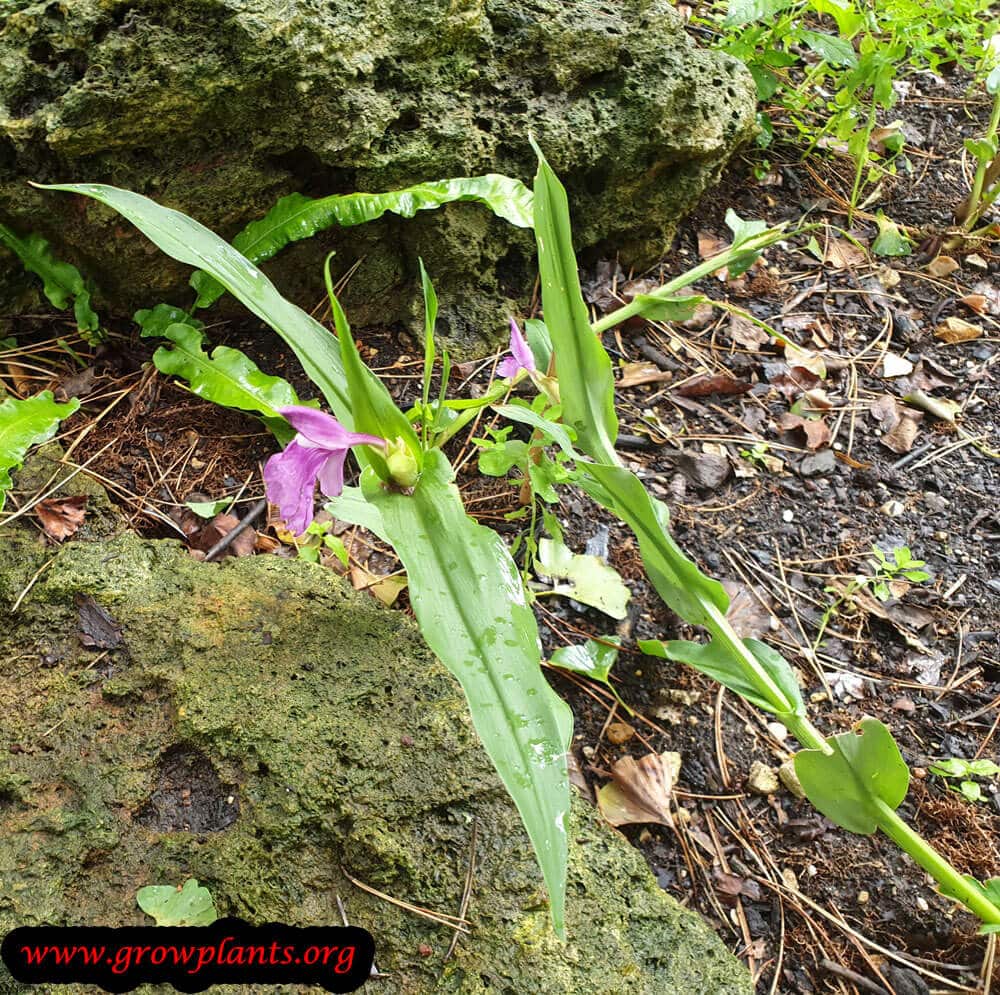
- Growth Habit & Form: An upright, clump-forming perennial arising from a rhizome; the leaf bases sheath the stem, and the plant needs a winter mulch where cold.
- Lifespan & Maturity: A hardy perennial that returns from its rhizome each year, bulking up into larger clumps over time.
Anatomy & Physical Features
- Leaves & Foliage: Green, linear leaves joined to the stem at the base.
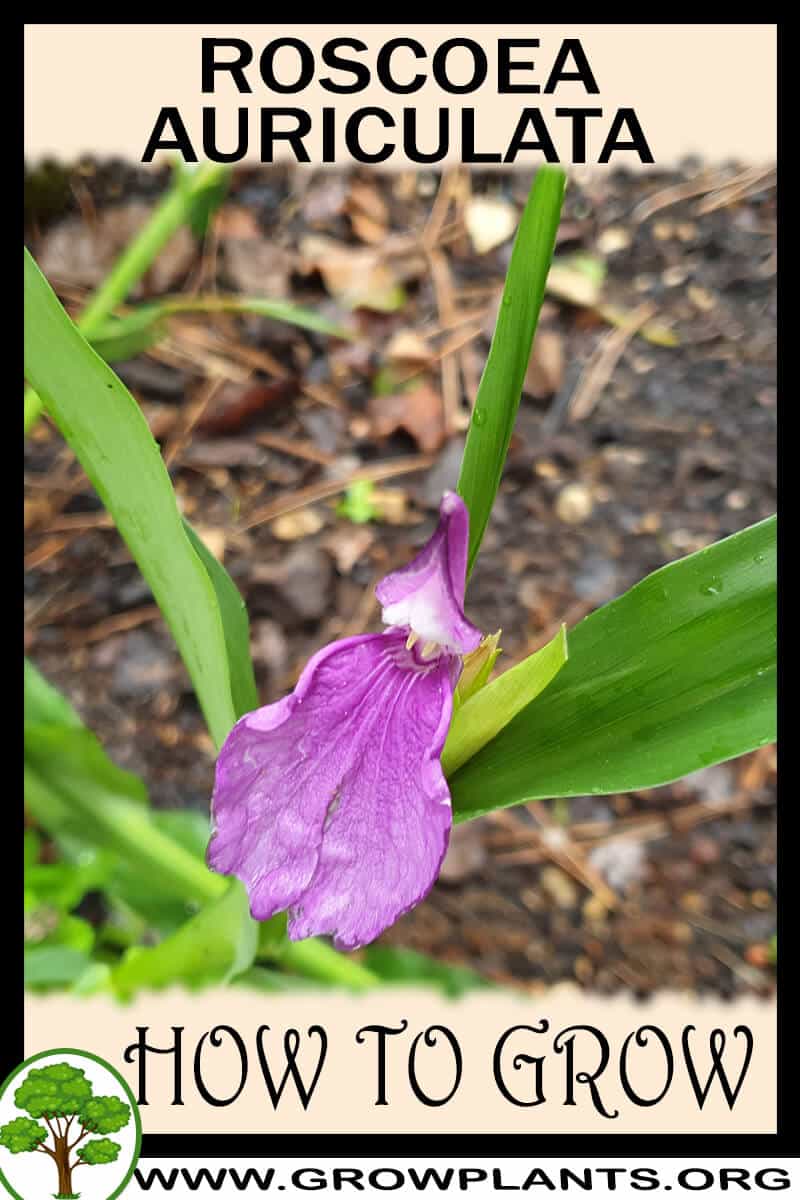
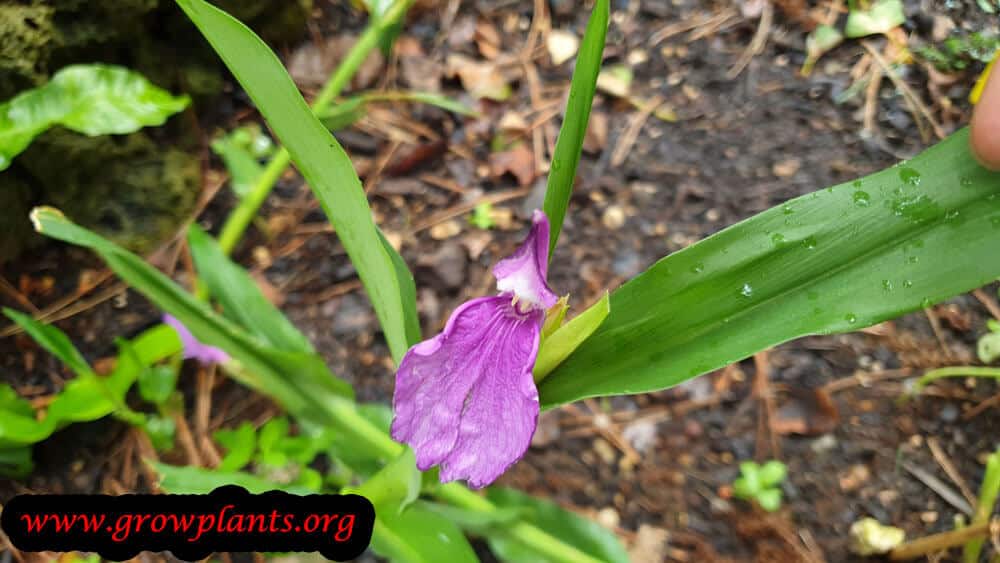
- Flower Characteristics: Purple, orchid-like (‘dancer’-shaped) flowers opening at the tops of the stems.
Primary Uses & Landscape Value
- Functional & Ornamental Roles: A late-season ornamental for shady and woodland borders, rock gardens and containers, grown for its exotic ginger-family flowers.
Care Guide: Planting, Soil & Watering
Overview: Roscoea auriculata is a rhizomatous perennial that enjoys rich, moisture-retentive soil in full sun to half shade, with a mulch kept over the root zone year-round. It likes steady, generous moisture through growth but needs drainage sharp enough that the rhizomes never sit in water.
Quick Care Requirements
| Requirement | Ideal Condition |
|---|---|
| Planting Season | Plant dormant rhizomes in winter to early spring; spring in zones 6–9, and spring to autumn in warmer zone 10a |
| Growth Rate | Moderate |
| Soil Type | Rich, moisture-retentive soil with plenty of organic matter |
| Water Need | Moderate to High — keep evenly moist through the growing season |
Planting & Establishment
- Best Planting Season: Plant the dormant rhizomes in winter to early spring before growth begins; in colder zones (6–9) plant in spring, and in warmer zone 10a from spring through autumn.
- How to Plant:
- Hole Preparation: Prepare a hole in humus-rich, free-draining soil and set the rhizome a few centimetres below the surface.
- Soil Amendments: Enrich the soil with compost, humus and leaf mould, and mix in some grit or perlite to keep drainage sharp.
- Planting Depth: Plant the rhizome a few centimetres deep, then cover with a layer of chopped mulch to hold moisture and, in colder zones, protect it over winter.
- Growth Speed & Expectations: A moderate grower that emerges late in spring, flowers in summer, and dies back to the rhizome each winter.
Soil, Watering & Drainage Care
- Soil Mix & Drainage Needs: Use rich but free-draining soil, or a potting mix of peat or compost with perlite and plenty of organic matter; keep it moist with a mulch but make sure the base of the pot drains so the rhizomes never waterlog.
- Watering Schedule & Technique:
- Young / Newly Planted: Keep newly planted rhizomes evenly moist as they root and send up shoots, never letting the soil dry out completely.
- Established: Water regularly and generously through the growing season so the soil stays consistently moist.
- Seasonal Adjustments: Add extra mulch and reduce watering as the plant dies back in autumn; keep it drier but protected during winter dormancy, with more winter mulch in zones 6–8.
Climate, Light & Hardiness
Roscoea auriculata is a cold-hardy member of the ginger family, growing well across temperate, mild Mediterranean, and subtropical gardens in USDA zones 6–10a. It accepts full sun to half shade, and while the dormant rhizome tolerates real winter cold, it relies on a mulch layer for reliable protection at the colder end of its range.
Quick Climate Specifications
| Climate Zones | Temperate, mild Mediterranean, subtropical |
|---|---|
| USDA Hardiness Zones | 6–10a |
| Light Conditions | Full sun to half shade |
| Frost Tolerance | Moderate to high (as a dormant, mulched rhizome) |
Sunlight & Light Exposure
Optimal Light Setup
Grows well in full sun or half shade; in the hotter part of its range a little midday shade can help keep the foliage and dancer-shaped flowers looking their best.
Best Exposure / Orientation
An open bed or a lightly shaded border both work; choose the shadier option in warmer zones and full sun toward the cooler end of its range.
Temperature Extremes & Hardiness
USDA Hardiness & Regional Limits
Hardy across zones 6 through 10a, going fully dormant each winter and regrowing from the rhizome in spring; in the mildest part of its range (10a) it can be planted and grown for extended periods from spring through autumn.
Cold Damage & Winter Protection
At the colder end of its range (zones 6–8) a mulch layer over the dormant rhizome is specifically recommended year-round and increased in winter, protecting it from hard freezes and moderating soil temperature swings.
Frost Sensitivity
Top growth dies back with autumn/winter cold as part of normal dormancy; the mulched, dormant rhizome is considerably more cold-tolerant than the foliage.
Wind, Humidity & Microclimate
Humidity Preferences
Prefers consistently moist, humus-rich soil kept evenly damp with mulch, in keeping with its woodland-edge, ginger-relative origins.
Microclimate Recommendations
A mulched bed that stays evenly moist without waterlogging suits it best; in colder zones, extra mulch depth in winter is the key protective measure.
Growing in Pots, Balconies & Indoors
Roscoea is a hardy, ginger-family perennial (20-40 cm / 8-16 in) with orchid-like flowers that grows from tuberous roots and dies right back each winter. The grower says it is not a houseplant – it needs a cool winter dormancy and full sun to part shade – but it grows well in a container.
Think of it as a seasonal patio pot: it emerges, flowers and then rests underground, so it belongs outdoors rather than on an indoor sill.
Quick Details
- Container Size: A pot at least 30-50% bigger than the plant; pot up as the clump outgrows it.
- Indoor Suitability: Not a houseplant – it needs a cold winter rest, which a warm room prevents.
- Best Spot: Full sun to half shade, outdoors on a patio or balcony.
- Soil & Drainage: Potting mix or peat soil with perlite, plus humus and organic matter; free-draining.
- Watering in Pots: Keep moist in growth; let the pot base take up water, then drain the same day. Keep nearly dry when dormant.
Indoors & On the Windowsill
- Not for indoors: The grower says no – it needs a cool winter dormancy and outdoor light, so a warm windowsill does not suit it.
On a Balcony or Patio
- Light & habit: Give it a sunny to lightly shaded spot; it appears late, flowers, then dies back – do not panic when it disappears for winter.
- Overwintering: Leave the pot in a cool, sheltered spot over winter, keeping the mix barely moist so the tuberous roots rest but do not shrivel.
Choosing the Pot, Soil & Long-Term Care
- Pot & drainage: Start 30-50% bigger than the plant and pot up when the roots outgrow it – ideally in the cool/dormant season. Give it strong drainage holes and skip a standing-water saucer to avoid root rot; terracotta breathes and dries faster, while glazed or plastic pots hold moisture longer.
- Potting mix: Potting mix or peat soil with perlite, blended with humus and organic matter; mulch to hold moisture.
- Feeding: Potted plants use up their food faster because nutrients wash out with every watering, so feed lightly but more regularly than plants growing in open ground.
- Repotting & upkeep: Every few years refresh the soil – in a small pot you can replace it all, trim some roots and tidy the clump; remove old, spent plants after flowering.
Grower’s Container Tip
- Soak-and-drain: Let the bottom of the pot fill with water so the mix drinks it up, then make sure it dries out the same day – never leave it standing wet.
Fertilizing & Feeding
A moderate feeder while in growth: balanced feeding supports the rhizome as shoots emerge and through the summer bloom, then stops as the foliage dies back for its dormant, chilled winter rest.
Quick Fertilizing Specs
| Feeding Level | Moderate feeder through spring and summer growth |
|---|---|
| Main Nutrient Priority | Balanced feeding with adequate nitrogen and potassium for foliage and flowering |
| Best Feeding Period | Spring shoot emergence through the summer-into-autumn bloom |
| Organic Options | Compost, humus, and mulch worked into rich, moisture-retentive soil |
| Reduce/Stop Feeding | Feeding stops once foliage dies back for winter dormancy |
| Micronutrients | Usually supplied by a complete fertilizer; correct only a diagnosed deficiency |
| Soil pH | Prefers rich, evenly moist, well-drained soil |
Feeding by Growth Stage
Spring shoot emergence
Support the emerging shoot and foliage as the rhizome breaks dormancy in spring.
| Nutrient direction | A balanced fertilizer with adequate nitrogen supports strong early foliage. |
|---|---|
| Timing | As the shoot emerges from the rhizome in spring. |
| Frequency | A light feeding as growth resumes, worked into rich, moisture-retentive soil. |
| Fertilizer types | A balanced complete fertilizer, Compost or organic matter worked in as mulch |
| Precautions | Keep soil consistently moist while feeding; the rhizome dislikes drying out during active growth. |
Summer to autumn bloom
Support the dancer-shaped flowers at the top of the stems through the bloom period.
| Nutrient direction | Continued balanced feeding with adequate potassium supports strong flowering stems. |
|---|---|
| Timing | Through the summer bloom season, extending into autumn where climate allows. |
| Frequency | Light, regular feeding through the active bloom period, then easing off as flowering finishes. |
| Fertilizer types | A balanced complete fertilizer, Compost or humus as a top-dressing |
| Precautions | Avoid letting the root zone dry out; moisture stress affects flower quality more than feeding does at this stage. |
Autumn dieback and winter dormancy
Let the foliage die back naturally and the rhizome rest through its required winter chill.
| Nutrient direction | None – the plant is entering dormancy, so supplemental feeding is not needed. |
|---|---|
| Timing | From autumn dieback through the winter dormant period. |
| Frequency | No feeding during this rest period; resume only once new growth emerges in spring. |
| Fertilizer types | No feeding at this stage; withhold fertilizer until spring growth resumes. |
| Precautions | Withhold fertilizer once foliage dies back; the dormant rhizome benefits from an undisturbed, unfed winter chill. |
Nutrient Deficiency Signs & Corrections
Foliage is pale green overall and shoot growth is weaker than expected for the season.
| Possible causes | low available soil nitrogen, nitrogen leaching from consistently moist, well-drained soil, thin, low-organic-matter soil |
|---|---|
| Appears first on | overall foliage color |
| What to check | recent feeding history, soil organic matter, how well the site drains and how often it is watered |
| Possible correction | Apply a balanced, nitrogen-forward fertilizer and renew organic matter or mulch. |
New leaves show yellowing between the veins while the veins remain green.
| Possible causes | iron deficiency, often in alkaline or waterlogged soil, poor drainage stressing the rhizome and roots, cold soil temperatures limiting root uptake |
|---|---|
| Appears first on | newest leaves |
| What to check | soil pH and drainage, roots and rhizome for rot or compaction, recent watering and soil temperature |
| Possible correction | Improve drainage first, then apply a chelated iron product per its label if the deficiency persists. |
Flower stems are thin or floppy, or the clump produces fewer flowers than expected.
| Possible causes | potassium deficiency weakening stem structure, an insufficient winter chill period ahead of the bloom season, an overcrowded, congested rhizome clump in need of division |
|---|---|
| Appears first on | flowering stems and overall bloom count |
| What to check | feeding balance, especially potassium, how the plant overwintered and whether it received a proper chill, clump density and time since the last division |
| Possible correction | Ensure balanced feeding with adequate potassium, confirm the plant gets a proper winter chill, and divide congested clumps during dormancy. |
Pruning, Training & Seasonal Maintenance
Roscoea auriculata is a ginger-relative herbaceous perennial that grows fresh leafy flowering stems from an underground rhizome each year and dies back completely to that rhizome in autumn, so there is no woody framework and no true structural pruning – maintenance is limited to removing spent flowering stems and dead top growth. The safest time to cut old growth away is autumn into winter, once it has died back naturally and stopped feeding the rhizome; cutting green growth back early simply weakens next year’s shoot.
Quick Pruning & Maintenance Specs
| Pruning Tolerance | Low to moderate – limited to removing dead/spent growth |
| Primary Pruning Window | Autumn to winter, after the stems die back |
| Typical Frequency | Once per year, at dieback |
| Main Objective | Remove spent flowering stems and dead foliage |
| Young Plant Priority | Leave stems untouched through their first season to build the rhizome |
| Mature Plant Priority | Cut dead stems to the base once fully browned |
| Best Tool Type | Precision snips or bypass secateurs |
Pruning by Plant Age & Size
Newly Established
Leave a newly planted rhizome’s first stems and leaves in place all season so it can build up reserves; remove only visibly dead or damaged tissue.
Young / Formative
No structural training applies – each shoot is a simple unbranched leafy stem topped with flowers, with nothing to select or frame.
Mature / Established
Once flowering has finished, the spent flowering stem can be removed at its base; once the whole stem and its leaves have died back at season’s end, cut or pull it away from the rhizome.
Seasonal Pruning Schedule
Post-Flowering: objective is removing the spent flower stem once bloom is over – it will not rebloom, and taking it out tidies the plant without affecting the rhizome.
Dormant / Winter: objective is a full cutback of the now-dead top growth to the base as the plant goes fully dormant; do not disturb the rhizome itself, which is best left undivided outside its winter-to-early-spring separation window.
Special Growth to Remove
Remove the spent flowering stem after bloom and the dead leafy stem at the end of the season. There are no suckers or side shoots to manage on this single-stem-per-shoot perennial.
Container & Small-Space Pruning
In a pot, old flowering stems are pulled once spent, and when the plant outgrows its container the root ball can be trimmed and the top growth cut back at the same time as repotting, done in winter while the plant is dormant.
Tools
Precision snips or bypass secateurs are enough for these soft, herbaceous stems.
Tool Hygiene & Disease Risk
Routine. No significant tool-transmitted disease is noted for this species (aphids are the main pest reported); clean, sharp tools are sufficient.
Cut Placement & Technique
Cut or pull spent stems close to the base without disturbing the rhizome beneath the soil surface.
Heavy Pruning & Rejuvenation
Not applicable in the woody sense – the plant renews itself from the rhizome each year on its own; the closest equivalent is lifting and dividing rhizomes in winter to early spring to reinvigorate a crowded clump.
Post-Pruning Care
After the winter cutback, keep mulch over the rhizome (especially in cooler zones, where mulch is recommended year-round) and avoid letting the site dry out or waterlog.
Common Pruning Mistakes
- Cutting back stems while still green, which reduces the energy reserves the rhizome needs for next year’s shoot.
- Disturbing or dividing the rhizome outside its winter-to-early-spring window.
When NOT to Prune
Avoid cutting back while foliage is still green and active, and avoid disturbing the rhizome during active growth or flowering.
Recommended Tools (by task)
- precision_snips – removing the spent flower stem after bloom and the dead stem at dormancy.
Propagation Guide
Roscoea auriculata is easier to start from separated rhizome divisions than from seed, making division the best method, though seed propagation is also practical when fresh seed and a cold period are provided; as a straight species, seed-grown plants are generally true-to-type. Propagation is Easy by rhizome division and Moderate from seed, given the need for fresh seed and roughly a month of chilling.
Quick Propagation Specs
| Best Propagation Method | Rhizome division |
| Alternative Methods | Seed |
| Propagation Difficulty | Easy (division) / Moderate (seed) |
| Seed True-to-Type | Yes |
| Vegetative True-to-Type | Yes |
| Best Propagation Season | Division: winter to early spring, before growth resumes after dormancy. Seed: spring or autumn, with fresh seed preferably sown in autumn |
| Seed Germination Time | About 4–8 weeks when sown in spring; autumn-sown seed usually germinates the following early spring |
| Germination Temperature | 16–21°C (60–70°F) |
| Seed Sowing Depth | 1–2cm (0.5–1 inch) |
Growing from Seed
Seed Handling & Viability
Use fresh seed for best results; store seed in the refrigerator, optionally with peat soil, or in a paper bag until sowing.
Dormancy & Pre-Sowing Treatment
Seed needs burying (cold stratification) before sowing – direct burial in the soil, or in hot climates, storage in the coldest part of the refrigerator – requiring at least one month of chilling hours.
Sowing Season
Spring or autumn; sowing fresh seed in autumn, so it experiences winter cold naturally, is preferred over spring sowing. In hotter climates (hardiness zone 10) autumn sowing is better.
Sowing Depth & Orientation
1–2cm (0.5–1 inch) deep; space plants roughly 20x20cm (8×8 inches) apart.
Germination Conditions
Bright light and consistently moist soil that is never allowed to dry out, at 16–21°C (60–70°F).
Germination Time
About 4–8 weeks when sown in spring; seed sown in autumn typically germinates the following early spring after overwintering.
Seedling Care
Keep the soil moist and avoid excessive heat while seedlings establish; water moderately to heavily once established.
Rhizomes, Tubers, Bulbs & Corms
Separate rhizomes in winter to early spring, before the plant starts to grow again after its dormant period – this is easier than starting from seed. Each division should include at least one visible growth bud and some roots; replant promptly so the rhizome does not dry out.
Bloom & Flower Guide
Quick Details
- Bloom Season: Summer into autumn
- Flower Appearance: Purple, orchid-like flowers in a “dancer” shape, carried at the tops of the leafy stems
- Edibility: Ornamental – not eaten
Detailed Blooming Overview
Roscoea is a hardy member of the ginger family (Zingiberaceae) whose flowers strikingly mimic orchids. The plant rises from a rhizome each season and opens its blooms at the tips of the stems, a few at a time over several weeks in the second half of the growing year.
Flower Characteristics
- Rich purple, hooded, orchid-like flowers with a dancer-like shape.
- Borne at the stem tips, opening in succession.
Bloom Care & Thinning
- Best conditions: Plant the rhizomes in humus-rich, moisture-retentive but well-drained soil in part shade for the strongest flowering.
- Tidying: Remove spent blooms; the plant emerges late in the season, so mark its position to avoid disturbing it.
Pests, Diseases & Troubleshooting
Overview: Roscoea auriculata is a hardy herbaceous ginger (Zingiberaceae) grown for its orchid-like summer flowers, and it is largely trouble-free apart from slugs and snails, which are its dominant pest, grazing the emerging spring shoots; aphids, red spider mite and (in pots) vine weevil are secondary. Its main disease risk is rhizome rot from cold, wet winter soil. Sharp winter drainage and slug vigilance in spring are the keys.
Quick Troubleshooting Overview
| Issue / Pest | Main Symptom | Primary Solution |
|---|---|---|
| Slugs and snails | Emerging shoots grazed and shredded | Protect shoots; iron-phosphate pellets, barriers |
| Aphids | Distorted, sticky new growth | Water jet, predators, insecticidal soap |
| Red spider mite | Stippled leaves in heat/under glass | Humidity, hose foliage, horticultural oil |
| Vine weevil (pots) | Notched leaves; grubs eat rhizomes | Check rootball; parasitic nematode drench |
| Rhizome rot | Fails to re-emerge after wet winter | Sharp winter drainage; discard rotted rhizomes |
| Late frost | Blackened emerging spring shoots | Fleece/mulch over shoots if frost threatens |
Common Pests & Management
- Slugs and snails (Gastropoda):
- Symptoms: The number-one pest: emerging spring shoots and the fleshy new growth are grazed, holed and shredded, sometimes eaten to the ground before they develop, and slime trails are visible.
- Prevention & Control: Protect the emerging shoots vigilantly in spring — hand-pick at night, remove hiding places, and ring plants with grit or copper barriers. Wildlife-safer iron-phosphate pellets around the crowns as growth emerges are very effective. Nematode biocontrol can help in warm, moist soil.
- Aphids (Aphididae):
- Symptoms: Clusters of soft insects on new leaves and flower stems cause distortion and sticky honeydew; this matches the source note.
- Prevention & Control: Protect predators and dislodge colonies with a water jet. Insecticidal soap or light horticultural oil on the undersides controls heavier infestations, sprayed in the evening to protect bees.
- Red spider mite (Tetranychus urticae):
- Symptoms: Fine stippling and bronzing of leaves in hot, dry conditions or under glass, occasionally with webbing.
- Prevention & Control: Raise humidity and avoid drought and heat stress; hose foliage. Encourage predatory mites, and use horticultural oil or insecticidal soap for outbreaks.
- Vine weevil (Otiorhynchus sulcatus):
- Symptoms: In containers, notched leaf margins (adults) and, more seriously, C-shaped white grubs that eat the rhizomes and roots, causing sudden wilting and collapse.
- Prevention & Control: Check the rootball of potted plants and remove grubs. Encourage predators and use parasitic nematodes drenched into moist, warm compost to kill the larvae; refresh potting mix and inspect at repotting.
Diseases & Fungal Issues
- Rhizome / basal rot (fungal (Fusarium, Pythium, etc.)):
- Symptoms: Rhizomes rot and fail to reappear in spring, or shoots collapse at the base, especially after a cold, wet dormant winter in heavy soil.
- Treatment & Management: Grow in humus-rich but free-draining soil that stays just moist in growth and drier in dormancy; avoid waterlogging over winter. Improve drainage or grow in raised beds or pots, and discard rotted rhizomes rather than replanting them.
- Botrytis / grey mould (Botrytis cinerea):
- Symptoms: Fuzzy grey mould rots flowers and soft foliage in cool, damp, still conditions, spotting the blooms.
- Treatment & Management: Improve airflow, remove faded flowers and dead foliage promptly, and avoid overhead watering late in the day. Good sanitation usually prevents it; a botrytis-labelled fungicide is rarely needed.
Growing Difficulties & Abiotic Problems
- Winter-wet rot in dormancy:
- Cause & Symptoms: The dormant rhizomes rot if the soil is cold and waterlogged through winter, and the plant simply fails to emerge in spring.
- Correction Strategy: Ensure sharp winter drainage — add grit, plant in raised beds, or lift pots under cover for the dormant season — while keeping soil moisture-retentive during summer growth.
- Late frost damage to new shoots:
- Cause & Symptoms: The soft, late-emerging spring shoots can be blackened by a late frost, checking growth and flowering.
- Correction Strategy: Roscoea emerges late, which usually avoids frost, but in cold gardens give a light protective mulch or fleece over emerging shoots when frost threatens.
- Scorch and drying out in summer:
- Cause & Symptoms: Leaf edges brown and the plant wilts if it dries out or sits in hot afternoon sun, as it prefers cool, humus-rich, moist woodland-edge conditions.
- Correction Strategy: Grow in dappled shade or morning sun with cool, moisture-retentive soil, mulch to conserve moisture, and water in dry spells during active growth.
What Helps — Products & Tools
For Roscoea the main defences are cultural: iron-phosphate slug pellets, grit and copper barriers to protect the emerging shoots, and sharp winter drainage to prevent rhizome rot. Insecticidal soap and light horticultural oil cover aphids and mites, and parasitic nematodes control vine weevil grubs in pots. Reserve any spray for real need, follow the label, and protect pollinators visiting the flowers.