

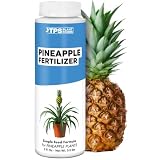


Plant Profile & Key Characteristics
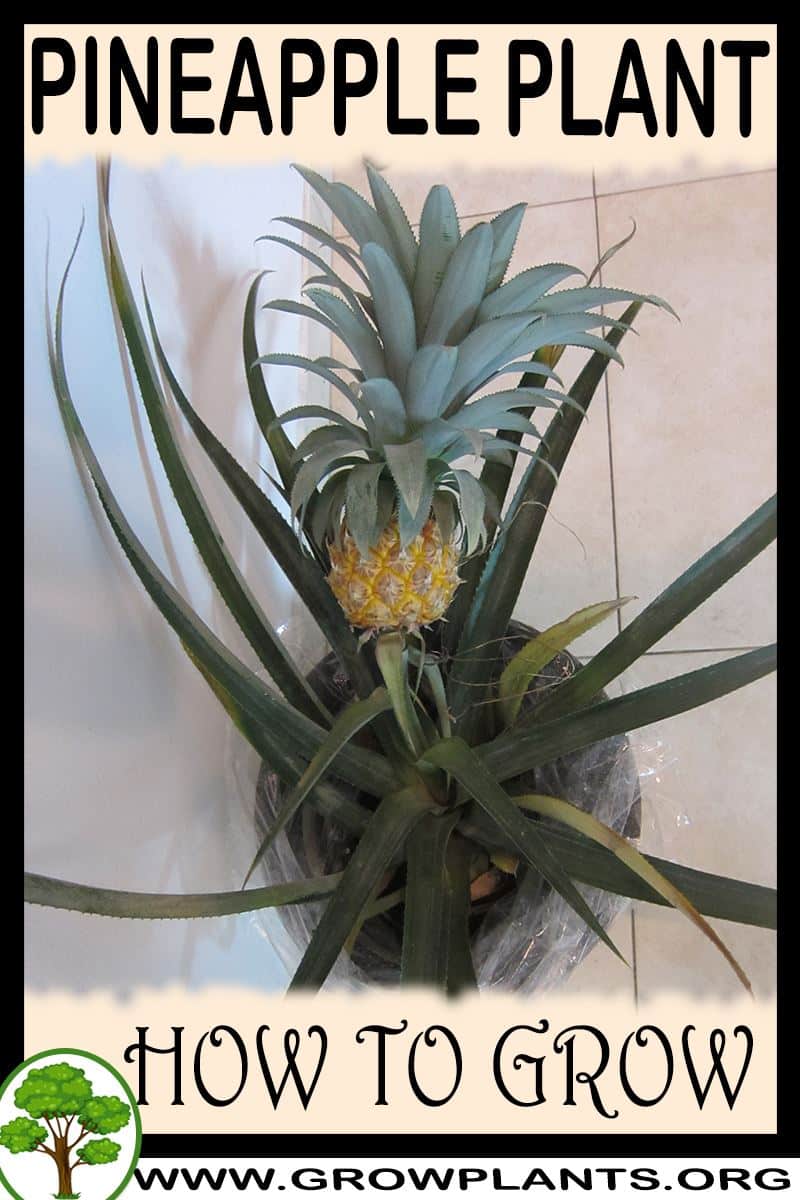
Overview: The pineapple (Ananas comosus) is an evergreen perennial bromeliad reaching 0.5-1.5 m (20-60 in). It is grown for its edible fruit and also as an ornamental, indoors or in warm climates.
Quick Specifications
| Specification | Attribute |
|---|---|
| Plant Type / Life Cycle | Perennial (evergreen bromeliad) |
| Foliage Type | Evergreen |
| Mature Size | 0.5-1.5 m (20-60 in) tall |
| Growth Rate | Slow to moderate |
| Root System | Shallow, fibrous |
| Toxicity | Ripe fruit edible; non-toxic |
| Hardiness | USDA zone 10b+ |
Growth Form & Structure
- Height & Spread: 0.5-1.5 m (20-60 in) tall in the ground; grows well in containers and as a houseplant, though fruiting needs strong light
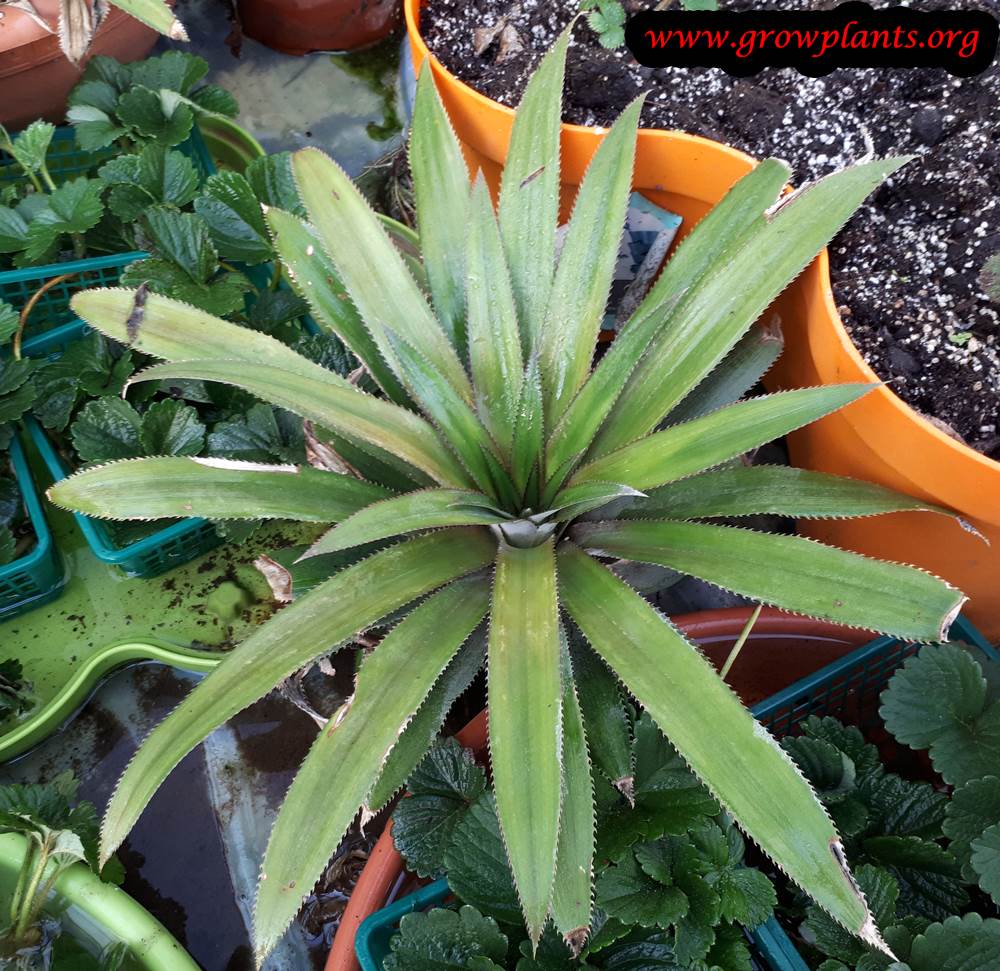
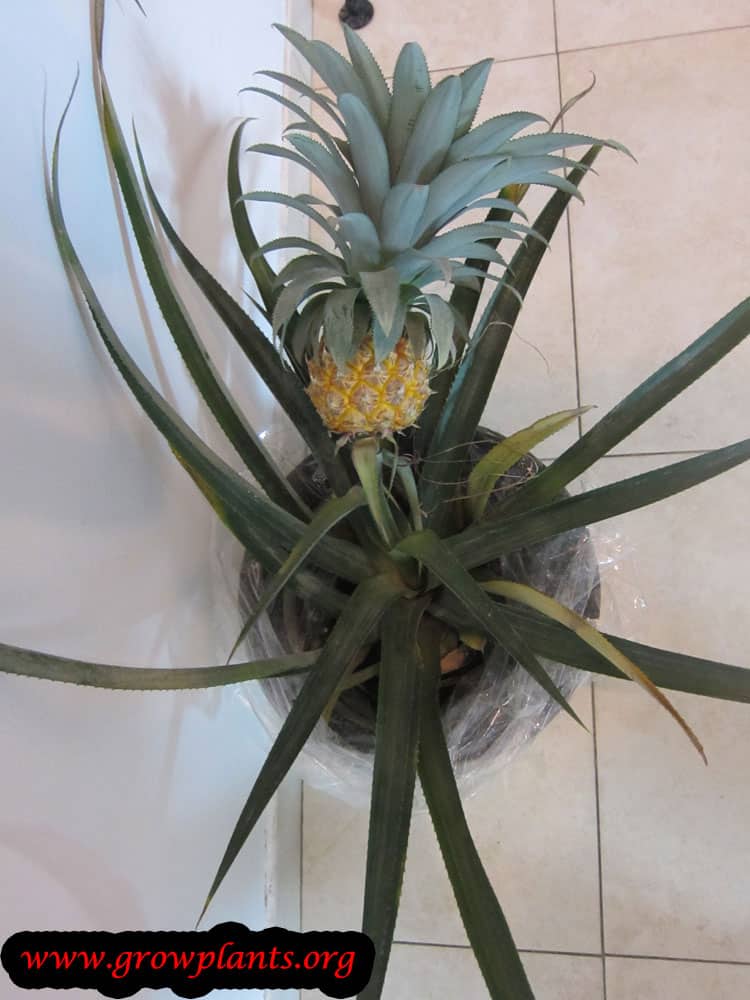
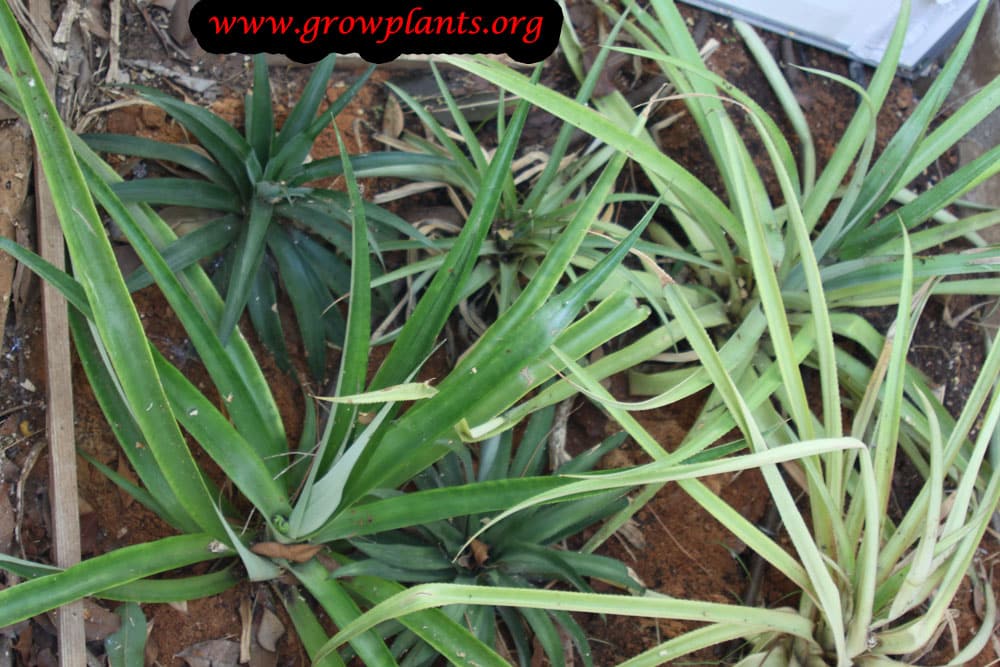
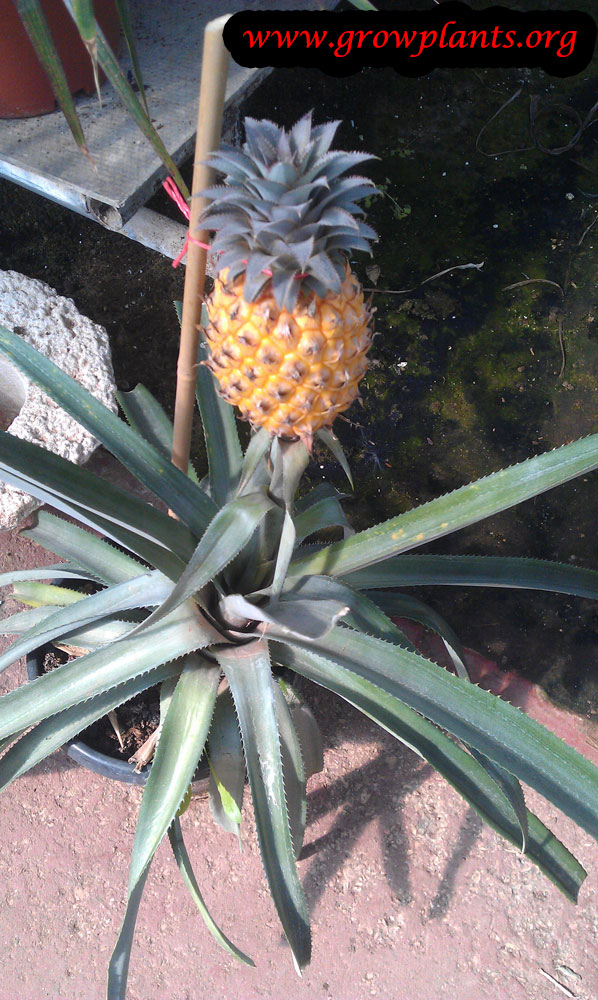
- Growth Habit & Form: A rosette of stiff, strap-like leaves with the fruit borne on a central stalk
- Lifespan & Maturity: Each rosette generally lives to fruit once (taking 1-2 years), then is replaced by offsets (pups)
Anatomy & Physical Features
- Leaves & Foliage: Flat, narrow, concave leaves, spiny-edged in some cultivars, forming a rosette
- Flower Characteristics: Small red or purple flowers massed in a crown atop the stalk (see the Bloom guide)
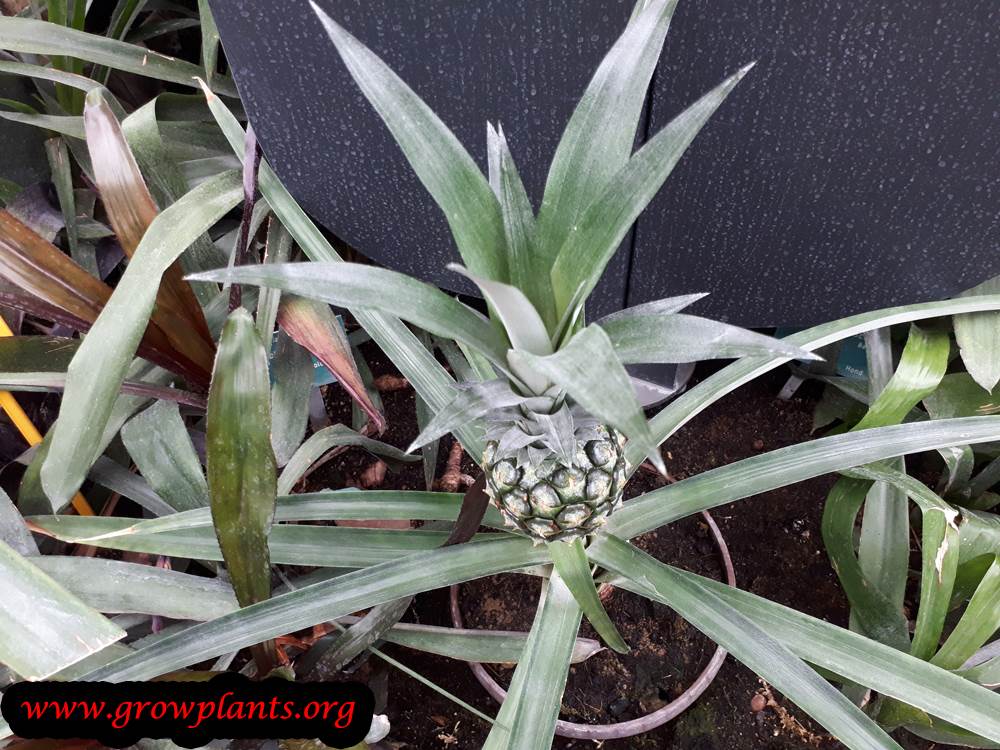
- Fruit Profile: A compound fruit (fused from many small fruits), yellow to green, red or brown outside with white to yellow flesh (see the Fruit guide)
Primary Uses & Landscape Value
- Edible Uses: Fruit eaten fresh, juiced, cooked, or used in ice-cream and cakes
- Functional & Ornamental Roles: Fruiting plant, also grown ornamentally in containers and as a houseplant
Care Guide: Planting, Soil & Watering
Overview: The pineapple (Ananas comosus) is a tropical bromeliad grown in full sun in warm, frost-free climates (hardiness zone 10b+) or under glass, needing warmth above about 15 C. It grows in moist yet well-draining soil rich in organic matter, and though thirsty it must never sit waterlogged.
Quick Care Requirements
| Requirement | Ideal Condition |
|---|---|
| Planting Season | Year-round in warm climates; spring to summer where cooler |
| Growth Rate | Slow to Moderate |
| Soil Type | Moist, well-draining soil rich in organic matter |
| Soil pH | Slightly acidic (around 4.5-6.5) |
| Water Need | Moderate to High, but never waterlogged |
Planting & Establishment
- Best Planting Season: Plant year-round in warm regions, or in spring to summer where the climate is cooler.
- How to Plant:
- Hole Preparation: Plant into loosened, free-draining soil, or start from a rooted crown or pup.
- Soil Amendments: Enrich with organic matter while keeping the soil open and well-drained.
- Planting Depth: Set the plant shallowly with the base of the leaf rosette at soil level; do not bury the central crown, which rots if kept wet.
- Growth Speed & Expectations: A slow-to-moderate grower that takes 1-2 years to fruit; it reaches around 0.5-1.5 m and fruits best with plenty of light.
Soil, Watering & Drainage Care
- Soil Mix & Drainage Needs: Give it moist but sharply-draining, organic-rich soil; in containers use a well-draining potting or peat mix with perlite or vermiculite and free-draining holes, refreshing the mix every few years.
- Watering Schedule & Technique:
- Young / Newly Planted: Keep the soil moist while the crown or pup roots and establishes.
- Established: Water moderately to generously so the soil stays moist and drains freely; grown indoors or in humidity it needs less, as the soil dries slowly.
- Seasonal Adjustments: Water more in warm, active growth and ease back in cooler conditions; avoid leaving water sitting around the roots.
Climate, Light & Hardiness
Pineapple plant (Ananas comosus) is a tropical, sun-loving fruiting bromeliad that needs warm, frost-free conditions and plenty of light to flower and set fruit. It is decidedly cold-sensitive: it grows and fruits best above about 15 °C (59 °F), suffers below that, and is killed at around 3 °C (37 °F) or in frost.
Quick Climate Specifications
| Climate Zones | Tropical, subtropical or Mediterranean (frost-free), or indoor |
|---|---|
| USDA Hardiness Zones | 10b and warmer |
| Optimal Temp Range | Warm, roughly 20–30 °C (68–86 °F); above about 15 °C (59 °F) |
| Cold Damage Begins | Below about 15 °C (59 °F) growth slows |
| Approx. Survival Minimum | Around 3 °C (37 °F); the plant dies below that |
| Frost Tolerance | None (light frost may be survived but usually harms or kills) |
| Light Conditions | Full sun (light shade and humidity in intense heat to prevent leaf burn) |
Sunlight & Light Exposure
Optimal Light Setup
Give it as much bright light as possible - full sun is ideal. Without strong light the plant will not bloom or fruit, though it can be grown for its foliage in brighter shade.
Direct Sun Requirement
Direct sun is needed for flowering and fruiting; a mature plant wants several hours of sun a day. Indoor artificial light alone is generally not enough to fruit.
Shade & Heat Management
In very hot, dry, or intense-sun sites, light afternoon shade (or the dappled shade of a deciduous tree) plus good humidity prevents leaf scorch while still allowing enough light.
Best Exposure / Orientation
A warm, sunny, sheltered exposure that stays frost-free is best for steady growth and fruiting.
Temperature Extremes & Hardiness
USDA Hardiness & Regional Limits
Grown outdoors year-round only in USDA zone 10b and warmer. Outside that range it may grow but rarely fruits and grows slowly, so it is often kept as a container plant brought under cover for winter.
Cold Damage & Winter Protection
Growth slows below about 15 °C (59 °F). Keep the plant above about 3 °C (37 °F); below that it dies. Move container plants to a warm, protected spot before cold weather.
Frost Sensitivity
Frost tolerance is essentially none. Light frost may occasionally be survived but usually damages the plant, and it will not grow well afterward. Young plants are more cold-sensitive than established ones, and cold tolerance varies with cultivar, plant age, exposure duration and conditions.
Extreme Heat Tolerance
It thrives in tropical heat, but in very hot, dry, sunny conditions leaves can scorch; humidity and a little shade prevent burn.
Frost-Free Growing Season
Because a plant takes on the order of one to two years to reach fruiting, it needs a long, warm, frost-free growing season (or protection through cool spells) to produce a crop.
Wind, Humidity & Microclimate
Humidity Preferences
It favours warm, humid tropical conditions; good humidity also helps shield the leaves from sun scorch.
Dry-Air Tolerance
The tough, moisture-conserving leaves cope with drier air, but in dry heat the foliage is more prone to scorch without added humidity.
Rainfall & Seasonal Moisture
Adapted to warm climates with regular rainfall; it grows through the warm season and slows in cool weather.
Microclimate Recommendations
A warm, sunny, sheltered, frost-free microclimate gives the best chance of flowering and fruiting; in marginal areas a container that can be moved under cover is practical.
Growing in Pots, Balconies & Indoors
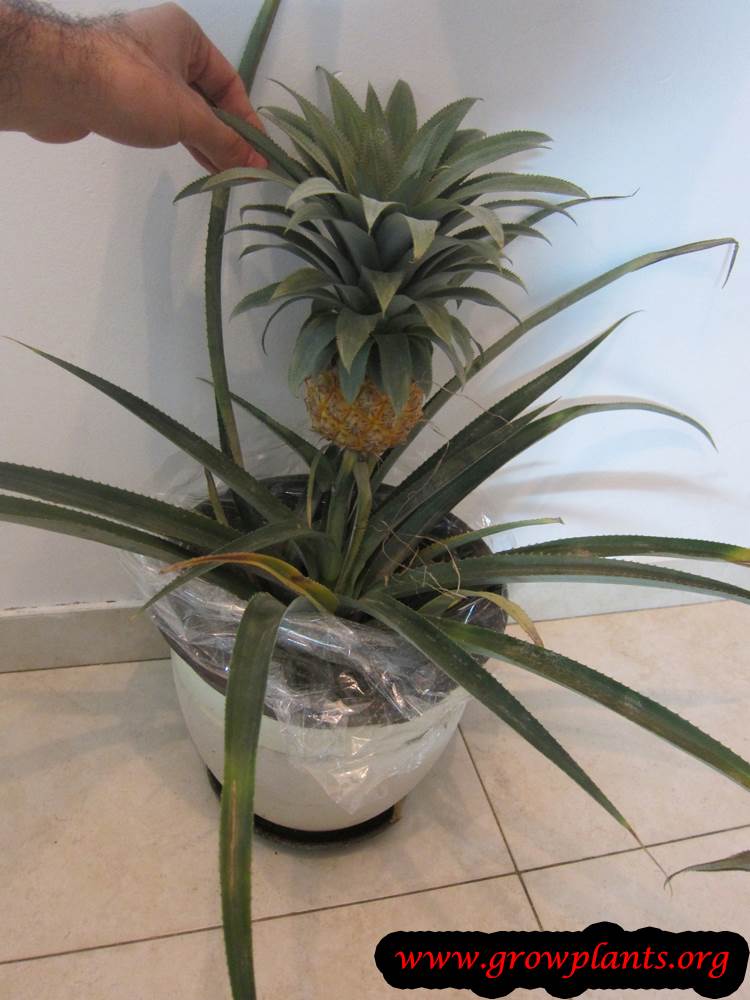
Pineapple plant (Ananas comosus) is a terrestrial bromeliad that makes a striking pot and houseplant, but it is a sun-lover: the grower notes it will grow indoors, yet to bear fruit it needs several hours of real sun a day once mature – ordinary room light is not enough. Grown in a roomy, free-draining pot it does well on a bright balcony, patio or the sunniest windowsill.
Quick Details
- Container Size: A roomy pot with excellent drainage; the grower refreshes the mix every few years and avoids letting the roots fill the whole container.
- Indoor Suitability: A good foliage houseplant; for fruit it must have a very sunny spot, not artificial light alone.
- Best Spot: Full sun to the brightest light you can give it – a little light shade only in very hot climates, kept humid to prevent leaf scorch.
- Soil & Drainage: Well-aerated, free-draining mix rich in organic matter – potting mix or peat/coir with perlite or vermiculite.
- Watering in Pots: Average to generous water – keep the mix moist and let the surplus drain freely; never waterlogged.
Indoors & On the Windowsill
- As a houseplant: It grows happily indoors as foliage in a bright, humid spot; keep it away from heaters, air-conditioning and fans, and water a little less in a humid room such as a bright bathroom.
- Windowsill growing & fruiting: For a chance of fruit, choose the sunniest windowsill with several hours of direct sun – the grower is clear that home light alone will not do it, and a feed before fruiting helps.
- Overwintering: It is frost-tender; keep it warm indoors through cold spells and bring any outdoor plant in before the first cold nights.
On a Balcony or Patio
- Light & wind: Give it the sunniest, most sheltered corner in the warm season. Walls and paving reflect heat, so a potted pineapple dries fast – check moisture often and keep humidity up.
- Practicalities: Use a stable, heavy-based pot so the arching leaves do not topple it, and make sure runoff drains away freely.
Choosing the Pot, Soil & Long-Term Care
- Pot & drainage: A roomy pot with strong drainage holes and no standing saucer; the grower warns that if the roots fill the container the plant struggles to fruit, so pot up or reduce crowding as needed.
- Potting mix: Well-ventilated and free-draining, rich in organic matter – potting mix or peat/coir with perlite or vermiculite.
- Feeding: Potted plants need feeding more often as nutrients leach out; a feed as the plant matures toward fruiting is, as the grower notes, especially worthwhile.
- Refreshing: Every few years switch out the mix (or part of it) to keep the roots healthy and open.
Growing this plant in a greenhouse
A greenhouse can give pineapple plant frost protection, cold protection, humidity control and extra warmth.
Greenhouse at a glance
| Greenhouse suitability | Good - clearly useful |
|---|---|
| Main benefits | frost protection, cold protection, humidity control, extra warmth |
| Season extension | earlier spring & later autumn |
| Outdoor protection advisable below | about 15°C |
| Maintain greenhouse minimum | around 15°C for active growth |
| Suitable types | heated greenhouse, polycarbonate greenhouse |
| Heating | Heating is recommended in cold climates for continuous growth. |
Related greenhouse guides
- Greenhouses: How to Choose the Right Greenhouse
- Best Greenhouse Heaters
- Greenhouse Climate Control: Temperature, Ventilation and Humidity
- Polycarbonate Greenhouses: What to Look for Before Buying
Fertilizing & Feeding
A moderate feeder that leans on nitrogen to build a big leafy rosette, then shifts to balanced feeding with ample potassium for flowering and fruiting.
Quick Fertilizing Specs
| Feeding Level | Moderate feeder |
|---|---|
| young_feeding | Light balanced feeding while establishing |
| mature_feeding | Nitrogen for leafy growth, then balanced with ample potassium at fruiting |
| Main Nutrient Priority | Nitrogen for the rosette, potassium for the fruit |
| Best Feeding Period | Warm active growing season, through flowering and fruit set |
| Organic Options | Well-rotted organic matter and compost in a free-draining mix |
| Micronutrients | Iron, manganese, and zinc are usually supplied by a complete fertilizer; correct diagnosed chlorosis |
| Soil pH | Slightly acidic and free-draining |
Feeding by Growth Stage
Establishing a young plant
Help a young pineapple crown, slip, or pup root and begin steady leaf growth.
| Nutrient direction | A balanced complete fertilizer, kept light, supports early rooting and the first flush of leaves. |
|---|---|
| Timing | After planting a crown, slip, or pup, once new growth begins. |
| Frequency | Light feeding as the young plant establishes. |
| Fertilizer types | A balanced complete fertilizer, Well-rotted organic matter worked into a free-draining mix |
| Precautions | Keep early feeding light; pineapple roots are shallow and sensitive to strong fertilizer and salts. |
Leafy rosette build-up
Build a large, healthy leaf rosette that can later support a fruit.
| Nutrient direction | A nitrogen-forward complete fertilizer drives the leafy growth that fuels fruiting later. |
|---|---|
| Timing | Through the warm active growing season before flowering. |
| Frequency | Regular light feeding across the growing season. |
| Fertilizer types | A nitrogen-forward complete fertilizer, A foliar spray feed onto the leaves, which pineapple takes up well, Organic matter to enrich a free-draining mix |
| Routine trace nutrients | iron, manganese, zinc |
| Precautions | Favor nitrogen for foliage now, but avoid overfeeding, which delays flowering and can scorch shallow roots. |
Flowering and fruit development
Support flowering and swell a well-sized, sweet fruit.
| Nutrient direction | Shift toward a balanced feed with ample potassium as the plant flowers and fruits. |
|---|---|
| Timing | From flowering through fruit development and ripening. |
| Frequency | Steady, moderate feeding while the fruit sizes up, easing back as it ripens. |
| Fertilizer types | A balanced complete fertilizer with good potassium, A potassium-inclusive feed to support fruit quality |
| Routine trace nutrients | iron, manganese, zinc |
| Precautions | Avoid heavy nitrogen at fruiting; excess nitrogen favors leaves over fruit quality. |
Nutrient Deficiency Signs & Corrections
Older leaves turn pale yellow-green, the rosette stays small, and growth is slow.
| Possible causes | low available nitrogen, nitrogen leaching in a sandy, free-draining mix, cold roots limiting nitrogen uptake |
|---|---|
| Appears first on | older, lower leaves |
| What to check | recent feeding history, soil organic matter, drainage and root-zone temperature |
| Possible correction | Apply a nitrogen-forward complete fertilizer and build organic matter, then water evenly. |
Youngest leaves yellow between the veins while the veins stay green.
| Possible causes | alkaline, high-pH soil or water locking up iron, waterlogged or cold roots limiting uptake, hard irrigation water |
|---|---|
| Appears first on | youngest leaves |
| What to check | soil and water pH, drainage, whether hard water is being used |
| Possible correction | Correct pH, improve drainage, and apply a chelated iron product per its label. |
Older leaf margins yellow then brown and scorch, and fruit stays small or poor.
| Possible causes | low available potassium, potassium leaching in sandy soils, heavy nitrogen feeding competing with potassium |
|---|---|
| Appears first on | older, lower leaves |
| What to check | potassium in the feeding program, soil texture and leaching, balance between nitrogen and potassium |
| Possible correction | Switch to a potassium-inclusive balanced fertilizer through flowering and fruiting. |
Pruning, Training & Seasonal Maintenance
A pineapple plant fruits once per rosette on a terminal stalk, then declines while basal suckers and slips carry the plant forward – so, like banana, this is sucker-and-succession management rather than classic woody pruning. There is no framework to train; the main jobs are removing spent leaf tissue, taking out the exhausted fruiting stalk once it has served its purpose, and, most importantly, deciding how many of the new suckers to keep versus remove so the plant’s energy goes into a strong follow-on rosette instead of being split too many ways.
Quick Pruning & Maintenance Specs
| Pruning Tolerance | Low on the leaf rosette itself; the real leverage is in sucker selection, not cutting |
| Primary Pruning Window | Year-round for dead leaves; after the fruiting stalk finishes for stalk and sucker work |
| Typical Frequency | Occasional leaf cleanup; a one-time sucker-thinning decision per fruiting cycle |
| Main Objective | Remove dead spiny leaves and the spent fruiting stalk; select which suckers/slips to keep |
| Young Plant Priority | None – let the young rosette build leaf area undisturbed before it fruits |
| Mature Plant Priority | Remove the exhausted fruiting stalk at its base; thin excess suckers, keeping a strong one or two for the next crop |
| Best Tool Type | Bypass secateurs for leaves and the stalk; a garden spade for dividing basal suckers |
| Avoid Heavy Pruning During | While the plant is actively building leaves toward its first flowering, and while fruit is developing on the stalk |
Pruning by Plant Age & Size
Newly Established
A young plant grown from a crown cut or a rooted sucker needs no pruning – let it build as much leaf area as possible, since leaf mass drives fruit size later.
Young / Formative
No structural training. Remove only leaves that are damaged, diseased, or fully dead; every healthy spiny leaf is feeding the eventual fruit.
Mature / Established
Once the rosette has fruited and the stalk is spent, cut it out at the base. At the same time, choose which basal suckers to keep – retaining too many splits the plant’s vigor across weak followers instead of one strong ratoon.
Seasonal Pruning Schedule
Ongoing Sanitary
Objective: keep the leaf rosette free of dead or damaged tissue year-round. Remove: fully dead, brown leaves. Do not remove: green leaves, even lower ones, since leaf area feeds fruit development. Expected response: none, purely hygienic. Flowering/fruiting impact: none if limited to dead tissue; removing healthy leaves reduces the plant’s capacity to size up its fruit.
Post-Harvest
Objective: reset the plant for its next cycle. Remove: the spent fruiting stalk once it is fully exhausted. What NOT to remove: healthy suckers and slips needed for the ratoon crop. Expected response: energy redirects into the retained suckers. Flowering/fruiting impact: this determines the vigor of the next fruiting cycle.
Special Growth to Remove
- Spent fruiting stalk – cut out at the base once exhausted.
- Excess basal suckers – thin to one or two vigorous ones per plant for a strong ratoon crop rather than many weak ones; the rest can be removed or used for propagation elsewhere.
- Dead, spine-edged leaves – remove at the base, with care for the spines on some cultivars.
Container & Small-Space Pruning
Grown as a houseplant or in containers it can still fruit given several hours of direct sun a day. In a pot, sucker selection matters even more than in the ground – keep only one strong sucker per container rather than letting several compete for limited root space, and refresh the potting mix every few years as the root system fills the container.
Tools
Bypass secateurs for dead leaves and cutting out the spent fruiting stalk; a garden spade for lifting and dividing basal suckers when propagating or thinning. No pruning saw or loppers are needed – there is no woody structure on this plant.
Tool Hygiene & Disease Risk
Routine – clean, sharp blades between plants. Mealybugs are the pest noted in this plant’s record and are not spread by pruning cuts, though a clean blade avoids bruising the spiny, fibrous leaf tissue.
Cut Placement & Technique
Cut the spent fruiting stalk close to its base without damaging the retained suckers growing around it. When dividing a sucker for propagation or removal, cut or lift it with enough of its own base to carry roots or root initials.
Heavy Pruning & Rejuvenation
Not applicable in the classic sense – the fruited rosette itself will not resprout or be rejuvenated by cutting back. Renewal comes entirely from the retained sucker(s) forming the next fruiting rosette.
Post-Pruning Care
No feeding change immediately after removing dead leaves; increase care around the retained sucker after removing the old stalk, since it is now the plant’s sole growing point. Watch the cut base of the old stalk for rot in wet conditions, and keep newly exposed suckers protected from strong direct sun if they were previously shaded by the parent’s foliage.
Common Pruning Mistakes
- Removing healthy lower leaves for tidiness, which reduces the leaf area feeding fruit development.
- Leaving too many suckers to grow on, which splits vigor and delays the next fruiting cycle.
- Handling spine-edged leaves without gloves.
When Not to Prune
Do not remove leaves while the plant is building toward its first flowering, or while fruit is actively developing on the stalk – both processes depend on the existing leaf area.
Recommended Tools (by task)
- bypass_secateurs – clean removal of dead leaves and the spent fruiting stalk.
- garden_spade – lifting and dividing basal suckers for thinning or propagation.
Pruning Troubleshooting
| Problem | Possible Cause | What to Check | Corrective Action |
| Weak or delayed next fruit | Too many suckers left competing for resources | Count basal suckers around the spent stalk | Thin to one or two strong suckers, remove the rest |
| Fruit or crown sunburn after leaf removal | Too many healthy leaves stripped, exposing the developing fruit | Recent leaf-removal history | Only ever remove fully dead leaves, never green ones, near a developing fruit |
| Rot at the base of the old stalk | Cut left in humid, poorly drained conditions | Moisture around the cut base | Ensure good drainage and airflow around the crown after removing the spent stalk |
Propagation Guide
Pineapple is grown vegetatively from the leafy crown of the fruit or from the shoots it makes at the base, since seed in cultivated fruit is usually not viable (site). Crowns and suckers are true-to-type and easy to root, making propagation Easy.
Quick Propagation Specs
| Best Propagation Method | Crown cutting (top of the fruit) |
| Alternative Methods | Basal shoots / suckers / slips (offsets) |
| Propagation Difficulty | Easy |
| Seed True-to-Type | Seeds usually not viable (site) |
| Vegetative True-to-Type | Yes — offsets are clones of the parent |
| Best Propagation Season | Spring / Summer (site) |
| Cutting Rooting Time | Crown roots in about 2–7 weeks (site) |
Growing from Seed
Seed is not a practical route: fruit from cultivated, self-incompatible clones rarely contains viable seed (site), and any seedlings would not come true.
Division, Offsets, Pups & Suckers
Crown cutting
Twist or cut the leafy crown from the top of a ripe fruit and trim about 1 cm into the flesh (site), removing every trace of pulp so it cannot rot. Following the site method, stand the crown in water, changing it every 2 days until the last fruit remnants are gone and then once or twice a week (site); roots usually appear in about 2–7 weeks (site), after which the rooted crown is potted and treated as a full-grown plant. Crowns can also be rooted directly in a light, well-drained mix.
Basal shoots, suckers & slips
The plant makes basal shoots (suckers) and slips around the base and stem; detach these with their roots attached and treat them exactly like a mature plant (site). Because they already carry roots they establish faster than a crown. Best taken in spring to summer (site); rooting hormone is not needed.
Bloom & Flower Guide
Quick Details
- Bloom Season: Spring to summer, once the plant is mature
- Time to First Bloom: A long wait – usually around two years (roughly 16 to 24 months) from a crown or sucker
- Flower Appearance: Dozens of small red-to-purple flowers packed into a cone-shaped head on a central stalk
- Edibility: The flowers themselves are ornamental and not eaten
Detailed Blooming Overview
A pineapple flowers only once it is fully grown, sending up a single cone-shaped head of many small red-to-purple flowers on a central stalk. It is a patient plant – it usually takes around two years to reach flowering size, and growers often nudge mature plants into bloom with ethylene. An interesting quirk: it is actually best if the flowers are not pollinated, since unpollinated flowers give the familiar smooth flesh, whereas pollination leads to hard seeds.
Flower Characteristics
- Many small red-to-purple flowers gathered into a cone-shaped head.
- In its native range the flowers are visited by hummingbirds; in cultivation they are usually left unpollinated.
Bloom Care & Thinning
- Forcing the bloom: A mature plant can be prompted to flower with ethylene – for example, enclosing it for a week or two with a ripe apple.
- Central cup: Keep a little fresh water in the central rosette during active growth.
- Pollination: Best left unpollinated; hummingbirds are the natural pollinators where it grows wild.
Fruit & Uses
The pineapple’s edible part is its large fleshy fruit – botanically a “multiple fruit” formed from many small fruitlets fused together around a central core. It is most often eaten fresh and raw once fully ripe, but is just as commonly processed into juice, ice-cream, or cooked into cakes and other dishes.
Quick Edible Specs
| Edible Parts | Fruit (ripe flesh) |
|---|---|
| Main Use(s) | Culinary – fresh eating, juice, ice-cream, baking/cake |
| Eaten Raw or Cooked | Raw (fresh) or cooked |
| Preparation Required | Peel; remove the tough rind and eyes; core if desired |
| Harvest Season | Summer / Autumn |
| Time to First Harvest | The plant needs to reach full size before it flowers and fruits – see Care/Propagation for the qualitative timing |
| Storage | Pineapples ripen little further once cut from the plant, so harvest at or near full colour; keep at room temperature briefly, then refrigerate for longer storage |
| Safety/Toxicity Caveat | Under-ripe fruit and the plant’s sap/leaves are not for eating – they can irritate the mouth and skin; the leaf edges are also sharp-spined in some cultivars |
Fruit
The fruit is a cluster of many small fruitlets grown together into one large compound fruit, topped with the spiny leaf crown. Outside colour signals ripeness and can be yellow, or sometimes green, red, or brown depending on cultivar and stage; the flesh inside is white or yellow. It is harvested by cutting the fruit from the stalk once it has coloured up; growers commonly cover developing fruit with netting to protect it from birds and snails. If picked slightly before full ripeness, the fruit can be left to finish ripening at home rather than on the plant.
Harvesting
Harvest falls in summer to autumn, once the outer skin has taken on its ripe colour. Because birds and snails are the main threats to ripening fruit, netting the fruit as it develops is standard practice. Each rosette/stem of the plant flowers and fruits essentially once; after that fruit is harvested the mother plant declines, but the daughter offshoots (pups) that grow alongside it continue on and can eventually produce their own fruit (see Propagation).
Preparation, Uses & Safety
Before eating, the tough outer rind and the small “eyes” embedded in the flesh are peeled/cut away, and the fibrous central core is often removed. Prepared fruit is eaten fresh, juiced, churned into ice-cream, or cooked into cakes and other dishes. Only ripe, prepared flesh should be eaten in quantity – unripe fruit and the plant’s sap and leaves contain compounds that can irritate the mouth, lips, and skin, so they should not be treated as food; the crown and leaves are ornamental/propagation material only, not something to eat.
Pests, Diseases & Troubleshooting
Overview: Ananas comosus is a bromeliad grown for its sweet fruit. Its signature problem is the pineapple mealybug, which not only sucks sap but transmits mealybug wilt; ants that farm the mealybugs, scale, thrips, mites and nematodes complete the pest picture, while heart rot and root rot (Phytophthora) are the key diseases in wet soil. Management hinges on controlling mealybugs and ants, clean planting material and sharp drainage.
Quick Troubleshooting Overview
| Issue / Pest | Main Symptom | Primary Solution |
|---|---|---|
| Pineapple mealybug | White tufts in leaf axils; wilt/reddening | Control ants, clean slips, horticultural oil |
| Ants | Trails farming mealybugs and scale | Bait/barrier ants to break the partnership |
| Scale | Grey/brown crusts on leaves and fruit | Encourage predators, horticultural oil |
| Thrips & mites | Silvery flecking; stippling on leaves | Predators, insecticidal soap/oil |
| Heart / root rot | Base rot, leaves pull out easily | Clean material, sharp drainage, avoid wet crown |
| Nematodes | Stunting, poor roots, wilting in heat | Clean planting stock, healthy soil, rotation |
Common Pests & Management
- Pineapple mealybug (Dysmicoccus brevipes):
- Symptoms: Pinkish, white-waxed mealybugs clustered in leaf axils, on roots and at the fruit base, sucking sap and – crucially – transmitting mealybug wilt, which reddens, curls and collapses the leaves; the single most important pineapple pest.
- Prevention & Control: Start with clean, mealybug-free slips and suckers, control the ants that spread and protect them (the key step), encourage ladybirds and mealybug destroyer (Cryptolaemus), and treat with horticultural oil or insecticidal soap into the axils.
- Ants (various (e.g. Pheidole, Solenopsis)):
- Symptoms: Ant trails running up the plant, farming and moving mealybugs and scale for their honeydew and shielding them from predators – the engine behind mealybug wilt spread.
- Prevention & Control: Break the partnership by baiting and barriering ants, keep the base clear, and use sticky barriers on ornamental container plants; controlling ants is often more effective than spraying the mealybugs directly.
- Scale insects (Diaspis bromeliae):
- Symptoms: Grey to brown crusty scales encrusting leaves and fruit, sucking sap and downgrading fruit quality.
- Prevention & Control: Encourage parasitic wasps and ladybirds, wipe or scrub off light infestations, and smother with horticultural oil.
- Thrips (Thrips / Frankliniella spp.):
- Symptoms: Silvery flecking and scarring on leaves and fruit from tiny slender insects; some thrips also spread disease.
- Prevention & Control: Encourage predatory mites and minute pirate bugs, hose foliage, and use insecticidal soap or spinosad in the evening if severe.
- Mites (Steneotarsonemus ananas / Tetranychus spp.):
- Symptoms: Pineapple fruit/tarsonemid mites cause corky russeting at leaf bases and on fruit, while spider mites stipple and bronze leaves in hot, dry conditions.
- Prevention & Control: Keep plants unstressed and humid, encourage predatory mites, and apply horticultural oil or insecticidal soap for heavy infestations.
- Nematodes (Meloidogyne / Rotylenchulus spp.):
- Symptoms: Root-knot and reniform nematodes stunt roots, causing poor vigour, heat-of-day wilting and reduced fruiting.
- Prevention & Control: Plant clean stock in fresh or solarised soil, build up organic matter and beneficial microbes, and rotate – chemical control is limited and best avoided in gardens.
Diseases & Fungal Issues
- Mealybug wilt of pineapple (associated virus + Dysmicoccus mealybugs):
- Symptoms: Progressive reddening, curling, tip die-back and wilting of leaves and root collapse, linked to mealybug feeding and an associated virus – the classic ‘wilt’ of pineapple.
- Treatment & Management: Control mealybugs and ants rigorously, start from clean planting material, and remove badly affected plants; there is no cure once virus-associated wilt is established.
- Heart rot & root rot (Phytophthora nicotianae / P. cinnamomi):
- Symptoms: Soft rot at the heart (central leaves pull out easily and smell foul) and rotting roots in wet, poorly drained soil; plants yellow and collapse.
- Treatment & Management: Plant in free-draining soil or raised beds, avoid waterlogging and water sitting in the crown, use clean material, and remove and destroy rotted plants; a labelled phosphonate/copper treatment can help in outbreaks.
- Fruitlet core rot / black rot (Fusarium / Thielaviopsis (Chalara) paradoxa):
- Symptoms: Internal browning of fruitlets, or soft, watery black rot of fruit entering through wounds after harvest.
- Treatment & Management: Handle fruit gently to avoid wounds, keep the field clean, cure and store fruit cool and dry, and remove infected fruit.
- Bacterial heart rot (Erwinia (Dickeya) chrysanthemi):
- Symptoms: Water-soaked, foul-smelling collapse of the central leaves in hot, wet, humid conditions.
- Treatment & Management: Improve drainage and airflow, avoid injury and overhead water in the crown, and remove affected plants.
Growing Difficulties & Abiotic Problems
- Sunburn / sunscald on fruit:
- Cause & Symptoms: Exposed fruit scald in intense sun, especially if the plant lodges, giving pale, collapsed patches that invite rot.
- Correction Strategy: Shade exposed fruit (traditionally with foliage or covers), keep plants upright and vigorous, and avoid sudden exposure.
- Crown / heart rot from water in the cup:
- Cause & Symptoms: Water and debris sitting in the central cup during cool, wet weather rots the growing point.
- Correction Strategy: Avoid overhead watering into the crown in cool spells, provide airflow, and plant so water drains freely.
- Chlorosis / nutrient deficiency:
- Cause & Symptoms: Iron, zinc or nitrogen deficiencies (often on alkaline or waterlogged soil) yellow the leaves and slow growth.
- Correction Strategy: Correct drainage and pH, feed with a suitable balanced fertiliser, and use foliar iron/zinc where deficiency shows.
- Bird & snail damage:
- Cause & Symptoms: Birds peck ripening fruit and snails graze foliage and fruit (matching the source note).
- Correction Strategy: Net or bag ripening fruit, hand-pick snails and use iron-phosphate bait, and harvest promptly.
What Helps – Products & Tools
The priorities are clean planting material, ant control and drainage. Useful products are ant baits and sticky barriers to cut off mealybugs and scale; horticultural oil and insecticidal soap for mealybugs, scale, thrips and mites; iron-phosphate bait for snails and netting for birds; and, for disease, a phosphonate or copper treatment for Phytophthora heart/root rot in outbreaks. Spray oils in the evening to protect pollinators and follow all labels and harvest intervals.