



Plant Profile & Key Characteristics
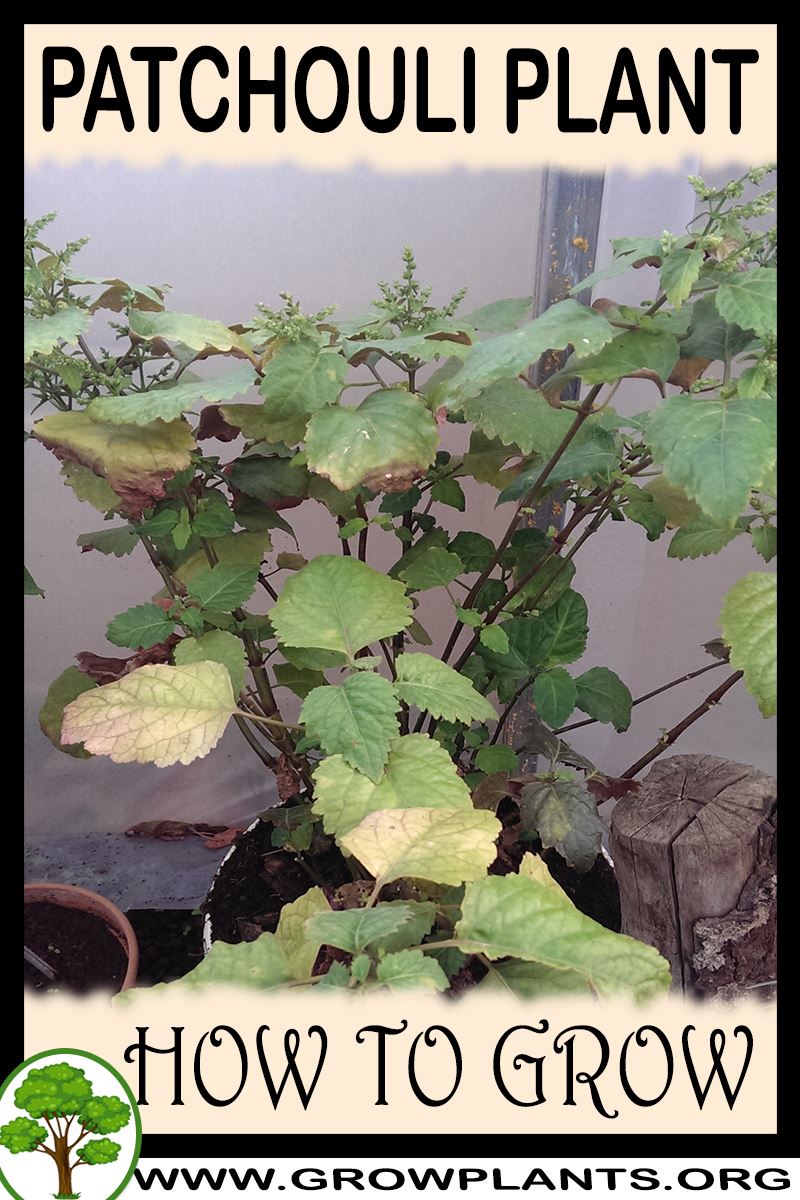
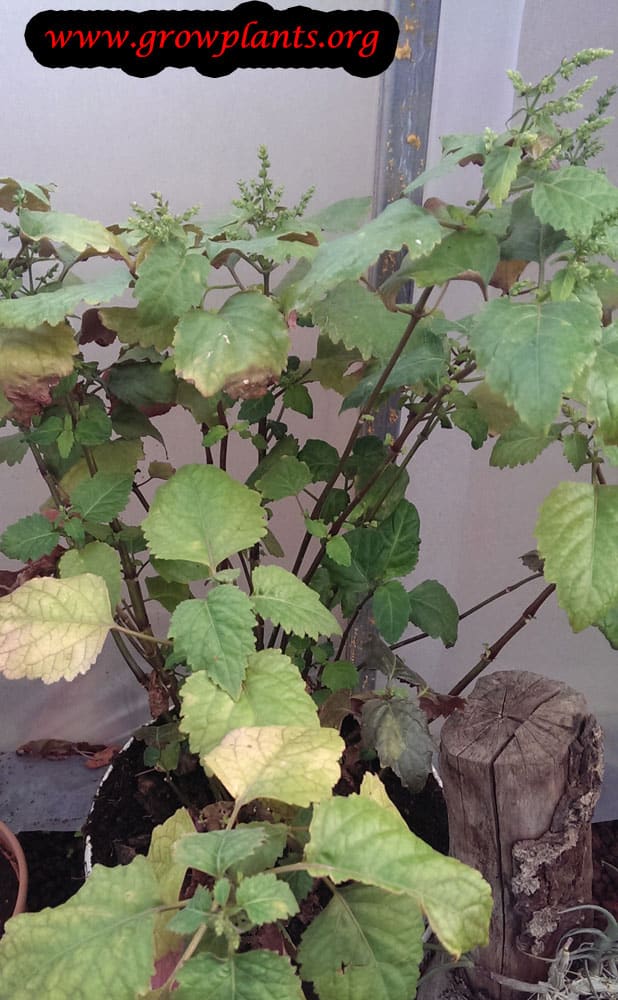
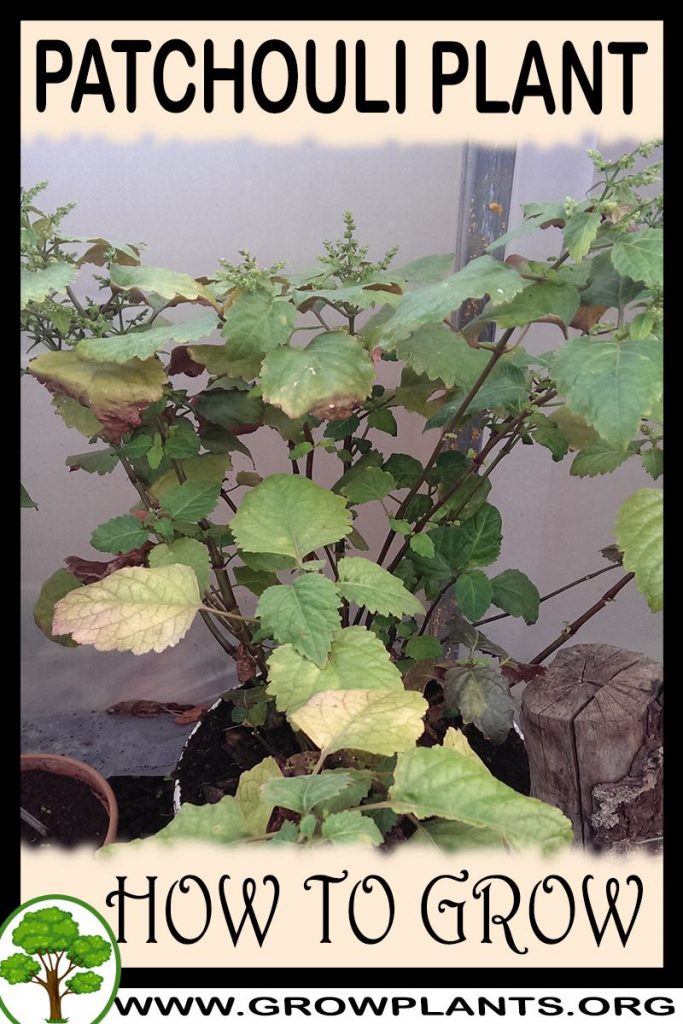
Overview: Patchouli (Pogostemon cablin) is an evergreen, aromatic herbaceous shrub growing 0.5-1 m (20-40 in) tall. This moderate-growing perennial is grown for its fragrant foliage – the source of patchouli oil – and as an ornamental.
Quick Specifications
| Specification | Attribute |
|---|---|
| Plant Type / Life Cycle | Perennial (evergreen herbaceous shrub) |
| Foliage Type | Evergreen |
| Mature Size | 0.5-1 m tall (20-40 in) |
| Growth Rate | Moderate |
| Hardiness | USDA zone 10+ |
Growth Form & Structure
- Height & Spread: A soft, bushy sub-shrub of 0.5-1 m (20-40 in); well suited to containers.
- Growth Habit & Form: Upright, spreading herbaceous shrub with square stems typical of the mint family.
- Lifespan & Maturity: Moderate growth; can be trimmed freely once established.
Anatomy & Physical Features
- Leaves & Foliage: Green, elliptic leaves with a serrated edge and a strong, distinctive aroma; edible as well as aromatic.
- Flower Characteristics: Small, fragrant pink-purple flowers borne on upright spikes in autumn.
Primary Uses & Landscape Value
- Edible Uses: Leaves used to flavour beverages and salads.
- Functional & Ornamental Roles: Grown commercially for essential oil (perfume and soap), and as a fragrant ornamental or container herb.
Care Guide: Planting, Soil & Watering
Overview: Patchouli likes warmth, humidity and rich, consistently moist soil in full sun to partial shade. It is a thirsty plant that prefers moderate to generous watering and should never be allowed to dry out.
Quick Care Requirements
| Requirement | Ideal Condition |
|---|---|
| Planting Season | Spring through autumn in warm, frost-free conditions |
| Growth Rate | Moderate |
| Soil Type | Rich, moisture-retentive but well-draining soil |
| Water Need | Moderate to high — keep the soil consistently moist |
Planting & Establishment
- Best Planting Season: Plant in the warm season from spring through autumn, once frost has passed, so it establishes in warm, humid conditions; it is tender and needs frost-free growing.
- How to Plant:
- Hole Preparation: Dig a hole about twice the width of the root ball and loosen the surrounding soil so roots spread easily through the rich bed.
- Soil Amendments: Work in plenty of compost and organic matter to build a rich, moisture-holding soil while keeping drainage free.
- Planting Depth: Set the plant at its original soil level, keeping the root collar at the surface and never burying the stem.
- Growth Speed & Expectations: A moderate grower that forms a bushy, aromatic herb up to about a metre tall in a single warm season.
Soil, Watering & Drainage Care
- Soil Mix & Drainage Needs: Use rich, humus-laden soil that holds moisture yet drains freely; in containers choose a quality potting mix and water often, as it wilts quickly if it dries out.
- Watering Schedule & Technique:
- Young / Newly Planted: Keep the soil evenly moist from planting on, watering whenever the surface begins to dry.
- Established: Water regularly and generously to maintain steady moisture, especially in heat; it does not tolerate drying out.
- Seasonal Adjustments: Water frequently through warm weather and ease back in cooler conditions, never letting the roots go bone dry.
Climate, Light & Hardiness
Patchouli is a frost-tender, fragrant evergreen shrub suited to tropical, subtropical, and Mediterranean climates, growing well in full sun to half shade. It needs essentially frost-free conditions, restricting reliable outdoor growth to USDA zone 10 and warmer.
Quick Climate Specifications
| Climate Zones | Tropical, subtropical, mediterranean |
|---|---|
| USDA Hardiness Zones | 10 and warmer |
| Light Conditions | Full sun to half shade |
| Frost Tolerance | Very low |
Sunlight & Light Exposure
Optimal Light Setup
Full sun to half shade both work; some afternoon shade in the hottest climates can help protect the aromatic foliage.
Temperature Extremes & Hardiness
USDA Hardiness & Regional Limits
Reliable outdoors only in essentially frost-free zone 10-and-warmer climates; elsewhere it needs to be grown as a container plant brought indoors or otherwise protected before cold weather arrives.
Frost Sensitivity
Cold-sensitive as a tropical species; even light frost is likely to damage or kill foliage.
Growing in Pots, Balconies & Indoors
Patchouli (Pogostemon cablin) is a tender, aromatic tropical herb that grows happily in a pot. The grower does not class it as a houseplant, but its love of warmth and its frost-tenderness make a pot genuinely useful: grow it outdoors in the warm season and bring it to a bright, warm windowsill to overwinter where frost threatens.
Quick Details
- Container Size: A medium pot of about 10-20 L for a 0.5-1 m bushy herb
- Indoor Suitability: Not a deep-room houseplant, but manageable on a bright, warm windowsill – especially for overwintering
- Best Spot: Full sun to half shade; warmth and humidity are key
- Soil & Drainage: Rich, moisture-retentive but free-draining mix
- Watering in Pots: Keep evenly moist – it wilts quickly when dry, but do not waterlog it; a drip irrigation kit with a timer can help strike that balance without daily guesswork
Indoors & On the Windowsill
- Windowsill & indoors: The grower marks it ‘no’ as a houseplant, but on a bright, warm sill it can be kept going – it likes humidity, so mist it or stand the pot on a damp pebble tray in dry indoor air.
- Overwintering: This is the main reason to pot it: patchouli is frost-tender, so in cold climates move the pot to a bright, warm, frost-free room over winter, keeping it just moist until warmth returns.
On a Balcony or Patio
- Light & warmth: On a balcony or patio give it a warm, sheltered spot with sun to light shade; it resents cold wind and drought.
- Watering: Pots dry fast in sun and wind, and patchouli hates drying out – check moisture often in warm weather.
Choosing the Pot, Soil & Long-Term Care
- Pot & drainage: A pot with strong drainage holes. Use a pot with strong drainage holes and skip a standing water saucer – constantly wet feet are the quickest route to root rot.
- Potting mix: A light, aerated, organic-rich potting mix – a peat- or coir-based blend with perlite or vermiculite for free drainage. It likes richness but must still drain freely.
- Feeding & pinching: Feed regularly in the growing season (feed lightly but more regularly through the growing season.); pinch the tips to keep it bushy and leafy.
Fertilizing & Feeding
Patchouli is an aromatic herb that does well on modest, balanced feeding – rich or heavy nitrogen feeding tends to push soft growth rather than the fragrant foliage the plant is grown for.
Quick Fertilizing Specs
| Feeding Level | Light to moderate – an aromatic herb grown mainly for its fragrant foliage |
|---|---|
| young_feeding | Light, balanced feeding while cuttings and young plants establish roots |
| mature_feeding | Modest, balanced feeding through the active growing season keeps foliage lush without diluting fragrance |
| Main Nutrient Priority | Balanced feeding with restrained nitrogen – heavy nitrogen can favor soft growth over fragrance |
| Best Feeding Period | Through the warm, humid active growing season |
| Organic Options | Compost or well-rotted organic matter worked into rich, moist soil suits this plant well |
| Micronutrients | No routine micronutrient program is typically needed for garden or container-grown patchouli |
| Soil pH | Prefers rich, consistently moist soil and tolerates a fairly wide pH range |
| Reduce/Stop Feeding | Ease off feeding as growth slows heading into cooler, shorter days |
Feeding by Growth Stage
Establishment From Cuttings or Young Plants
Support root development and early leaf growth while a new patchouli plant, often started from a cutting, gets established.
| Nutrient direction | Light, balanced feeding supports steady rooting and early growth without pushing overly soft foliage. |
|---|---|
| Timing | After planting or rooting, through the first flush of new growth. |
| Frequency | Light feeding is enough while the plant is still establishing. |
| Fertilizer types | A diluted, balanced fertilizer during establishment, Rich, moist, organic-matter-amended soil at planting |
| Precautions | Avoid heavy feeding on unrooted cuttings or very young plants, which can stress tender new roots. |
Active Growth
Support the lush, fragrant foliage growth patchouli is grown for through its warm-season active period.
| Nutrient direction | A balanced fertilizer with restrained nitrogen keeps growth full and healthy without favoring soft, diluted foliage. |
|---|---|
| Timing | Through the warm, humid active growing season. |
| Frequency | Light, regular feeding through the growing season suits this plant well. |
| Fertilizer types | A balanced, complete fertilizer applied at a light rate through the growing season, Organic feeding such as compost tea or diluted fish emulsion |
| Precautions | Heavy nitrogen feeding can push rapid, soft growth at the expense of the plant’s characteristic fragrance. |
Nutrient Deficiency Signs & Corrections
Overall foliage looks pale green to yellowish with slowed new growth.
| Possible causes | Nitrogen deficiency, Poor, depleted potting or garden soil, Overly wet or poorly drained soil limiting root function |
|---|---|
| Appears first on | Older leaves and overall plant color. |
| What to check | Soil richness and organic matter content, Drainage and soil moisture patterns, Recent feeding history |
| Possible correction | A light, balanced feeding with adequate nitrogen usually restores healthy color and growth. |
Older leaves show yellowing between the veins while the veins themselves stay green.
| Possible causes | Magnesium deficiency, Potassium-heavy feeding that has crowded out magnesium uptake, Leaching from very sandy or frequently watered soil |
|---|---|
| Appears first on | Older, lower leaves. |
| What to check | Recent fertilizer type and nutrient balance, Soil type and drainage or leaching, Whether yellowing follows an interveinal pattern |
| Possible correction | A balanced, complete fertilizer that includes magnesium, or a dedicated magnesium supplement per its label, typically resolves this. |
Leaf edges show a dry, scorched, or curling appearance on older leaves.
| Possible causes | Potassium deficiency, Inconsistent watering or drought stress, Salt buildup from over-fertilizing in containers |
|---|---|
| Appears first on | Older leaf margins. |
| What to check | Watering consistency, Container drainage and any salt crust on the soil surface, Recent feeding rate and frequency |
| Possible correction | Flush container soil to clear excess salts, then resume a light, balanced feeding routine. |
Pruning, Training & Seasonal Maintenance
Patchouli is a soft-stemmed, frost-tender subshrub grown almost entirely for its aromatic leaves, so “pruning” here really means regular tip-pinching and leaf harvest rather than shaping a woody plant. It tolerates frequent cutting extremely well and responds with denser, bushier growth – the main goals are to keep it compact, delay flowering (which slightly reduces leaf/oil quality), and avoid cutting hard right before cold weather since it is frost-sensitive outside hardiness zone 10+.
Quick Pruning & Maintenance Specs
| Pruning Tolerance | High (tip-pinching/harvest) |
| Primary Pruning Window | Year-round light pinching/harvest once established |
| Secondary Maintenance Window | Light rejuvenation cut-back in spring after any cold-season dieback |
| Typical Frequency | Every few weeks during active growth |
| Main Objective | Bushiness, leaf/oil harvest, delayed flowering |
| Young Plant Priority | Pinch growing tips early to force multiple branches |
| Mature Plant Priority | Rotational harvest cuts; rejuvenate if the base becomes woody or leggy |
| Best Tool Type | Fingers or precision snips |
| Avoid Heavy Pruning During | Cold snaps or near expected frost |
Pruning by Plant Age & Size
Newly Established
Pinch the growing tip once the plant has several sets of leaves to force early branching; avoid any hard cutback while roots are still establishing.
Young / Formative
No leader or vase-style training is used – repeated pinching of shoot tips is the only formative work, building a dense, multi-branched habit rather than a single stem.
Mature / Established
Rotate harvest cuts across the plant rather than stripping one side bare; cut back by up to a third during warm weather if the base becomes sparse or leggy.
Seasonal Pruning Schedule
| Ongoing Sanitary / Harvest (year-round in warm zones) | Objective: leaf/oil harvest and bushiness. Remove or harvest stem tips and any damaged foliage; do not strip a single stem completely bare. Response: rapid re-branching. No flowering impact, since flowering is not the goal for this foliage crop. |
| Pre-Growth / Early Spring | Objective: rejuvenate winter-leggy growth once frost risk has passed. Remove cold-damaged or blackened tips; avoid cutting into old wood before new growth shows. Response: fresh flush of aromatic foliage. |
Special Growth to Remove
- Spent flower spikes – optional deadheading redirects the plant’s energy back into leaf growth, since it is grown for foliage rather than bloom.
- Cold-damaged or blackened stem tips after a chill event.
Container & Small-Space Pruning
Patchouli is commonly grown in containers outside truly tropical zones so it can be moved under cover for winter. Pinch regularly to keep it compact in a pot, and give it a harder cut-back before bringing it indoors or into a greenhouse for the cold season to reduce size and refresh growth.
Tools
- Precision snips or bypass secateurs for routine tip-pinching and leaf harvest on soft stems.
Tool Hygiene & Disease Risk
Routine: clean, sharp tools are sufficient for normal harvest. Increased: patchouli is noted as susceptible to nematodes and fungal problems, so avoid working wet foliage and disinfect tools if any fungal symptoms are seen before moving to the next plant.
Cut Placement & Technique
Pinch or snip just above a leaf node on soft green stems; avoid tearing or crushing the stem, which invites rot in humid conditions.
Heavy Pruning & Rejuvenation
Tolerates a hard cut-back (up to half) during warm weather if the base has become woody and sparse, with vigorous regrowth expected. Avoid doing this shortly before a cold snap, since the tender new growth is frost-sensitive.
Post-Pruning Care
Water normally and watch cut ends for fungal rot in humid weather; no need for extra feeding after routine pinching, since this is already a medium-to-fast grower.
Common Pruning Mistakes
- Letting the plant flower and set seed before ever harvesting, which lowers leaf quality.
- Hard-pruning right before a cold snap and exposing tender new growth to frost damage.
- Cutting or harvesting wet foliage in humid weather, encouraging fungal problems.
When NOT to Prune
Avoid a major cut-back immediately before expected cold or frost, and avoid pruning during prolonged wet, humid conditions given the plant’s fungal susceptibility.
Recommended Tools (by task)
- precision_snips – routine tip-pinching and leaf harvest on soft stems.
- bypass_secateurs – occasional thicker, semi-woody basal stems on a mature plant.
- blade_disinfectant – wipe down between cuts if fungal symptoms are present, given the plant’s listed fungal susceptibility.
Propagation Guide
Patchouli (Pogostemon cablin) is normally propagated from stem cuttings. Vegetative propagation is the practical and reliable method because flowering and seed production are uncommon in cultivated patchouli.
Quick Propagation Specs
| Best Propagation Method | Stem cuttings |
| Seed Propagation | Not normally practical |
| Propagation Difficulty | Easy to moderate |
| Best Material | Healthy, semi-mature stems with several nodes |
| Growing Medium | Moist but well-drained |
| Early Conditions | Warm, humid conditions with protection from harsh sun |
Taking Stem Cuttings
Select vigorous, healthy stems from a disease-free parent plant. Use sections containing several nodes and remove leaves from the part of the stem that will be inserted into the rooting medium.
Rooting the Cuttings
Insert the lower nodes into a loose, well-drained growing medium. Keep the medium evenly moist and maintain humidity around the cuttings while roots form, but do not allow the substrate to remain waterlogged.
Light During Rooting
Protect newly planted cuttings from strong direct sun. Bright shade or filtered light helps reduce moisture stress until the root system is established.
Potting On
Once the cuttings have rooted and begun producing healthy new growth, transplant them carefully into individual containers or their permanent growing position.
Seed
Seed is not the normal propagation method for Pogostemon cablin because cultivated plants flower and set usable seed only rarely. Stem cuttings are therefore preferred for routine propagation.
Bloom & Flower Guide
Quick Details
- Bloom Season: Autumn
- Flower Appearance: Small, fragrant pink-purple flowers set closely along upright spikes
- Edibility: Grown for its aromatic leaves and oil – the flowers are used for fragrance, essential oil and soap, not as food
Detailed Blooming Overview
Patchouli is grown above all for its richly scented foliage, and in cultivation it often flowers only lightly, mainly in autumn. When it does bloom, it produces upright spikes of small pink-purple flowers that carry the same heady fragrance as the leaves. The scent – not the plate – is the point here: the flowers feed the essential-oil, perfume and soap trades rather than the kitchen.
Flower Characteristics
- Small pink-purple flowers packed along erect, spike-like inflorescences.
- Strongly and sweetly aromatic.
- Produced sparingly, mostly in warm, short-day conditions.
Bloom Care & Thinning
- Managing the bloom: For the best leaf and oil quality, plants are often pinched to stay bushy and are not grown on for heavy flowering.
Fruit & Uses
Only the leaves of patchouli are documented as edible on this page, used sparingly as a fresh flavoring herb or brewed as a beverage. The plant is grown chiefly for its strongly aromatic essential oil (perfumery, soap), so this culinary use should be treated as a minor, traditional one rather than a primary food.
Quick Edible Specs
| Edible Parts | Leaves |
|---|---|
| Main Use(s) | Minor culinary (flavoring herb, salad addition, beverage); primary plant use is oil/fragrance (not covered here) |
| Eaten Raw or Cooked | Raw (salad) or steeped (beverage) |
| Preparation Required | None beyond washing; use sparingly given the strong essential-oil content |
| Harvest Season | All year, once the plant is established |
| Safety/Toxicity Caveat | Leaves and oil are strongly aromatic; the plant’s oil is noted on this page as able to cause skin problems — handle and consume in small quantities |
Leaves & Greens
Leaves are green, elliptic in shape with a serrated edge. Once the plant is established it can be trimmed freely, any time of year. Leaves are used fresh in small amounts — added sparingly to salads for their strong aroma, or steeped as a beverage.
Harvesting
Trim leaves as needed once the plant is established; there is no defined season, but because this is a minor culinary use rather than a main crop, take only what you plan to use.
Preparation, Uses & Safety
Leaves are eaten fresh in small quantities as a flavoring/salad herb, or brewed as a beverage; no cooking is required. Caution: this page notes the plant can cause skin problems, consistent with its strongly aromatic, oil-rich foliage — use leaves sparingly and be mindful of skin sensitivity when handling them. The plant’s primary economic use is distillation of its essential oil for perfumery and soap, which is a separate use from the edible leaf noted here.
Pests, Diseases & Troubleshooting
Overview: Pogostemon cablin (patchouli) is an aromatic Lamiaceae herb grown for its scented oil, and its most damaging enemy is below ground: root-knot nematodes that gall the roots and sap vigor. Above ground it faces leaf-eating caterpillars and the usual soft-leaved sap-suckers, plus fungal leaf blight and wilt in humid, wet conditions. Manage with clean soil/stock, good drainage and airflow, and organic controls first.
Quick Troubleshooting Overview
| Issue / Pest | Main Symptom | Primary Solution |
|---|---|---|
| Root-knot nematode | Stunting, wilting, galled/knotted roots | Clean stock, rotation, marigold, soil solarization |
| Leaf-eating caterpillars | Chewed, ragged, holed leaves | Hand-pick, Bt spray |
| Whitefly & mealybugs | Sticky leaves, sooty mold, white fluff | Insecticidal soap, sticky traps |
| Leaf blight | Brown/grey spreading leaf spots in wet weather | Airflow, remove leaves, copper |
| Wilt | Sudden wilting and collapse of whole shoots | Improve drainage, rogue plants, clean tools |
Common Pests & Management
- Root-knot nematodes (Meloidogyne incognita):
- Symptoms: Above ground the plant is stunted, pale, and wilts in heat despite watering; below ground the roots carry the diagnostic knobbly galls and knots, reducing water and nutrient uptake and oil yield.
- Prevention & Control: Start with clean, nematode-free stock and soil; rotate away from other hosts, incorporate organic matter and antagonistic marigold (Tagetes), and solarize infested beds. Bio-nematicides based on Paecilomyces/Purpureocillium or neem cake help; avoid replanting into known infested ground.
- Leaf-eating caterpillars (Spodoptera litura, loopers (Chrysodeixis)):
- Symptoms: Irregular holes, ragged margins and skeletonized patches on the aromatic leaves, with frass, worst on lush young growth.
- Prevention & Control: Hand-pick and destroy larvae and egg masses, encourage birds and parasitic wasps, and spray Bacillus thuringiensis (Bt) on young caterpillars; spinosad in the evening handles heavier outbreaks.
- Whitefly (Bemisia tabaci):
- Symptoms: Tiny white flies lift from disturbed foliage, leaving sticky honeydew and sooty mold, and can transmit viruses.
- Prevention & Control: Use yellow sticky traps, encourage parasitoids, and spray insecticidal soap or neem to leaf undersides in the evening; keep plants unstressed and remove badly infested lower leaves.
- Mealybugs & aphids (Pseudococcus spp., Aphis gossypii):
- Symptoms: White cottony masses in leaf axils and green aphid colonies on shoot tips, with honeydew, sooty mold and curling of new growth.
- Prevention & Control: Hose off, swab mealybugs with alcohol, and encourage ladybirds and lacewings; insecticidal soap or neem controls persistent colonies. Manage attendant ants.
- Spider mites (Tetranychus urticae):
- Symptoms: Fine stippling and webbing on leaf undersides in hot, dry conditions, dulling and bronzing the foliage.
- Prevention & Control: Rinse foliage, raise humidity and airflow, and apply insecticidal soap or a light oil, repeating in heat.
Diseases & Fungal Issues
- Leaf blight / leaf spot (Cercospora / Colletotrichum spp.):
- Symptoms: Brown to grey angular or circular spots that enlarge and merge on the leaves in warm, humid, wet conditions, causing blighting and defoliation and cutting oil yield.
- Treatment & Management: Space plants and prune for airflow, avoid overhead watering, remove and bin affected leaves, and apply a copper or mancozeb fungicide preventively during prolonged wet weather; use clean, disease-free cuttings.
- Wilt disease (Ralstonia solanacearum (bacterial) / Fusarium (fungal)):
- Symptoms: Sudden, often one-sided wilting of shoots that does not recover with watering, followed by yellowing and collapse; browned vascular tissue inside stems.
- Treatment & Management: There is no cure once infected: rogue and destroy affected plants, avoid waterlogging, rotate crops, sterilize tools and pots, and replant clean stock in well-drained soil; solarize or amend heavily infested beds.
- Root rot (Pythium / Rhizoctonia spp.):
- Symptoms: Damping-off of young plants and blackening, rotting roots and stem base in wet, poorly drained soil.
- Treatment & Management: Grow in free-draining media, avoid overwatering, and use biofungicides such as Trichoderma; discard collapsed plants.
- Patchouli mottle / mosaic virus (Patchouli mottle virus (potyvirus)):
- Symptoms: Mottling, mosaic patterning, puckering and stunting of leaves, spread by aphids and infected cuttings, permanently reducing vigor and oil.
- Treatment & Management: Use only virus-free mother stock for cuttings, control aphid vectors, and rogue symptomatic plants; there is no chemical cure.
Growing Difficulties & Abiotic Problems
- Heat / drought wilting:
- Cause & Symptoms: As a soft-leaved herb, patchouli wilts quickly in strong sun and dry soil, and prolonged stress checks growth and oil.
- Correction Strategy: Grow in light shade in hot climates, keep the soil evenly moist with mulch, and shelter from harsh midday sun and drying wind.
- Cold sensitivity:
- Cause & Symptoms: Patchouli is frost-tender; cold blackens foliage and kills the plant outright.
- Correction Strategy: Grow as a warm-season crop or under protection, and take cuttings to overwinter frost-free.
- Leggy, oil-poor growth:
- Cause & Symptoms: Deep shade or excess nitrogen gives soft, sprawling, low-oil foliage.
- Correction Strategy: Give bright light (with midday shade only in the hottest sites), feed in balance, and pinch to keep growth bushy and leafy.
- Nutrient deficiency:
- Cause & Symptoms: Poor, exhausted soil yellows leaves and lowers oil content.
- Correction Strategy: Feed with balanced, organic-rich nutrition and adequate potassium; maintain soil organic matter for steady leaf production.
What Helps – Products & Tools
Clean stock, drainage and airflow are the foundation. Useful inputs are bio-nematicides / neem cake and marigold companion planting for root-knot nematode, Bacillus thuringiensis (Bt) and spinosad for caterpillars, insecticidal soap / neem and yellow sticky traps for whitefly, mealybugs, aphids and mites, and copper / mancozeb fungicide plus Trichoderma for leaf blight and root rot.
Frequently Asked Questions
What is patchouli?
Patchouli (Pogostemon cablin) is a tender, evergreen aromatic herbaceous shrub growing 0.5-1 m (20-40 in) tall. It is grown for its strongly fragrant leaves, the source of the classic essential oil used in perfumes and incense.
How do you grow patchouli?
Grow patchouli in full sun to partial shade with warmth and humidity, in rich, consistently moist soil that still drains well – it is a thirsty plant that should never be allowed to dry out. Plant it in the warm season from spring through autumn, once frost has passed, since it is tender and needs frost-free growing. It needs essentially frost-free conditions, restricting reliable outdoor growth to USDA zone 10 and warmer.
Can patchouli be grown in a pot or indoors?
Yes – patchouli is a tender, aromatic tropical herb that grows happily in a pot, though it is not classed as a true houseplant. Because it loves warmth and is frost-tender, grow it outdoors in the warm season and bring it to a bright, warm windowsill to overwinter where frost threatens. Use a medium pot of about 10-20 L for a 0.5-1 m bushy herb, and keep the soil evenly moist, since it wilts quickly when dry.
How is patchouli propagated?
Patchouli is normally propagated from stem cuttings rather than seed, since cultivated plants flower and set usable seed only rarely. Take healthy stem sections with several nodes, insert the lower nodes into a loose, well-drained growing medium, and protect newly planted cuttings from strong direct sun until roots form.
What are the main pests and diseases that affect patchouli?
The biggest threat to patchouli is below ground: root-knot nematodes that gall the roots and sap the plant’s vigor. Above ground it also faces leaf-eating caterpillars and the usual soft-leaved sap-suckers, plus fungal leaf blight and wilt in humid, wet conditions. Manage it with clean soil and stock, good drainage and airflow, and organic controls first.