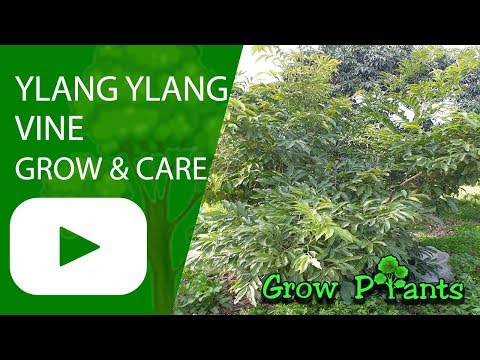

Plant Profile & Key Characteristics
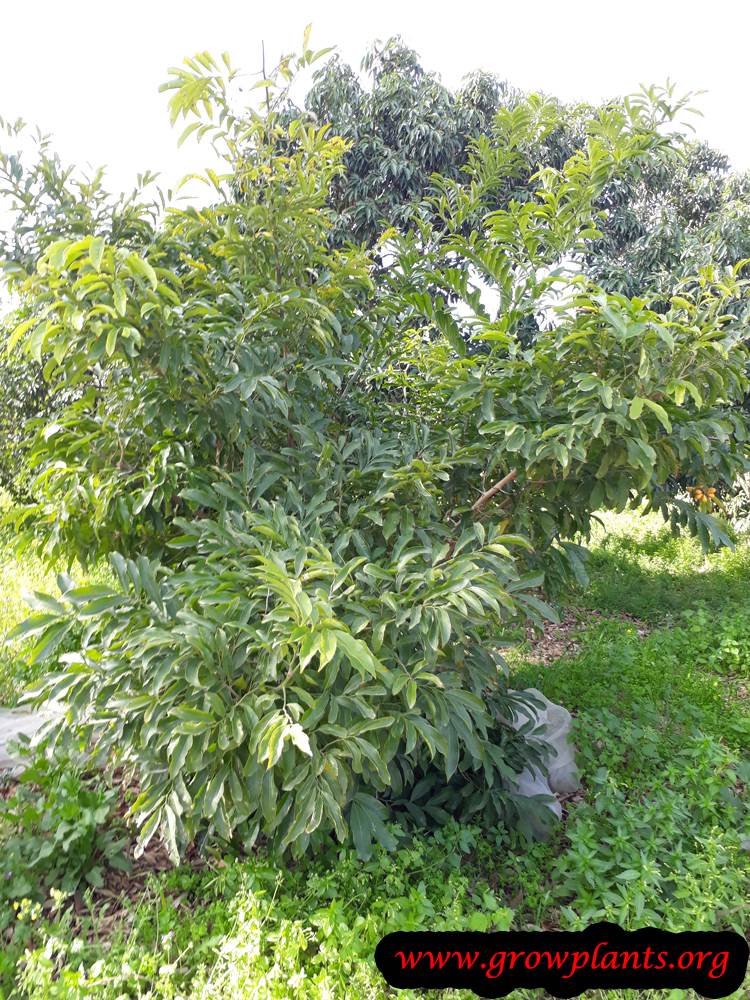
Overview: Ylang ylang vine (Artabotrys hexapetalus) is an evergreen woody climber or scrambling shrub reaching about 2-5 m (6-15 ft), grown chiefly for its intensely fragrant yellow flowers. It is used as a scented ornamental, a hedge or screen, and occasionally for its small edible fruit.
Quick Specifications
| Specification | Attribute |
|---|---|
| Plant Type / Life Cycle | Perennial (woody) |
| Foliage Type | Evergreen |
| Mature Size | 2-5 m (6-15 ft) |
| Growth Rate | Moderate |
| Hardiness | USDA 10+ (tolerates only light frost) |
Growth Form & Structure
- Height & Spread: 2-5 m (6-15 ft), climbing or scrambling where support is available; can also be grown in a large container.
- Growth Habit & Form: Evergreen woody climber or vine (can be trained as a shrub) that clings by hooked, woody flower stalks.
- Lifespan & Maturity: Long-lived perennial; fruiting begins about 2-4 years from planting.
Anatomy & Physical Features
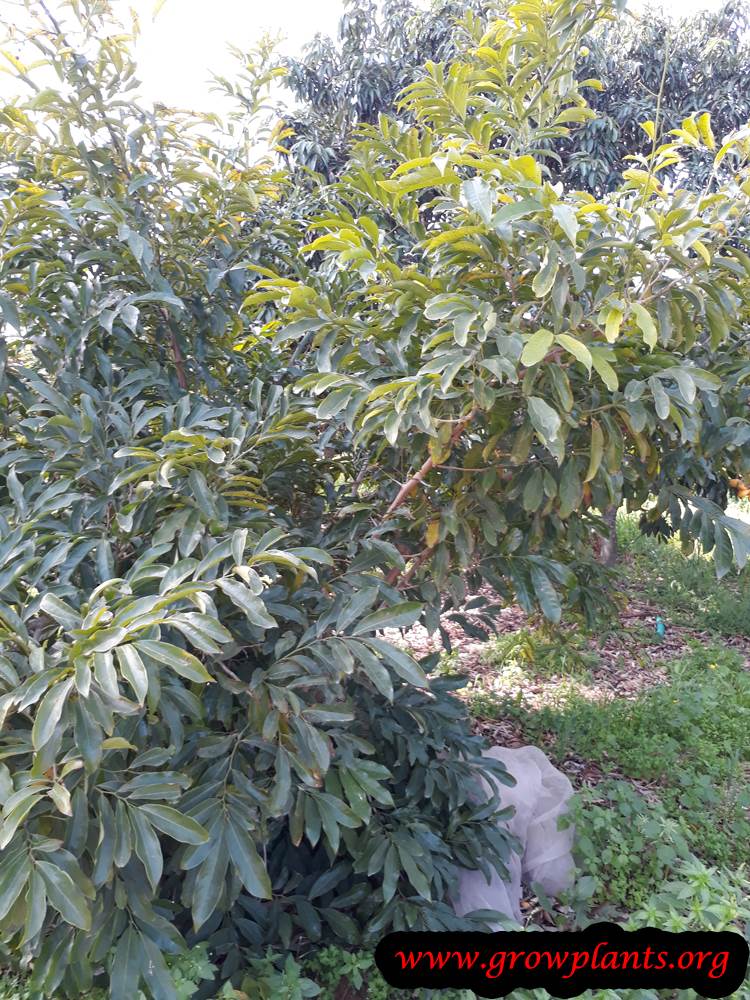
- Leaves & Foliage: Glossy, waxy, elliptic green leaves.
- Flower Characteristics: Waxy, highly fragrant yellow flowers with six petals (three inner, three outer); the source of the plant’s perfume-like scent.
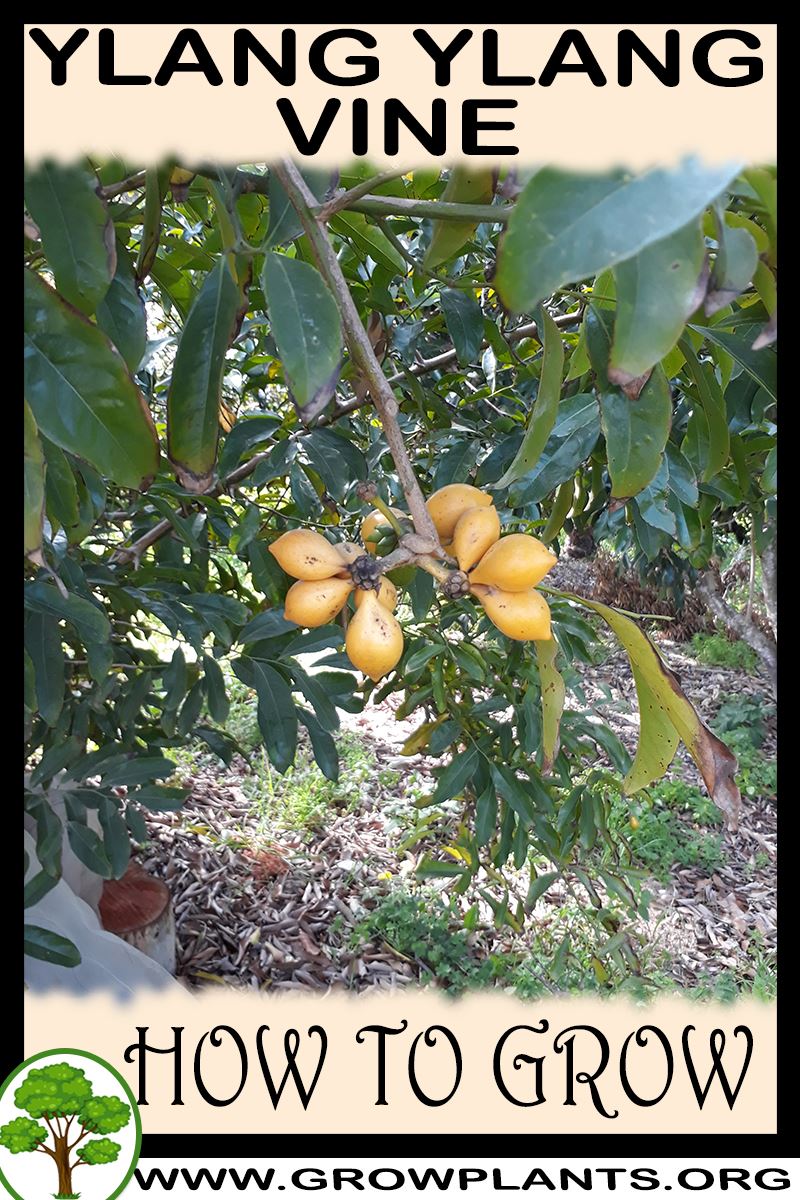
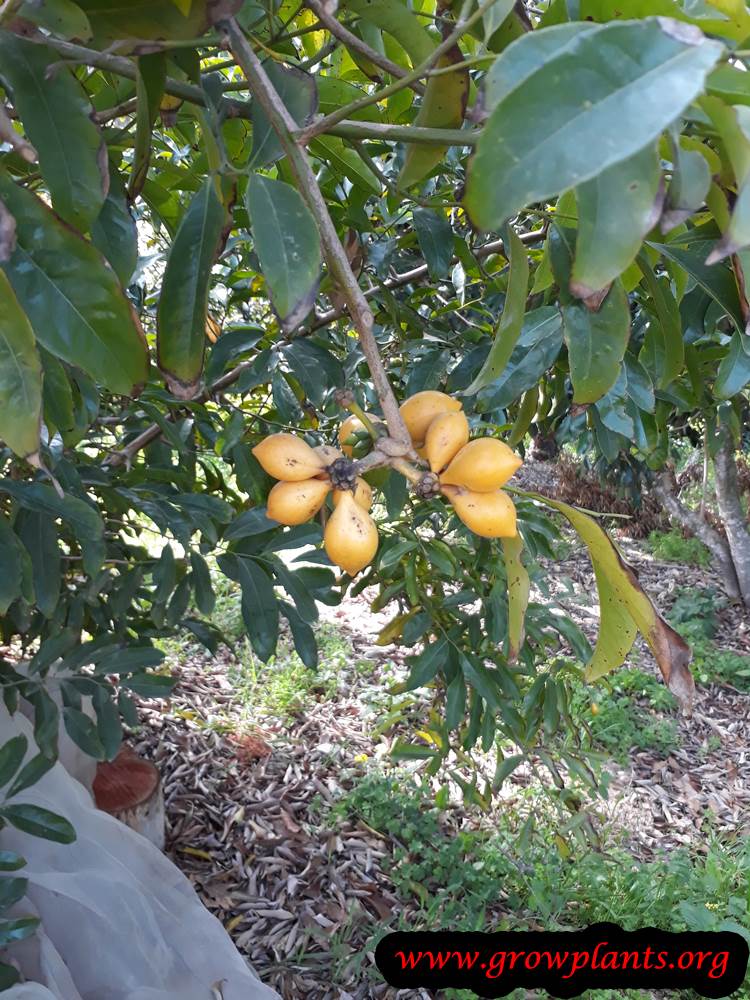
- Fruit Profile: Small yellow fruit about 2-5 cm, edible but rarely eaten.
Primary Uses & Landscape Value
- Edible Uses: The fruit is edible (eaten fresh or made into jam) but is seldom used.
- Functional & Ornamental Roles: Fragrant ornamental climber grown as a hedge or screen and to scent gardens and rooms; the flowers are used in perfumery. Can be vigorous to invasive in suitable climates.
Care Guide: Planting, Soil & Watering
Overview: Climbing ylang-ylang is a tender tropical vine that grows best in full sun to light shade in fertile, well-draining, slightly acidic soil, in frost-free (zone 10+) gardens. It likes warmth and steady, moderate moisture, and tolerates only the very lightest brief frost.
Quick Care Requirements
| Requirement | Ideal Condition |
|---|---|
| Planting Season | Cooler, milder months — spring, autumn or winter, avoiding peak summer heat |
| Growth Rate | Moderate |
| Soil Type | Fertile, well-draining soil rich in organic matter |
| Soil pH | Slightly acidic |
| Water Need | Moderate — keep evenly moist in warmth; avoid both drying out and waterlogging |
Planting & Establishment
- Best Planting Season: Plant in the milder parts of the year — spring, autumn or winter — in a warm, sheltered, frost-free spot, avoiding the fiercest summer heat.
- How to Plant:
- Hole Preparation: Dig a hole a little wider than the root ball beside its support, in a warm, sunny to lightly shaded position.
- Soil Amendments: Enrich the backfill with compost or organic matter, and ensure the soil is loose and free-draining.
- Planting Depth: Set the plant with its root collar level with the soil surface; do not bury the stem.
- Growth Speed & Expectations: Moderate — it climbs and spreads to about 2-5 m, 6-15 feet and needs a sturdy support or framework to scramble over as a vine.
Soil, Watering & Drainage Care
- Soil Mix & Drainage Needs: It wants fertile, organic-rich yet free-draining soil that stays lightly moist — the source notes it prefers slightly acidic ground. Avoid heavy waterlogged soils, and in containers use a rich, free-draining mix with ample drainage holes.
- Watering Schedule & Technique:
- Young / Newly Planted: Water regularly to keep the soil evenly moist while the young vine establishes in warmth.
- Established: Water moderately and deeply, letting the surface dry slightly between waterings but never allowing the plant to dry out fully.
- Seasonal Adjustments: Water more freely in hot, active growth; reduce watering in the cooler season when growth slows.
Climate, Light & Hardiness
Ylang ylang vine grows as a shrub or climbing vine in tropical, subtropical, and Mediterranean climates in full sun to half shade, and can survive only light frost. It needs a genuinely warm, sheltered site to avoid winter cold damage.
Quick Climate Specifications
| Climate Zones | Tropical, Subtropical, Mediterranean |
|---|---|
| USDA Hardiness Zones | 10+ |
| Frost Tolerance | Low (can survive light frost only) |
| Light Conditions | Full Sun to Half Shade |
Sunlight & Light Exposure
Optimal Light Setup
Full sun to half shade.
Direct Sun Requirement
Beneficial but flexible.
Best Exposure / Orientation
A warm, sheltered site, ideally against a wall or trellis that buffers winter cold.
Temperature Extremes & Hardiness
USDA Hardiness & Regional Limits
Zone 10+ places it among the more cold-tender species in this group.
Cold Damage & Winter Protection
Can survive only light frost, per source data – anything beyond that is likely to cause damage; site in the warmest, most sheltered spot available.
Frost Sensitivity
Low frost tolerance overall, with only light frost survivable.
Extreme Heat Tolerance
Good in genuinely tropical/subtropical/Mediterranean heat.
Wind, Humidity & Microclimate
Rainfall & Seasonal Moisture
Suited to tropical, subtropical, and Mediterranean rainfall patterns.
Microclimate Recommendations
A warm, sheltered microclimate (e.g. a south-facing wall) helps push this species through occasional light frosts.
Growing in Pots, Balconies & Indoors
The ylang ylang vine (Artabotrys hexapetalus) is a scrambling climber of 2-5 m (6-15 ft). The grower confirms it can be grown in a container but is not a houseplant – and note it can be invasive, so a pot is a good way to keep it in check.
Quick Details
- Container Size: A roomy tub (30-50 L / 8-13 gal) with a trellis or support
- Indoor Suitability: Not a houseplant; grow it outdoors
- Best Spot: Full sun to half shade
- Soil & Drainage: Rich, free-draining mix
- Watering in Pots: Average – keep evenly moist, never waterlogged
Indoors & On the Windowsill
- Houseplant limits: Not a houseplant – it is a vigorous climber that needs good light and room to scramble.
- Overwintering: A potted vine can be sheltered in a bright, frost-free spot for the cool season in cold climates.
- Containing its spread: Because it can be invasive, a pot helps limit its roots and reach.
On a Balcony or Patio
- Light, support & exposure: Give it a sunny, sheltered spot with a sturdy trellis. Pots dry fast in sun and wind, so check moisture regularly.
Choosing the Pot, Soil & Long-Term Care
- Pot & drainage: Use a pot with plenty of drainage holes; skip a standing water saucer to avoid root rot. Terracotta breathes and dries faster, while glazed or plastic pots hold moisture longer.
- Potting mix: A well-aerated, organic-rich mix – peat or coir blended with perlite or vermiculite for drainage.
- Feeding: Potted plants need feeding more often than those in the ground, as nutrients leach out with each watering – feed lightly through the active growing season.
- Repotting: Refresh the mix or pot up about every two years; for an established specimen, replace part of the soil and lightly prune the roots and top growth.
Fertilizing & Feeding
Ylang ylang vine (climbing ylang ylang) is grown mainly for its waxy, fragrant yellow flowers; it grows vigorously enough to be considered invasive in some areas, so light, restrained feeding suits it better than a heavy program.
Quick Fertilizing Specs
| Feeding Level | Light; this vine already grows vigorously and can spread aggressively without extra encouragement. |
|---|---|
| Main Nutrient Priority | Balanced, restrained nutrition that supports the fragrant flower display without pushing excess vine growth. |
| Best Feeding Period | During the active growing season. |
| Organic Options | Working organic matter into the soil at planting suits this vine well. |
| Reduce/Stop Feeding | Skip feeding altogether where the vine is already spreading vigorously, since it doesn’t need encouragement to grow. |
Feeding by Growth Stage
Establishment
Help a newly planted ylang ylang vine root in and put out its first waxy, elliptic leaves along its climbing or hedge framework.
| Nutrient direction | Light, balanced nutrition focused on root establishment rather than pushing top growth. |
|---|---|
| Timing | In the weeks after planting, while the vine is still becoming established. |
| Frequency | A light feeding at planting is usually enough to help this vine establish. |
| Fertilizer types | A balanced complete fertilizer used lightly, Organic matter worked into the soil at planting |
| Precautions | Avoid heavy feeding at planting, since this species already grows vigorously and can become invasive if encouraged further. |
Active growth and bloom
Support the tree’s waxy, six-petaled, fragrant yellow flowers, prized for their scent, without fueling excess vine spread.
| Nutrient direction | Light, balanced nutrition; avoid heavy or nitrogen-forward feeding, which would push more vine growth than flowering. |
|---|---|
| Timing | Through the active growing season and into the autumn-to-winter bloom period. |
| Frequency | Light, infrequent feeding is usually enough to support flowering on this vigorous grower. |
| Fertilizer types | A balanced complete fertilizer used sparingly, For hedge or trained plants, occasional light feeding paired with regular pruning to control size |
| Precautions | Regular pruning to control this vine’s spread is at least as important as feeding; avoid feeding heavily where it is already growing aggressively. |
Nutrient Deficiency Signs & Corrections
The vine grows vigorously but produces few of its fragrant yellow flowers.
| Possible causes | Excess nitrogen favoring vine growth over flowers, Insufficient sun for good bud formation, Heavy, unpruned growth shading out flowering wood |
|---|---|
| Appears first on | Overall flowering across the plant. |
| What to check | Recent nitrogen-heavy feeding, Sun exposure, Whether the vine has been pruned recently |
| Possible correction | Ease back on nitrogen, confirm adequate sun, and prune to open up the plant and encourage flowering wood. |
Leaves look pale and new growth is noticeably slower than this vine’s normally vigorous pace.
| Possible causes | A general nutrient shortage on very poor soil, Waterlogged or poorly draining soil, Insufficient light |
|---|---|
| Appears first on | New growth across the plant. |
| What to check | Soil drainage, Light exposure, Overall soil fertility |
| Possible correction | Confirm drainage and light are adequate; if pale, slow growth persists, a light balanced feeding is usually enough to correct it. |
Pruning, Training & Seasonal Maintenance
This climbing relative of true ylang ylang is a light-touch pruning plant — its own guidance simply calls for cutting for design and removing dead parts, tolerated at any time of year. The one real caution flagged in its own facts is that it is invasive, so canopy and spread control matter more here than for most plants in this set; Artabotrys species are also known to climb by hooking their flower stalks over supports, making trellis training a genuine structural consideration rather than just tidying.
Quick Pruning & Maintenance Specs
| Pruning Tolerance | High (tolerated any time of year for light, design-focused cuts) |
| Primary Pruning Window | Any time (all year, per the plant’s own facts) |
| Typical Frequency | As-needed, ongoing |
| Main Objective | Control spread (invasive tendency); shape/design; remove dead growth; direct climbing growth onto its support |
| Young Plant Priority | Establish the trellis/support and start training climbing growth onto it early |
| Mature Plant Priority | Ongoing spread control and design shaping |
| Best Tool Type | Bypass secateurs/precision snips |
| Avoid Heavy Pruning During | The autumn–winter bloom, to protect the fragrant flower display |
Pruning by Plant Age & Size
Newly Established
Minimal pruning; remove only damaged growth, and begin tying leading shoots to a support.
Young / Formative
Train the climbing/scrambling growth onto a trellis or support, since this species climbs partly by hooking its flowering stalks over whatever it can reach. Remove any growth heading away from the intended support to prevent it spreading into surrounding plantings — a real risk given its documented invasiveness.
Mature / Established
Ongoing spread control — cut back growth that has escaped the trellis or hedge line, plus routine design and dead-wood removal.
Seasonal Pruning Schedule
Ongoing Sanitary (year-round, per the plant’s own “all year” pruning season)
Objective: remove dead parts and shape as needed. Because bloom is autumn–winter, a lighter touch through that specific period helps preserve the fragrant flower display, even though the plant tolerates cutting at other times.
Flowering & Fruiting Wood
Flowers form on new growth through the autumn–winter bloom period. Light, ongoing pruning outside that window — rather than one concentrated hard cut right before bloom — is the more cautious approach to avoid removing the current season’s flowering wood. Fruit is edible but the plant’s own facts note it is almost never used for that purpose, so this module treats flowering (for fragrance/perfume use) as the priority, not fruiting wood.
Structural Pruning & Training
Spread and size control is a genuine priority given this species’ documented invasive tendency — left untrained it will scramble well beyond a hedge or trellis line. Train climbing growth onto a support using its hooked flower-stalk climbing habit rather than fighting it; it can also be maintained as a clipped hedge per its own description.
Special Growth to Remove
- Any growth that has escaped its trellis/support and is scrambling into neighboring plants or spreading beyond its intended footprint — a priority given the plant’s noted invasiveness.
- Dead parts, at any time.
Container & Small-Space Pruning
Container growing is possible and is actually a useful way to manage this species’ invasive tendency by containing the root system. It still needs regular pruning to keep climbing growth on its support rather than spreading over the container’s edge into the ground.
Tools
- bypass_secateurs — routine design and dead-growth removal.
- precision_snips — fine shaping of the waxy flowering stems.
- soft_ties_stakes — training climbing growth onto a trellis/support.
Tool Hygiene & Disease Risk
Routine — clean, sharp tools. Recorded pest pressure is aphids, not a documented tool-spread disease.
Cut Placement & Technique
Thinning cuts back to a main stem or the trellis line for wayward/escaped growth. Avoid leaving long stubs, since this scrambling climber will simply resume growing outward from any cut end left too long.
Heavy Pruning & Rejuvenation
Tolerated well, given the “all year” pruning allowance in the plant’s own facts. A hard cut-back is a reasonable way to regain control of an overgrown, spread-out specimen given its invasive tendency, with vigorous regrowth expected.
Post-Pruning Care
Routine watering; no special feeding tied to pruning. Monitor regrowth closely given the species’ invasive tendency, since vigorous new growth is exactly what needs to be kept in check.
Common Pruning Mistakes
- Letting the plant scramble unchecked given its documented invasiveness, rather than pruning proactively to contain spread.
- Cutting hard right through the autumn–winter bloom and losing the fragrant flower display.
- Leaving long stubs on cut stems, which this scrambling climber will simply regrow from.
When NOT to Prune
Avoid heavy cuts during the autumn–winter bloom period to preserve the fragrant flower display; otherwise this species tolerates pruning at any time.
Recommended Tools (by task)
- Routine design shaping and dead-growth removal: bypass_secateurs — suits the light, frequent, year-round pruning this species is described as tolerating.
- Training and re-directing climbing growth onto a support: soft_ties_stakes — needed given this species’ hook-and-scramble climbing habit and documented invasive spread.
Pruning Troubleshooting
| Problem | Possible Cause | What to Check | Corrective Action |
| Plant spreading beyond its intended area | Invasive growth habit left unchecked | Growth escaping the trellis/hedge line into surrounding beds | Cut back escaped growth promptly and reinforce training onto its support; consider container growing to limit spread |
| Reduced flowering after a hard cut-back | Pruning removed the current season’s flowering wood right before autumn–winter bloom | Timing of the last hard prune relative to bloom season | Shift heavier cuts outside the bloom window going forward |
Propagation Guide
Ylang ylang vine can be grown from seed, which the site lists as the standard method, with vegetative reproduction noted only in passing and grafting explicitly said to be unnecessary. Site detail for this species is minimal, so this guide stays cautious and general; difficulty is best estimated as Moderate.
Quick Propagation Specs
| Best Propagation Method | Seed |
| Alternative Methods | Vegetative reproduction – noted by the site without further detail; semi-hardwood cuttings are a plausible general option for a woody vine of this type |
| Propagation Difficulty | Moderate |
| Vegetative True-to-Type | Yes, if propagated vegetatively, though the site gives no specific method |
| Best Propagation Season | The site’s general planting season is spring, autumn and winter |
Growing from Seed
Seed Handling & Viability
The site gives no specific seed-handling instructions for this species. As a general, cautious note not stated by the site, relatives in the custard-apple family (Annonaceae) often have a hard seed coat and can benefit from soaking before sowing to improve and even out germination.
Sowing Season
The site’s general planting season – spring, autumn and winter – is the best available guide for sowing timing, though it is not stated specifically as a sowing season.
Germination
The site does not document germination time, temperature or sowing depth for this species; treat any timing as undocumented rather than assume a specific figure.
Bloom & Flower Guide
Quick Details
- Bloom Season: Autumn to winter
- Flower Appearance: Waxy yellow flowers with six petals – three inner and three outer; strongly fragrant
- Edibility: The flower is not eaten; it is prized for its powerful sweet fragrance and used in perfume and to scent the home
Detailed Blooming Overview
Climbing ylang ylang is grown above all for its scent. The waxy yellow six-petaled flowers release a rich, sweet fragrance, especially as they mature, which is why the blooms are cut to perfume rooms and used in perfumery.
Flower Characteristics
- Waxy yellow flowers with six petals – three inner and three outer.
- Strongly and sweetly fragrant.
Bloom Care & Thinning
- Pollination: Mainly bees.
- Flower uses: The blooms are cut to scent rooms and are used in perfume-making.
Fruit & Uses
Note: the site’s own description is explicit that although this vine’s small fruits are technically edible, they are “almost never” eaten in practice – the plant is grown for its fragrant flowers, not as a food crop. Where used, fruit is eaten raw or made into jam.
Quick Edible Specs
| Edible Parts | Fruit (rarely used as food) |
|---|---|
| Main Use(s) | Occasional fresh eating or jam – not a practiced food use |
| Eaten Raw or Cooked | Raw or cooked, per site data |
| Preparation Required | Deseed – fruit contains small seeds |
| Harvest Season | Spring |
| Time to First Harvest | A few years after planting – see Propagation |
| Storage | Not documented; not a fruit grown for storage |
| Safety/Toxicity Caveat | No specific toxicity noted, but this is explicitly an almost-never-used food source – do not treat as an established edible crop |
Fruit
The fruit is yellow, about 2-5 cm, with small seeds inside, ripening in spring. Harvesting is simply a matter of collecting fruit from the vine, but this is rarely done in practice, since the plant is grown for its waxy, fragrant flowers rather than for food.
Preparation, Uses & Safety
On the rare occasions the fruit is eaten, it is used raw or cooked into jam, with the small seeds removed. Because this use is explicitly marginal (per the site’s own description), it should not be presented as an established or recommended food source – the vine’s real value is ornamental and fragrant, covered separately.
Pests, Diseases & Troubleshooting
Overview: This tropical climbing shrub (Annonaceae, the custard-apple family) is not widely documented for pests, but like its relatives it is chiefly troubled by sap-sucking insects – mealybugs and soft scale that colonise stems, leaf axils and flower buds – along with fungal leaf spot and, above all, root rot in poorly drained tropical soils. Grown ornamentally it is generally hardy and fragrant; watch for the usual warm-climate and greenhouse sap-suckers and keep its feet from staying wet.
Quick Troubleshooting Overview
| Issue / Pest | Main Symptom | Primary Solution |
|---|---|---|
| Mealybugs | White cottony masses in leaf axils; sticky honeydew | Wipe/dab off; insecticidal soap or oil |
| Soft & armoured scale | Brown bumps on stems; sooty mould | Prune out; horticultural oil |
| Aphids | Distorted, sticky new shoots | Water blast; insecticidal soap |
| Spider mites | Stippling and webbing in heat / indoors | Raise humidity; horticultural oil |
| Leaf spot / anthracnose | Brown-black blotches on leaves | Improve airflow; remove leaves |
| Root / collar rot | Wilting, yellowing, blackened roots in wet soil | Sharp drainage; ease off watering |
Common Pests & Management
- Mealybugs (Planococcus citri / Pseudococcus spp.):
- Symptoms: Soft, oval insects coated in white waxy “cotton wool” that cluster in leaf axils, on stems and around flower buds, sucking sap to weaken and yellow growth and excreting honeydew that turns black with sooty mould. The prime pest of Annonaceae under cultivation.
- Prevention & Control: Wipe or dab colonies off with a cotton bud dipped in soapy water or diluted alcohol, and hose down accessible growth. Encourage or introduce mealybug destroyers (Cryptolaemus) and lacewings; spray insecticidal soap or horticultural/neem oil thoroughly, repeating to catch new hatches.
- Soft & armoured scale (Coccus hesperidum / Saissetia / Aspidiotus spp.):
- Symptoms: Small immobile brown, tan or blackish bumps stuck along stems, leaf veins and undersides; soft scales drip honeydew and breed sooty mould, while armoured scales cause yellow spotting, dieback and leaf drop.
- Prevention & Control: Prune out and destroy heavily encrusted shoots and scrub off light infestations. Smother the vulnerable crawler stage with horticultural or neem oil, repeating as needed; conserve parasitic wasps and predatory beetles that keep scale in check.
- Aphids (Aphis spp.):
- Symptoms: Clusters of soft green or black insects on the softest new shoots and buds, distorting growth and coating it in sticky honeydew and sooty mould; they can also transmit viruses.
- Prevention & Control: Dislodge with a jet of water and support ladybirds, lacewings and hoverflies. Treat persistent colonies with insecticidal soap or neem oil, spraying under the leaves in the cool of the evening.
- Spider mites (Tetranychus urticae):
- Symptoms: Fine pale stippling and a bronzed, dusty look to the leaves with delicate webbing underneath, worst in hot, dry air and especially on plants grown under glass or indoors.
- Prevention & Control: Raise humidity, mist and hose the foliage, and avoid drought stress. Introduce predatory mites under cover, and use insecticidal soap or horticultural oil with good underside coverage for heavy infestations.
Diseases & Fungal Issues
- Fungal leaf spot & anthracnose (Colletotrichum / Cercospora spp.):
- Symptoms: Brown to black spots and blotches on the leaves, sometimes with yellow halos or dark sunken anthracnose lesions on leaves and stems, worst in warm, wet, humid conditions and crowded growth.
- Treatment & Management: Remove and destroy spotted leaves, improve airflow by thinning and training the vine, and water at the base rather than overhead. A copper-based fungicide protects new growth where spotting is persistent.
- Root and collar rot (Phytophthora / Pythium spp.):
- Symptoms: Wilting and yellowing despite moist soil, dieback of shoots, and dark, soft, blackened roots and stem base – driven by waterlogged, heavy or poorly drained soil and overwatering.
- Treatment & Management: Prevent it culturally: plant in free-draining soil, avoid waterlogging, and let the surface dry between waterings. Remove badly affected plants; improving drainage and easing off water is far more effective than any fungicide.
- Sooty mould (Capnodium spp.):
- Symptoms: A superficial black, soot-like coating over leaves and stems that grows on the honeydew dropped by mealybugs, scale and aphids, blocking light and dulling the plant rather than infecting it directly.
- Treatment & Management: Control the underlying sap-sucking pests and the mould fades; wipe or wash off the black film from prized foliage. Improving airflow and reducing honeydew is the real fix.
Growing Difficulties & Abiotic Problems
- Cold and frost damage:
- Cause & Symptoms: A tropical plant, it is frost-tender; cold snaps blacken and drop leaves and can kill unprotected growth, and it sulks in cold, wet conditions.
- Correction Strategy: Grow in a frost-free spot, under glass or as a container plant that can be moved in for winter in cool climates; protect from cold drying winds and keep it warm and bright.
- Overwatering root rot:
- Cause & Symptoms: Standing water and constantly soggy soil suffocate the roots and invite rot, showing as wilting, yellowing and dieback even while the soil is wet.
- Correction Strategy: Plant in rich but free-draining soil, water thoroughly then allow the surface to dry, and never leave pots standing in saucers of water. Ensure containers drain freely.
- Lime-induced chlorosis:
- Cause & Symptoms: In alkaline or chalky soils the leaves yellow between the veins as iron becomes unavailable, weakening the plant.
- Correction Strategy: Grow in neutral to slightly acidic, humus-rich soil; correct with chelated iron and acidic organic matter, and mulch to keep the root zone cool and evenly moist.
- Poor flowering / weak fragrance in low light:
- Cause & Symptoms: In too much shade the vine grows leafy but flowers sparsely and its prized fragrance is muted.
- Correction Strategy: Give it bright light with some direct sun, feed moderately in the growing season, and train and lightly prune to encourage flowering wood.
What Helps – Products & Tools
Focus on the sap-suckers with gentle tools first: insecticidal soap, horticultural or neem oil, and a cotton bud with diluted alcohol for mealybugs, plus a systemic option only for stubborn scale under cover. For disease, copper fungicide addresses leaf spot and the real defence against root rot is drainage, not chemicals. Useful tools: a free-draining potting mix, good drainage, and chelated iron on alkaline soils.