Plant Profile & Key Characteristics
Overview: A large tropical rhizomatous perennial 1.5-6 m (5-19 ft) grown for its showy, long-lasting flower bracts. It forms bold banana-like clumps and is evergreen in the tropics.
Quick Specifications
| Specification | Attribute |
|---|---|
| Plant Type / Life Cycle | Perennial |
| Foliage Type | Evergreen |
| Mature Size | 1.5-6 m (5-19 ft) |
| Growth Rate | Fast |
| Root System | Rhizomatous |
| Hardiness | USDA zone 12b+ |
Growth Form & Structure
- Height & Spread: Clumps 1.5-6 m (5-19 ft) tall; can be grown in large containers.
- Growth Habit & Form: Upright, banana-like clump of leafy pseudostems arising from spreading rhizomes; leaves up to 0.5-2 m long.
- Lifespan & Maturity: Perennial of fast growth, forming large clumps over time.
Anatomy & Physical Features
- Leaves & Foliage: Large oval green leaves, 0.5-2 m long.
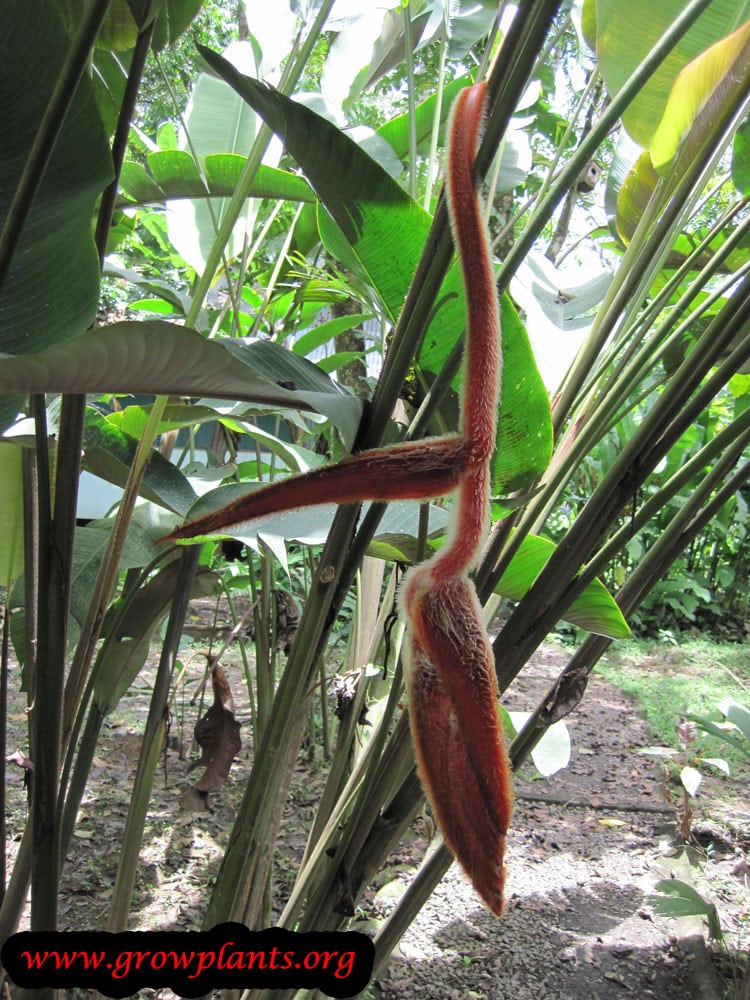
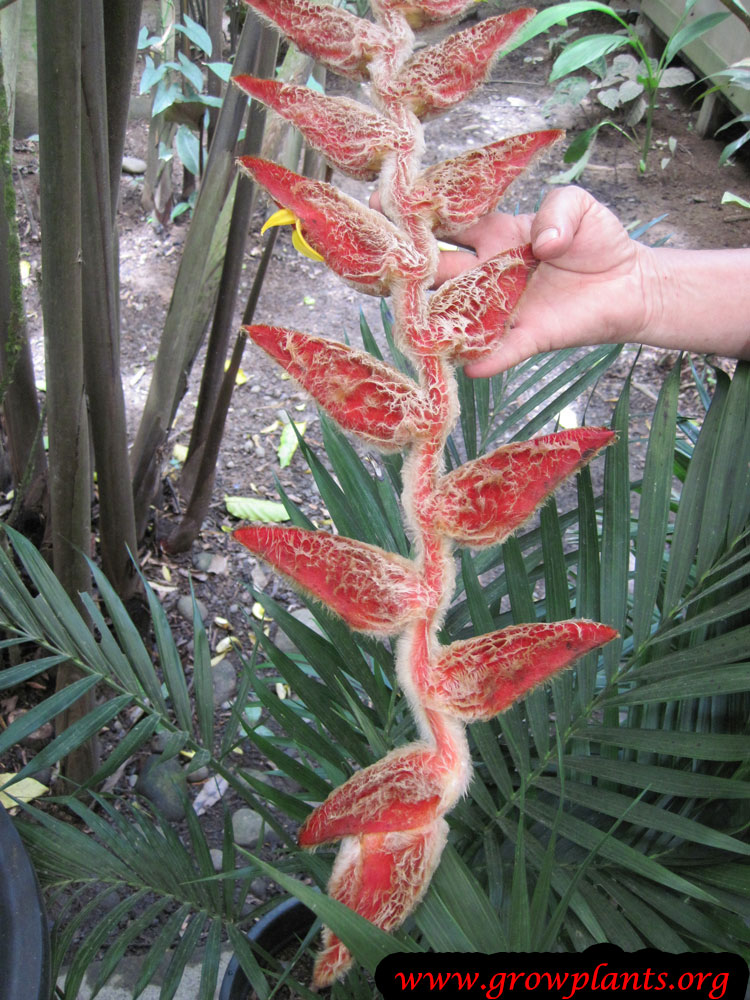
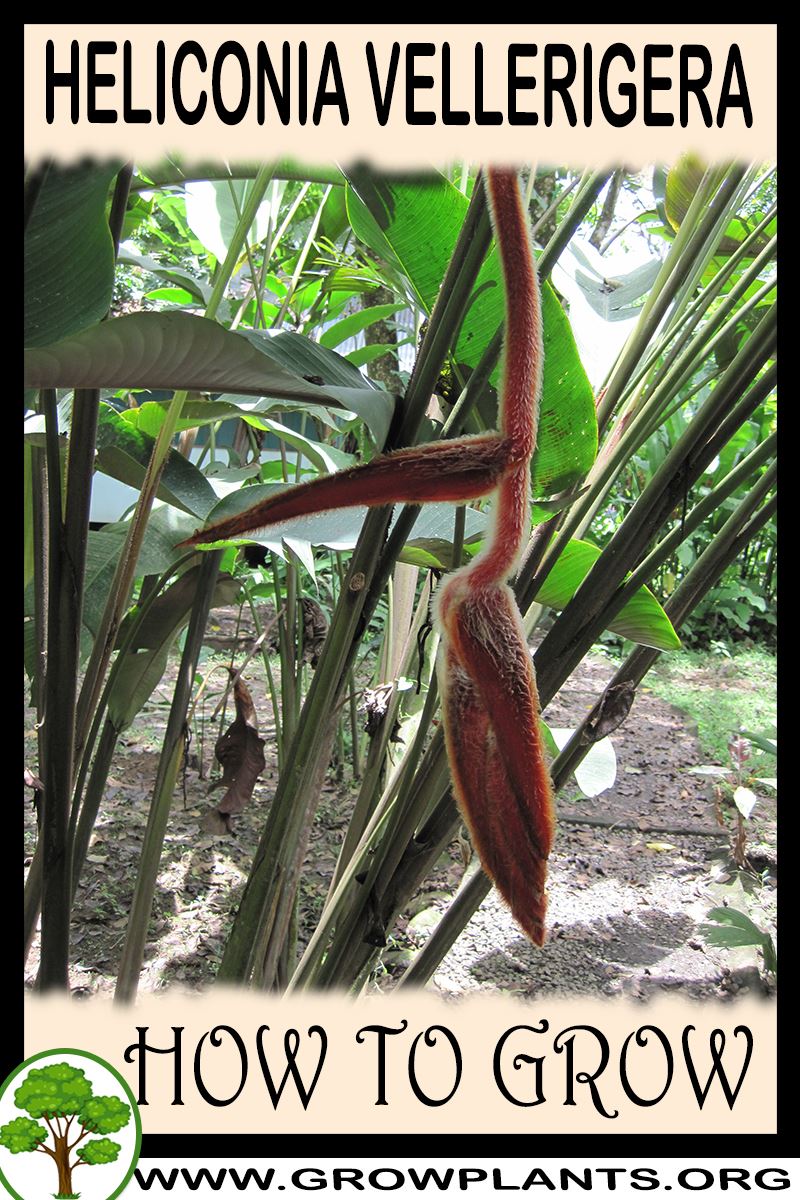
- Flower Characteristics: Small yellow flowers held in showy red bracts covered in velvety hair, borne on triangular spikes; attracts hummingbirds.
Primary Uses & Landscape Value
- Functional & Ornamental Roles: Bold tropical ornamental and long-lasting cut flower; attracts hummingbirds.
Care Guide: Planting, Soil & Watering
Overview: Heliconia vellerigera (fuzzy heliconia) is a large, tropical rhizomatous perennial that thrives in warmth and high humidity, in full sun to part shade. It needs rich, moisture-retentive soil and generous, steady watering.
Quick Care Requirements
| Requirement | Ideal Condition |
|---|---|
| Planting Season | In spring through autumn in warm, frost-free conditions |
| Growth Rate | Fast |
| Soil Type | Rich, moisture-retentive |
| Water Need | Moderate to High |
Planting & Establishment
- Best Planting Season: Plant from spring to autumn in a warm, frost-free, sheltered spot (hardiness zone 12b and warmer).
- How to Plant:
- Hole Preparation: Set the rhizomes in a generous hole in loosened, enriched soil, wide enough for the clump to spread.
- Soil Amendments: Work in plenty of compost and organic matter for a rich, moisture-retentive soil.
- Planting Depth: Plant the rhizome shallowly with the growing points near the surface; do not bury it deeply.
- Growth Speed & Expectations: A fast grower reaching 1.5-6 m (5-19 ft).
Soil, Watering & Drainage Care
- Soil Mix & Drainage Needs: Provide rich soil that holds moisture; high humidity suits it, but avoid stagnant waterlogging.
- Watering Schedule & Technique:
- Young / Newly Planted: Keep consistently moist after planting to establish the rhizomes.
- Established: Water generously and regularly to keep the soil moist in the warm growing season.
- Seasonal Adjustments: Water freely in heat; ease back a little in cooler, duller weather while keeping it from drying out.
Climate, Light & Hardiness
Heliconia vellerigera is a strictly tropical rhizome plant needing warm, essentially frost-free conditions year-round, and prefers full sun to half shade. It has no meaningful cold tolerance and is not suited to outdoor culture outside true tropical climates.
Quick Climate Specifications
| Climate Zones | Tropical |
|---|---|
| USDA Hardiness Zones | 12b+ |
| Frost Tolerance | Very Low |
| Light Conditions | Full Sun to Half Shade |
Sunlight & Light Exposure
Optimal Light Setup
Grows and flowers best in full sun to half shade.
Temperature Extremes & Hardiness
USDA Hardiness & Regional Limits
Suited to outdoor growing only in USDA zone 12b and warmer, among the most tropical, cold-sensitive hardiness ratings in this group.
Cold Damage & Winter Protection
Because it has essentially no cold tolerance, gardeners outside true tropical zones should grow it in a large container that can be moved under cover before any cool weather arrives.
Frost Sensitivity
Frost-sensitive with no meaningful ability to withstand freezing; even a light frost is likely to cause serious damage to foliage and flower spikes.
Wind, Humidity & Microclimate
Rainfall & Seasonal Moisture
Prefers average to generous, consistent moisture in rich soil, in keeping with a tropical rainforest-margin species.
Growing in Pots, Balconies & Indoors
Fuzzy Heliconia is not a houseplant – the grower confirms – and it is a huge tropical, reaching up to 6 m, so a container suits it only while young or as a large specimen for a warm, sheltered patio. In pots it can be moved under cover in cold weather, which it needs as a strictly tropical (zone 12b+) plant.
Quick Details
- Container Size: Very large – a big tub, and even then only for young plants or short-term display
- Indoor Suitability: Not a houseplant; far too large and demanding for indoor life
- Best Spot: Full sun to part shade, warm and humid
- Soil & Drainage: Rich soil kept moist but never waterlogged
- Watering in Pots: Average to plenty – a big leafy plant that drinks heavily in heat
Indoors & On the Windowsill
- Why not indoors: The grower does not treat it as a houseplant – it grows several metres tall and needs tropical warmth, humidity and light no ordinary room can supply.
- Under glass: Only a large, warm greenhouse or conservatory could hold it; elsewhere grow it outdoors in the warm season and protect it from any chill.
On a Balcony or Patio
- Light & wind: Bright light with some shelter from harsh midday sun suits it. Pots dry fast in heat and wind, so check moisture daily in warm weather and never let this moisture-lover dry out; shelter tall stems from wind.
- Practicalities: A large, wet pot is heavy – position it before filling, and allow for drainage runoff on paving or decking.
Choosing the Pot, Soil & Long-Term Care
- Pot & drainage: Use a very large pot with strong drainage holes; skip a standing-water saucer to avoid root rot. Terracotta breathes and dries faster, while glazed or plastic pots hold moisture and add stability to a tall plant.
- Potting mix: A rich, well-aerated organic mix – peat or coir with plenty of compost or organic matter, lightened with perlite or vermiculite for drainage.
- Feeding: Feed generously through the warm season – a fast, massive plant in a pot is extremely hungry.
- Repotting: Refresh the mix or pot up about every two years; for clumping perennials, lift and divide, trimming the roots and old top growth as you go.
Fertilizing & Feeding
A moderate feeder: balanced, nitrogen-forward feeding fuels this fast-growing tropical heliconia’s canes and velvety bracts, easing off entirely during any cool-season slowdown.
Quick Fertilizing Specs
| Feeding Level | Moderate feeder |
|---|---|
| Main Nutrient Priority | Balanced feeding with adequate nitrogen to support fast, tropical growth and hummingbird-attracting bracts |
| Best Feeding Period | Through the warm growing season into summer bloom |
| Organic Options | Compost or well-rotted organic matter worked into rich soil |
| Reduce/Stop Feeding | Ease off feeding if growth slows in cooler conditions at the edge of its hardiness range |
| Micronutrients | Usually supplied by rich soil and a complete fertilizer; correct only a diagnosed deficiency |
| Soil pH | Prefers rich, evenly moist tropical soil; avoid extremes rather than targeting an exact number |
Feeding by Growth Stage
Fast-growing active season
Support the fast cane and leaf growth typical of this tropical heliconia.
| Nutrient direction | A balanced, nitrogen-forward feeding fuels the rapid growth this plant is known for. |
|---|---|
| Timing | Through the warm growing season as canes grow quickly. |
| Frequency | Regular light feedings while growth is fast and active. |
| Fertilizer types | A balanced complete fertilizer with available nitrogen, Compost or organic matter worked into the soil |
| Precautions | Keep soil consistently moist and humidity high; a fast grower like this shows stress quickly if it dries out. |
Summer hummingbird bloom
Support the velvety red bracts that hold nectar and attract hummingbirds.
| Nutrient direction | Continue a balanced complete feeding; overall vigor supports bract production more than extra phosphorus. |
|---|---|
| Timing | Summer, during the main bloom period. |
| Frequency | Continue light, regular feeding through bloom. |
| Fertilizer types | A balanced complete fertilizer, Organic matter as a top-dressing |
| Precautions | Keep watering steady through bloom, since the water-holding bracts and flower quality suffer under drought stress. |
Cool-season slowdown
Let the plant ease off growth during any cooler period, since it is only hardy in truly tropical conditions.
| Nutrient direction | No feeding is needed while growth has slowed and the plant is not pushing new canes. |
|---|---|
| Timing | Any cooler period outside the main warm growing season. |
| Frequency | No feeding during this slowdown. |
| Fertilizer types | No feeding at this stage; withhold fertilizer until active growth clearly resumes. |
| Precautions | Do not fertilize a plant that is not actively growing; resume once warmth returns and new canes appear. |
Nutrient Deficiency Signs & Corrections
Leaves are pale green to yellow and cane growth slows despite warm conditions.
| Possible causes | low available soil nitrogen, leaching from frequent heavy watering, insufficient organic matter for such a fast grower |
|---|---|
| Appears first on | older, lower leaves |
| What to check | feeding history, soil organic matter, watering frequency |
| Possible correction | Apply a nitrogen-forward fertilizer and build up soil organic matter. |
New leaves emerge pale yellow while veins remain green.
| Possible causes | waterlogged or poorly drained soil, high soil pH tying up iron, root stress in crowded plantings |
|---|---|
| Appears first on | newest leaves |
| What to check | soil drainage, soil pH, planting density |
| Possible correction | Improve drainage, correct pH if needed, and apply a chelated iron product per its label. |
Leaf margins scorch or brown during the main bloom period.
| Possible causes | low soil potassium during bloom, heavy nitrogen feeding without balance, drought stress limiting uptake |
|---|---|
| Appears first on | older leaf margins |
| What to check | recent fertilizer balance, soil moisture consistency, overall bloom vigor |
| Possible correction | Use a balanced or potassium-inclusive fertilizer and keep watering consistent through bloom. |
Pruning, Training & Seasonal Maintenance
Fuzzy Heliconia’s pseudostems are monocarpic, much like a banana’s: each one produces a single flower spike over its lifetime and then declines, so once a spike is fully spent the pseudostem itself is eventually removed at the base to make room for the fresh suckers that keep the clump flowering. Because this species is fast growing to as much as 6 m, this succession happens as an ongoing, year-round task rather than on a fixed season in its true-tropical (zone 12b+) range, and mature pseudostem bases are thick enough to call for loppers or a saw rather than hand secateurs.
Quick Pruning & Maintenance Specs
| Pruning Tolerance | Moderate–High (whole spent pseudostems are routinely removed; there is no shaping in the woody-shrub sense) |
| Primary Pruning Window | All year, as pseudostems finish flowering and decline |
| Typical Frequency | Ongoing, pseudostem by pseudostem |
| Main Objective | Pseudostem succession (remove declining, spent-flowered stems) and sucker/clump density management |
| Young Plant Priority | Let the clump establish and build sucker number for the first season or two |
| Mature Plant Priority | Remove each pseudostem at the base once it visibly declines after flowering; thin excess suckers in crowded clumps |
| Best Tool Type | Loppers or pruning saw for mature pseudostem bases; bypass secateurs for spikes and leaves |
| Avoid Heavy Pruning During | While a flower spike is still actively opening bracts (also an active hummingbird nectar source) |
Pruning by Plant Age & Size
Newly Established
Let the clump build sucker number for the first one to two seasons; remove only damaged leaves.
Young / Formative
No leader or vase training applies. Allow several strong suckers to establish the clump rather than limiting it to a single stem, since Heliconia is grown as a multi-stemmed clump for a fuller flowering display.
Mature / Established
Remove each pseudostem at the base once it has clearly finished flowering and begun to decline, and thin out weak or excess suckers where the clump is overcrowded.
Seasonal Pruning Schedule
Ongoing Sanitary / Succession
Objective: pseudostem renewal. Once a flower spike is fully spent, leave the pseudostem in place while its leaves are still healthy and contributing to the clump; remove it at the base only once it visibly starts to yellow and decline. Also remove dead leaves as they occur. Expected response: continuous replacement by fresh suckers, since a spent pseudostem will not reflower itself.
Structural Pruning & Training
The structural task is pseudostem succession combined with sucker thinning: removing declining stems at the base and reducing overcrowded, weak suckers so the clump’s energy goes into fewer, stronger flowering stems. Vigorous suckers removed during thinning can be saved as propagation material, since vegetative propagation is how this species is kept true to a particular bract color.
Special Growth to Remove
- Dead leaves
- Spent flower spikes, and the pseudostem itself once it visibly declines after flowering
- Weak or excess suckers in an overcrowded clump
Container & Small-Space Pruning
This species is not grown as an indoor houseplant but can be kept in a large container while young. Given its fast growth to as much as 6 m, expect it to outgrow typical pots fairly quickly; plan on eventual transition to open ground or a very large planter, with more frequent sucker thinning in the meantime to manage size.
Tools
- Loppers or pruning saw – removing thick, mature pseudostem bases
- Bypass secateurs – spent flower spikes and leaf clean-up
A pole pruner is not needed despite the plant’s height; all cuts are made at or near ground level, not overhead.
Tool Hygiene & Disease Risk
Routine: no specific pathogen risk is noted for this species. Clean, sharp tools are sufficient.
Cut Placement & Technique
Cut declining pseudostems flush at the base near the rhizome once they’ve clearly finished contributing, using loppers or a saw for a clean cut on the thick base rather than sawing repeatedly with undersized secateurs, which tears fibrous tissue.
Heavy Pruning & Rejuvenation
Whole-clump rejuvenation isn’t typically needed, since renewal happens continuously through individual pseudostem replacement. If wind or cold damages several stems at once, remove the damaged pseudostems at the base as recovery; the clump regrows readily from remaining suckers.
Post-Pruning Care
No special care is needed beyond normal watering after removing a spent pseudostem. Keep new sucker shoots consistently moist while they establish, and don’t pile cut pseudostem debris against remaining stems, where it can hold moisture and harbor pests.
Common Pruning Mistakes
- Cutting a pseudostem down immediately once its flower spike fades, before its leaves have finished contributing energy to the clump
- Letting suckers overcrowd the clump, producing many thin, weak flowering stems instead of fewer strong ones
- Using hand secateurs to hack at a thick, mature pseudostem base instead of loppers or a saw, leaving a ragged cut
When NOT to Prune
Avoid cutting a pseudostem while its flower spike is still actively opening bracts.
Recommended Tools (by task)
- loppers – mature pseudostem base removal
- pruning_saw – the thickest, oldest pseudostem bases
- bypass_secateurs – spent flower spike and leaf clean-up
- garden_spade – sucker division for propagation or thinning
Propagation Guide
Heliconia vellerigera (Fuzzy Heliconia) is propagated almost exclusively by dividing its spreading rhizome, since the site notes vegetative reproduction is needed to reproduce the same red, velvet-haired bract colour – seedlings from this hummingbird-pollinated flower can vary. Division is a moderately easy way to get an identical, faster-establishing plant, while seed is a slower and less certain alternative.
Quick Propagation Specs
| Best Propagation Method | Rhizome Division |
| Alternative Methods | Seed |
| Propagation Difficulty | Moderate |
| Seed True-to-Type | Variable – site notes vegetative propagation is needed “to get the color that you want” |
| Vegetative True-to-Type | Yes |
| Best Propagation Season | Spring to summer (site planting season: spring, summer, autumn) |
| Seed Germination Time | Slow and often irregular, commonly several weeks to a few months |
| Germination Temperature | Warm, roughly 24–29°C (75–85°F) |
Growing from Seed
Seed Handling & Viability
Heliconia seed is best sown while relatively fresh, as viability declines with storage; a hard seed coat also contributes to slow, uneven germination.
Dormancy & Pre-Sowing Treatment
Soaking seed in water for a day or two before sowing can help soften the hard seed coat and improve germination.
Germination Conditions & Time
Warm, humid conditions are needed; germination is slow and can be staggered over several weeks to a few months.
Seedling Care
Keep seedlings warm and humid; they are slow to reach a plantable size.
Rhizomes, Tubers, Bulbs & Corms
Rhizome Division
Divide clumps during the warm growing season, separating a rhizome section that has its own shoot(s) and roots attached – a shoot without roots is much less likely to establish. Trimming back some foliage on the division reduces water loss while new roots establish; keep it warm, humid and consistently moist until active growth resumes.
Bloom & Flower Guide
Quick Details
- Bloom Season: Summer
- Flower Appearance: Small, inconspicuous yellow true flowers held within large red, velvety-haired bracts arranged along a spike
- Edibility: Ornamental – grown for its striking bracts, not eaten
Detailed Blooming Overview
The drama of Fuzzy Heliconia is all in the bracts. The actual flowers are small and yellow, but they sit inside big, triangular red bracts clothed in soft, velvety hairs, ranged along an upright spike. Those bracts even collect rainwater in their cups, and the whole display is built to draw in hummingbirds through the summer.
Flower Characteristics
- True flowers small and yellow, tucked within the bracts.
- Bracts red and velvety-haired, triangular, and water-holding.
Bloom Care & Thinning
- Pollination: Hummingbirds, drawn to the bright bracts and nectar, are the main visitors.
- After flowering: Cut spent flowering stems down to the base, as each stem blooms only once.
Pests, Diseases & Troubleshooting
Overview: Heliconias are lush tropical relatives of bananas and gingers, grown for their dramatic bracts, and in warm, moist, well-drained ground they are generally vigorous. Their main pests are mites and sap-suckers in dry or sheltered conditions, plus root-knot nematodes and some banana-group pests; their serious diseases are root/rhizome rot and fungal leaf spot in waterlogged or crowded plantings. Clean stock, drainage and airflow are the foundation of control. H. vellerigera has furry, hairy bracts.
Quick Troubleshooting Overview
| Issue / Pest | Main Symptom | Primary Solution |
|---|---|---|
| Spider mites | Stippling, bronzing, webbing in hot/dry air | Raise humidity, wash foliage, horticultural oil/miticide |
| Mealybug & scale | White fluff / brown bumps, honeydew | Alcohol swab, insecticidal soap/oil |
| Root-knot nematode | Galled roots, stunting, wilting | Clean stock, rotate, soil health |
| Root / rhizome rot | Soft foul rhizomes; yellowing, collapse | Plant clean stock in drained soil; avoid waterlogging |
| Leaf spot | Brown/tan spots and streaks on leaves | Airflow, remove leaves, copper if needed |
| Caterpillars/grasshoppers | Chewed, ragged leaf margins | Hand-pick, Bt for caterpillars |
Common Pests & Management
- Spider mites (Tetranychus spp.):
- Symptoms: Fine stippling and a bronze cast on leaves with webbing on undersides and along midribs, worst in hot, dry, sheltered spots or under cover.
- Prevention & Control: Raise humidity and hose down the foliage (especially undersides) regularly; at first sign treat with horticultural oil, insecticidal soap or a miticide, repeating every 5–7 days. Predatory mites help under cover.
- Mealybug (Pseudococcus / Planococcus spp.):
- Symptoms: White cottony tufts in leaf sheaths, leaf axils and the crown, with honeydew and sooty mould; can also infest the rhizome zone.
- Prevention & Control: Dab with 70% alcohol and spray insecticidal soap or horticultural oil into the sheaths, repeating. Inspect rhizomes at planting and discard infested stock.
- Scale insects (Coccidae & Diaspididae):
- Symptoms: Brown or waxy immobile bumps on stems, leaf sheaths and midribs with honeydew.
- Prevention & Control: Wipe or scrape off, then horticultural oil to smother crawlers; prune out heavily encrusted growth.
- Aphids (Aphididae (incl. banana aphid, Pentalonia nigronervosa)):
- Symptoms: Soft insects on new growth and in the crown, causing distortion and honeydew; the banana aphid can transmit viruses in the banana/heliconia group.
- Prevention & Control: Blast off with water and encourage predators; insecticidal soap or a light oil for persistent colonies. Control matters partly to limit virus spread.
- Root-knot nematode (Meloidogyne spp.):
- Symptoms: Below-ground pest causing root galls, with above-ground stunting, yellowing and wilting in warm sandy soils.
- Prevention & Control: Plant clean, nematode-free rhizomes, rotate away from infested ground, build soil organic matter and beneficial microbes, and solarise beds before planting in warm climates.
Diseases & Fungal Issues
- Root & rhizome rot (Pythium / Fusarium / Rhizoctonia spp.):
- Symptoms: Soft, water-soaked, foul decay of roots and rhizomes with yellowing, wilting and clump collapse; the result of waterlogged soil or planting infected rhizomes.
- Treatment & Management: Plant firm, clean rhizomes in rich but free-draining soil, avoid waterlogging, and don’t overwater. Lift and cut away rot, discard badly affected pieces, and replant healthy divisions in fresh drained ground.
- Fungal leaf spot (Cercospora / Bipolaris / Colletotrichum spp.):
- Symptoms: Brown, tan or reddish spots, streaks and blotches on leaves, sometimes with yellow halos, enlarging in warm wet weather and crowded plantings.
- Treatment & Management: Improve airflow by dividing and spacing, avoid overhead watering, and remove affected leaves. Copper or a suitable fungicide protects new foliage during persistent wet spells.
- Bacterial wilt / Moko (host risk) (Ralstonia solanacearum):
- Symptoms: As banana relatives, some heliconias can host this bacterium – sudden wilting of green foliage and vascular browning, with ooze from cut tissue; plants do not recover. (Mainly a concern near infected banana/heliconia plantings.)
- Treatment & Management: There is no cure – remove and destroy affected plants and surrounding soil, plant certified clean stock, sanitise tools, and avoid moving soil or water from infected areas. Keep separate from infected banana crops.
Growing Difficulties & Abiotic Problems
- Cold / frost sensitivity:
- Cause & Symptoms: As tropicals, heliconias are damaged or killed by cold; foliage blackens and rhizomes rot in cold-wet soil.
- Correction Strategy: Grow in warm, frost-free conditions or under cover; mulch rhizomes and keep drier through cool spells. Damaged foliage should be cut back once warmth returns.
- Wind tatter & sun scorch:
- Cause & Symptoms: Strong wind shreds the large paddle leaves and fierce direct sun scorches them.
- Correction Strategy: Site in bright light with shelter from strong wind and harsh midday sun; keep roots moist to reduce scorch.
- Waterlogging:
- Cause & Symptoms: Constantly saturated soil rots roots and rhizomes despite the plant’s love of moisture.
- Correction Strategy: Grow in rich, moisture-retentive but free-draining soil; water generously but never leave it swampy.
- Nutrient deficiency / poor bract colour:
- Cause & Symptoms: Pale growth and weak, few bracts on hungry or root-bound plants.
- Correction Strategy: Feed generously through the growing season, keep the soil rich in organic matter, and divide congested clumps to restore vigour and flowering.
What Helps – Products & Tools
Lead with clean rhizomes, drainage and airflow. For pests: horticultural/neem oil and insecticidal soap for mites, mealybug, scale and aphids, with a miticide in reserve; manage nematodes culturally. For disease: copper fungicide for leaf spot, and strict sanitation for root/rhizome rot and bacterial wilt (no spray cure – rogue and destroy).