

Plant Profile & Key Characteristics
Overview: A large tropical rhizomatous perennial 1.5-6 m (5-19 ft) grown for its showy, long-lasting flower bracts. It forms bold banana-like clumps and is evergreen in the tropics.
Quick Specifications
| Specification | Attribute |
|---|---|
| Plant Type / Life Cycle | Perennial |
| Foliage Type | Evergreen |
| Mature Size | 1.5-6 m (5-19 ft) |
| Growth Rate | Fast |
| Root System | Rhizomatous |
| Hardiness | USDA zone 12b+ |
Growth Form & Structure
- Height & Spread: Clumps 1.5-6 m (5-19 ft) tall; can be grown in large containers.
- Growth Habit & Form: Upright, banana-like clump of leafy pseudostems arising from spreading rhizomes; leaves up to 0.5-2 m long.
- Lifespan & Maturity: Perennial of fast growth, forming large clumps over time.
Anatomy & Physical Features
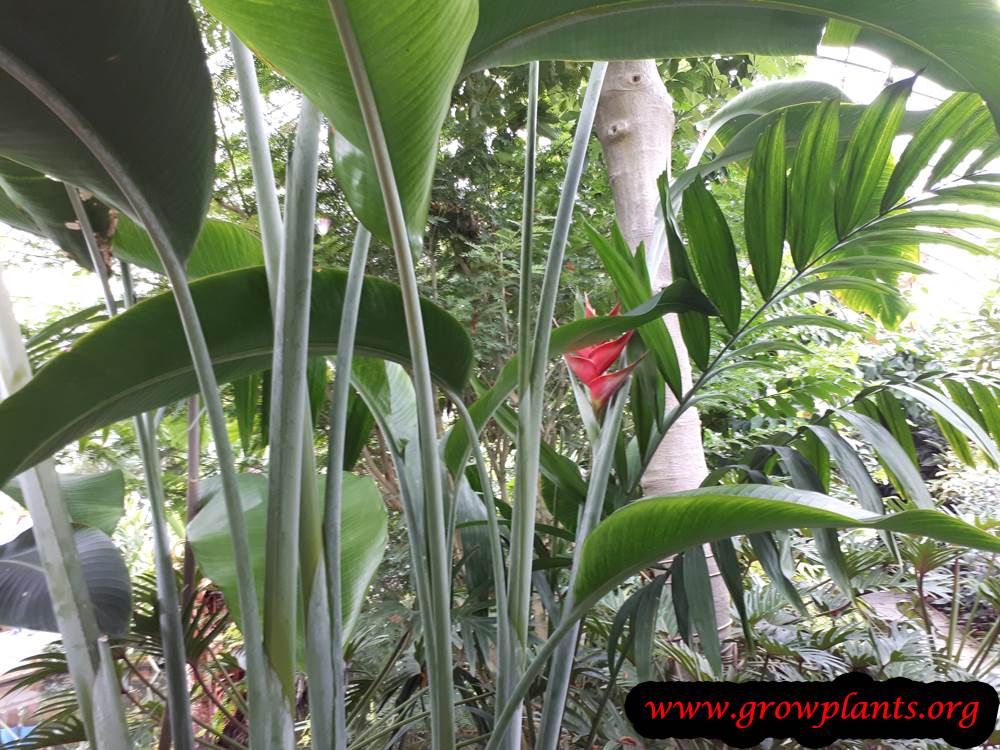
- Leaves & Foliage: Large oval green leaves, 0.5-2 m long.
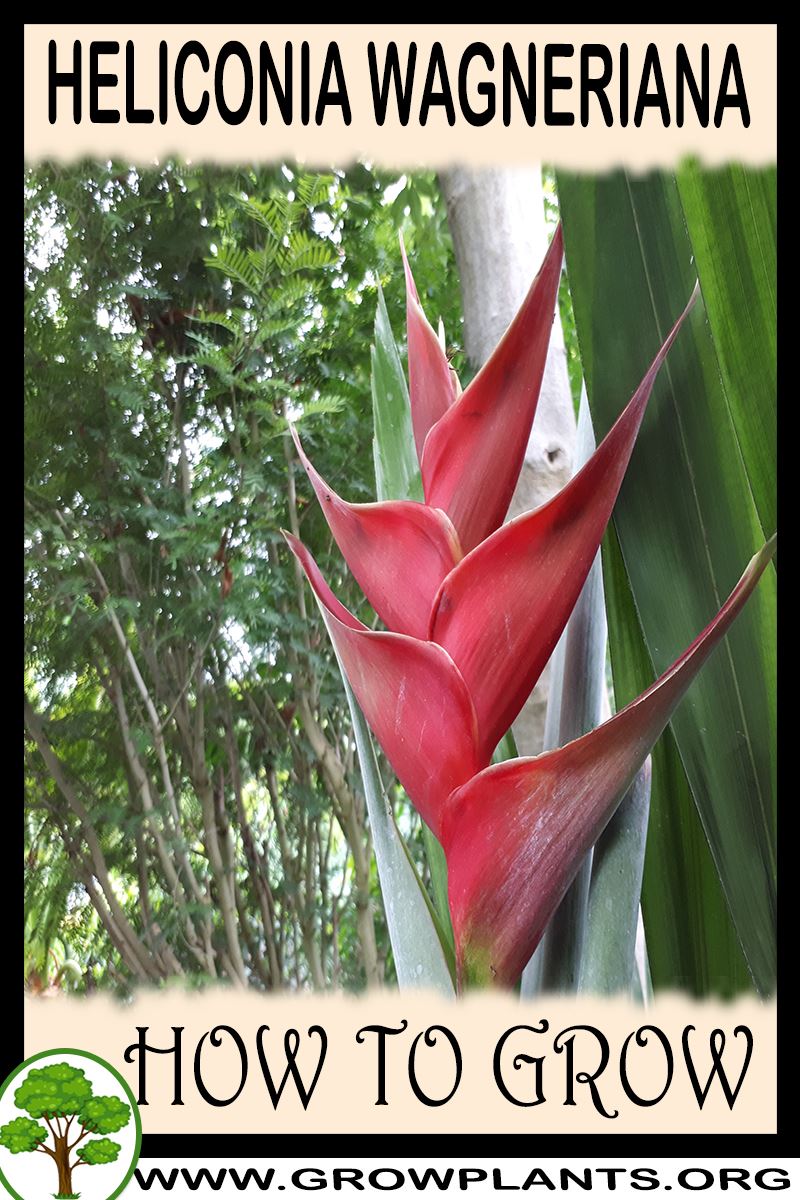
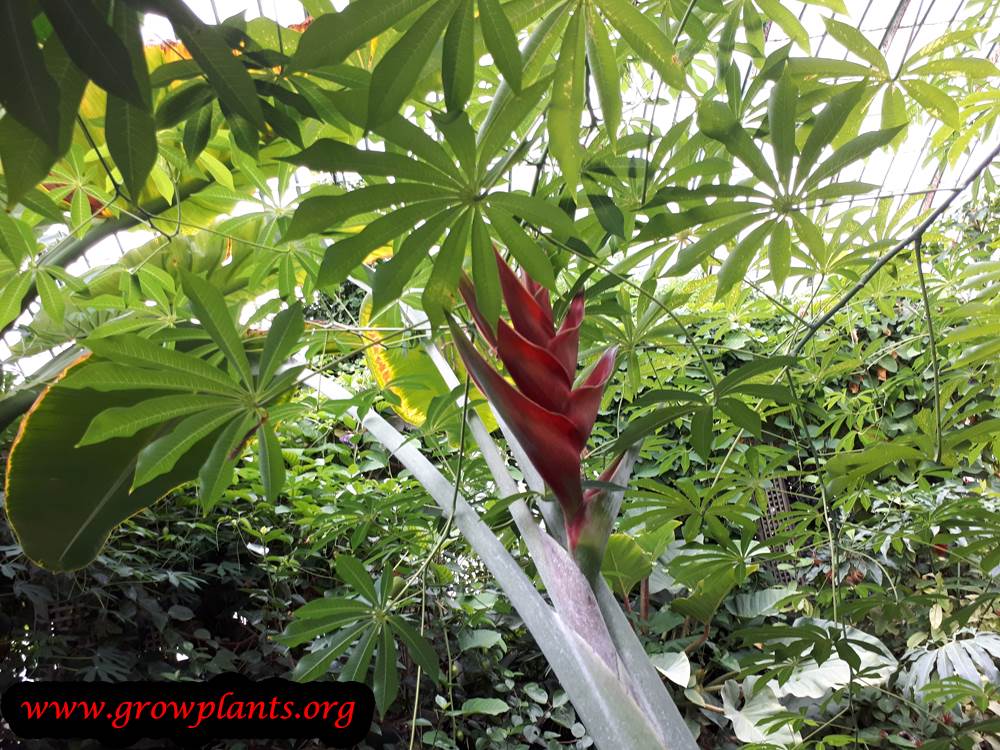
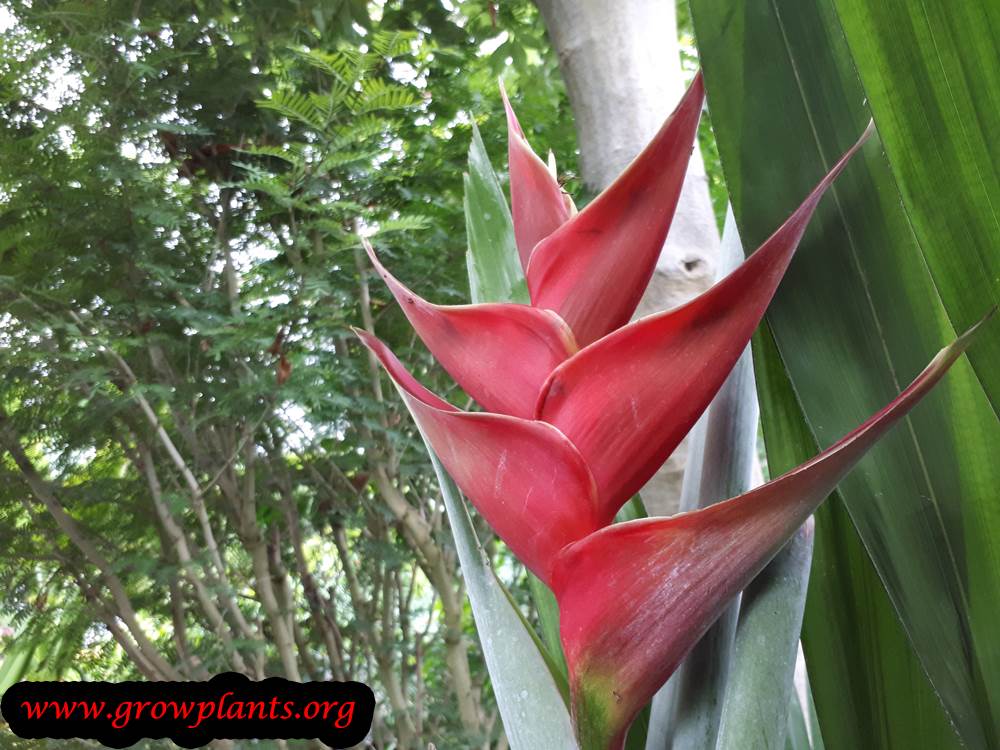
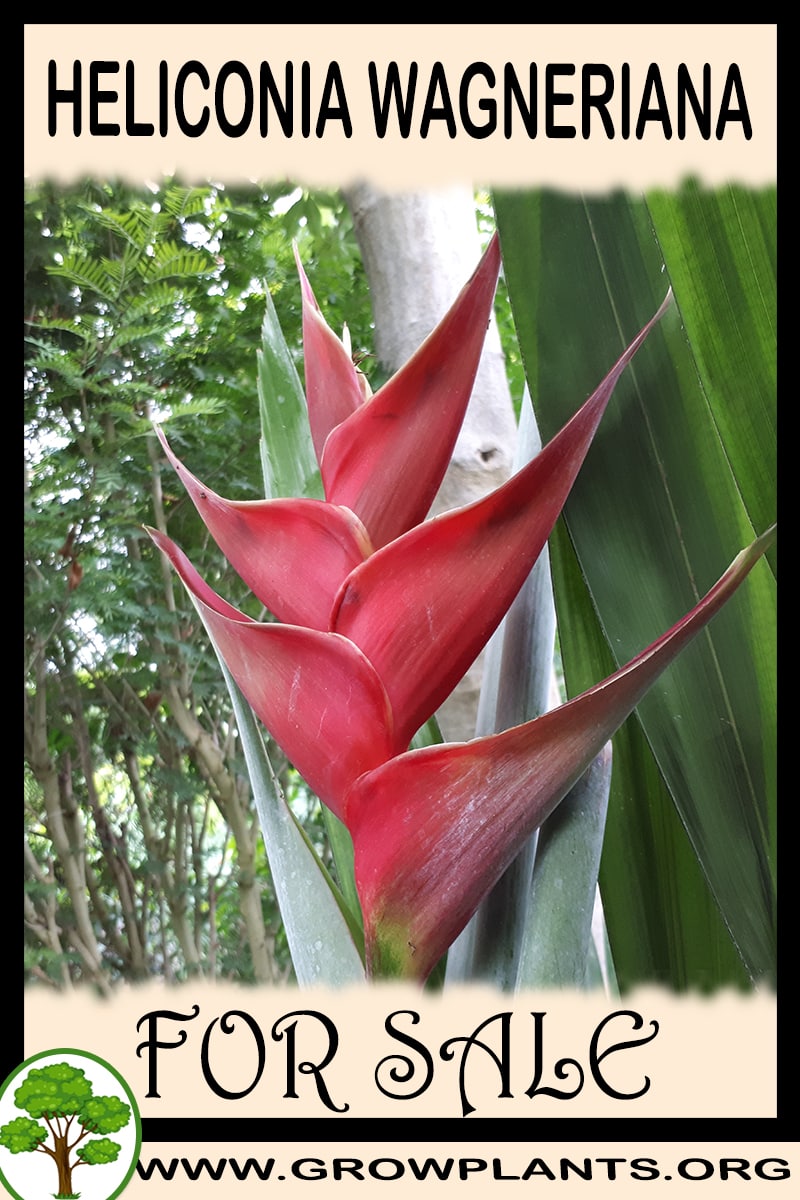
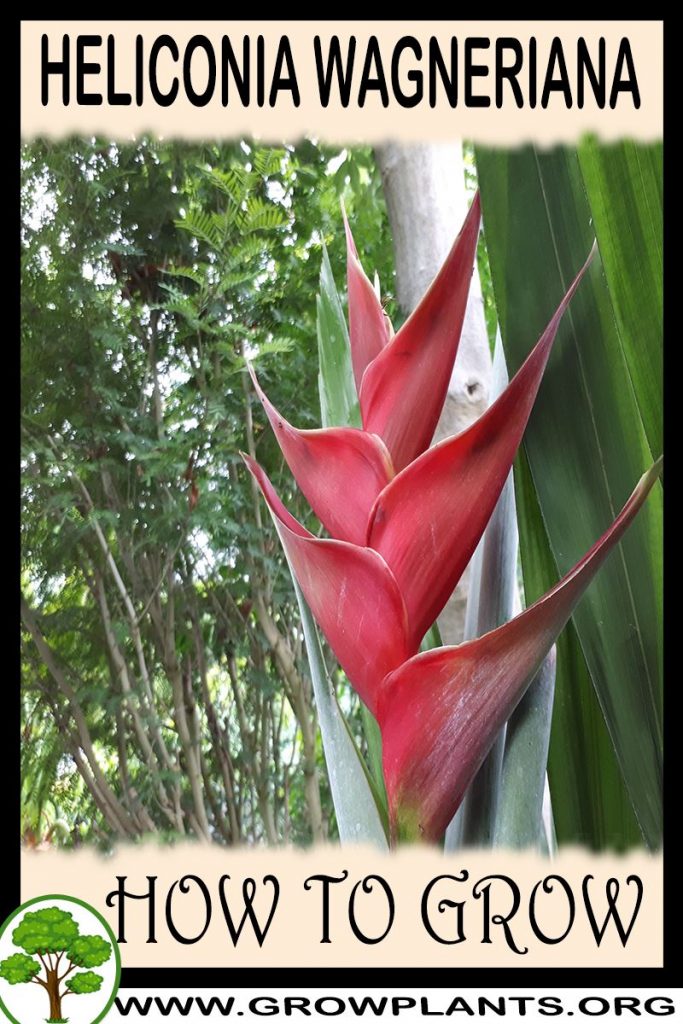
- Flower Characteristics: Small green flowers held in upright bracts of pink-red marked with yellow and green on triangular spikes; attracts hummingbirds.
Primary Uses & Landscape Value
- Functional & Ornamental Roles: Bold tropical ornamental and long-lasting cut flower; attracts hummingbirds.
Care Guide: Planting, Soil & Watering
Overview: Heliconia wagneriana is a large, tropical rhizomatous perennial that thrives in warmth and high humidity, in full sun to part shade. It needs rich, moisture-retentive soil and generous, steady watering.
Quick Care Requirements
| Requirement | Ideal Condition |
|---|---|
| Planting Season | In spring through autumn in warm, frost-free conditions |
| Growth Rate | Fast |
| Soil Type | Rich, moisture-retentive |
| Water Need | Moderate to High |
Planting & Establishment
- Best Planting Season: Plant from spring to autumn in a warm, frost-free, sheltered spot (hardiness zone 12b and warmer).
- How to Plant:
- Hole Preparation: Set the rhizomes in a generous hole in loosened, enriched soil, wide enough for the clump to spread.
- Soil Amendments: Work in plenty of compost and organic matter for a rich, moisture-retentive soil.
- Planting Depth: Plant the rhizome shallowly with the growing points near the surface; do not bury it deeply.
- Growth Speed & Expectations: A fast grower reaching 1.5-6 m (5-19 ft).
Soil, Watering & Drainage Care
- Soil Mix & Drainage Needs: Provide rich soil that holds moisture; high humidity suits it, but avoid stagnant waterlogging.
- Watering Schedule & Technique:
- Young / Newly Planted: Keep consistently moist after planting to establish the rhizomes.
- Established: Water generously and regularly to keep the soil moist in the warm growing season.
- Seasonal Adjustments: Water freely in heat; ease back a little in cooler, duller weather while keeping it from drying out.
Climate, Light & Hardiness
Heliconia wagneriana (Fuzzy Heliconia) is a true tropical rhizomatous perennial, needing consistently warm, essentially frost-free conditions and rich soil. It grows in full sun to half shade and has very little tolerance for cold, reflecting its narrow, warm-climate hardiness range.
Quick Climate Specifications
| Climate Zones | Tropical climates |
|---|---|
| USDA Hardiness Zones | Approximately zone 12b and warmer |
| Optimal Temp Range | Warm, humid tropical conditions |
| Cold Damage Begins | Foliage is damaged well above freezing, as cool temperatures alone can stress this tropical plant |
| Approx. Survival Minimum | Has essentially no tolerance for frost or prolonged cool conditions |
| Frost Tolerance | None |
| Light Conditions | Full Sun to Half Shade |
Sunlight & Light Exposure
Optimal Light Setup
Full sun to half shade suits this large-leaved tropical plant, with some shade helpful in the hottest, driest conditions.
Direct Sun Requirement
Tolerates and generally benefits from strong direct sun in humid tropical settings.
Best Exposure / Orientation
A warm, humid, sheltered spot in rich soil suits this plant best.
Temperature Extremes & Hardiness
USDA Hardiness & Regional Limits
Site data places this plant at zone 12b and warmer, among the narrowest, warmest hardiness ranges in the genus; it is not suited to outdoor culture anywhere winters bring cool or cold conditions.
Cold Damage & Winter Protection
Where grown outside its zone, this plant needs to be kept in a warm greenhouse or indoors through any cool season, since it has no frost tolerance at all.
Frost Sensitivity
Extremely frost sensitive with no meaningful cold tolerance; even a light frost is likely to be fatal.
Extreme Heat Tolerance
Thrives in hot, humid tropical heat, consistent with its native range.
Wind, Humidity & Microclimate
Humidity Preferences
Requires high humidity, in keeping with its tropical rainforest origins.
Microclimate Recommendations
A warm, humid, wind-sheltered spot in rich soil is essential; this plant is not a candidate for marginal or cool-climate outdoor planting.
Growing in Pots, Balconies & Indoors
Heliconia wagneriana is a large tropical clump-former (1.5-6 m / 5-19 ft), not a houseplant – the grower confirms it is unsuited to indoor growing. It can be grown in a big container on a warm, sunny patio in frost-free climates, where a young or dwarf plant gives its striking flower bracts, but it soon outgrows small pots.
Quick Details
- Container Size: Large and heavy – it is a big, hungry clump; only young or dwarf plants stay pot-sized
- Indoor Suitability: Not a houseplant; grow outdoors in warm climates
- Best Spot: Full sun to half shade, warm and sheltered from wind
- Soil & Drainage: Rich, moisture-retentive but free-draining mix
- Watering in Pots: Generous – it is thirsty and pots dry fast, but never let it sit waterlogged
Indoors & On the Windowsill
- Not for indoors: The grower marks it as unsuitable as a houseplant; its size and demand for heat, light, and humidity make room culture impractical.
- Overwintering: Not hardy – in cold climates a potted plant must be moved under warm, bright glass for winter, which suits only a compact, young specimen.
On a Balcony or Patio
- Light & wind: Give it the warmest, sunniest, most sheltered spot; the big leaves tear in wind, so shelter is important. Reflected heat from walls dries pots fast – water generously.
- Weight: A large filled pot is very heavy – set it in its final position before filling, and ensure free drainage.
Choosing the Pot, Soil & Long-Term Care
- Pot & drainage: Choose a pot a size or two larger than the root ball, with strong drainage holes; skip a standing water saucer to avoid root rot. Terracotta breathes and dries faster, while glazed or plastic pots hold moisture longer.
- Potting mix: A well-aerated, organic-rich mix – a quality potting mix, or peat/coir blended with perlite or vermiculite.
- Feeding: Potted plants need feeding more often than those in open ground, as frequent watering leaches nutrients away – feed lightly through the growing season.
- Repotting: Refresh the mix or pot up about every two years; for perennials, lightly trim the root ball and top growth at the same time.
Fertilizing & Feeding
Heliconia wagneriana is a fast-growing tropical plant that thrives in rich soil and benefits from steady, moderate feeding through its growing season rather than a single light application.
Quick Fertilizing Specs
| Feeding Level | moderate |
|---|---|
| Main Nutrient Priority | a balanced fertilizer with adequate nitrogen to support its fast, lush growth |
| Best Feeding Period | throughout the warm, active growing season |
| Organic Options | regular additions of compost or well-rotted organic matter suit its preference for rich soil |
| Reduce/Stop Feeding | ease off feeding if growth naturally slows during cooler or drier spells |
Feeding by Growth Stage
Establishment After Planting or Division
Help newly planted rhizomes or divisions root in before pushing heavy growth.
| Nutrient direction | Keep feeding light and balanced while roots establish. |
|---|---|
| Timing | The first weeks to months after planting or dividing a clump. |
| Frequency | Light feeding is usually enough until new shoots are clearly established. |
| Fertilizer types | A diluted, balanced fertilizer suited to establishing tropical perennials |
| Precautions | Avoid heavy feeding on unestablished roots; keep soil consistently moist but not waterlogged when fertilizing. |
Active Growth and Bract Display
Fuel the plant’s fast growth and support its ornamental bract and flower display through the season.
| Nutrient direction | Favor a balanced to nitrogen-leaning fertilizer that matches its vigorous, rich-soil-loving growth habit. |
|---|---|
| Timing | The main warm growing season. |
| Frequency | Regular feeding through the growing season supports its fast pace of growth. |
| Fertilizer types | A balanced fertilizer with a nitrogen-forward lean, applied regularly through the growing season, Compost or other organic matter worked into the soil |
| Routine trace nutrients | iron, manganese |
| Precautions | Keep feeding paired with consistent moisture, since this plant does not tolerate letting rich soil dry out for long. |
Cooler or Slower Period Maintenance
Match feeding to any natural slowdown in growth during cooler or less favorable conditions.
| Nutrient direction | Cut back to a lighter, reduced feeding rate rather than a full stop, since this tropical evergreen rarely goes fully dormant. |
|---|---|
| Timing | Any period when growth is visibly slower, such as cooler or drier stretches. |
| Frequency | Minimal feeding is usually enough during a slow period. |
| Fertilizer types | A light, reduced-rate balanced fertilizer application, or skip feeding entirely if growth has essentially stopped |
| Precautions | Scale feeding back with growth rather than maintaining a heavy summer schedule year-round. |
Nutrient Deficiency Signs & Corrections
Older leaves turn pale yellow-green while new growth stays smaller than expected.
| Possible causes | Insufficient nitrogen for this fast-growing, heavy-feeding tropical plant, Soil that has become depleted of organic matter over time, Root stress from poor drainage limiting nutrient uptake despite adequate feeding |
|---|---|
| Appears first on | Older, lower leaves |
| What to check | Review feeding frequency against the plant’s fast growth rate, Check soil organic matter and whether compost has been added recently, Inspect roots and drainage |
| Possible correction | Increase organic matter in the soil and resume a balanced, nitrogen-leaning feeding routine through the growing season. |
Leaf margins turn brown and dry while the leaf interior stays green.
| Possible causes | Potassium shortage relative to this plant’s fast growth demands, Salt buildup from over-concentrated fertilizer applications, Underlying drought stress or inconsistent watering |
|---|---|
| Appears first on | Older leaf margins first |
| What to check | Review fertilizer concentration and watering consistency, Check for a pattern of drought stress between waterings, Look at whether the symptom appears with heat or wind exposure too |
| Possible correction | Flush the soil to clear excess salts, keep watering consistent, and maintain balanced feeding through the season. |
The newest leaves and bracts emerge pale or washed-out in color.
| Possible causes | High soil pH or mineral-heavy irrigation limiting iron availability, Cool soil temperatures slowing nutrient uptake even when nutrients are present, General nutrient depletion in soil that has not been enriched recently |
|---|---|
| Appears first on | The newest unfurling leaves |
| What to check | Test irrigation water and soil pH if chlorosis persists, Confirm the plant is in consistently warm, rich soil, Review how recently organic matter or fertilizer was added |
| Possible correction | Enrich the soil with organic matter, keep it consistently warm and moist, and apply a chelated iron product suited to tropical foliage plants per its label if pale growth persists. |
Pruning, Training & Seasonal Maintenance
Heliconia wagneriana grows as a clump of upright, banana-like leafy canes (pseudostems) rising from a spreading rhizome. Each individual cane produces one terminal inflorescence and, once that bloom is spent, that particular cane will not flower or grow taller again – the plant renews itself continuously through new canes emerging from the rhizome. "Pruning" here is really clump management: removing spent flowering canes and dead leaves, and thinning overcrowded shoots, which can be done year-round in its frost-free tropical growing conditions.
Quick Pruning & Maintenance Specs
| Pruning Tolerance | Moderate at the clump level (individual canes are not cut back to regrow – they are removed and replaced by new canes) |
| Primary Pruning Window | Year-round in frost-free tropical conditions |
| Typical Frequency | Ongoing, as canes finish flowering or decline |
| Main Objective | Remove spent flowering canes and dead leaves; manage clump density |
| Young Plant Priority | Let the clump establish; no cane removal needed yet |
| Mature Plant Priority | Cut spent flowering canes to the base; thin overcrowded canes for light and airflow |
| Best Tool Type | Loppers or bypass secateurs for cane bases; precision snips for leaves |
Pruning by Plant Age & Size
Newly Established
Minimal – tidy only clearly dead leaves; let the clump fill in and establish its rhizome system before any cane removal.
Young / Formative
No formal training system applies (it is a clump-forming rhizome, not a plant with a leader or vase framework); only thin shoots if the young clump becomes unusually dense.
Mature / Established
Renewal-style clump management: remove old or spent canes at the base to make room and light for new shoots, and thin overcrowded growth to maintain flower quality.
Structural Pruning & Training
Canopy density matters more than shape here: an overcrowded clump shades its own new shoots and reduces flower size and quality, so periodic thinning of the oldest or weakest canes benefits the planting. There is no branch structure to train.
Special Growth to Remove
- Spent flowering canes – once the bracts have fully faded, cut the cane to the base; it will not rebloom or produce new leaves.
- Dead or yellowing lower leaves – remove for appearance and to reduce a hiding place for pests.
- Weak, overcrowded shoots – thin out where the clump has become dense, favouring strong, well-spaced canes.
Container & Small-Space Pruning
Heliconia wagneriana can be grown in a large container, where the restricted root run naturally limits its spread compared with growing in open ground (where the rhizome can travel widely). The same rule applies at any scale: cut spent canes at soil level rather than partway up.
Tools
- Loppers – for the tough, fibrous cane bases, which are thicker than a simple hand-snip can manage cleanly.
- Bypass secateurs – for thinner canes and shoots.
- Precision snips – for individual dead leaves.
Tool Hygiene & Disease Risk
Routine – no specific transmissible disease is flagged for this species; clean, sharp tools are sufficient, with extra care to avoid leaving wet, freshly cut cane stubs sitting in constantly soggy soil.
Cut Placement & Technique
Cut spent canes at or very close to ground/rhizome level – a stub left partway up will not resprout and simply becomes an unsightly dead stick. Cut individual leaves at the base of the leaf stalk.
Heavy Pruning & Rejuvenation
Tolerated at the clump level. In true tropical conditions this is rarely necessary since old canes are continuously self-replaced, but in marginal or cool-season conditions the whole clump can be cut back hard near ground level during its slow-growth period to rejuvenate it; expect a flush of new canes that will take a season to reach flowering size.
Post-Pruning Care
After a hard clump cut-back, keep the planting consistently moist and warm to encourage new shoots, and watch tender new growth for slug and snail damage.
Common Pruning Mistakes
- Cutting a spent cane partway up instead of at the base – the stub will not regrow and just leaves a dead stick in the clump.
- Over-thinning a young, still-establishing clump before it has built up enough canes.
- Leaving spent canes in place indefinitely, which crowds and shades new emerging shoots.
When NOT to Prune
Avoid removing canes that are actively developing or about to flower. In the cooler edge of its growing range, avoid heavy cane removal during cool snaps, which stresses the rhizome.
Recommended Tools (by task)
- bypass_secateurs – leaves and thinner shoots.
- loppers – thicker, fibrous cane bases that are too tough for hand secateurs.
Pruning Troubleshooting
| Problem | Possible Cause | What to Check | Corrective Action |
| No regrowth from a cut cane | Cane was cut partway up instead of at the base, leaving a stub with no growing point | Look for cut stubs still standing in the clump | Always cut spent canes flush at the rhizome/base; remove old stubs |
| Weak, floppy new shoots or reduced flowering | Clump overcrowded or shaded by old canes | Canopy density and light reaching the base of the clump | Thin the oldest canes to open up light and airflow |
| Soft, rotten tissue at a cane base after cutting | Cut made during wet conditions or with a dirty blade | Inspect cut cane bases for discoloured or soft tissue | Recut lower into clean tissue, improve drainage, avoid cutting in prolonged wet weather |
Propagation Guide
Heliconia wagneriana is propagated almost entirely by dividing its rhizome clumps rather than from seed, since seed-grown plants won’t reliably reproduce the parent’s pink-red and yellow bract pattern. Rhizome division is a straightforward, moderate-difficulty task for a home grower, while raising it from seed is a slower, less predictable route best reserved for when no divisions are available.
Quick Propagation Specs
| Best Propagation Method | Rhizome division |
| Alternative Methods | Seed (species only, bract color not guaranteed) |
| Propagation Difficulty | Moderate |
| Seed True-to-Type | No – bract color is not guaranteed from seed |
| Vegetative True-to-Type | Yes |
| Best Propagation Season | Spring through autumn, matching this species’ warm-season active growth and planting season |
Growing from Seed
Seed sowing specifics are not given in the source data, and seed is rarely the practical route for this species: germination tends to be slow and uneven, and seedlings won’t necessarily repeat the parent’s bract coloring, which is why the site notes vegetative propagation is needed to get a chosen color.
Division, Offsets, Pups & Suckers
As a rhizomatous herbaceous plant grown in rich soil, Heliconia wagneriana is best increased by lifting and dividing its rhizome clumps during the warm growing season (spring through autumn, matching its planting season). Cut or break the rhizome into sections that each carry at least one healthy growing shoot and some roots, trim back the foliage on each division to reduce water loss while it re-establishes, and replant promptly into rich, moist soil in a warm, humid, sheltered spot. Keep divisions consistently moist and out of drying wind until new growth confirms establishment.
Bloom & Flower Guide
Quick Details
- Bloom Season: Summer
- Flower Appearance: Bold, triangular bracts in pink-red, yellow and green on upright spikes; the true flowers are small and green, tucked within
- Edibility: Grown as a tropical ornamental; the flowers and bracts are decorative, not a food
Detailed Blooming Overview
Fuzzy heliconia makes its display not from petals but from bracts – waxy, boat-shaped structures stacked into a striking upright spike of pink-red, yellow and green. The real flowers are small and green and sit down inside these bracts, which cup rainwater and draw hummingbirds. It is a big, fast, tropical plant, and in summer those architectural flower spikes are the whole point.
Flower Characteristics
- Showy colour comes from triangular bracts in pink-red, yellow and green.
- True flowers are small and green, held within the bracts.
- Bracts hold water and attract hummingbirds.
Bloom Care & Thinning
- Managing the bloom: Cut spent flower spikes and tired leaves down at the base to keep the clump fresh and make room for new stems.
- Pollination: The water-filled bracts and colourful spikes are worked by hummingbirds.
Pests, Diseases & Troubleshooting
Overview: Heliconias are lush tropical relatives of bananas and gingers, grown for their dramatic bracts, and in warm, moist, well-drained ground they are generally vigorous. Their main pests are mites and sap-suckers in dry or sheltered conditions, plus root-knot nematodes and some banana-group pests; their serious diseases are root/rhizome rot and fungal leaf spot in waterlogged or crowded plantings. Clean stock, drainage and airflow are the foundation of control. H. wagneriana has upright multicoloured bracts.
Quick Troubleshooting Overview
| Issue / Pest | Main Symptom | Primary Solution |
|---|---|---|
| Spider mites | Stippling, bronzing, webbing in hot/dry air | Raise humidity, wash foliage, horticultural oil/miticide |
| Mealybug & scale | White fluff / brown bumps, honeydew | Alcohol swab, insecticidal soap/oil |
| Root-knot nematode | Galled roots, stunting, wilting | Clean stock, rotate, soil health |
| Root / rhizome rot | Soft foul rhizomes; yellowing, collapse | Plant clean stock in drained soil; avoid waterlogging |
| Leaf spot | Brown/tan spots and streaks on leaves | Airflow, remove leaves, copper if needed |
| Caterpillars/grasshoppers | Chewed, ragged leaf margins | Hand-pick, Bt for caterpillars |
Common Pests & Management
- Spider mites (Tetranychus spp.):
- Symptoms: Fine stippling and a bronze cast on leaves with webbing on undersides and along midribs, worst in hot, dry, sheltered spots or under cover.
- Prevention & Control: Raise humidity and hose down the foliage (especially undersides) regularly; at first sign treat with horticultural oil, insecticidal soap or a miticide, repeating every 5–7 days. Predatory mites help under cover.
- Mealybug (Pseudococcus / Planococcus spp.):
- Symptoms: White cottony tufts in leaf sheaths, leaf axils and the crown, with honeydew and sooty mould; can also infest the rhizome zone.
- Prevention & Control: Dab with 70% alcohol and spray insecticidal soap or horticultural oil into the sheaths, repeating. Inspect rhizomes at planting and discard infested stock.
- Scale insects (Coccidae & Diaspididae):
- Symptoms: Brown or waxy immobile bumps on stems, leaf sheaths and midribs with honeydew.
- Prevention & Control: Wipe or scrape off, then horticultural oil to smother crawlers; prune out heavily encrusted growth.
- Aphids (Aphididae (incl. banana aphid, Pentalonia nigronervosa)):
- Symptoms: Soft insects on new growth and in the crown, causing distortion and honeydew; the banana aphid can transmit viruses in the banana/heliconia group.
- Prevention & Control: Blast off with water and encourage predators; insecticidal soap or a light oil for persistent colonies. Control matters partly to limit virus spread.
- Root-knot nematode (Meloidogyne spp.):
- Symptoms: Below-ground pest causing root galls, with above-ground stunting, yellowing and wilting in warm sandy soils.
- Prevention & Control: Plant clean, nematode-free rhizomes, rotate away from infested ground, build soil organic matter and beneficial microbes, and solarise beds before planting in warm climates.
Diseases & Fungal Issues
- Root & rhizome rot (Pythium / Fusarium / Rhizoctonia spp.):
- Symptoms: Soft, water-soaked, foul decay of roots and rhizomes with yellowing, wilting and clump collapse; the result of waterlogged soil or planting infected rhizomes.
- Treatment & Management: Plant firm, clean rhizomes in rich but free-draining soil, avoid waterlogging, and don’t overwater. Lift and cut away rot, discard badly affected pieces, and replant healthy divisions in fresh drained ground.
- Fungal leaf spot (Cercospora / Bipolaris / Colletotrichum spp.):
- Symptoms: Brown, tan or reddish spots, streaks and blotches on leaves, sometimes with yellow halos, enlarging in warm wet weather and crowded plantings.
- Treatment & Management: Improve airflow by dividing and spacing, avoid overhead watering, and remove affected leaves. Copper or a suitable fungicide protects new foliage during persistent wet spells.
- Bacterial wilt / Moko (host risk) (Ralstonia solanacearum):
- Symptoms: As banana relatives, some heliconias can host this bacterium – sudden wilting of green foliage and vascular browning, with ooze from cut tissue; plants do not recover. (Mainly a concern near infected banana/heliconia plantings.)
- Treatment & Management: There is no cure – remove and destroy affected plants and surrounding soil, plant certified clean stock, sanitise tools, and avoid moving soil or water from infected areas. Keep separate from infected banana crops.
Growing Difficulties & Abiotic Problems
- Cold / frost sensitivity:
- Cause & Symptoms: As tropicals, heliconias are damaged or killed by cold; foliage blackens and rhizomes rot in cold-wet soil.
- Correction Strategy: Grow in warm, frost-free conditions or under cover; mulch rhizomes and keep drier through cool spells. Damaged foliage should be cut back once warmth returns.
- Wind tatter & sun scorch:
- Cause & Symptoms: Strong wind shreds the large paddle leaves and fierce direct sun scorches them.
- Correction Strategy: Site in bright light with shelter from strong wind and harsh midday sun; keep roots moist to reduce scorch.
- Waterlogging:
- Cause & Symptoms: Constantly saturated soil rots roots and rhizomes despite the plant’s love of moisture.
- Correction Strategy: Grow in rich, moisture-retentive but free-draining soil; water generously but never leave it swampy.
- Nutrient deficiency / poor bract colour:
- Cause & Symptoms: Pale growth and weak, few bracts on hungry or root-bound plants.
- Correction Strategy: Feed generously through the growing season, keep the soil rich in organic matter, and divide congested clumps to restore vigour and flowering.
What Helps – Products & Tools
Lead with clean rhizomes, drainage and airflow. For pests: horticultural/neem oil and insecticidal soap for mites, mealybug, scale and aphids, with a miticide in reserve; manage nematodes culturally. For disease: copper fungicide for leaf spot, and strict sanitation for root/rhizome rot and bacterial wilt (no spray cure – rogue and destroy).