



Plant Profile & Key Characteristics
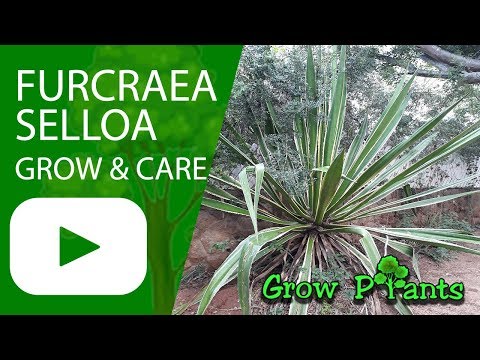
Overview: Furcraea bedinghausii is a large evergreen succulent forming a bold rosette of fleshy green, spear-shaped leaves 1–2 m long. It is grown as a striking, drought-tolerant architectural ornamental for warm, dry gardens.
Quick Specifications
| Specification | Attribute |
|---|---|
| Plant Type / Life Cycle | Perennial, monocarpic (dies after flowering) |
| Foliage Type | Evergreen (succulent) |
| Mature Size | Leaf rosette 1–2 m; flower stalk 4–6 m (12–18 ft) |
| Growth Rate | Slow |
| Hardiness | USDA 8+ |
Growth Form & Structure
- Height & Spread: Rosette 1–2 m across; can be container-grown, with a flower stalk to 4–6 m (12–18 ft).
- Growth Habit & Form: Agave-like evergreen succulent forming a symmetrical rosette; monocarpic – it flowers once, then dies as offsets take over.
- Lifespan & Maturity: Slow-growing over many years to flowering size, after which the mother rosette dies.
Anatomy & Physical Features
- Leaves & Foliage: Fleshy green leaves, spear-shaped with a sharp pointed tip, arranged in a rosette.
- Flower Characteristics: Green-yellow flowers in a huge branched cluster atop a tall stalk, produced once at the end of the plant’s life.
Primary Uses & Landscape Value
- Functional & Ornamental Roles: Architectural, drought-tolerant ornamental for xeriscape and coastal gardens; also grown as a container specimen.
Care Guide: Planting, Soil & Watering
Overview: Furcraea is a large rosette succulent that needs a gritty, sharply drained, sandy soil and full sun to part shade, and is drought-tolerant once established. It prefers frost-free conditions, though it can survive some frost, and wants only light watering with the soil drying fully between.
Quick Care Requirements
| Requirement | Ideal Condition |
|---|---|
| Planting Season | Year-round (in cold climates, better in spring) |
| Growth Rate | Slow |
| Soil Type | Sandy, gritty and sharply draining |
| Water Need | Low – drought-tolerant; let the soil dry fully between waterings |
Planting & Establishment
- Best Planting Season: Plant year-round in mild climates, or in spring where winters are cold; give it a warm, frost-free, sunny spot.
- How to Plant:
- Hole Preparation: Plant into loosened, gritty, free-draining ground so water never pools around the base.
- Soil Amendments: Add coarse sand or grit to improve drainage rather than rich organic matter.
- Planting Depth: Set the rosette with its base at soil level so the crown is not buried and cannot collect water.
- Growth Speed & Expectations: Slow growth; the leaf rosette reaches 1-2 m, with a flowering stalk 4-6 m (12-18 ft).
Soil, Watering & Drainage Care
- Soil Mix & Drainage Needs: A sandy, gritty, sharply drained mix is essential to prevent rot; in containers use a cactus or succulent mix with extra grit and ample drainage holes.
- Watering Schedule & Technique:
- Young / Newly Planted: Water sparingly while it roots in, letting the soil dry between waterings.
- Established: Water only occasionally once established; it stores water and tolerates drought, so err on the dry side.
- Seasonal Adjustments: Water a little more in the warmth of the growing season; keep it nearly dry in cool or wet winter weather.
Climate, Light & Hardiness
Furcraea bedinghausii is an Agave relative suited to desert, subtropical, Mediterranean, tropical, and temperate climates, grown in full sun to half shade. It is best treated as frost-free but can survive some frost, generally reliable to about USDA zone 8.
Quick Climate Specifications
| Climate Zones | Desert, subtropical, Mediterranean, tropical, and temperate |
|---|---|
| USDA Hardiness Zones | Typically zone 8 and warmer |
| Frost Tolerance | Low–Moderate; better frost-free, but established plants can survive some frost |
| Light Conditions | Full Sun to Half Shade |
| Wind Tolerance | High |
| Salt / Coastal Tolerance | Moderate |
Sunlight & Light Exposure
Optimal Light Setup
Full sun to half shade suits this rosette succulent well, encouraging dense, well-formed growth on its short trunk.
Direct Sun Requirement
Several hours of direct sun daily supports strong, healthy growth.
Shade & Heat Management
Handles hot climates well; little extra shade protection is generally needed within its normal growing range.
Best Exposure / Orientation
An open, sun-exposed site with sharp drainage suits it well; allow room for its eventual tall flowering stalk.
Temperature Extremes & Hardiness
USDA Hardiness & Regional Limits
Hardy outdoors year-round in roughly USDA zone 8 and warmer. It performs best treated as a frost-free plant, though established specimens can survive brief, light frost. Cold tolerance varies with plant age and exposure duration.
Cold Damage & Winter Protection
Cold, wet soil compounds frost risk - ensure sharp drainage. In marginal climates, mulch the root zone and consider frost cloth for young plants ahead of hard freezes.
Frost Sensitivity
Frost-sensitive overall; light frost may be survived, but hard or prolonged freezes are likely to cause significant leaf damage.
Extreme Heat Tolerance
Very heat tolerant and well suited to hot desert, subtropical, and tropical summers.
Wind, Humidity & Microclimate
Humidity Preferences
Adapts to a range of humidity, from dry desert and Mediterranean air to humid subtropical and tropical conditions.
Dry-Air Tolerance
Good tolerance of dry air.
Wind Tolerance
Good wind tolerance once established, typical of large rosette succulents.
Coastal / Salt Tolerance
Moderate salt and coastal tolerance; direct, heavy salt spray on foliage is best avoided.
Rainfall & Seasonal Moisture
Adapted to climates with a dry season; it does not want consistently wet, poorly drained conditions.
Microclimate Recommendations
A warm, sun-exposed, well-drained site benefits this species; in marginal climates a sheltered microclimate near a warm wall can help push survival toward the cold edge of its range.
Growing in Pots, Balconies & Indoors
Furcraea bedinghausii (a big, agave-like succulent sometimes called false agave or Mauritius hemp) is a bold architectural plant – the leaf rosette reaches 1-2 m, later topped by a flower stalk 4-6 m (12-18 feet) tall. It is far too large to be a houseplant, but it makes a dramatic container specimen while young, and a potted plant can stand on a sunny patio and be sheltered indoors over winter in cold climates.
Quick Details
- Container Size: A large, heavy, stable pot while young; it outgrows any container in time and is best planted out eventually
- Indoor Suitability: Not a houseplant – too large; only young plants suit a pot, and only briefly indoors for winter shelter
- Best Spot: Full sun to half shade
- Soil & Drainage: Sandy, gritty, free-draining mix – cactus/succulent mix or potting mix with grit; strong drainage
- Watering in Pots: Water sparingly and let the mix dry between waterings; it is very drought-tolerant
Indoors & On the Windowsill
- Houseplant limits: The grower’s answer is No – a Furcraea becomes far too large for indoor life and needs full sun. It is not a room plant.
- Young plants & overwintering: While small it can stand in the brightest window or, better, spend the growing season outdoors and come inside frost-free only over winter in cold climates, then return to full sun.
- Safety: The sap can irritate skin and eyes – wear gloves when handling or pruning, and keep young plants away from children and pets.
On a Balcony or Patio
- Light & wind: Give it the sunniest spot; the stiff, sometimes sharp-edged leaves are handsome but can scratch, so place it where people won’t brush against it. Walls and paving reflect heat and dry pots fast – check moisture in hot weather.
- Practicalities: A potted specimen is heavy and top-heavy – use a wide, sturdy, well-drained container so it can’t tip.
Choosing the Pot, Soil & Long-Term Care
- Pot & drainage: A large, stable pot with strong drainage holes; skip a standing-water saucer to avoid root rot.
- Potting mix: A sandy, gritty, free-draining mix – a cactus/succulent mix or potting mix with added grit and a little organic matter.
- Feeding: Feed only lightly; it is not hungry, and potted plants need just an occasional top-up as nutrients leach.
- Repotting: Pot up as it grows; once it outgrows practical container sizes, plant it out or pass it on.
Fertilizing & Feeding
A light feeder: a little dilute, low-nitrogen fertilizer during the warm growing season is all it needs, with feeding stopped entirely during its cool or dry rest.
Quick Fertilizing Specs
| Feeding Level | Light feeder |
|---|---|
| Main Nutrient Priority | Light, low-nitrogen balanced feeding only during active growth |
| Best Feeding Period | The warm, active growing season |
| Organic Options | A lean, gritty mix; a little compost worked in is plenty |
| Reduce/Stop Feeding | Stop feeding during cool-season or dry dormancy |
| Micronutrients | Usually adequate in a decent mix; correct only a diagnosed deficiency |
| Soil pH | Slightly acidic to near neutral |
Feeding by Growth Stage
Warm-season active growth
Support steady, firm growth and good leaf color through the warm growing season.
| Nutrient direction | A dilute, low-nitrogen complete fertilizer; this succulent needs only light feeding to firm up growth and keep color. |
|---|---|
| Timing | During the warm, actively growing months. |
| Frequency | A light feeding during the active growing season is usually enough; err toward less. |
| Fertilizer types | A dilute, low-nitrogen complete fertilizer, A specialized cactus and succulent fertilizer |
| Precautions | Feed sparingly; overfeeding forces soft, weak, stretched growth that is prone to rot and pests. |
Cool-season dormancy and rest
Let the plant rest through cool, dark, or dry conditions without pushing tender growth.
| Nutrient direction | None – withhold fertilizer while the plant is resting and not in active growth. |
|---|---|
| Timing | During cool weather, low light, or the dry dormant rest period. |
| Frequency | No feeding during dormancy; resume only when active growth returns. |
| Fertilizer types | No feeding at this stage; do not fertilize until active growth resumes. |
| Precautions | Do not fertilize a resting succulent; feeding now risks salt buildup and rot. |
Nutrient Deficiency Signs & Corrections
Overall growth slows and older leaves fade to a pale, washed-out green.
| Possible causes | low available nitrogen in a lean, fast-draining mix, nitrogen leached out by frequent watering, a long spell in the same tired, exhausted potting mix |
|---|---|
| Appears first on | older, lower leaves |
| What to check | recent feeding history, age and quality of the potting mix, watering frequency and leaching |
| Possible correction | Apply a dilute, low-nitrogen complete fertilizer during active growth and refresh the mix if it is exhausted. |
Leaf tips and margins brown or scorch and roots look damaged even though the plant is watered.
| Possible causes | fertilizer salt buildup in a pot that rarely leaches, overfeeding a low-demand succulent, poor drainage that concentrates salts in the root zone |
|---|---|
| Appears first on | leaf tips and margins |
| What to check | how much and how often fertilizer was applied, drainage and pot design, time since the mix was last flushed with plain water |
| Possible correction | Ease off feeding, flush the mix with plain water to leach salts, then return to sparing feeding. |
New leaves emerge pale or yellow between still-green veins while older leaves stay greener.
| Possible causes | poor micronutrient availability in an alkaline or waterlogged mix, high soil or water pH locking up iron, cold, soggy roots slowing nutrient uptake |
|---|---|
| Appears first on | new, young leaves |
| What to check | soil moisture and drainage, whether the mix or irrigation water is alkaline, root health |
| Possible correction | Correct drainage and alkalinity first, and apply a chelated micronutrient product per its label if the problem persists. |
Pruning, Training & Seasonal Maintenance
Furcraea bedinghausii is a large, single-rosette succulent that, like the rest of this genus, needs almost no pruning of the living plant. The two real tasks are sanitary removal of fully dead lower leaves as they age, and clearing the spent flower stalk and mother rosette once its single bloom cycle ends — this species is monocarpic, sending up a stalk of 4–6 m and then dying back after flowering, with a young offset taking over. Nothing about this schedule is about shaping the rosette; it is entirely about sanitation and the one-time clearance that follows flowering.
Quick Pruning & Maintenance Specs
| Pruning Tolerance | Low (sanitary removal only) |
| Primary Pruning Window | All year for dead-leaf removal; after flowering finishes for stalk and spent-rosette removal |
| Typical Frequency | Occasional dead-leaf trims; one major clearance per rosette’s lifetime after it blooms |
| Main Objective | Remove dead leaves; clear the spent flower stalk and mother rosette once flowering finishes |
| Young Plant Priority | Leave leaves alone; remove only fully dead lower leaves |
| Mature Plant Priority | Watch for the flower stalk; clear the spent rosette once it dies post-bloom |
| Best Tool Type | Precision snips for dead leaves; pruning saw and pole pruner for the tall spent stalk |
| Avoid Heavy Pruning During | Never cut healthy green leaves |
Pruning by Plant Age & Size
Newly Established
Remove only leaves damaged in transplanting; let the rosette establish undisturbed.
Young / Formative
No structural training applies to a single rosette; the only task is removing fully dead, browned lower leaves as they senesce.
Mature / Established
Continue sanitary dead-leaf removal; once flowering finishes and that rosette dies, cut the spent stalk and mother plant away to give the replacement offset room and light.
Seasonal Pruning Schedule
Ongoing sanitary (year-round): remove only fully dead, brown lower leaves; leave green, functional foliage untouched. Post-flowering (once the bloom stalk finishes, typically following its summer bloom): cut the spent stalk in sections and remove the dying mother rosette; this particular rosette will not flower again, so cutting timing has no bearing on “next year’s bloom” — the offset carries that forward.
Special Growth to Remove
Fully dead lower leaves, and the spent flower stalk and mother rosette once flowering finishes. Retain basal offsets — they are how the plant continues once the flowering rosette dies; thin only if crowded.
Container & Small-Space Pruning
Container culture limits the ultimate size of this large plant; in a tight space near foot traffic, trimming the sharp, spear-pointed leaf tips slightly is a safety measure, not a shaping one.
Tools
Precision snips for individual dead leaf removal. Pruning saw for the thick, fibrous flower stalk and old rosette base. Pole pruner for reaching the top of a stalk up to 18 ft, taken down in sections.
Tool Hygiene & Disease Risk
Increased. The agave snout weevil, a recorded pest of this genus, exploits damaged or wounded tissue, so clean, prompt cuts reduce the openings it can use.
Cut Placement & Technique
Cut dead leaves close to the base without gouging the living rosette core. Bring the flower stalk down in manageable sections from the top rather than felling it whole. Wear thick gloves for the spear-sharp leaf tips.
Heavy Pruning & Rejuvenation
Not applicable in the shrub-renewal sense — once flowered, the mother rosette cannot be rejuvenated; clearing it only makes room for the offset that replaces it.
Post-Pruning Care
Check the newly exposed offset for sunburn after removing a tall spent stalk that had been shading it. No feeding is needed for routine dead-leaf removal.
Common Pruning Mistakes
- Cutting healthy green leaves for tidiness, stressing the single growing point.
- Removing the flower stalk or mother rosette before the replacement offset is established.
- Attempting to fell a multi-metre spent stalk in one piece with undersized tools.
When NOT to Prune
Do not remove lower leaves that are still partly green and functional. Do not cut down the flowering stalk while its bloom cycle is still active.
Recommended Tools (by task)
- precision_snips — for routine removal of individual dead lower leaves.
- pruning_saw — for the thick spent flower stalk and old rosette base.
- pole_pruner — to safely bring down sections of a stalk up to 18 ft.
Propagation Guide
Furcraea bedinghausii, whose stalk can tower well above the leaf rosette, is propagated mainly from the bulbils (small plantlets) that form abundantly along that flower stalk, since the rosette is monocarpic and dies after flowering. Vegetative propagation from bulbils or basal offsets is the standard, near-essential method and is Easy once material is available, while raising the species from seed is possible but slow.
Quick Propagation Specs
| Best Propagation Method | Bulbils (plantlets from the flower stalk) |
| Alternative Methods | Basal offsets/pups where present; seed for the species form |
| Propagation Difficulty | Easy from bulbils or offsets; slow and less reliable from seed |
| Seed True-to-Type | Cultivar-dependent – selected or variegated forms do not come true from seed |
| Vegetative True-to-Type | Yes |
| Best Propagation Season | All year in frost-free climates; in cold climates spring is preferable so young plants establish before winter |
| Seed Germination Time | Several weeks to a few months, can be slow and uneven |
| Germination Temperature | 20–25°C (68–77°F) |
| Seed Sowing Depth | Shallow, just covered |
Growing from Seed
Seed Handling & Viability
Use fresh seed where possible, since viability can decline with storage.
Sowing Season
Sow during the warm months.
Sowing Depth & Orientation
Sow shallowly and cover lightly.
Germination Conditions
Warm, bright conditions with the mix kept consistently moist but not waterlogged.
Germination Time
Germination can be slow and uneven, taking several weeks to a few months.
Seedling Care
Growth is slow, matching this species’ generally slow growth rate; grow seedlings on in bright light to partial shade before planting out, and expect a long juvenile period before a rosette reaches flowering size and sends up its tall stalk.
Division, Offsets, Pups & Suckers
Some rosettes produce basal offsets around the base of the mother plant before flowering. Once an offset has its own roots and is large enough to survive independently, separate it with roots attached, pot it in a well-drained mix, and keep it humid and lightly shaded until established, then move it toward full sun.
Rhizomes, Tubers, Bulbs & Corms
Bulbils: After the rosette flowers, it dies, and the tall flower stalk typically produces numerous small bulbils (plantlets) instead of, or alongside, seed. Left in place, many bulbils root directly on the stalk or drop and root where they land. For controlled propagation, detach individual bulbils once they show a few small leaves and root initials, and pot them in a well-drained succulent mix; keep lightly moist in bright, indirect light or part shade until well rooted, then move to full sun. Once the flower stalk and spent mother rosette have finished producing bulbils, they should be cut away and removed.
Bloom & Flower Guide
Quick Details
- Bloom Season: Summer
- Time to First Bloom: Only once, after many years – the rosette is monocarpic and flowers a single time when fully mature
- Flower Appearance: Green-yellow flowers carried in large clusters on a tall stalk
- Edibility: Not an edible flower; grown for its form and fibre, and the sap contains saponins that can irritate skin and eyes
Detailed Blooming Overview
After years of building up its rosette, Furcraea bedinghausii sends up an enormous branched flowering stalk in summer. It is monocarpic: the parent rosette flowers just once and then dies, but it leaves behind numerous bulbils – small plantlets – on the old flower stalk that root and carry the plant on.
Flower Characteristics
- Green-yellow flowers, often nodding and bell-like, held in a very large branched panicle.
- Bulbils commonly form along the flowering stalk after the blooms fade.
Bloom Care & Thinning
- After flowering: Because the rosette dies once it has bloomed, let the bulbils develop, then detach and pot them on to replace the parent.
- Tidying up: Remove the spent stalk once the bulbils have been collected.
Pests, Diseases & Troubleshooting
Overview: Furcraeas are large agave-relatives (Mauritius hemp) grown as bold architectural succulents; like agaves they are tough and generally pest-resistant, their chief threats being the agave snout weevil boring into the crown, plus scale and mealybug, and – most of all – crown and root rot from overwatering or cold-wet soil. They are frost-tender and many are monocarpic. F. bedinghausii is a tree-like blue-green species; it follows the general Furcraea profile and is a little more cold-tolerant than some.
Quick Troubleshooting Overview
| Issue / Pest | Main Symptom | Primary Solution |
|---|---|---|
| Agave snout weevil | Crown collapses, leaves splay, rotten grub-riddled base | Remove infested plants; preventive drench, hygiene |
| Scale insects | Brown/grey bumps and flecks on leaves; sooty mould | Wipe/scrape off, horticultural oil |
| Mealybugs | White cottony fluff in leaf axils and centre | Alcohol swab, insecticidal soap/oil |
| Spider mites | Fine stippling, dull leaves in hot dry air | Rinse, raise humidity, miticidal soap |
| Crown / root rot | Soft, browning base; collapse in wet or cold | Sharp drainage, dry-side watering, remove rot |
| Sunburn / cold damage | Bleached scorched or mushy translucent tissue | Acclimatise to sun; protect from frost |
Common Pests & Management
- Agave snout weevil (Scyphophorus acupunctatus):
- Symptoms: A large dark snout weevil whose grubs bore into the crown and base, hollowing and rotting the core so that the leaves loosen, splay and the whole plant collapses – often only noticed when it is too late; a shared and serious pest of agaves and their relatives.
- Prevention & Control: Remove and destroy collapsing, grub-riddled plants promptly with their surrounding soil to stop the weevils spreading, keep plants vigorous and unstressed, and avoid wounding the crown. A preventive soil drench of a systemic insecticide protects valuable specimens in areas where the weevil is active; good hygiene is key.
- Scale insects (Diaspididae / Coccidae):
- Symptoms: Small brown, grey or white waxy bumps and flecks along the leaves and in the axils, sucking sap, sometimes with honeydew and sooty mould; heavy infestations dull and weaken the foliage.
- Prevention & Control: Wipe or gently scrape off, isolate affected plants, and follow with a light horticultural or neem oil to smother crawlers, repeating every couple of weeks. Inspect the leaf bases and undersides.
- Mealybugs (Pseudococcus / Planococcus spp.):
- Symptoms: White cottony tufts tucked into leaf axils and the crown, with honeydew, sooty mould and stunted growth; root mealybug can also infest the roots.
- Prevention & Control: Dab colonies with an alcohol-moistened cotton bud, then treat with insecticidal soap or neem/horticultural oil, reaching into the tight leaf bases. Check roots at repotting and quarantine new plants.
- Spider mites (Tetranychus urticae):
- Symptoms: Fine stippling and a dull, dusty look on the leaves of plants kept hot, dry and airless, with faint webbing in bad cases.
- Prevention & Control: Rinse the foliage, improve airflow, and use insecticidal soap or a light miticidal oil if mites persist. Rarely serious outdoors.
Diseases & Fungal Issues
- Crown and root rot (Phytophthora / Fusarium / Pythium spp.):
- Symptoms: Soft, browning or blackening tissue at the base and crown with wilting and collapse, and dark mushy roots – almost always following overwatering, poor drainage, or cold-wet conditions.
- Treatment & Management: Prevention is the cure: grow in fast-draining gritty soil, water thoroughly then let it dry well, keep the plant on the dry side in cool weather, and never leave it waterlogged. Cut away all rotten tissue and try to re-root a firm crown dry; discard collapsed plants and their soil.
- Bacterial soft rot (Erwinia / Pectobacterium spp.):
- Symptoms: Foul-smelling, slimy, soft rot spreading from wounds or the crown, especially in warm wet conditions or after weevil or frost injury.
- Treatment & Management: Keep the plant dry and unwounded, remove and destroy rotting tissue and badly affected plants, and improve drainage and airflow. There is no reliable chemical cure – sanitation and dry culture prevent it.
- Anthracnose / leaf spot (Colletotrichum / Coniothyrium spp.):
- Symptoms: Sunken brown or black spots and blotches on the leaves in humid, wet, crowded conditions.
- Treatment & Management: Remove affected leaves, avoid overhead watering and crowding, and improve airflow. A copper fungicide can protect valued plants where spotting is persistent.
Growing Difficulties & Abiotic Problems
- Overwatering rot (main killer):
- Cause & Symptoms: Grown too wet or in heavy, poorly drained or cold-wet soil, these succulents rot at the roots and crown.
- Correction Strategy: Use a gritty, fast-draining mix or well-drained ground, water generously only when the soil has dried, and cut watering right back in cool weather and winter.
- Frost / cold damage:
- Cause & Symptoms: Furcraeas are frost-tender; freezing causes translucent, mushy, collapsed tissue that then rots.
- Correction Strategy: Protect from frost – grow in containers to move under cover, or provide overhead protection in marginal climates – and keep plants dry in cold spells, as dry plants tolerate cold far better than wet ones.
- Sunburn:
- Cause & Symptoms: Sudden exposure to intense sun after shade (or in variegated forms) bleaches and scorches the leaves.
- Correction Strategy: Acclimatise gradually to full sun; give variegated plants some protection from the fiercest midday sun, which their paler tissue tolerates less well.
- Monocarpic flowering / bulbils:
- Cause & Symptoms: Many Furcraeas flower only once after many years, sending up a huge inflorescence, then die – often producing masses of plantlets (bulbils) on the flower spike.
- Correction Strategy: This is natural, not a disease: enjoy the spectacular bloom, then pot up the bulbils or offsets to continue the plant, and remove the spent rosette. Sap can irritate skin, so handle with care.
What Helps – Products & Tools
Care is chiefly cultural – sharp drainage, dry-side watering, full sun (acclimatised) and frost protection prevent the rot that is the main risk. For pests, hygiene and prompt removal of weevil-struck plants are vital, with a preventive systemic drench for the snout weevil on valued specimens; insecticidal soap, neem and light horticultural oil handle scale, mealybug and mites, and a copper fungicide backs up sanitation against leaf spot.