


Plant Profile & Key Characteristics
Overview: A tender tuberous perennial reaching 0.3-1.5 m (1-5 ft) that dies back to fleshy underground tubers each winter. It is grown purely for ornament and as a cut flower, valued here for its fuchsia-pink, cactus-flowered blooms.
Quick Specifications
| Specification | Attribute |
|---|---|
| Plant Type / Life Cycle | Herbaceous perennial (tuberous geophyte) |
| Foliage Type | Deciduous (dies back each winter) |
| Mature Size | 0.3-1.5 m (1-5 ft) tall, occasionally more |
| Growth Rate | Moderate |
| Root System | Tuberous roots (a cluster of fleshy storage tubers) |
| Toxicity | Non-toxic / edible — the tubers were historically eaten and the plant is not listed as toxic to cats or dogs |
| Hardiness | USDA zones 8-11 in the ground; in zones 2-7 the tubers are lifted and stored over winter |
Growth Form & Structure
- Height & Spread: 0.3-1.5 m (1-5 ft) tall in the ground and equally at home in a large pot, where its size stays naturally more restrained; taller stems benefit from staking.
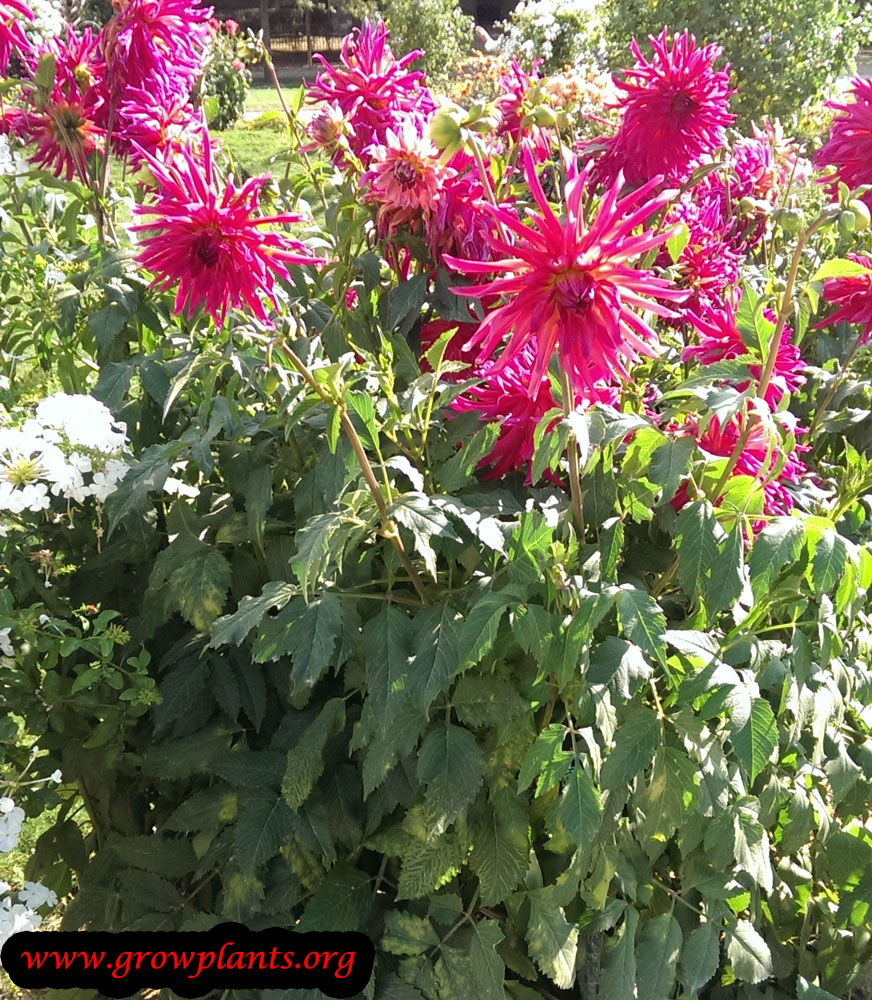
- Growth Habit & Form: Upright, clump-forming herbaceous plant; hollow branching stems rise each year from the tuber cluster to form a bushy plant.
- Lifespan & Maturity: The tuber is long-lived, returning for many years where hardy or if lifted and stored; plants reach full size and flower in their first season from a spring-planted tuber.
Anatomy & Physical Features
- Leaves & Foliage: Mid-green leaves, elliptic to lanceolate or deeply lobed with serrated margins, pinnately arranged on hollow branching stems.
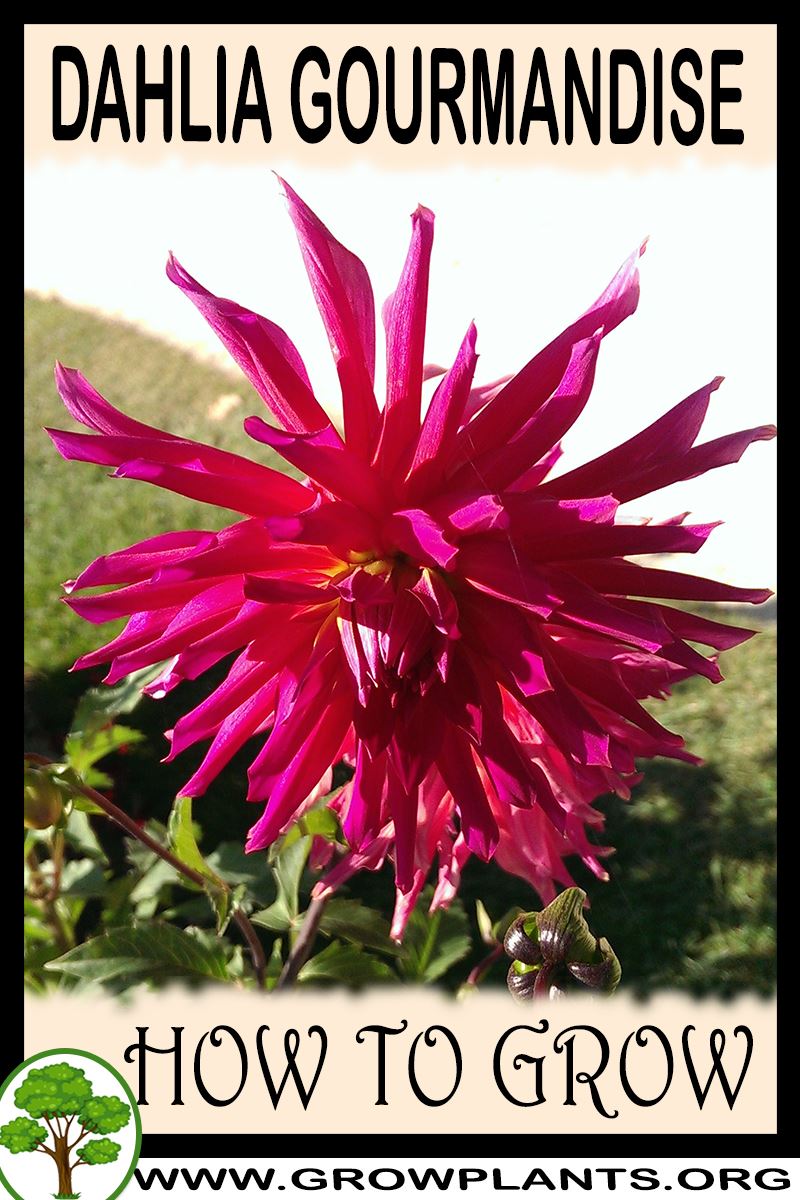
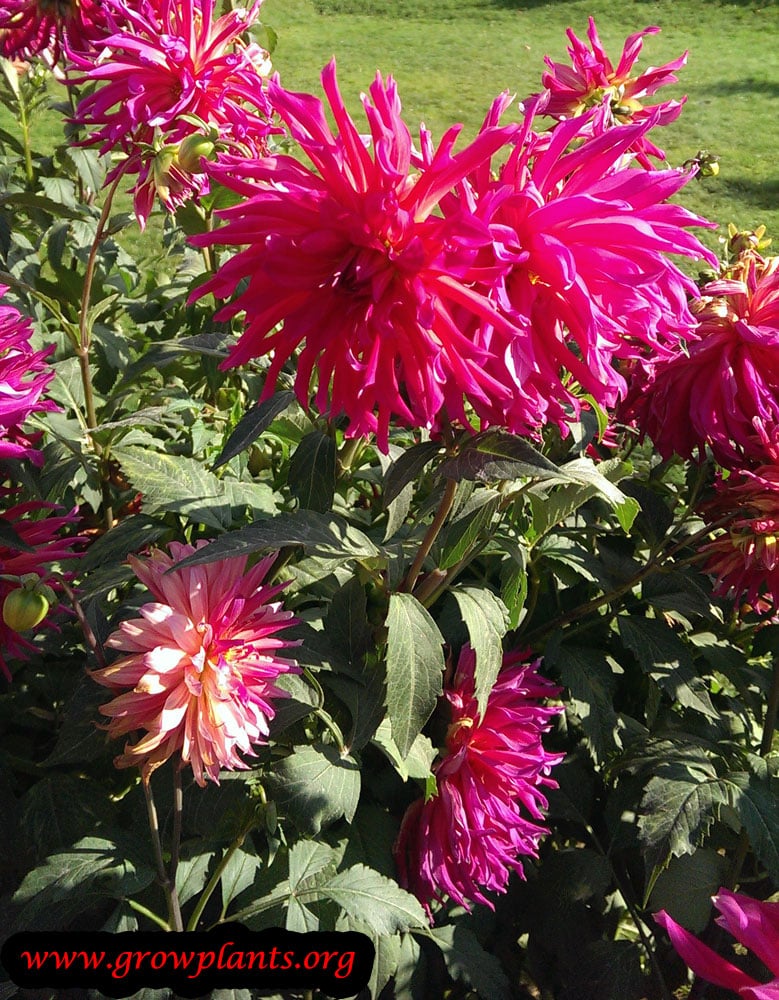
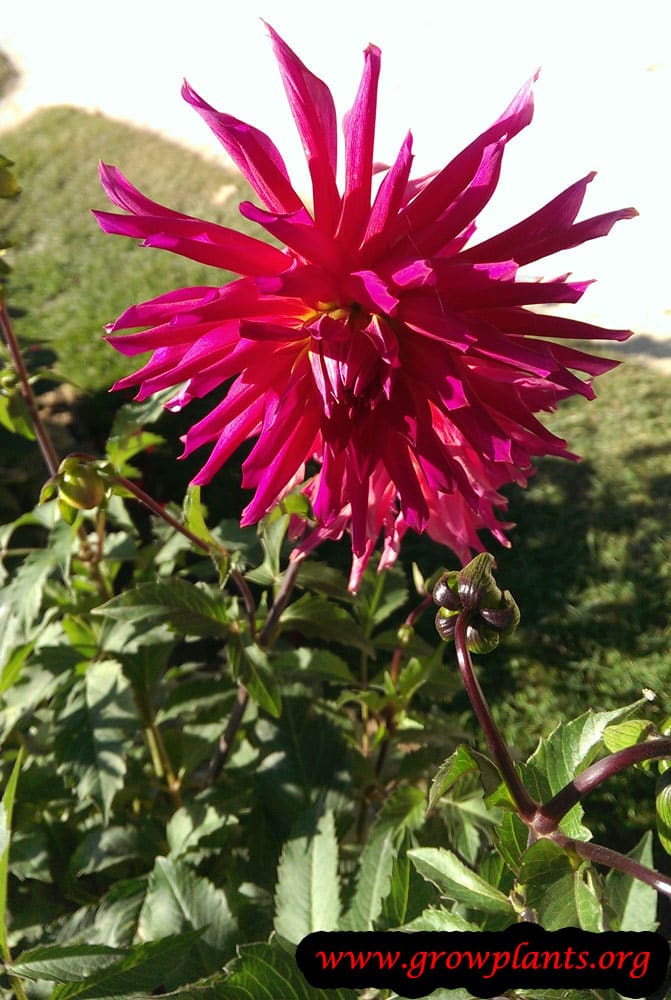
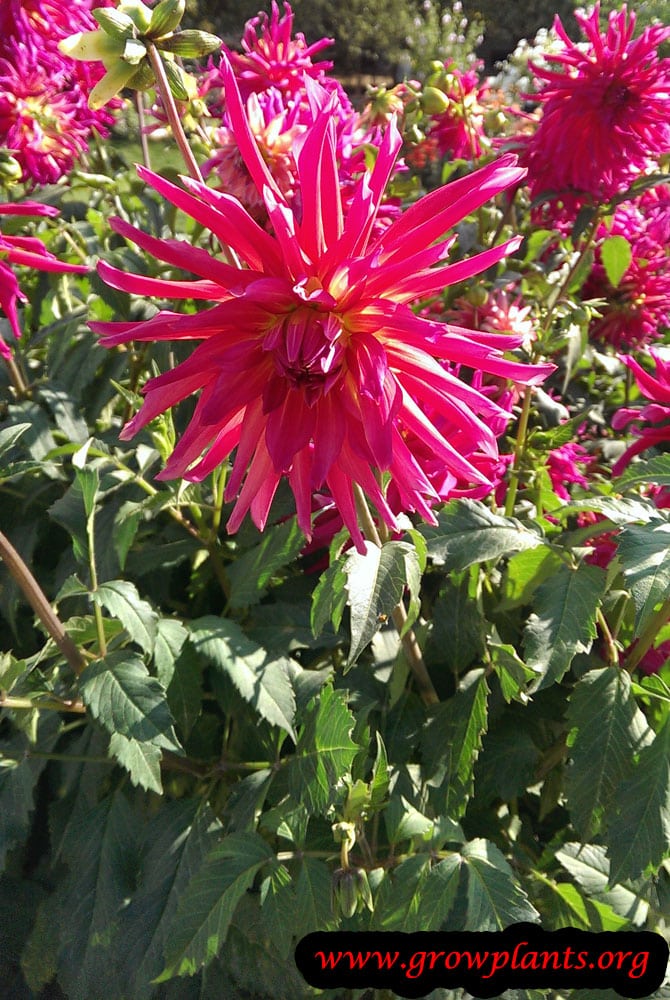
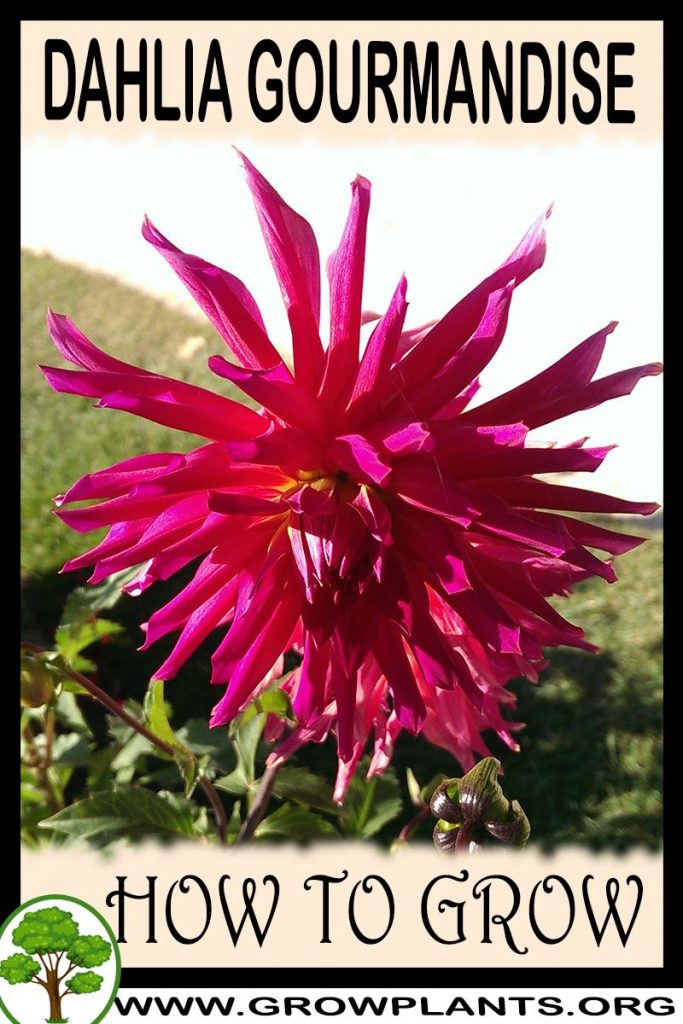
- Flower Characteristics: Fuchsia-pink cactus-type blooms formed of many narrow, quilled, needle-pointed petals.
Primary Uses & Landscape Value
- Functional & Ornamental Roles: Border, bed and cottage-garden ornamental, an excellent large-container specimen and a prized cut flower for late-season colour.
Care Guide: Planting, Soil & Watering
Overview: Dahlia ‘Gourmandise’ is a tuberous dahlia grown for its showy blooms, thriving in full sun in rich, well-drained soil. It needs steady, even moisture through the growing season and sharp drainage to protect its tubers from rot.
Quick Care Requirements
| Requirement | Ideal Condition |
|---|---|
| Planting Season | Spring, once frost has passed (mid-spring in cold areas) |
| Growth Rate | Moderate |
| Soil Type | Rich, well-draining |
| Water Need | Moderate; keep evenly moist, never waterlogged |
Planting & Establishment
- Best Planting Season: Plant tubers in spring after the last frost, waiting until mid-spring in cold areas; in frost-prone zones lift and store the tubers over winter.
- How to Plant:
- Hole Preparation: Dig a hole a little wider than the tuber and lay it on its side with the growing eye facing up.
- Soil Amendments: Work in compost and organic matter for a rich, free-draining bed; go easy on high-nitrogen feeds, which encourage leaf at the expense of flowers.
- Planting Depth: Set the tuber roughly 10-15 cm deep with the crown just below the surface; do not bury it in wet, cold soil where it may rot.
- Growth Speed & Expectations: A moderate grower reaching about 0.3-1.5 m (sometimes more) and flowering from spring through autumn.
Soil, Watering & Drainage Care
- Soil Mix & Drainage Needs: Needs rich but sharply drained soil; wet, heavy ground is the main cause of tuber rot, so improve drainage before planting.
- Watering Schedule & Technique:
- Young / Newly Planted: Water only lightly until shoots appear, then keep the soil evenly moist – overwatering a dormant tuber invites rot.
- Established: Water deeply and regularly once in active growth, letting the top few centimetres dry between waterings.
- Seasonal Adjustments: More water in summer heat and flowering; taper off in autumn as the plant dies back.
Climate, Light & Hardiness
Dahlia Gourmandise, a Cactus-group cultivar, is a tender tuberous perennial suited to subtropical, Mediterranean, desert, temperate, and tropical climates, thriving in full sun. It grows year-round outdoors only in warm zones; elsewhere the tubers must be lifted for winter storage.
Quick Climate Specifications
| Climate Zones | Subtropics, Mediterranean, desert, temperate, tropics |
|---|---|
| USDA Hardiness Zones | 8–11 with tubers left in the ground; growable as a seasonal (lift-and-store) planting in zones 2–7 and 12+ |
| Frost Tolerance | Very Low (tubers can rot or be killed by hard freezing) |
| Light Conditions | Full sun |
Sunlight & Light Exposure
Optimal Light Setup
Needs full sun for strong stems and abundant flowering.
Direct Sun Requirement
Several hours of direct sun daily are essential; flowering declines sharply in shade.
Best Exposure / Orientation
An open, unobstructed southern exposure supports the strongest bloom.
Temperature Extremes & Hardiness
USDA Hardiness & Regional Limits
The tuber survives in the ground year-round only in zone 8–11 climates. Outside that range, the site data explains that in cold areas the tubers must be dug up and stored over winter, then replanted - the same tuber can be reused for years even though the ground itself freezes.
Cold Damage & Winter Protection
Frost kills top growth, and prolonged ground freezing rots or kills the tuber itself, which is why lifting is necessary outside zone 8–11. Stored tubers need a cool, dry, frost-free place over winter.
Frost Sensitivity
High - foliage and flowers are damaged by the first frost of autumn, marking the end of the outdoor growing season wherever winters freeze.
Extreme Heat Tolerance
Generally tolerates warm subtropical and tropical heat well, provided watering keeps pace.
Wind, Humidity & Microclimate
Humidity Preferences
Adapts across the humidity range from humid tropics and subtropics to drier Mediterranean and desert climates, provided soil moisture is maintained.
Microclimate Recommendations
In borderline zone 8 areas, heavy mulching over the dormant tuber can sometimes substitute for lifting; in colder zones, lifting after the first frost and storing indoors is the standard practice.
Growing in Pots, Balconies & Indoors
Dahlia ‘Gourmandise’ is a full-sun flowering tuber, not a houseplant – indoors it can’t get the light it needs to bloom, so it belongs on a sunny balcony or patio. In a good-sized, free-draining pot it flowers freely, and the tubers are easily lifted and stored frost-free over winter.
Quick Details
- Container Size: A roomy pot, roughly 10-30 L (2-6 gal) depending on the variety’s height
- Indoor Suitability: Not a houseplant – it needs full sun to flower
- Best Spot: Full sun (light shade tolerated) on a balcony or patio
- Soil & Drainage: Rich but free-draining mix – wet, stagnant soil rots the tuber
- Watering in Pots: Average and steady once growing – pots dry fast; keep moist but never waterlogged
Indoors & On the Windowsill
- Not a houseplant: The grower marks it as unsuitable indoors – a warm room simply can’t supply the strong light it needs to bloom. Grow it outdoors.
- Overwintering the tuber: This is the key indoor role. In cold climates, once the top growth is knocked back by frost, lift the tubers, dry them and store them somewhere cool, dark and frost-free, then restart them in warmth before the next growing season. In frost-free climates the pot can simply stay outside.
On a Balcony or Patio
- Light & wind: Give it the sunniest spot. Taller varieties are top-heavy in bloom, so stake them and shelter the pot from strong wind. Reflected heat from walls dries pots fast – check moisture often in warm weather.
- Practicalities: Use a stable, heavy-enough pot so it won’t blow over, and make sure runoff drains away freely.
Choosing the Pot, Soil & Long-Term Care
- Pot & drainage: A 10-30 L pot with strong drainage holes; skip a standing-water saucer, as a wet, stagnant base rots the tuber.
- Potting mix: A well-aerated, organic-rich mix – peat or coir with perlite or vermiculite for sharp drainage.
- Feeding: Feed potted dahlias through the growing season, but go easy on nitrogen – the grower warns that too much nitrogen spoils the flowers, so favour a lower-nitrogen (higher potassium) feed once buds form.
- Through the season: Deadhead spent blooms to keep flowering going, and refresh the mix each year when you replant the stored tubers.
Fertilizing & Feeding
Dahlias are moderate feeders – they respond well to a balanced fertilizer regimen through the growing season but do not need frequent or heavy feeding, and excess nitrogen can reduce flowering quality and weaken stems.
Quick Fertilizing Specs
| Feeding Level | Light to moderate feeder – dahlias generally need only modest fertilizing to perform well |
|---|---|
| Main Nutrient Priority | Balanced feeding with attention to potassium for stem strength and bloom quality; avoid nitrogen-heavy products that push foliage over flowers |
| Best Feeding Period | From spring shoot emergence through the summer and autumn bloom season |
| Reduce/Stop Feeding | Stop feeding as foliage begins to die back in autumn and the tuber enters dormancy |
| Organic Options | Well-rotted compost or aged organic matter worked into the soil at planting supports steady, moderate growth |
Feeding by Growth Stage
Spring Growth (Sprouting to Vegetative Establishment)
Support vigorous leaf and stem development as the tuber breaks dormancy and shoots emerge in spring, building strong stems ahead of this cactus-type dahlia’s narrow, spiky-petaled fuchsia flower heads
| Nutrient direction | Balanced, moderate feeding with adequate nitrogen to build strong foliage and stems |
|---|---|
| Timing | Begin once new shoots are actively growing above the soil in spring |
| Frequency | Several light feedings spaced through the spring growth period |
| Fertilizer types | A balanced, complete fertilizer formulated for flowering garden plants, Well-rotted compost or organic matter worked into the planting area |
| Precautions | Avoid heavy nitrogen applications, since excess nitrogen encourages lush foliage at the expense of flowering and can weaken stems |
Bud Set and Bloom
Sustain steady flowering and stem strength through the summer-into-autumn bloom period; the narrow, needle-like petals of cactus-type dahlias form on tall stems that benefit from good potassium supply
| Nutrient direction | Balanced feeding with attention to potassium to support stem strength and flower quality; steer away from nitrogen-heavy products |
|---|---|
| Timing | From bud formation through the main summer and autumn bloom period |
| Frequency | Light, regular feeding through the bloom season, tapering off as flowering slows |
| Fertilizer types | A balanced or slightly potassium-leaning fertilizer for flowering plants, Avoid high-nitrogen lawn or foliage fertilizers near the planting |
| Precautions | Established plants rarely need heavy feeding once blooming is underway; overfeeding with nitrogen can reduce bloom quality and weaken flower stems |
Dieback and Tuber Dormancy
Let the plant die back naturally as the tuber enters dormancy; in cold climates the tuber is typically lifted and stored, while in mild climates it may stay in the ground
| Nutrient direction | None – withhold fertilizer while the plant is dying back and the tuber is dormant |
|---|---|
| Timing | After the foliage is cut back or killed by frost in autumn, through the dormant winter period |
| Frequency | No feeding at this stage |
| Fertilizer types | No feeding at this stage – the plant is entering dormancy and cannot use additional nutrients |
| Precautions | Do not fertilize the dormant tuber; focus instead on well-drained storage or soil conditions to prevent rot |
Nutrient Deficiency Signs & Corrections
Overall pale green color and slower-than-expected leaf and stem growth during the active growing season
| Possible causes | Nitrogen deficiency, Poorly drained or compacted soil limiting root function, Cool soil temperatures slowing nutrient uptake early in the season |
|---|---|
| Appears first on | Older, lower leaves first, then spreading upward if uncorrected |
| What to check | Soil drainage and structure around the tuber, Recent feeding history, Root and tuber health for rot or damage |
| Possible correction | Apply a balanced, complete fertilizer for flowering plants per its label and improve soil drainage if compacted or waterlogged |
Weak, floppy flower stems and reduced or delayed flowering despite healthy-looking foliage
| Possible causes | Potassium deficiency, Excess nitrogen favoring foliage growth over flowering, Insufficient sunlight during bud development |
|---|---|
| Appears first on | Flower stems and developing buds |
| What to check | Recent feeding history for heavy nitrogen use, Hours of direct sun the plant receives, Overall stem sturdiness compared to earlier in the season |
| Possible correction | Shift toward a balanced or potassium-leaning fertilizer for flowering plants and reduce nitrogen-heavy feeding; ensure the planting site gets full sun |
Yellowing between the veins on new, upper leaves while the veins themselves stay green
| Possible causes | Iron deficiency linked to high soil pH limiting availability, Waterlogged soil reducing root uptake of micronutrients, Root stress from tuber rot |
|---|---|
| Appears first on | New growth at the shoot tips |
| What to check | Soil pH and drainage, Whether yellowing follows a clear vein pattern, Tuber and root condition for rot |
| Possible correction | Correct overly alkaline soil gradually and apply a chelated iron product per its label if a true iron deficiency is confirmed |
Pruning, Training & Seasonal Maintenance
Dahlia Gourmandise dies back to a tuber every year, so there is no woody structure to shape – pruning is entirely soft-tissue work on the current season’s growth. A single early pinch builds a bushier plant, regular deadheading of the fuchsia, needle-petalled cactus blooms keeps it flowering from spring into autumn, and a full cutback follows the first frost.
Quick Pruning & Maintenance Specs
| Pruning Tolerance | Moderate to high for pinching/deadheading; no woody structural pruning applies |
| Primary Pruning Window | Spring, at 2-3 leaf pairs (tip pinch) |
| Secondary Maintenance Window | Summer-autumn, weekly deadheading while flowering |
| Typical Frequency | One spring pinch, weekly deadheads through bloom, one cutback at frost |
| Main Objective | More lateral stems and blooms, then a clean dormancy |
| Young Plant Priority | Pinch the tip and stake before the tuber fills out |
| Mature Plant Priority | Regular deadheading; thin crowded basal shoots on older clumps |
| Best Tool Type | Precision snips for soft growth; bypass secateurs for the firmer base at cutback |
| Avoid Heavy Pruning During | Active bud formation you want to keep, and just after transplanting |
Pruning by Plant Age & Size
Newly Established
No pruning beyond removing any rotten or damaged tissue found on the tuber at planting; let the first shoots grow undisturbed until 2-3 leaf pairs form.
Young / Formative
At roughly 2-3 leaf pairs, pinch the soft growing tip above a node to force lateral branching – left alone the plant tends to run up one dominant stem. Set the stake at the same time, since staking later can pierce the expanded tuber.
Mature / Established
An established plant needs ongoing deadheading and tying-in of new growth, with optional disbudding of the two smaller side buds flanking a main bud for larger single blooms.
Seasonal Pruning Schedule
Pre-Growth / Early-Spring
Objective: branching. Pinch the soft tip once, at 2-3 leaf pairs; do not repeat once branched, as it only delays bloom. Expect several new lateral shoots within 1-2 weeks and more total flowers across the season.
Ongoing Sanitary
Objective: extend the spring-summer-autumn bloom and keep the plant clean. Deadhead spent flowers back to the first full leaf pair or a side bud, and remove damaged or yellowing foliage – leave the rest, which is still feeding the tuber. Deadheading directly extends flowering by preventing seed set.
Dormant / Winter
Objective: shutdown and tuber protection. Once frost blackens the foliage, cut the plant down – to about 10-15cm and lift the tuber for storage in cold-winter areas, or simply remove dead flowers/leaves and leave the tuber in the ground where winters are mild. Don’t cut back green, frost-undamaged foliage early.
Structural Pruning & Training
No branch selection applies; structure means staking the 0.3-1.5m stems (top-heavy in full bloom), the single formative pinch, and thinning the weakest basal stems from an older, crowded clump each spring.
Special Growth to Remove
- Spent flower stems – deadhead regularly; the main recurring cut.
- Frost-killed top growth – remove fully at dormancy.
- Weak or crowded basal shoots on multi-year clumps – thin a few each spring.
- Smaller flanking side buds – optional disbudding for larger individual blooms.
Container & Small-Space Pruning
Pinch slightly earlier in a container (2 leaf pairs) for compact proportions, stake even modest growth since pots anchor less than open ground, deadhead promptly since spent blooms are more visible in a small space, and avoid delaying the frost cutback given the smaller soil buffer around a container tuber.
Tools
Precision or floral snips for pinching and deadheading; bypass secateurs for the firmer basal stems at the frost cutback. No saw, loppers, or hedge shears – there is no woody growth on this plant.
Tool Hygiene & Disease Risk
Increased. Dahlia mosaic virus and similar pathogens spread mechanically via sap on cutting tools, so disinfect blades between plants when pinching, disbudding, or dividing, even though individual cuts are minor.
Cut Placement & Technique
Pinch just above a node. Deadhead to the first full leaf pair or emerging side bud rather than pulling petals, to avoid a rotting stub. Cut cleanly a few centimeters above soil at the frost cutback rather than tearing, to protect the crown.
Heavy Pruning & Rejuvenation
No woody rejuvenation cut applies; the annual frost cutback is the routine equivalent, and dividing the tuber clump every 2-3 years renews vigor as undivided clumps flower less over time.
Post-Pruning Care
Water normally after the spring pinch; no extra feeding needed for it. Keep lifted tubers just barely moist and cool in storage, since rot is the main storage risk. Watch new pinched shoots for aphids and slugs/snails, which target tender new tips.
Common Pruning Mistakes
- Skipping the pinch, leaving one tall stem with fewer blooms.
- Pulling petals instead of cutting back to a leaf pair when deadheading.
- Staking too late and damaging the expanded tuber.
- Cutting back healthy, frost-undamaged foliage too early.
When NOT to Prune
- Not before frost has actually blackened the foliage.
- Not immediately after transplanting – let the plant establish first.
- Avoid cutting in wet weather, which raises botrytis/stem-rot risk on fresh cuts.
Recommended Tools (by task)
| Task | Stem / Cut Size | Tool Category | Why |
| Pinching the tip and deadheading through bloom | Soft green tissue, under 1cm | precision_snips | Clean cuts on soft tissue without crushing the stem |
| Frost-time full cutback | Firmer basal stem, up to ~1-2cm | bypass_secateurs | Cleaner cut than snips give on the firmer base |
| Staking flowering stems | n/a | soft_ties_stakes | Supports top-heavy 0.3-1.5m stems without girdling |
Propagation Guide
Dahlia Gourmandise, with its fuchsia cactus-type blooms, is propagated primarily by dividing the tuberous root clump, since seed-grown plants will not reproduce this exact color and form. Division is straightforward for home gardeners, while raising extra stock from basal cuttings takes a bit more care and warmth.
Quick Propagation Specs
| Best Propagation Method | Tuber (clump) division |
| Alternative Methods | Basal stem cuttings; seed (breeding/novelty only) |
| Propagation Difficulty | Easy by division; Moderate by cuttings |
| Seed True-to-Type | No – hybrid cultivar, seedlings vary |
| Vegetative True-to-Type | Yes |
| Best Propagation Season | Spring (mid-spring in cold-winter areas) |
| Seed Germination Time | Often one to two weeks under warmth |
| Cutting Rooting Time | About 2–3 weeks in warm, humid conditions |
| Germination Temperature | About 18–21°C (64–70°F) |
| Seed Sowing Depth | Shallow, roughly 0.5 cm (¼ in) |
Growing from Seed
Seed Handling & Viability
Seed does not preserve Gourmandise’s fuchsia color and needle-like petals, so it is only useful for breeding. Sow while reasonably fresh; stored dry seed loses viability within a year or two if not kept cool and dry.
Sowing Season
Sow indoors about 6–8 weeks before the last frost, or outdoors after frost danger passes.
Sowing Depth & Orientation
Cover lightly, roughly 0.5 cm (¼ in) deep.
Germination Conditions
Warm, evenly moist medium in bright, indirect light, about 18–21°C (64–70°F).
Germination Time
Typically one to two weeks under warm conditions.
Seedling Care
Pot seedlings individually once true leaves develop and harden off before planting out; expect wide variation in flower color and form.
Stem Cuttings
Cutting Type
Basal shoot cuttings from tubers sprouted early indoors.
Best Timing
Late winter into early spring, once shoots are about 5–10 cm long.
Cutting Preparation
Cut the shoot close to the tuber crown, ideally with a small heel of tuber tissue, and remove lower leaves.
Rooting Setup
Insert into a free-draining, moist propagation mix under warm, humid cover.
Rooting Hormone
Optional; may speed and even out rooting but is not required.
Rooting Time
Usually about 2–3 weeks under warm, humid conditions.
Rhizomes, Tubers, Bulbs & Corms
Tuber Division. Divide the dormant clump in spring once growth eyes are visible near the base of the old stem. Every division needs a piece of crown tissue carrying at least one eye, because dahlia tubers sprout only from the crown/neck rather than from eyes scattered over the tuber surface as in potatoes; a piece lacking crown and eye will not sprout. Lift the clump for winter in cold areas and dry tubers briefly before storage, guarding against rot, which is the main storage problem noted for this plant. Plant divisions with the eye/crown facing up, at about the depth of the original clump.
Bloom & Edible Flower Guide
Quick Details
- Bloom Season: Late spring through autumn, right up until the first frost
- Time to First Bloom: Roughly 8-10 weeks after tubers are planted out once the soil has warmed, with the main flush from midsummer on
- Flower Appearance: Fuchsia, cactus-form blooms with narrow, quill-like petals
- Edibility: The ray petals are edible – a colourful garnish or salad confetti – though flavour varies by cultivar; eat only blooms grown without pesticides
Detailed Blooming Overview
Dahlias are tuberous perennials from the highlands of Mexico and Central America, grown as much for the vase as for the border. This is a cactus-flowered type, its narrow ray petals rolled back along their length into spiky, quill-like points. Fuchsia blooms packed with many petals, each oval and tapering to a fine, needle-like point. Flowering builds from late spring to a long midsummer-to-autumn display that only ends with the first frost.
Flower Characteristics
- Fuchsia blooms packed with many petals, each oval and tapering to a fine, needle-like point.
- What reads as a single flower is really a composite head in the daisy family (Asteraceae) – many tiny florets packed together, which is why a well-grown bloom holds its shape so well in the vase.
- The densely doubled form largely hides the central florets, so it offers pollinators less than single or collarette dahlias – a border and vase flower first and foremost.
Bloom Care & Thinning
- Deadheading: Remove spent blooms regularly to keep fresh buds coming through until frost. A quick tell – faded flowers form a pointed, cone-like shape while new buds stay round and firm, so that check saves you snipping buds by mistake.
- Pinching: Pinch out the growing tip of young plants above the third or fourth pair of leaves to encourage bushier growth and more flowering stems.
- Disbudding for size: For larger show or cut blooms, remove the two side buds flanking each central bud so the plant puts its energy into the main flower.
- Support: The heads are heavy – stake taller plants early so stems are not snapped or the blooms splashed with soil.
- Cutting: Cut in the cool of the morning when blooms are almost fully open, as dahlias barely open further once cut.
Bloom Health & Protection
- Earwigs: They chew ragged holes in the petals overnight; a straw-stuffed pot or a rolled damp newspaper set as a trap near the plants, emptied each morning, helps keep numbers down.
- Thrips and aphids: These can distort opening buds and spread viruses; a strong jet of water or an insecticidal soap or neem-based spray helps.
- Grey mould (Botrytis): Blooms brown and rot in damp, crowded conditions; improving airflow and promptly removing affected flowers helps, with a suitable fungicide only if it persists.
Fruit & Uses
Dahlia Gourmandise is grown for its fuchsia, needle-petalled cactus-type blooms, but like all dahlias it forms fleshy tuberous roots with a genuine, if lesser-known, history as a food crop, and its petals can be used as an edible garnish. Both need some preparation before eating – the tubers are best cooked, and the petals should have their bitter pale base trimmed away – and because this cultivar was bred for exhibition flowers rather than flavour, its eating quality has never been documented.
Quick Edible Specs
| Edible Parts | Tuberous roots (tubers); flower petals |
|---|---|
| Main Use(s) | Root vegetable (cooked, potato/jicama-like); petals as a raw garnish |
| Eaten Raw or Cooked | Tubers best cooked (some eat them raw); petals raw |
| Preparation Required | Peel and cook the tubers; trim the bitter pale base from each petal |
| Harvest Season | Tubers lifted in autumn as foliage dies back; petals picked at peak bloom |
| Time to First Harvest | Only after a full season’s growth, once the tuber clump has matured by season’s end |
| Storage | Cured and kept cool and frost-free over winter, the same as tubers saved for replanting |
| Safety/Toxicity Caveat | Tubers store carbohydrate as inulin, not starch, and can cause bloating or gas in sensitive people; never eat tubers or foliage treated with fungicide or pesticide; handling stems and leaves can irritate sensitive skin (Asteraceae family) |
Roots & Tubers
The fleshy, finger-like tuberous roots this cultivar forms below ground each season – the same storage organ the site’s own care notes describe lifting out of the ground before winter in cold areas – are the main edible part. Dahlia tubers were historically an Aztec food crop before European breeders turned the genus almost entirely toward ornamental flowers, and the tubers of modern cactus-type cultivars like this one remain technically edible: scrubbed, peeled and cooked (roasted, boiled or fried, similar to a potato or jicama), or eaten raw in thin slices. Because the plant stores carbohydrate as inulin rather than starch, texture and sweetness vary widely from clump to clump and are not documented for this specific cultivar, and some people find raw or lightly cooked tubers cause gas or bloating until their gut adjusts. Only eat tubers grown without fungicide or pesticide treatment – tubers saved for replanting are often dusted with fungicide and must never be eaten.
Flowers & Flower Buds
The fuchsia, multi-petalled cactus-type blooms are edible in small amounts: individual petals can be pulled from a fresh flower and used raw as a garnish on salads or desserts. Flavour is mild and leans bitter to peppery rather than sweet, and the pale, tapered base of each petal is more bitter than the tip, so it is usually trimmed off before serving. The central disc and pollen are not a food part and are normally discarded.
Harvesting
Petals are picked just before use, from fully open flowers. Tubers are lifted once, at the end of the growing season, when foliage has died back or blackened after the first light frost in cooler climates – the same point at which the site’s own pruning notes describe cutting the plant back and pulling the bulb for winter storage. This is a single end-of-season harvest, not a repeat one; taking the tubers ends that clump’s growth for the year.
Preparation, Uses & Safety
Treat the tuber as a novelty root vegetable rather than a reliable food crop: peel and cook it (boiling or roasting are the gentlest introductions) before deciding whether raw agrees with you, since its inulin content can cause digestive discomfort in people unused to it. Only use tubers and petals that have not been sprayed with fungicide, pesticide or other garden chemicals. Handling the leaves and stems can occasionally irritate sensitive skin, as with other plants in the daisy (Asteraceae) family. Dahlia tubers have a traditional food and folk-use history among Mexican and Aztec peoples, noted here only as background, not as a health claim.
Pests, Diseases & Troubleshooting
Overview: Dahlias are heavy-feeding, tender tuberous perennials that reward attention but attract a wide pest guild – aphids (also virus vectors), slugs and snails on emerging shoots, and earwigs and thrips on blooms and foliage – while stored tubers and wet soil invite rots. Scout early, keep plants open and clean, and lift tubers where winters are cold.
Quick Troubleshooting Overview
| Issue / Pest | Main Symptom | Primary Solution |
|---|---|---|
| Aphids | Clusters on shoots and buds; distortion, honeydew, virus spread | Hose off, encourage predators, insecticidal soap |
| Slugs & snails | Emerging shoots and young leaves shredded overnight; slime | Iron-phosphate bait, hand-pick, grit/copper barrier |
| Earwigs | Ragged holes in petals and young leaves; hide by day | Trap in rolled paper/straw pots, remove daytime shelter |
| Powdery mildew | White powdery film on leaves late in season | Airflow, sulfur/bicarbonate spray |
| Botrytis / gray mold | Brown, rotting, mold-covered blooms in damp weather | Remove spent blooms, ventilate, deadhead |
| Tuber rot | Soft, rotten stored tubers or collapse in wet soil | Dry-cure and store cool/airy; improve drainage |
Common Pests & Management
- Aphids (Myzus persicae / Aphis fabae):
- Symptoms: Green, black or peach colonies on shoot tips, buds and leaf undersides, causing distortion, honeydew and sooty mold – and, importantly, spreading dahlia mosaic and other viruses as they feed.
- Prevention & Control: Because they vector viruses, keep numbers low: hose off or squash colonies, encourage ladybirds, hoverflies and lacewings, and use insecticidal soap or neem for heavier outbreaks. Avoid excess nitrogen, which fuels soft, aphid-prone growth.
- Slugs and snails (Gastropoda):
- Symptoms: Emerging spring shoots and young leaves grazed to ribbons overnight, with slime trails; they can destroy new growth before it establishes.
- Prevention & Control: Protect shoots from the moment they emerge with iron-phosphate bait, grit or copper barriers; hand-pick after dark and clear damp hiding places nearby.
- Earwigs (Forficula auricularia):
- Symptoms: Ragged holes chewed in petals and young leaves, mostly at night; the insects hide in blooms and crevices by day. They also eat some aphids, so damage must be weighed.
- Prevention & Control: Trap them in rolled newspaper or straw-stuffed inverted pots on canes, emptied each morning; remove daytime shelter and tolerate them where aphid control outweighs petal damage.
- Thrips (Frankliniella occidentalis):
- Symptoms: Silvery streaking and speckling on leaves and petals with tiny black frass; flowers distort, and thrips can transmit tomato spotted wilt virus.
- Prevention & Control: Monitor with blue sticky traps, remove badly affected blooms, and treat with insecticidal soap or neem if numbers rise; control weeds that harbor them.
- Capsid / tarnished plant bug (Lygocoris / Lygus spp.):
- Symptoms: Feeding on shoot tips and buds causes distorted leaves with small ragged holes and blind or lopsided flowers.
- Prevention & Control: Keep the area weed-free, tolerate light damage, and treat heavy infestations early; the bugs are quick and drop when disturbed.
- Spider mites (Tetranychus urticae):
- Symptoms: Fine speckling, bronzing and webbing on leaf undersides in hot, dry conditions.
- Prevention & Control: Hose foliage, avoid drought stress, and apply horticultural oil or insecticidal soap to undersides if they build up.
Diseases & Fungal Issues
- Powdery mildew (Golovinomyces / Erysiphe spp.):
- Symptoms: White powdery coating on leaves, common late in the season and in crowded, humid, still conditions, causing yellowing and early leaf loss.
- Treatment & Management: Space and stake plants for airflow, avoid overhead watering, and treat with sulfur or potassium bicarbonate at first signs; remove the worst leaves.
- Botrytis (grey mold) (Botrytis cinerea):
- Symptoms: Brown, water-soaked, then grey-fuzzy rotting of blooms and soft growth in cool, damp, crowded conditions.
- Treatment & Management: Deadhead promptly, remove spent flowers and debris, improve ventilation, and avoid wetting the blooms; apply a suitable fungicide only if it persists.
- Dahlia viruses (Dahlia mosaic virus / Tomato spotted wilt virus):
- Symptoms: Mottled, streaked, ring-spotted or distorted leaves, stunting and poor, broken-colored flowers; incurable and spread by aphids and thrips.
- Treatment & Management: There is no cure – rogue out and destroy affected plants, control aphids and thrips, sterilize cutting tools, and start with clean, virus-tested stock.
- Wilt (verticillium / fusarium) (Verticillium / Fusarium spp.):
- Symptoms: Yellowing, wilting and browning that often begins on one side, with darkened vascular tissue inside the stem.
- Treatment & Management: Remove and destroy affected plants and avoid replanting dahlias in the same infested soil; there is no chemical cure, so rely on clean stock and rotation.
- Tuber and crown rot (various fungi & bacteria):
- Symptoms: Soft, discoloured, foul rotting of tubers in storage or in wet, cold soil, and collapse of the crown.
- Treatment & Management: Cure lifted tubers well and store them cool, dry and airy; plant into free-draining soil, avoid overwatering early, and discard any soft or rotted tubers.
Growing Difficulties & Abiotic Problems
- Tuber rot in storage or wet soil:
- Cause & Symptoms: Soft, rotting tubers from damp storage or waterlogged planting ground – a leading cause of loss over winter.
- Correction Strategy: Lift after the first frost blackens the tops, cure the tubers, and store cool, dry and airy; plant into well-drained soil and go easy on water until growth is up.
- Frost damage:
- Cause & Symptoms: Blackened, collapsed top growth after frost, as dahlias are frost-tender.
- Correction Strategy: In cold climates lift and store tubers over winter, or mulch heavily where they can stay in the ground; cut back blackened growth.
- Flower balling / bud failure:
- Cause & Symptoms: Buds rot or fail to open (ball) in persistently wet weather, and blooms may distort.
- Correction Strategy: Choose weather-tolerant forms, deadhead and remove spoiled buds, and ensure airflow; nothing cures the weather, but sanitation limits secondary rot.
- Nutrient and boron issues:
- Cause & Symptoms: Poor flowering or distorted growth from over-feeding with nitrogen or occasional micronutrient imbalance.
- Correction Strategy: Feed a balanced, lower-nitrogen, higher-potassium fertilizer for blooms, and correct deficiencies based on symptoms and soil.
What Helps – Products & Tools
The dahlia toolkit is iron-phosphate slug bait, insecticidal soap and neem for aphids, thrips and mites, blue/yellow sticky traps for monitoring, and earwig traps of rolled paper or straw pots; add a sulfur or potassium-bicarbonate fungicide for powdery mildew and grey mold. Clean tools and virus-free stock matter as much as any spray. Apply sprays in the evening to protect pollinators and follow the label.