


Plant Profile & Key Characteristics
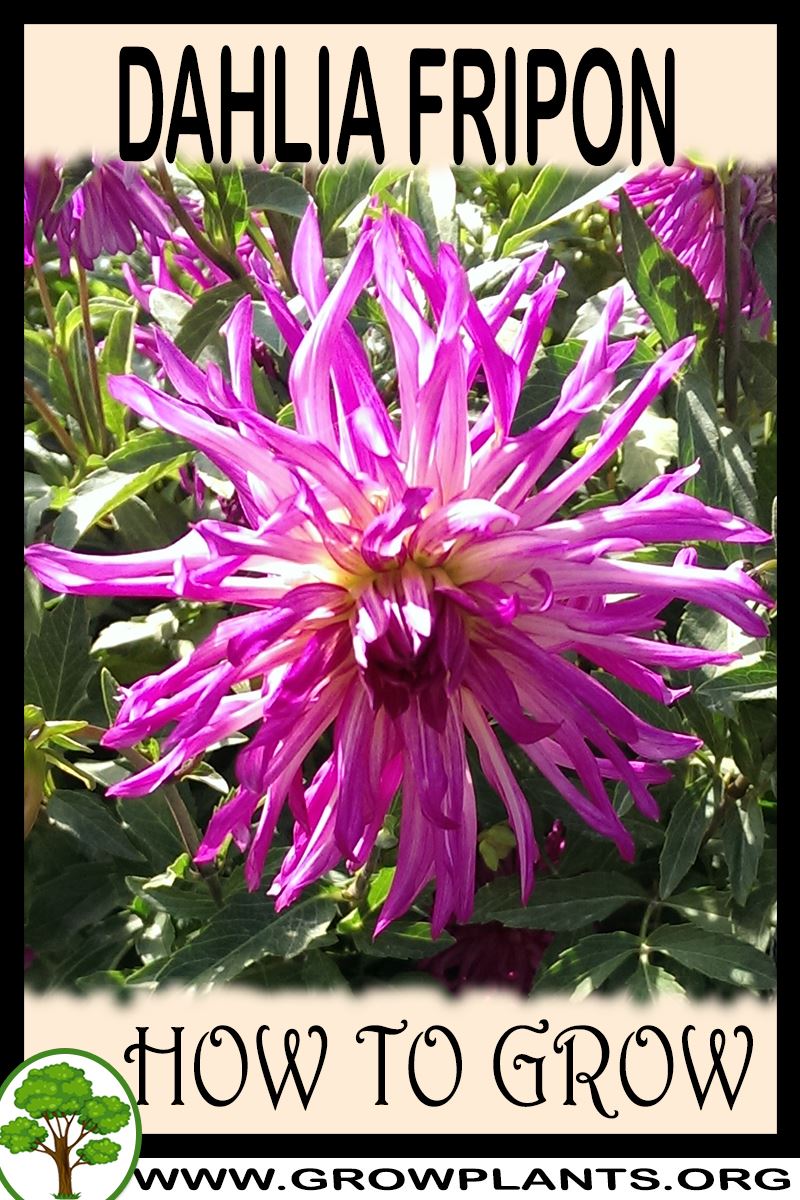
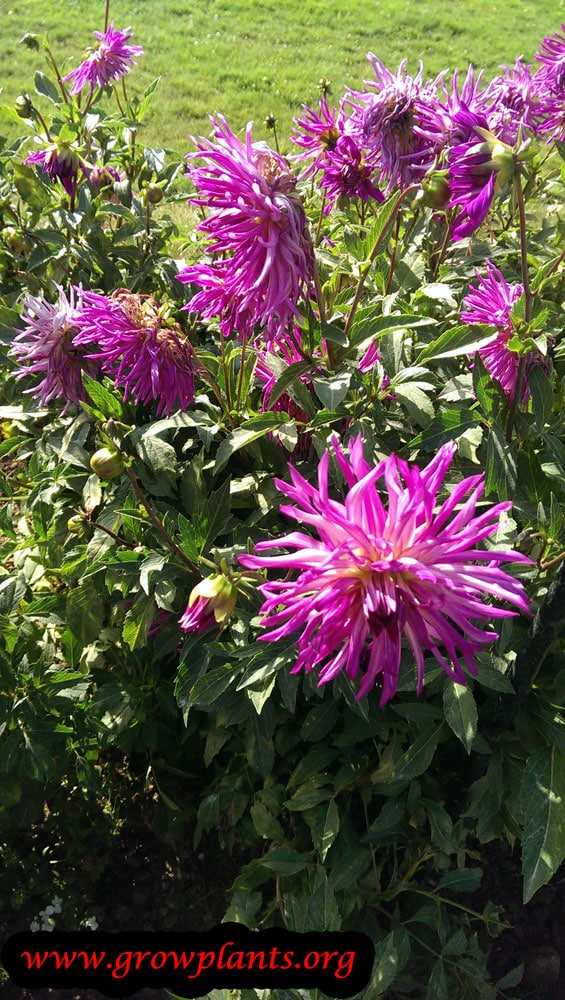
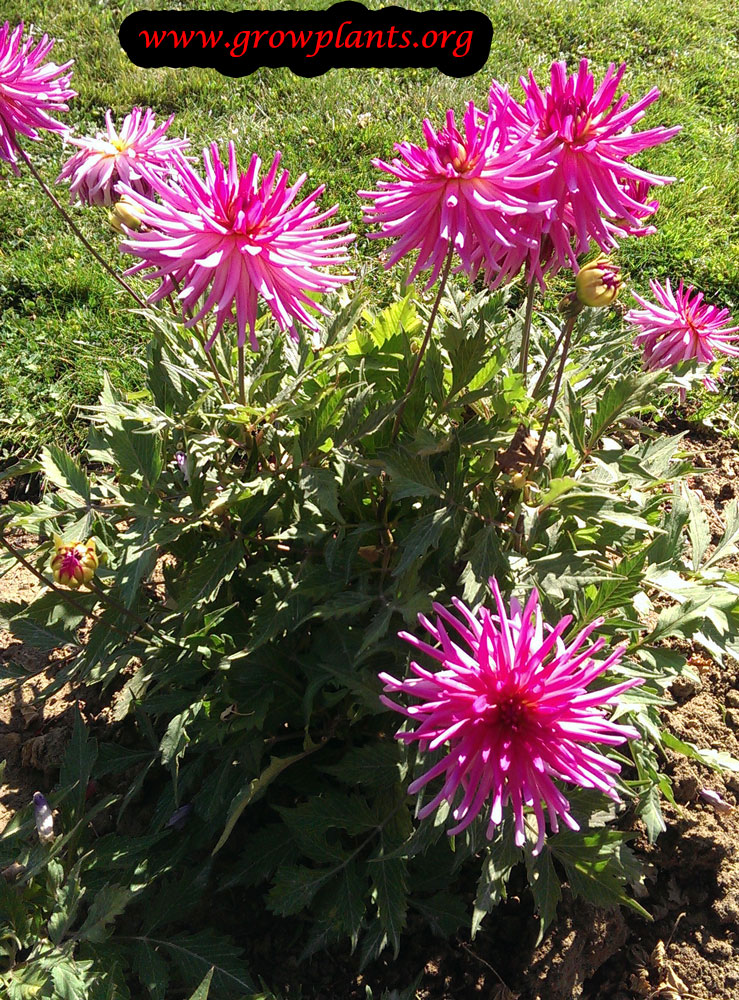
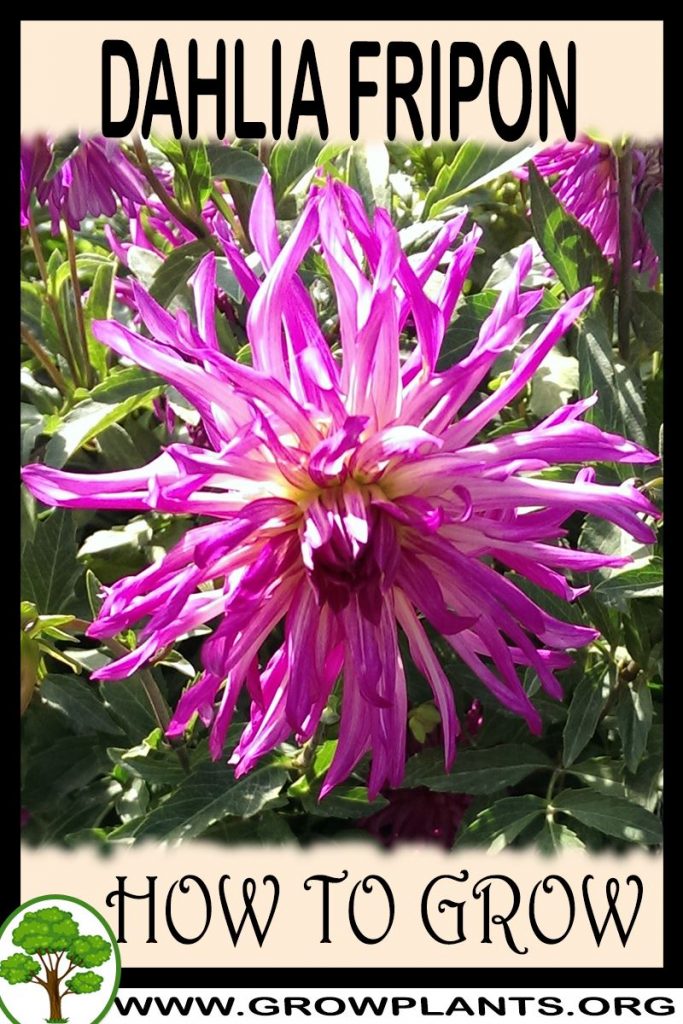
Overview: ‘Dahlia fripon’ is a cactus-flowered dahlia, a tuberous herbaceous perennial 0.3-1.5 m tall grown as an ornamental and cut flower. Like all dahlias it is deciduous, dying back to fleshy tubers that are lifted and stored over winter in cold climates, and it bears fuchsia, spiky cactus-type blooms.
Quick Specifications
| Specification | Attribute |
|---|---|
| Plant Type / Life Cycle | Perennial (tuberous, herbaceous) |
| Foliage Type | Deciduous |
| Mature Size | 0.3-1.5 m tall (sometimes more) |
| Growth Rate | Moderate |
| Root System | Tuberous roots (geophyte) |
| Hardiness | USDA zones 8-11 in the ground (tubers lifted and stored over winter in colder zones) |
Growth Form & Structure
- Height & Spread: 0.3-1.5 m tall in beds and borders; also grown in containers, though not as an indoor plant.
- Growth Habit & Form: Upright, clump-forming herbaceous plant arising from a cluster of fleshy tubers.
- Lifespan & Maturity: Perennial from its tubers; grows, flowers and dies back within each season.
Anatomy & Physical Features
- Leaves & Foliage: Green pinnate leaves, elliptic to lanceolate or deeply lobed, with serrated margins.
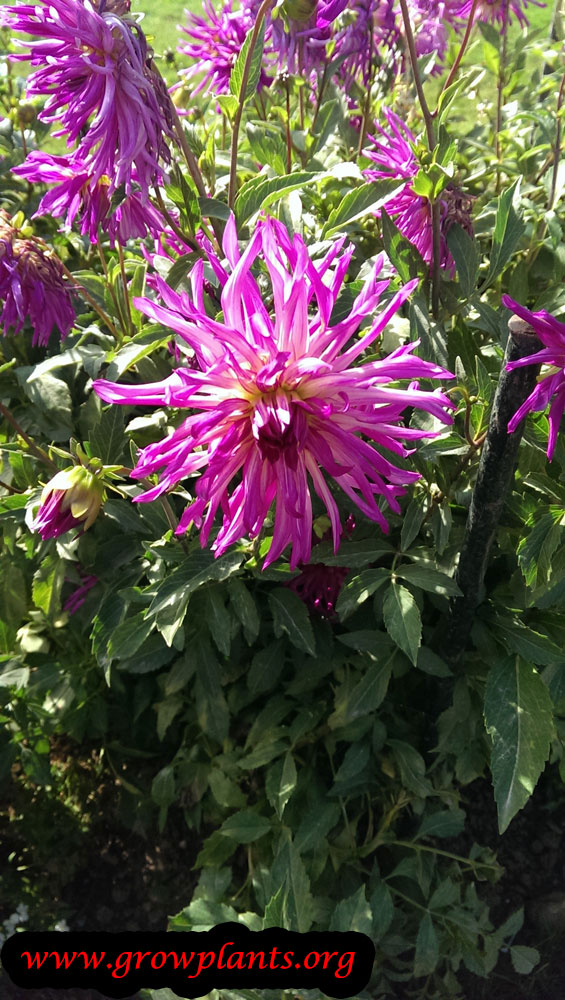
- Flower Characteristics: Fully double, fuchsia flowers with narrow petals tapering to a needle-like point (cactus type).
Primary Uses & Landscape Value
- Functional & Ornamental Roles: Grown as a border ornamental and cut flower.
Care Guide: Planting, Soil & Watering
Overview: Dahlias are tuberous perennials that grow best in full sun and rich, free-draining soil with steady but moderate moisture. In cold-winter regions the tubers are lifted and stored over winter, then replanted in spring.
Quick Care Requirements
| Requirement | Ideal Condition |
|---|---|
| Planting Season | Spring, after the last frost (mid-spring in cold areas) |
| Growth Rate | Moderate |
| Soil Type | Rich, loose, well-draining soil |
| Water Need | Moderate – keep evenly moist once growing, but never waterlogged |
Planting & Establishment
- Best Planting Season: plant the tubers in spring once the soil has warmed and all frost has passed; in cold areas wait until mid-spring.
- How to Plant:
- Hole Preparation: dig a hole about 10–15 cm (4–6 in) deep and a little wider than the tuber.
- Soil Amendments: work in compost or organic matter and make sure drainage is sharp; go easy on nitrogen, which pushes leafy growth at the expense of flowers.
- Planting Depth: lay the tuber on its side with the growing eye facing up and cover with about 5–10 cm of soil – do not plant it too deep.
- Growth Speed & Expectations: moderate; it builds a flowering clump of roughly 0.3–1.5 m in a single season.
Soil, Watering & Drainage Care
- Soil Mix & Drainage Needs: light, free-draining soil is essential – cold, wet, heavy soil rots the tubers. In containers use a free-draining mix with good drainage holes.
- Watering Schedule & Technique:
- Young / Newly Planted: after planting, water only sparingly until shoots appear, to avoid rotting the dormant tuber.
- Established: once in active growth, water deeply and regularly, keeping the soil evenly moist.
- Seasonal Adjustments: water more in summer heat; in cold regions stop watering at the end of the season and lift the tubers for frost-free winter storage.
Climate, Light & Hardiness
Dahlia fripon, a Cactus-group cultivar, is a tender tuberous perennial suited to subtropical, Mediterranean, desert, temperate, and tropical climates, thriving in full sun. It grows year-round outdoors only in warm zones; elsewhere the tubers must be lifted for winter storage.
Quick Climate Specifications
| Climate Zones | Subtropics, Mediterranean, desert, temperate, tropics |
|---|---|
| USDA Hardiness Zones | 8–11 with tubers left in the ground; growable as a seasonal (lift-and-store) planting in zones 2–7 and 12+ |
| Frost Tolerance | Very Low (tubers can rot or be killed by hard freezing) |
| Light Conditions | Full sun |
Sunlight & Light Exposure
Optimal Light Setup
Needs full sun for strong stems and abundant flowering.
Direct Sun Requirement
Several hours of direct sun daily are essential; flowering declines sharply in shade.
Best Exposure / Orientation
An open, unobstructed southern exposure supports the strongest bloom.
Temperature Extremes & Hardiness
USDA Hardiness & Regional Limits
The tuber survives in the ground year-round only in zone 8–11 climates. Outside that range, the site data explains that in cold areas the tubers must be dug up and stored over winter, then replanted - the same tuber can be reused for years even though the ground itself freezes.
Cold Damage & Winter Protection
Frost kills top growth, and prolonged ground freezing rots or kills the tuber itself, which is why lifting is necessary outside zone 8–11. Stored tubers need a cool, dry, frost-free place over winter.
Frost Sensitivity
High - foliage and flowers are damaged by the first frost of autumn, marking the end of the outdoor growing season wherever winters freeze.
Extreme Heat Tolerance
Generally tolerates warm subtropical and tropical heat well, provided watering keeps pace.
Wind, Humidity & Microclimate
Humidity Preferences
Adapts across the humidity range from humid tropics and subtropics to drier Mediterranean and desert climates, provided soil moisture is maintained.
Microclimate Recommendations
In borderline zone 8 areas, heavy mulching over the dormant tuber can sometimes substitute for lifting; in colder zones, lifting after the first frost and storing indoors is the standard practice.
Growing in Pots, Balconies & Indoors
Dahlia ‘Fripon’ is a full-sun flowering tuber, not a houseplant – indoors it can’t get the light it needs to bloom, so it belongs on a sunny balcony or patio. In a good-sized, free-draining pot it flowers freely, and the tubers are easily lifted and stored frost-free over winter.
Quick Details
- Container Size: A roomy pot, roughly 10-30 L (2-6 gal) depending on the variety’s height
- Indoor Suitability: Not a houseplant – it needs full sun to flower
- Best Spot: Full sun (light shade tolerated) on a balcony or patio
- Soil & Drainage: Rich but free-draining mix – wet, stagnant soil rots the tuber
- Watering in Pots: Average and steady once growing – pots dry fast; keep moist but never waterlogged
Indoors & On the Windowsill
- Not a houseplant: The grower marks it as unsuitable indoors – a warm room simply can’t supply the strong light it needs to bloom. Grow it outdoors.
- Overwintering the tuber: This is the key indoor role. In cold climates, once the top growth is knocked back by frost, lift the tubers, dry them and store them somewhere cool, dark and frost-free, then restart them in warmth before the next growing season. In frost-free climates the pot can simply stay outside.
On a Balcony or Patio
- Light & wind: Give it the sunniest spot. Taller varieties are top-heavy in bloom, so stake them and shelter the pot from strong wind. Reflected heat from walls dries pots fast – check moisture often in warm weather.
- Practicalities: Use a stable, heavy-enough pot so it won’t blow over, and make sure runoff drains away freely.
Choosing the Pot, Soil & Long-Term Care
- Pot & drainage: A 10-30 L pot with strong drainage holes; skip a standing-water saucer, as a wet, stagnant base rots the tuber.
- Potting mix: A well-aerated, organic-rich mix – peat or coir with perlite or vermiculite for sharp drainage.
- Feeding: Feed potted dahlias through the growing season, but go easy on nitrogen – the grower warns that too much nitrogen spoils the flowers, so favour a lower-nitrogen (higher potassium) feed once buds form.
- Through the season: Deadhead spent blooms to keep flowering going, and refresh the mix each year when you replant the stored tubers.
Fertilizing & Feeding
Dahlias are moderate feeders – they respond well to a balanced fertilizer regimen through the growing season but do not need frequent or heavy feeding, and excess nitrogen can reduce flowering quality and weaken stems.
Quick Fertilizing Specs
| Feeding Level | Light to moderate feeder – dahlias generally need only modest fertilizing to perform well |
|---|---|
| Main Nutrient Priority | Balanced feeding with attention to potassium for stem strength and bloom quality; avoid nitrogen-heavy products that push foliage over flowers |
| Best Feeding Period | From spring shoot emergence through the summer and autumn bloom season |
| Reduce/Stop Feeding | Stop feeding as foliage begins to die back in autumn and the tuber enters dormancy |
| Organic Options | Well-rotted compost or aged organic matter worked into the soil at planting supports steady, moderate growth |
Feeding by Growth Stage
Spring Growth (Sprouting to Vegetative Establishment)
Support vigorous leaf and stem development as the tuber breaks dormancy and shoots emerge in spring, building strong stems ahead of this cactus-type dahlia’s narrow, spiky-petaled flower heads
| Nutrient direction | Balanced, moderate feeding with adequate nitrogen to build strong foliage and stems |
|---|---|
| Timing | Begin once new shoots are actively growing above the soil in spring |
| Frequency | Several light feedings spaced through the spring growth period |
| Fertilizer types | A balanced, complete fertilizer formulated for flowering garden plants, Well-rotted compost or organic matter worked into the planting area |
| Precautions | Avoid heavy nitrogen applications, since excess nitrogen encourages lush foliage at the expense of flowering and can weaken stems |
Bud Set and Bloom
Sustain steady flowering and stem strength through the summer-into-autumn bloom period; the narrow, needle-like petals of cactus-type dahlias form on tall stems that benefit from good potassium supply
| Nutrient direction | Balanced feeding with attention to potassium to support stem strength and flower quality; steer away from nitrogen-heavy products |
|---|---|
| Timing | From bud formation through the main summer and autumn bloom period |
| Frequency | Light, regular feeding through the bloom season, tapering off as flowering slows |
| Fertilizer types | A balanced or slightly potassium-leaning fertilizer for flowering plants, Avoid high-nitrogen lawn or foliage fertilizers near the planting |
| Precautions | Established plants rarely need heavy feeding once blooming is underway; overfeeding with nitrogen can reduce bloom quality and weaken flower stems |
Dieback and Tuber Dormancy
Let the plant die back naturally as the tuber enters dormancy; in cold climates the tuber is typically lifted and stored, while in mild climates it may stay in the ground
| Nutrient direction | None – withhold fertilizer while the plant is dying back and the tuber is dormant |
|---|---|
| Timing | After the foliage is cut back or killed by frost in autumn, through the dormant winter period |
| Frequency | No feeding at this stage |
| Fertilizer types | No feeding at this stage – the plant is entering dormancy and cannot use additional nutrients |
| Precautions | Do not fertilize the dormant tuber; focus instead on well-drained storage or soil conditions to prevent rot |
Nutrient Deficiency Signs & Corrections
Overall pale green color and slower-than-expected leaf and stem growth during the active growing season
| Possible causes | Nitrogen deficiency, Poorly drained or compacted soil limiting root function, Cool soil temperatures slowing nutrient uptake early in the season |
|---|---|
| Appears first on | Older, lower leaves first, then spreading upward if uncorrected |
| What to check | Soil drainage and structure around the tuber, Recent feeding history, Root and tuber health for rot or damage |
| Possible correction | Apply a balanced, complete fertilizer for flowering plants per its label and improve soil drainage if compacted or waterlogged |
Weak, floppy flower stems and reduced or delayed flowering despite healthy-looking foliage
| Possible causes | Potassium deficiency, Excess nitrogen favoring foliage growth over flowering, Insufficient sunlight during bud development |
|---|---|
| Appears first on | Flower stems and developing buds |
| What to check | Recent feeding history for heavy nitrogen use, Hours of direct sun the plant receives, Overall stem sturdiness compared to earlier in the season |
| Possible correction | Shift toward a balanced or potassium-leaning fertilizer for flowering plants and reduce nitrogen-heavy feeding; ensure the planting site gets full sun |
Yellowing between the veins on new, upper leaves while the veins themselves stay green
| Possible causes | Iron deficiency linked to high soil pH limiting availability, Waterlogged soil reducing root uptake of micronutrients, Root stress from tuber rot |
|---|---|
| Appears first on | New growth at the shoot tips |
| What to check | Soil pH and drainage, Whether yellowing follows a clear vein pattern, Tuber and root condition for rot |
| Possible correction | Correct overly alkaline soil gradually and apply a chelated iron product per its label if a true iron deficiency is confirmed |
Pruning, Training & Seasonal Maintenance
Dahlia fripon is a cactus-type dahlia, recognisable by its narrow, rolled, needle-pointed petals – a form that tends to carry large blooms on comparatively slender stems. That combination makes staking and support the priority pruning-adjacent task here, more so than on stockier dahlia forms, since an unsupported stem is prone to snapping or bending under a large cactus-form bloom in wind or rain. Like other dahlias it is herbaceous and dies back to the tuber each winter, so seasonal cutback replaces any need for permanent structural shaping.
Quick Pruning & Maintenance Specs
| Pruning Tolerance | High (herbaceous, dies back annually) |
| Primary Pruning Window | Winter – full cutback of dead top growth |
| Secondary Maintenance Window | Spring–autumn bloom – pinching, staking, deadheading |
| Typical Frequency | Tip-pinch once early; stake as stems extend; deadhead weekly through bloom; one winter cutback |
| Main Objective | Support tall stems carrying large blooms; prolong flowering |
| Young Plant Priority | Pinch the central growing tip; install stakes early before roots/tuber are established enough to disturb later |
| Mature Plant Priority | Keep ties/stakes current as blooms get heavier; deadhead; disbud for larger show blooms if wanted |
| Best Tool Type | Bypass secateurs; soft ties for staking |
| Avoid Heavy Pruning During | Active flowering – whole-stem removal then sacrifices blooms in progress; also avoid handling open blooms roughly, as the narrow quill petals bruise easily |
Pruning by Plant Age & Size
Newly Established
Pinch out the central growing tip once the young shoot has a few sets of leaves; set a stake in place early, since inserting one later risks damaging the tuber.
Young / Formative
No structural framework applies to this herbaceous plant; training is limited to the tip pinch and progressively tying the stem to its stake as it lengthens, given this type’s tendency toward tall growth with a heavy bloom at the tip.
Mature / Established
Keep ties adjusted as stems grow and blooms open; disbud side buds where a single larger show bloom is preferred over several smaller ones; deadhead spent flowers regularly.
Structural Pruning & Training
- Staking/support – the main structural task for this type, given large blooms on relatively slender stems.
- No canopy or crossing-branch work – open herbaceous habit.
Special Growth to Remove
- Side buds flanking the central bud (disbudding), where a larger single bloom is preferred.
- Spent flower stems – deadhead to a leaf node.
- At season’s end: cut back all top growth once frost blackens it in cold climates and lift the tuber; in frost-free areas just remove dead flowers and leaves.
Container & Small-Space Pruning
Cactus types are less ideal for small pots given their height and top-heavy blooms; if grown in a large container, staking is essential from the start, more so than for compact dahlia forms.
Tools
- Bypass secateurs – for deadheading and cutting fleshy stems.
- Precision snips – for disbudding side buds without disturbing the central bud.
- Soft ties/stakes – the key tool for this type, supporting tall stems against the weight of large blooms.
Tool Hygiene & Disease Risk
Increased – tuber rot is a known risk; keep cuts clean and avoid carrying rot-affected tissue onto healthy stems or into winter tuber storage.
Cut Placement & Technique
Tie stems loosely to their stake to allow some natural movement without snapping; disbud by pinching side buds off cleanly at their base; deadhead spent blooms back to the first strong leaf node below the flower, handling the narrow quill petals gently since they bruise more easily than broader-petalled forms.
Heavy Pruning & Rejuvenation
Not applicable in the woody sense – the plant dies back to the tuber naturally each year, and the winter cutback is that annual reset.
Post-Pruning Care
Keep a lifted winter tuber dry to avoid rot; check stake ties periodically through the season as blooms add weight, and avoid excess nitrogen feeding, noted as a cause of flowering problems in this genus.
Common Pruning Mistakes
- Staking too late, after the stem has already started to lean or bend.
- Tying stems too tightly, restricting growth or snapping them in wind.
- Leaving spent blooms unremoved, reducing further flower production.
When NOT to Prune
Don’t remove whole flowering stems while budded or in bloom; wait for frost to blacken the foliage before the winter cutback in cold climates.
Recommended Tools (by task)
- soft_ties_stakes – supporting tall stems carrying large, comparatively heavy cactus-form blooms.
- bypass_secateurs – deadheading and the winter cutback of fleshy stems.
- precision_snips – disbudding side buds without disturbing the central bud.
Propagation Guide
Dahlia Fripon belongs to the cactus-flowered group (per the site’s own classification), recognizable by its narrow, pointed, needle-like petals; like other named Dahlia cultivars it must be propagated by dividing its tuberous roots to keep this quilled petal form true, since hybrid seed will not reproduce it reliably. Propagation is easy once the tubers are divided correctly.
Quick Propagation Specs
| Best Propagation Method | Tuber (tuberous-root) division |
| Alternative Methods | Basal stem cuttings from sprouted tubers |
| Propagation Difficulty | Easy |
| Seed True-to-Type | Hybrid offspring vary; will not reproduce this named cactus-flowered cultivar |
| Vegetative True-to-Type | Yes |
| Best Propagation Season | Spring (mid-spring in cold climates) |
Rhizomes, Tubers, Bulbs & Corms
Propagated from the cluster of tuberous roots at the stem base (referred to loosely on the site as “bulbs”).
Tuber (Root) Division
Divide in spring, making sure each division includes a piece of the crown with at least one growth eye — a piece without an eye will not sprout. As with related Dahlia cultivars, divisions commonly establish roots within a few weeks of planting under warm spring conditions. In cold areas the clump is lifted and foliage cut back at season’s end, per the site’s own notes, and stored before spring division; avoid excess drying or waterlogged soil, since tuber rot is a noted problem for this plant.
Stem Cuttings
Cutting Type
Basal shoot cuttings from a sprouted tuber, with a small piece of tuber tissue attached.
Best Timing
Early spring, after tubers are started into growth in warmth.
Rooting Setup
A light, well-drained, humid propagating mix.
Rooting Hormone
Optional.
Rooting Time
Commonly within a couple of weeks under warm, humid conditions.
Bloom & Edible Flower Guide
Quick Details
- Bloom Season: Spring, summer and autumn
- Flower Appearance: A cactus-flowered dahlia – fully double, fuchsia-pink heads of many narrow petals that are rolled and taper to a fine, needle-like point
- Edibility: The petals are edible, with a mild and variable flavour, and are used fresh as a garnish or in salads; use clean, unsprayed petals only
Detailed Blooming Overview
Cactus dahlias like ‘Fripon’ have a spiky, starburst look – their many petals roll inward and narrow to sharp points, giving each fully double bloom a shaggy, dramatic outline in vivid fuchsia. They flower from late spring to the first frosts, and the more you cut and deadhead, the longer the show lasts.
Flower Characteristics
- Fully double, fuchsia-pink flowers.
- Many narrow petals, rolled along their length and tapering to needle-fine points.
Bloom Care & Thinning
- Prolonging the display: Deadhead spent flowers before they set seed to keep new buds coming.
- Disbudding for size: Remove the side buds beside each main bud for larger, more shapely blooms.
- Support: Stake early – the full heads are heavy and can bend or snap unsupported stems.
Bloom Health & Protection
- Earwigs on the petals: They chew the open blooms at night; a straw-filled-pot or rolled-newspaper trap emptied each morning keeps them off.
- Thrips distorting buds: They streak and deform opening flowers; an insecticidal soap or neem-based spray, or natural predators, helps.
- Botrytis (grey mould) on blooms: The tightly packed petals trap moisture, so remove faded heads promptly and improve airflow, using a suitable fungicide only under heavy pressure.
Pests, Diseases & Troubleshooting
Overview: Dahlias are tender tuberous perennials that are magnets for slugs, aphids and earwigs on the soft growth, with mites and thrips in heat, and are prone to powdery mildew, several viruses and – most importantly – tuber rot in wet, cold soil or storage. The approach is preventive and cultural: protect young shoots from slugs, keep plants open and airy, control aphids and thrips (the virus vectors), and lift and store tubers dry and frost-free.
Quick Troubleshooting Overview
| Issue / Pest | Main Symptom | Primary Solution |
|---|---|---|
| Slugs and snails | Young shoots and leaves shredded overnight; slime trails | Protect emerging shoots; hand-pick; iron-phosphate bait |
| Aphids | Curled shoot tips, honeydew, sooty mould; virus spread | Rinse off; insecticidal soap; encourage predators |
| Earwigs | Ragged holes in leaves and petals; hide by day | Trap in rolled paper/pots; clear debris; hand-remove |
| Spider mites / thrips | Stippling, bronzing (mites); silvering, virus (thrips) | Raise humidity; hose down; oil/soap; sticky traps |
| Powdery mildew | White powdery film on leaves late in season | Airflow; avoid crowding; sulfur or potassium bicarbonate |
| Tuber rot | Soft, rotting tubers in wet cold soil or storage | Improve drainage; lift and store dry; discard soft tubers |
Common Pests & Management
- Slugs and snails (various species):
- Symptoms: The number-one dahlia pest – they shred emerging shoots and young leaves overnight, sometimes destroying new growth entirely, and leave tell-tale slime trails; damp, mulched beds are worst.
- Prevention & Control: Protect emerging shoots with barriers (grit, copper rings, cut bottles), hand-pick after dark, set beer traps, remove daytime hiding places, and use iron-phosphate bait sparingly around new shoots.
- Aphids (Aphis / Myzus species):
- Symptoms: Colonies of green or black soft insects cluster on shoot tips, buds and leaf undersides, curling growth and leaving honeydew and sooty mould; critically, they transmit dahlia viruses.
- Prevention & Control: Blast off with water, spray insecticidal soap or neem, and encourage ladybirds, lacewings and hoverflies; early control is the main way to limit virus spread.
- Earwigs (Forficula auricularia):
- Symptoms: Nocturnal earwigs chew ragged holes in leaves and flower petals and hide in blooms and debris by day; damage looks like caterpillar feeding.
- Prevention & Control: Trap them in rolled newspaper, straw-stuffed pots or rolled cardboard set among the plants and empty daily, clear debris hiding places, and tolerate light damage since earwigs also eat aphids.
- Spider mites (Tetranychus urticae):
- Symptoms: In hot, dry weather leaves show fine pale stippling, then bronze, dry and drop, with fine webbing on the undersides in bad cases.
- Prevention & Control: Raise humidity, hose the undersides regularly, avoid drought-stressing plants, and apply horticultural oil or insecticidal soap, repeating.
- Thrips (Frankliniella occidentalis):
- Symptoms: Silvery streaking and black frass on leaves and distorted, marked flowers; a key vector of tomato spotted wilt and impatiens necrotic spot viruses.
- Prevention & Control: Use blue sticky traps to monitor, remove affected buds, encourage predatory mites, and spray spinosad or insecticidal soap when numbers rise; controlling thrips limits virus.
- Capsid (plant) bugs and leafhoppers (Lygocoris / various species):
- Symptoms: Capsid bugs pierce buds and shoot tips causing tattered, distorted, holed young leaves, while leafhoppers cause pale stippling and can spread pathogens.
- Prevention & Control: Encourage general predators, keep beds weed-free, hose down foliage, and spray insecticidal soap on nymphs where damage is significant; much damage is tolerable.
Diseases & Fungal Issues
- Powdery mildew (Golovinomyces cichoracearum / Erysiphe species):
- Symptoms: A white powdery film spreads over leaves and stems, especially late in the season and in crowded, dry-rooted plantings, yellowing and weakening foliage.
- Treatment & Management: Space plants for airflow, avoid drought stress and excess nitrogen, remove affected leaves, and apply sulfur, potassium bicarbonate or a labelled fungicide when it appears.
- Dahlia mosaic and spotted wilt viruses (Dahlia mosaic virus / TSWV / INSV):
- Symptoms: Mottled, streaked, distorted or stunted leaves, yellow ring or line patterns, and colour-broken or deformed flowers; permanent and spread by aphids and thrips and through infected tubers.
- Treatment & Management: There is no cure – rogue out and destroy symptomatic plants and their tubers, control aphids and thrips, start with clean stock, and disinfect cutting tools between plants.
- Grey mould (Botrytis cinerea):
- Symptoms: Fuzzy grey rot on buds, open blooms and damaged stems in cool, wet, crowded conditions, and a common cause of storage rot on tubers.
- Treatment & Management: Improve spacing and airflow, remove faded blooms and damaged tissue promptly, avoid overhead watering, and ensure tubers are cured and stored dry; use a biofungicide if pressure is high.
- Dahlia smut (Entyloma dahliae):
- Symptoms: Pale yellow to brown spots, often ringed, spread across the lower leaves and enlarge, causing older foliage to die back from the base up in wet weather.
- Treatment & Management: Remove and destroy affected leaves and debris, improve airflow, avoid wetting foliage, and use a protectant fungicide if it recurs.
- Verticillium / Sclerotinia stem rot (Verticillium dahliae / Sclerotinia sclerotiorum):
- Symptoms: Wilting, yellowing and browned vascular tissue (Verticillium), or a white cottony mould rotting the stem base with hard black bodies inside (Sclerotinia); plants collapse.
- Treatment & Management: Remove and destroy affected plants, do not replant dahlias or other susceptible crops on infected ground for several years, improve drainage and spacing, and avoid crowding.
Growing Difficulties & Abiotic Problems
- Tuber rot in wet/cold soil and storage:
- Cause & Symptoms: Dahlias are frost-tender; tubers left in cold, wet soil or stored damp rot, and frost blackens the top growth. This is the main way dahlias are lost over winter.
- Correction Strategy: Plant in free-draining soil, and in frost-prone areas lift tubers after the first frost, cure them briefly, remove soft or damaged ones, and store dry, cool and frost-free in slightly moist medium; check periodically and discard any rotting.
- Failure to bloom / blindness:
- Cause & Symptoms: Excess nitrogen, too much shade, or heat stress gives lush leaves but few or no flowers.
- Correction Strategy: Give full sun, use a lower-nitrogen, higher-potassium feed as buds form, keep watering steady, and pinch and disbud to channel energy into blooms.
- Sunscald and wind/heat stress:
- Cause & Symptoms: Intense sun and heat can scorch and fade foliage and blooms, while wind topples the tall brittle stems.
- Correction Strategy: Water deeply and mulch to buffer heat, provide light afternoon shade in very hot climates, and stake plants early to prevent wind and top-heavy breakage.
What Helps – Products & Tools
Prevention centres on slug protection, airflow and clean stock. Keep iron-phosphate bait and copper barriers for slugs and snails, insecticidal soap and neem oil for aphids, mites and capsids, blue sticky traps and spinosad for thrips, and earwig traps. For disease, use sulfur or potassium bicarbonate for powdery mildew and a biofungicide for Botrytis, while virus control means roguing infected plants and disinfecting tools. Sound tuber curing and dry storage prevent the biggest losses. Apply oils in the evening and follow the label to protect pollinators.