Plant Profile & Key Characteristics
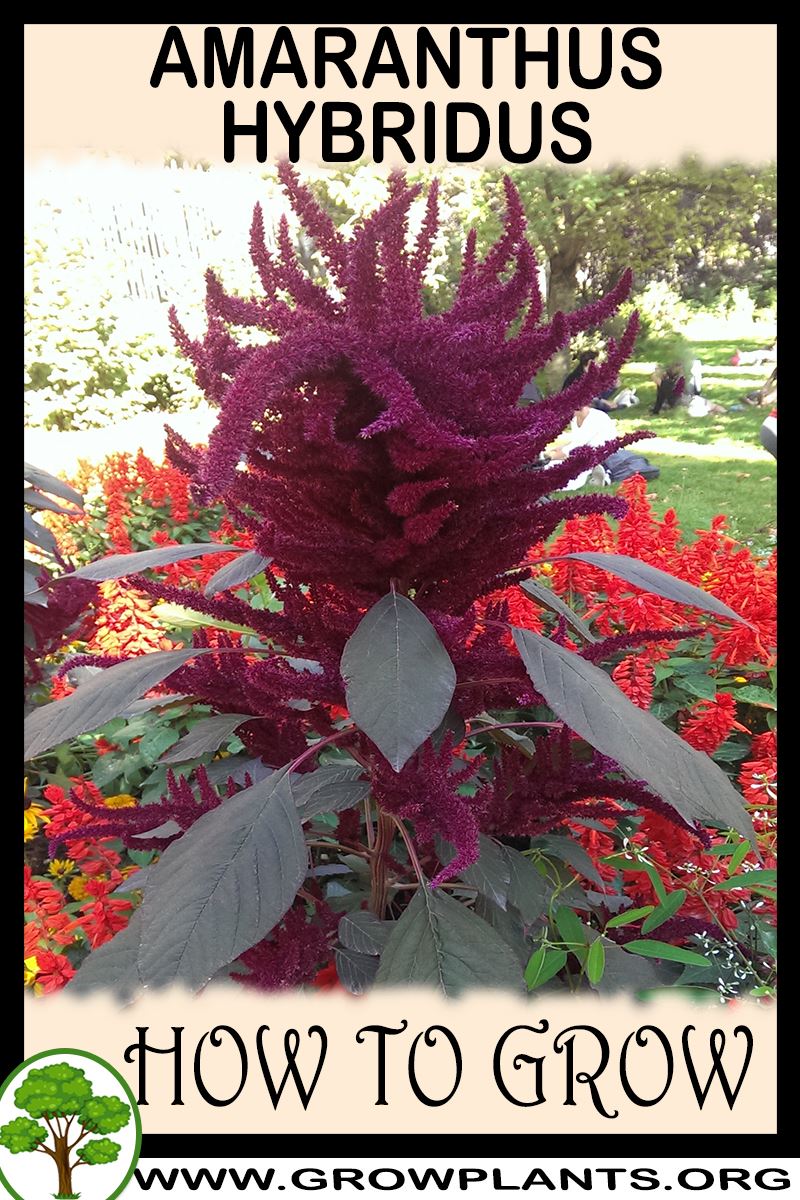
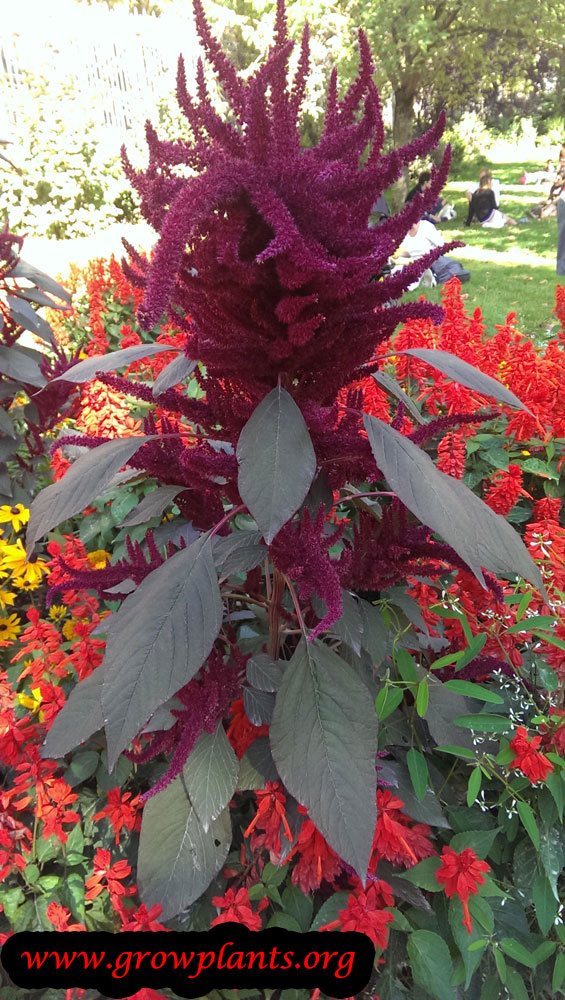
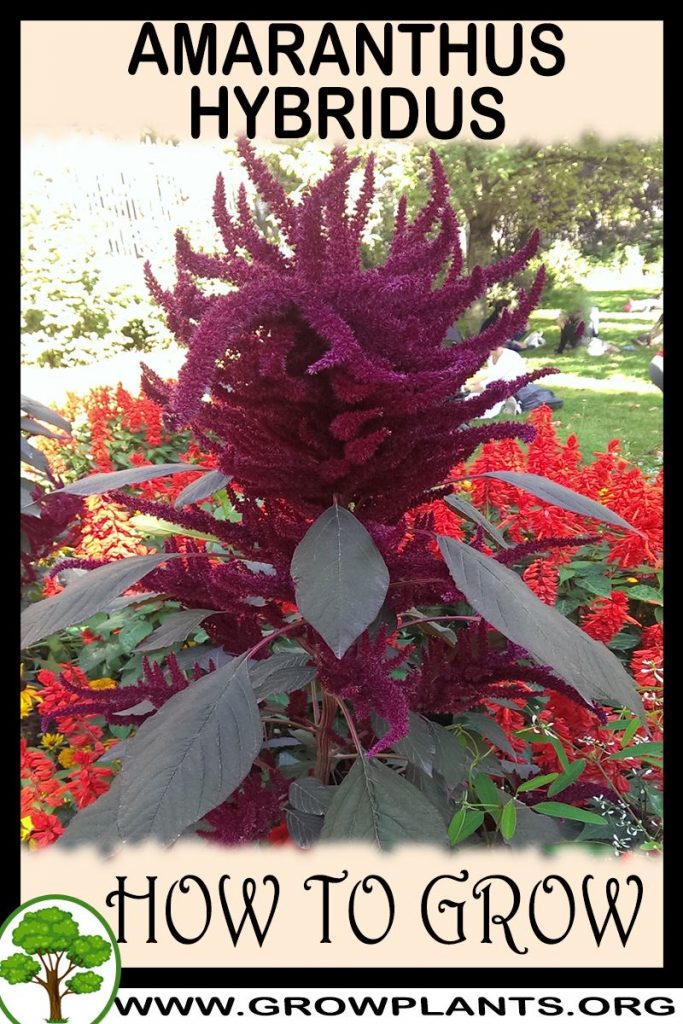
Overview: Amaranthus hypochondriacus (prince’s feather) is a tall, fast-growing plant, a short-lived perennial usually grown as an annual, reaching 0.8-1.5 m (32-60 in). It is grown as an ornamental and as an edible leaf-and-grain amaranth.
Quick Specifications
| Specification | Attribute |
|---|---|
| Plant Type / Life Cycle | Short-lived perennial, usually grown as an annual |
| Foliage Type | Evergreen (herbaceous; dies back in cold) |
| Mature Size | 0.8-1.5 m (32-60 in) tall |
| Growth Rate | Fast to moderate |
| Root System | Taproot |
| Toxicity | Non-toxic / edible (leaves and seeds both edible) |
| Hardiness | USDA zone 2+ |
Growth Form & Structure
- Height & Spread: 0.8-1.5 m (32-60 in) tall in the ground; in containers a 5-8 litre (1.5-2 gal) pot is suitable
- Growth Habit & Form: Tall, upright herbaceous plant that may need a cane for support; can self-seed and become invasive
- Lifespan & Maturity: Flowers and sets seed within a single warm season
Anatomy & Physical Features
- Leaves & Foliage: Oval, edible leaves in green, purple or shades between
- Flower Characteristics: Small purple or yellow-orange flowers on upright inflorescence spikes; seeds are also edible (see the Bloom guide)
Primary Uses & Landscape Value
- Edible Uses: Leaves eaten raw, in salad, stir-fried or cooked; seeds used as an edible grain
- Functional & Ornamental Roles: Ornamental for beds and borders as well as a grain and leaf crop
Care Guide: Planting, Soil & Watering
Overview: Amaranthus hypochondriacus (Prince’s feather) is a fast-growing, warm-season annual (occasionally a short-lived perennial) that thrives in full sun across a very wide climate range (hardiness zone 2+). It grows best in moist, rich soil with plenty of organic matter, and taller types may need a cane for support.
Quick Care Requirements
| Requirement | Ideal Condition |
|---|---|
| Planting Season | In spring after the last frost; start indoors at winter’s end in cold regions, or plant in summer in warm areas |
| Growth Rate | Moderate to Fast |
| Soil Type | Moist, fertile soil rich in organic matter |
| Water Need | Moderate – keep the soil evenly moist |
Planting & Establishment
- Best Planting Season: Plant out in spring after frost has passed; in cold climates start seedlings indoors at the end of winter and transplant once frost risk is over, while in warm regions small plants can go out into summer.
- How to Plant:
- Hole Preparation: Dig a hole slightly larger than the root ball and loosen the surrounding soil.
- Soil Amendments: Enrich the soil with compost or other organic matter, and mulch to keep it moist.
- Planting Depth: Set the seedling at the same depth it grew, with the root collar at soil level; stake tall varieties so they do not topple.
- Growth Speed & Expectations: A quick grower that shoots up in warm weather, reaching 0.8-1.5 m, so allow space and support for the taller kinds.
Soil, Watering & Drainage Care
- Soil Mix & Drainage Needs: Give it rich, well-aerated soil that holds moisture yet drains freely; in containers (about 5-8 L) use a potting or peat-based mix with perlite or vermiculite and good drainage holes.
- Watering Schedule & Technique:
- Young / Newly Planted: Keep the soil evenly moist and weed-free while seedlings establish and put on early growth.
- Established: Provide a steady, moderate supply of water; mulch helps hold moisture and cuts evaporation.
- Seasonal Adjustments: Water more during hot, dry spells; the plant naturally winds down in autumn as it flowers and sets seed.
Climate, Light & Hardiness
Amaranthus hypochondriacus (Prince's feather) is a warm-season grain amaranth, a short-lived evergreen in warm climates but grown as an annual where winters are cold, valued for edible leaves and seed and showy plumes. It is a heat-loving, frost-tender plant that grows fast in warm, sunny weather, and has essentially no frost tolerance, so it is raised through the warm, frost-free part of the year.
Quick Climate Specifications
| Climate Zones | Tropical, subtropical, Mediterranean and temperate; grown in the warm season |
| USDA Hardiness Zones | Grown as a warm-season annual from about zone 2 upward; in zone 10b and warmer it can grow through much of the year |
| Optimal Temp Range | Warm, roughly 20–30°C (68–86°F) |
| Cold Damage Begins | Growth slows and chilling shows as temperatures fall toward 10°C (50°F) |
| Approx. Survival Minimum | Near 0°C (32°F) briefly; frost kills the plant |
| Frost Tolerance | None |
| Light Conditions | Full sun (tolerates a little less, at the cost of colour and flowering) |
| Wind Tolerance | Low to moderate (tall flower stalks may need staking) |
Sunlight & Light Exposure
Optimal Light Setup
Full sun gives the strongest stems, the richest foliage colour and the biggest flower plumes. In less light the plant still grows but flowers less and colours weakly.
Temperature Extremes & Hardiness
USDA Hardiness & Regional Limits
Commonly grown as an annual wherever there is a warm, frost-free season - which is why it can be raised from cold-winter zone 2 upward - but it is not winter-hardy. In frost-free climates (about zone 10b and up) it can be grown over a longer period, though it performs poorly in cool winter weather.
Cold Damage & Winter Protection
In cold areas it is best started indoors in late winter and moved out only after the last frost. Cool weather checks growth, and the first autumn frost blackens and kills the plant.
Frost Sensitivity
Frost tolerance is none; the soft, sappy stems collapse at freezing. Time sowing to the frost-free window rather than attempting winter protection.
Extreme Heat Tolerance
It is genuinely heat-tolerant and thrives through hot summers, which is when it makes most of its growth and flower display.
Frost-Free Growing Season
A warm, frost-free stretch of several months lets it reach full size, flower and (where wanted) ripen its edible seed; short-season gardens grow it purely as a summer plant.
Wind, Humidity & Microclimate
Wind Tolerance
The tall, laden flower stalks can bend or topple in wind, so a cane or stake and a sheltered position help in exposed sites.
Microclimate Recommendations
A warm, sunny, sheltered bed gives the best growth and the fullest, most colourful plumes.
Growing in Pots, Balconies & Indoors
Prince’s-feather (Amaranthus hypochondriacus) is a tall grain amaranth, 0.8-1.5 m, with upright plumes. The grower does not treat it as a houseplant, but it grows well in a 5-8 L pot on a sunny balcony or patio.
Quick Details
- Container Size: 5-8 L (1.5-2 gal) – the grower’s guide
- Indoor Suitability: Not a houseplant – a tall, sun-loving annual
- Best Spot: Full sun (part sun only reduces flowering)
- Soil & Drainage: Well-ventilated, organic-rich mix with good drainage (grower)
- Watering in Pots: Average needs – keep the soil moist, helped by mulch (grower)
Indoors & On the Windowsill
- Houseplant: No – the grower marks it as not an indoor plant; it needs full sun and grows tall.
- Windowsill growing: Only for raising seedlings on a sunny sill before planting out.
On a Balcony or Patio
- Light & wind: Give it full sun (a little less only trades some flowering); tall types catch the wind, so stake or shelter them. Pots in sun dry fast – the grower’s mulch tip helps hold moisture.
- Practicalities: A stable pot keeps top-heavy plants upright; easy to move while young.
Choosing the Pot, Soil & Long-Term Care
- Pot & drainage: A 5-8 L (1.5-2 gal) pot (the grower’s size) with strong drainage holes; Use a pot with strong drainage holes and skip a standing-water saucer to avoid root rot; terracotta breathes and dries out faster, while glazed or plastic pots hold moisture longer.
- Potting mix: The grower advises a well-ventilated, well-drained mix rich in organic matter – potting mix or peat soil with perlite or vermiculite.
- Feeding: Potted plants use up their soil quickly because watering leaches nutrients away, so feed a little more often than plants in open ground through the growing season.
- Season: As an annual it finishes in one season, so start each new crop in fresh mix rather than repotting.
Grower’s Container Tip
- Mulch to hold moisture: The grower advises mulching the surface of the pot to keep the soil moist and cut water loss, and watching that the mix stays evenly moist.
Growing this plant in a greenhouse
A greenhouse can give amaranthus hypochondriacus frost protection, cold protection, humidity control and extra warmth.
Greenhouse at a glance
| Greenhouse suitability | Conditional - depends on your climate |
|---|---|
| Main benefits | frost protection, cold protection, humidity control, extra warmth |
| Season extension | earlier spring & later autumn |
| Outdoor protection advisable below | about 10°C |
| Maintain greenhouse minimum | around 10°C for active growth |
| Suitable types | heated greenhouse, polycarbonate greenhouse |
| Heating | Heating is recommended in cold climates for continuous growth. |
Related greenhouse guides
- Greenhouses: How to Choose the Right Greenhouse
- Best Greenhouse Heaters
- Greenhouse Climate Control: Temperature, Ventilation and Humidity
- Polycarbonate Greenhouses: What to Look for Before Buying
Fertilizing & Feeding
A moderate feeder and fast grower: nitrogen-forward through leafy growth, then balanced and easing off through flowering, all supported by rich, mulched soil.
Quick Fertilizing Specs
| Feeding Level | Moderate feeder |
|---|---|
| Main Nutrient Priority | Nitrogen for foliage, balanced at flowering |
| Best Feeding Period | Through the warm-season vegetative growth |
| Organic Options | Compost, well-rotted manure, and mulch |
| Micronutrients | Usually met by a complete fertilizer and organic matter; correct only diagnosed issues |
| Soil pH | Slightly acidic to near neutral |
Feeding by Growth Stage
Establishment from seed or seedling
Support quick rooting and early growth of the young plant.
| Nutrient direction | A balanced complete fertilizer with steady nitrogen to launch growth. |
|---|---|
| Timing | From sowing or transplanting through early establishment. |
| Frequency | A light feeding as the seedlings take hold. |
| Fertilizer types | A balanced complete garden fertilizer, Compost or well-rotted organic matter |
| Precautions | Keep early feeding light and water in well; these fast growers respond quickly. |
Vegetative and foliage growth
Build vigorous leafy, colorful growth, whether harvested as greens or grown for show.
| Nutrient direction | Nitrogen-forward to drive lush foliage, keeping other nutrients adequate. |
|---|---|
| Timing | Through the main growth phase before heavy flowering. |
| Frequency | Several light feedings across the warm growing season. |
| Fertilizer types | A nitrogen-forward complete fertilizer, Side-dressing with compost or a nitrogen-rich amendment |
| Precautions | Avoid heavy single doses; rich moist soil plus mulch supports steady growth. |
Flowering and seed set
Support the showy inflorescence and, where wanted, seed set.
| Nutrient direction | Ease nitrogen and return to balanced feeding as the plant flowers and sets seed. |
|---|---|
| Timing | From flowering through seed development in summer and autumn. |
| Frequency | Little extra feeding once flowering begins; a balanced feeding only if growth looks weak. |
| Fertilizer types | A balanced complete fertilizer if needed |
| Precautions | Late heavy nitrogen favors leaves over flowers and seed. |
Nutrient Deficiency Signs & Corrections
Older, lower leaves fade to pale green or uniform yellow and overall growth slows.
| Possible causes | low available soil nitrogen, nitrogen leaching from heavy watering or rain, thin, low-organic-matter soil |
|---|---|
| Appears first on | older, lower leaves |
| What to check | recent feeding history, soil organic matter, watering and drainage |
| Possible correction | Apply a nitrogen-containing complete fertilizer and build soil organic matter, then water evenly. |
Interveinal yellowing on older leaves while the veins themselves stay green.
| Possible causes | low soil magnesium, high potassium feeding competing with magnesium uptake, leaching in light, sandy soils |
|---|---|
| Appears first on | older, lower leaves |
| What to check | soil magnesium status, how potassium-heavy recent feeding has been, soil texture and leaching |
| Possible correction | Apply a labeled magnesium source such as Epsom salt or a dolomitic amendment and rebalance feeding. |
Leaf margins brown or scorch and growth stalls despite adequate watering.
| Possible causes | fertilizer salt buildup in the root zone, under-watering that concentrates salts, excessive or too-frequent feeding |
|---|---|
| Appears first on | leaf margins and tips |
| What to check | recent fertilizer amounts, watering consistency, drainage, especially in containers |
| Possible correction | Ease off feeding, water thoroughly to flush accumulated salts, then return to lighter feeding. |
Pruning, Training & Seasonal Maintenance
Amaranthus hypochondriacus (prince’s feather) is a grain amaranth grown for its edible seed and leaves, so like other grain types its flower/seed heads are not deadheaded – that would remove the crop. Pruning is minimal: an optional early tip pinch can favour a bushier, leafier plant over one dominant seed head, and the tall stems with weighty heads generally need staking. In warm zones it may persist as a short-lived plant, but it is managed as an annual.
Pruning & the Edible Harvest
Prince’s feather is a grain amaranth grown for edible seed and leaves, so its seed heads are never cut off until harvest. An optional early tip pinch shifts the plant toward more leaf and multiple smaller heads, while leaving the leader unpinched maximises grain – the two edible parts are optimised against each other.
Quick Pruning & Maintenance Specs
| Pruning Tolerance | Low–Moderate – grown for seed/leaf; heads retained |
| Primary Pruning Window | Spring for any pinch; sanitary through season |
| Typical Frequency | Optional single pinch; occasional leaf harvest |
| Main Objective | Protect seed heads; optionally favour leaf/branching |
| Young Plant Priority | Choose single head vs pinched leafy plant |
| Mature Plant Priority | Support heavy heads; remove dead lower leaves |
| Best Tool Type | Precision snips; secateurs at harvest |
| Avoid Heavy Pruning During | Flowering and seed fill |
Pruning by Plant Age & Size
Newly Established
Establish on a strong stem; remove only damaged growth. Keep the leader for grain; plan an early pinch only if you want a leafier plant.
Young / Formative
An optional pinch before flowering branches the plant for more leaf at the cost of one big head; for maximum grain, leave the leader unpinched.
Mature / Established
Stake the heavy heads, harvest young leaves if wanted, and remove dead lower leaves. Retain the seed heads until harvest.
Seasonal Pruning Schedule
Spring (formative): optional branching pinch.
Summer–autumn (flower to seed): hands-off on heads; sanitary leaf removal; stake as heads fill.
Harvest: cut whole heads for threshing, then clear the stalk.
Structural Pruning & Training
Training is an optional early pinch plus staking; deadheading is avoided because the flowers carry the grain.
Special Growth to Remove
Remove only dead lower leaves; retain the seed heads. Remove seed heads at the very end only to curb aggressive self-seeding.
Container & Small-Space Pruning
In a large pot keep to one or two stems, stake early, and expect smaller heads; pinch only if you prefer leaves to grain.
Tools
Precision snips for pinch and leaf harvest; bypass secateurs to cut the thick stalk and heads at harvest.
Tool Hygiene & Disease Risk
Routine. No major tool-borne disease; keep tools clean and remove pest-damaged leaves.
Cut Placement & Technique
Pinch above a node to branch; cut leaves at the base; cut whole heads on the stalk at harvest without damaging the main stem.
Heavy Pruning & Rejuvenation
Not applicable – grown as an annual to a seed crop; it branches from an early pinch but does not rejuvenate from hard cutting.
Post-Pruning Care
Water well after any pinch; maintain even moisture through seed fill and re-check stakes as heads gain weight.
Common Pruning Mistakes
- Deadheading the spikes – that removes the grain.
- Pinching when a single large head was the goal.
- Not staking, so seed-heavy stems lodge.
When NOT to Prune
Never cut the heads during flowering or fill; avoid pruning in heat or drought stress that threatens seed set.
Recommended Tools (by task)
- precision_snips – optional pinch and leaf harvest.
- bypass_secateurs – cutting thick stalks and heads at harvest.
- soft_ties_stakes – supporting tall stems and heavy heads.
Propagation Guide
Amaranthus hypochondriacus is grown mainly from seed, direct-sown after the last frost (or started early indoors in cold areas); stem cuttings are biologically possible but strike unreliably, so seed is the preferred and easier route. As a grain amaranth it is largely self-pollinating, so its seed comes fairly true. It is Easy.
Quick Propagation Specs
| Best Propagation Method | Seed (direct-sown) |
| Alternative Methods | Softwood stem cuttings (low success rate) |
| Propagation Difficulty | Easy |
| Seed True-to-Type | Comes fairly true — this grain amaranth (Prince’s-feather) is largely self-pollinating, though it will cross with other amaranths, so isolate for pure seed |
| Best Propagation Season | Spring after the last frost to early summer (year-round in zone 10b+, mostly germinating in spring or autumn) |
| Seed Germination Time | From about 2 weeks, but emergence is staggered and can extend over many months |
| Germination Temperature | Warm soil, roughly 20–30°C (68–86°F) |
| Seed Sowing Depth | 1–10 mm — very shallow; the fine seed needs light |
Growing from Seed
Seed Handling & Viability
Store the tiny seed dry and dark; it keeps well.
Dormancy & Pre-Sowing Treatment
No treatment is needed, but germination is naturally staggered — the site records anything from about 2 weeks to many months — so do not assume slow or old seed has failed.
Sowing Season
Sow in spring after the last frost to early summer; in cold areas start indoors at the end of winter and transplant out after frost. When bought as a small plant in a warm region it can also be set out in summer.
Sowing Depth & Orientation
Sow very shallowly, only 1–10 mm deep, pressing the fine seed into moist soil rather than burying it — it needs warmth and light to germinate.
Germination Conditions
Keep the soil moist in full sun and warm weather.
Seedling Care
Water regularly, keep weed-free, and thin or space seedlings about 20×30 cm (8×12 in).
Stem Cuttings
Cutting Type & Timing
Take a cutting from soft new growth; if the plant is not making fresh shoots, pinch out the top first to force new growth. Avoid taking cuttings while the plant is flowering.
Rooting Setup
Set the cutting in moist soil at high humidity and never let it dry out.
Rooting Success
Cuttings strike unreliably — seed is the dependable route for this plant.
Bloom & Flower Guide
Quick Details
- Bloom Season: Summer to autumn
- Time to First Bloom: In its first year (annual in cold climates)
- Flower Appearance: Small purple or yellow-orange flowers on upright inflorescence stalks
- Edibility: Ornamental as a flower – grown for its edible seed and leaves (other sections)
Detailed Blooming Overview
This grain amaranth carries upright plumes of small purple or yellow-orange flowers through summer and autumn, which later ripen into edible seed.
Flower Characteristics
- Small flowers densely set on upright inflorescence stalks.
Bloom Care & Thinning
- Managing the bloom: Thinning is not recommended, since the flower heads ripen into edible seed.
- Pollination & seed set: Bees and flies (wind also contributes).
Fruit & Uses
Amaranth (prince’s feather) is grown ornamentally but is also a food plant: the green-to-purple leaves are a leafy vegetable and the small seeds are an edible pseudo-grain.
Quick Edible Specs
| Edible Parts | Leaves; seeds |
|---|---|
| Main Use(s) | Culinary |
| Eaten Raw or Cooked | Leaves both (cooking preferred); seeds cooked |
| Preparation Required | Wash and preferably cook leaves (oxalate & nitrate); cook or pop seeds |
| Harvest Season | Leaves spring, summer and autumn; seed late summer to autumn |
| Storage | Leaves fresh; seed dried and kept dry and dark |
| Safety/Toxicity Caveat | Amaranth leaves can be high in oxalates and nitrates — cook them and eat young leaves in moderation |
Leaves & Greens
The oval leaves are the main food part. Harvest young, tender leaves by cutting stems or picking leaves at the base through spring, summer and autumn. Use young leaves raw in salad or, better, cooked and stir-fried like spinach.
Seeds, Pods & Nuts
The flower tassels ripen many small seeds; leave the flowers on the plant if you want to collect seed (cross-reference the blooming notes). Seeds are cooked — boiled like a grain or popped — not eaten raw.
Preparation, Uses & Safety
Cooking the leaves is recommended because amaranth foliage can be high in oxalate and nitrate; eat young leaves in moderation. Cook the seeds (boiled or popped) before eating. Note the plant can be aggressive and self-seed, so harvesting reduces spread.
Pests, Diseases & Troubleshooting
Overview: Amaranthus hypochondriacus is a fast, warm-season Amaranthaceae grown as a grain, leafy vegetable and ornamental. Its soft, protein-rich foliage draws a broad insect complex – aphids, flea beetles, Lygus/tarnished plant bugs, leaf miners, cutworms, armyworms and weevils – while damping-off, leaf spots, white rust and wet-weather stem rot are the key diseases. Because leaves are often eaten, management leans on sanitation, rotation, resistant timing and selective, low-residue products.
Quick Troubleshooting Overview
| Issue / Pest | Main Symptom | Primary Solution |
|---|---|---|
| Aphids | Curled sticky leaves, sooty mould, virus spread | Water-blast, beneficials, insecticidal soap |
| Flea beetles | Tiny ‘shot-hole’ pits in leaves | Row cover, kaolin clay, trap crops |
| Tarnished/Lygus bug | Deformed shoots, blasted flowers/seed | Weed control, row cover, monitor with traps |
| Armyworms (prodenia) | Chewed leaves and dark frass | Hand-pick, Bt, spinosad if severe |
| Leaf miner | Pale winding tunnels inside leaves | Remove mined leaves, row cover, sanitation |
| Damping-off / leaf spot | Seedling collapse; brown leaf spots | Clean seed, airflow, avoid wet foliage |
Common Pests & Management
- Aphids (Myzus persicae / Aphis spp.):
- Symptoms: Colonies of soft green, grey or black insects on shoot tips and leaf undersides, causing curling, honeydew and sooty mould; they also transmit plant viruses.
- Prevention & Control: Dislodge with a water jet, conserve ladybirds, lacewings and parasitic wasps, control ants, and use insecticidal soap or neem for heavy colonies – favouring these on leaf crops.
- Flea beetles (Phyllotreta / Systena spp.):
- Symptoms: Tiny jumping beetles that pit leaves with numerous small round ‘shot-holes’; most damaging to seedlings and young leafy plantings.
- Prevention & Control: Protect seedlings with floating row cover until established, use kaolin-clay film or trap crops, keep beds weed-free, and treat severe attacks with spinosad or neem.
- Tarnished / Lygus plant bug (Lygus lineolaris / Lygus spp.):
- Symptoms: Mottled brown bugs whose feeding distorts shoot tips, blasts flowers and shrivels developing seed; damage often shows as blackened, deformed growing points.
- Prevention & Control: Keep surrounding weeds (their reservoir) mown, use row cover on young plants, monitor with white sticky traps, and encourage big-eyed bugs and damsel bugs; spot-treat hotspots if needed.
- Armyworms & cutworms (Spodoptera spp. / Agrotis spp.):
- Symptoms: Ragged, chewed leaves with dark frass (‘prodenia’ of the source is the armyworm Spodoptera); cutworms sever young seedlings at the soil line overnight.
- Prevention & Control: Hand-pick, use cardboard collars against cutworms, encourage birds and predatory wasps, and apply Bacillus thuringiensis (Bt) or spinosad – both suitable for leaf crops.
- Amaranth leaf miner (Liriomyza / Amauromyza spp.):
- Symptoms: Pale, winding serpentine tunnels mined inside the leaf blade, with reduced quality of leafy harvests.
- Prevention & Control: Pick off and destroy mined leaves, use row cover to exclude egg-laying flies, keep plants vigorous, and conserve the parasitic wasps that naturally control miners.
- Amaranth / stem weevils (Hypolixus truncatulus / Conotrachelus spp.):
- Symptoms: Grubs tunnel inside stems causing swellings, wilting and lodging; adults notch leaves and stems, mainly on grain amaranth.
- Prevention & Control: Remove and destroy infested stems and crop residue after harvest, rotate away from amaranth, encourage natural enemies, and avoid carrying larvae over in stubble.
Diseases & Fungal Issues
- Damping-off & root/stem rot (Pythium / Rhizoctonia / Fusarium spp.):
- Symptoms: Seedlings rot and topple at the soil line; older plants show water-soaked, girdling lesions and collapse in wet, cool, crowded stands.
- Treatment & Management: Sow clean seed in warm, well-drained soil, avoid overcrowding and overwatering, thin for airflow, and rotate; drench only if a specific pathogen warrants it.
- Leaf spots (Alternaria / Cercospora spp.):
- Symptoms: Brown to grey angular or circular spots, sometimes with concentric rings or yellow halos, that merge and defoliate in warm, humid weather.
- Treatment & Management: Space plants and weed for airflow, avoid overhead watering, remove infected debris and rotate crops; a copper fungicide can be used on severe outbreaks with attention to harvest intervals.
- White rust (Albugo bliti):
- Symptoms: Chalky-white, blister-like pustules on leaf undersides with yellowing above; spreads in cool, wet, humid conditions.
- Treatment & Management: Improve airflow, avoid leaf wetness, remove infected leaves, rotate, and use resistant lines; copper or a labelled fungicide for persistent pressure.
- Wet rot / choanephora (Choanephora cucurbitarum):
- Symptoms: Soft, blackening rot of shoot tips and inflorescences with whiskery fungal growth in hot, very humid, wet weather.
- Treatment & Management: Improve drainage and spacing, avoid overhead irrigation, and remove affected tissue promptly.
Growing Difficulties & Abiotic Problems
- Lodging (falling over):
- Cause & Symptoms: Tall grain and ornamental types topple in wind or after heavy rain, especially in rich soil or crowding.
- Correction Strategy: Avoid excess nitrogen, thin to sensible spacing, choose sturdier or dwarf types in exposed sites, and stake tall ornamentals.
- Nitrate accumulation:
- Cause & Symptoms: Amaranth foliage can concentrate nitrates under heavy nitrogen feeding and drought stress – relevant for leaf crops.
- Correction Strategy: Feed moderately, keep plants evenly watered, and harvest young leaves from unstressed plants.
- Bolting / poor leaf quality:
- Cause & Symptoms: Heat and long days push early flowering, toughening leaves of vegetable types.
- Correction Strategy: Grow leaf types in the cooler part of the season, harvest young, and keep soil moisture steady.
- Iron/manganese chlorosis:
- Cause & Symptoms: Interveinal yellowing of young leaves in cold, wet or alkaline soils.
- Correction Strategy: Improve drainage and warmth, add organic matter, and correct extreme pH; a chelated micronutrient feed helps short-term.
What Helps – Products & Tools
Because the leaves are frequently eaten, favour selective, low-residue tools: insecticidal soap and neem for aphids and beetles; Bacillus thuringiensis (Bt) and spinosad for caterpillars and armyworms; floating row cover and kaolin clay to exclude flea beetles, Lygus bugs and leaf-mining flies; and yellow/white sticky traps for monitoring. For disease, rely on clean seed, rotation and airflow, with a copper fungicide for leaf spot or white rust if needed. Observe harvest intervals and follow all labels.
Frequently Asked Questions
What is prince’s-feather (Amaranthus hypochondriacus)?
Prince’s-feather is a tall amaranth grown for its erect crimson flower plumes and its high-protein grain, and it’s usually grown as a warm-season annual.
How do you care for Amaranthus hypochondriacus?
Give it full sun and moist, fertile soil rich in organic matter; it thrives across a very wide climate range down to hardiness zone 2 when grown as a warm-season annual. Plant it out in spring after frost has passed (starting seedlings indoors at winter’s end in cold climates), keep the soil evenly moist, and stake taller plants since they may need a cane for support.
Is Amaranthus hypochondriacus edible?
Yes – both the leaves and seeds are edible and the plant is classed as non-toxic. Young leaves can be eaten raw or cooked, but since amaranth leaves can be high in oxalates and nitrates it’s best to cook them and eat young leaves in moderation; the seeds are cooked – boiled like a grain or popped – rather than eaten raw.
How do you grow Amaranthus hypochondriacus from seed?
Seed is the preferred and easiest propagation method, since stem cuttings root unreliably. Direct-sow after the last frost, pressing the fine seed only 1-10 mm deep because it needs warmth and light to germinate. Germination begins from about 2 weeks but is naturally staggered and can extend over many months, so don’t assume slow seed has failed.
Can Amaranthus hypochondriacus be grown in a pot?
It isn’t treated as a houseplant, but it grows well in a 5-8 litre (1.5-2 gal) pot on a sunny balcony or patio, given full sun and a well-drained, organic-rich potting mix. Because it’s an annual, start each new crop in fresh mix rather than repotting.