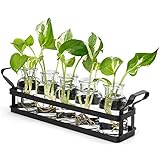
Propagation is how you turn one plant into many — for free, and true to the parent. The two most useful methods for home gardeners are cuttings (rooting a piece of a plant) and division (splitting an established plant into pieces). This guide covers both. Which method works depends on the plant, so always check what suits the specific species; not every plant roots from a cutting, and not every plant can be divided.
Cuttings vs division: which to use
- Cuttings suit many shrubs, houseplants, herbs, vines and soft-stemmed perennials — you take a piece and root it.
- Division suits clumping perennials, grasses, and plants that form crowns, offsets or rhizomes — you split what’s already rooted.
Part 1 – Propagating from cuttings
Types of cutting
- Stem cuttings — the most common; a length of stem with several nodes (softwood, semi-ripe or hardwood depending on plant and season).
- Leaf cuttings — work for certain plants (e.g. many succulents and some foliage houseplants) where a leaf or leaf section forms roots and plantlets.
- Root cuttings — sections of root for plants that regrow from roots.
Node placement
For stem cuttings, roots usually form at the nodes (where leaves attach). Cut just below a node and set that node in the medium; remove lower leaves so no foliage sits buried. Nodes are where the rooting happens — a cutting with no node struggles.
Medium
Use a light, free-draining rooting medium that holds moisture but plenty of air (mixes based on perlite, coarse sand, coco or a purpose rooting mix). Water/plain-water rooting works for some plants but roots formed in water adapt less well to soil. See soil & growing media.
Humidity
A cutting has no roots yet but keeps losing water through its leaves, so high humidity (a propagator, dome or loose bag) keeps it alive until roots form. Vent periodically to prevent rot.
Light
Give bright, indirect light — enough energy to root, but not harsh direct sun that scorches or dries an unrooted cutting.
Rooting conditions
Warmth at the base speeds rooting for many plants (a heat mat helps); keep the medium moist, not wet. Rooting hormone can improve success on tougher subjects. See propagation equipment.
Transplanting after rooting
Once a gentle tug meets resistance and new growth appears, pot the rooted cutting into normal potting mix and grow it on, easing it into brighter conditions gradually.
Common failures
- Rot — medium too wet or no airflow.
- Drying out / wilting — humidity too low before roots formed.
- No node in the medium, or a cutting taken at the wrong time/wood type for that plant.
Part 2 – Propagating by division
Which plants can be divided
Plants that grow as clumps or spread from a crown, rhizome, tuber, bulb offset or runner — many perennials, ornamental grasses and clumping houseplants. Single-stemmed woody plants generally cannot be divided (use cuttings instead).
Identifying natural divisions / crowns
Look for the natural clumps or growing points (crowns) — each viable division needs both roots and shoots/growth points. Divide along these natural sections rather than cutting through a single crown at random.
Timing
Most plants divide best when not in active flower — commonly at the start of their growing season or during dormancy, depending on the plant. Dividing in the heat of summer or mid-bloom stresses them most.
Root handling
Lift the plant, shake or wash off soil to see the roots, and separate sections by hand, or with a clean knife/spade for tough crowns. Keep as much healthy root as possible on each division and don’t let roots dry out while you work.
Replanting
Replant divisions promptly at the same depth as before, firm gently and water in. Smaller divisions establish faster but take longer to reach full size.
Aftercare
Keep divisions well watered and out of harsh sun while they re-establish; expect a short pause in growth. Hold off feeding until new growth shows they’ve rooted.
Related guides
- Propagation equipment · heat mats
- Soil & growing media
- Seed germination & starting seeds — propagating from seed instead
- rooting hormone for cuttings
For the general techniques behind this (cuttings, division, layering, grafting), see our plant propagation methods guide.