Most people meet blue raspberry as a flavour of sweets and slush drinks and assume the fruit was invented to go with the colour. It was not. Blue raspberry is a real plant and a real fruit — a raspberry in the genus Rubus, grown in gardens for eating, and the reason so few gardeners have seen one is simply that it is uncommon in cultivation, not that it does not exist.
Is blue raspberry real? What the plant actually looks like
The plant is a perennial deciduous shrub or bush of the genus Rubus. It is listed botanically as Rubus leucodermis, the whitebark raspberry, and it is also widely sold and written up under the closely related name Rubus occidentalis. Either way it belongs to the black-cap side of the raspberry family rather than the red one, and that lineage is where the dark colour comes from.
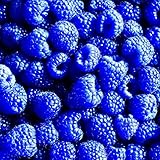
The honest description of the fruit is this: it is blue, and sometimes black or purple. Some cultivars are light blue, most are dark, and a few are almost black. What it is not is the electric cyan of the candy aisle — the vivid neon photographs you find online have been colour-enhanced. Expect a deep dusty blue with a bloom on the skin, closer to a blueberry’s colouring than to a food dye.
In shape and structure it is an ordinary raspberry: a round to oval aggregate fruit assembled from many small drupelets, and the flavour is much like red, purple or black raspberry. There is one giveaway detail worth knowing, because it doubles as your ripeness test. When you pick a blue raspberry, the fruit slips off and the torus — the small white core it grew around — stays behind on the branch, leaving a hollow, thimble-shaped berry. A fruit that will not release cleanly is not ready. Anything you have to pull hard, leave for another day.
Flowers are white, 1–3 cm, with five petals, carried in clusters. The leaves are green and edible in their own way — they are used medicinally and for making beverages, in the same tradition as red raspberry leaf tea.
Climate: why the winter matters more than the summer
Blue raspberry grows in temperate and subtropical climates, in hardiness zones 5–9, and in zone 10a with the right care. But zone numbers understate the real constraint, which is the chilling requirement.
This plant needs chilling hours in order to bear fruit. Its flower buds stay dormant until they have accumulated enough hours of winter cold, and only then can they open in spring. Grow it somewhere with warm, mild winters and the outcome is not death but disappointment: the bush grows, leafs out and looks well, and never gives you a proper crop. No cold winter, no fruit. If you are in a marginal, warm-winter area, that is the single factor to check before you plant anything else.
The other end matters too. Blue raspberry should be grown where temperatures do not run too high, and sustained heat above about 40°C (104°F) can kill the plant. In hot-summer regions do not give it unshaded full sun all day — grow it under shade netting, or on the edge of a tree’s shade so it takes the morning sun and is protected from the worst of the afternoon.
Soil, water and light
Give it slightly acid soil, rich, with plenty of organic matter, and mulch on top. The mulch is not decoration: raspberry roots run shallow and wide, they resent drying out, and a mulched root zone stays evenly moist and cool in a way an irrigation timer cannot match.
Water requirement is average to high, and the soil should stay moist — but water must never sit around the roots. Those two demands only look contradictory. Raspberries want constant moisture and free drainage, which means normal well-drained soil watered often, never heavy soil watered heavily. Waterlogging kills raspberries faster than drought does.
Light is full sun to half shade, with the hot-climate reduction described above.
Size: 0.4–2.5 m (1–8 ft) tall, and after a few years it can spread a few metres wide. It is fast growing, so plan for the width rather than the height you see on planting day.
Planting: how to do it and when
Planting season is broad — winter, spring or summer. Start from a plant, a bare-root plant, or vegetative propagation.
- Dig a hole at least 50–100% bigger than the root ball. Raspberries feed close to the surface, so a generously loosened area around the plant pays for itself.
- Mix in dead leaves, rich soil, organic matter and humus, blending them together with the excavated soil rather than dropping the plant into a pocket of pure compost.
- Plant, firm gently, and water in.
- Put in a stake or support at planting time for trellising. Do it now, not later — driving a post through an established raspberry root system means cutting through the roots and the suckers you want.
Trellising is worth the trouble beyond mere tidiness. It holds the fruiting canes apart so air moves through them, which cuts fungal problems, and it keeps the fruit off the ground and reachable — which matters more than usual here, because this plant has spines, and the spines are the main practical difficulty in growing it.
Pruning: get this wrong and you get no fruit
Here is the biology that governs everything. The plant is perennial, but the canes are biennial: a cane grows in its first year, bears fruit in its second year, and is then replaced by new canes coming up from the base.
So a cane has exactly one crop in it. Cut all the canes down each winter and you remove next season’s entire harvest before it happens — the classic beginner mistake, and the reason people report a bush that grows superbly and never fruits.
The rule that follows is simple:
- Prune once a year, and preferably after the fruit has been picked. The formal pruning season is winter.
- Remove the old canes that have already fruited, cutting them down to about 5–10 cm (2–4 inches) above the ground. They will never fruit again, and leaving them shades the new canes and harbours pests.
- Leave the current year’s new canes standing. Those are next summer’s crop.
- Prune for easy harvest as well: keep the row open enough that you can reach in without fighting the spines.
If you plan to take cuttings, do it at the end of winter or the beginning of spring.
Propagation: cuttings, not seed
You can start blue raspberry from seed, from a plant, from bare root or by vegetative propagation, but the recommendation is clear: use vegetative propagation or buy a plant. That is what guarantees the quality of the fruit, since a seedling is a genetic reshuffle and you have no idea what colour or flavour you will get for the two years it takes to find out.
If you do want to grow from seed, the seeds carry the same chilling requirement as the plant. Hold the seeds at around 0°C for a few weeks before sowing, either mixed with soil or in a paper bag in the fridge. It is not difficult — it is just not recommended, for the reason above.
Growing blue raspberry in a container
It is not a houseplant, but it grows well in a pot, planter or container.
- Start with a pot 40–60% larger than the root ball, and move up a size each time the plant fills its container, until it reaches the size you want it to stay.
- Change the soil in the middle of winter, while the plant is dormant and least disturbed by root work. Potting soil loses its structure and viability over time, so refreshing it periodically is more effective than trying to feed a tired mix back to life — and it also lets you inspect the roots.
- Give an average amount of water with good drainage. A pot magnifies both mistakes: it dries out faster than open ground and it waterlogs faster too.
- Feed with fertilizer in early spring, and top up mulch and organic matter, the same as a plant in the ground.
Pests and diseases
Three to watch for:
- Aphids — cluster on soft new shoot tips and flower clusters, weakening growth. They also matter beyond the direct damage, as aphids move viruses between raspberry plants.
- Mites — worst in hot, dry, dusty conditions, giving leaves a fine stippled, bronzed look. Another argument for shade and steady moisture where summers are hot.
- Cane borer — the one to take seriously, because the larvae tunnel inside the cane. The symptom is a shoot tip that suddenly wilts and dies back while the rest of the plant looks fine. Cut the affected cane back below the damage and remove it from the garden; anything left lying about carries the next generation.
Harvest and uses
Blue raspberry starts bearing after about 2 years — which follows directly from the cane biology, since the canes you plant or grow in year one are the ones that fruit in year two. The fruit season is summer.
Fruit is eaten raw, juiced, cooked, baked into cakes, and made into candy. The leaves are used medicinally and for beverages. Pick often once the season starts — ripe raspberries hold on the plant for a matter of days, and the clean-release test above tells you exactly which ones to take.
For the full plant profile see our Blue raspberry growing page.
See also: rooting hormone for cuttings
See also: using rooting hormone
More fruit-growing guides
Browse our other fruit growing guides for related trees and berries.