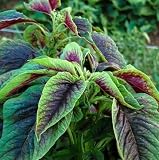
Amaranthus tricolor — Joseph’s coat, or edible amaranth tricolor — is grown mainly for foliage that most gardeners would not believe was a leaf until they saw it. The leaves come in orange, yellow, red, purple, blue and pink, and they are edible, as are the small round white seeds. It is usually treated as an annual herbaceous plant, though in a warm climate it can behave as a short-lived perennial, and it grows in Mediterranean, subtropical, temperate and tropical conditions across hardiness zone 2 and up — which really means it will grow almost anywhere as a summer plant, because it completes its life cycle in a single warm season and does not need to survive winter.
It is an easy plant. The three things that separate a good stand from a scruffy one are timing, support, and knowing when not to prune.
Sowing: Wait for Warmth, Not for the Calendar
Amaranthus tricolor is not difficult from seed, and seed is the recommended route — there is no reason to graft it and no advantage to any other method. The one condition it insists on is warm weather.
- Sow in spring, after the last frost. This is the mistake most people make: they sow on a mild early-spring day and the seed sits in cold soil doing nothing, or germinates into weather that checks it. The plant is a warm-season grower and cold soil simply stalls it.
- Sow 1–2 cm deep. The seed is very small, so deeper sowing buries it beyond the reserves it has to push a shoot to the surface.
- Keep the soil moist through germination and give the seedbed full sun.
- Once the seedlings are up, mulch. Mulching after germination rather than before means you are not smothering emerging seedlings, and from then on it stabilises the moisture in the top layer of soil where the young roots are working.
- Water at an average rate from then on — steady moisture rather than either extreme.
In a cold region, start indoors at the end of winter and move the plants outside after the last frost. That buys you several weeks of the growing season you would otherwise lose waiting for the soil to warm. If you are buying small plants in a warm region, you can also plant them out in summer.
Cuttings: possible, but rarely worth it
You can root cuttings. Cut a stem from new growth; if there is none, cut the top of the plant to force it, then take the fresh stems. Put the cutting in moist soil with high humidity and never let it dry out. Two caveats: do not try it while the plant is flowering, because a plant in bloom has committed its energy to seed rather than roots, and success rates are generally not high. Given how easily it grows from seed, cuttings are a curiosity rather than a technique.
Site, Soil and Water
Grow it in full sun. It tolerates less, but the reduction shows up in fewer flowers — and, as explained below, that also means less of the intense leaf colour, because the brightest foliage is concentrated around the flowering tops.
The soil should be rich and moist, and mulch is genuinely important rather than optional here. This is a fast-growing plant carrying a lot of soft leaf on a shallow root system, so it loses water quickly and reacts badly to a dry spell. Mulch stabilises soil moisture and keeps growth even, which in turn keeps the leaves large and well coloured; a plant that has been through a drought check produces smaller, duller leaves and runs to flower early.
Note that it is not a houseplant. Indoor light will not sustain the colour or the growth.
Support: Why It Falls Over and What to Do About It
Amaranthus tricolor reaches 0.4–1 m (16–40 inches) and grows fast to medium fast. As it gets tall, plants frequently need a cane for support to stop them falling over.
The cause is a mismatch between growth rate and stem strength. The plant gains height quickly and carries a heavy head of leaf and flower at the top, on a stem that is soft rather than woody, with a root system too shallow to anchor that leverage. Add wet soil after rain or a gust of wind and the whole plant goes over at the base — and once it has flopped, the stem kinks and rarely looks right again. Put the cane in before it is needed, while the plant is upright and you can drive the support in without cutting through roots, and tie loosely near the top where the weight actually is.
Pruning: The Trade-off Between Flowers and Colour
Most of the time you do not need to prune at all. Where pruning is useful, there are two distinct jobs.
Pinching for a bushier, shorter plant
If you want a plant that is smaller or fuller with more stems, cut the top of the plant in spring, once it has established. Removing the growing tip releases the side buds lower down, so instead of one tall stem you get several shorter ones. This also reduces the flopping problem at source: a shorter, multi-stemmed plant carries its weight lower and is far more stable than a single tall stem.
The important limit is not to prune heavily just before flowering. Cutting at that point removes the buds the plant is about to open and sets the display back with no time left in the season to recover.
Removing flowers — and what it costs you
Flowers appear in summer as purple inflorescences on a stalk, and removing them is generally recommended. The reason is that flowering pushes the plant towards the end of its cycle: energy that had been building leaves goes into seed instead, and once seed sets the plant declines.
But there is a genuine trade-off, and it is worth understanding before you reach for the secateurs. The most intensely coloured leaves grow next to the flowers, at the top of the plant. Cut the flowering tops off indiscriminately and you remove the best colour along with them. The practical compromise is to remove flower stalks selectively — taking those that are setting seed while leaving enough coloured growth at the top for display — rather than shearing the whole plant.
The broader pruning window is summer to autumn, and it can be done at any time of year; the tidiest moments are after the plant has died back, or in spring before flowering begins.
Keeping It From Taking Over
This is the one real warning. Amaranthus tricolor is aggressive and can become invasive. Each plant produces a large quantity of small seed that scatters easily and germinates readily in warm soil, so a single plant left to seed can turn into a persistent colony that reappears every year.
The control is simple and it is the same as the pruning advice: if the plant starts becoming invasive, collect all the seed before it drops. Cut and bag the flower heads as they begin to mature rather than letting them shatter over the bed. Removing flowers early serves both purposes at once — it keeps the plant productive and keeps next year’s seedlings out of your borders. And if you want to grow it again next season, you now have your own seed for free.
Pests
Three pests matter. Aphids cluster on soft new shoot tips and the flower stalks, distorting exactly the growth you are growing the plant for. Prodenia — armyworm caterpillars — feed at night and can strip large areas of leaf very quickly, so damage often appears overnight with no visible culprit in daylight; check under leaves and in the soil at the base. Slugs go for seedlings and young plants hardest, and a soft, moist, mulched bed is exactly the habitat they like. The mulch that keeps the plant growing well also shelters them, so watch newly emerged seedlings closely — a slug can remove an entire young plant in a night.
Growing in a Container
Amaranthus tricolor grows well in pots and planters, which is also the easiest way to enjoy it without letting it seed into the garden.
- Use a container of 5–8 litres (1.5–2 gallons) — enough soil volume to hold moisture through a hot day.
- Water at an average rate, aiming to keep the soil moist, and mulch the surface of the pot as well; it reduces evaporation, which is the main reason container plants dry out.
- Make sure the mix is well ventilated with good drainage and rich in organic matter. A standard potting mix works, or peat soil opened up with perlite or vermiculite.
- Remember the support. A container plant reaching a metre is top-heavy and the pot itself can go over — cane it early and use a heavy pot.
For the full plant profile see our Amaranthus tricolor growing page.
If the plant needs repotting, see our guide to choosing the right pot or planter.
For general seed-starting technique, see our seed germination guide.