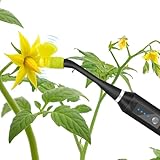
A greenhouse keeps pollinating insects out as well as pests, so fruiting crops that rely on bees or wind often set poorly under cover unless you help. Fortunately, greenhouse pollination is easy once you know which crops need help and how. This guide covers the main methods.
Why pollination fails under cover
Closed vents mean few or no bees reach the flowers, and still air means little wind pollination. The result is flowers that open, then drop without setting fruit — a common and frustrating greenhouse problem. See why plants flower but don’t fruit and flower & bud drop.
Methods that work
- Open up — ventilating on warm days lets some pollinators in and air move, helping wind-pollinated crops like tomatoes.
- Encourage airflow / gentle shaking — tapping or gently shaking tomato and pepper trusses releases pollen (they’re self-pollinating but need movement).
- Hand pollination — transfer pollen with a soft brush or cotton bud; essential for cucurbits with separate male and female flowers. See how to hand pollinate plants.
- Introduce pollinators — commercial bumblebee boxes are used in larger greenhouses.
Crop notes
- Tomatoes/peppers — self-fertile; just need movement (breeze, fan, or a daily tap).
- Cucumbers/melons/squash — separate male/female flowers; often need hand pollination (some cucumbers are parthenocarpic and don’t).
- Strawberries — benefit from brushing or insect access for well-shaped fruit.
Quick questions
Do I need to hand-pollinate greenhouse tomatoes? Not usually — they’re self-fertile; just ventilate or gently shake the plants daily to move pollen. Cucurbits more often need hand pollination.