


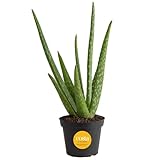


Plant Profile & Key Characteristics
Overview: Aloe albida is a miniature, evergreen succulent that forms a rosette of fleshy, spine-edged leaves, reaching only about 10 cm (4 in) tall. A drought-tolerant perennial, it is grown almost entirely as an ornamental for the beauty of its foliage, carrying conical spikes of white flowers in summer.
Quick Specifications
| Specification | Attribute |
|---|---|
| Plant Type / Life Cycle | Perennial succulent |
| Foliage Type | Evergreen |
| Mature Size | ~10 cm (4 in) tall, a miniature rosette |
| Growth Rate | Slow |
| Root System | Shallow, fibrous root system |
| Toxicity | Leaf sap/latex contains aloin, a bitter purgative – mildly toxic if ingested; the genus is listed as toxic to dogs and cats. Handle the cut sap with care. |
| Hardiness | USDA zone 10b+ (to zone 10a with winter protection) |
Growth Form & Structure
- Height & Spread: In the ground a mature plant reaches only about 10 cm (4 in) tall and wide. It grows readily in pots, where it stays more compact and portable. Best grown outdoors or in a container in full sun; not suited to low-light indoor culture.
- Growth Habit & Form: Miniature, grass-like aloe forming a small, tight rosette of slender fleshy leaves.
- Lifespan & Maturity: Long-lived evergreen perennial; slow-growing, taking several years to reach full size and its first flowering.
Anatomy & Physical Features
- Leaves & Foliage: Leaf colour green leaves fleshy with spiny edges, arranged in a rosette.
- Flower Characteristics: White, tubular flowers borne in a conical raceme on an upright stalk above the foliage (blooms in summer).
Primary Uses & Landscape Value
- Functional & Ornamental Roles: Grown almost exclusively as an ornamental, valued for its sculptural rosette and fleshy, often colourful foliage. Well suited to xeriscape and rock gardens, dry sunny borders, gravel and coastal plantings, and containers; drought-tolerant and low-maintenance once established. Ideal for small containers, trough and rockery plantings, and succulent collections.
Care Guide: Planting, Soil & Watering
Overview: Aloe albida is a drought-tolerant succulent that grows best in full sun to light shade with frost-free warmth, storing water in its fleshy, rosette-forming leaves. It needs sharply well-draining, sandy or gritty soil and only light, infrequent watering, as it rots quickly in heavy or waterlogged ground.
Quick Care Requirements
| Requirement | Ideal Condition |
|---|---|
| Planting Season | Warm season — spring in zone 10a, spring to autumn in 10b, year-round in zone 11+ |
| Growth Rate | Slow |
| Soil Type | Well-draining, sandy or gritty (cactus / succulent mix) |
| Water Need | Low — let the soil dry out between waterings |
Planting & Establishment
- Best Planting Season: Plant in the warm season once frost risk has passed — spring in zone 10a, spring through autumn in 10b, and any time of year in zone 11 and warmer.
- How to Plant:
- Hole Preparation: Dig a hole about 50–100% wider than the root ball so the roots can spread into loosened soil.
- Soil Amendments: Mix in only a small amount of organic matter and, if the ground is heavy, add coarse sand or grit to sharpen drainage.
- Planting Depth: Set the plant with its root collar at soil level and cover lightly; in high-rainfall spots, plant slightly raised above grade so water cannot pool around the base.
- Growth Speed & Expectations: A slow grower — expect steady, unhurried growth even in ideal conditions, so give it room and be patient.
Soil, Watering & Drainage Care
- Soil Mix & Drainage Needs: Fast drainage is essential. In the ground use sandy, gritty soil; in pots use a cactus/succulent mix (or regular potting mix opened up with sand and lava grit) in a container with generous drainage holes to prevent root rot.
- Watering Schedule & Technique:
- Young / Newly Planted: Water lightly to settle the soil, then keep watering sparing while the plant establishes.
- Established: Water deeply but infrequently, always letting the soil dry out almost completely before watering again — never leave it sitting in water.
- Seasonal Adjustments: Cut back sharply in winter, and water a little more often only during prolonged heat.
Climate, Light & Hardiness
Aloe albida thrives in warm, dry climates – desert, Mediterranean, subtropical, or tropical – and is grown in full sun to half shade. It is a frost-tender succulent, reliably hardy outdoors from USDA zone 10b and warmer, marginal in zone 10a where winter protection is needed, and best treated as frost-free.
Quick Climate Specifications
| Climate Zones | Desert, Mediterranean, Subtropical, Tropical |
|---|---|
| USDA Hardiness Zones | 10a (with winter protection) – 11+; generally cited as zone 10b+ |
| Optimal Temp Range | Approximately 18–29°C (64–84°F) during active growth |
| Cold Damage Begins | Approximately 5°C (41°F) and below |
| Approx. Survival Minimum | Established plants may briefly tolerate very light frost near 0°C (32°F), but sustained frost is usually fatal; young plants are more vulnerable |
| Frost Tolerance | Very Low |
| Light Conditions | Full Sun / Half Shade |
| Wind Tolerance | Moderate |
Sunlight & Light Exposure
Optimal Light Setup
Grow in full sun to half shade. This is not a shade species – consistent bright light keeps the rosette compact and encourages leaf colour and flowering.
Direct Sun Requirement
Several hours of direct sun daily are needed for compact, well-coloured growth; leaves often develop stronger red, orange, or bronze tones under strong sun and heat stress, fading to plain green in lower light.
Shade & Heat Management
Half shade is tolerated, particularly in the hottest part of the day in very intense-sun climates, but deep or full shade is not recommended – it thins out growth and reduces flowering.
Best Exposure / Orientation
A south-facing (Northern Hemisphere) or otherwise sun-facing, open aspect works best. In marginal zone 10a locations, siting against a warm, sun-facing wall adds useful winter warmth.
Temperature Extremes & Hardiness
USDA Hardiness & Regional Limits
Grows outdoors year-round in USDA zone 11 and warmer. In zone 10b it can be planted from spring through autumn. In zone 10a it is marginal – the site recommends spring-to-summer planting, with winter protection and dedicated overwinter protection, since winters there occasionally dip below this species’ comfort range.
Cold Damage & Winter Protection
Ahead of frost, site the plant out of the wind and cover the crown with mulch and dry, dead leaves; established plants can be fertilised once a year to support recovery going into the growing season. Winter wet combined with cold is riskier than cold alone, since a chilled, saturated crown is prone to rot.
Frost Sensitivity
Best treated as frost-tender. Foliage is easily marked or collapses on exposure to frost, and repeated or hard frost can kill the plant outright; young, unestablished specimens are the most vulnerable.
Extreme Heat Tolerance
Very heat tolerant once established, consistent with its desert and dry-subtropical origins and general drought tolerance; good drainage matters more in extreme heat than shade does. In climates with intense, prolonged summer heat, light afternoon shade can keep the rosette looking its best.
Wind, Humidity & Microclimate
Humidity Preferences
Prefers the low ambient humidity typical of arid and semi-arid climates. High humidity combined with cold or poor air movement raises the risk of fungal and rot problems at the crown.
Dry-Air Tolerance
Handles dry air very well and needs no humidity intervention outdoors in arid or Mediterranean climates.
Wind Tolerance
Moderately wind tolerant once established, but the site’s own care guidance is to plant in a location sheltered from wind, particularly heading into the cold season, since wind exposure compounds cold and frost damage risk.
Rainfall & Seasonal Moisture
Native to climates with low, often seasonal rainfall, consistent with this species’ general drought tolerance; it is adapted to dry spells rather than sustained wet conditions.
Microclimate Recommendations
A raised, mounded, or gravelly/sandy bed with sharp drainage suits this species well and helps the root zone shed winter wet quickly. In marginal zone 10a gardens, a courtyard or a spot against a warm, sun-facing wall buffers winter lows.
Grows well in containers, which also makes winter management easier in zone 10a: pots can be moved to a sheltered spot, against the house, or under cover during cold snaps, since a container root zone heats, cools, and freezes faster than one in open ground.
Growing in Pots, Balconies & Indoors
Aloe albida (Aloe albida) is a sun-loving succulent that takes naturally to pot culture – its shallow, modest root system and drought tolerance make it an easy container plant for a hot patio, balcony or a bright, sunny windowsill. The grower does not list it as a true houseplant, which is fair: it needs strong direct light and does best on the sunniest sill rather than deep inside a room. Being a dwarf species, it stays happy in a small pot for a long time.
Quick Details
- Container Size: A pot roughly 30-50% larger than the root ball (the grower’s guide); wide and shallow suits it better than deep and narrow
- Indoor Suitability: Not a low-light houseplant, but happy on a bright, sunny windowsill and easy to overwinter indoors
- Best Spot: Full sun to light shade – the brightest position you can offer
- Soil & Drainage: Fast-draining gritty/sandy mix or cactus compost; plenty of drainage holes
- Watering in Pots: Sparingly – water, then let the mix dry out before watering again; never leave it standing in water
Indoors & On the Windowsill
- On a sunny windowsill: Although the grower marks it as not a houseplant, aloes grow well indoors on a very bright, sunny sill. In dim light they stretch, pale and flop, so give the strongest light in the home.
- Overwintering: Aloes are frost-tender – in cold-winter climates a pot lets you move the plant to a bright, frost-free room over the cold months, watering only occasionally until growth resumes.
- Safety: Aloe sap is toxic if eaten and can upset pets – keep pots out of reach of curious children and animals.
On a Balcony or Patio
- Light & heat: A hot, sunny balcony or patio is ideal; walls and paving reflect heat, which aloes enjoy, but pots dry fast, so check them in prolonged heat.
- Weight & shelter: Use a stable, heavier pot for tall or clustering plants so wind and top growth cannot tip it; move under cover before frost.
Choosing the Pot, Soil & Long-Term Care
- Pot & drainage: Choose a container about 30-50% bigger than the root ball, with generous drainage holes (the grower’s method). Terracotta breathes and dries quickly (good for plants that dislike wet feet); glazed or plastic pots hold moisture longer. The grower prefers no drip tray – if you use one, empty it so it is dry by the end of the day.
- Potting mix: Sandy, gritty, free-draining soil – lava grit or other inert material, or a cactus mix, with only a little organic matter. The grower notes it also grows well in regular potting mix as long as drainage is sharp.
- Watering & feeding: Small amounts of water only, letting the mix dry between waterings; a light feed roughly once a year is plenty for these lean-living succulents.
Grower’s Container Tip
- The grower’s potting method: Pot into a container 30-50% larger than the root ball; use sandy soil, lava grit or cactus mix with a little organic matter; make plenty of drainage holes; feed about once a year; water sparingly and let it dry between waterings. He prefers no saucer under the pot – but if one is used, make sure it is dry by day’s end.
Growing this plant in a greenhouse
A greenhouse can give aloe albida frost protection, cold protection, humidity control and extra warmth.
Greenhouse at a glance
| Greenhouse suitability | Conditional – depends on your climate |
|---|---|
| Main benefits | frost protection, cold protection, humidity control, extra warmth |
| Outdoor protection advisable below | about 5°C |
| Maintain greenhouse minimum | around 5°C for active growth |
| Suitable types | unheated greenhouse, polycarbonate greenhouse |
| Heating | Heating is optional – useful mainly for winter growing in cold areas. |
Related greenhouse guides
- Greenhouses: How to Choose the Right Greenhouse
- Polycarbonate Greenhouses: What to Look for Before Buying
- Greenhouse Climate Control: Temperature, Ventilation and Humidity
Fertilizing & Feeding
A light feeder: this is a notably compact, dwarf rosette aloe with small spiny-edged leaves, much smaller overall than most garden aloes, and it produces white summer flowers. This drought-tolerant rosette succulent is grown for the beauty of its leaves rather than for fast growth, so minimal, infrequent feeding is enough and heavy feeding can do more harm than good.
Quick Fertilizing Specs
| Feeding Level | Light feeder |
|---|---|
| Main Nutrient Priority | A dilute, low-nitrogen cactus or succulent fertilizer that avoids pushing soft growth |
| Best Feeding Period | During the warmer active growing season |
| Organic Options | A small amount of organic matter worked into the lean, well-drained planting mix |
| Reduce/Stop Feeding | Feeding is withheld through any cool-season rest or frost-risk period when growth pauses |
| Micronutrients | Generally adequate from an occasional light succulent feeding; no routine micronutrient product is needed |
| Soil pH | Tolerates a wide range of well-drained soil |
Feeding by Growth Stage
Active growth
Support this compact, dwarf aloe’s small rosette without overfeeding a plant whose naturally small scale means it needs very little in the way of nutrients.
| Nutrient direction | A dilute, low-nitrogen cactus or succulent fertilizer supports leaf and rosette growth without encouraging soft, disease-prone tissue on this drought-tolerant aloe. |
|---|---|
| Timing | During the warmer months while the plant is visibly putting on new leaf growth. |
| Frequency | This slow-growing aloe rarely needs feeding; an occasional light application during active growth is enough. |
| Fertilizer types | A diluted, low-nitrogen cactus or succulent fertilizer, A small amount of organic matter worked lightly into the planting or potting mix |
| Precautions | Favor a highly diluted, low-nitrogen product over a full-strength general fertilizer; because this is a notably small, dwarf aloe, even light feeding should be scaled down further than for larger garden aloes. |
Dormant or resting period
Avoid feeding this drought-tolerant aloe while it is dormant or resting, particularly through cooler, wetter, or frost-risk periods.
| Nutrient direction | None – withhold fertilizer during dormancy or cool-season rest. |
|---|---|
| Timing | During cooler months or any period when growth visibly pauses, including frost-risk periods that call for protective mulching. |
| Frequency | No feeding at this stage. |
| Fertilizer types | No feeding at this stage; resume only light feeding once active growth returns in warmer conditions. |
| Precautions | Do not fertilize a dormant or frost-protected aloe; unused fertilizer salts can accumulate in infrequently flushed, well-drained soil and stress the plant once it resumes growth. |
Nutrient Deficiency Signs & Corrections
Leaves look duller or paler than expected and growth is slower than normal for the season.
| Possible causes | very low soil nitrogen in an otherwise appropriately lean succulent mix, insufficient sunlight limiting growth and nutrient uptake, root stress from soil that stays too wet or drains poorly |
|---|---|
| Appears first on | older, lower rosette leaves |
| What to check | recent feeding history, light exposure, soil drainage and how quickly it dries between waterings |
| Possible correction | Apply a light, dilute low-nitrogen feeding only once active growth is confirmed, and correct any drainage or light issues first. |
Leaves turn soft, translucent, or discolored and growth stalls even after feeding.
| Possible causes | waterlogged or poorly drained soil restricting root function and nutrient uptake, overwatering relative to this drought-tolerant aloe’s low water needs, fertilizing too heavily or too often for a slow-growing succulent |
|---|---|
| Appears first on | lower and inner rosette leaves |
| What to check | drainage of the pot or planting site, watering frequency, recent fertilizer amount and strength |
| Possible correction | Improve drainage, let the soil dry between waterings, and hold off on any further feeding until the plant is clearly healthy and actively growing. |
New leaves emerge yellowish while the veins stay comparatively green, most visible after cool or wet spells.
| Possible causes | soil pH drifting outside the range this succulent tolerates well, waterlogged soil limiting micronutrient availability to the roots, very lean, mineral-heavy soil with little organic matter |
|---|---|
| Appears first on | newest rosette leaves |
| What to check | soil pH and drainage, recent watering pattern, whether any fertilizer has been used recently |
| Possible correction | Correct drainage and soil pH toward the plant’s preferred range, and apply a chelated micronutrient product per its label if the pattern continues. |
Pruning, Training & Seasonal Maintenance
Aloe albida is a true dwarf among Aloes – the whole plant is only around 10 cm (4 in) tall with leaves just 3-7 cm long, and its leaves are noticeably thinner and softer than the thick fleshy leaves of larger shrub Aloes. It tolerates no structural pruning at all; care is limited to removing collapsed or fully dried leaf tissue and the spent flower stalk, and to resisting the urge to “clean up” the plant during a natural dieback or slow period, which for a species this small and thin-leaved can look like dead growth when it is not.
Quick Pruning & Maintenance Specs
| Pruning Tolerance | Very low (light leaf/stalk cleanup only) |
| Primary Maintenance Window | After the summer white bloom finishes |
| Secondary Maintenance Window | Early growing season, once new leaf growth confirms the plant is active again |
| Typical Frequency | Occasional, light touch only |
| Main Objective | Remove clearly dead tissue without disturbing the small rootstock/crown |
| Young Plant Priority | Do not trim at all beyond removing obviously rotted material |
| Mature Plant Priority | Remove fully collapsed leaves and the spent flower stalk only |
| Best Tool Type | Small precision snips |
| Avoid Heavy Pruning During | Any apparent slow/dormant period and during bloom |
Pruning by Plant Age & Size
Newly Established
Leave the plant entirely alone beyond removing anything clearly rotted; given its small size, there is very little leaf mass to spare while it settles in.
Young / Formative
No structural training applies to a plant this size and form – it has no stem or branch framework to train.
Mature / Established
Even mature plants need only occasional removal of fully collapsed leaves and the old flower stalk; resist trimming anything that still shows colour or turgidity, since the thin leaf blades can look tired well before they are actually finished.
Seasonal Pruning Schedule
Post-Flowering
Objective: once the white flowers finish, cut the stalk near its base. This does not affect next year’s flowering, which comes from fresh growth at the crown.
Ongoing Sanitary
Objective: remove only leaves that are fully collapsed, papery, or rotted. Because this species has thinner, softer leaves than the other Aloes in this collection and may go through a slow or leaf-reduced phase in cooler or drier periods, wait for clear new growth before assuming older leaves are truly finished and cleaning them out.
Special Growth to Remove
- Spent flower stalk – cut at the base once bloom is over.
- Fully collapsed or rotted leaf tissue only; do not remove leaves that are simply smaller or less upright than expected, which is normal for this dwarf species.
Container & Small-Space Pruning
This species is naturally container-scale, so no size control is ever needed. The main container consideration is drainage around the small rootstock – excess standing moisture at the crown is a bigger risk to this plant than any amount of “un-pruned” old leaf tissue.
Tools
Small precision snips only; the leaves and flower stalk are both thin and easily damaged by anything heavier.
Tool Hygiene & Disease Risk
Routine risk, but be gentle – the thin leaf tissue bruises and tears more easily than thicker-leaved Aloes, so use a sharp, clean blade rather than pinching or snapping material off by hand.
Cut Placement & Technique
Cut the flower stalk and any dead leaf close to its base with a single clean pass; avoid tugging, which can pull against the small crown/rootstock.
Heavy Pruning & Rejuvenation
Not tolerated in any form. This is a single small growing point with very little leaf reserve; there is no rejuvenation technique that benefits it.
Post-Pruning Care
Let any cut dry briefly before watering; do not fertilize in response to a cleanup cut – feeding is already limited to about once a year for this genus.
Common Pruning Mistakes
- Mistaking a slow or leaf-reduced period for dead growth and over-cleaning the plant.
- Using tools sized for larger Aloes and tearing the thin leaf tissue.
- Disturbing the small crown/rootstock while removing old leaves.
When NOT to Prune
Avoid cutting during active bloom, right after transplant, and whenever the plant appears to be in a slow or reduced-growth phase rather than clearly, fully dead.
Recommended Tools (by task)
- precision_snips – the only tool this dwarf species needs, for the spent flower stalk and any fully collapsed leaves.
Propagation Guide
Aloe albida can be raised from seed. Vegetative propagation may also be possible when the plant naturally produces offsets, pups or suitable stem growth. Individual leaf cuttings are not recommended.
Quick Propagation Specs
| Best Propagation Method | Seed; vegetative methods only where naturally produced |
| Seed | Valid for raising the species |
| Leaf Cuttings | Not recommended |
Seed Propagation
Sow fresh, mature seed in a clean, well-drained succulent propagation medium. Keep the medium lightly moist rather than wet and provide warm, bright conditions while seedlings establish.
Vegetative Propagation
Use vegetative propagation only from material the plant naturally provides, such as offsets, pups, divisions or suitable stem growth. Do not invent offsets for a plant that does not produce them.
Aftercare
Keep newly propagated plants in excellent drainage and avoid prolonged wet conditions around developing roots. Increase light gradually after seedlings or vegetative propagules are established.
Bloom & Flower Guide
Quick Details
- Bloom Season: Summer
- Flower Appearance: A slender spike (raceme) of tubular white flowers on an upright stalk
- Edibility: Grown as an ornamental; aloe sap (the bitter latex) is a laxative, so it is not for eating
Detailed Blooming Overview
Aloe albida is a small “grass aloe”, and its summer bloom is unusual for the genus in being white rather than the familiar orange or red. The tubular flowers line an upright stalk and are rich in nectar, drawing in insects and small birds.
Flower Characteristics
- Tubular white flowers, sometimes described as cone-shaped in bud.
- Carried in a slender raceme on an upright stalk.
- Nectar-rich.
Bloom Care & Thinning
- Encouraging bloom: Full sun and a dry winter rest set the plant up to send its flower spike in summer.
- Pollination: Nectar-feeding insects and birds work the flowers.
Bloom Health & Protection
- Aloe mite: This tiny mite can trigger warty, distorted galls, including on the flower stalk – cutting out and destroying affected growth is the usual way to keep it from spreading.
Pests, Diseases & Troubleshooting
Overview: Aloes are tough, drought-adapted succulents whose troubles are overwhelmingly cultural rather than biotic – the single biggest killer is overwatering, which triggers basal stem and root rot far faster than any insect. A small white-flowered grass aloe; being small and softer it is a little more prone to overwatering rot. When pests do appear they are the usual succulent-house culprits (the gall-forming aloe mite is the one signature problem worth learning to recognise), and a healthy, gritty-potted, well-lit plant shrugs off most of them. Manage organically first: correct watering and light, keep foliage dry and airy, inspect new arrivals, and reach for oils or soaps only when a real infestation is confirmed.
Quick Troubleshooting Overview
| Issue / Pest | Main Symptom | Primary Solution |
|---|---|---|
| Aloe mite (aloe wart mite) | Warty, lumpy galls / cancer-like growths on leaves, stem or flower spike | Cut out and destroy galled tissue; isolate; miticide only if spreading |
| Overwatering rot | Soft, mushy, translucent base; leaves yellow and collapse | Stop watering; unpot, cut to clean tissue, re-root in gritty mix |
| Soft brown scale & mealybugs | Sticky honeydew, sooty mould, white fluff in leaf axils / on roots | Wipe off, horticultural oil or insecticidal soap; check roots |
| Spider mites | Fine stippling, dull bronzed leaves, faint webbing in dry heat | Raise humidity/airflow, hose off, miticidal oil |
| Aloe rust | Round black/brown corky spots with yellow halo on leaves | Mostly cosmetic; remove worst leaves, improve airflow |
| Sunburn / cold damage | Bleached tan patches or translucent frost-scorched leaves | Acclimatise to sun gradually; protect from frost |
Common Pests & Management
- Aloe mite / aloe wart mite (Aceria aloinis):
- Symptoms: The signature aloe pest. This microscopic eriophyid mite injects a growth-hormone-like toxin that causes abnormal, lumpy, warty galls – often called “aloe cancer” – on leaf edges, the stem, or especially the flower spike. Growth is distorted, corky and orange-tan. The mites themselves are invisible to the naked eye; you diagnose by the galls.
- Prevention & Control: There is no cure for galled tissue. Cut out and destroy every galled part well into clean tissue, sterilising the blade between cuts. Isolate the plant immediately – it spreads on wind, hands and tools to nearby aloes. For prized specimens a systemic/miticidal acaricide (e.g. a labelled abamectin or a sulfur-based miticide) applied to new growth can suppress spread; badly cancered plants are best discarded to protect a collection.
- Soft brown scale (Coccus hesperidum):
- Symptoms: Flat, oval, tan-to-brown limpet-like bumps clustered along leaf bases, undersides and the stem. They excrete sticky honeydew that turns leaves shiny then black with sooty mould. Heavy scale drains vigour and yellows leaves.
- Prevention & Control: Inspect leaf axils regularly. Scrub off small numbers with a fingernail or a cotton bud dipped in dilute alcohol. For wider infestations spray thoroughly with horticultural oil or insecticidal soap to smother them, repeating every 1–2 weeks; oil also clears the sooty mould. Encourage lacewings and parasitic wasps outdoors.
- Mealybugs, incl. root mealybugs (Planococcus citri / Rhizoecus spp.):
- Symptoms: Cottony white tufts tucked into leaf axils and the crown; foliar mealybugs leave honeydew and sooty mould. Root mealybugs are sneakier – white “mould-like” wax and grey insects on the roots and inner pot wall of a plant that is inexplicably stalling, yellowing or wilting despite correct care.
- Prevention & Control: Dab foliar colonies with an alcohol-tipped swab, then treat with horticultural oil or insecticidal soap. For root mealybugs, unpot and bare-root the plant, wash the roots, discard the old soil, and repot into fresh gritty mix and a clean pot; a systemic soil drench helps for persistent cases. Always quarantine new plants – this is how root mealybug arrives.
- Aphids (Aphis spp.):
- Symptoms: Soft green, grey or black insects crowding tender new growth and – most of all – the emerging flower stalk, which becomes sticky with honeydew and may distort. Ants farming the aphids are a giveaway.
- Prevention & Control: Dislodge with a firm jet of water. Small colonies wipe off easily; larger ones respond to insecticidal soap or a light horticultural oil. Preserve ladybirds, lacewings and hoverflies, which usually keep aphids in check outdoors.
- Spider mites (Tetranychus urticae):
- Symptoms: A hot, dry, still atmosphere (often indoors) brings fine pale stippling, a dull bronzed or greyish cast to the leaves, and in bad cases delicate webbing across leaf tips. Mites are pinprick specks on the undersides.
- Prevention & Control: They hate humidity and airflow – improving both is half the cure. Rinse the plant, then apply insecticidal soap or a fine horticultural/miticidal oil to leaf undersides, repeating to break the fast breeding cycle. Predatory mites are effective in greenhouses.
- Snout / vine weevil (Otiorhynchus sulcatus and relatives):
- Symptoms: Adults notch ragged bites out of leaf margins at night; the far more damaging cream, legless, C-shaped larvae live in the soil and devour roots and the corm-like base, causing sudden collapse of an apparently healthy plant – easily mistaken for rot.
- Prevention & Control: Check the root ball when repotting. Drench the soil with parasitic entomopathogenic nematodes (Steinernema/Heterorhabditis) in warm conditions to kill grubs biologically; a diatomaceous-earth ring deters adults. Remove and squash night-feeding adults by torchlight.
- Snails & slugs (Gastropoda):
- Symptoms: Most troublesome on aloes grown in shade or kept damp – they rasp irregular holes and silvery grazed scars into soft leaf tissue and seedlings overnight, leaving slime trails. (These are the real culprits behind much of the “pest” damage on shaded aloes.)
- Prevention & Control: Grow in brighter light and let the surface dry – both discourage them. Hand-pick after dark, set beer traps, and ring vulnerable plants with grit or diatomaceous earth; iron-phosphate pellets are a pet-safer bait if needed.
Diseases & Fungal Issues
- Basal stem & root rot (Fusarium / Pythium / Phytophthora spp.):
- Symptoms: The classic aloe killer. The base of the plant turns soft, brown-black, translucent and foul; lower leaves yellow, go limp and pull away easily. Almost always follows wet, cold, poorly drained soil.
- Treatment & Management: Prevention is everything – a fast-draining gritty/mineral mix, a pot with drainage, and watering only when dry. If caught early, unpot, cut away all soft tissue back to firm white flesh, dust the wound with sulfur or cinnamon, let it callus for several days, and re-root in dry gritty mix. Discard hopelessly rotted plants; a soil-drench fungicide is only a support to the cultural fix.
- Aloe rust (Phakopsora / Uromyces spp.):
- Symptoms: Round, hard, black-brown corky spots, often with a yellow halo, mainly on lower/older leaves. The black colour comes from oxidised phenols the leaf uses to wall off the fungus, so spots are self-limiting but permanent.
- Treatment & Management: Largely cosmetic and rarely fatal. Improve airflow, avoid wetting the foliage and reduce humidity. Remove the most disfigured leaves for looks. Fungicides are seldom warranted; a copper spray can slow spread on a valued plant.
- Bacterial soft rot (Pectobacterium / Erwinia spp.):
- Symptoms: Rapid, wet, mushy collapse of leaves or the whole rosette, often with a slimy texture and a distinct sour/rotten smell; can liquefy a plant within days in warm, humid, waterlogged conditions, frequently entering through a wound or frost/sun crack.
- Treatment & Management: No chemical cure. Cut out affected tissue far into clean flesh with a sterilised blade, or salvage a clean offset/leaf and discard the rest. Keep plants dry, uncrowded and unwounded; copper can offer some protective help but sanitation and dryness are decisive.
- Fungal leaf spot / anthracnose (Colletotrichum / Alternaria spp.):
- Symptoms: Sunken tan-to-black spots or blotches, sometimes with concentric rings or a watery margin, appearing on leaves kept wet or splashed, especially in still, humid air.
- Treatment & Management: Water at the soil, never over the leaves; space plants for airflow and give bright light. Remove spotted leaves and clear debris. A copper or sulfur fungicide checks stubborn outbreaks, but cultural drying usually suffices.
Growing Difficulties & Abiotic Problems
- Overwatering & poor drainage (the #1 killer):
- Cause & Symptoms: Soggy soil suffocates and rots roots; leaves yellow, soften, become translucent and mushy from the base, and the plant collapses. Far more aloes die from kindness (water) than from neglect.
- Correction Strategy: Use a sharply draining gritty/mineral mix and a pot with holes; water thoroughly only when the soil is fully dry, and much less in cool, dark or dormant periods. If rot has begun, treat as basal rot above.
- Sunburn & sun-stress reddening:
- Cause & Symptoms: A plant moved abruptly into fierce sun scorches into permanent bleached tan or white patches. Milder heat/drought/cold stress instead flushes leaves red, bronze or purple – protective pigment that is harmless and reversible.
- Correction Strategy: Acclimatise to full sun gradually over a couple of weeks, and give light shade in the fiercest midday heat of very hot climates. Read reddening as a signal to check water and exposure rather than as damage.
- Cold & frost damage:
- Cause & Symptoms: Frost ruptures leaf cells, leaving translucent, water-soaked, then brown mushy tissue; these wounds are prime entry points for soft rot. Most aloes are frost-tender.
- Correction Strategy: Keep plants above freezing; move containers under cover or fleece them before frost. Leave damaged leaves in place until danger passes (they shield the core), then trim once the plant is growing again.
- Etiolation (too little light):
- Cause & Symptoms: In deep shade the rosette stretches, pales, loses its tight symmetry and leans toward the light, with weak, widely spaced leaves; shaded plants are also softer and more pest-prone.
- Correction Strategy: Give bright light – ideally several hours of direct sun (acclimatised) or a very bright indoor spot. Stretched growth won’t retighten, but new growth will be compact.
- Edema (oedema):
- Cause & Symptoms: When roots take up water faster than leaves transpire it – typically cool, damp, overcast spells with wet soil – cells burst and leave corky, blister-like bumps or scabs on the undersides of leaves. Harmless but permanent.
- Correction Strategy: Ease off watering in cool, humid, low-light conditions and improve air movement and light. New leaves emerge clean.
What Helps – Products & Tools
For this genus the toolkit is deliberately simple and cultural-first: a gritty, fast-draining succulent/mineral mix and a well-drained pot are your primary “disease control.” For the occasional pest, reach for horticultural (neem) oil and insecticidal soap against scale, mealybugs, aphids and spider mites; isopropyl alcohol on a swab for spot-treating; a sulfur or copper fungicide for stubborn rust or leaf spot; sulfur/cinnamon as a wound dressing after cutting out rot; diatomaceous earth and iron-phosphate bait against weevils, snails and slugs; and entomopathogenic nematodes for soil grubs. A systemic soil drench is the fallback for hidden root mealybug or heavy scale. Always follow the label, and spray oils in the cool of the evening to protect the plant and pollinators.