
A greenhouse extends your season, protects tender plants and gives you a controlled space to raise seedlings and overwinter tender crops. But “greenhouse” covers everything from a small cold frame to a walk-in glasshouse, and the right choice depends on your space, climate and how you’ll use it. This is a buyer’s framework, not a one-size answer — use it to match a greenhouse to your garden.
GrowPlants is reader-supported. We may earn a commission from qualifying purchases made through links on this page, at no extra cost to you.
What a greenhouse actually does
A greenhouse traps solar heat and shelters plants from wind, frost and heavy rain, creating a warmer, more stable microclimate. It does not heat itself in winter without extra equipment, and on sunny days it can overheat fast — which is why ventilation matters as much as the structure.
Size: buy bigger than you think
The most common regret is buying too small. Plants, staging and pots fill the space quickly, and a larger volume holds temperature more steadily and overheats less abruptly. Balance that against your footprint, budget and any local rules. If space is tight, see small greenhouses.
Frame materials
- Aluminium — light, rust-proof, low-maintenance and the most common; slim bars let in more light.
- Galvanised/powder-coated steel — very strong, good for larger or high-wind sites.
- Wood (cedar) — attractive and sturdy, but needs occasional maintenance.
- Resin/PVC — common on small hobby units; keep them well anchored.
Glazing: glass vs polycarbonate vs film
| Glazing | Light | Insulation | Durability | Best for |
|---|---|---|---|---|
| Horticultural glass | Highest clarity | Low (single pane) | Long-lived, can shatter | Permanent, sheltered sites |
| Twin/multi-wall polycarbonate | Diffused, good | Better (air gaps) | Shatter-resistant | Most home gardens, kids/pets, wind |
| Polythene film | Good when new | Low | Replace every few years | Budget, polytunnels, temporary |
For most home growers, polycarbonate greenhouses is the practical middle ground: safer than glass, warmer, and diffuses light to reduce scorch.
Ventilation, siting and anchoring
- Ventilation — roof vents plus a louvre/side vent (and often a fan) are essential to dump summer heat and reduce disease-promoting humidity.
- Siting — a bright, sheltered, level spot with good winter light; avoid frost pockets and deep shade.
- Anchoring — secure to a base or ground anchors. Greenhouses are large sails; an unanchored one can be destroyed in a storm.
Accessories worth planning for
Staging/shelving, a max-min thermometer, automatic vent openers, shading (shade cloth) for summer, and cold-season protection such as frost protection. See the wider climate & season protection range.
Popular garden greenhouses


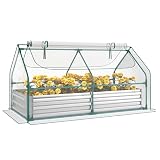
Greenhouse staging & shelving


Beginner vs advanced use
Beginners can do a lot with an unheated greenhouse: earlier and later seasons, seed raising, tomatoes and frost protection. Adding heating, automatic vents, shading and irrigation turns it into a year-round growing space — add those as your needs grow rather than all at once.
How to choose — quick checklist
- Pick the largest size your space and budget allow.
- Polycarbonate for safety/insulation; glass for clarity on sheltered sites.
- Insist on real ventilation (roof + side vents).
- Plan anchoring before delivery.
- Match frame strength to your wind exposure.
Quick questions
Glass or polycarbonate? Polycarbonate for most home gardens (safe, insulating, diffuses light); glass where you want maximum clarity on a sheltered site.
What size greenhouse should I buy? Bigger than you first think — space fills fast and larger volumes hold temperature more steadily.
Do I need heating? Not for season extension and frost protection in mild areas; you do for year-round warm-climate crops or hard winters.
Related guides
- Small greenhouses · polycarbonate greenhouses · greenhouse ventilation
- Climate & season protection · shade cloth · frost protection
Greenhouse guides & equipment
Choose a greenhouse: kits · mini · small · walk-in · lean-to · polycarbonate
Climate & equipment: climate control · ventilation & fans · heaters · thermometers & hygrometers · shade cloth · irrigation · shelving & benches · propagation
Growing guides: greenhouse growing · what to grow · temperature · ventilation · humidity · cooling · heating
Setting Up a Greenhouse, in Order
Most people buy the structure first and figure out the rest later, which usually means expensive fixes afterward. If you haven’t bought a greenhouse yet, start with Greenhouse Kits: Types, Sizes and How to Choose. Once it’s up, the order that actually matters is: ventilation first (overheating kills plants faster than almost anything else), then shelving and benches to actually use the space, then propagation equipment if you’re starting seeds or cuttings under cover.