
Shelving and staging (benches) turn empty greenhouse floor space into tiers of growing area at a comfortable working height — and keep pots, trays and tools organised. The right setup depends on your greenhouse size and what you grow.
GrowPlants is reader-supported. We may earn a commission from qualifying purchases made through links on this page, at no extra cost to you.
Staging, shelving and benches
- Staging / benches — waist-height work surfaces for potting and displaying plants; slatted or mesh tops let water drain and air circulate.
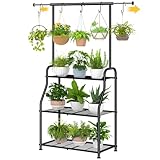
- Tiered shelving — multiplies growing space in a small footprint, ideal for seedlings and small pots.
- Under-bench space — useful for shade-tolerant plants, dormant pots and storage.
Materials
Powder-coated steel and aluminium resist rust and damp; treated wood looks good but needs maintenance. Slatted or mesh surfaces are better than solid ones because they drain and let air move (reducing disease).
Greenhouse staging & benches


Tiered shelving
How to plan the layout
Put staging along the sides for working height, use tiered shelving for seedlings near the light, and keep a clear path. Leave room for airflow around plants. For what to grow on it, see the greenhouse growing guide.
Buying criteria
- Dimensions & shelf depth — match to your greenhouse width and pot sizes; deeper shelves hold more but shade the tier below.
- Working height — waist-height staging saves your back for potting.
- Weight capacity — wet trays and pots are heavy; check the per-shelf load.
- Rust/moisture resistance — powder-coated steel or aluminium beats bare metal in a damp greenhouse.
- Slatted/mesh surfaces — drain and let air move (less disease) vs solid trays.
- Modularity — add-a-tier systems adapt as you grow.
Related guides
Choosing Materials: Wood, Metal or Plastic
Wood staging is cheap and easy to build to a custom size, but untreated timber rots quickly in a humid greenhouse — use cedar, treated softwood, or seal it well. Galvanised steel or aluminium benches cost more but shrug off constant moisture and won’t warp. Plastic and resin staging is the lightest and rust-proof option, though it can sag under heavy pots over a wide span without enough support legs.
Getting the Height and Depth Right
Aim for bench height around 75-90cm (comfortable working height without bending), and 45-60cm depth so you can reach the back row without stepping on anything. Slatted or mesh tops let excess water drain straight through rather than pooling, which matters more than the material it’s made from for keeping pots from sitting wet. Leave at least one aisle wide enough for a wheelbarrow if you’ll be moving bags of soil or large pots regularly.