Plant Profile & Key Characteristics
Also known as: Aibika, Hibiscus manihot, Sunset muskmallow, Sunset hibiscus
Overview: Abelmoschus manihot (aibika, sunset hibiscus), 1–2 m (3–6.5 ft) tall, is a fast- to moderate-growing tender perennial grown as an annual in cold climates. It is cultivated chiefly for its edible leaves and starchy tubers, and doubles as an ornamental for its large yellow hibiscus-like flowers.
Quick Specifications
| Specification | Attribute |
|---|---|
| Plant Type / Life Cycle | Tender perennial, often grown as an annual |
| Foliage Type | Evergreen in warm climates, deciduous or grown as an annual in cold ones |
| Mature Size | 1–2 m (3–6.5 ft) tall |
| Growth Rate | Moderate |
| Root System | Fleshy, tuber-forming roots |
| Toxicity | Non-toxic / edible (leaves and tubers) |
| Hardiness | USDA zone 10b+ as a perennial, 5+ grown as an annual |
Growth Form & Structure
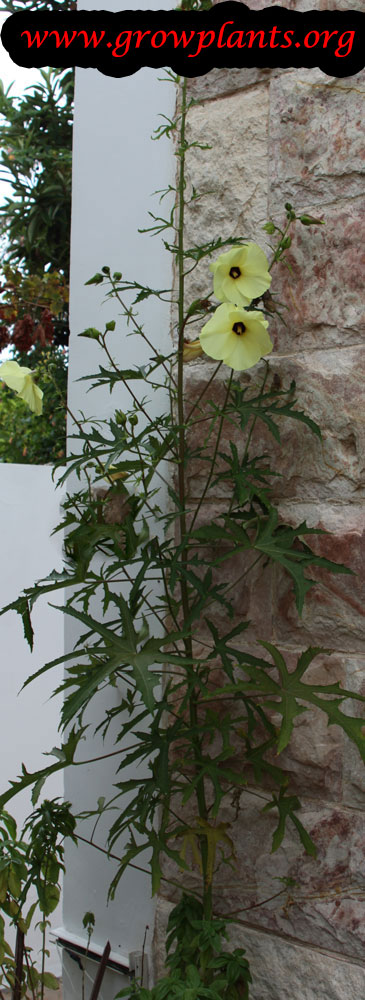
- Height & Spread: Upright plant to 1–2 m (3–6.5 ft) tall; also grown in large containers.
- Growth Habit & Form: Erect, softly woody herbaceous shrub.
- Lifespan & Maturity: Reaches harvestable size in one season; leaves picked through the growing season and tubers lifted in autumn.
Anatomy & Physical Features
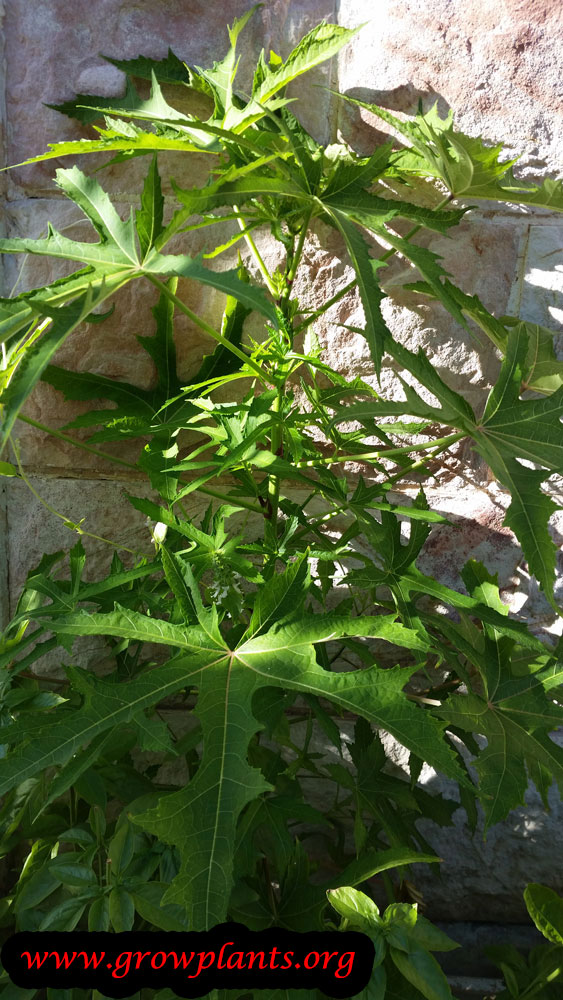
- Leaves & Foliage: Large fleshy palmate leaves with 5–7 lobes, up to about 15 cm across; the main edible part.
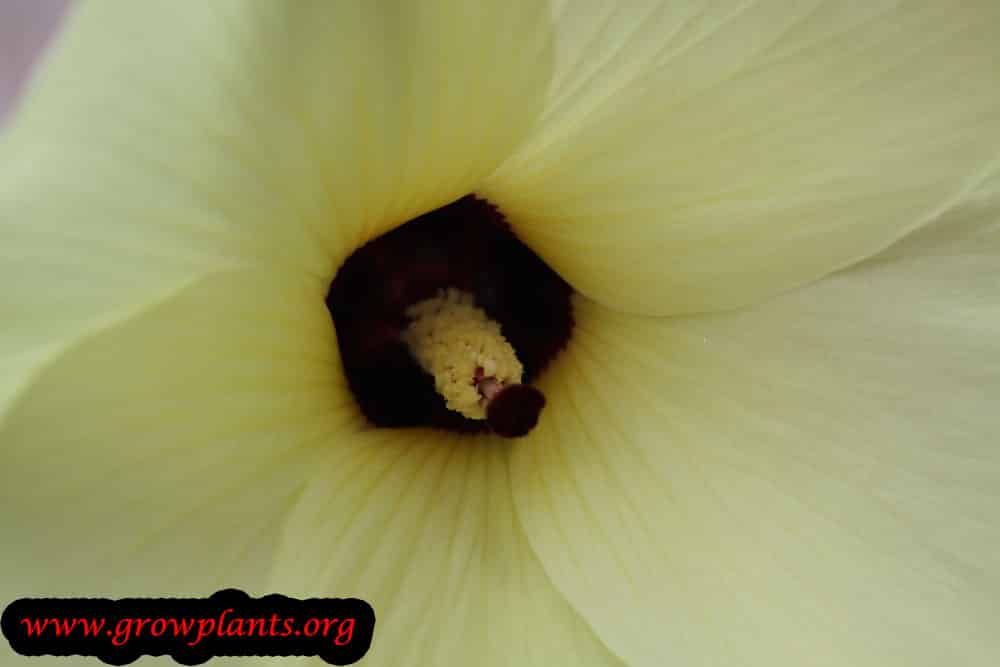
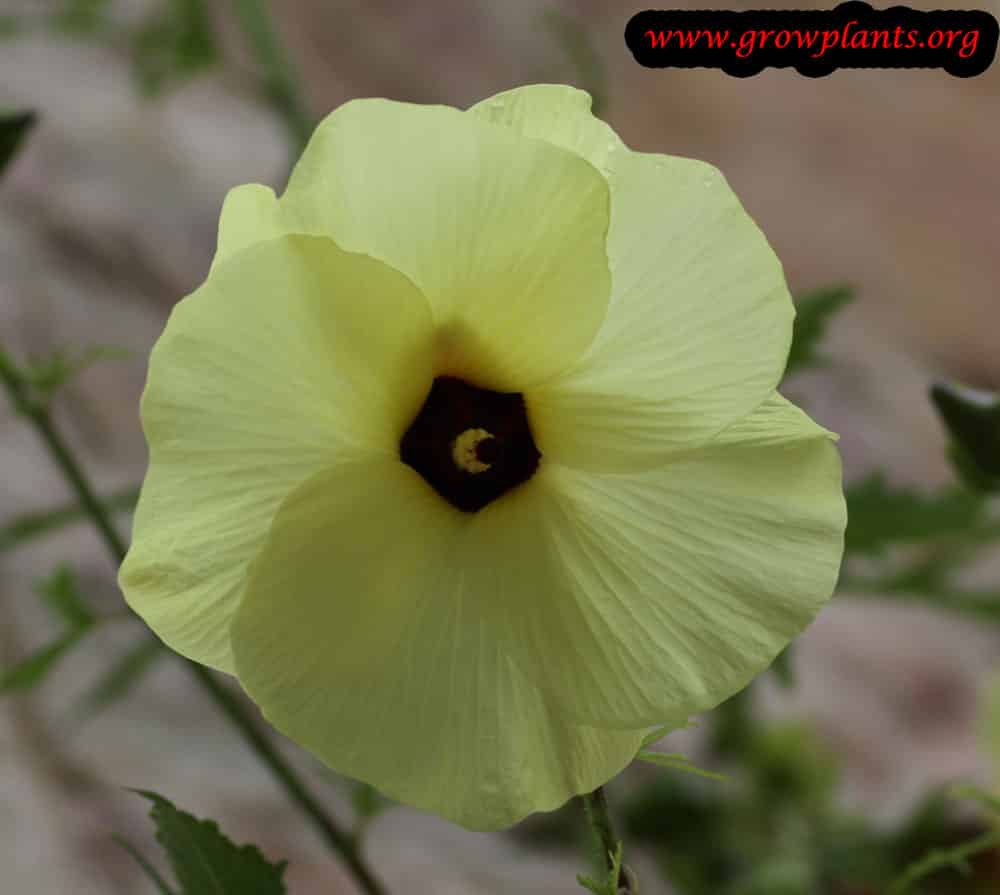
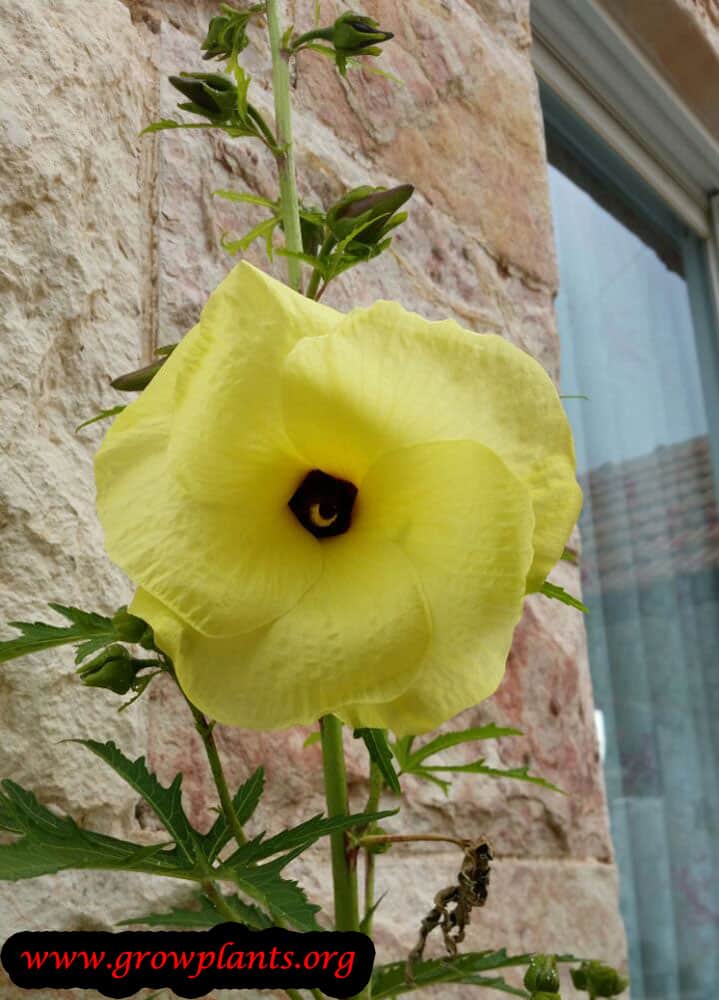
- Flower Characteristics: Large bright yellow hibiscus-like flowers with a dark purple-brown centre.
Primary Uses & Landscape Value
- Edible Uses: Young leaves eaten in salad, mature leaves cooked, stir-fried or stuffed; starchy tubers eaten cooked; seeds used as a coffee substitute (pods are of uncertain edibility).
- Functional & Ornamental Roles: Leafy vegetable and root crop that also serves as an ornamental flowering shrub; suited to beds and large containers.
Care Guide: Planting, Soil & Watering
Overview: Abelmoschus manihot (aibika) is a moderate-growing leafy vegetable shrub for full sun that likes fertile, well-draining soil kept consistently moist. It is frost-tender, so plant it in the warm season and never let the soil dry out completely.
Quick Care Requirements
| Requirement | Ideal Condition |
|---|---|
| Planting Season | Spring after the last frost (as an annual); spring through summer or autumn where grown as a perennial in frost-free zones |
| Growth Rate | Moderate |
| Soil Type | Fertile, well-draining soil, rich in organic matter |
| Water Need | Moderate — keep the soil evenly moist; it suffers if allowed to dry out |
Planting & Establishment
- Best Planting Season: In cold climates grow it as an annual, planting in spring after the last frost (zone 5+). In frost-free zones it is perennial — plant from spring into summer in zones 10b–11a, or spring through autumn in zone 11b and warmer.
- How to Plant:
- Hole Preparation: Plant into a hole a little wider than the root ball and at the same depth, in a warm, sunny position.
- Soil Amendments: Work in plenty of compost or well-rotted organic matter; this leafy mallow appreciates rich, moisture-retentive yet free-draining soil.
- Planting Depth: Set transplants at the depth they grew, keeping the stem base at soil level.
- Growth Speed & Expectations: Moderate — in warm, humid conditions it grows steadily into a leafy 1–2 m shrub.
Soil, Watering & Drainage Care
- Soil Mix & Drainage Needs: Wants rich, moisture-retentive but well-draining soil; in containers use a fertile, free-draining potting mix and never let it dry out completely.
- Watering Schedule & Technique:
- Young / Newly Planted: Keep the soil evenly moist while seedlings and transplants establish — young plants can die if the soil dries out.
- Established: Water regularly to keep the soil consistently moist, especially in heat; provide good drainage so the roots are moist but not waterlogged.
- Seasonal Adjustments: More frequent watering in summer heat and high growth; much less in cool weather when growth slows or the plant dies back.
Climate, Light & Hardiness
Abelmoschus manihot behaves as an evergreen (or cold-deciduous) perennial in warm climates but as an annual further north, suiting Mediterranean, subtropical, temperate, and tropical gardens across USDA zone 10b+ as a perennial or zone 5+ as an annual. It wants full sun in most climates, with somewhat less sun preferred in hot-summer areas.
Quick Climate Specifications
| Climate Zones | Mediterranean, subtropical, temperate, tropical |
|---|---|
| USDA Hardiness Zones | 10b+ as a perennial; 5+ grown as an annual |
| Frost Tolerance | Low |
| Light Conditions | Full sun (less than full sun in hot-summer climates) |
Sunlight & Light Exposure
Optimal Light Setup
Full sun suits it in most climates; in areas with intense summer heat, slightly reduced sun exposure is preferred.
Temperature Extremes & Hardiness
USDA Hardiness & Regional Limits
Frost cuts the top growth back - it survives as a genuine perennial only in zone 10b and warmer, while in zone 5–10a it is grown as an annual, regrowing from seed each year rather than overwintering outdoors.
Growing in Pots, Balconies & Indoors
Aibika (Abelmoschus manihot) is a tall, sun-loving edible-leaf plant, not a houseplant – it grows well in a large container on a sunny balcony or patio, while indoor light is generally too weak for it.
Quick Details
- Container Size: A generous pot or planter with free drainage – the grower confirms container growing but gives no set size, so match the pot volume to the plant’s size (1-2 m / 40-80 in)
- Indoor Suitability: Not a true houseplant; it needs strong direct sun
- Best Spot: Full sun (a little shade helps in very hot summers)
- Soil & Drainage: Aerated, organic-rich mix that drains freely
- Watering in Pots: Keep the mix evenly moist; pots dry fast, so check often in warm weather.
Indoors & On the Windowsill
- Houseplant limits: The grower marks it as not suited to indoor life – it wants full sun to grow well, which an ordinary room rarely provides.
- Windowsill option: Only the brightest, sunniest sill comes close, and even then growth may be thin and drawn. It is happier outdoors.
On a Balcony or Patio
- Light and wind: Give it the sunniest, warmest spot. Walls and paving reflect heat so containers dry quickly – check moisture daily in hot spells, and shelter tall or exposed stems from strong wind.
- Heat note: In very hot climates a touch of afternoon shade keeps the large leaves from scorching in a fast-drying pot.
- Practicalities: A full, watered pot is heavy – make sure the balcony can take the weight, and set a tray or feet to manage drainage runoff.
Choosing the Pot, Soil & Long-Term Care
- Pot and drainage: Choose a pot with strong drainage holes; if you stand it on a saucer, empty the saucer promptly so the roots never sit in water. Terracotta breathes and dries faster, while glazed or plastic pots hold moisture longer.
- Potting mix: Use a well-aerated, organic-rich mix – a good potting soil, or peat/coir blended with perlite or vermiculite for drainage and air.
- Watering: Water regularly to keep the mix evenly moist – pots dry out far faster than open ground, so check often in heat – but never leave it standing wet.
- Feeding: Potted plants run through their soil faster because nutrients leach out with every watering, so feed a little more often than you would in open ground.
Fertilizing & Feeding
Grown mainly as a leafy green (Aibika), with edible tubers as a secondary yield: nitrogen-leaning feeding through establishment and leafy growth supports the harvestable foliage, with a more balanced approach as the plant matures and forms tubers.
Quick Fertilizing Specs
| Feeding Level | Moderate feeder |
|---|---|
| young_feeding | A light, balanced starter feeding once young plants or cuttings are rooted and growing |
| mature_feeding | Steady, nitrogen-leaning feeding through leafy growth, easing toward a more balanced mix as the plant matures |
| Main Nutrient Priority | Nitrogen to support the fleshy, lobed leaves that are the main harvested part |
| Best Feeding Period | Through the warm growing season while leaves are being cut for use |
| Organic Options | Compost or other organic matter worked into the soil at planting and as a topdressing |
| Soil pH | Prefers moist, well-drained garden soil without an extreme pH |
| Reduce/Stop Feeding | Ease off feeding as growth slows in cooler weather or once the plant is treated as finished for the season |
Feeding by Growth Stage
Establishment after planting or cutting
Help young plants or rooted cuttings settle in before the main leafy growth phase.
| Nutrient direction | A balanced starter feeding with organic matter worked into the planting area. |
|---|---|
| Timing | After transplanting seedlings or once cuttings have rooted and show new growth. |
| Frequency | A single light starter feeding is usually enough while roots are still developing. |
| Fertilizer types | Balanced complete fertilizer, Compost or other organic matter worked into the soil |
| Precautions | Keep the soil evenly moist alongside feeding, since this plant is sensitive to drying out while establishing. |
Leafy growth before harvest
Build a full canopy of the large, fleshy, edible leaves that are the plant’s main product.
| Nutrient direction | A nitrogen-forward complete fertilizer to encourage vigorous leaf production. |
|---|---|
| Timing | From establishment through the main growing season, ahead of and during leaf harvest. |
| Frequency | Light, regular feeding matches this plant’s medium growth pace better than infrequent heavy doses. |
| Fertilizer types | Complete fertilizer with a nitrogen emphasis |
| Precautions | Watch for aphids and slugs during lush leafy growth, and avoid overfeeding, which can make foliage more attractive to them. |
Maturing growth and tuber formation
Support the plant as it matures, flowers, and develops its edible tubers alongside continued leaf harvest.
| Nutrient direction | Shift toward a more balanced feeding mix rather than staying strongly nitrogen-forward. |
|---|---|
| Timing | As the plant matures through summer into autumn, when tubers are forming underground. |
| Frequency | Continue light, regular feeding through this stage, tapering off as growth slows. |
| Fertilizer types | Balanced complete fertilizer |
| Precautions | Avoid heavy nitrogen late in the season, which favors leaf growth over tuber and seed development. |
Nutrient Deficiency Signs & Corrections
Pale, undersized leaves and a thinner canopy than expected during active growth.
| Possible causes | Low available nitrogen in the soil, Nitrogen leached away by heavy watering or rain, Harvesting leaves faster than the feeding schedule supports |
|---|---|
| Appears first on | Older, lower leaves first. |
| What to check | Recent feeding history relative to harvest frequency, Soil drainage and rainfall, Overall canopy fullness compared to earlier growth |
| Possible correction | Resume light, nitrogen-forward feeding on a regular schedule tied to harvest activity. |
Yellowing and browning along the margins of older leaves, with weaker tuber development.
| Possible causes | Low available potassium in sandy or leached soil, Drought stress during tuber formation, A feeding program that stayed nitrogen-heavy too long |
|---|---|
| Appears first on | Older leaves, starting at the margins. |
| What to check | Fertilizer balance used earlier in the season, Soil type and moisture consistency, Timing of the shift toward balanced feeding |
| Possible correction | Move to a balanced complete fertilizer as the plant matures and keep soil moisture consistent. |
New leaves yellow between the veins while the veins stay green.
| Possible causes | High or alkaline soil pH limiting iron availability, Waterlogged or compacted soil, Cool, wet conditions temporarily slowing uptake |
|---|---|
| Appears first on | Youngest leaves at the growing tips. |
| What to check | Soil pH, Drainage around the roots, Whether symptoms follow cold or wet weather |
| Possible correction | Correct overly alkaline soil where practical and apply a chelated iron product per its label if the pattern persists. |
Pruning, Training & Seasonal Maintenance
Abelmoschus manihot is grown for its edible leaves and starchy tuberous roots, not for its okra-like pods (which are not the intended crop), so its maintenance is built around encouraging leafy branches rather than preserving pod-bearing wood. It tolerates ongoing tip-pinching well, which is genuinely productive here – each pinch forces new lateral shoots, and every new shoot tip becomes another leaf-harvest point. In autumn, top growth is typically cut back as part of lifting the starchy tuber cluster; where the plant is kept as a perennial in warm zones (10b+), it resprouts from the base afterward.
Quick Pruning & Maintenance Specs
| Pruning Tolerance | Moderate – tip-pinching is beneficial; no heavy structural pruning needed |
| Primary Pruning Window | Ongoing tip-pinching and leaf harvest through the growing season |
| Secondary Maintenance Window | Autumn, coinciding with tuber harvest |
| Typical Frequency | Pinch regrowing tips every few weeks; continuous leaf harvest |
| Main Objective | Maximize branching for leaf yield; clear top growth to access and lift the tuber |
| Young Plant Priority | Establish several sets of true leaves before the first tip-pinch |
| Mature Plant Priority | Rotating leaf harvest plus continued pinching; hard cutback at autumn tuber lift |
| Best Tool Type | Precision snips for pinching/harvest; spade at tuber harvest |
| Avoid Heavy Pruning During | Active tuber bulking, ahead of the autumn harvest |
Pruning by Plant Age & Size
Newly Established
Remove only damaged growth while the young plant roots in; wait until several true leaves have formed before the first pinch.
Young / Formative
Pinch the growing tip once established to force lateral branching. Unlike on its relative okra, where a similar pinch is only optional height control, here it is central to yield – each new branch tip is a future leaf-harvest point.
Mature / Established
Harvest leaves in rotation – young top leaves for salad, larger lower leaves for cooking, per this plant’s own leaf-use notes – while continuing to pinch regrowing tips to keep multiple productive shoots active. In autumn, cut back top growth to access and lift the tuber cluster developing on the roots.
Structural Pruning & Training
Height & spread control via ongoing tip-pinching, keeping a multi-branched, leaf-dense plant rather than one tall single stem. There is no fruiting-wood consideration to weigh against this, since the pods are not the harvested product.
Special Growth to Remove
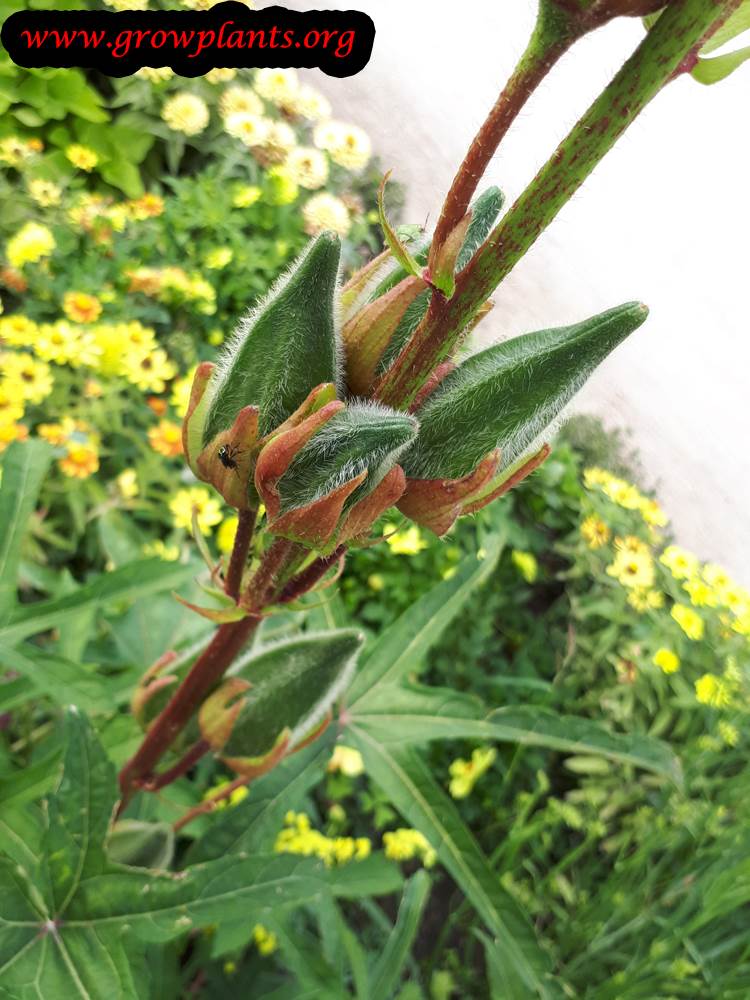
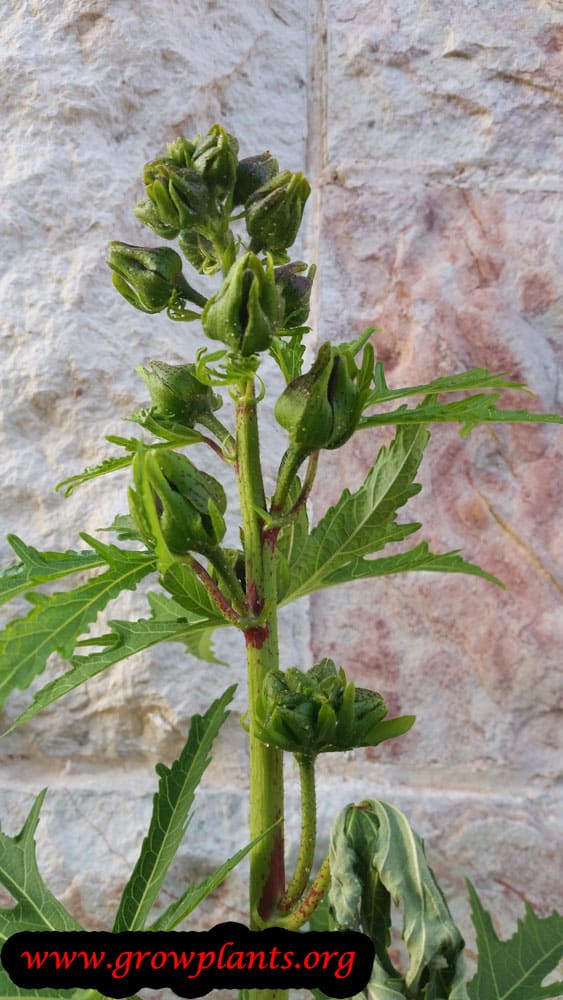
- Developing flower/seed pods, unless seed is intentionally being saved (it can substitute for coffee) – removing them redirects the plant’s energy toward leaf and tuber growth rather than seed production.
- Top growth at the autumn tuber harvest – cut back to access and lift the root cluster; where the plant is being kept as a multi-year perennial, leave enough basal tissue for it to resprout.
Container & Small-Space Pruning
This plant grows well in containers; the same pinch-for-branching approach applies at a smaller scale. Because a container restricts root space, container-grown plants are more realistically grown mainly for leaf harvest, with tuber development limited compared with an in-ground planting.
Tools
- Precision snips – tip-pinching and leaf harvest on soft, non-woody stems.
- Spade – lifting the tuber cluster at autumn harvest.
Tool Hygiene & Disease Risk
Routine. Only aphids and slugs are noted as pests for this species, with no documented tool-transmissible disease – clean, sharp tools are sufficient.
Cut Placement & Technique
Pinch tips just above a node to encourage branching. At the autumn cutback, cut stems near the base; if the plant is being kept as a perennial in a frost-free zone, leave enough basal stem tissue for it to resprout the following season.
Heavy Pruning & Rejuvenation
Tolerated as part of the tuber-harvest cycle – cutting the top growth back hard at the autumn lift is standard practice. Where grown as an annual, this cutback is effectively the final harvest rather than rejuvenation; where kept as a perennial, the plant resprouts from the base.
Post-Pruning Care
After the autumn cutback, protect the crown from cold if the plant is being kept as a perennial in a marginal zone (10b–11a). No extra feeding is needed specifically because of routine tip-pinching.
Common Pruning Mistakes
- Pinching so heavily that too little leaf area remains to sustain the plant.
- Letting the plant set seed heavily when leaf or tuber yield is the actual goal.
- Treating it like okra and preserving pod-bearing growth – unlike okra, the pods here are not a usable crop, so there is little reason to protect them.
When NOT to Prune
- Avoid a hard cutback while the tuber is actively bulking, ahead of the autumn harvest window.
- Avoid heavy pinching immediately after transplanting, before the plant is established.
Pruning Troubleshooting
| Problem | Possible Cause | What to Check | Corrective Action |
| Sparse branching, low leaf yield | No tip-pinching has been done | Whether the plant is a single unbranched stem | Pinch growing tips regularly through the season |
| Poor tuber development | Container root restriction, or tubers left unharvested too long | Pot size and root space; time since planting | Grow in-ground or a larger container; harvest tubers in autumn as roots mature |
| Reduced leaf quality | Plant allowed to flower and set seed heavily | Presence of spent flowers/seed heads | Remove flowers before seed set and resume regular pinching |
Recommended Tools (by task)
- precision_snips – tip-pinching and rotational leaf harvest on soft growth.
- garden_spade – lifting the tuber cluster at autumn harvest.
Propagation Guide
Abelmoschus manihot can be propagated from seed and from healthy stem cuttings where vegetative propagation is desired. Cuttings are harder to establish than seed. Start in spring, in moist soil with high humidity, using peat soil and rooting hormone in half shade; rooting in water is also possible.
Quick Propagation Specs
| Seed | Valid |
| Vegetative Method | Stem cuttings |
Growing from Seed
Use mature viable seed and sow it in a warm, free-draining medium. Keep the medium evenly moist but not waterlogged.
Stem Cuttings
Take healthy non-flowering stem material with viable nodes and root it in a clean, airy propagation medium.
Note: Sow about 1-2cm deep.
Bloom & Edible Flower Guide
Quick Details
- Bloom Season: Spring through autumn
- Time to First Bloom: In its first season; this is a fast-growing plant
- Flower Appearance: Large, showy pale-to-bright yellow hibiscus-like flowers with a dark purple-brown center
- Edibility: The large flowers are edible, mild, and used in salads and cooking
Detailed Blooming Overview
Aibika is a fast-growing relative of okra and hibiscus, and its flowers are spectacular: large, pale-to-bright yellow blooms, up to around 15 cm across, with a deep purple-brown eye around the central column. Each flower is short-lived – often lasting just a day – but they open in succession from spring through autumn. Like the leaves, the flowers are edible and mild.
Flower Characteristics
- Large, showy hibiscus-like flowers, pale to bright yellow with a dark purple-brown center.
- Often up to around 15 cm across; each bloom is typically open for only a day.
- Edible and mild, used in salads and cooked dishes.
Bloom Care & Thinning
- Managing the bloom: No thinning is needed – the plant flowers freely and blooms open in a steady succession.
- Pollination: Pollinated by bees.
Fruit & Uses
Aibika is grown mainly for its tender edible leaves, a staple leafy vegetable in parts of the Pacific Islands and Papua New Guinea; young leaves are used raw in salads while fully grown leaves are cooked. Its seeds have a minor traditional use as a coffee substitute, but claims about an edible fruit or starchy tuber on this plant are not well supported and should not be relied on.
Quick Edible Specs
| Edible Parts | Leaves (main); seeds (minor, traditional) |
|---|---|
| Main Use(s) | Culinary — salad, cooking, stir-fry, stuffed leaves (leaves); traditional coffee substitute (seeds) |
| Eaten Raw or Cooked | Young leaves raw; fully grown leaves cooked. Seeds roasted, not eaten raw. |
| Preparation Required | None for young leaves; Cook for mature leaves; Roast for seed use |
| Harvest Season | Leaves: year-round in tropical climates, spring-summer-autumn elsewhere. Seeds: collected from the seed pods in summer/autumn. |
| Time to First Harvest | Leaves can be picked once the plant is established (qualitative; see Growing Info for planting timeline) |
| Storage | Leaves best used fresh; seeds kept dry in a dark place |
| Safety/Toxicity Caveat | – do not eat the fruit or any root/tuber from this plant based on this page. Fruit edibility is explicitly unconfirmed, and the tuber claim appears to be confusion with the unrelated cassava plant. |
Leaves & Greens
Leaves are fleshy with 5-7 lobes (sometimes barely visible depending on cultivar and growing conditions), reaching up to about 15 cm (6 in). Young leaves are tender enough for salads; fully grown leaves are used cooked — stir-fried, added to soups, or used as wrapping (stuffed) leaves. Harvest by cutting leaves next to the branch once the plant is established.
Seeds, Pods & Nuts
Small (2-3.5 mm) black seeds have a minor traditional use as a coffee substitute; they are collected from the seed pods before the pods split and drop them. This is a minor, occasional use rather than a significant food crop — treat it as a curiosity rather than a reliable coffee alternative.
Preparation, Uses & Safety
The leaves are the plant’s genuine, well-established food use, eaten raw when young and cooked when mature. Be cautious about two other claims sometimes made for this plant: its fruit, which the growing data for this plant explicitly flags as unconfirmed and possibly inedible; and a supposed edible starchy tuber “like cassava” — this description likely reflects confusion with the unrelated cassava plant (Manihot esculenta), which shares only the species epithet “manihot,” not an actual documented edible tuber in Abelmoschus manihot. Do not eat the fruit or any root/tuber of this plant on the strength of those claims; if in doubt, stick to the leaves and roasted seeds.
Pests, Diseases & Troubleshooting
Overview: Aibika (edible hibiscus) is a fast-growing leafy Malvaceae vegetable that shares okra’s pest picture – sap-sucking insects, leaf-eating caterpillars, and the sooty mold and viruses that follow whitefly and aphid feeding. Because the tender leaves are the crop, keeping sucking pests and their honeydew off the foliage with a cultural, organic-first routine matters most.
Quick Troubleshooting Overview
| Issue / Pest | Main Symptom | Primary Solution |
|---|---|---|
| Aphids | Curled, sticky leaves with clustered insects; honeydew and sooty mold | Water jet, ladybirds; insecticidal soap or neem if heavy |
| Whiteflies | White flies under leaves; yellowing – and they spread mosaic virus | Sticky traps, reflective mulch, resistant lines; neem/soap |
| Fruit/shoot borer | Bored, frass-filled pods and wilted shoot tips | Remove bored pods, pheromone traps, Bt or spinosad |
| Root-knot nematode | Stunting, root galls, wilting in heat despite watering | Rotate, add organic matter, plant resistant lines, solarize |
| Yellow vein mosaic | Yellow vein-netting, small distorted leaves and pods | Control whiteflies, rogue infected plants, resistant varieties |
| Powdery mildew | White powder on leaves late in the season | Airflow, sulfur or potassium bicarbonate |
Common Pests & Management
- Cotton / melon aphid (Aphis gossypii):
- Symptoms: Clusters of small green-to-black insects on shoot tips and leaf undersides curl and pucker the foliage; sticky honeydew, sooty mold, and ants follow, and the aphids can transmit viruses.
- Prevention & Control: Encourage ladybirds, lacewings, and hoverflies, knock colonies off with water, and avoid excess nitrogen. Reflective/silver mulch deters landing; treat persistent outbreaks with insecticidal soap or neem sprayed under the leaves in the evening.
- Whiteflies (Bemisia tabaci):
- Symptoms: Tiny white flies swarm up from leaf undersides when disturbed; nymphs suck sap, yellow and weaken leaves, coat them in honeydew and sooty mold, and – most seriously – transmit yellow vein mosaic virus.
- Prevention & Control: This is the key vector, so manage it hard: yellow sticky traps, reflective mulch, and prompt removal of virus-infected plants. Support parasitoids and predators, and rotate insecticidal soap, neem, or horticultural oil on leaf undersides; grow tolerant varieties where virus pressure is high.
- Fruit & shoot borer (Earias vittella / Earias insulana):
- Symptoms: Young caterpillars bore into growing shoot tips, causing them to wilt and droop, then tunnel into pods leaving entry holes, frass, and distorted, inedible fruit.
- Prevention & Control: Scout and pinch out wilted ‘dead-heart’ shoot tips and remove bored pods to break the cycle; hang pheromone traps to time control. Encourage Trichogramma egg parasitoids and spray Bt or spinosad against small larvae before they enter the pods.
- Fruit borer / earworm (Helicoverpa armigera):
- Symptoms: Larger caterpillars chew buds, flowers, and bore round holes into pods, feeding inside and fouling them with frass; damage often peaks as pods set.
- Prevention & Control: Handpick larvae, encourage birds and parasitic wasps, and use pheromone traps for monitoring. Treat egg-lay and small larvae with Bt or spinosad, and keep to a resistant-friendly rotation to avoid resistance build-up.
- Spider mites (Tetranychus urticae):
- Symptoms: Fine pale stippling and bronzing of leaves with faint webbing on undersides during hot, dry weather; heavy feeding scorches and drops leaves.
- Prevention & Control: Hose foliage to raise humidity and knock mites off, keep plants watered, and avoid dusty stress. Release predatory mites where available and use horticultural oil or a labelled miticide only for stubborn hot-spell outbreaks.
- Flea beetles (Systena / Phyllotreta spp.):
- Symptoms: Numerous tiny ‘shot-hole’ pits chewed through the leaves, worst on young plants; the small beetles hop away when disturbed.
- Prevention & Control: Protect seedlings with floating row cover until established, keep beds weed-free, and use trap crops. Kaolin clay or spinosad can protect heavily hit young plantings; mature okra usually outgrows the damage.
Diseases & Fungal Issues
- Yellow vein mosaic virus (Bhendi yellow vein mosaic begomovirus):
- Symptoms: A striking network of yellow, chlorotic veins over the leaf, followed by overall yellowing, stunting, and small, pale, distorted pods; spread by whiteflies and the crop’s most damaging disease.
- Treatment & Management: There is no cure once infected, so prevention rules: control whiteflies aggressively, remove and destroy infected plants promptly, manage weed reservoirs, and – most importantly – grow resistant or tolerant varieties where the virus is present.
- Fusarium & Verticillium wilt (Fusarium oxysporum / Verticillium dahliae):
- Symptoms: Yellowing and wilting that often starts on one side or lower leaves, with browning of the internal stem tissue; plants decline and may collapse, worse on infested, poorly drained ground.
- Treatment & Management: Rotate away from Malvaceae and other susceptible crops for several years, plant on well-drained soil, and use resistant varieties and clean seed. Remove and destroy affected plants; the soil-borne fungi cannot be sprayed out once established.
- Powdery mildew (Erysiphe cichoracearum / Podosphaera):
- Symptoms: White powdery patches on leaves, usually later in the season, that yellow and dry the foliage and can reduce yield in a dry, crowded stand.
- Treatment & Management: Space plants for airflow, water at the base, and clear crop debris. Sulfur, potassium bicarbonate, or a horticultural-oil spray checks it if applied early on unstressed plants.
- Cercospora leaf spot & damping-off (Cercospora abelmoschi / Pythium):
- Symptoms: Angular grey-brown leaf spots with premature defoliation in wet weather; at the seedling stage damping-off collapses stems at the soil line.
- Treatment & Management: Use clean, treated seed and a free-draining seedbed, avoid overwatering seedlings, and rotate. Copper fungicide can protect foliage during prolonged wet spells; rogue and destroy heavily spotted debris.
- Root-knot nematode (Meloidogyne spp.):
- Symptoms: Stunting, midday wilting, and yellowing despite adequate water, with characteristic knotty galls swelling the roots when lifted.
- Treatment & Management: Rotate with non-hosts such as cereals and marigold, build soil organic matter to feed antagonists, solarize infested beds in the hot season, and choose resistant lines where available.
Growing Difficulties & Abiotic Problems
- Bud & flower drop:
- Cause & Symptoms: Extreme heat, cold snaps, drought, or erratic watering make okra shed buds and blooms before pods set.
- Correction Strategy: Keep soil evenly moist with deep, regular watering and mulch, and expect set to resume once temperatures moderate; avoid transplant and drought shock during flowering.
- Tough, woody pods:
- Cause & Symptoms: Pods left on the plant past their tender stage turn fibrous and inedible, and slow, cool growth can also toughen them.
- Correction Strategy: Harvest young and often – every day or two in warm weather – to keep pods tender and to keep the plant productive; grow in full warmth for fast, succulent growth.
- Poor germination / cold-set:
- Cause & Symptoms: Okra is a heat lover; cold, wet soil rots seed and stalls seedlings, and cool spells stall pod set.
- Correction Strategy: Sow only into warm soil, pre-soak seed to speed emergence, and avoid overwatering the seedbed; use warmth or protection to get an even, vigorous start.
- Nutrient & edema issues:
- Cause & Symptoms: Yellowing lower leaves signal nitrogen shortage, while sudden swings in soil moisture can cause corky edema spots on pods.
- Correction Strategy: Feed a balanced fertiliser (not excess nitrogen, which delays fruiting), keep watering steady, and correct any chlorosis with organic matter and a balanced feed.
What Helps – Products & Tools
For okra and its kin the practical kit is mostly soft and cultural: neem and horticultural oil and insecticidal soap for aphids, whiteflies, and mites; Bt or spinosad for boring caterpillars; yellow sticky traps and reflective mulch to blunt whitefly virus spread; sulfur or potassium bicarbonate for powdery mildew; a copper fungicide for wet-weather leaf spot; and resistant varieties plus crop rotation as the backbone against wilt, nematodes, and yellow vein mosaic virus.