
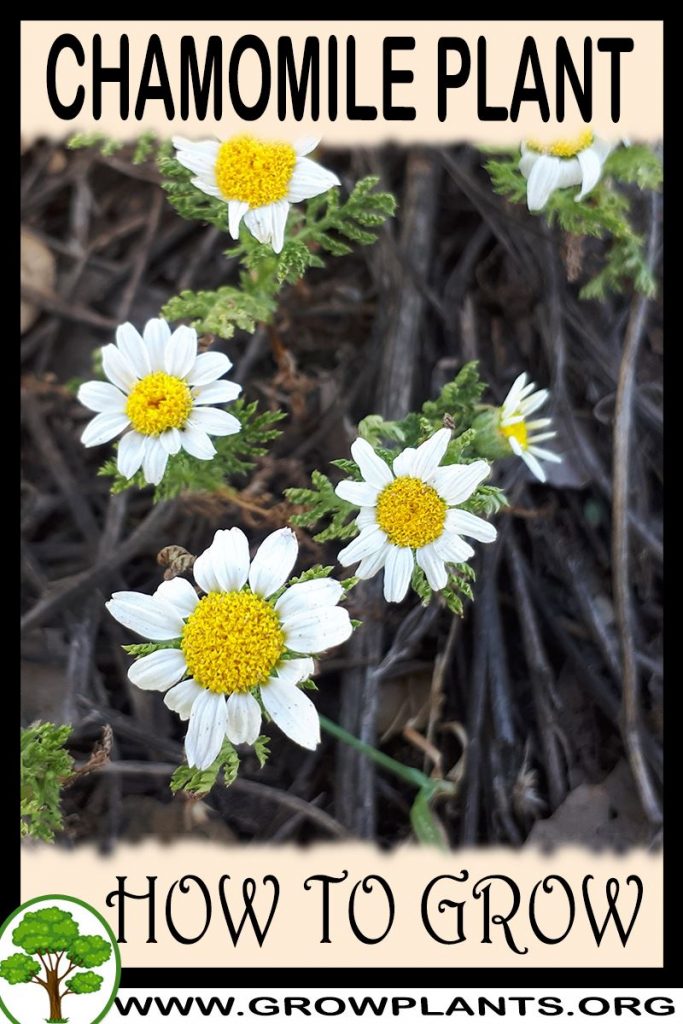
Plant Profile & Key Characteristics
Overview: Chamomile (German = annual Matricaria chamomilla; Roman = evergreen perennial Chamaemelum nobile) is an aromatic herb 10-50 cm with feathery foliage and white-and-yellow daisy flowers, grown for chamomile tea and as a fragrant medicinal and ornamental herb.
Quick Specifications
| Specification | Attribute |
|---|---|
| Plant Type / Life Cycle | Annual (German) or evergreen perennial (Roman) |
| Foliage Type | Evergreen (Roman chamomile) |
| Mature Size | 10-50 cm (4-20 in) |
| Growth Rate | Fast |
| Root System | Shallow, fibrous |
| Toxicity | Non-toxic / edible |
| Hardiness | USDA 4-11 (species-dependent) |
Growth Form & Structure
- Height & Spread: 10-50 cm (4-20 in); suits small containers; Roman chamomile is also used as a low lawn or groundcover. Spacing differs by type: Roman chamomile is planted closely, about 5-10 cm (2-4 in) apart for groundcover; German chamomile needs more room, about 20-30 cm (8-12 in) apart.
- Growth Habit & Form: Low, branching aromatic herb – Roman chamomile mat-forming and perennial, German upright and annual.
- Lifespan & Maturity: German flowers within its annual season; Roman is a long-lived perennial.
Anatomy & Physical Features
- Leaves & Foliage: Finely divided, narrow, aromatic (apple-scented) green leaves.
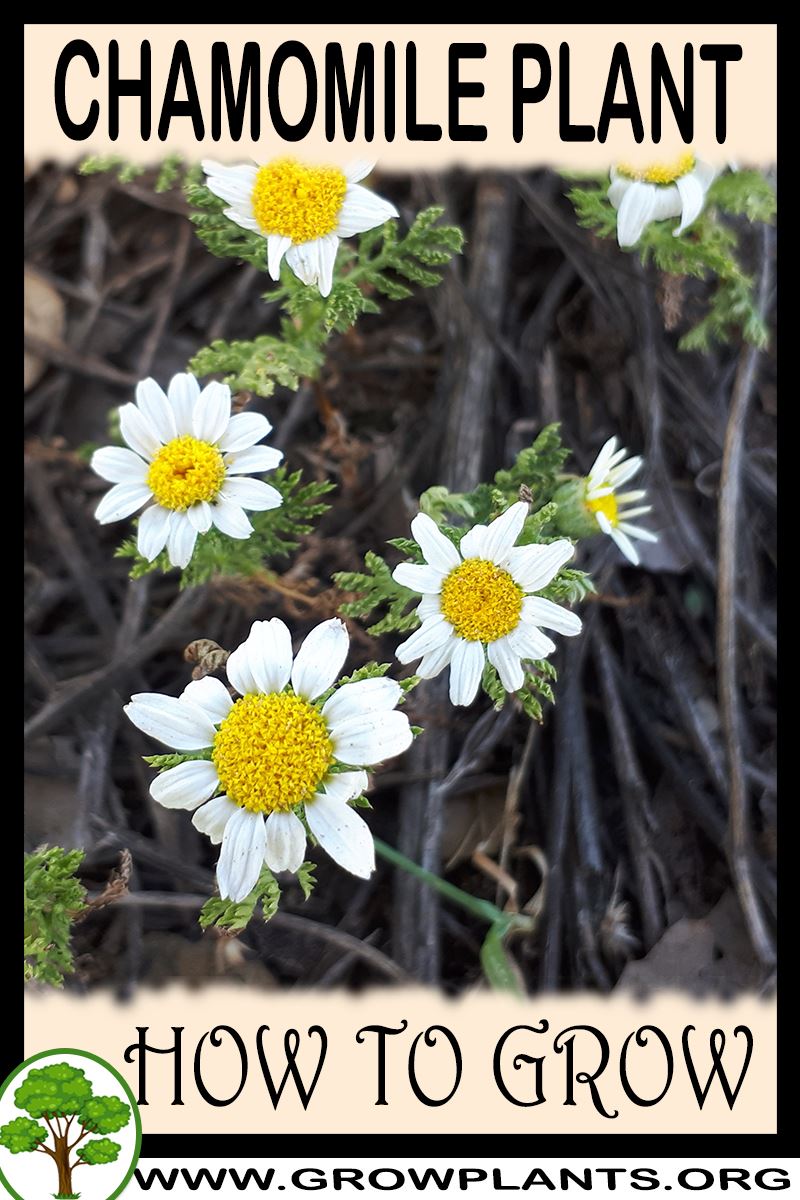
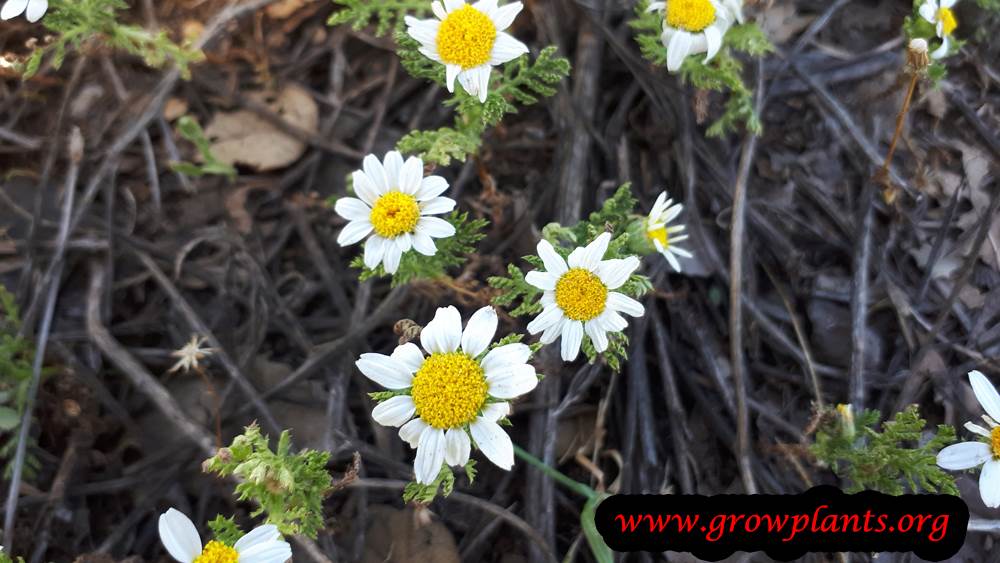
- Flower Characteristics: White daisy flowers with a yellow centre (see Bloom guide).
Primary Uses & Landscape Value
- Edible Uses: Flowers and leaves used for chamomile tea and other beverages; a medicinal herb.
- Functional & Ornamental Roles: Herb garden, fragrant groundcover/lawn (Roman), pollinator and ornamental plant.
Care Guide: Planting, Soil & Watering
Overview: Chamomile (Matricaria chamomilla / Chamaemelum nobile — German and Roman types) is a fast-growing herb that grows in full sun to part shade and tolerates heavier soils. It likes soil kept moist, especially while young, with only low to moderate watering once established.
Quick Care Requirements
| Requirement | Ideal Condition |
|---|---|
| Planting Season | Roman: mainly spring; German: spring–summer in cooler zones, autumn–winter in 10b–11 |
| Growth Rate | Fast |
| Soil Type | Heavier soil, kept moist when young |
| Water Need | Low to Moderate |
Planting & Establishment
- Best Planting Season: Roman chamomile is planted mainly in spring (into summer in milder zones); German chamomile in spring to summer in cooler zones, or autumn to winter in zones 10b–11.
- How to Plant:
- Hole Preparation: Dig a hole a little larger than the root ball.
- Soil Amendments: Add fertilizer and organic matter, and mulch around young plants to hold moisture.
- Planting Depth: Set the root ball at soil level and firm gently.
- Growth Speed & Expectations: Fast — reaches about 10–50 cm (4–20 in); perennial Roman types return each year, while German chamomile self-seeds.
Soil, Watering & Drainage Care
- Soil Mix & Drainage Needs: Tolerates heavier soil but needs good drainage; in containers (2.5–7 L / 0.5–1.5 gal, larger for perennial types) use potting or peat mix with perlite, humus and organic matter, with drainage holes.
- Watering Schedule & Technique:
- Young / Newly Planted: Water at least once a day at first and keep the soil moist while plants establish.
- Established: Water lightly to moderately, letting the surface dry between waterings.
- Seasonal Adjustments: More in warm, dry weather and less when cool; let any water in a pot saucer drain the same day.
Climate, Light & Hardiness
“Chamomile” covers two related plants with different life cycles but similar climate needs: perennial evergreen Roman chamomile (hardy USDA zone 4–9, 10a with care) and annual German chamomile (zone 4–10a, 11 with care), both suited to Mediterranean, subtropical, and temperate climates. Both take full sun to half shade and prefer soil that stays consistently moist.
Quick Climate Specifications
| Climate Zones | Mediterranean, subtropical, temperate |
|---|---|
| USDA Hardiness Zones | Roman: 4–9 (10a with care); German: 4–10a (11 with care) |
| Frost Tolerance | Moderate (Roman, perennial) / Low (German, annual) |
| Light Conditions | Full sun to half shade |
Sunlight & Light Exposure
Optimal Light Setup
Both types flower most heavily in full sun and tolerate half shade, which can help in hot-summer areas.
Temperature Extremes & Hardiness
USDA Hardiness & Regional Limits
Roman chamomile is the perennial of the two and persists as a low mat through zone 4–9 winters (marginal in 10a); German chamomile is an annual re-sown each cycle, so its broader zone 4–11 listing reflects growing-season length rather than a single plant surviving year to year.
Cold Damage & Winter Protection
Roman chamomile can die back to the crown in its coldest zones and regrow with a protective mulch; German chamomile is simply replaced by re-sowing.
Frost Sensitivity
Both are frost-tender at the foliage/flower level; in the hottest part of the shared range (zone 10b–11) German chamomile is instead grown through autumn–winter to dodge summer heat.
Wind, Humidity & Microclimate
Humidity Preferences
Both prefer evenly moist, humid soil conditions rather than prolonged dryness, particularly while establishing.
Growing in Pots, Balconies & Indoors
Chamomile (the perennial Roman or the annual German type) is a small, fragrant herb grown for its edible tea flowers. The grower does not rate it as a houseplant, but its compact size makes it easy in a pot on a very sunny windowsill, balcony or patio.
Quick Details
- Container Size: 2.5-7 L (0.5-1.5 gal); start in a pot at least 200% larger than the plant (grower’s values)
- Indoor Suitability: Not a deep-indoor houseplant, but manageable on a very bright, sunny windowsill
- Best Spot: Full sun to part shade
- Soil & Drainage: Free-draining mix with plenty of holes; the grower stresses good drainage
- Watering in Pots: Water moderately; let the base drain and dry out the same day – do not leave it standing wet
Indoors & On the Windowsill
- Houseplant limits: The grower marks it as not a houseplant – indoors it needs strong direct light to bloom, so keep it to the sunniest sill rather than a room interior.
- Windowsill growing: A compact plant on a bright sill can give a few flowers for tea; direct sun is essential.
- Overwintering: As a tender-ish perennial it can be sheltered on a bright sill through a cold winter and moved back out in the warm season.
On a Balcony or Patio
- Light, wind & heat: It is happy on a balcony or patio in good light. Pots dry quickly because walls and paving reflect heat, so check them often in warm spells; shelter tall stems from wind and mind the pot weight and drainage runoff.
- Practicalities: A shallow, wide 2.5-7 L pot in full sun suits it; deadhead to keep flowers coming.
Choosing the Pot, Soil & Long-Term Care
- Pot & drainage: Start about 200% larger than the plant, in a 2.5-7 L pot with plenty of drainage holes; the grower lets the base fill with water but ensures it dries out the same day to avoid rot.
- Pot material: Terracotta breathes and dries quickly (handy for sun-loving Mediterranean plants); glazed or plastic pots hold moisture longer.
- Potting mix: The grower uses potting mix or peat with perlite, mixed with humus and organic matter; chopped mulch on top helps keep the surface moist.
- Feeding: Potted plants use up nutrients faster because watering leaches them out, so feed a little more often than plants in open ground.
- Repotting: The grower advises switching the soil every few years when grown on as a perennial.
Grower’s Container Tip
- Right-size the pot & base-water: Start in a container about 200% larger than the plant; you can let the pot base fill with water but make sure it dries out the same day – his method for keeping the roots moist without rotting them.
Fertilizing & Feeding
Covering both the annual (German) and perennial (Roman) chamomiles, this plant is grown chiefly for its edible flowers and performs best on light, modest feeding rather than a rich diet.
Quick Fertilizing Specs
| Feeding Level | light |
|---|---|
| young_feeding | A newly planted or newly sprouted chamomile benefits from a light feeding once it is actively growing, not right at sowing or transplant. |
| mature_feeding | Established plants, whether the annual or perennial type, generally need only occasional light feeding through the growing season. |
| Main Nutrient Priority | A balanced, modest fertilizer supports healthy foliage and good flower production without excess soft growth. |
| Best Feeding Period | The active growing season through the main bloom period. |
| Organic Options | Compost and organic matter worked into the soil at planting suit chamomile well. |
| Soil pH | Tolerates a range of soil pH; extremes are best avoided. |
| Reduce/Stop Feeding | Feeding tapers off as bloom finishes – permanently for the annual type at season’s end, and going into cooler, slower growth for the perennial type. |
Feeding by Growth Stage
Establishment from seed or transplant
Support a young chamomile plant through early rooting and leaf growth.
| Nutrient direction | Light, balanced feeding; well-prepared, organically enriched soil usually covers early needs. |
|---|---|
| Timing | At sowing or transplanting and through early growth. |
| Frequency | A single light feeding once the plant is actively growing is usually enough to start. |
| Fertilizer types | A balanced fertilizer worked into the soil at planting, or a light dose of compost |
| Precautions | Avoid concentrated fertilizer directly on young seedlings or fresh transplants, which can scorch fine new roots. |
Active growth and bloom
Support foliage growth and a good flush of tea-quality flowers through the growing season.
| Nutrient direction | Keep nitrogen modest; chamomile flowers well on lean feeding, and excess nitrogen favors soft foliage over flowers. |
|---|---|
| Timing | From active leafy growth through the main bloom period. |
| Frequency | This plant rarely needs feeding beyond an occasional light application through the growing season. |
| Fertilizer types | An occasional light, balanced fertilizer application, or a compost top-dressing |
| Precautions | Avoid frequent or nitrogen-heavy feeding, which produces excess leafy growth at the expense of flowering. |
Nutrient Deficiency Signs & Corrections
Pale, yellow-green older foliage and weaker-than-expected growth.
| Possible causes | Nitrogen deficiency in poor soil, Waterlogged or compacted soil limiting root uptake, Natural decline as bloom finishes |
|---|---|
| Appears first on | Older, lower foliage first |
| What to check | Soil drainage and texture, Recent feeding history, Whether new growth at the tips still looks healthy |
| Possible correction | A light, balanced feeding during active growth is usually enough to correct a genuine deficiency. |
New growth turning pale to yellow while the veins stay green.
| Possible causes | High or alkaline soil pH tying up iron, Poor drainage limiting root function, Root stress following transplanting |
|---|---|
| Appears first on | Newest leaves at the growing tips |
| What to check | Soil pH and drainage, Whether the plant was recently transplanted or disturbed, Whether older foliage remains a normal green |
| Possible correction | Address the underlying soil pH or drainage issue; a chelated iron product applied per its label can help if color does not recover on its own. |
Interveinal yellowing on older foliage while the veins remain green.
| Possible causes | Magnesium deficiency in light or heavily leached soil, Excess potassium competing with magnesium uptake, Normal aging of older foliage |
|---|---|
| Appears first on | Older foliage |
| What to check | Whether yellowing is between the veins rather than whole-leaf, Soil type and watering pattern, Overall vigor of new growth |
| Possible correction | Rule out watering and soil issues first; a chelated or soluble magnesium product used per its label can correct a genuine deficiency. |
Pruning, Training & Seasonal Maintenance
“Chamomile” on this site covers two different plants with different lifespans, so the right pruning approach depends on which one you have. Roman chamomile (Chamaemelum nobile) is a perennial evergreen mat-former that needs ongoing yearly maintenance, while German chamomile (Matricaria chamomilla) is an annual that completes its cycle in one season and is managed mainly through deadheading and a deliberate choice about self-seeding. Both tolerate frequent light cutting and both are commonly grown for their edible, tea-worthy flowers, but only Roman chamomile has a persistent structure worth training or renewing.
Quick Pruning & Maintenance Specs
| Pruning Tolerance | Moderate to High for both types |
| Primary Pruning Window | Roman: winter tidy of the mat. German: throughout its single bloom season |
| Typical Frequency | Weekly deadheading in bloom for both; Roman also gets one yearly winter trim |
| Main Objective | Roman: dense evergreen mat + prolonged bloom. German: prolonged bloom within the season, balanced against self-seeding |
| Young Plant Priority | Roman: light pinching to fill in as a mat. German: none – let seedlings establish |
| Mature Plant Priority | Roman: deadhead + annual mat tidy. German: harvest/deadhead most heads, leave some to seed |
| Best Tool Type | Precision snips for deadheading either type; small hand shears for Roman’s winter mat trim |
| Avoid Heavy Pruning During | Peak bloom on either type, if flowers are being harvested for tea |
Pruning by Plant Age & Size
Newly Established
For either type, avoid cutting back a young planting – let it root in first and only remove damaged growth.
Young / Formative
Roman chamomile benefits from light pinching of spreading stems to encourage a denser, more even mat. German chamomile needs no formative pruning; it branches and buds on its own as an upright annual.
Mature / Established
Roman chamomile: alternate light deadheading through summer with a fuller winter tidy, year after year. German chamomile: deadhead/harvest through its one bloom season, with no later renewal stage since the plant does not persist.
Seasonal Pruning Schedule
Dormant/Winter (Roman chamomile only)
Objective: reset the perennial mat before spring. Remove: old flower stalks and dead foliage. Do not remove: healthy evergreen growth near the crown. Flowering impact: none, since this falls after that year’s bloom.
Summer Canopy Management (both types)
Objective: keep flowers coming for harvest. Remove: spent or peak-ripe flower heads regularly. Do not remove: every head late in German chamomile’s season if you want it to self-sow and return next year. Flowering impact: deadheading prolongs bloom within the season for both; it has no bearing on “next year” for German chamomile beyond how much seed is allowed to drop.
Special Growth to Remove
Roman chamomile: remove spent flower stems and any dead/winter-browned foliage each year. German chamomile: the equivalent action is simply harvesting flower heads before they set full seed, or intentionally leaving a portion to mature if self-sowing is wanted.
Container & Small-Space Pruning
Roman chamomile in a pot should be trimmed a little tighter than an in-ground mat to stop it thinning at the center, and its soil is best refreshed every few years alongside a rejuvenating trim. German chamomile in a pot should be harvested promptly through its season and then simply removed once spent, rather than cut back for regrowth.
Tools
Precision snips for deadheading and harvest on either type; small hand shears for Roman chamomile’s broader winter mat tidy.
Tool Hygiene & Disease Risk
Increased care is worthwhile for both – powdery mildew is a noted issue on this plant group, so remove (don’t compost) affected foliage and wipe tools if mildew is present before moving to other plants.
Cut Placement & Technique
For both types, deadhead individual flower stalks down to the foliage rather than leaving bare stubs. On Roman chamomile’s winter tidy, shear evenly across the mat rather than gouging into the crown.
Post-Pruning Care
Normal watering is sufficient for either type after cutting; avoid fertilizing purely in response to deadheading, since both flower freely on their own once established.
Common Pruning Mistakes
Applying Roman chamomile’s yearly mat-renewal routine to German chamomile (which has no perennial structure to renew), or conversely never giving a Roman chamomile planting its winter tidy and letting the mat go patchy over years.
When NOT to Prune
Avoid a hard cut during peak bloom on either type if flowers are being harvested for tea, and on German chamomile specifically avoid removing every late-season head if you want it to self-sow and return next year.
Recommended Tools (by task)
- Deadheading / flower harvest (both types) – precision_snips: quick, clean cuts on soft flower stalks.
- Roman chamomile winter mat tidy – hedge_shears: even, low-effort trim across the spreading mat.
Propagation Guide
This chamomile page covers more than one commonly grown chamomile type, so their propagation should remain distinct.
Roman Chamomile
Roman chamomile can be propagated from seed and vegetatively by division or cuttings.
German Chamomile
German chamomile is propagated primarily from seed.
Seed Sowing
Store saved seed in a dry, dark place, ideally refrigerated, until ready to sow. For chamomile seed, surface-sow or cover only very lightly and keep the medium evenly moist while seedlings establish.
Note: Seeds typically germinate in 7-14 days and need light to sprout, so do not bury them.
Bloom & Edible Flower Guide
Quick Details
- Bloom Season: Spring and summer, occasionally into autumn
- Time to First Bloom: In its first season; German types flower from seed in a couple of months, Roman types once established
- Flower Appearance: Small daisy-like heads, white petals around a yellow center
- Edibility: The flowers are edible and are the classic base for a calming herbal tea
Detailed Blooming Overview
“Chamomile” covers two closely related plants – annual German chamomile and the low, mat-forming perennial Roman chamomile – both grown for the same small, apple-scented daisy flowers. In each case the blooms are the prize: edible, fragrant, and dried for a gentle, soothing tea. Expect flowering through spring and summer, sometimes lingering into autumn.
Flower Characteristics
- Small daisy-like heads with white ray petals and a yellow central disc.
- Apple-scented and edible; picked and dried for tea.
- German chamomile grows upright and annual; Roman chamomile is a spreading perennial.
Bloom Care & Thinning
- Managing the bloom: Pick the flowers as they open fully; regular harvesting keeps new buds forming.
- Pollination: Pollinated by bees, and the open flowers draw pollinators in generally.
Bloom Health & Protection
- Aphids can gather on buds and flower stems – a firm spray of water or insecticidal soap keeps them in check.
Fruit & Uses
This page covers both Roman chamomile (perennial) and German chamomile (annual); in both, the small, white-petalled, yellow-centered flowers and the finely divided leaves are edible and used mainly fresh or dried for tea/infusions. Both parts are infused as a beverage rather than cooked as food.
Quick Edible Specs
| Edible Parts | Flowers; Leaves (and stems) |
|---|---|
| Main Use(s) | Beverage (tea/infusion); traditionally also regarded as a medicinal herb (traditional-use note only) |
| Eaten Raw or Cooked | Infused (tea) or used fresh |
| Preparation Required | None beyond rinsing; dry for storage |
| Harvest Season | Flowers – spring/summer, rarely autumn; Leaves/stems – through the growing season once established, continuing longer in mild-winter climates where the annual (German) type grows over autumn–spring instead |
| Time to First Harvest | After the plant is established |
| Storage | Air-dry flowers and leaves for long-term tea use; best fresh otherwise |
| Safety/Toxicity Caveat | Chamomile is in the daisy (Asteraceae) family – people with ragweed or related pollen allergies should be cautious |
Flowers & Flower Buds
The white-petalled, yellow-centered flowers are the classic chamomile-tea part on either type. Pick them once fully open during the spring–summer (occasionally autumn) bloom season, fresh or air-dried for later use.
Leaves & Greens
The narrow (about 0.2mm wide, 1–2cm long), finely divided leaves and stems are also edible and can be cut once the plant is established. They are used the same way as the flowers, mainly for beverages.
Harvesting
Flowers are picked through the bloom season as they open; leaves/stems can be cut alongside them once established. Roman chamomile (perennial) can be harvested from repeatedly over years, while German chamomile (annual) is harvested through its single growing season, which shifts to an autumn–spring window in the mildest (10b–11) climates.
Preparation, Uses & Safety
No cooking is required – flowers and leaves are used fresh or air-dried, mainly steeped as a beverage/tea, and the flowers are traditionally regarded as a medicinal herb (a traditional-use note only, not a health claim). As a daisy-family (Asteraceae) plant, anyone with ragweed or related pollen allergies should be cautious when consuming or handling it.
Pests, Diseases & Troubleshooting
Overview: Chamomile — whether German (Matricaria chamomilla, annual) or Roman (Chamaemelum nobile, perennial) — is an easy, pest-light aromatic daisy often grown as a companion plant, with aphids and thrips the likeliest pests, powdery mildew in crowded humid conditions, and damping-off on seedlings. Both share essentially the same profile: grow in sun with airflow and lean soil, and rely on organic controls since the flowers are usually harvested for tea.
Quick Troubleshooting Overview
| Issue / Pest | Main Symptom | Primary Solution |
|---|---|---|
| Aphids | Clusters on stems, buds and undersides; honeydew | Hose off, insecticidal soap or neem; support predators |
| Thrips | Silvery flecking and distorted flowers | Blue sticky traps, insecticidal soap or spinosad |
| Spider mites | Fine stippling and webbing in hot dry spells | Rinse, raise humidity, insecticidal soap |
| Powdery mildew | White powdery coating on leaves in humid crowding | Airflow, spacing, sulphur/potassium bicarbonate |
| Damping-off | Seedlings collapse at soil line | Clean mix, sow thinly, avoid overwatering |
| Root rot (Roman type) | Yellowing, collapse of the mat in wet, heavy soil | Sharp drainage, avoid waterlogging |
Common Pests & Management
- Aphids (Aphis / Myzus spp.):
- Symptoms: Green, grey or black clusters mass on stems, buds and leaf undersides, distorting growth and leaving honeydew; the most likely chamomile pest and a trap that can protect nearby plants.
- Prevention & Control: Rinse off with water and treat with insecticidal soap or neem if needed; the flowers draw hoverflies, lacewings and ladybirds that usually keep aphids in check, so avoid harsh sprays.
- Thrips (Frankliniella / Thrips spp.):
- Symptoms: Silvery streaks and flecking on leaves and petals with distorted, discoloured flowers, downgrading blooms cut for tea.
- Prevention & Control: Use blue sticky traps, remove spent flowers, and apply insecticidal soap or spinosad if numbers build, repeating to catch newly hatched thrips.
- Spider mites (Tetranychus urticae):
- Symptoms: In hot, dry weather leaves show fine pale stippling and light webbing on the undersides, dulling and yellowing.
- Prevention & Control: Rinse the foliage, avoid drought stress, and use insecticidal soap if mites persist; humidity and airflow discourage them.
- Mealybugs (Planococcus citri):
- Symptoms: Occasional white cottony tufts in leaf axils and stem joints on container-grown or crowded plants, with honeydew.
- Prevention & Control: Spot-treat with alcohol and insecticidal soap; generally a minor issue outdoors.
Diseases & Fungal Issues
- Powdery mildew (Erysiphaceae (Golovinomyces / Podosphaera)):
- Symptoms: A white powdery film on leaves and stems in crowded, humid, poorly ventilated plantings, causing yellowing and weakening.
- Treatment & Management: Space for airflow, grow in full sun, avoid overhead watering, remove affected foliage, and treat with sulphur or potassium bicarbonate where persistent.
- Damping-off (Pythium / Rhizoctonia / Fusarium):
- Symptoms: Seedlings rot and topple at the soil line in cold, wet, overcrowded seed compost.
- Treatment & Management: Sow thinly in clean, free-draining mix, avoid overwatering, provide warmth and airflow, and water from below.
- Grey mould & sclerotinia rot (Botrytis cinerea; Sclerotinia sclerotiorum):
- Symptoms: Grey mould on spent flowers and damaged tissue, or a white cottony rot collapsing stems in cool, damp, crowded conditions.
- Treatment & Management: Remove faded flowers and dead material, improve ventilation and spacing, and avoid overwatering; a botrytis-active fungicide can help in prolonged damp, though sanitation usually suffices.
- Aster yellows (phytoplasma (leafhopper-vectored)):
- Symptoms: Yellowed, stunted, distorted growth with greened or deformed flowers, spread by leafhoppers.
- Treatment & Management: Remove infected plants, control leafhoppers and weedy reservoirs; there is no cure once infected.
Growing Difficulties & Abiotic Problems
- Flopping / lodging:
- Cause & Symptoms: Tall stems flop in rich soil, shade or after rain in dense plantings (German type especially).
- Correction Strategy: Grow in full sun and lean soil, avoid excess nitrogen, and space or lightly support plants.
- Root rot in wet soil (Roman lawn chamomile):
- Cause & Symptoms: The perennial mat yellows and dies out in patches where soil stays wet and heavy.
- Correction Strategy: Plant Roman chamomile in free-draining soil, avoid waterlogging and heavy foot traffic when wet, and improve drainage.
- Poor germination / bolting:
- Cause & Symptoms: Erratic emergence from buried seed, or bolting in heat shortening flowering.
- Correction Strategy: Surface-sow (seed needs light), keep evenly moist to germinate, and sow in the cooler season to prolong flowering.
What Helps – Products & Tools
Chamomile stays healthy mostly through culture — sun, airflow, lean soil and its own beneficial-attracting flowers. When needed, insecticidal soap and neem handle aphids, thrips and mites, blue sticky traps and spinosad target thrips, and sulphur or potassium bicarbonate controls powdery mildew. Observe pre-harvest intervals as the flowers are used for tea.
Types and forms
Two different species are both commonly grown and sold as “chamomile,” and they behave differently in the garden.
Quick Comparison
| Species | Growth Habit | Life Cycle | Best For |
|---|---|---|---|
| Roman chamomile (Chamaemelum nobile) | Perennial, evergreen, low-growing | Grown from cuttings, hardiness zone 4-10a | Permanent ground cover, borders |
| German chamomile (Matricaria chamomilla) | Annual, upright | Grown from seed, hardiness zone 4-11 | Reseeding annual beds |
Both are used the same way for tea, and both have edible white-and-yellow flowers — choose Roman for a persistent perennial patch, German for an easy annual grown from seed.