
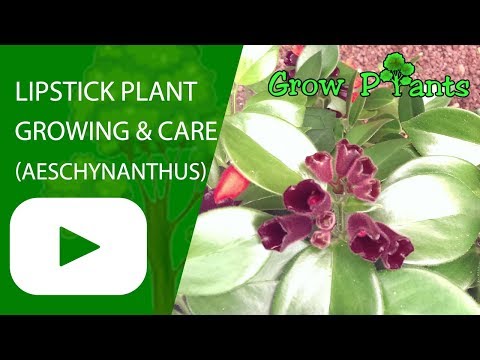

Plant Profile & Key Characteristics
Overview: The lipstick plant is an evergreen, trailing epiphytic vine, 40–80 cm (16–32 in) long, with waxy leaves and tubular flowers that push out of a dark calyx like a lipstick. This tropical perennial is grown almost entirely as an ornamental flowering houseplant, especially in hanging baskets.
Quick Specifications
| Specification | Attribute |
|---|---|
| Plant Type / Life Cycle | Perennial (evergreen epiphytic vine) |
| Foliage Type | Evergreen |
| Mature Size | 40–80 cm (16–32 in), trailing |
| Growth Rate | Slow to moderate |
| Root System | Fine and fibrous (epiphytic) |
| Toxicity | Non-toxic (considered pet-safe) |
| Hardiness | USDA zone 10b+ (frost-tender) |
Growth Form & Structure
- Height & Spread: Produces trailing to climbing stems 40–80 cm (16–32 in) long – ideal for a hanging basket or raised pot indoors; needs warmth and humidity.
- Growth Habit & Form: Evergreen trailing to climbing epiphytic vine with slender, pendent stems.
- Lifespan & Maturity: A long-lived perennial houseplant that begins flowering once established.
Anatomy & Physical Features
- Leaves & Foliage: Waxy, oval green leaves arranged in two rows along the stems; some cultivars are variegated white or yellow, or carry purple foliage.
- Flower Characteristics: Curved tubular flowers in red, pink, yellow or orange emerging from a darker calyx like a lipstick, borne in clusters mainly through autumn and winter.
Primary Uses & Landscape Value
- Functional & Ornamental Roles: Grown as an ornamental flowering houseplant for hanging baskets and containers in bright, indirect light.
Care Guide: Planting, Soil & Watering
Overview: The Lipstick plant is an epiphytic trailing vine that grows best as a warm, humid, frost-free houseplant in bright indirect light to part shade. It wants a loose, airy, fast-draining mix kept lightly and evenly moist — never soggy — because its roots naturally cling to bark rather than sit in heavy wet soil.
Quick Care Requirements
| Requirement | Ideal Condition |
|---|---|
| Planting Season | Year-round indoors in a warm, frost-free spot |
| Growth Rate | Slow to Moderate |
| Soil Type | Loose, airy, well-draining epiphytic mix (peat/bark-based) |
| Water Need | Moderate — keep lightly moist, let the top of the mix dry slightly between waterings |
Planting & Establishment
- Best Planting Season: As a tender houseplant it can be potted or repotted at any time of year, as long as it is kept warm and out of frost.
- How to Plant:
- Hole Preparation: Use a container only slightly larger than the root ball with good drainage holes; this epiphyte flowers best when its roots are a little snug.
- Soil Amendments: Blend a light houseplant or peat mix with bark, perlite or coarse material so the mix stays open and airy.
- Planting Depth: Set the plant at the same depth it grew before, keeping the stem base at the surface and not buried.
- Growth Speed & Expectations: A slow to moderate grower, trailing to about 40–80 cm and best shown off in a hanging basket or raised pot.
Soil, Watering & Drainage Care
- Soil Mix & Drainage Needs: Sharp drainage and air around the roots are essential; a soggy, heavy mix leads to root rot in this epiphyte, so always use a container with drainage holes and never leave it standing in water.
- Watering Schedule & Technique:
- Young / Newly Planted: Keep the mix lightly and evenly moist while the plant settles in.
- Established: Water when the top of the mix begins to dry, then let it drain fully; benefits from humidity and occasional misting.
- Seasonal Adjustments: Water a little more in warm, active growth and ease back in cooler, darker months when growth slows.
Climate, Light & Hardiness
Lipstick plant is an epiphytic tropical vine grown mainly as a houseplant, doing best in bright indirect light (half shade to full shade) with consistently high humidity. Outdoors it is limited to essentially frost-free, humid tropical-to-subtropical climates, rated by the site to approximately zone 10b and above.
Quick Climate Specifications
| Climate Zones | Subtropical, mediterranean, and tropical climates (outdoor); typically grown as a houseplant elsewhere |
|---|---|
| USDA Hardiness Zones | Approximately 10b and above (outdoor cold limit) |
| Frost Tolerance | None – frost-free conditions required |
| Light Conditions | Half Shade to Full Shade (bright indirect light indoors) |
Sunlight & Light Exposure
Optimal Light Setup
Bright, indirect light suits it best, whether grown outdoors in dappled shade or indoors near a bright window out of direct sun.
Direct Sun Requirement
Direct sun is not needed and can scorch its leaves; the plant is adapted to filtered light beneath a forest canopy in its native tropical habitat.
Temperature Extremes & Hardiness
USDA Hardiness & Regional Limits
Outdoor, year-round culture is limited to approximately zone 10b and above. Anyone growing it outside that range should treat it as a houseplant or bring it under cover for winter.
Cold Damage & Winter Protection
The plant needs consistently frost-free, humid warmth; keep indoor specimens away from cold windows and draughts in winter, and avoid letting temperatures drop into the chilly range even briefly.
Frost Sensitivity
Has essentially no frost tolerance at any age or size.
Wind, Humidity & Microclimate
Humidity Preferences
As an epiphyte from humid tropical forests, it needs consistently high humidity to thrive; dry indoor air, especially from heating in winter, is a common cause of poor performance.
Dry-Air Tolerance
Tolerates dry air poorly; misting, a pebble humidity tray, or a humidifier helps in dry indoor environments.
Growing in Pots, Balconies & Indoors
The lipstick plant is a classic houseplant – the grower confirms it grows well indoors – and this trailing epiphyte (stems 40-80 cm / 16-32 in) is made for hanging baskets in bright, indirect light. It suits shaded balconies and patios too, but never full, harsh sun.
Quick Details
- Container Size: A hanging basket or pot of about 3-8 L (1-2 gal) suits its shallow roots
- Indoor Suitability: An excellent houseplant for bright, indirect light
- Best Spot: Part to full shade with plenty of ambient light; no direct midday sun
- Soil & Drainage: Light, very free-draining, airy epiphyte-style mix
- Watering in Pots: Keep lightly moist in growth; let the top dry a little between – it dislikes soggy roots
Indoors & On the Windowsill
- A true houseplant: Thrives indoors in bright, indirect light – an east or west window, or a well-lit spot back from a south window, is ideal. It enjoys warmth and humidity.
- Windowsill / basket: Best grown as a trailing plant in a hanging basket; the cascading stems show off the tubular flowers.
- Humidity: As a tropical epiphyte it appreciates a humid corner – a bathroom or kitchen window suits it well.
On a Balcony or Patio
- Light & wind: A shaded, sheltered balcony is ideal; keep it out of direct sun, which scorches the leaves, and out of drying wind.
- Practicalities: Bring it indoors in cool weather – it is tender and dislikes cold draughts.
Choosing the Pot, Soil & Long-Term Care
- Pot & drainage: A small 3-8 L pot or basket with strong drainage holes; skip a standing-water saucer to avoid root rot.
- Potting mix: A light, aerated, organic-rich mix – potting compost or peat/coir with added perlite or vermiculite for drainage. An airy, open mix (add orchid bark or extra perlite) mimics its natural epiphytic roots.
- Feeding: Nutrients wash out of pots faster than open ground, so feed potted the lipstick plant more often – a balanced liquid feed through the active growing season.
- Repotting: Refresh the top layer of mix each year and renew it or pot up every couple of years; lightly trim the roots and top growth when you do.
Fertilizing & Feeding
A light-to-moderate feeder as a houseplant; skip feeding right after repotting, then feed lightly through active growth and taper off when light and warmth drop in the cooler months.
Quick Fertilizing Specs
| Feeding Level | Light to moderate feeder |
|---|---|
| Main Nutrient Priority | Balanced feeding with adequate nitrogen to support waxy foliage and clusters of tubular blooms |
| Best Feeding Period | Active growth in the warmer, brighter months |
| Organic Options | A quality potting mix with compost or worm castings blended in |
| Reduce/Stop Feeding | Hold off feeding right after repotting, and again as light and temperatures drop |
| Micronutrients | Iron and manganese are typically supplied by a complete houseplant fertilizer; correct only a diagnosed deficiency beyond that |
| Soil pH | Slightly acidic potting mix is preferred |
Feeding by Growth Stage
Settling in after potting or repotting
Let roots recover and re-establish in fresh mix before asking the plant to support new growth.
| Nutrient direction | None – hold off on fertilizer while the plant settles into its pot. |
|---|---|
| Timing | The first weeks after potting or repotting. |
| Frequency | No feeding during this settling-in period. |
| Fertilizer types | No feeding at this stage; a fresh, quality potting mix supplies what the plant needs while it settles in. |
| Precautions | Do not fertilize freshly disturbed roots; wait for clear signs of new growth first. |
Active growth and flowering
Support trailing stems, glossy waxy foliage, and the clusters of red, pink, yellow, or orange tubular flowers.
| Nutrient direction | A balanced houseplant fertilizer with adequate nitrogen keeps foliage lush and supports repeat flowering. |
|---|---|
| Timing | Through the warmer months when the plant is putting out visible new growth. |
| Frequency | A light, regular feeding through active growth suits this plant well. |
| Fertilizer types | A balanced complete houseplant fertilizer, A diluted liquid feed suited to flowering houseplants |
| Routine trace nutrients | iron, manganese |
| Precautions | Avoid overfeeding, which can suppress flowering in favor of leafy growth and cause tender stems to become leggy. |
Low-light and cooler-season slowdown
Let the plant rest through shorter, dimmer days without pushing growth it can’t support.
| Nutrient direction | None – withhold fertilizer while growth is minimal in lower light and cooler temperatures. |
|---|---|
| Timing | The darker, cooler months indoors, typically autumn into winter. |
| Frequency | No feeding at this stage; resume once brighter conditions bring on new growth. |
| Fertilizer types | No feeding at this stage; hold off fertilizing until active growth resumes. |
| Precautions | Feeding a plant that isn’t actively growing risks salt buildup in the potting mix rather than any benefit. |
Nutrient Deficiency Signs & Corrections
Older leaves pale to light green or yellow while overall growth and flowering slow.
| Possible causes | low available nitrogen in an old or depleted potting mix, infrequent feeding relative to active growth, roots crowded and nutrient-exhausted in an undersized pot |
|---|---|
| Appears first on | older, lower leaves |
| What to check | how long since the last repotting or fresh mix, recent feeding history, root crowding in the pot |
| Possible correction | Resume light, regular feeding with a balanced houseplant fertilizer and consider refreshing the potting mix. |
New leaves emerge yellow with the veins staying green.
| Possible causes | potting mix pH drifting too alkaline over time, waterlogged soil limiting root uptake, cold irrigation water slowing nutrient uptake |
|---|---|
| Appears first on | newest growth |
| What to check | how well the pot drains, potting mix age and pH drift, watering temperature and frequency |
| Possible correction | Improve drainage, refresh the potting mix, and apply a chelated iron product per its label if the pattern persists. |
Leaf tips and margins brown or crisp even though the plant is watered regularly.
| Possible causes | fertilizer salt buildup from consistent feeding without flushing, low humidity common to indoor conditions, underwatering that concentrates salts in the mix |
|---|---|
| Appears first on | leaf tips and margins |
| What to check | recent fertilizer frequency and strength, any crusty residue on the soil surface or pot rim, ambient humidity |
| Possible correction | Flush the potting mix thoroughly with plain water and resume with lighter, less frequent feeding. |
Pruning, Training & Seasonal Maintenance
Lipstick plant is a trailing epiphytic houseplant grown for both its glossy foliage and its tubular flower clusters, and it tolerates frequent light trimming very well. The main objectives are keeping the trailing stems bushy rather than bare and leggy, and controlling size in a hanging basket. Because flower clusters form at the leaf axils of stems that have had time to mature, the best window for any real shaping cutback is right after the autumn–winter bloom finishes, giving new growth the rest of the year to harden and set the next round of flower buds; light pinching for tidiness can otherwise be done at any time.
Quick Pruning & Maintenance Specs
| Pruning Tolerance | High (soft stems, tolerates frequent pinching) |
| Primary Pruning Window | Just after flowering (late winter – early spring) |
| Secondary Maintenance Window | Light pinching/tip trims year-round |
| Typical Frequency | Ongoing light pinching, one shaping cutback after bloom |
| Main Objective | Bushiness, trail density, size control in a basket/pot |
| Young Plant Priority | Pinch early and often to build multiple trailing stems from the base |
| Mature Plant Priority | Cut back bare/leggy trails to renew fullness; deadhead spent clusters |
| Best Tool Type | Precision snips |
| Avoid Heavy Pruning During | Just before or during the autumn/winter bloom period |
Pruning by Plant Age & Size
Newly Established
Pinch soft tips lightly once the plant is settled in, to encourage branching low down rather than a single long trail.
Young / Formative
No formal training system applies – this is a trailing, not climbing or free-standing, habit. Regular pinching of growing tips is the only ‘training’ needed, and it builds a full, many-stemmed basket rather than a few long bare runners.
Mature / Established
Cut back any stems that have gone bare and leggy toward their base, just after flowering, to force fresh branching; deadhead spent flower clusters once they fade.
Seasonal Pruning Schedule
Post-Flowering
- Objective: renew fullness and reset the plant for the next bloom cycle.
- Remove: leggy, bare-based trailing stems; spent flower clusters.
- Do not remove: young, still-soft growth that has not yet had a chance to mature and set buds.
- Expected response: branching from lower nodes, giving a fuller plant by the time flowering approaches again.
- Flowering impact: pruning at this point costs nothing, since it precedes the growth that will carry next season’s buds; pruning right before or during bloom removes flower-bearing wood for that cycle.
Ongoing Sanitary
- Objective: tidy appearance and plant health.
- Remove: dead or damaged leaves as they appear.
Special Growth to Remove
- Dead or damaged leaves – remove as seen.
- Bare, leggy trailing stems – cut back to a healthy node to force new branching.
- Spent flower clusters – trim off once colour fades.
Container & Small-Space Pruning
This species is grown as a hanging-basket or pot plant by nature, so ‘container pruning’ is simply its normal care: pinch regularly to keep the trails dense rather than sparse, and cut the longest trails back periodically to keep the basket in proportion to its space. Healthy cut tips root easily and are a simple way to refresh an ageing, leggy plant.
Tools
Precision snips are all this soft-stemmed epiphyte needs for both pinching and cutback.
Tool Hygiene & Disease Risk
Routine care – keep snips clean and sharp; no significant transmissible disease risk is documented for this species.
Cut Placement & Technique
Pinch or cut just above a leaf node; when renewing a leggy trail, cut back to just above a lower node with visible healthy growth so the plant has somewhere to branch from.
Heavy Pruning & Rejuvenation
A hard cutback of an overgrown, sparse plant is well tolerated and is the standard fix for a lipstick plant that has become mostly bare trails with foliage only at the tips; expect a temporary gap in flowering while the plant rebuilds growth.
Post-Pruning Care
Keep humidity up and avoid cold draughts after cutting back, since this is a frost-free, humidity-loving species; no extra feeding is needed beyond its normal light feeding schedule. Rooted tip cuttings can be potted up alongside the parent to bulk out a basket.
Common Pruning Mistakes
- Never pinching, leaving the plant as a few long, bare trailing stems with foliage only at the ends.
- Hard cutting back right before or during the autumn/winter bloom, removing that season’s flower buds.
- Letting spent flower clusters sit and fade on the plant instead of trimming them off.
When Not to Prune
Avoid a real shaping cutback immediately before or during the autumn/winter flowering period, when it would remove developing flower buds.
Recommended Tools (by task)
- precision_snips – the only tool needed, for both routine pinching and the post-bloom renewal cutback.
Propagation Guide
Lipstick plant is propagated almost exclusively from stem-tip cuttings, which root readily in a humid, well-drained mix and reliably keep variegated or colored-leaf cultivars true – something the site notes some plants show and which seed would not reliably reproduce. Seed propagation is possible but is rarely used at home. Overall this is an easy plant to propagate.
Quick Propagation Specs
| Best Propagation Method | Stem/tip cuttings |
| Alternative Methods | Seed (uncommon in cultivation) |
| Propagation Difficulty | Easy |
| Seed True-to-Type | Variable / cultivar-dependent – variegated or purple-leaved forms do not reliably come true |
| Vegetative True-to-Type | Yes |
| Best Propagation Season | Warm months (spring to summer), though it can be done year-round indoors with extra warmth |
| Cutting Rooting Time | Typically a few weeks |
Stem Cuttings
Cutting Type
Stem-tip cuttings with two to three nodes/leaf pairs.
Best Timing
Warm months root fastest, though indoor plants can be propagated at other times with added warmth.
Cutting Preparation
Cut just below a node and remove the lowest leaf pair.
Rooting Setup
A moist, well-aerated mix (such as a light peat/perlite or orchid-type blend, reflecting this plant’s epiphytic habit) or clean water, with high humidity – a propagator lid or bag helps.
Rooting Hormone
Optional; not required, but it can speed rooting.
Rooting Time
Typically a few weeks.
Division, Offsets, Pups & Suckers
Mature pot-grown plants that have developed multiple rooted stems can sometimes be divided at repotting, though stem cuttings remain the more reliable and commonly used method for this species.
Bloom & Flower Guide
Quick Details
- Bloom Season: Mainly autumn into winter, with occasional flushes at other times in warm rooms
- Flower Appearance: Tubular, lipstick-like flowers in red, orange, pink or yellow, pushing from darker calyces in clusters
- Edibility: Ornamental houseplant — not eaten, and not known to be toxic
Detailed Blooming Overview
The lipstick plant is grown for exactly one thing: those waxy tubular flowers that emerge from a dark bud like a lipstick from its case. As an epiphyte it flowers best when a little pot-bound and given bright, indirect light, with the main flush coming in the cooler months.
Flower Characteristics
- Tubular, cone-shaped flowers in red, orange, pink or yellow, clustered at the stem tips; glossy oval leaves grow in two ranks.
Bloom Care & Thinning
- Encouraging bloom: Bright indirect light, steady humidity and a slightly cool rest period encourage budding.
- Protecting the buds: Avoid moving the plant once buds set — sudden changes in light or temperature cause bud drop.
Bloom Health & Protection
- Aphids on buds: Aphids sometimes attack the soft buds; insecticidal soap or neem oil helps.
Pests, Diseases & Troubleshooting
Overview: The lipstick plant is an epiphytic trailing gesneriad grown as a warm, humidity-loving houseplant, so its troubles are the classic indoor sap-suckers — above all mealybugs, which love its leaf axils — together with rots that set in when its airy, epiphytic roots are kept in cold, soggy compost. Care is mostly about balance: warmth, steady humidity, bright indirect light and a fast-draining mix, with sprays only when a pest actually appears.
Quick Troubleshooting Overview
| Issue / Pest | Main Symptom | Primary Solution |
|---|---|---|
| Mealybugs | White cottony fluff in leaf axils & along stems | Dab with alcohol; insecticidal soap/neem, repeat |
| Spider mites | Fine stippling, dull leaves, webbing in dry air | Raise humidity; rinse; insecticidal soap/oil |
| Aphids | Clusters on soft new shoots & buds, honeydew | Rinse off; insecticidal soap or neem |
| Scale | Brown immobile bumps on stems & leaf undersides | Scrape off; horticultural oil |
| Root / crown rot | Yellowing, mushy base, collapse in wet cold mix | Repot into airy mix; water less; warmth |
| Leaf & bud drop | Sudden shedding of leaves or flower buds | Steady warmth & moisture; avoid cold drafts |
Common Pests & Management
- Mealybugs (Planococcus citri):
- Symptoms: The signature pest of gesneriads — tufts of white cottony wax tucked into leaf axils, along trailing stems and at the growing tips, with sticky honeydew and sooty mould following; heavy infestations stunt and yellow the plant.
- Prevention & Control: Isolate new plants and inspect axils regularly; dab each cluster with a 70% alcohol-dipped cotton bud, then follow with insecticidal soap or neem oil, repeating weekly until clear. Check the roots for root mealybugs if the plant declines unexplained.
- Aphids (Myzus persicae and allies):
- Symptoms: Soft green or black insects massed on tender new shoots and flower buds, distorting growth and leaving sticky honeydew.
- Prevention & Control: Rinse them off under a tepid tap or wipe them away; treat persistent colonies with insecticidal soap or neem, focusing on shoot tips and bud clusters.
- Spider mites (Tetranychus urticae):
- Symptoms: Fine pale speckling and a dull, faded look, with delicate webbing on leaf undersides and shoot tips — a direct consequence of hot, dry indoor air.
- Prevention & Control: Raise humidity and keep air moving, rinse the foliage periodically, and apply insecticidal soap or a light horticultural oil, repeating to catch new hatches.
- Soft brown scale (Coccus hesperidum):
- Symptoms: Flat brown immobile bumps along stems and leaf undersides, producing honeydew and sooty mould; easy to overlook until numerous.
- Prevention & Control: Scrape off by hand or with an alcohol bud; smother the mobile crawlers with horticultural oil, repeating as they hatch.
- Thrips (Frankliniella spp.):
- Symptoms: Silvery-flecked, scarred leaf surfaces and distorted new growth, sometimes with tiny black faecal specks; slender insects that dart when disturbed.
- Prevention & Control: Use blue sticky traps to monitor, remove badly affected growth, and treat with insecticidal soap, neem or spinosad; keep new plants isolated.
- Whitefly (Trialeurodes vaporariorum):
- Symptoms: Tiny white moth-like flies that rise in a cloud when the plant is shaken; their nymphs feed on leaf undersides, yellowing foliage and leaving honeydew.
- Prevention & Control: Yellow sticky traps and repeated insecticidal-soap or neem sprays to leaf undersides; avoid over-feeding with nitrogen, which fuels them.
Diseases & Fungal Issues
- Root & crown rot (Pythium, Phytophthora, Rhizoctonia):
- Symptoms: Yellowing, wilting and a soft, blackening stem base or crown; roots turn brown and mushy. Caused by a dense, waterlogged mix, cold water or standing water in the saucer — this epiphyte resents wet feet.
- Treatment & Management: Repot into a chunky, free-draining epiphytic mix (bark, perlite, some peat/coir), let it dry between waterings, use tepid water and keep it warm. Salvage healthy stem tips as cuttings if the base is lost.
- Botrytis / gray mould (Botrytis cinerea):
- Symptoms: Fuzzy grey mould on flowers, buds and older leaves in cool, damp, still conditions; affected tissue browns and rots.
- Treatment & Management: Improve airflow, lower humidity a touch, avoid wetting the flowers, and remove faded blooms and mouldy tissue promptly; a copper fungicide can help if it persists.
- Fungal / bacterial leaf spot:
- Symptoms: Brown or water-soaked spots, sometimes ringed yellow, where cold water has sat on the leaves or air is stagnant.
- Treatment & Management: Water at the roots with tepid water, keep foliage dry, improve ventilation, and remove spotted leaves; copper fungicide only if it spreads.
Growing Difficulties & Abiotic Problems
- Leaf drop from cold & drafts:
- Cause & Symptoms: Sudden chilling, cold drafts or a swing in temperature makes leaves yellow and drop abruptly; this is a warmth-loving tropical.
- Correction Strategy: Keep it warm and away from cold windows, doors and air-conditioning; maintain steady conditions.
- Overwatering yellowing:
- Cause & Symptoms: A constantly soggy mix yellows the foliage and precedes root rot.
- Correction Strategy: Let the top of the mix dry before watering, ensure free drainage, and never leave the pot standing in water.
- Leaf-tip browning & salt build-up:
- Cause & Symptoms: Dry air, hard or fluoridated water and fertiliser salts brown the leaf edges and tips.
- Correction Strategy: Raise humidity, water with rain or filtered water, and flush the pot periodically to leach out salts.
- Poor colour / weak growth from light:
- Cause & Symptoms: Deep shade gives thin, leggy, pale growth; harsh direct sun scorches and bleaches the leaves.
- Correction Strategy: Give bright, indirect light — an east or filtered window — for compact, healthy foliage.
What Helps — Products & Tools
Keep it simple and plant-safe: 70% isopropyl alcohol on a cotton bud for spot-treating mealybugs and scale; insecticidal soap and neem or light horticultural oil for aphids, mites, whitefly and general clean-up; spinosad for stubborn thrips; and yellow/blue sticky traps to monitor whitefly and thrips. For the roots, the fix is cultural — a chunky free-draining epiphytic mix and restrained, tepid watering — with a copper fungicide only as an occasional aid against Botrytis or leaf spot in damp air. Spray in the evening and follow the label to protect the plant and any pollinators.
Frequently Asked Questions
What is a lipstick plant (Aeschynanthus)?
The lipstick plant is a trailing epiphytic houseplant grown for its glossy foliage and vivid red tubular flowers that emerge from dark lipstick-like buds. It’s an evergreen vine, 40–80 cm (16–32 in) long, usually grown in a hanging basket.
How do you care for a lipstick plant?
Give it a warm, humid, frost-free spot in bright indirect light to part shade, potted in a loose, airy, fast-draining mix. Keep it lightly and evenly moist — never soggy — watering again once the top of the mix begins to dry, and feed lightly through active growth in the warmer months.
How do you propagate a lipstick plant?
Lipstick plant is propagated almost exclusively from stem-tip cuttings with two to three nodes, taken during the warm months and rooted in a moist, well-aerated mix or clean water with high humidity. Rooting typically takes a few weeks, and it’s considered an easy plant to propagate.
Is the lipstick plant toxic to pets?
No — the lipstick plant is considered non-toxic and pet-safe.


