Plant Profile & Key Characteristics
Overview: A tuberous, deciduous perennial 20-40 cm (8-16 in) high, forming a rosette of velvety leaves topped by large, fragrant trumpet flowers. Grown as an ornamental flowering houseplant and pot plant.
Quick Specifications
| Specification | Attribute |
|---|---|
| Plant Type / Life Cycle | Herbaceous perennial (tuberous geophyte) |
| Foliage Type | Deciduous – dies back to the tuber |
| Mature Size | 20-40 cm (8-16 in) |
| Growth Rate | Slow |
| Root System | Tuberous (grows from an underground tuber) |
| Toxicity | Non-toxic – Sinningia (Gloxinia) is not listed as toxic to cats or dogs |
| Hardiness | USDA zone 11+ (grown indoors elsewhere) |
Growth Form & Structure
- Height & Spread: A low rosette 20-40 cm (8-16 in) tall and about as wide; ideal as a pot plant.
- Growth Habit & Form: Compact, clump-forming herb growing from a tuber, with a low rosette of leaves and short flower stems.
- Lifespan & Maturity: The tuber is perennial and long-lived, going dormant and re-sprouting; the foliage dies back between growth cycles.
Anatomy & Physical Features
- Leaves & Foliage: Green, oval, softly velvety leaves arranged in a low rosette.
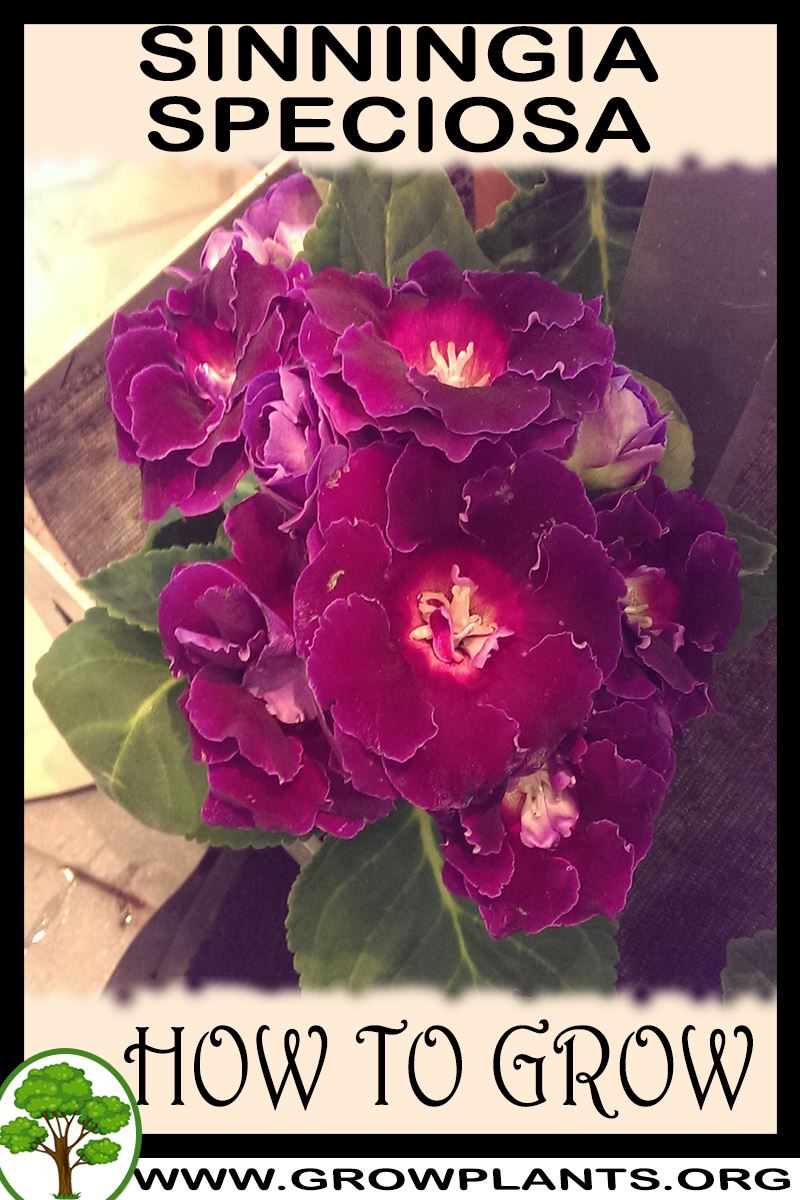
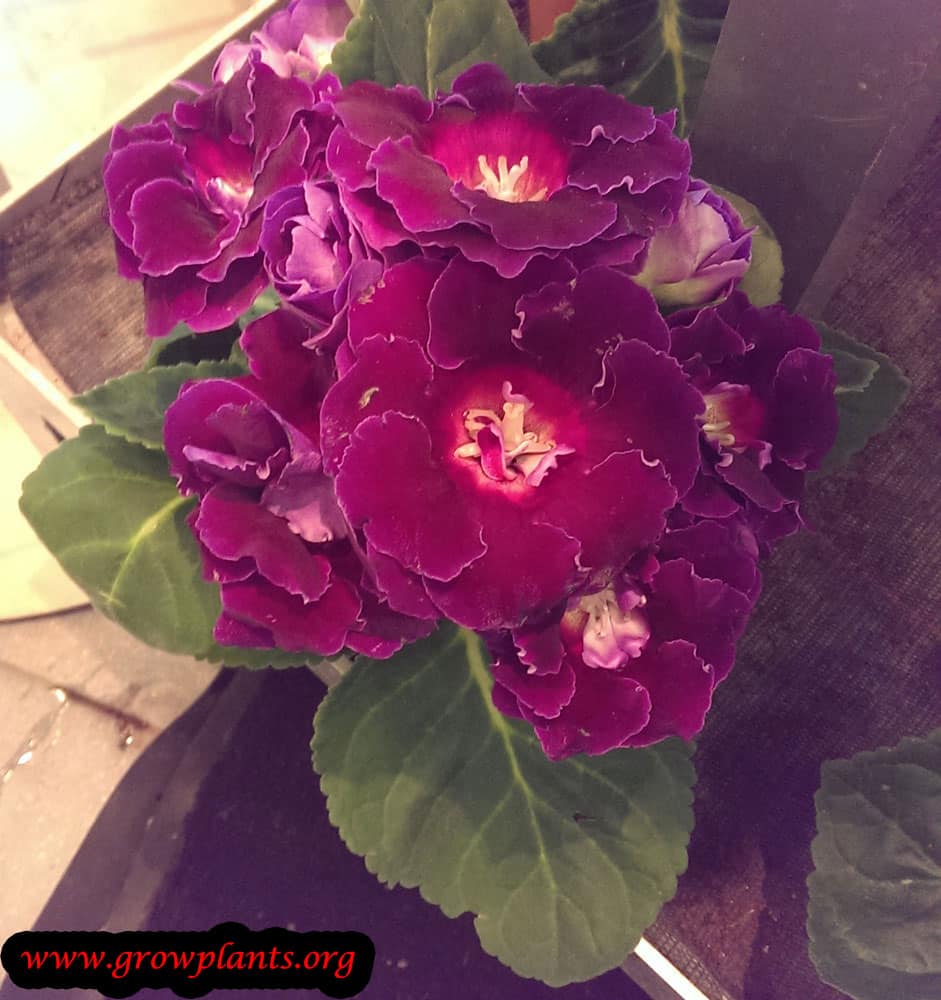
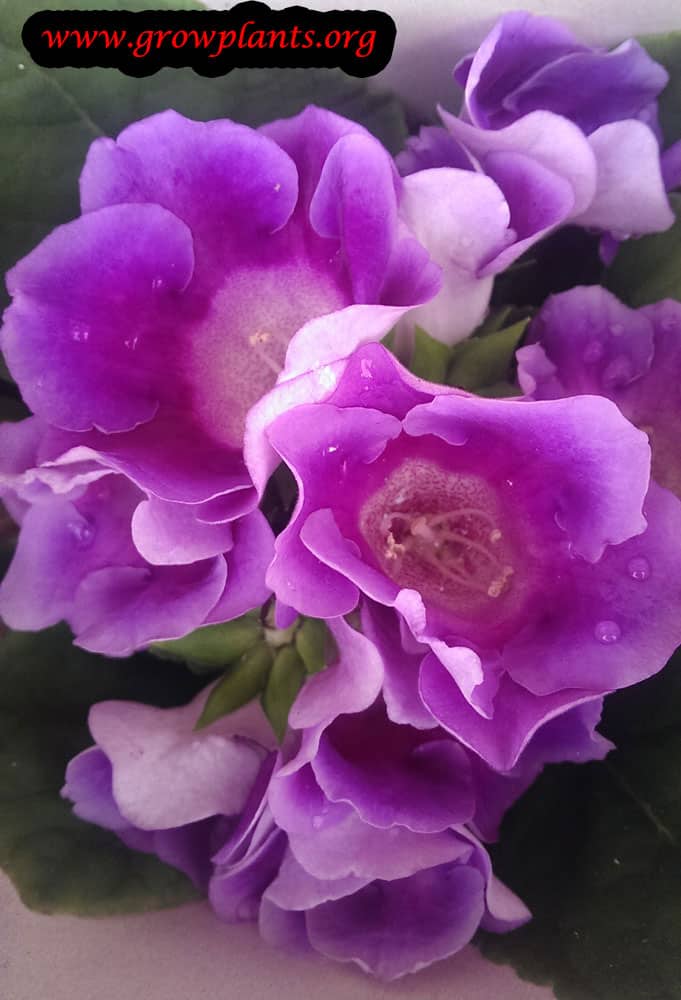
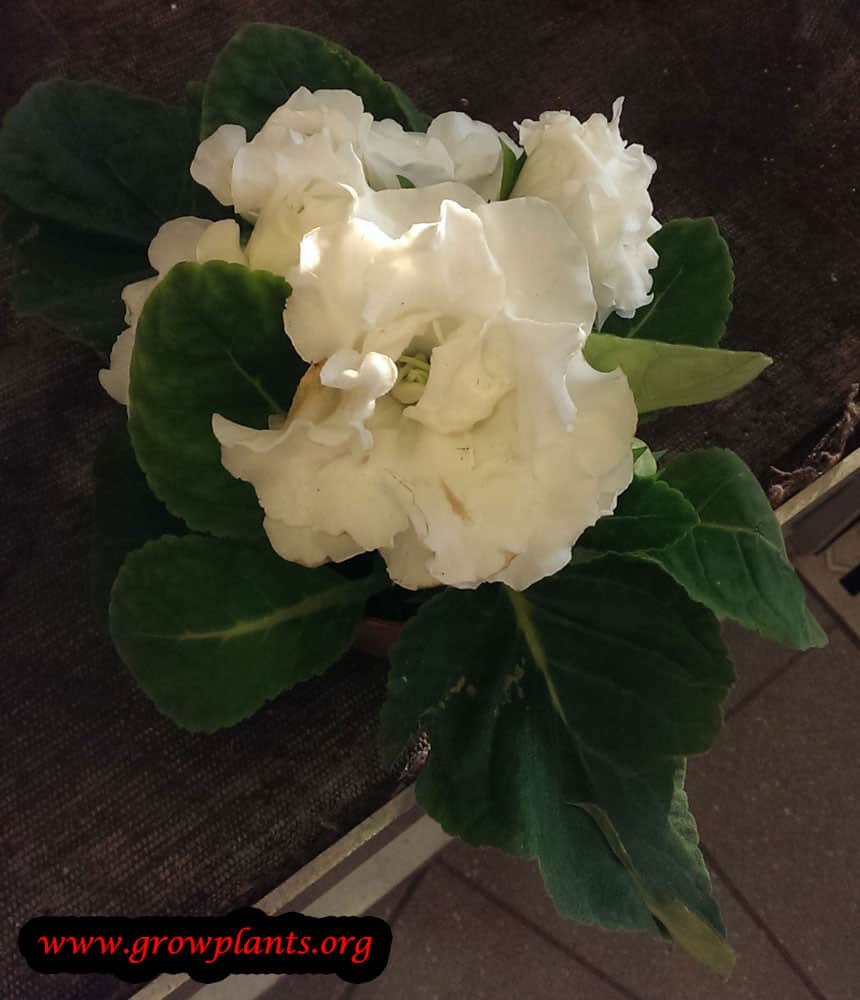
- Flower Characteristics: Large, fragrant, trumpet-shaped blooms in red, purple, blue, white, pink or bicolours, often with a contrasting margin.
Primary Uses & Landscape Value
- Functional & Ornamental Roles: An ornamental flowering houseplant and container plant, grown for its showy, scented blooms.
Care Guide: Planting, Soil & Watering
Overview: Sinningia speciosa (Gloxinia) is a tender, tuberous flowering plant that grows best in bright, indirect light with rich, well-drained soil. It likes evenly moist soil in growth but the tuber must never sit wet, so drainage is essential to prevent rot.
Quick Care Requirements
| Requirement | Ideal Condition |
|---|---|
| Planting Season | In spring or summer as growth begins |
| Growth Rate | Slow |
| Soil Type | Rich, light, well-drained soil |
| Water Need | Moderate — keep evenly moist in growth, drier while dormant |
Planting & Establishment
- Best Planting Season: Plant the tuber in spring or summer as it starts into growth; it is frost-tender (zone 11+ or grown indoors), so keep it warm and bring it inside where winters are cold.
- How to Plant:
- Hole Preparation: For a tuber, make a shallow depression a little wider than the tuber in loose, well-drained soil or potting mix.
- Soil Amendments: Blend peat or compost with perlite for a light, rich, free-draining medium that holds moisture without staying soggy.
- Planting Depth: Set the tuber shallowly with the hollow (concave) side up, barely covered by soil — planting too deep invites rot.
- Growth Speed & Expectations: Slow growth as it develops leaves and its showy trumpet flowers; after blooming it dies back to the tuber for a dormant rest.
Soil, Watering & Drainage Care
- Soil Mix & Drainage Needs: Use a light, aerated, peat-based mix with sharp drainage; in pots ensure water drains away freely, as the tuber rots easily in waterlogged soil.
- Watering Schedule & Technique:
- Young / Newly Planted: Water sparingly as the tuber sprouts, increasing gradually as leaves develop; avoid wetting the crown of the tuber.
- Established: Keep the soil evenly moist during active growth and flowering, watering from below or at the soil to keep water off the fuzzy leaves.
- Seasonal Adjustments: Water freely in the warm growing season; as the plant dies back, reduce watering and keep the dormant tuber nearly dry.
Climate, Light & Hardiness
Sinningia speciosa (gloxinia) is a tropical tuberous plant grown mainly as an indoor or warm-climate ornamental, thriving in warmth and bright, indirect light. It is frost-tender and its tuber takes a dormant rest, so steady warmth - not cold tolerance - defines its needs.
Quick Climate Specifications
| Climate Zones | Tropical, subtropical, Mediterranean; grown as a houseplant elsewhere |
|---|---|
| USDA Hardiness Zones | Approximately 11 and warmer (per site data) |
| Optimal Temp Range | Warm, roughly 18–27 °C (64–81 °F) |
| Cold Damage Begins | Suffers below about 15 °C (59 °F) |
| Approx. Survival Minimum | No frost tolerance; keep above roughly 10 °C (50 °F). The dormant tuber tolerates cool rest but not freezing |
| Frost Tolerance | None |
| Light Conditions | Bright indirect light to half shade |
Sunlight & Light Exposure
Optimal Light Setup
Wants bright but indirect light for compact growth and good flowering; strong midday sun scorches the soft, velvety leaves, so half shade or a filtered window is ideal.
Shade & Heat Management
Shield from hot direct sun; gentle, diffuse light keeps foliage from burning while still supporting bloom.
Best Exposure / Orientation
An east-facing window or lightly shaded position gives the balanced light it prefers.
Temperature Extremes & Hardiness
Indoor Comfortable Temperature
Thrives in warm room temperatures around 18–27 °C (64–81 °F), away from cold draughts.
USDA Hardiness & Regional Limits
The site data places it at about USDA zone 11 and warmer, reflecting a genuinely tropical, frost-free outdoor limit; in cooler regions it is an indoor or seasonal plant.
Cold Damage & Winter Protection
Growth and flowers decline below about 15 °C (59 °F). As days shorten, the plant naturally dies back to its tuber, which should be kept cool but frost-free during dormancy.
Frost Sensitivity
Completely frost-sensitive - foliage collapses with cold and the tuber must never freeze.
Wind, Humidity & Microclimate
Humidity Preferences
Prefers moderate to high humidity for lush leaves; very dry air causes leaf browning.
Dry-Air Tolerance
Limited - avoid the dry air of heaters and vents. Raise humidity around the plant rather than misting the felted leaves directly.
Microclimate Recommendations
A warm, humid, brightly-but-indirectly lit, draught-free spot gives the best growth and flowering.
Growing in Pots, Balconies & Indoors
Florist’s gloxinia is a compact, tuberous plant that the grower notes is not a true deep-room houseplant – but it is small and showy, and does very well in a pot on a bright windowsill or in a conservatory where the light is strong enough for its velvety flowers.
Quick Details
- Container Size: A shallow 2-4 L (about half to one gallon) pot suits the tuber
- Indoor Suitability: Windowsill or conservatory plant – it needs bright light to flower well
- Best Spot: Bright light with some direct sun, but shaded from fierce midday sun
- Soil & Drainage: Light, free-draining mix; the tuber rots in wet soil
- Watering in Pots: Keep evenly moist in growth; water from below to keep the hairy leaves dry
Indoors & On the Windowsill
- Bright windowsill, not deep shade: Away from a window the light is too weak for good flowers; give it a bright sill or conservatory with gentle direct sun.
- Humidity and care: It likes warm, humid air but hates water sitting on its felted leaves or crown – water at the base and avoid cold, wet conditions.
- Dormancy: After flowering the top dies back and the tuber rests; keep it barely moist and cool, then restart it into growth.
On a Balcony or Patio
- Light & shelter: Outdoors only in warm, frost-free weather, in bright shade sheltered from strong sun, wind and heavy rain on the flowers.
- Overwintering: It is frost-tender – store the dormant tuber somewhere cool but frost-free, or keep the pot indoors.
Choosing the Pot, Soil & Long-Term Care
- Pot & drainage: A shallow 2-4 L pot with drainage holes; skip a standing water saucer to avoid root rot; terracotta breathes and dries faster, while glazed or plastic holds moisture longer.
- Potting mix: A light, aerated mix – peat or coir blended with perlite or vermiculite so roots get both moisture and air.
- Feeding: Feed lightly through the growing and flowering season; potted plants leach nutrients faster.
- Repotting: Refresh the mix each season when you restart the tuber, setting it just at the soil surface.
Growing this plant in a greenhouse
A greenhouse can give sinningia speciosa frost protection and cold protection.
Greenhouse at a glance
| Greenhouse suitability | Good - clearly useful |
|---|---|
| Main benefits | frost protection, cold protection |
| Season extension | earlier spring & later autumn |
| Outdoor protection advisable below | about 15°C |
| Maintain greenhouse minimum | around 15°C for active growth |
| Suitable types | heated greenhouse, polycarbonate greenhouse |
| Heating | Heating is recommended in cold climates for continuous growth. |
Related greenhouse guides
- Greenhouses: How to Choose the Right Greenhouse
- Best Greenhouse Heaters
- Greenhouse Climate Control: Temperature, Ventilation and Humidity
- Polycarbonate Greenhouses: What to Look for Before Buying
Fertilizing & Feeding
A moderate feeder: a balanced complete fertilizer through the growing season supports strong growth and flowering, while overfeeding pushes leafy growth at the expense of blooms.
Quick Fertilizing Specs
| Feeding Level | Moderate |
|---|---|
| Main Nutrient Priority | Balanced complete feeding with adequate nitrogen and potassium |
| Best Feeding Period | Spring through the flowering season |
| Organic Options | Compost and other organic matter around the root zone |
| Soil pH | Prefers a slightly acidic to near-neutral soil |
| Reduce/Stop Feeding | Reduce feeding as growth slows and stop during dormancy |
| Micronutrients | Usually supplied by a complete fertilizer; iron may need correction in alkaline soils |
Feeding by Growth Stage
Spring growth
Support new shoots and leafy growth as the plant breaks from winter rest.
| Nutrient direction | A balanced complete fertilizer with steady nitrogen to build healthy foliage. |
|---|---|
| Timing | As growth resumes in spring. |
| Frequency | A few light feedings through the early growing season. |
| Fertilizer types | A balanced complete garden fertilizer, Compost or other organic matter worked in around the root zone |
| Precautions | Avoid heavy nitrogen late in the season, which pushes soft growth at the expense of flowers. |
Flowering
Sustain flowering without forcing excess leafy growth.
| Nutrient direction | Continue a balanced feed; adequate nitrogen and potassium support bloom better than high-phosphorus products. |
|---|---|
| Timing | Through the main flowering period. |
| Frequency | Keep feeding light and steady. |
| Fertilizer types | A balanced complete fertilizer |
| Precautions | Skip high-phosphorus bloom-booster products; balanced feeding drives flowering. |
Dormancy / rest
Let the plant rest as growth slows in the cool season.
| Nutrient direction | None – withhold fertilizer while the plant is dormant. |
|---|---|
| Timing | Late autumn through winter dormancy. |
| Frequency | No feeding at this stage. |
| Fertilizer types | No feeding during dormancy – withhold fertilizer until growth resumes in spring. |
| Precautions | Do not fertilize dormant plants; resume only when new growth appears. |
Nutrient Deficiency Signs & Corrections
Pale, yellowing older leaves with weak, slow growth.
| Possible causes | Low soil nitrogen, Nitrogen leaching from frequent watering or sandy soil, Compacted or poor soil limiting root uptake |
|---|---|
| Appears first on | Older, lower leaves. |
| What to check | Recent feeding history, Soil condition and drainage, Watering frequency |
| Possible correction | Apply a balanced complete fertilizer and improve organic matter in the root zone. |
Interveinal yellowing on new leaves while veins stay green.
| Possible causes | High soil pH reducing iron availability, Waterlogged or cold roots limiting uptake, Not necessarily a lack of iron in the soil |
|---|---|
| Appears first on | New, young leaves at the shoot tips. |
| What to check | Soil pH, Drainage and root health |
| Possible correction | Correct soil pH and drainage, and apply a chelated iron product per its label. |
Scorched leaf edges and tips with dull foliage.
| Possible causes | Excess fertilizer salts in the root zone, Underwatering that concentrates salts, Poor drainage |
|---|---|
| Appears first on | Leaf margins and tips. |
| What to check | Feeding rate, Drainage, Salt buildup in soil |
| Possible correction | Reduce feeding and leach the root zone with thorough watering. |
Pruning, Training & Seasonal Maintenance
Florist gloxinia is a tuberous, herbaceous gesneriad grown as a container plant for its large, velvety trumpet flowers, and it is deciduous — it grows from a tuber, flowers, then dies back and takes a dormant rest. Because of that life cycle there is no structural pruning at all: the useful work is deadheading spent flowers to keep the display going and to steer the plant’s energy back into the tuber, and then removing the foliage as it yellows and collapses at the end of the season before the tuber is rested. It is a slow grower with a low rosette of leaves, so it is never cut for shape — only groomed and put to bed.
Quick Pruning & Maintenance Specs
| Pruning Tolerance | Low — groom only; no structural or hard pruning |
| Primary Maintenance Window | Through flowering (spring to autumn): deadheading |
| Secondary Maintenance Window | Autumn/winter: cut down dying foliage as the plant enters dormancy |
| Typical Frequency | Deadhead as blooms fade; one clean-down at dormancy |
| Main Objective | Prolong flowering and return energy to the tuber for next season |
| Young Plant Priority | None beyond removing damaged leaves; do not cut a growing rosette |
| Mature Plant Priority | Deadhead; remove spent foliage only once it yellows |
| Best Tool Type | Precision snips |
| Avoid Heavy Pruning During | Active growth and flowering — never strip green leaves |
Pruning by Plant Age & Size
Newly Established
A sprouting tuber or young plant needs nothing but the removal of any damaged leaf. The rosette of leaves feeds the tuber, so it must be left intact; there is no tip-pinching or formative cutting on a gloxinia.
Young / Formative
No training system applies — the plant builds a low rosette, not a branched framework. Simply let it grow and support any heavy flower cluster if it flops.
Mature / Established
On a flowering plant, the only routine task is deadheading — snip each spent trumpet off at the base of its stalk so the plant keeps producing buds instead of setting seed. As the season ends and leaves yellow, cut the foliage down and let the tuber rest.
Seasonal Pruning Schedule
Growing Season (Spring–Autumn)
Objective: prolong bloom. Remove each faded flower at the base of its stem; do not cut healthy green leaves, which are feeding the tuber. Expected response: continued flushes of buds through the warm months. Because gloxinia flowers on the current season’s soft growth from the tuber, deadheading — not cutting back — is what keeps flowering going.
Dormancy / Dieback (Autumn–Winter)
Objective: clean transition to rest. When flowering finishes and the leaves naturally yellow and flop, cut the top growth away and reduce watering so the tuber goes dormant. Do not force this by cutting green foliage early — premature removal robs the tuber of the reserves it needs to bloom well next year.
Special Growth to Remove
The things to remove are spent flower stalks (deadhead to prolong bloom and prevent the plant tiring itself on seed) and, at season’s end, the collapsing leaves and stems once they have yellowed. There are no runners, suckers or woody growth. Gloxinia flowers and can set seed, but since the display comes from soft, current-season growth off the tuber rather than any persistent wood, timing revolves around deadheading and dieback, not around cutting flowering wood.
Container & Small-Space Pruning
Gloxinia is a pot plant, and container care simply means deadheading through the season and cutting the foliage down at dormancy, then storing the tuber in its dry pot (or lifted) somewhere cool and frost-free until it resprouts. There is no size-control pruning; the plant stays naturally small at 20–40 cm.
Tools
Precision snips are all that is required — the stems and flower stalks are soft and fleshy, and a clean, sharp small blade gives a tidy cut without crushing. Nothing heavier is ever needed on this plant.
Tool Hygiene & Disease Risk
Hygiene is Routine: use clean, sharp snips. The plant’s pests are aphids and leaf miner rather than a blade-borne disease, but because the tissue is soft and fleshy a clean cut helps avoid rot at the wound — particularly when cutting near the crown at dormancy, where damp, crushed tissue can rot back into the tuber.
Cut Placement & Technique
Deadhead by cutting the flower stalk off cleanly at its base, not part way up, so no bare stub is left to rot. At dieback, cut the foliage back to just above the crown once it has yellowed, leaving the tuber undisturbed.
Heavy Pruning & Rejuvenation
Gloxinia does not respond to hard or rejuvenation pruning — there is no woody structure to cut back and no benefit in cutting a healthy plant down. Renewal happens naturally through the dormant tuber, which resprouts fresh growth each season; the grower’s role is simply to let the plant die back cleanly and rest, not to force regrowth with the secateurs.
Post-Pruning Care
After deadheading, keep the plant warm, bright (out of harsh midday sun) and evenly watered to sustain flowering. After the dormancy clean-down, do the opposite — keep the tuber dry and cool while it rests, and only resume watering when new shoots appear. Do not feed a plant that is being put into dormancy.
Common Pruning Mistakes
- Cutting the foliage off while it is still green, which starves the tuber and weakens next year’s flowering.
- Failing to deadhead, so the plant sets seed and stops producing new buds.
- Leaving long, hollow stalk stubs after deadheading, which rot back toward the crown.
- Trying to keep the plant in leaf year-round instead of allowing its natural dormant rest.
When NOT to Prune
Do not cut back a plant in active growth or full flower, and never remove green, healthy leaves — the rosette must fuel the tuber. Wait for natural yellowing before the end-of-season cut-down.
Recommended Tools (by task)
- precision_snips — for deadheading soft flower stalks and cutting down yellowed foliage cleanly at the crown.
Propagation Guide
Florist’s gloxinia is a tuberous gesneriad grown from dust-fine seed, from leaf cuttings (as with its relative the African violet) and by dividing the tuber. Seed strains vary, so leaf cuttings or tuber division are used to reproduce a particular plant exactly. The fine seed makes it moderately fiddly rather than difficult.
Quick Propagation Specs
| Best Propagation Method | Seed (for numbers) / leaf cuttings (to keep a form) |
| Alternative Methods | Tuber division, stem cuttings |
| Propagation Difficulty | Moderate (very fine seed) |
| Seed True-to-Type | Variable; named forms not reproduced from seed |
| Vegetative True-to-Type | Yes |
| Best Propagation Season | Spring to summer |
| Germination Temperature | Warm, about 21–24°C (70–75°F) |
| Seed Sowing Depth | Surface-sown; not covered (light required) |
Growing from Seed
Seed Handling & Sowing
The seed is dust-fine; scatter it on the surface of a moist, fine mix and do not cover it, as light is needed for germination.
Germination Conditions
Keep warm at about 21–24°C (70–75°F), humid and brightly but indirectly lit; germination may be slow and uneven.
Seedling Care
Handle the tiny seedlings gently and prick them out once they can be managed, keeping them warm and humid.
Leaf & Root Cuttings
A healthy leaf, or leaf sections cut across the main veins, will form small tubers and plantlets when the cut surface is inserted into a moist, humid, warm rooting mix – the standard way to reproduce a chosen gloxinia. Named forms come true from leaf cuttings, unlike seed.
Rhizomes, Tubers, Bulbs & Corms
Tuber Division
A large dormant or newly sprouting tuber can be cut into pieces, each bearing at least one growth bud (eye). Let the cut surfaces dry briefly, then pot up in a free-draining mix and keep just moist and warm until shoots establish.
Bloom & Flower Guide
Quick Details
- Bloom Season: Spring through autumn, mainly in the warm months
- Time to First Bloom: Within the first season once the tuber is in active growth
- Flower Appearance: Large, velvety, trumpet-shaped flowers in red, purple, blue, white or pink, often with a contrasting and sometimes ruffled or waxy edge, carried in clusters
- Edibility: Ornamental only, but non-toxic and considered safe around pets
Detailed Blooming Overview
Gloxinia is grown for its lavish, velvety bells. Rising from a tuber, it produces clusters of large trumpet flowers over a long warm-season display, often lightly fragrant, in rich reds, purples, blues, pinks and whites, frequently with a picotee edge in a different shade. After flowering the plant naturally dies back and rests before starting the cycle again.
Flower Characteristics
- Large, velvety, trumpet-shaped flowers in red, purple, blue, white or pink.
- Edges may be a contrasting colour and can be smooth or waxy and ruffled.
- Flowers are carried in clusters and are lightly fragrant.
Bloom Care & Thinning
- Deadheading: Remove faded blooms to keep new buds coming through the season.
- After flowering: Let the plant die back and rest the tuber dry and cool, then restart it for the next flush.
- Protecting the flowers: Keep water off the velvety petals and leaves and give bright, indirect light for the best display.
Pests, Diseases & Troubleshooting
Overview: Sinningias are tender, tuberous gesneriads with soft, hairy foliage that is very attractive to tiny sap-sucking pests and prone to botrytis and tuber rot in cool, damp, still conditions. Warmth, gentle airflow, careful watering and scrupulous hygiene prevent most trouble.
Quick Troubleshooting Overview
| Issue / Pest | Main Symptom | Primary Solution |
|---|---|---|
| Thrips | Silvery streaks, distorted buds; can spread virus | Sticky traps; remove buds; insecticidal soap |
| Aphids | Clusters on soft tips & buds; honeydew | Rinse/wipe; insecticidal soap |
| Cyclamen & spider mites | Distorted, stunted new growth; stippling | Isolate; miticide/oil; discard if severe |
| Mealybugs / whitefly | Cottony tufts or white flies; honeydew | Alcohol swab / sticky traps; insecticidal soap |
| Botrytis (grey mould) | Fuzzy grey mould on leaves/flowers | Airflow; remove debris; avoid wet foliage |
| Tuber / crown rot | Soft, brown, collapsing base; sour soil | Ease off water; drainage; dust cut tuber |
Common Pests & Management
- Thrips (Frankliniella / Thrips spp.):
- Symptoms: Tiny slender insects causing silvery streaking and stippling on leaves, distorted or aborted flower buds with brown-flecked petals, and black specks of excrement; critically, they transmit tospoviruses (INSV/TSWV) that can destroy a plant.
- Prevention & Control: Monitor with blue or yellow sticky traps, remove infested buds and flowers, and treat with insecticidal soap, spinosad or neem, repeating to catch the fast life cycle. Isolate new plants and immediately discard any showing virus symptoms, as there is no cure.
- Aphids (Myzus persicae and others):
- Symptoms: Green, pink or black clusters on the soft new growth and flower buds, sucking sap, distorting growth, leaving honeydew, and spreading viruses.
- Prevention & Control: Wipe off or gently rinse small colonies (taking care with the brittle, hairy leaves), and use insecticidal soap for heavier numbers. Keep plants unstressed, avoid over-feeding, and isolate infested plants.
- Cyclamen & spider mites (Phytonemus pallidus / Tetranychus urticae):
- Symptoms: Cyclamen mites are microscopic and cause severely distorted, stunted, hardened new growth and deformed flowers at the crown; spider mites cause fine stippling and webbing in hot, dry air. Both are easily spread on hands and tools.
- Prevention & Control: Isolate affected plants immediately. Badly infested plants with cyclamen mite are often best discarded to protect a collection; otherwise treat with a suitable miticide or horticultural oil, and improve humidity for spider mites. Wash hands and tools between plants.
- Mealybugs & whitefly (Pseudococcus spp. / Trialeurodes vaporariorum):
- Symptoms: White cottony tufts in leaf axils and on the tuber (mealybug) or clouds of tiny white flies on leaf undersides (whitefly), both sucking sap and producing honeydew and sooty mould on the soft foliage.
- Prevention & Control: Spot-treat mealybugs with alcohol on a cotton bud and hang sticky traps for whitefly, following with insecticidal soap or neem to the undersides and repeating to catch crawlers. Check the tuber and roots at repotting for hidden mealybug.
Diseases & Fungal Issues
- Botrytis (grey mould) (Botrytis cinerea):
- Symptoms: Fuzzy grey-brown mould on leaves, stems and especially the soft flowers, with water-soaked collapse in cool, damp, still, or overcrowded conditions; fallen petals and dead leaves left on the plant are common infection sites.
- Treatment & Management: Increase airflow and warmth, avoid wetting the foliage and flowers, and remove spent blooms and dead leaves promptly (good hygiene is key). Space plants, water in the morning at the soil level, and use a copper or biological fungicide only if sanitation is not enough.
- Powdery mildew (Erysiphales):
- Symptoms: White powdery patches on the leaves and stems in crowded, humid, still conditions with poor light, distorting growth and disfiguring the plant.
- Treatment & Management: Improve airflow and light, thin congested growth, and avoid overcrowding. Remove affected leaves; a sulphur, potassium-bicarbonate or biological fungicide checks it, though better ventilation usually resolves it.
- Tuber & crown rot (Pythium / Phytophthora / Rhizoctonia / Fusarium spp.):
- Symptoms: Soft, brown, mushy decay of the crown and tuber with collapse of the plant and a sour, wet mix; caused by overwatering, water sitting in the crown, cold wet conditions, or infected, reused soil.
- Treatment & Management: Water carefully at the soil surface (never into the crown), use a free-draining, sterile mix, and keep dormant tubers barely moist and cool. Remove rotten tissue, dust cut surfaces of a salvaged tuber with sulphur or cinnamon, and repot into fresh mix.
Growing Difficulties & Abiotic Problems
- Cold-water leaf spotting:
- Cause & Symptoms: Pale, ringed or bleached spots appear where cold water or strong sun has hit the hairy leaves; the fine hairs hold water droplets that scald or chill the tissue.
- Correction Strategy: Water at the soil level with tepid water, avoid splashing the foliage, and keep the plant out of hot direct sun. Damaged leaves can be removed; new growth will be unmarked.
- Overwatering & crown rot:
- Cause & Symptoms: Yellowing, wilting despite wet soil, and a soft crown signal too much water or water lodged in the growing point — the commonest way these tubers are lost.
- Correction Strategy: Use a light, free-draining mix, water when the surface begins to dry, keep water out of the crown, and reduce watering sharply as the plant enters dormancy. Ensure the pot drains freely.
- Dormancy confusion:
- Cause & Symptoms: After flowering the top growth naturally yellows and dies back as the tuber goes dormant; this is mistaken for disease and the plant is often overwatered and rotted at this point.
- Correction Strategy: Recognise the natural rest: let the foliage die down, store the tuber cool and nearly dry, and resume watering only when new shoots appear. Do not keep a dormant tuber wet.
What Helps – Products & Tools
For these soft-leaved gesneriads use gentle tools: blue/yellow sticky traps and spinosad or insecticidal soap for thrips, insecticidal soap and neem for aphids, whitefly and mealybugs, alcohol swabs for spot-treating mealybugs, and a suitable miticide or horticultural oil for mites. Botrytis and mildew are met first with airflow and hygiene, backed by a copper or biological fungicide, and cut tubers are dusted with sulphur or cinnamon. Warmth, careful watering and a sterile free-draining mix are the real safeguards.